
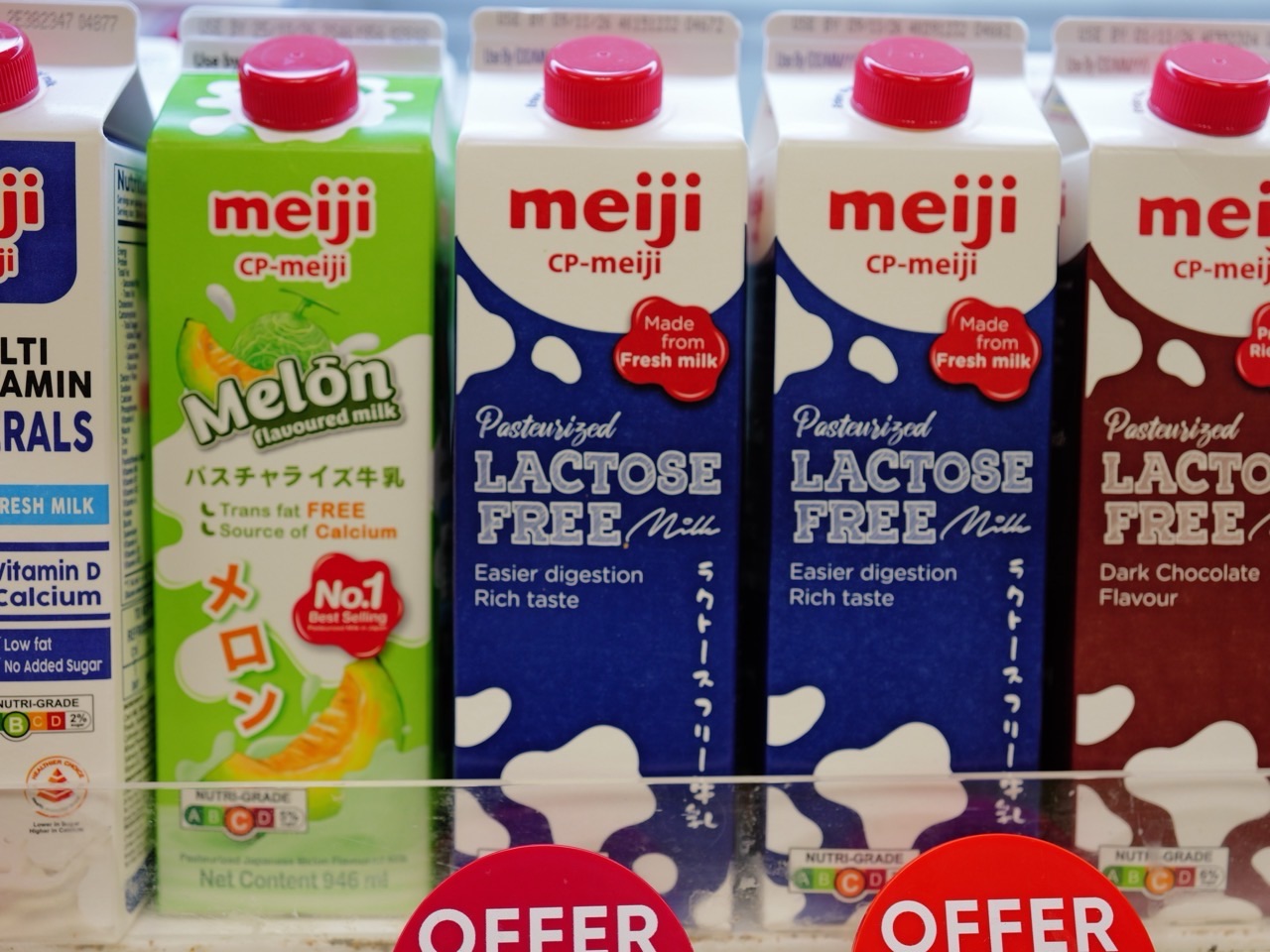
Packaging looks like the thing around the product.
Economically, it is often part of the product.
It protects food, carries instructions, proves identity, survives shipping, communicates a brand, enables scanning and increasingly connects physical goods to digital information.
Did you know that a badly designed box can waste more money in storage and transport than the box itself costs?
This article targets the search ideas packaging Singapore, printing Singapore, smart labels Singapore, packaging design Singapore and sustainable packaging Singapore.
Official information was checked on 4 October 2026. Worked examples are fictional.
Did You Know? Packaging Is a Logistics Technology
A package keeps a product intact while it is stacked, stored, handled and transported.
The shape affects how many units fit on a pallet.
The weight affects freight.
The material affects protection and waste.
The label affects whether the correct item reaches the correct customer.
Packaging therefore sits at the intersection of manufacturing, logistics, marketing and information.
Singapore Treats Packaging Waste as a Major Resource Issue
The National Environment Agency states that packaging waste, including plastics, makes up about one-third of domestic waste disposed of in Singapore.
Official reference: NEA — Mandatory Packaging Reporting.
The scale of the waste stream creates both a cost problem and an innovation opportunity.
Mandatory Packaging Reporting Makes Packaging Visible
Under Singapore’s Mandatory Packaging Reporting scheme, producers of packaged products and certain retailers above the prescribed turnover threshold must report specified packaging data and submit 3R plans.
The current threshold is annual turnover above S$10 million, subject to the scheme’s definitions and requirements.
Official reference: NEA — Mandatory Packaging Reporting.
Measurement changes the conversation because companies must know what materials and quantities they are putting into the market.
The 2026 Reporting Cycle Uses 2025 Packaging Data
NEA’s current guidance states that companies meeting the relevant 2024 turnover criterion were required to report calendar-year 2025 packaging data and 3R plans during the 1 January to 31 March 2026 submission window.
Official reference: NEA — Mandatory Packaging Reporting.
The broader economic principle is simple: what gets measured can be redesigned.
Packaging Reduction Can Save Money Before It Saves Waste
Use less material and the business may buy less material.
Reduce box volume and more units may fit in a truck or container.
Simplify formats and purchasing becomes easier.
Sustainable packaging is strongest when environmental and operational economics point in the same direction.
Worked Example: Smaller Boxes Can Increase Container Density
Imagine a fictional product ships in boxes occupying 0.02 cubic metres each.
A redesign reduces volume by 15% without reducing protection.
The same container can carry more units.
The saving may come from fewer shipments, less void fill and lower storage demand.
Packaging design becomes a transport-efficiency project.
Protective Packaging Prevents Much Larger Losses
Too much packaging wastes material.
Too little can damage the product.
The optimal design balances protection, cost and material use.
A S$2 protective insert may be economical if it prevents a S$200 product from breaking.
Sustainability should therefore consider avoided product waste as well as packaging weight.
Printing Turns Packaging Into an Information Surface
A carton can carry ingredients, instructions, warnings, barcodes, expiry dates, batch codes and branding.
Printing therefore performs regulatory, operational and marketing functions at once.
A printing error can create recalls, mis-picks or customer confusion.
Precision in printing is a quality-control issue.
Labels Make Products Legible to Machines
Barcodes allow scanners to identify products quickly.
QR codes can connect a physical package to digital information.
Serial numbers and data-matrix codes can identify individual units or batches.
The label becomes an interface between the physical supply chain and the information system.
Smart Labels Add Dynamic Information
A conventional label stores printed information.
A smart label can add machine-readable identifiers, radio-frequency tags, sensors or digital links.
The value appears when the extra information changes an action: locate stock, verify identity, monitor temperature or provide updated product information.
A smart label that nobody uses is merely an expensive label.
Cold Chains Make Packaging More Technical
Vaccines, seafood, meat and other temperature-sensitive goods need packaging that preserves conditions through transport.
Insulated containers, gel packs, sensors and tamper evidence can all become part of the system.
See Making Singapore Rich | Cold-Chain Logistics, Refrigeration and Perishable Trade.
Pharmaceutical Packaging Is a Safety System
A medicine package protects the product and communicates dose, batch and expiry information.
Tamper-evident and child-resistant features can be critical depending on the product.
Traceability can help manage recalls.
Packaging in healthcare is therefore part of risk control, not decoration.
Food Packaging Extends Shelf Life
Freshness can be lost through oxygen, moisture, light, contamination or physical damage.
Packaging materials and seals can slow those processes.
A longer useful shelf life can reduce food waste and improve distribution reach.
See Making Singapore Rich | Food Safety, Testing and Certification.
The Beverage Container Return Scheme Began on 1 April 2026
NEA states that Singapore’s beverage container return scheme commenced on 1 April 2026.
The scheme applies an Extended Producer Responsibility approach to covered beverage containers.
Official reference: NEA — Reducing Our Use of Disposables.
The scheme changes packaging economics by giving used containers a defined return pathway.
Extended Producer Responsibility Changes the Design Question
If producers carry more responsibility for end-of-life management, recyclability becomes a commercial design consideration.
Material combinations that are cheap to make but difficult to separate can create downstream cost.
Design-for-recycling moves waste management upstream into product development.
Singapore Has a Sustainable Packaging Technical Reference
NEA’s packaging-reporting guidance points companies to Technical Reference 109:2023 on sustainable packaging guiding frameworks and practices.
Official reference: NEA — Mandatory Packaging Reporting.
Standards can turn broad sustainability intentions into more consistent design practices.
Recycled Content Creates a Market for Recovered Materials
Recycling works better when somebody wants to buy the recovered material.
Using recycled content can create demand for secondary plastics, paper, metals or glass.
That connects packaging with Making Singapore Rich | Recycling, Materials Recovery and Circular Manufacturing.
A circular economy needs both collection and end markets.
Worked Example: Packaging Weight Multiplies Across Volume
Imagine a fictional manufacturer reduces a bottle by 8 grams.
Across 10 million bottles, material use falls by 80,000 kilograms.
The per-unit change looks tiny.
Scale turns it into an industrial effect.
This is why high-volume packaging optimisation can matter enormously.
Packaging Automation Creates Manufacturing Productivity
Filling, sealing, labelling, coding, inspection and palletising can all be automated.
Vision systems can check label position and printed codes.
Robots can case-pack products.
Automation reduces repetitive manual handling and can improve consistency.
See Making Singapore Rich | Robotics and Industrial Automation.
Digital Printing Changes the Economics of Short Runs
Traditional printing methods can be highly efficient at large volume.
Digital printing can reduce setup friction for smaller batches, variable data and rapid design changes.
That can help brands test products, personalise labels or serve smaller markets without carrying enormous printed inventory.
Packaging Design Is Also Brand Design
Customers often meet the package before the product.
Shape, typography, colour, opening experience and material quality communicate positioning.
See Making Singapore Rich | Digital Marketing, Advertising and Brand Building.
The best packaging makes marketing and operations reinforce each other.
E-Commerce Changes Packaging Requirements
A retail package may travel from factory to shelf in controlled cartons.
An e-commerce package may be handled individually through sorting centres and door-to-door delivery.
That can require different protection, labelling and size optimisation.
Packaging follows the distribution model.
Smart Labels Improve Inventory Visibility
Machine-readable labels can help warehouses identify products, locations and batches.
Better identification reduces picking errors and supports traceability.
See Making Singapore Rich | Logistics, Warehousing and Supply Chains.
A label becomes valuable when it reduces information friction.
Traceability Helps Manage Recalls
If a defect affects only one batch, a company wants to identify exactly which units are involved.
Poor traceability can force a much larger recall.
Batch codes, serial numbers and digital records allow a narrower response.
Information quality can therefore reduce the cost of quality failure.
Packaging Is an Industrial-Design Problem
The package must protect, communicate, fit machines, stack efficiently and satisfy the user.
These requirements can conflict.
Design teams balance material, geometry, manufacturing and human behaviour.
See Making Singapore Rich | Industrial Design and Product Development.
The Risk: Green-Looking Packaging Can Be Worse
A heavier package may use a material with a more sustainable image but increase transport emissions.
A compostable material may not be useful if the local disposal system cannot process it.
A recyclable package may not be recycled if contaminated.
Sustainability requires system analysis rather than appearance.
The Risk: Too Little Packaging Can Increase Product Waste
Reducing material is useful until protection fails.
The environmental cost of replacing a damaged laptop, meal or medical product can far exceed the packaging saved.
Optimisation means enough packaging, not zero packaging.
The Risk: Too Many Formats Create Complexity
Every extra box size, label variant and material can increase inventory, setup and purchasing complexity.
Standardisation can reduce cost.
Customisation can improve fit and branding.
The best portfolio uses variety only where variety creates value.
Education Makes Packaging a Perfect Systems Lesson
Students can measure volume, surface area, material mass, transport density and percentage reduction.
They can study language through labels and design through consumer behaviour.
Packaging connects mathematics, science, English, art and economics in one object.
See Making Singapore Rich | Education, Skills and Human Capital.
A Guided Classroom Investigation
Give students a fragile fictional product measuring 20 cm by 10 cm by 5 cm.
Ask them to design a package that minimises material while surviving a one-metre drop.
Then require a barcode, instructions and a recycling label.
The task turns packaging into a constrained engineering problem.
Independent Practice: Reduce Packaging Without Breaking the System
A fictional company uses 100 tonnes of plastic packaging annually.
It can reduce material by 12%, but product damage rises from 0.3% to 1.5%.
Students should calculate the material saving and identify what additional information is needed to decide whether the redesign is worthwhile.
The lesson is that single metrics can mislead.
What Progress Should Look Like
A stronger packaging economy should use less unnecessary material, protect products better, improve recyclability, increase traceability, reduce logistics waste and create higher-value printing, design and smart-label capability.
A stronger learner should distinguish packaging weight from packaging performance, recycling claims from system reality and label data from useful traceability.
Frequently Asked Questions
Why is packaging economically important?
Packaging protects products, reduces damage, enables logistics, carries information, supports branding and increasingly connects physical goods to digital systems.
What is Mandatory Packaging Reporting?
It is Singapore’s scheme requiring qualifying producers and retailers to report specified packaging data and submit 3R plans.
What is Singapore’s current turnover threshold for Mandatory Packaging Reporting?
NEA’s current guidance states that the prescribed annual turnover threshold is above S$10 million, subject to the scheme’s other requirements.
When did the beverage container return scheme start?
NEA states that the scheme commenced on 1 April 2026.
What is a smart label?
A smart label adds machine-readable or connected information, such as digital identifiers, RFID or sensor functionality, to ordinary product labelling.
Is less packaging always better?
No. Packaging must still protect the product. Excessive reduction can increase damage and total waste.
How does packaging make Singapore richer?
It improves logistics, manufacturing, food and pharmaceutical safety, branding, traceability and circular-material systems while creating specialised design and printing work.
Helpful Reading and Singapore Graph Connections
- NEA — Mandatory Packaging Reporting
- NEA — Reducing Our Use of Disposables
- Making Singapore Rich | Recycling, Materials Recovery and Circular Manufacturing
- Making Singapore Rich | Logistics, Warehousing and Supply Chains
- Making Singapore Rich | Industrial Design and Product Development
- Making Singapore Rich | Food Safety, Testing and Certification
Making Singapore Rich: Make the Box Do More
Did you know that one package can be a shield, a billboard, a database key and a recycling problem at the same time?
Good packaging protects the product.
Great packaging also fits the supply chain, communicates clearly, uses material intelligently and makes the product easier to identify and recover.
Singapore becomes richer when packaging stops being treated as disposable decoration and starts being engineered as part of the system.
The product may be inside the box.
A surprising amount of value is in the box itself.