
Reference Chapter 197 · Examination tools must be permitted, functioning, accessible and understood before a pupil needs them
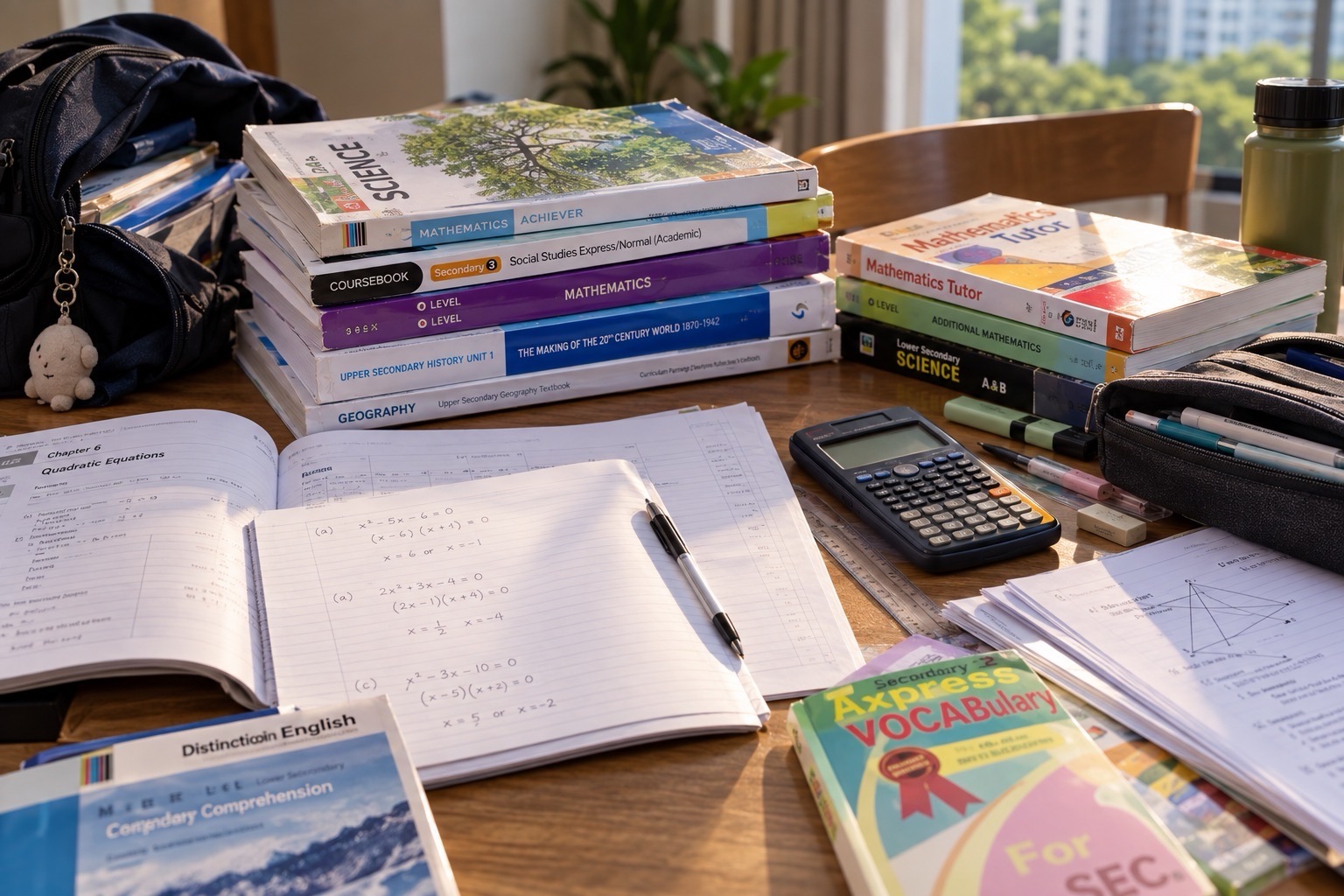
A Secondary 4 Mathematics student arrives with a scientific calculator that worked throughout revision. The class teacher recognises the brand but cannot confirm whether the exact model is permitted for the relevant national paper. Another student brings a ruler with its first centimetre worn away. A third pupil has a compass with a loose pencil holder and cannot construct a reliable circle. The school keeps a box of replacement calculators, but several have flat batteries and the inventory does not say which are on the current approved list. What looks like a last-minute stationery problem has become an avoidable access and assessment-integrity failure.
The gold standard is a school mathematical instrument and examination-tool readiness system that translates the authoritative assessment rules into clear pupil guidance, teaches proper tool use during regular lessons, maintains suitable and accessible equipment, tests permitted spares, distinguishes school assessments from externally regulated examinations and provides lawful remedies when a student’s tool fails. Ownership of a calculator is not a substitute for numerical understanding; ownership of an unverified device is not proof that it is exam-approved.
This chapter concerns approved calculators, basic mathematical drawing instruments, batteries and permitted spares, geometry set inspection, equipment-readiness lessons, financial-access arrangements and candidate assistance. It complements Chapter 38 on Mathematics and Numeracy Strategy, Chapter 59 on National Examinations, Chapter 127 on Examination Access Arrangements and Chapter 177 on Examination Paper Production. The authority’s permitted-materials rules take precedence over this proposed operational model.
Quick answer: what must a student check?
- Confirm the exact assessment and paper rules, including whether any calculator is allowed at all.
- Compare the precise calculator model—not merely the manufacturer—with the relevant current approved list where one applies.
- Check display, keys, battery, settings and any restrictions on stored material or functions.
- Pack a functional ruler, suitable eraser and permitted mathematical instruments required for the paper.
- Do not improvise a prohibited device or unauthorised mobile-phone calculator if equipment fails.
- Know which authorised invigilator or teacher handles the problem and whether a verified approved spare is available.
1. Keep the external authority’s examination rules above school custom
A school may have used a calculator model in internal tests for several years, yet the national examining authority may define a narrower set of permitted devices or paper-specific restrictions. A teacher’s familiarity with a brand is insufficient evidence of approval.
Singapore’s Singapore Examinations and Assessment Board Approved Calculators page, last updated 9 April 2026, provides the authoritative route to its published approved lists. Schools should verify the precise examination year and candidate-paper requirements, including emerging Secondary Education Certificate arrangements, rather than reprinting a possibly obsolete model table.
2. Separate permitted equipment from suitable pedagogy
Classroom learning may use technology or manipulatives to illustrate a mathematical concept in ways not allowed during a formal examination. Equally, a permitted scientific calculator should not replace understanding of ratio, algebra or numerical structure.
Teach mental estimation and reasoning before technology-assisted calculation. Students should be able to anticipate whether an answer is plausible, choose the correct operation and identify the meaning of the result. A correct display created by an incorrect sequence does not establish mathematical understanding.
3. Define school-owned and student-owned tool responsibilities
A personal calculator may belong to a family, while a school-owned examination spare remains under institutional inventory and issue rules. Different ownership affects repairs, loans, battery supply, loss and returns.
Give families a concise list of recommended specifications and lawful approved options, but avoid stating that a particular commercial model is compulsory unless the governing programme legitimately requires it. For pupils with financial barriers, establish school-based access arrangements without public disclosure of need.
4. Check calculators by exact model and version
Similar model names may differ by series, revision or features. A student might find an online photograph of an approved device and assume a superficially similar unit is accepted. Staff should avoid guesses based on appearance alone.
Verify the full model designation against the actual issuing authority’s list and any accompanying conditions. Capture the last date checked and the correct official source rather than maintaining an informal spreadsheet of ‘probably accepted’ devices. The policy should tell parents what to do if their unit is not listed.
5. Give students clear paper-specific preparation
A paper may require no calculator, an approved calculator or specific mathematical tools. Exam rules can also differ by qualification level and examining body; instructions for an internal class test are not automatically identical to those for a national examination.
Provide a succinct candidate checklist tied to each actual paper, prepared by the authorised examination coordinator. State what is permitted, what is prohibited and whom to ask about uncertainty before the examination day. Do not encourage pupils to bring unapproved accessories as an imagined emergency workaround.
6. Confirm function rather than trusting a power-on test
A calculator may light up yet have an unreliable key, unreadable display or low battery that fails under prolonged use. A school should check spares before they are placed in the examination reserve.
Verify essential functions with representative calculations according to manufacturer guidance, including display readability and correct settings. Record the service condition and safe battery-replacement arrangements; avoid opening unfamiliar devices or attempting unsafe modifications in front of students.
7. Teach number entry and order of operations deliberately
Students sometimes enter a correct algebraic expression incorrectly, especially when using brackets, negative numbers, powers and fractions. The resulting display may look convincing while representing a different mathematical statement.
Practise translating written mathematics into correct key sequences, explaining each grouping. For example, compare entering −3 squared as a negative of 3² with entering (−3)²; the outcomes differ. Require an estimate and a check so pupils understand the mathematical meaning rather than merely memorising button patterns.
8. Make degrees, radians and other settings visible
A correct trigonometric method can produce an incorrect answer if the calculator uses the wrong angular measure for the context. A student should not discover this during the final minutes of a national examination.
Teach pupils how to recognise and verify the relevant mode under the subject syllabus and device instructions. Use practice questions with predictable results, and train students to restore permitted settings safely. Do not present one permanent configuration as universal across all mathematics and science applications.
9. Protect ruler accuracy and scale
A cracked ruler, worn zero edge or unclear centimetre markings can produce repeated errors. In geometry construction and data presentation, a pupil’s understanding may be undermined by an unreliable physical instrument.
Teach alignment of the true zero mark, reading units carefully and checking whether a scale represents actual length or a diagram instruction. Keep approved straightedges available where appropriate. Distinguish the student’s geometric misconception from an equipment error before assigning remedial teaching.
10. Ensure compasses and protractors are usable
A compass with a loose hinge may not preserve radius; a protractor with obscured markings can make angle measurement unreliable. Merely distributing a geometry set to each pupil does not ensure the set functions correctly.
Include age-appropriate handling and storage rules for pointed instruments. Teachers should show how to align the centre and baseline of a protractor and how to maintain compass radius during construction. Damaged equipment should be withdrawn and replaced through the approved school supply process.
11. Distinguish measurement tools from conceptual proof
A protractor can measure a drawn angle, but it cannot replace a deduction from geometric properties in a proof question. Likewise, a calculator can evaluate a numerical result but cannot justify why a ratio transformation is valid.
Require pupils to explain the relevant rule or relation before relying on the tool. Use physical instruments to verify reasonableness rather than substitute for mathematical logic. This protects performance when questions are unfamiliar or the examination restricts certain devices.
12. Address mathematics access for pupils with disabilities
Some learners require authorised adapted calculators, enlarged print, modified instruments or another approved arrangement. The correct solution depends on the educational objective, the particular examination’s rules and the competent access-arrangements process.
Plan these needs before exam week and verify that staff understand the authorised provisions without revealing medical information to classmates. For nationally regulated examinations, only the examining authority can confirm the permitted arrangements. A school should not improvise a calculator accommodation that changes what is being assessed.
13. Provide ordinary classroom spares equitably
A child who forgets an inexpensive ruler or loses a calculator should not automatically miss a lesson about algebraic reasoning. A school can hold proportionate spares while teaching responsibility for equipment.
Establish fair issue and return processes, distinguishing a short lesson loan from national examination materials. Check stock readiness and avoid tying access to an unauthorised fee. A student with genuine financial difficulty should have a discreet support route, not a public label.
14. Protect examination integrity in emergency replacements
When an approved device stops working during a formal paper, the pupil must follow the invigilator’s directions and the applicable examining body’s equipment-replacement procedures. A school must not substitute a similar-looking unapproved calculator out of sympathy.
Keep any allowed spare equipment under the authorised exam coordinator’s control, with exact model verification and documented condition. Do not promise extra time, a resit or another remedy that the school lacks power to grant. Record the facts and refer them through the proper examination process.
15. Do not misstate the number of permitted backups
Rules differ among examination bodies, and schools sometimes reproduce outdated folk rules such as ‘only one calculator may be taken into the hall’. Such misinformation may lead pupils to abandon a legitimate safeguard or bring prohibited devices.
SEAB’s official calculator-and-dictionary FAQ states that candidates may bring more than one approved calculator for its PSLE and covered GCE-level examinations. That answer must still be read with the actual examination and paper rules; it is not a worldwide entitlement.
16. Check the examination desk and safe storage
A student may bring an approved instrument but be unable to use it easily when the desk is unstable, crowded or inaccessible. A large pencil box can also take up working space without helping the mathematical task.
Confirm permitted materials, appropriate desk layout and a safe location for accessories under the examining body’s regulations. Avoid storing batteries, sharp instruments or electronic tools in ways that create an unnecessary hazard. Classroom conditions should not undermine otherwise valid access arrangements.
17. Distinguish personal phones from authorised calculators
A smartphone has calculator functions, but mobile devices can also store communications and information and may be prohibited in the examination context. A school should never advise using a phone calculator just because a conventional unit has failed.
Give pupils clear instructions about official restrictions and storage. Personal-device policy belongs in Chapter 126 on Smartphones and Attention; this reference ensures mathematics-tool advice does not contradict national exam security.
18. Include geometry materials in lesson sequencing
If the first construction lesson begins before students have learnt how to handle a compass, the teacher may spend half the period fixing pencils and broken screws instead of teaching perpendicular bisectors or loci.
Introduce equipment handling with short, purposeful examples; then teach the conceptual relationship. Use carefully planned steps and verbal explanations, moving from instrument practice to formal reasoning. Make a spare available so physical breakage does not become a false diagnosis of weak geometry.
19. Plan quality checks before high-stakes periods
Examination weeks create unusually high demand for calculator testing, batteries, rulers and correctly labelled equipment. A procurement order submitted on the examination morning is too late to protect access.
Schedule pre-exam readiness checks with reasonable time for replacement, including any externally regulated verification. Give families an easy way to ask about their exact calculator model. Avoid panic messaging that implies a student must buy a costly new unit without first checking an existing compliant device.
20. Control repairs and battery disposal
School-owned spares may need repairs, batteries or retirement. Disposal of electronic devices and batteries requires the applicable safety and e-waste arrangements rather than ordinary classroom waste bins.
Maintain an asset state of ready, under repair or withdrawn. Use authorised service personnel when technical or battery faults appear and apply current product-safety guidance. A repaired device returns to the loan pool only after the relevant functional and compliance checks are completed.
21. Keep teachers current on changing syllabuses
The launch of Singapore’s Singapore-Cambridge Secondary Education Certificate in 2027 changes the wider qualification context for full subject-based banding. It does not mean that any single calculator model or tool rule can be inferred for every 2027 paper.
Use SEAB’s official examinations portal and published syllabuses for the relevant academic year. Inform departments whenever a governing approved list changes, with a clearly dated and controlled notice. Do not rely on commercial retailer descriptions such as ‘O-Level approved’ as the final authority.
22. Set a fair response to forgotten or damaged equipment
A student may forget an instrument after a difficult family morning, and an otherwise well-maintained calculator may fail unexpectedly. Schools can teach preparedness without making every problem a punitive moral judgment.
Record recurring patterns where educationally useful, offer proportionate assistance and distinguish intentional rule violations from genuine equipment issues. Do not change an external examination’s lawful procedure to show compassion; instead, make preparatory support effective enough to prevent avoidable crisis.
23. Protect family costs through accurate information
Families may purchase unnecessary sets when schools issue vague instructions such as ‘all scientific calculators are compulsory’ or repeat a particular brand from an old brochure. Clear rules can prevent waste and promote equal learning access.
Publish functional requirements and accurate official references, with legitimate school financial-aid options. If a new approved device is genuinely necessary, explain why. A ministry should not use a private commercial affiliate link as proof of exam permission.
24. Use approved devices to teach checking strategies
Students can estimate an answer, calculate, then verify whether the output agrees with known bounds or an alternative method. This turns the calculator into a reasoning instrument rather than a black box.
Take 18% of 250: an estimate near one fifth of 250 suggests around 50, while the exact result is 45. A screen showing 4.5 should trigger a place-value check. The goal is a transferable mathematical habit that survives changes in tool models and examination formats.
25. Audit the live school experience, not inventory count
An inventory can show one calculator per learner while half the class lacks functional batteries or the geometry sets have missing rulers. A school needs evidence from ordinary lessons and, where authorised, pre-exam readiness exercises.
Useful measures include tool failure during lessons, incorrect model advice, unusable spares, unresolved access adjustments and families charged for unnecessary items. Reward truthful reports and corrective action rather than an artificial zero-fault dashboard.
26. Worked case: the non-compliant calculator on exam morning
A pupil discovers that a class-approved device is absent from the current published examination authority’s calculator list. The school does not rely on an assumption that a similar model is acceptable, and it does not conceal the question. Before the paper begins, the authorised examination officer checks the relevant regulations and whether a verified spare can lawfully be provided.
Staff document the resolution through the proper process, protecting the student’s dignity. Afterwards the mathematics department reviews why its classroom guidance was not updated and checks all reserve devices against current authority information. The actual institutional repair is to prevent the next pupil facing the same mismatch, not simply to complete another purchase order.
27. Common failure modes and repairs
Brand mistaken for model approval: confirm exact current listings. School practice rules substituted for national rules: reference the competent examiner. Calculators work but pupils cannot estimate: teach mathematical reasonableness. Geometry sets lack functioning pieces: inspect and replenish.
Spare devices lack batteries: test and label ready stock. One model is prescribed by habit: use genuine requirements and equitable guidance. Students are given unapproved replacements: route through the exam officer. Paper-specific restrictions disappear into generic reminders: provide a clear candidate checklist.
28. Instrument readiness and control matrix
| Tool or decision | Core check | Evidence before use |
|---|---|---|
| Scientific calculator | Exact approved model, permitted paper, functioning keys | Official-list verification and pre-use test |
| Spare calculator | Current permission, battery and secure loan | Ready-stock record and authorised issue |
| Ruler and protractor | Readable scales, sound material and correct alignment | Usable construction or measurement result |
| Compass and geometry set | Complete pieces, safe condition, appropriate grip | Safe demonstrable geometry operation |
| Accessible arrangement | Exam-authorised modification where applicable | Approved plan and actual student access |
| Exam-day failure | Competent invigilator response and lawful remedy | Event record, not informal improvisation |
29. The first 180 days
Days 1–30: review the current authority’s permitted-material lists and identify obviously unusable school spares. Days 31–60: assign the approved-model and candidate-checklist owner, and document a fair loan route. Days 61–90: test classroom calculators and geometry materials, including pupil understanding of settings, units and verification.
Days 91–120: rehearse an approved exam-tool failure scenario with exam officers, subject leads and accessibility personnel. Days 121–150: correct inaccurate school and family information, replenish stock and verify disposal rules. Days 151–180: audit lessons and exam-readiness processes for authentic accessibility, lower cost and improved student mathematical reasoning.
30. Gold-standard acceptance tests
- Can the school produce the current authoritative examination calculator and tool requirements?
- Are model names checked exactly, with a dated reference to the governing list?
- Can students use basic calculator settings, brackets and number operations accurately while estimating results?
- Are rulers, compasses and protractors complete and physically reliable for teaching?
- Are approved spares working, ready and controlled through the exam officer where necessary?
- Can authorised accessibility needs be met without unapproved examination alterations?
- Do families receive accurate guidance without pressure to buy unnecessary models?
- Does a discovered mistake lead to a corrected school process rather than blame alone?
31. Parent and teacher FAQ
Can my child use any scientific calculator for Singapore national examinations?
No. Check the current SEAB approved list and the rules for the actual paper. A broadly described scientific calculator is not necessarily an approved model.
Can a candidate bring a second approved calculator?
SEAB’s published FAQ permits more than one approved calculator for its covered national examinations, subject to the examination’s applicable rules. Confirm the current authority guidance.
Does a calculator replace learning algebra?
No. Students still need to understand relationships, choose correct operations, estimate outcomes and explain their reasoning.
What if a calculator battery fails during an external examination?
Follow the invigilator and examining authority’s procedures. Do not assume an unapproved phone or another student’s device may be used.
Should every student buy the most expensive model?
No. The suitable choice depends on the relevant exam approval, actual schoolwork and family resources. Higher price alone does not establish necessity.
Can a pupil receive a special calculator because of a disability?
Potential arrangements are determined by the competent examination body’s rules and the student’s authorised access plan. Do not assume a teacher can approve an alternative unilaterally.
32. Official references and connected chapters
Primary sources: SEAB Approved Calculators (updated 9 April 2026); SEAB Calculators and Dictionaries (updated 3 August 2026); SEAB FAQ on bringing more than one approved calculator; SEAB GCE O-Level School-Candidate Information and 2026 Rules; and SEAB SEC and National Examination Portal. The appropriate year and paper’s examination rules control. All tool-loan, learning and preparation details here are proposed ministry operating practices, not invented SEAB directives.
Chapter 197 of The Gold Standard of a Ministry of Education Reference Manual. Connected reading: National Mathematics and Numeracy, Examination Paper Integrity, Classroom Mathematics Manipulatives and Student Financial Access.
Final principle
A gold-standard school does not confuse a calculator in a pencil case with a pupil ready to demonstrate mathematical competence. It makes the correct instruments available, verifies permissions against authoritative rules, teaches pupils to understand what the tools do, and protects fair opportunities when equipment fails. The purpose remains reliable mathematical reasoning.