
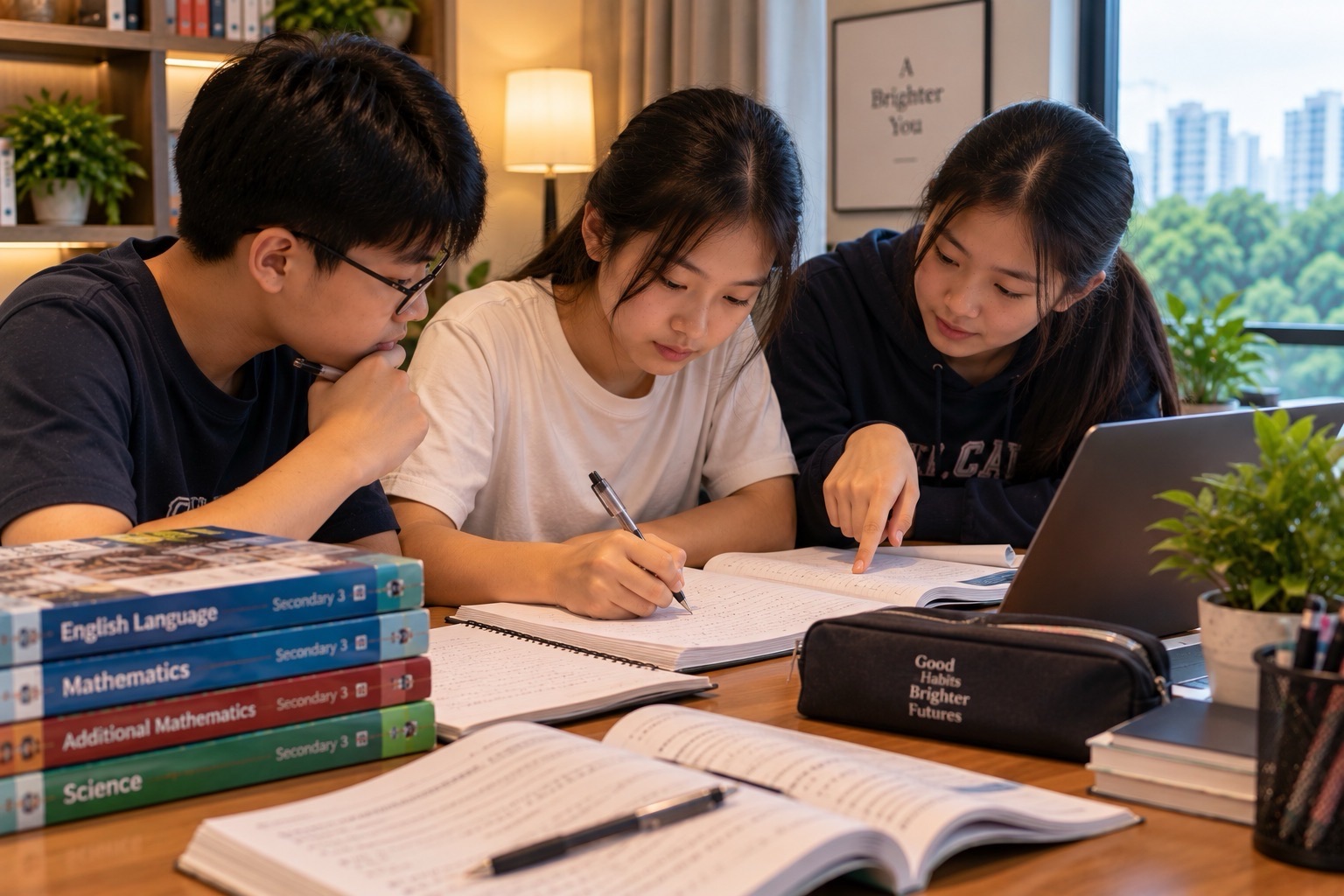
Reference Chapter 216 · A group task is educational when each child helps reason, question, explain and eventually perform independently
A class is assigned a Science presentation. One confident pupil chooses all the evidence, writes every slide and answers the teacher’s questions. Two classmates design the title page, while a quiet fourth learner struggles to understand what the investigation was about. The group finishes on time, receives praise and appears on a school website. But when asked individually why the experiment supports its conclusion, only the first pupil can explain. Four pupils sat together; only one demonstrated the intended learning.
The gold standard is a purposeful classroom collaborative-learning and fair-participation system in which teachers select a task genuinely helped by discussion, build sufficient foundational knowledge, give meaningful opportunities to every learner, monitor imbalanced participation, protect those who need access adjustments, distinguish academic understanding from social popularity and verify a fresh individual response after the shared task. It is not a requirement to place every child in a group for every lesson, nor a promise that choosing a particular number of chairs will automatically improve results.
The distinction matters for a ministry of education. Classrooms can look energetic during poster preparation while substantial misconceptions remain. Some pupils hide behind confident peers; others are forced into a leadership role every time because they are quick at writing. Effective collaborative learning requires careful curriculum design, subject explanations from first principles, authentic evidence, manageable group sizes, equitable participation and follow-up. No pupil should have to trade dignity, confidentiality or meaningful understanding for the appearance of successful teamwork.
This chapter concerns the micro-design of group work, student roles, discussion, cooperative problem-solving, group outputs and individual learning verification. It complements Chapter 67 on Social and Emotional Learning, Chapter 195 on Mathematics Manipulatives, Chapter 209 on Feedback and Chapter 180 on Classroom Furniture. Those govern the wider relationships, teaching aids, response-to-error and room arrangement.
The quick answer: how can teachers make group work effective?
- Begin with a subject concept or challenge that benefits from sharing explanations and testing evidence.
- Prepare individual knowledge and a short starting thought before the group discussion.
- Use clear roles that require thinking, not only typing, decorating or keeping time.
- Help quieter pupils, multilingual learners and those with accessibility needs to contribute meaningfully.
- Observe the group, challenge unsupported claims and intervene when one pupil controls the work.
- Finish with a short new task through which each learner independently demonstrates the intended understanding.
1. Begin with the curriculum rather than the seating plan
Moving desks into a cluster is an organisational decision, not automatically a teaching strategy. The teacher should first identify a subject relationship that pupils could understand more deeply by comparing reasons, contrasting approaches or checking evidence.
The Education Endowment Foundation’s Collaborative Learning Toolkit distinguishes purposeful cooperation from unstructured group work. A strong task requires a shared goal with an intellectual reason to work together; it is not merely individual copying carried out beside other people.
2. Distinguish the common product from the learning outcome
A finished presentation, shared poster or completed data table can be an appropriate group product. Yet the product’s quality may reveal more about one child’s typing or design skills than what others know.
Write separate success statements: what the group must produce, and what every student should be able to explain afterwards. For example, a Science group might construct one evidence table, while each pupil must independently justify a conclusion. Teachers should design both outcomes before choosing materials or allocating class time.
3. Provide sufficient knowledge before expecting collaboration
An inexperienced learner cannot reliably improve a discussion about fractions if the meaning of the denominator has never been explained. Collaboration should help pupils apply and deepen an idea, not conceal missing first principles.
Use direct modelling, appropriate worked examples, vocabulary and a quick individual check before group interaction. Students can enter the discussion with a tentative answer or question of their own. Pupils with a specific knowledge gap should receive teacher support rather than being expected to acquire everything by copying a strong peer.
4. Use group-size research carefully
Research can help teachers select manageable groups, but the age, activity and pupil needs matter. More people around a table may create more voices without creating more meaningful contribution.
EEF’s toolkit identifies groups of approximately three to five learners as promising in much collaborative-learning evidence. Its August 2026 16–19 guidance emphasises clear roles and individual understanding. These findings are not legal class-size requirements or automatic guarantees of improvements in any specific school.
5. Give each learner an intellectually meaningful role
A role such as ‘slides designer’ may be useful organisationally, but it does not by itself demonstrate that the student understands the underlying argument. Assigning one ‘smart’ child every difficult question is especially damaging.
Use roles such as evidence checker, alternative-method explainer, hypothesis challenger and synthesis presenter when they serve the task. Rotate opportunities so no pupil permanently becomes an observer or decorative assistant. Explicitly explain what thinking is expected of each role and how pupils may ask for support.
6. Teach group leadership as service
Student leaders sometimes assume they should make every decision rapidly, distribute easy tasks and speak for the entire team. A group can then be efficient at producing a display but poor at including others.
Model leadership through inviting explanations, asking neutral questions, checking understanding and treating disagreement respectfully. Teachers retain responsibility for safeguarding and assessment. Students should not be made responsible for disciplinary investigations or for obtaining private information from peers to complete a group assignment.
7. Give quieter pupils preparation time
Silence can reflect careful thought, social anxiety, emerging language skills, exclusion or simply a reserved communication style. Demanding instant public speech may reduce the pupil’s chance to contribute constructively.
Use an individual think-and-write period, pair rehearsal, visual prompt or suitable alternative before whole-group reporting. Judge the quality of a contribution, not the volume of voice. Where pupils have authorised communication adjustments, include these without forcing them to disclose personal information to classmates.
8. Prevent one person from monopolising the reasoning
A group may appear to be solving a problem when only one pupil makes intellectual decisions. Teachers can easily miss this if they inspect the final worksheet rather than the actual interaction.
Move among groups and ask different pupils why the answer works, what evidence they considered or what alternative was rejected. If students cannot answer, provide more structure or direct teaching. Do not simply award the same learning grade based on the confidence of the speaker.
9. Teach disagreement through evidence
In worthwhile mathematics, humanities and science discussions, pupils may disagree about assumptions, interpretations or methods. Without a safe routine, disagreement can become personal criticism or be avoided altogether.
Model language such as ‘Show me the step that proves it’, ‘What would change if the condition differed?’ and ‘Can both approaches be right?’ Praise evidence-based revision rather than loud certainty. A teacher should stop insults, protect vulnerable students and make clear that challenging an idea is different from attacking the person.
10. Check that all students can access the task
Group work can disadvantage a pupil who cannot see the shared screen, hear a fast discussion, reach manipulatives or understand an unexplained subject-specific word. Allocating roles after the task begins often leaves accessibility to chance.
Plan suitable seating, high-contrast text, accessible materials, alternate response methods and trained support. A pupil should contribute to the same central concept even if their physical action differs. Avoid the common mistake of assigning every child with a disability the role of watching and applauding.
11. Do not use permanent ability labels as group names
Dividing pupils into visible groups labelled weak, average and gifted can make learning differences public and shape how children treat one another. It can also cause a learner to internalise a temporary difficulty as a fixed identity.
Form groups around the task and adjust them over time, using flexible support and evidence of actual understanding. Protect confidential assessments. If mixed attainment is beneficial for a particular task, explain the academic purpose and ensure everyone has a chance to learn rather than exploit the highest-attaining pupil as unpaid staff.
12. Distinguish collaboration from peer tutoring
In cooperative work, learners may jointly investigate a question. Peer tutoring more explicitly involves one pupil supporting another’s learning according to a structured instructional plan.
Both can be valuable, but neither should transfer the teacher’s responsibility for curriculum accuracy, safeguarding or assessment. If a pupil repeatedly teaches a peer, provide guidance, supervision and a way to verify both students learn. Do not assume the tutor’s own understanding remains secure simply because they can give an answer.
13. Use mathematics groups to compare valid methods
A Mathematics group may benefit from finding two correct approaches to a linear equation and identifying the relation they share. Merely dividing ten repetitive questions among the members is not the same learning task.
For 4(x + 2) = 28, pupils could divide first, obtaining x + 2 = 7, or expand to 4x + 8 = 28; both yield x = 5. Ask each student to explain a valid step and check substitution. Then give a related problem to solve independently and test whether the reasoning transfers.
14. Use scientific work to compare evidence
A group may collect observations, graph readings and formulate a hypothesis. The educational danger is that one learner does the interpretation while others move apparatus or write headings without understanding the method.
Define what makes the evidence reliable and require each member to explain a conclusion. Apply relevant laboratory and fieldwork safety rules through trained adults. No student role should authorise unsafe chemical handling or specialist equipment use that would otherwise be prohibited.
15. Structure reading groups around textual reasoning
Students can compare interpretations of a literary scene, assess a source’s credibility or support a claim with quotations. Some pupils may read faster, but speed should not determine who is permitted to interpret.
Offer suitable excerpts, reading or listening support, a short individual initial view and shared evidence questions. Ask students to distinguish observation from inference. Finish with an independent sentence or spoken explanation showing that the learner can use relevant evidence rather than merely repeat the group’s polished claim.
16. Keep shared outputs truthful
A group report might name every pupil as a contributor while one member wrote everything. Alternatively, a member may make a strong conceptual contribution but do little typing. Both situations can be misunderstood if contribution is measured solely by visible file edits.
Use proportionate evidence of roles, discussion and learning. Explain which aspects of the output are collective and which are individual. Do not require intrusive minute-by-minute tracking of children when teacher observation and a short explanation can support a fair evaluation.
17. Handle unequal contributions fairly
A pupil might miss part of a meeting for an authorised appointment or have less home internet access. Another might repeatedly refuse agreed work. The teacher should not treat all differences as identical misconduct.
Investigate the actual circumstances and offer reasonable opportunities to contribute within the school. Evaluate learning and any legitimate behaviour concern separately. Do not automatically assign a zero to a pupil simply because another group member complained first or spoke most confidently.
18. Avoid overemphasising group competition
Some pupils enjoy points and friendly comparisons, but an intense race can encourage copying, domination and guessing. Winning a speed challenge does not guarantee that a mathematical model has been understood.
Use competition only where it supports the intended learning objective and age group. Reward clear explanation, justified strategies and fair participation. The EEF evidence highlights positive collaborative approaches while cautioning against allowing competition to displace meaningful group understanding.
19. Keep teacher monitoring active
Assigning group work is not a period in which the teacher has no instructional responsibilities. Pupils may need clarifying questions, an adjusted model, vocabulary support or intervention when discussion becomes exclusionary.
Circulate with purposeful prompts: What is your claim? How do you know? Who can explain the alternative? Which pupil has not yet had an appropriate chance? Note broad patterns rather than creating public individual labels, and modify instruction when common misunderstandings appear.
20. Use physical resources to make shared ideas visible
Counters, geometry models and diagrams can allow pupils to point to a common relationship instead of arguing only verbally. But equipment without explanation can become a distraction.
Select suitable age-safe resources and prepare complete sets under Chapter 195. Define what each item represents and how the model connects to words or symbols. Avoid making the pupil with the best dexterity automatically responsible for all physical manipulation.
21. Protect safe classroom movement
Group layouts can create blocked exits, awkward movement between tables or excessive noise. A group assignment may also require sharing a single workstation whose screen cannot be seen from all seats.
Check appropriate furniture, access routes and classroom norms before the task. Coordinate adjustments with legitimate accessibility and fire-safety rules. If a student cannot reach a table or communicate comfortably, correct the arrangement rather than treating the learner as less suited to cooperative education.
22. Use digital documents as tools, not evidence of thought
Collaborative slides and shared online documents simplify collection, but the edit history alone does not explain whether each pupil understood the argument. An efficient typist may perform nearly all edits despite meaningful oral contributions from others.
Use authorised school accounts, suitable sharing permissions and concise teacher checks. Avoid unapproved personal services that expose identifiable student work. An accessible paper or oral alternative should remain available when technology is unreliable or cannot serve a student’s approved learning needs.
23. Build a subject-specific reflection habit
At the end of discussion, pupils can evaluate which explanation persuaded them, where their initial thinking changed and which method they can now use independently.
Keep reflection specific to the learning: ‘I changed my answer because substituting x = 5 satisfies both sides’ is stronger than ‘we cooperated well’. A few lines or a short verbal response are often sufficient. The teacher can use recurring reflection difficulties to plan future modelling.
24. Separate enjoyment from achievement
Students may enjoy group work even when the content is simple, just as a challenging and valuable task may initially feel uncomfortable. Enjoyment is relevant to engagement but not identical to measured learning.
Use student experience alongside quality of reasoning, independent response, inclusion and curriculum progression. Avoid inventing causal improvements from one class satisfaction survey. The ministry should evaluate whether cooperative tasks improve real opportunity for understanding rather than simply add activity to a school’s display of innovation.
25. Use independent work to close the learning loop
The group may reach the right answer through discussion, but each pupil needs a reasonable chance to show the knowledge without that group. Otherwise a weak conception can remain hidden beneath the shared result.
Provide one near-transfer example, short individual explanation or retrieval question. Do not turn every task into a formal exam; choose an evidence check proportional to the topic. When multiple students struggle, reteach the unstable foundation and revisit the skill later instead of merely repeating the group activity.
26. Worked case: algebra methods and shared reasoning
A Secondary 1 group studies 5(2x − 1) = 35. One child expands to 10x − 5 = 35, another divides by five first to obtain 2x − 1 = 7. They compare how the two approaches preserve equality, and the teacher asks each pupil to justify a step rather than allowing a single spokesperson.
Both methods yield x = 4. A classmate initially writes x = 3 after forgetting to add one; the group uses substitution to show why that cannot satisfy the equation. Finally, every pupil individually solves 4(3y + 2) = 32 and explains y = 2. The shared work succeeds because the new result is grounded in independently demonstrated reasoning.
27. Failure modes and how to repair them
Pupils sit together but work alone: give a purposeful shared problem. One voice dominates: design meaningful roles and teacher prompts. Roles are only decorative: connect each to subject reasoning. Quieter or disabled learners are excluded: prepare accessible entry points.
Students share a high score but not understanding: use individual checks. Competition becomes the goal: return to evidence and accuracy. Teachers stop teaching during group activity: monitor and intervene. Foundational knowledge is missing: rebuild before expecting peer explanation.
28. Classroom collaboration assurance matrix
| Component | Essential action | Evidence of success |
|---|---|---|
| Subject objective | Select a genuinely collaborative reasoning task | Shared evidence and defensible explanation |
| Entry knowledge | Model and check prerequisite ideas | Each pupil begins with a relevant thought |
| Roles and membership | Assign and rotate meaningful responsibilities | Broad, safe intellectual participation |
| Teacher intervention | Challenge unsupported claims and exclusion | Misconceptions repaired during discussion |
| Shared product | Make the joint conclusion explicit | Correct group outcome with transparent reasoning |
| Individual follow-up | Ask for independent near-transfer | Learner can explain the next related problem |
29. Implementation over 180 days
Days 1–30: identify group projects that conceal unequal learning. Days 31–60: provide teachers a concise purpose, role and individual-check template. Days 61–90: model structured discussions across Mathematics, Science and reading, ensuring everyone can enter the task.
Days 91–120: observe group composition, safeguards and accessibility, then adjust teaching. Days 121–150: compare group outputs with pupils’ independent understanding, including longer-term recall. Days 151–180: retire cosmetic tasks, improve teacher development and preserve evidence of meaningful subject progress and equitable participation.
30. Gold-standard acceptance tests
- Can the teacher justify the use of collaboration for this particular idea?
- Do pupils receive adequate first-principles instruction before discussion?
- Are roles meaningful, safe and not permanent ability labels?
- Do all students have supported opportunities to reason and contribute?
- Does the teacher intervene to address monopolisation or misconceptions?
- Is any group competition secondary to the learning objective?
- Can each student demonstrate relevant independent understanding afterwards?
- Does evaluation consider fairness, accessibility and sustainable teacher workload?
31. Frequently asked questions
Do groups automatically improve learning?
No. Effective collaborative learning depends on planning, suitable prior knowledge, fair participation, teacher support and a meaningful learning task.
What size should groups be?
EEF evidence identifies approximately three to five learners as promising for many cooperative approaches, but this is not a universal rule for every task.
Should one strong pupil always be the leader?
Not automatically. Roles should support subject learning and give others opportunities to lead and explain.
Can quiet pupils still contribute?
Yes. Preparation time, appropriate questions, written ideas and suitable accessible formats can support meaningful contributions.
Does a group grade prove individual mastery?
No. An appropriately designed independent question or explanation is needed when the claim concerns each pupil’s understanding.
Is competitive teamwork necessarily better?
No. Competition may be useful in some circumstances but can distract from reasoning and inclusive learning when overemphasised.
32. Official and research references
Research sources: EEF Teaching and Learning Toolkit, Collaborative Learning Approaches; EEF, Developing Independent Learners: Collaborative Learning (24 August 2026); EEF, Metacognition and Self-Regulation (2026); and EEF, Teacher Feedback to Improve Pupil Learning. These are pedagogical evidence sources, not legal classroom size or assessment mandates.
This is Chapter 216 of The Gold Standard of a Ministry of Education Reference Manual. Connected: Inclusive Classroom Seating, Mathematics Manipulatives, Marked-Work Feedback and New Student Orientation.
Final principle
The gold standard of group work is not how many pupils fit around a desk or how polished the shared presentation appears. It is the child who has practised thinking with others, contributed evidence, listened and questioned responsibly, and can now apply the subject understanding alone. Cooperative learning should create capable minds, not just busy tables.