
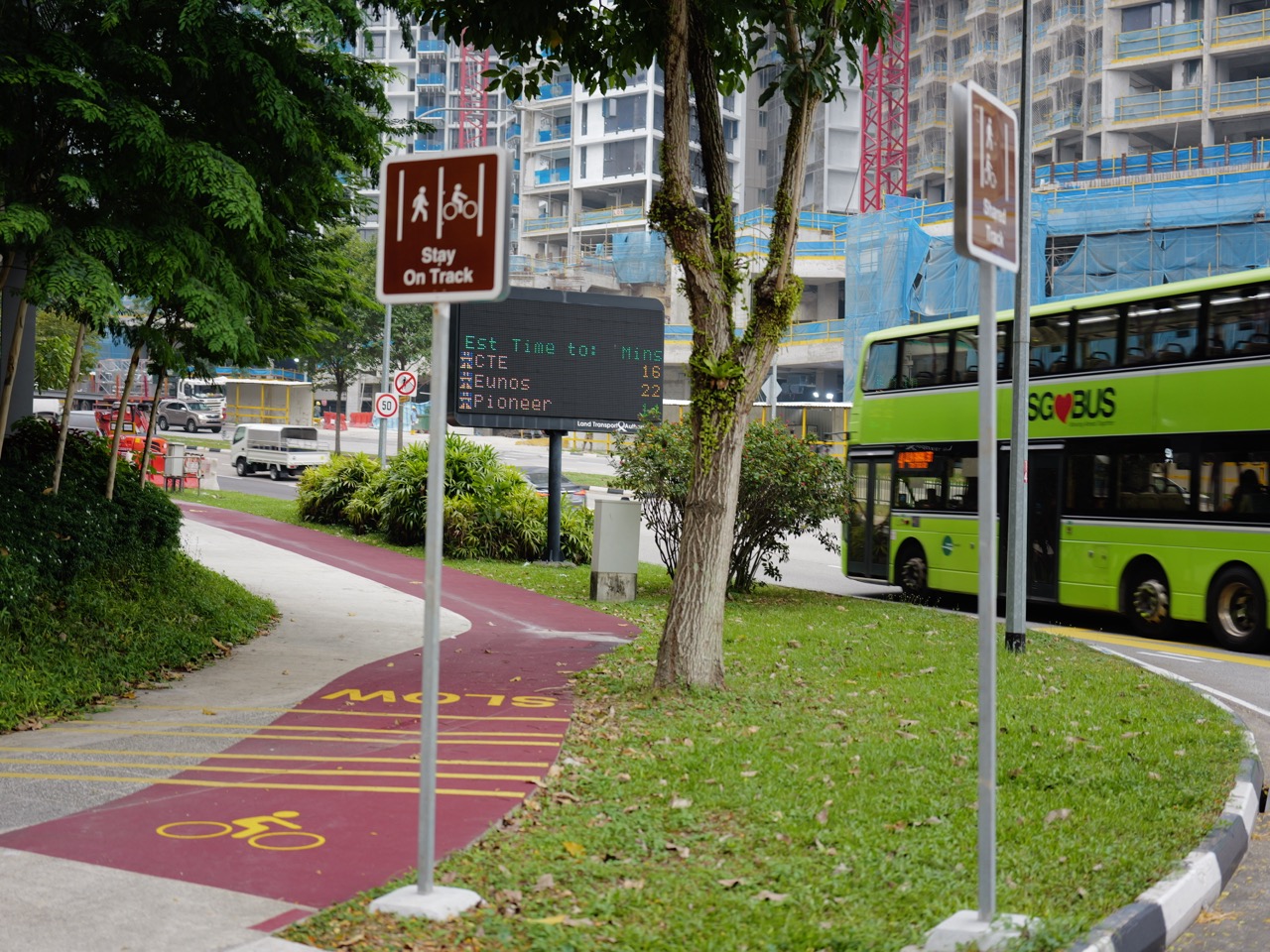
A Primary 6 pupil wants to cycle to school. The family has checked the bicycle and agrees that the journey may help the child become more independent. The pupil’s friend says bicycles can be parked inside the campus, but the family’s school handbook seems to say permission is required. During morning arrival, a busy drop-off queue uses the same gate approach, and the nearest sheltered area is not necessarily a designated bicycle bay.
A safe school cycling arrangement has to work across the entire journey. It involves family judgement, current transport and road rules, school-specific permission, bicycle condition, the chosen route, school-zone behaviour, gates, parking facilities and what happens when a pupil changes travel plans. An attractive sustainability slogan does not authorise travel in breach of a school’s safety policy.
Quick answer: check the exact school’s current policy first; distinguish ordinary bicycles from other regulated devices; establish the necessary parent approval and school briefing; assess the child’s age, skill and actual route; inspect the bicycle’s condition; teach lawful and considerate path and road sharing; identify authorised dismount and entry points; verify a suitable parking space; and coordinate unusual arrivals or after-school release with the school’s ordinary attendance and family procedures.
This independent eduKateSG Ministry of Education V2.0 reference is a school operations model, not a statement that every Singapore school permits cycling. Riverside Primary published 2026 cycling advice for students whose parents had consented, and Pioneer Primary describes prior school permission and safety briefing. Beatty Secondary and Nan Hua Primary describe authorised school bicycle parking, while Anglo-Chinese School (Independent) does not allow students to cycle to or park bicycles at school under its current published policy. School permission therefore cannot be inferred from another campus.
The student-cycling assurance chain
- Exact school policy confirmed before family route planning
- Appropriate consent, school approval, pupil readiness and equipment checks
- Lawful path and road sharing with a current school-zone awareness
- Authorised gate, dismount process and safe bicycle parking
- Normal school attendance and after-school release controls, with contingency plans
1. Check the precise school’s policy before any route advice
Some schools permit cycling subject to consent, designated entry and parking arrangements. Others do not allow student bicycles on campus or as school transport.
Parents should use the current school’s authorised instructions. General active-mobility guidance does not override a school’s own legitimate safety and access controls.
2. Separate walking, cycling and powered devices
A conventional bicycle is not the same as a personal mobility device or a power-assisted bicycle under Singapore’s regulations. Different categories can be subject to different rules and school policies.
Do not assume that permission to park an ordinary bicycle also authorises e-scooters, power-assisted bicycles or other devices. Check current Land Transport Authority rules and the school’s specific prohibitions.
3. Confirm consent and school approval distinctly
A parent may consider cycling suitable, while the school may require a separate application, acknowledgement or briefing before its premises can be used.
Pioneer Primary’s guidance describes prior school approval and an advisory form, while Riverside Primary provides advice for families who have already given consent. Neither one creates a universal permission at other schools.
4. Review a child’s real independence and judgement
A pupil’s ability to pedal is only one requirement. Their capacity to recognise hazards, follow route rules, manage distractions and ask for help matters as well.
Families and schools should not set a blanket assumption that all children of a particular age are ready to ride independently. Apply the relevant school’s guidance and age-appropriate adult judgement.
5. Select a route using current conditions
A chosen journey may include local roads, shared paths, junctions or school approaches. Families should examine the actual lawful route and the child’s ability to navigate it under expected conditions.
A route that appears short on a map may involve complicated crossings or congested areas. Do not select a path solely from straight-line distance or a generic travel-time estimate.
6. Distinguish path-sharing from road travel
Current active-mobility rules and public safety guidance address how users should share spaces with pedestrians and other road users. School teaching must accurately reflect the applicable legal category and place.
LTA emphasises safe, responsible walking, cycling and scooting, alongside giving appropriate consideration to others. Follow posted signs and current regulations rather than relying on outdated internet diagrams.
7. Respect school-zone speed and protection measures
Singapore’s School Zones use marked areas and reduced traffic speeds to improve student safety. LTA explains that from 1 January 2026, enhanced-school-zone lower speed limits apply throughout the day.
That change concerns designated Enhanced School Zones, not an invented single speed limit for every school road. Obey the actual posted limits and respect measures such as marked crossings and traffic-calming features.
8. Keep vehicle drop-off and cyclist movement coordinated
Morning arrivals may mix cars, school buses, cyclists and walking pupils near a gate. Even if each individual follows a plausible routine, the combined flow can create conflict.
School traffic management should identify the intended bicycle approach, drop-off arrangements and pedestrian priority without improvising new road restrictions beyond the school’s authority.
9. Use an authorised school gate and dismount point
Where student cycling is permitted, the school may require pupils to get off and push bicycles before entering the campus. Riverside Primary’s published advice identifies the gates and parking process for that school.
Do not copy those gate numbers to another institution. Each school’s current entry instructions and campus layout determine where students should dismount and proceed.
10. Make pedestrian safety visible at the gate
A student riding through a crowded school entrance can endanger walkers and other pupils. Rules should clearly separate riding from pushing where required.
Security and operations staff must know the approved arrangement. A student should not discover the correct method only after entering a congested arrival area.
11. Inspect the bicycle before daily use
Relevant checks include brakes, tyres, chain, bell and lighting where applicable, as well as whether the bicycle is mechanically sound for the actual conditions.
Riverside Primary’s 2026 advice discusses those features. Parents should arrange competent maintenance for faults and should not encourage a child to ride equipment that appears unsafe.
12. Teach helmets and protective preparation appropriately
Helmet rules and protective expectations depend on the activity, location and applicable current rules. Schools may also impose their own safety requirements.
Encourage competent fitting and age-appropriate protective practice without claiming that one equipment item eliminates every traffic risk. Suitable footwear and secured loose clothing also matter.
13. Keep attention on the route
Mobile-phone use, earphones or distractions can impair attention to pedestrians, signs and traffic. School guidance from Riverside Primary explicitly warns against divided attention.
Students should understand why a short message can wait until they are safely stopped. Real road awareness cannot be replaced by a reminder poster after an incident.
14. Teach consideration for pedestrians
Shared paths include walkers of different ages and mobility needs. Pupils should learn to slow appropriately, give way where required and avoid intimidating others.
Cycling to school is not a race for the fastest arrival. Gracious sharing helps protect younger pupils, residents and vulnerable path users.
15. Give crossing decisions priority over speed
Junctions and pedestrian crossings require compliance with applicable signals, markings and rules. Local school guidance may include dismounting where specified.
Avoid teaching a one-line shortcut that disregards different crossing types. Pupils need supervised education using current official guidance and the actual route.
16. Account for buses, heavy vehicles and blind spots
A child’s route may pass delivery vehicles, bus stops and school traffic queues. The risks differ from riding on a quiet recreational path.
Help pupils recognise that a large vehicle’s presence changes the safety environment. Do not encourage close passing or risky manoeuvres to save a few minutes.
17. Rehearse the approved route with adults where appropriate
Parents may choose age-appropriate accompanied practice to check landmarks, busy periods, entry points and the child’s understanding of lawful choices.
A successful supervised trip once is not proof that the route remains safe in every weather or traffic condition. Review changing risks and respond conservatively.
18. Plan for rain, lightning and reduced visibility
Singapore weather can make paths slippery, obscure sightlines and create dangerous conditions. An approved alternative journey should be available when cycling is unsuitable.
School-wide outdoor activity guidance is relevant, but ordinary travel decisions also require family judgement and current public weather information. A planned cycling day is not a promise to ride regardless of conditions.
19. Treat breakdown as an exception needing a plan
A flat tyre or mechanical issue may prevent a pupil completing the route. Students should know how to contact the appropriate responsible adult without taking risks to repair the bicycle beside traffic.
Do not instruct children to dismantle a damaged brake or move into traffic to retrieve an item. Safety and appropriate adult assistance take precedence over on-time arrival.
20. Account for alternative arrival modes
A pupil may usually cycle but arrive by public transport or family car after equipment failure, illness or poor weather. The school’s normal attendance rules still apply.
A cycle-permission list does not automatically replace the class attendance register. Notify the school of relevant changes through its authorised channels when required.
21. Make bicycle parking an actual service
A suitable school bicycle bay needs a clear permitted location, access arrangement and capacity. The school should communicate where bicycles may be left and which areas must remain unobstructed.
A covered corner is not automatically designated parking. Nan Hua Primary’s 2026 plan identifies particular bicycle lots, while Beatty Secondary specifies a bicycle bay under its current rules.
22. Avoid blocking fire and pedestrian routes
Parking bicycles along escape routes, ramps or corridors can create hazards and reduce access for pupils with mobility needs.
Facilities staff should keep authorised spaces distinct from emergency access routes. A sustainability programme should not produce inaccessible walkways or unsafe congestion.
23. Clarify locks and property responsibility
Families should know any school policy on securing bicycles, allowed parking hours and what to do about suspected loss or damage.
Do not promise that approval to park gives the school unlimited responsibility for theft or repairs. Describe the actual current rules and a legitimate incident-reporting route.
24. Distinguish bicycle parking counts from student counts
An occupied bicycle slot shows that a bicycle is parked, not necessarily which pupil arrived or whether the bicycle is authorised.
Attendance and student safety require their own records. Operations teams should not infer a class register from a rough count of parked cycles.
25. Worked capacity case: slots versus demand
Imagine a fictional school bay with 24 designated slots. Eighteen authorised bicycles arrive one morning, giving 18 ÷ 24 × 100 = 75% slot use.
That percentage concerns bay occupancy at that time, not cycling participation in the whole school. A full bay on another day may require a safer capacity decision rather than overflow parking in corridors.
26. Worked flow case: compare school gate arrival rates
A fictional gate observes 36 authorised bicycle arrivals over 15 minutes on Monday and 24 over 10 minutes on Tuesday. Both average 2.4 arrivals per minute.
Equal average rates do not prove identical crowding or safety. The pupils may arrive in different bursts, and pedestrians or cars may use the approach differently. Observations need context.
27. Worked distance case: route length is not trip safety
A map shows one fictional route of 1.1 km and another of 1.4 km. The shorter path crosses a more complex junction, while the longer one uses a different permitted route.
It would be invalid to declare the 1.1 km option safer merely because its distance is lower. Students can learn how geographical and mathematical evidence supports decisions without replacing competent traffic-safety review.
28. Plan supervised arrival during nonstandard sessions
CCAs, remedial lessons, school events and night study may finish after the usual bicycle-bay or gate arrangements. A student who cycles for morning lessons may face different dismissal conditions.
Before approving after-school cycling, check current gate opening, supervision, lighting, permitted parking and the student’s authorised homeward plan. Do not assume an early-morning gate remains available in the evening.
29. Coordinate after-school release separately
A pupil leaving a CCA may be expected at an authorised pick-up point or subject to another student-release arrangement.
Reconcile participation and departure through current school procedures. A bicycle parked on campus does not prove that the pupil has left safely or is travelling alone with permission.
30. Communicate with school bus and parent-dropoff teams
Mixed modes can compete for entrance space. A traffic-management plan should clarify where cyclists, buses, parents’ cars and pedestrians belong under the institution’s actual layout.
Do not instruct families to stop illegally or create an unofficial unloading spot just to reduce bicycle-bay congestion. Road controls belong to competent authorities.
31. Treat cycling education as part of civic responsibility
Pupils can learn respect for pedestrians, lawful use of shared spaces, equipment care and environmental awareness.
A school may offer public-education materials without running its own cycling-permission scheme. Education about safe cycling is not equivalent to authorising all students to cycle there.
32. Do not promise universal health or environmental effects
Active travel can offer opportunities for movement and reduce some vehicle trips, but its effect depends on what transport mode it replaces, trip conditions and individual circumstances.
Avoid claiming that one pupil’s cycling necessarily produces a precise carbon saving or health outcome. Use defensible assumptions if a class studies the environmental effect.
33. Coordinate policy changes clearly
Schools may revise permissions, gates, parking availability or traffic arrangements during construction and redevelopment.
Publish the effective date, affected students, new decision route and safe alternative arrangements. An outdated student handbook screenshot should not override a current authorised change.
34. Include disability and accessibility considerations
Paths, ramps, parking arrangements and mobility needs vary. The school must avoid treating ordinary bicycles and disability-related mobility aids as identical categories.
Apply the relevant legal, accessibility and school policies to each device and student. Student safety and dignity should guide individual arrangements.
35. Protect families from avoidable confusion
A parent whose child transfers schools may rely on the cycling rule used previously. Clarify that permissions belong to the actual school, not to a general Singapore standard.
Provide the correct current contact for questions and state exactly which forms, briefings and acknowledgement are needed if cycling is allowed.
36. Make school security and facilities staff part of planning
Gate guards, school operations staff and the student-development team see different aspects of arrival and parking. Their information helps identify bottlenecks or unsafe behaviour.
Do not adopt a cycling programme purely through a student council campaign without checking facilities, security and competent traffic requirements.
37. Use incident records for repair rather than blame
Near misses, blocked routes, bicycle damage or inconsistent gate instructions can signal a process problem. Record relevant facts, responsible actions and outcomes.
Avoid ranking children by reported mistakes in a way that discourages honesty. A useful review fixes the actual source of hazard and verifies the change.
38. Distinguish current school examples honestly
Riverside Primary provides consent-based guidance and designated bay procedures. Pioneer Primary requires prior approval and a safety briefing. Nan Hua Primary’s 2026 traffic plan identifies specific cycling requirements.
By contrast, Anglo-Chinese School (Independent) currently prohibits students from cycling to or parking bicycles at school. Those differences are why a national operational model must never impersonate the policy of a particular campus.
39. Check current law separately from school permission
LTA’s active-mobility resources and official School Zone information provide the wider public framework for safe travel. School-specific rules can add or limit campus access.
Laws, device classes and published school procedures can change. Refer families to present authoritative sources rather than promising that every older safety poster remains correct.
40. Audit one pupil journey end to end
A reviewer can trace the school’s actual permission status, family acknowledgement, student preparation, lawful route choice, permitted entry, parking, attendance and eventual dismissal.
If a school knows that pupils cycle but cannot explain where bicycles belong or how the gate accommodates pedestrians, repair the operational gap. Do not rely on a general road-safety assembly to substitute for practical controls.
41. Build independence without shifting adult duties
Older pupils may develop transport responsibility through appropriate practice and clear routines, but adults and school operators remain accountable for their own decisions.
Good independence is not abandonment. It grows through suitable judgement, lawful behaviour and reliable support when a plan changes.
42. Keep learning and attendance separate
Pupils can use cycling-related data to practise rates, percentages, mapping and environmental enquiry. Those classroom exercises should be clearly distinguished from real transport permissions and safety decisions.
A successful lesson about bicycle counts does not authorise a pupil to cycle to school. Education can improve understanding while respecting competent institutional controls.
A practical school cycling-control table
| Stage | Key decision | Responsible record |
|---|---|---|
| Permission | May this particular pupil cycle to this school? | Current policy and required acknowledgement |
| Journey | Are route and pupil readiness suitable? | Parent decision and applicable safety guidance |
| Arrival | Is the gate and dismount procedure followed? | School instructions and relevant incident reporting |
| Parking | Is there an authorised safe space? | Facilities controls and bay rules |
| Dismissal | Does travel after school follow the current arrangement? | Relevant school attendance and release process |
Parent FAQ
Can every Singapore student cycle to school?
No. School policies differ. Some allow cycling with consent and conditions; others prohibit student cycling to school.
Do parents’ permission alone guarantee a school parking space?
Not necessarily. The school’s actual approval, capacity and parking rules still apply.
Must pupils get off their bikes at the school gate?
Follow the particular school’s current dismount and entry instructions; these vary by campus.
Do school cycling rules apply equally to PMDs and power-assisted bicycles?
No. Device categories and regulations can differ, and schools may specifically prohibit certain vehicles.
Are Enhanced School Zone speed limits active only during arrival and dismissal?
LTA states that from 1 January 2026, lower speed limits in Enhanced School Zones apply throughout the day. Follow the actual posted signs.
Can a student park along a corridor when the bike bay is full?
Not without authorisation. Parking must respect current campus rules, pedestrian accessibility and safety.
What should families do before approving cycling?
Check the specific school policy, current route conditions, student readiness, bicycle condition and authorised arrival or dismissal arrangements.
The institutional standard
Cycling to school can be a positive independent-travel choice when it is suitable, lawful and specifically allowed. It must not be presented as universally authorised, nor should an environmental campaign override pedestrian safety or real school capacity.
Ministry of Education V2.0 assures the interface between family, public mobility rules and school operations: clear permissions, age-appropriate travel preparation, safe arrivals, practical parking and dependable student handoffs.
Sources and connected reading
MOE V2.0 — Main Reference Library
Reference 131 — School Bus Routes and Student Handoffs
Reference 141 — Late Arrival and Classroom Re-entry
Reference 160 — Weather Safety and Dismissal
Riverside Primary — 2026 Cycling to School Safety Advice
Pioneer Primary — School Cycling Approval and Briefing
Nan Hua Primary — 2026 Traffic Management Plan
Beatty Secondary — Bicycle Consent and Parking Rules
Anglo-Chinese School Independent — School Cycling Prohibition
Junyuan Primary — Gate and Bicycle Policy
Land Transport Authority — Active Mobility Public Education
Land Transport Authority — School Zones and 2026 Safety Measures
Editorial scope: independent school cycling-policy and safe-arrival operating model, not individual route directions or permission for a particular student. Current public law, transport category, school prohibitions, adult judgement, equipment condition, route risk, parking availability and actual authorised student-release rules govern each situation. All illustrative quantities are hypothetical.