
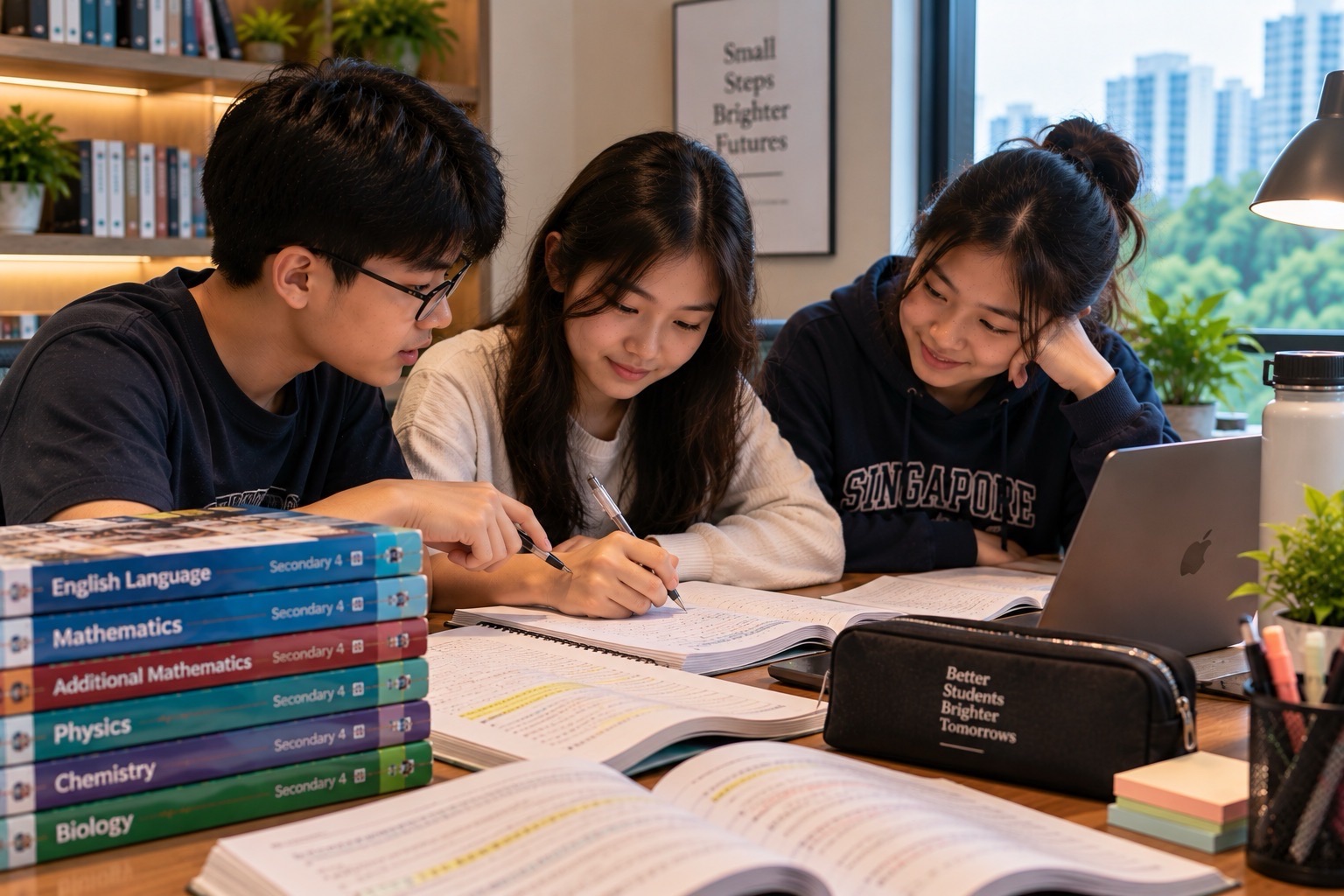
The revised 2027 G3 Bahasa Indonesia as a Third Language K367 Listening paper is not a generic multiple-choice test. It consists of 37 numbered questions worth 40 raw marks over approximately 50 minutes. The six sections have different response styles. Most items need one answer, but Questions 35–37 each require TWO true options from five. The paper contributes 25% of the SEC subject grade.
This independent eduKateSG Ministry of Education V3.0 Reference 414 explains the K367 Paper 1 task sequence and practical ways to hear a changing schedule, match people to their actions and check competing propositions. K367 was formerly 1136 and has its first examination year under this revised scheme in 2027. Reading, Speaking and Writing each account for another 25% of the grade, and dictionaries are prohibited in every component.
Every recording summary and multiple-choice exercise here is original teaching material, not an official examination text or a prediction. The 2027 SEAB specimen provides answer-sheet directions, including a six-minute transfer period, and the actual examination instructions control test-day procedures.
Six official task blocks and their marks
| Question range | 2027 listening format | Marks |
| 1–8 | Eight very short two- or three-sentence recordings; four picture options each | 8 |
| 9–14 | Factual monologue/dialogue of approximately 170–180 words; six four-picture MCQs | 6 |
| 15–19 | Informal conversation of approximately 200–220 words; five matching items | 5 |
| 20–28 | Dialogues/interviews of approximately 290–330 words or two related shorter texts; nine three-choice MCQs | 9 |
| 29–34 | Longer dialogue of approximately 350–380 words; six four-choice MCQs | 6 |
| 35–37 | Dialogue of approximately 300–330 words; three five-option questions, two correct choices each | 6 |
| Total | 37 questions, all spoken texts twice, approximately 50 minutes | 40 raw marks; weighted 25% |
The last three two-answer questions are worth two marks apiece. In the specimen instructions, candidates shade one letter for Questions 1–34 and two for Questions 35–37. This explains why 37 questions do not mean 37 marks. A student who understands the source but fills only one bubble in the final block has not followed the intended response format.
Eight original Indonesian sentences that change an answer
| Indonesian sentence | Plain-English meaning | What matters |
| Acara dipindahkan dari hari Jumat ke hari Sabtu. | The event moved from Friday to Saturday. | Original and final plan differ. |
| Hanya peserta yang sudah mendaftar boleh masuk. | Only registered participants can enter. | Admission is restricted. |
| Kereta akan berangkat pukul sepuluh pagi. | The train departs at ten in the morning. | Time includes daypart. |
| Sinta suka bersepeda, sedangkan Budi suka menggambar. | Sinta likes cycling while Budi likes drawing. | Speakers need distinct mappings. |
| Perpustakaan belum buka. | The library has not opened yet. | Not yet is a specific event status. |
| Menurut petugas, kegiatan itu mungkin dimulai minggu depan. | According to staff, the activity may start next week. | The claim is tentative. |
| Mereka mengumpulkan tujuh puluh buku. | They collected seventy books. | Books are not attendees. |
| Pertemuan berlangsung di aula, bukan di kelas. | The meeting is in the hall, not the classroom. | Negation distinguishes venues. |
A five-option practice case: TWO statements are true
Imagine this fictional recording summary. A school reading event was originally proposed for Friday in the hall. After a room conflict, the organiser confirms Saturday at ten in the library. Only registered pupils may attend. The organisers have prepared seventy books, but do not know how many individual visitors will come. This is an original classroom example, not an audio file from SEAB.
| Option | Statement | Supported |
| A | The current event is on Saturday. | Yes |
| B | Every pupil may attend without registration. | No |
| C | The confirmed venue is the library. | Yes |
| D | Seventy people registered. | No |
| E | Friday in the hall remains the confirmed plan. | No |
A and C are supported by the source. B contradicts only registered pupils; D changes books prepared into registered people; E uses an old arrangement rather than the confirmed one. The learner should be able to explain each rejected statement, then analyse a revised example in which the event moves again. This trains the complete proposition, not a lucky choice between familiar words.
Thirty focused listening skills and their root-cause repairs
1. Verify the newly revised syllabus
K367 is G3 Bahasa Indonesia as a Third Language, first examined in 2027. Its earlier subject code was 1136 and its paper structure is different from the previous syllabus.
A frequent wrong move is: The pupil practices a 2026 Writing Paper 1 when the new Paper 1 is Listening. A tutor should identify whether this is an error in hearing, chronology, speaker attribution, numerical scope or response format. More vocabulary alone may not fix a source relation that the pupil already heard correctly but misunderstood.
Repair method: Check K367 and 2027 before selecting a practice set. Test an unfamiliar recording afterwards. The student should identify which source evidence has changed and select a new answer without yesterday’s model visible.
2. Distinguish it from other Third Languages
K367 Bahasa Indonesia is not Arabic K366 or Malay Special Programme K365. The revised K367 structure weights Listening, Reading, Speaking and Writing equally.
A frequent wrong move is: The student learns the K365 20/30/50 scheme as though it applies to Indonesian. A tutor should identify whether this is an error in hearing, chronology, speaker attribution, numerical scope or response format. More vocabulary alone may not fix a source relation that the pupil already heard correctly but misunderstood.
Repair method: Use the K367 25/25/25/25 component table. Test an unfamiliar recording afterwards. The student should identify which source evidence has changed and select a new answer without yesterday’s model visible.
3. Know listening duration and marks
Paper 1 Listening lasts approximately 50 minutes and carries 40 raw marks weighted to 25%. There are 37 numbered questions.
A frequent wrong move is: The candidate assumes 37 questions always means 37 marks. A tutor should identify whether this is an error in hearing, chronology, speaker attribution, numerical scope or response format. More vocabulary alone may not fix a source relation that the pupil already heard correctly but misunderstood.
Repair method: Recognise that the last three items require two true options each. Test an unfamiliar recording afterwards. The student should identify which source evidence has changed and select a new answer without yesterday’s model visible.
4. Know the two-hearing rule
K367 recorded texts are heard twice. The first hearing should establish who and what; the second checks a specific ambiguity.
A frequent wrong move is: A learner depends on unlimited replay in a practice app. A tutor should identify whether this is an error in hearing, chronology, speaker attribution, numerical scope or response format. More vocabulary alone may not fix a source relation that the pupil already heard correctly but misunderstood.
Repair method: Use two-hearing rehearsal, then explain errors after the recording. Test an unfamiliar recording afterwards. The student should identify which source evidence has changed and select a new answer without yesterday’s model visible.
5. Understand the official transfer period
The 2027 SEAB listening specimen gives six minutes to transfer responses to a separate answer sheet at the end.
A frequent wrong move is: The learner knows the right answers but does not finish recording them. A tutor should identify whether this is an error in hearing, chronology, speaker attribution, numerical scope or response format. More vocabulary alone may not fix a source relation that the pupil already heard correctly but misunderstood.
Repair method: Practise answer transfer and check the official test-day instructions. Test an unfamiliar recording afterwards. The student should identify which source evidence has changed and select a new answer without yesterday’s model visible.
6. Q1–8 short pictures
Eight short recordings of two or three sentences each lead to picture MCQs with four options.
A frequent wrong move is: A picture shares the correct noun but shows the wrong action. A tutor should identify whether this is an error in hearing, chronology, speaker attribution, numerical scope or response format. More vocabulary alone may not fix a source relation that the pupil already heard correctly but misunderstood.
Repair method: Identify the entire event or instruction, not one word. Test an unfamiliar recording afterwards. The student should identify which source evidence has changed and select a new answer without yesterday’s model visible.
7. Q9–14 medium factual audio
A roughly 170–180-word monologue or dialogue supports six picture-option questions.
A frequent wrong move is: A candidate forgets that multiple questions refer to one audio context. A tutor should identify whether this is an error in hearing, chronology, speaker attribution, numerical scope or response format. More vocabulary alone may not fix a source relation that the pupil already heard correctly but misunderstood.
Repair method: Keep brief source notes on people, location, event and important numbers. Test an unfamiliar recording afterwards. The student should identify which source evidence has changed and select a new answer without yesterday’s model visible.
8. Q15–19 matching
An informal conversation of about 200–220 words requires matching five people, places, items or activities to statements.
A frequent wrong move is: A preference is assigned to the wrong person because the speaker asks about it. A tutor should identify whether this is an error in hearing, chronology, speaker attribution, numerical scope or response format. More vocabulary alone may not fix a source relation that the pupil already heard correctly but misunderstood.
Repair method: Map the final statement to the correct named speaker. Test an unfamiliar recording afterwards. The student should identify which source evidence has changed and select a new answer without yesterday’s model visible.
9. Q20–28 dialogue choices
A roughly 290–330-word dialogue or two shorter related dialogues leads to nine three-option MCQs.
A frequent wrong move is: The pupil chooses an early suggestion despite a later correction. A tutor should identify whether this is an error in hearing, chronology, speaker attribution, numerical scope or response format. More vocabulary alone may not fix a source relation that the pupil already heard correctly but misunderstood.
Repair method: Identify the initial proposal and final decision separately. Test an unfamiliar recording afterwards. The student should identify which source evidence has changed and select a new answer without yesterday’s model visible.
10. Q29–34 longer dialogue
An approximately 350–380-word conversation supports six four-option questions.
A frequent wrong move is: The candidate remembers the main topic but misses a late important qualification. A tutor should identify whether this is an error in hearing, chronology, speaker attribution, numerical scope or response format. More vocabulary alone may not fix a source relation that the pupil already heard correctly but misunderstood.
Repair method: Follow speaker viewpoints and subsequent changes throughout. Test an unfamiliar recording afterwards. The student should identify which source evidence has changed and select a new answer without yesterday’s model visible.
11. Q35–37 select two true statements
Each of the final three questions has five options and requires selecting two correct answers. Three questions therefore contribute six raw marks.
A frequent wrong move is: A student selects only one answer because earlier MCQs required one. A tutor should identify whether this is an error in hearing, chronology, speaker attribution, numerical scope or response format. More vocabulary alone may not fix a source relation that the pupil already heard correctly but misunderstood.
Repair method: Check two complete source-supported options for each final question. Test an unfamiliar recording afterwards. The student should identify which source evidence has changed and select a new answer without yesterday’s model visible.
12. Do not choose two plausible options
The final test asks which TWO statements are true, not which sound most reasonable in everyday life.
A frequent wrong move is: A candidate selects one factual statement and one unsourced assumption. A tutor should identify whether this is an error in hearing, chronology, speaker attribution, numerical scope or response format. More vocabulary alone may not fix a source relation that the pupil already heard correctly but misunderstood.
Repair method: Find evidence for both selected answers and challenge the three distractors. Test an unfamiliar recording afterwards. The student should identify which source evidence has changed and select a new answer without yesterday’s model visible.
13. Use exact picture-action matching
Images may differ by buying versus borrowing, arrival versus departure or right versus left.
A frequent wrong move is: A student matches the object but not the spoken action. A tutor should identify whether this is an error in hearing, chronology, speaker attribution, numerical scope or response format. More vocabulary alone may not fix a source relation that the pupil already heard correctly but misunderstood.
Repair method: Explain the whole image in words before selection. Test an unfamiliar recording afterwards. The student should identify which source evidence has changed and select a new answer without yesterday’s model visible.
14. Track old and revised schedules
A notice may propose Friday and later confirm Saturday. The earlier proposal may become a distractor.
A frequent wrong move is: The first date is reported as the current date. A tutor should identify whether this is an error in hearing, chronology, speaker attribution, numerical scope or response format. More vocabulary alone may not fix a source relation that the pupil already heard correctly but misunderstood.
Repair method: Record ‘from’ and ‘to’, then confirm the new plan. Test an unfamiliar recording afterwards. The student should identify which source evidence has changed and select a new answer without yesterday’s model visible.
15. Separate message date from event date
An announcement made Monday may concern a meeting on Thursday. They are not competing descriptions of one date.
A frequent wrong move is: A learner answers Monday when asked when the event takes place. A tutor should identify whether this is an error in hearing, chronology, speaker attribution, numerical scope or response format. More vocabulary alone may not fix a source relation that the pupil already heard correctly but misunderstood.
Repair method: Label each time expression by its function. Test an unfamiliar recording afterwards. The student should identify which source evidence has changed and select a new answer without yesterday’s model visible.
16. Protect negatives
Indonesian words such as tidak and belum can reverse meaning or distinguish not yet from impossible.
A frequent wrong move is: The candidate chooses an open-library picture after hearing that it has not opened. A tutor should identify whether this is an error in hearing, chronology, speaker attribution, numerical scope or response format. More vocabulary alone may not fix a source relation that the pupil already heard correctly but misunderstood.
Repair method: Retain negative status and temporal nuance. Test an unfamiliar recording afterwards. The student should identify which source evidence has changed and select a new answer without yesterday’s model visible.
17. Protect only and exceptions
Only registered participants, except public holidays or members only are important conditions.
A frequent wrong move is: A learner selects an answer promising unrestricted admission. A tutor should identify whether this is an error in hearing, chronology, speaker attribution, numerical scope or response format. More vocabulary alone may not fix a source relation that the pupil already heard correctly but misunderstood.
Repair method: Check qualifiers before accepting an option. Test an unfamiliar recording afterwards. The student should identify which source evidence has changed and select a new answer without yesterday’s model visible.
18. Keep numbers linked to units
A speaker can mention a fee, time, number of books, number of people or duration. Correct digits with incorrect units remain wrong.
A frequent wrong move is: Forty books are translated into forty visitors. A tutor should identify whether this is an error in hearing, chronology, speaker attribution, numerical scope or response format. More vocabulary alone may not fix a source relation that the pupil already heard correctly but misunderstood.
Repair method: Write or remember numeral plus noun and source context. Test an unfamiliar recording afterwards. The student should identify which source evidence has changed and select a new answer without yesterday’s model visible.
19. Recognise future possibility
Maybe, may and planned do not automatically mean an event is confirmed.
A frequent wrong move is: The candidate says a proposed shuttle definitely operates. A tutor should identify whether this is an error in hearing, chronology, speaker attribution, numerical scope or response format. More vocabulary alone may not fix a source relation that the pupil already heard correctly but misunderstood.
Repair method: Preserve the degree of certainty in the answer. Test an unfamiliar recording afterwards. The student should identify which source evidence has changed and select a new answer without yesterday’s model visible.
20. Attribute reported opinions
Two interviewees may disagree. Their views remain separate even when both talk about the same project.
A frequent wrong move is: One person’s worry is described as everyone’s opposition. A tutor should identify whether this is an error in hearing, chronology, speaker attribution, numerical scope or response format. More vocabulary alone may not fix a source relation that the pupil already heard correctly but misunderstood.
Repair method: Map speaker, view and evidence independently. Test an unfamiliar recording afterwards. The student should identify which source evidence has changed and select a new answer without yesterday’s model visible.
21. Do not invent causes
A numerical improvement after two changes does not show which one caused it.
A frequent wrong move is: The learner attributes higher attendance solely to a new advertisement without adequate evidence. A tutor should identify whether this is an error in hearing, chronology, speaker attribution, numerical scope or response format. More vocabulary alone may not fix a source relation that the pupil already heard correctly but misunderstood.
Repair method: Report what changed and avoid overconfident causation. Test an unfamiliar recording afterwards. The student should identify which source evidence has changed and select a new answer without yesterday’s model visible.
22. Use the second hearing actively
Before the repeat, identify whether the uncertain issue is a time, name, restriction or final plan.
A frequent wrong move is: The student listens to the entire repeat without checking the actual unresolved fact. A tutor should identify whether this is an error in hearing, chronology, speaker attribution, numerical scope or response format. More vocabulary alone may not fix a source relation that the pupil already heard correctly but misunderstood.
Repair method: Focus on the missing relationship and verify it. Test an unfamiliar recording afterwards. The student should identify which source evidence has changed and select a new answer without yesterday’s model visible.
23. Compare full propositions
An MCQ may include a correct place plus the wrong date, so one matching keyword is insufficient.
A frequent wrong move is: The learner chooses the first option with the word perpustakaan. A tutor should identify whether this is an error in hearing, chronology, speaker attribution, numerical scope or response format. More vocabulary alone may not fix a source relation that the pupil already heard correctly but misunderstood.
Repair method: Check actor, action, time, place and qualification. Test an unfamiliar recording afterwards. The student should identify which source evidence has changed and select a new answer without yesterday’s model visible.
24. Recognise simultaneous truths
Two statements about a recording can be independently true. The final Q35–37 format explicitly allows two correct answers.
A frequent wrong move is: The pupil believes one option must contradict the other. A tutor should identify whether this is an error in hearing, chronology, speaker attribution, numerical scope or response format. More vocabulary alone may not fix a source relation that the pupil already heard correctly but misunderstood.
Repair method: Accept two compatible facts when each has source evidence. Test an unfamiliar recording afterwards. The student should identify which source evidence has changed and select a new answer without yesterday’s model visible.
25. Practice longer-audio working memory
As recordings lengthen, students must organise information across speakers, changes and themes rather than remember a verbatim transcript.
A frequent wrong move is: A candidate remembers a colourful opening but forgets the final agreement. A tutor should identify whether this is an error in hearing, chronology, speaker attribution, numerical scope or response format. More vocabulary alone may not fix a source relation that the pupil already heard correctly but misunderstood.
Repair method: Summarise the central issue, roles and outcome. Test an unfamiliar recording afterwards. The student should identify which source evidence has changed and select a new answer without yesterday’s model visible.
26. Understand matching distractors
A matching task can mention the same place several times as questions and proposals before identifying who actually visited.
A frequent wrong move is: A student matches the first mention of the place to the first person. A tutor should identify whether this is an error in hearing, chronology, speaker attribution, numerical scope or response format. More vocabulary alone may not fix a source relation that the pupil already heard correctly but misunderstood.
Repair method: Use the final meaningful relation, not order of first mention. Test an unfamiliar recording afterwards. The student should identify which source evidence has changed and select a new answer without yesterday’s model visible.
27. Respect no dictionaries
The 2027 K367 syllabus prohibits dictionaries in all four components, including Listening.
A frequent wrong move is: A family imports a dictionary allowance from another language’s writing paper. A tutor should identify whether this is an error in hearing, chronology, speaker attribution, numerical scope or response format. More vocabulary alone may not fix a source relation that the pupil already heard correctly but misunderstood.
Repair method: Build independent comprehension under the permitted exam conditions. Test an unfamiliar recording afterwards. The student should identify which source evidence has changed and select a new answer without yesterday’s model visible.
28. Develop standard Bahasa Indonesia
K367 assesses standard Indonesian. Proximity to Malay does not make all exam content and usage identical.
A frequent wrong move is: The candidate assumes a Malay Special paper replicates K367 Listening. A tutor should identify whether this is an error in hearing, chronology, speaker attribution, numerical scope or response format. More vocabulary alone may not fix a source relation that the pupil already heard correctly but misunderstood.
Repair method: Use Indonesian specialist feedback and the correct sources. Test an unfamiliar recording afterwards. The student should identify which source evidence has changed and select a new answer without yesterday’s model visible.
29. Keep the other three papers ready
Listening has 25%, Reading 25%, Speaking 25% and Writing 25%. A strong first paper cannot replace the other skills.
A frequent wrong move is: Revision consists only of listening drills. A tutor should identify whether this is an error in hearing, chronology, speaker attribution, numerical scope or response format. More vocabulary alone may not fix a source relation that the pupil already heard correctly but misunderstood.
Repair method: Diagnose and plan for all four equal-weight components. Test an unfamiliar recording afterwards. The student should identify which source evidence has changed and select a new answer without yesterday’s model visible.
30. Retest after correction
A learned answer to one dialogue may be remembered without understanding. An unfamiliar speaker and new date test actual skill transfer.
A frequent wrong move is: The student keeps choosing Saturday after the source changes to Sunday. A tutor should identify whether this is an error in hearing, chronology, speaker attribution, numerical scope or response format. More vocabulary alone may not fix a source relation that the pupil already heard correctly but misunderstood.
Repair method: Hide the model and require a fresh evidence-based selection. Test an unfamiliar recording afterwards. The student should identify which source evidence has changed and select a new answer without yesterday’s model visible.
Eighteen applied listening errors and corrections
Case 1: Revised departure
Fictional source: An announcement changes a bus departure from nine to ten.
Correct reasoning: Choose ten for the current plan.
Changed input: Change only the bus stop. The student should update only information the new source changes, explain why the earlier option is now wrong and avoid unsupported facts.
Case 2: Hobby matching
Fictional source: Sinta cycles while Budi draws.
Correct reasoning: Attribute each hobby to the named person.
Changed input: Swap the speakers in the recording. The student should update only information the new source changes, explain why the earlier option is now wrong and avoid unsupported facts.
Case 3: Ticket price versus duration
Fictional source: An event costs twenty dollars and lasts one hour.
Correct reasoning: Do not confuse money and duration.
Changed input: Change only the ticket price. The student should update only information the new source changes, explain why the earlier option is now wrong and avoid unsupported facts.
Case 4: Members only
Fictional source: A discount is available only to members.
Correct reasoning: Keep the eligibility condition.
Changed input: Offer it to everyone in a revised notice. The student should update only information the new source changes, explain why the earlier option is now wrong and avoid unsupported facts.
Case 5: The library is not open yet
Fictional source: A short notice says the library belum buka.
Correct reasoning: Do not select an open-now statement.
Changed input: Change to sudah buka. The student should update only information the new source changes, explain why the earlier option is now wrong and avoid unsupported facts.
Case 6: Might start next week
Fictional source: An organiser discusses an unconfirmed plan.
Correct reasoning: Avoid claiming a guaranteed start.
Changed input: Add an official confirmation. The student should update only information the new source changes, explain why the earlier option is now wrong and avoid unsupported facts.
Case 7: A source with two venues
Fictional source: A pupil mentions home and a final meeting venue.
Correct reasoning: Answer the venue the question actually requests.
Changed input: Move the meeting to another site. The student should update only information the new source changes, explain why the earlier option is now wrong and avoid unsupported facts.
Case 8: Two speaker views
Fictional source: One student supports a proposal and the other worries about cost.
Correct reasoning: Attribute each view accurately.
Changed input: Add a third speaker with a mixed view. The student should update only information the new source changes, explain why the earlier option is now wrong and avoid unsupported facts.
Case 9: Some books versus people
Fictional source: Seventy books are collected without counting unique contributors.
Correct reasoning: Report book totals only.
Changed input: Provide a separate attendee count. The student should update only information the new source changes, explain why the earlier option is now wrong and avoid unsupported facts.
Case 10: Buying versus borrowing
Fictional source: A source describes borrowing a book while a distractor shows purchase.
Correct reasoning: Choose the action actually spoken.
Changed input: Change the source to a purchase. The student should update only information the new source changes, explain why the earlier option is now wrong and avoid unsupported facts.
Case 11: Final schedule correction
Fictional source: One speaker initially says Friday and another corrects it to Saturday.
Correct reasoning: Use the final confirmed plan.
Changed input: Add a further correction to Sunday. The student should update only information the new source changes, explain why the earlier option is now wrong and avoid unsupported facts.
Case 12: Qualified support
Fictional source: A speaker supports a programme only if it is affordable.
Correct reasoning: Keep the conditional support.
Changed input: Change the condition to transport accessibility. The student should update only information the new source changes, explain why the earlier option is now wrong and avoid unsupported facts.
Case 13: Choose two true options
Fictional source: Five statements contain two supported facts and three assumptions.
Correct reasoning: Select the two complete true statements.
Changed input: Change one supported fact and reselect. The student should update only information the new source changes, explain why the earlier option is now wrong and avoid unsupported facts.
Case 14: One partly true option
Fictional source: An option gives the right date but an incorrect room.
Correct reasoning: Reject the whole proposition.
Changed input: Correct room and change the time. The student should update only information the new source changes, explain why the earlier option is now wrong and avoid unsupported facts.
Case 15: No single proven cause
Fictional source: Two programme features change as a measured count increases.
Correct reasoning: Do not attribute the effect solely to one feature.
Changed input: Keep one feature unchanged in a new comparison. The student should update only information the new source changes, explain why the earlier option is now wrong and avoid unsupported facts.
Case 16: Transfer sheet error
Fictional source: A learner knows two answers for Q36 but shades only one letter.
Correct reasoning: Follow the double-answer response instruction.
Changed input: Practise on another five-option item. The student should update only information the new source changes, explain why the earlier option is now wrong and avoid unsupported facts.
Case 17: Wrong scheme
Fictional source: A practice source uses Arabic K366’s fifteen-MCQ Paper 3.
Correct reasoning: Use K367’s revised thirty-seven questions and six blocks.
Changed input: Compare the official source titles. The student should update only information the new source changes, explain why the earlier option is now wrong and avoid unsupported facts.
Case 18: Unfamiliar wording
Fictional source: The same information is delivered with different words.
Correct reasoning: Recognise equivalent meaning, not just a memorised phrase.
Changed input: Use a new speaker and topic. The student should update only information the new source changes, explain why the earlier option is now wrong and avoid unsupported facts.
Matching names to activities: a new worked example
Imagine a recording in which Sinta likes cycling, Budi prefers drawing and Rani enjoys reading. Each pupil mentions another person’s hobby while asking a question. A listener who matches the first mention of cycling to the first name heard may make an error. The correct mapping is based on who expresses the preference or does the activity, not the order in which the word appears. A second rehearsal changes only one person’s final decision and asks the learner to update the relevant match.
The same approach applies to places and objects. A speaker might discuss a library they visited yesterday and a museum they plan to visit tomorrow; questions about where they will go next need the future destination. Working-memory aids such as speaker/action tables are useful during revision, though candidates should follow actual examination rules concerning notes and answer sheets.
A two-hearing strategy that works for different task lengths
On the first hearing, identify the main theme and people. For a short text, note the action and one distinctive detail; for a longer interview, keep the major speakers, proposals and conclusion in mind. On the second hearing, check the uncertainty that matters for the question: date, actor, negation, restriction or final agreement. Replaying a source without an identified question may simply reinforce a misunderstood first impression.
The official 2027 K367 syllabus says each recorded text is heard twice. Practice with unlimited replay is useful for learning vocabulary, but exam simulations should eventually use two hearings. A qualified language teacher can diagnose whether a wrong answer reflects unfamiliar pronunciation or a higher-level reasoning error, and provide a new recording to test transfer.
A small-group diagnosis of three distinct errors
Three fictional learners complete Q35-style practice. One understands the source but marks just one option. Another marks two, yet one statement combines a correct day with a wrong venue. A third chooses a plausible claim about the audience despite no registration figures being announced. Their first problems are response convention, partial truth and ungrounded inference. Each needs a different corrective exercise.
The tutor can give the first a five-option answer-sheet practice, the second a clause-by-clause truth check, and the third an exercise distinguishing measured book counts from participant totals. They then face a new recording. Parents can ask what independent skill improved, rather than relying only on a score earned by repeating one solved example.
Twelve-stage K367 Paper 1 study method
- 1. Confirm the revised K367 first-year 2027 scheme.
- 2. Know Listening is 25% and approximately 50 minutes.
- 3. Memorise the six task blocks and their 8/6/5/9/6/6 marks.
- 4. Read the MCQ instructions and check picture or text answer format.
- 5. Identify topic and speakers on the first hearing.
- 6. Track changed plans, conditions and units.
- 7. Match people to their actual activities.
- 8. Evaluate entire statements for longer interviews.
- 9. Select two supported options for Q35–37.
- 10. Use the second hearing to resolve a specific uncertainty.
- 11. Transfer answers to the sheet under the specimen directions.
- 12. Retest with new audio and continue other three K367 papers.
Eight-week practical listening preparation
- Week 1 — short picture-based announcements and answer-sheet habits.
- Week 2 — factual monologues with numbers, price, time and location.
- Week 3 — matching people and activities in conversations.
- Week 4 — longer dialogues with changed plans and speaker positions.
- Week 5 — four-choice interview questions and strong distractors.
- Week 6 — two-true-statement practice and complete-proposition testing.
- Week 7 — mixed forty-mark listening simulation with two hearings.
- Week 8 — new voices and topics, alongside Reading, Speaking and Writing.
Frequently asked questions
1. What is the 2027 G3 Indonesian code?
K367, formerly 1136.
2. Is the 2027 format revised?
Yes; 2027 is the first examination year for this version.
3. How many listening questions?
37 numbered questions.
4. Why is it 40 marks?
The last three items each require two true responses and carry two marks.
5. How long is the paper?
Approximately 50 minutes.
6. What is its grade weighting?
25%.
7. Are recorded texts played twice?
Yes.
8. What is the final-question format?
Questions 35–37 each have five options and two correct answers.
9. What do Questions 15–19 test?
Matching names, places, activities or items from an informal conversation.
10. Is there time to transfer answers?
The official 2027 specimen states six minutes for transfer.
11. Are dictionaries allowed?
No, in any K367 paper.
12. Does the same format apply to K366 Arabic?
No. The languages have different examinations.
13. What are the other K367 papers?
Reading, Speaking and Writing, each weighted 25%.
14. Are the examples authentic SEAB recordings?
No, they are original educational simulations.
Official sources and related eduKateSG resources
SEAB official 2027 K367 Bahasa Indonesia syllabus
SEAB K367 2027 Listening specimen
2027 G3 school-candidate syllabus list
Reference 367 — complete K367 syllabus guide
Immutable eduKateSG tutorial benchmark
The K367 Listening test checks the ability to follow real information over short messages and longer conversations, then answer in the correct format. The distinctive two-correct-answer final questions make format awareness important. The deeper skill is to identify what the recording actually supports rather than select a familiar or plausible-looking phrase.
Continue to Reference 415: Bahasa Indonesia K367 Reading Paper 2