
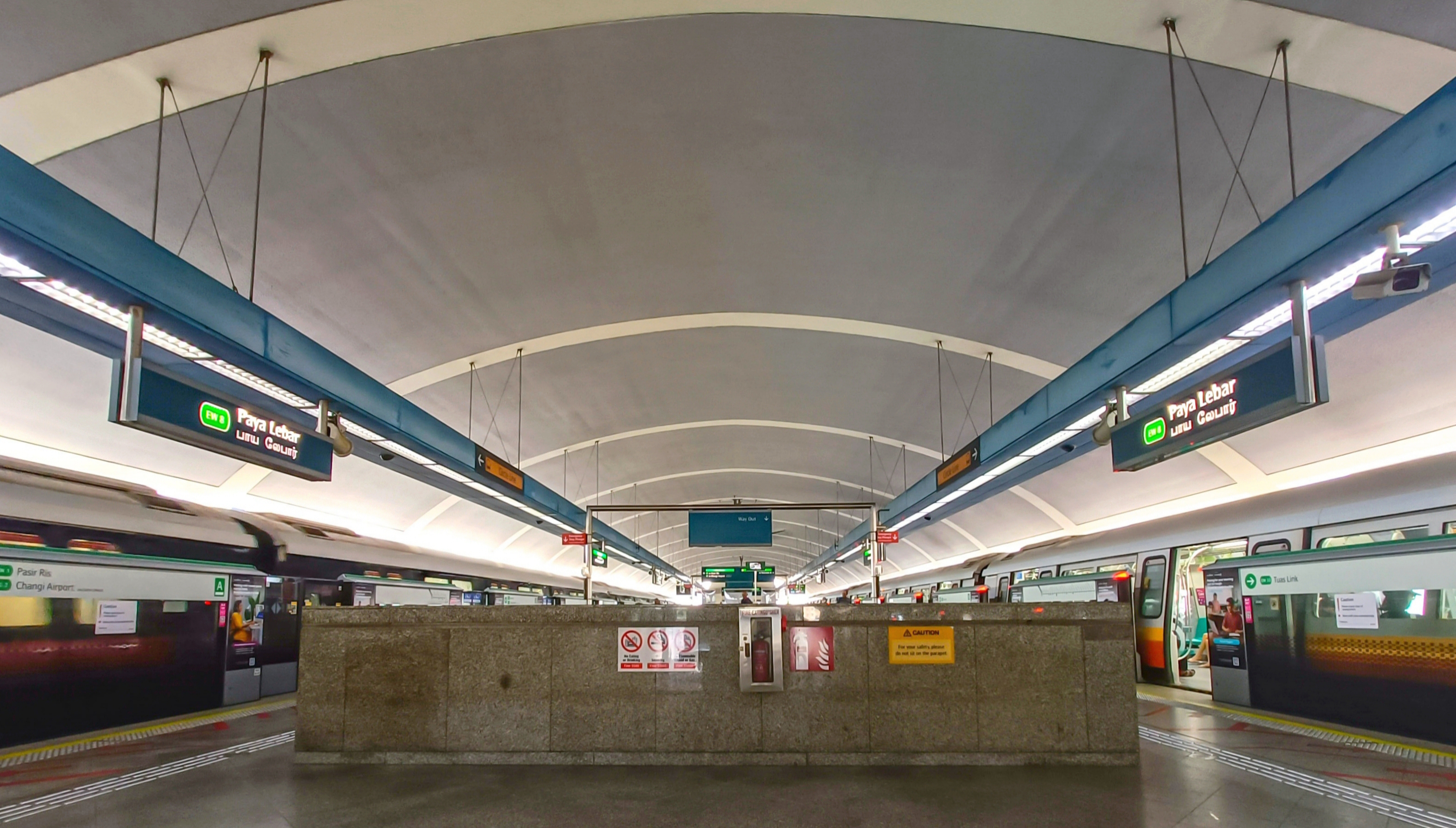
Paya Lebar MRT Station (EW8/CC9) is a busy interchange between Singapore’s East–West and Circle Lines and a convenient starting point for food, retail and heritage. Directly around the station are PLQ Mall, Paya Lebar Square and SingPost Centre. A little farther along the public streets are Geylang Serai Market, Wisma Geylang Serai and Geylang Serai Heritage Gallery. A first visit can simply combine one mall with a meal, or use the station as a starting point for a longer cultural walk.
The most useful 2026 date-specific detail is that Geylang Serai Market is scheduled to close for cleaning from 14 to 16 December 2026, according to NEA’s current list. Haig Road Market and Cooked Food Centre has a separate cleaning period from 30 November to 3 December 2026, with differing dates for the two blocks. These are specific market notices, not closures of the entire Paya Lebar area. If a particular hawker stall is your main destination, check the operating status before travelling.
This guide explains station exits, indoor malls, PLQ’s rooftop garden, market heritage and a practical two-hour walking plan. It also makes one important museum distinction: Geylang Serai Heritage Gallery lists Tuesday–Sunday 10am–6pm hours but restricts ordinary weekday walk-ins during school-term hours until 4.30pm; check whether a booking is required. Reviewed 1 November 2026.
- Station: Paya Lebar EW8/CC9 interchange
- Exit A: a published approach to SingPost Centre; Exit B serves Paya Lebar Square side
- Exits E/F: toward PLQ Mall, Geylang Serai and the larger eastern heritage-and-retail cluster
- Immediate food/shopping: PLQ Mall at 10 Paya Lebar Road, Paya Lebar Square at 60 Paya Lebar Road, SingPost Centre at 10 Eunos Road 8
- Outdoor family choice: PLQ Parkside playground and PLQ Mall rooftop garden, with separate posted hours
- Longer heritage outing: Geylang Serai Market, Wisma Geylang Serai and its gallery
- Dated closure: Geylang Serai Market cleaning 14–16 December 2026


Paya Lebar is more than a shopping-mall interchange
The station serves an increasingly important commercial district and an older surrounding community. Paya Lebar Quarter’s offices and retail sit close to neighbourhood businesses, wet markets, religious institutions and the historic Geylang Serai area. This contrast makes the place interesting even when you are not shopping.
A visitor who focuses only on malls might miss the market and gallery. Another who follows a heritage list without checking distances may arrive tired before seeing anything properly. The useful approach is to choose whether the day is mainly for convenience, food or history, then give that purpose the time it needs.
An office lunch, a school-age learning trip and a casual family outing have different priorities. This guide groups options by those practical needs instead of suggesting everyone should complete every nearby attraction.
Station exits: choose a destination, not a random letter
Paya Lebar has both elevated East–West Line platforms and underground Circle Line facilities. People can emerge on different sides of a busy junction, making the exit choice important even when destinations are close together.
SingPost Centre’s own website specifies Exit A for its premises at Eunos Road 8. Paya Lebar Square says it is directly connected to the interchange, with access through retail levels depending on the line. The wider station directory identifies Exit B for the Paya Lebar Square side and Exits E/F for the PLQ and Geylang Serai directions.
However, station connections and road crossings can change. Use the current operator map, especially for a wheelchair-accessible route, rather than relying only on a historical internet exit list. A short approach that requires a staircase may not be the best choice for everyone.
If a group is meeting, name the actual mall and entrance. ‘Paya Lebar MRT’ is ambiguous, and people arriving from the Circle Line can easily surface somewhere different from a friend arriving on the East–West Line.
Stop 1: PLQ Mall—shops, food and an integrated business district
PLQ Mall is at 10 Paya Lebar Road, Singapore 409057. It belongs to Paya Lebar Quarter, a mixed-use precinct that also includes offices, residential spaces and public-facing outdoor areas. Its operator describes more than two hundred shops and eateries spread across several retail levels.
This makes PLQ suitable for visitors who want a choice of meals, practical shopping or a comfortable indoor break. However, a shopping centre with many tenants should not be treated as one restaurant with a fixed menu and hours. Check the official directory if you need a particular retailer.
The usual shop hours are around 10am–10pm, but some food outlets operate differently. A visitor who wants a morning meal or late dinner should consult the specific business, not the general retail schedule.
The development also provides several outdoor choices, including the Parkside area and roof garden. These make PLQ more useful as a family destination than a mall-only list might suggest, provided their separate access schedules and weather conditions are respected.
A practical hour at PLQ may simply involve lunch and a short browse. You do not need to cross the entire Paya Lebar neighbourhood to make the visit worthwhile.
Stop 2: the PLQ rooftop garden—an elevated outdoor pause
The PLQ Mall operator identifies an outdoor rooftop garden at Level 7, normally open 10am–10pm daily and reached using passenger lifts. It is a useful option for visitors who want a short outdoor view without leaving the commercial precinct for a long walk.
Because it is a rooftop setting, the garden is exposed to weather. Do not assume it is suitable during lightning or heavy rain simply because the mall below is open. Follow any maintenance barriers and local safety instructions.
Visitors can look at how a dense business district includes planted outdoor space. Ask why developers might place greenery on a high level, what benefits such a space provides and which aspects require ongoing care.
Do not treat the rooftop as a public sports court or a place for unrestricted private events. Use seating and paths respectfully and keep passageways clear.
Stop 3: PLQ Parkside playground and the outdoor precinct
PLQ Parkside lies across Sims Avenue and provides alfresco dining and public-facing outdoor areas associated with the wider development. The operator lists an outdoor playground open 9am–9pm daily near PLQ 3 and Park Place Residences, subject to normal access and maintenance arrangements.
This is a useful option for a family who wants a short play period after a meal. Unlike a dedicated ticketed theme park, it can be used as part of an ordinary community outing, but parents must supervise children and respect the equipment’s age and safety signs.
PLQ Parkside also offers a lesson in how mixed-use city planning works. A play area, offices and residences are located close to shops and a train station. Different people use the same public spaces at different times of the day.
For a first visit, do not promise the playground will be uncrowded. Decide beforehand what you will do if the weather changes, the space is busy or a child needs a quiet break.
Stop 4: Paya Lebar Square—another station-linked retail option
Paya Lebar Square is at 60 Paya Lebar Road, Singapore 409051. Its operator describes the mall as connected to the Paya Lebar interchange and lists general opening of 10am–10pm. The shopping centre has its own food, retail and service tenants.
It is not a wing of PLQ Mall. Even though the names are similar and the sites are close, a visitor must check which building contains the intended shop. Sending a friend simply to ‘the Paya Lebar mall’ may result in meeting at different entrances.
Choose the mall based on the current directory, price range and your group’s needs. If the purpose is a quick meal or a service appointment, one building can be enough for the entire visit.
The published customer-service point is on Level 2, but a visitor who needs assistance should still check its current operating arrangements. A centre’s advertised opening time does not guarantee that every individual counter is staffed continuously.
Stop 5: SingPost Centre—a distinctive mix of postal services and shopping
SingPost Centre is at 10 Eunos Road 8, Singapore 408600. The operator lists daily retail hours of 10am–10pm and specifies Paya Lebar MRT Exit A as the nearby rail approach.
This is not only another shopping mall. The complex includes the General Post Office and postal-related self-service infrastructure, along with a supermarket, cinema, dining and other retail facilities. It can be an interesting stop for a student learning how communications, logistics and everyday services have changed.
However, the fact that a shopping building is open does not establish that a staffed postal counter operates at the same hours. Confirm the specific counter or service before travelling with an urgent parcel or document. Automated kiosks may have different availability and service limitations.
An ordinary family outing may involve a meal or movie instead of any postal service. Choose the current tenant or screening schedule rather than assuming a film or programme is available every evening.
If you want a short visit, combine the centre with the MRT station rather than attempting to add the full Geylang Serai heritage walk afterward.
Stop 6: Geylang Serai Market—food, a wet market and cultural history
Geylang Serai Market is at 1 Geylang Serai, Singapore 402001. It is a substantial food-and-market landmark in Singapore’s eastern Malay heritage district. The National Heritage Board’s historical material traces the market to a 1964 opening, followed by later redevelopment and reopening in 2009.
The present building design incorporates elements inspired by traditional Malay kampung architecture, including high sloping roofs and timber-patterned details. The wet market and food-centre floors support everyday shopping, dining and community interaction.
Visitors should not treat the market merely as a collection of famous dishes. It is a working place for sellers, customers and residents, with deliveries, shopping trolleys and different stall operating hours. Walk carefully, keep the aisles clear and avoid taking close-up photographs of people without their consent.
A food visit is most useful when you check what is actually available, read menus and choose a meal that fits your appetite and dietary needs. Some stalls may be famous for Malay and regional dishes, but popularity does not guarantee a seat or the same menu every day.
Do not mistake the market for a formal museum. The best way to learn here is to observe how food, ingredients and everyday transactions are part of living heritage, then use an interpretive gallery if you want structured historical context.
Scheduled 2026 cleaning at Geylang Serai Market
The National Environment Agency currently lists 14–16 December 2026 as the cleaning closure for Geylang Serai Market. That matters to anyone planning an end-of-year food trip, because a market can have a normal operating pattern and still be unavailable during scheduled maintenance.
This does not mean the entire Geylang Serai district is closed. The neighbouring streets, community spaces and other separately managed businesses follow their own arrangements. It does mean a visitor should not travel specifically for a hawker meal on those dates without verifying any updates.
If a particular stall is the only reason for coming, confirm its exact business day. A stall may be closed at another time for its own reasons even when the market as a whole is open.
Cleaning and maintenance support food safety and shared public infrastructure. They are part of how a living market remains usable, not simply an inconvenience to visitors.
Stop 7: Wisma Geylang Serai—a community and cultural destination
Wisma Geylang Serai is at 1 Engku Aman Turn, Singapore 408528. It serves community, cultural and public-service functions, including Geylang Serai Community Club, arts activity, meeting areas and spaces for events.
Unlike a mall, the building has parts that are used by different organisations. A public plaza may be open for people to pass through, while a rehearsal space, activity room or booking venue may be reserved. The distinction matters for anyone looking for a specific programme.
The district hosts celebrations and seasonal events, including Ramadan and Hari Raya activities during relevant periods. A large bazaar shown in a photograph from February or March is not a permanent market operating every month of the year.
If you are visiting for a cultural event, check the organiser’s current date, registration and venue instructions. If your purpose is simply to understand the precinct, the building and its public spaces can still provide context without claiming an event is happening today.
Stop 8: Geylang Serai Heritage Gallery—check the weekday restrictions
The Geylang Serai Heritage Gallery is at Wisma Geylang Serai, Level 1, #01-05. It presents stories of the area’s settlements, plantations, commerce and communities. The National Heritage Board’s official Roots page lists regular hours Tuesday–Sunday, 10am–6pm.
However, there is a significant exception: during the school term, weekday walk-in admission is restricted from 9am to 4.30pm. Visitors wishing to attend in that period should contact the gallery in advance to ask about an appointment. The current NHB programme lists the gallery as accepting ordinary public visits more readily on Saturday and Sunday, and weekday access after 4.30pm.
This is more useful than simply writing ‘open Tuesday to Sunday’. A family arriving on a Wednesday at 11am may find that the gallery is not admitting casual visitors even though the broader listed opening span includes that hour.
The collection can help visitors see that Geylang Serai has changed repeatedly: from agricultural activities such as rice and coconut cultivation to a major market and residential neighbourhood. Use the exhibits to connect the older historical layers with the modern commercial cluster around Paya Lebar MRT.
Where guided activities or school visits are offered, contact the organiser first. A small exhibition cannot always accommodate an unscheduled large group during a school session.
A cultural lesson: modern Paya Lebar and older Geylang Serai
The walk from an office-and-mall district towards an older market and cultural hub creates a valuable contrast. PLQ is designed around modern integrated transport, retail, work and housing; Geylang Serai reflects generations of commercial and community development.
Neither side is automatically more authentic. Both are places where people live and work. Heritage can survive through buildings, markets, languages, recipes and community use, while modern development changes how people reach and use the area.
For students, one useful question is how a town can modernise without losing its identity. They can compare the market’s architectural elements with the public spaces of PLQ, then ask what both places are trying to accomplish.
Do not reduce the district to a simplistic contrast between an ‘old ethnic area’ and a ‘new business area’. Its history includes several communities, institutions and economic changes that deserve careful interpretation.
Haig Road and Joo Chiat Complex: a longer food-and-shopping option
Haig Road Market and Cooked Food Centre is another food destination in the broader district, while Joo Chiat Complex offers retail associated with everyday shopping and festive needs. These are not immediately inside the Paya Lebar MRT station and should be treated as a longer walking extension.
The NEA current notice identifies 30 November–3 December 2026 as the cleaning period for the Haig Road market, with different closure dates across Blocks 13 and 14. Visitors seeking a specific stall should check the affected block and date, not assume that all the food-centre areas reopen together.
Joo Chiat Complex has had upgrading works associated with the Geylang Serai Cultural Belt. A visitor should follow current pedestrian and access signage instead of relying on an image of older construction hoardings.
These places can make a separate heritage-and-shopping afternoon. They do not need to be added to a brief one-hour trip for lunch at PLQ.
Kinex and City Plaza: why a general mall list can be misleading
Kinex and City Plaza are additional retail destinations in the wider Paya Lebar area. Their names may appear on exit lists and in shopping recommendations, but they are separate buildings with different shop mixes and entrances.
If you are visiting a specific business, search for that business’s current unit and building. A similarly named building is not evidence that two shops are adjacent. The practical goal is to avoid unnecessary crossings and backtracking.
A person who wants bargain hunting may prefer one of these centres to a larger modern mall, but any claim of consistently cheaper prices must be tested on actual products. Retail categories and promotions change over time.
Choose them as deliberate options, not as compulsory additions to an already full Paya Lebar outing.
A one-hour plan: choose PLQ, Paya Lebar Square or SingPost Centre
For a short visit, choose one mall that matches your needs. PLQ is useful for dining and an optional rooftop view; Paya Lebar Square is straightforward for everyday shopping; SingPost Centre is practical for postal services and related retail.
Travel to the correct exit, find the chosen business and return. An hour should not include the market, cultural gallery and rooftop garden on top of a long meal. Moving constantly between places is not the same as having a good outing.
If the main business is closed, choose a nearby alternative that is actually open rather than trying to complete a whole-district detour.
A two-hour family route: food and public open space
Begin near PLQ Mall and choose a meal at a confirmed-open venue. When the weather is suitable, visit the Level 7 rooftop garden or the Parkside playground, depending on the age and interests of the group. Finish by returning to the MRT through a familiar route.
Plan around the published 9am–9pm playground hours and 10am–10pm roof garden hours, while accepting that maintenance or storms may affect access. An outdoor rooftop or play space should not be used during lightning.
This route works well for a family that wants a modest outing without a ticketed attraction. Allow children time to enjoy the stop rather than requiring a complete tour of every mall.
A half-day cultural walk to Geylang Serai
For a longer visit, make Geylang Serai Market the main food stop and Wisma Geylang Serai the interpretive destination. Begin from Paya Lebar MRT, follow signed public routes, choose a meal and continue towards the cultural hub if the group is comfortable.
If the Heritage Gallery is essential, check its appointment restriction before setting out. A weekend may be a better choice for spontaneous admission during published opening hours; during school-term weekdays, public access is restricted for much of the day.
Do not try to add every mall, temple and neighbouring district on top of the market. Two carefully chosen destinations can occupy a rewarding half-day once travel, food and reading time are included.
An evening plan: shops and a meal, not an unverified bazaar
Paya Lebar’s malls provide indoor dining and shopping into the evening, with individual tenants setting their hours. PLQ’s roof garden is listed open until 10pm under ordinary conditions, providing a possible outdoor pause after food.
Do not assume Wisma Geylang Serai’s heritage gallery or market wet stalls follow the mall’s late hours. A community building, an exhibition space and a shopping centre have different timetables.
Likewise, do not promise a Ramadan bazaar in November simply because an earlier year’s street photographs show one. Large festivals are seasonal and require current event listings.
Transport to the heritage area: walking time is not only the distance
Although Geylang Serai Market is relatively near the Paya Lebar interchange, the actual route involves public streets, crossings and possibly busy pedestrian areas. Allow a buffer and check the precise entrance before departure. A distance printed on a map does not include queueing, photography or time spent stopping to orientate.
Someone with a stroller or reduced mobility may prefer to use a suitable bus or vehicle for a longer extension rather than walk every segment. The right choice depends on the accessible stop and route actually available.
If you finish far from the station, consider whether returning to Paya Lebar MRT is still the easiest option. Do not assume every street leads directly to a station entrance.
What is actually free and what costs money?
General public shopping areas, permitted public paths and the listed outdoor communal spaces can be visited without buying an attraction admission package. A meal, cinema ticket, retail purchase or paid programme has its own price.
The Heritage Gallery has specific access rules; ordinary public access should not be confused with a guaranteed reserved group tour. A public market does not require entry admission to browse, but food and groceries cost money.
Plan the budget around your chosen activity rather than a vague claim that ‘Paya Lebar is free’. The most modest visit might be a mall walk and a snack, while a longer cultural outing may include transport, a meal and a booked activity.
Accessibility and shared spaces
The station and modern retail buildings offer accessible facilities, but the full route includes street crossings, lifts and sometimes longer outdoor segments. Select the station exit and shop entrance that work for the person in your group with the greatest access needs.
PLQ’s roof garden is accessible by passenger lift under normal operating conditions. The playground is in an outdoor part of the precinct; accessibility to the play equipment and the connecting paths should be checked, not inferred from a general building description.
For older visitors, choose one building and a seated meal rather than a long loop around every shopping centre. For a child with sensory needs, the right outing may be quieter and shorter than a busy market in peak periods.
Do not crowd station lifts or block ramps while gathering the group. A comfortable public space depends on everyone being able to move.
Weather, heat, haze and different types of shelter
Paya Lebar’s immediate mall cluster is useful when Singapore’s weather changes, but not every connection to the heritage market is fully sheltered. During thunderstorms, delay the outdoor portion and do not cross flooded routes merely to keep an itinerary on time.
In strong sunshine, walk earlier, carry water and choose a rest stop before continuing to Geylang Serai. Outdoor areas near PLQ may be pleasant in the evening but should still be avoided during lightning.
During haze, consult the official Singapore air-quality guidance and reduce outdoor activity when necessary. A shorter indoor mall visit can be a sensible alternative to a long cultural walk.
The mistakes that matter most near Paya Lebar MRT
Confusing PLQ Mall and Paya Lebar Square. They are separate destinations with different addresses.
Choosing an exit without checking the actual destination. SingPost Centre recommends Exit A; other businesses may be more convenient from different exits.
Assuming Geylang Serai Market is serving food on 14–16 December 2026. The current NEA cleaning notice lists those dates.
Assuming Haig Road Market shares Geylang Serai’s maintenance schedule. Its late-November and early-December cleaning days are different.
Walking into Geylang Serai Heritage Gallery on a weekday school-term morning without an appointment. NHB restricts casual weekday admission before 4.30pm.
Treating seasonal bazaars as permanent daily attractions. Check actual event dates.
Assuming every retail or postal counter operates while the mall is open. Individual services have different hours.
Frequently asked questions about Paya Lebar MRT
Which MRT lines serve Paya Lebar? East–West Line EW8 and Circle Line CC9.
Which exit goes to SingPost Centre? The centre’s own directions specify Exit A.
Where is PLQ Mall? 10 Paya Lebar Road, part of Paya Lebar Quarter.
Is PLQ Mall the same as Paya Lebar Square? No. Paya Lebar Square is at 60 Paya Lebar Road.
Can I use the PLQ roof garden? It is listed as a public-facing amenity on Level 7, generally 10am–10pm, subject to current access.
Where is Geylang Serai Market? 1 Geylang Serai, a separate walking destination from the immediate MRT retail cluster.
When does Geylang Serai Market close for cleaning? NEA currently lists 14–16 December 2026.
Is Geylang Serai Heritage Gallery open on weekdays? It has listed Tuesday–Sunday hours, but ordinary school-term weekday visits before 4.30pm are restricted; contact the gallery.
Can I visit Wisma Geylang Serai without attending a bazaar? It is a community hub with different public spaces and activities; a bazaar is a seasonal event, not a permanent condition.
How much time should I spend? One hour for a focused mall visit, two hours for food and public open space, or a half-day for a carefully planned Geylang Serai heritage outing.
The value of a station-first Paya Lebar guide
The key problem is not lack of places to visit. It is knowing which nearby name refers to which building, which exit reduces unnecessary walking, which market is closed for maintenance and whether a small heritage gallery can accept a casual visitor.
This article separates those practical decisions and links them to the current operators. It is a starting point for exploring Paya Lebar without confusing a mall, a working market and a cultural institution.
Official sources and useful companion reading
- Paya Lebar Quarter: access and PLQ Mall address
- PLQ Mall: retail and public facilities
- PLQ: Level 7 roof garden and Parkside playground hours
- Paya Lebar Square: official address and opening hours
- SingPost Centre: Exit A, address and retail hours
- NEA: Geylang Serai and Haig Road market 2026 cleaning schedules
- NHB: Geylang Serai Heritage Gallery and weekday booking restriction
- NHB: gallery address and restricted weekday public visiting windows
- eduKateSG: Geylang Serai neighbourhood reading
Independent editorial guide reviewed 1 November 2026. Verify shopping tenants, hawker closures, gallery bookings and current transport signage before travelling.