
What should parents do when a child in Punggol says, ‘I don’t want to go to school’? Start by finding out why, rather than immediately treating the sentence as laziness or misconduct. The child may be physically unwell, worried about a class or friendship, overwhelmed by a transition, exhausted, or facing a different difficulty. Listen calmly, check for immediate safety or health concerns, and contact the child’s school through its appropriate support channel when the problem continues or involves possible harm.
Parents with a child at Northshore Primary, Punggol View Primary, Edgefield Secondary or another Singapore school do not need to diagnose anxiety on their own. An occasional difficult morning differs from persistent fear or refusal that disrupts daily life. The right response depends on the child’s circumstances. If the reluctance is persistent, severe or associated with significant distress, involve school staff and appropriate healthcare professionals promptly instead of relying solely on reassurance or discipline.
The aim is a stable return to learning with the right support. This article looks at what to ask, how to distinguish practical barriers from deeper worries, how school and home can cooperate, and why a calm morning routine can help only when the underlying problem is taken seriously.
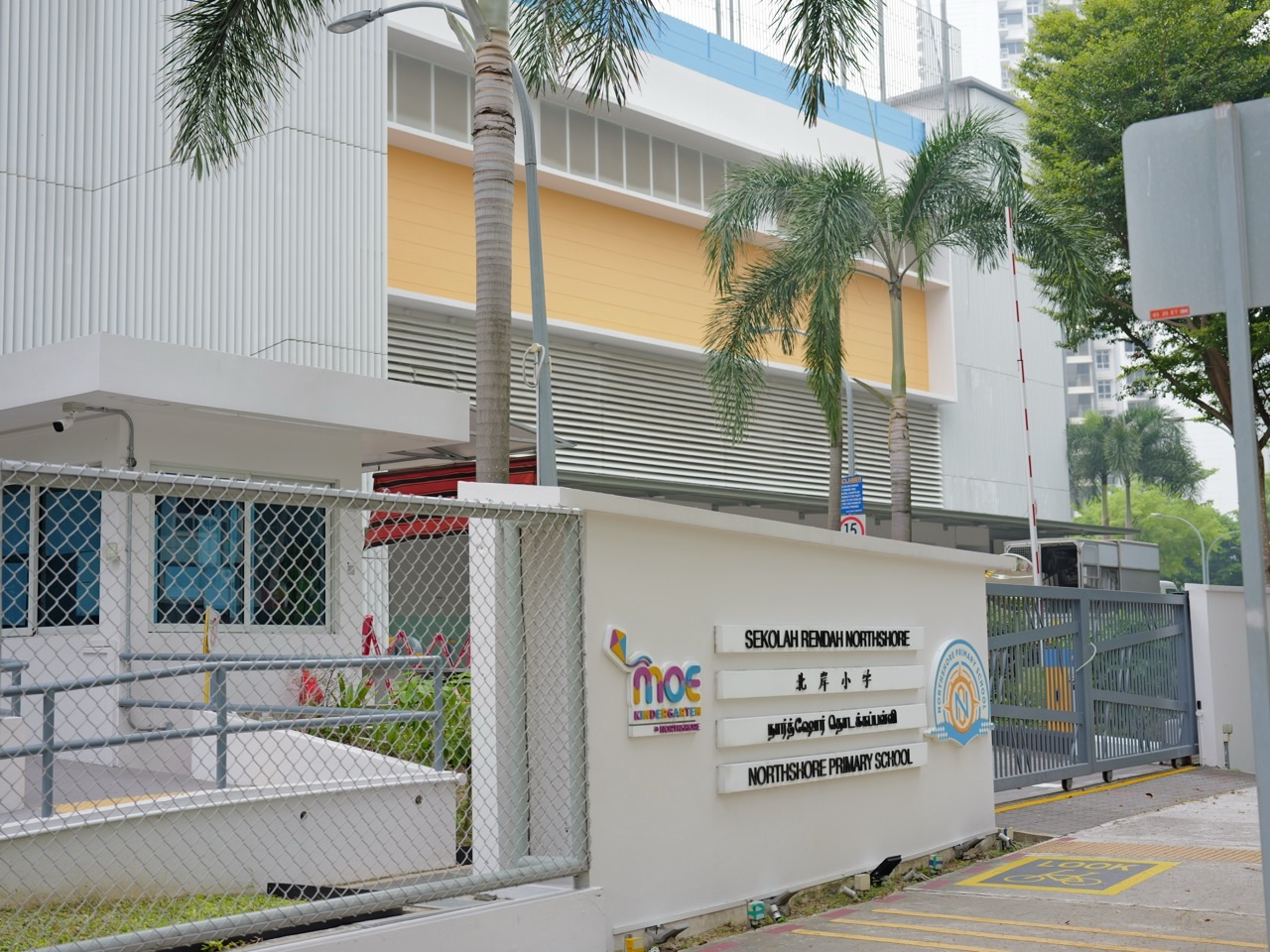
Featured photograph: Northshore Primary School entrance and guardhouse in Punggol. It is a neighbourhood image, not evidence of any school refusal, distress or incident at that school.
Choose your reading route
Understand the reason · Check the morning · Protect learning
Article contents
Sections 1–6
1. Ask what the child means by ‘I don’t want to go’
2. Notice the difference between a difficult morning and sustained distress
3. Sometimes the barrier is practical, and that matters too
4. Bring the school into the conversation early
5. Build a return-to-school approach around the real barrier
Children use short sentences for large feelings. A younger child may say they have a tummy ache when they are worried about separation. An older pupil may say school is boring when a subject has become confusing or a peer situation has become stressful. Another child may genuinely be ill. None of these possibilities should be presumed from the first sentence alone.
Try a quiet conversation when time pressure is low. Ask which part of the day feels hardest: waking up, leaving home, the journey, entering the gate, a particular lesson, recess, CCA or coming home. Listen for specifics and patterns, and ask what makes the day better. If the student cannot explain, avoid forcing a polished answer. You can try again when they are calmer.
School reluctance is an observation, not a diagnosis. The goal is to identify the next useful question and determine whether health, safety, school support or a practical change is needed. HealthHub’s Grow Well SG guidance encourages parents to understand the child’s stressors rather than dismissing worries.
- Is the child physically unwell? Address health concerns appropriately
- Is a specific place, person, task or time causing fear?
- Does the problem happen only on some mornings?
- Is there a change in sleep, appetite or daily behaviour?
- Who is a trusted adult at school?
SECTION 2 OF 6
Notice the difference between a difficult morning and sustained distress
Many children have mornings when they would rather stay home. Change, tiredness and ordinary nerves can make leaving the house difficult. It becomes more concerning when the fear is repeated, severe, escalating or begins to disrupt attendance, relationships, sleep or daily functioning.
HealthHub’s MindSG resource on anxiety in children distinguishes everyday worries from persistent, overwhelming anxiety that interferes with life and may call for professional assessment. Parents should not use an article, questionnaire or one school morning to label a child with a condition. They can, however, recognise when support is warranted.
Take any threats, bullying allegations, injuries or acute safety concerns seriously. Protect the child and seek appropriate urgent assistance when necessary. If the child is physically sick, follow healthcare guidance and the school’s absence procedures; our Punggol sick-days guide explains that separate process.
- Look for repetition and increasing intensity rather than one isolated episode
- Consider health, learning, peer and transport factors
- Avoid publicly sharing the child’s private concerns
- Seek professional advice when distress interferes with daily functioning
- Treat immediate danger as a safety priority, not a homework or attendance negotiation
Punggol school mornings include ordinary logistics: getting ready, packing books, moving through HDB estates, boarding transport and arriving at the correct school entrance. A child who repeatedly loses stationery may fear a teacher’s question; another may be unsettled by a rushed bus transfer. A long or unpredictable journey can add tension even when there is no problem inside school.
Ask the child to describe their morning as a series of steps. Which step creates the most difficulty? Would packing the correct items the evening before help? Is there a confusing route or a change in collection? These problems can sometimes be improved quickly, but do not use a better packing list as a substitute for responding to genuine fear, exclusion or illness.
Our school-bag planning guide and transport and rainy-day journeys guide address logistics. They are useful tools only when logistics are the actual problem.
- Rehearse the route with an appropriate adult if travel is the concern
- Pack required materials the night before
- Check whether an earlier or calmer preparation routine is feasible
- Make drop-off and collection instructions unambiguous
- Keep the routine flexible when an underlying health or emotional issue is present
When reluctance continues, share an accurate account with the class or form teacher through the school’s official channel. Describe the dates, the child’s words, the moments when distress is strongest and any known trigger. Ask what the school has observed. Parents see the morning at home; teachers see a different part of the day. Together, those perspectives can reveal what neither can see alone.
Ask whether the child has a designated trusted adult, whether an appropriate school counsellor or student-support staff member should be involved, and what adjustments or check-ins may be considered. School arrangements differ; no outside article can promise a particular accommodation. HealthHub MindSG explicitly encourages working with schools and seeking professional help for anxiety that substantially affects daily life.
If a child reports bullying or threats, follow a safety-first reporting path rather than treating the issue only as morning motivation. Our separate Punggol friendships, bullying and getting help guide explains how to document and report concerns appropriately.
- Communicate what the child has said without exaggeration
- Ask what school staff have observed
- Identify the adult the child can approach at school
- Agree how and when the family will receive a response
- Involve school counselling or healthcare professionals when appropriate
Families often want one sentence that will make tomorrow morning easy. Usually, lasting progress comes from an agreed plan that addresses the actual cause. For a practical barrier, that may be a clearer route or packing routine. For a subject problem, it may be classroom clarification and manageable practice. For a friendship or safety issue, it may require direct intervention from the school. For persistent anxiety, a professional can help design an appropriate individual approach.
A plan should preserve dignity and avoid making the child feel that their distress is a performance failure. Agree who they can approach, what to do when feelings rise and how adults will monitor whether the support works. Parents and schools can reinforce consistent messages, but forcing a fixed timeline without assessing the child’s condition may be counterproductive.
Healthy routines help support the plan. HealthHub’s Better Sleep resources offer parent-friendly ideas for calming evenings. Our exam-week recovery guide also explains why adequate rest and a manageable workload matter. These habits are supports, not treatments.
- Choose a next step linked to the actual difficulty
- Agree a trusted-adult contact and clear communication path
- Maintain realistic meals, rest and school preparation
- Review what changes in the child’s experience
- Seek further assessment if attendance or daily functioning remains seriously affected
A child who has missed school may worry about returning because they also fear being behind. That is a second problem layered on top of the first. Once safety and well-being needs are being addressed, ask the teacher which essential lesson or assignment the child should reconnect with first. Do not make catching up with every worksheet the price of asking for help.
A learning gap can be repaired in a sequence: identify the missing concept, teach it, attempt a manageable question, check understanding and build towards the current classwork. Our catch-up guide explains the approach. With older pupils, a missed Mathematics concept or an unfamiliar examination format may need a more deliberate bridge.
At eduKate, learning support in three-student small groups begins with finding the real academic obstacle. Tuition is not a substitute for safeguarding, school counselling or healthcare. Where teaching is genuinely needed, it should return capability to the child rather than fill another evening with pressure. The measure of progress is a learner who feels more able to participate and understand—not simply a busier timetable.
Frequently asked questions
What should I do if my Primary 1 child cries before school?
Check whether there is illness or a safety concern, listen to what feels difficult, and talk with the school if the distress persists. A familiar routine may help, but it should not replace addressing the underlying reason.
Is not wanting to go to school always anxiety?
No. It may reflect illness, tiredness, transitions, bullying, academic difficulty or ordinary reluctance. Persistent or impairing anxiety warrants professional assessment; parents should not diagnose from one behaviour.
Who can help if my Punggol child consistently refuses to attend school?
Contact the school through its official channel and ask about its student-support or counselling route. Consult an appropriate healthcare professional when distress is severe, ongoing or affecting daily life.
Related eduKate reading
Use the friendships and safety guide, absence and returning to class, Primary 1 readiness and Punggol school journeys. For subject-specific learning support, explore eduKate Punggol after the underlying need is clear.
Sources and accuracy notes
- HealthHub: Grow Well SG—Nurturing Healthy Behaviours, family strategies for worries, stress and seeking school counsellor support.
- HealthHub MindSG: My Child/Teen Is Managing an Anxiety Disorder, on persistent anxiety, professional assessment and working with school.
- HealthHub: Parenting for Wellness, resources for parenting, relationships and mental well-being.
- Individual school support contacts, absence arrangements and any attendance plan must be confirmed with the student’s own school and relevant professionals.
This independent eduKateSG article shares general practical suggestions, not individualised clinical advice or a claim about any particular Punggol school’s current internal practices. Confirm assignments, timetables, support channels and policies with the school. The featured school image is an exterior neighbourhood reference only.