
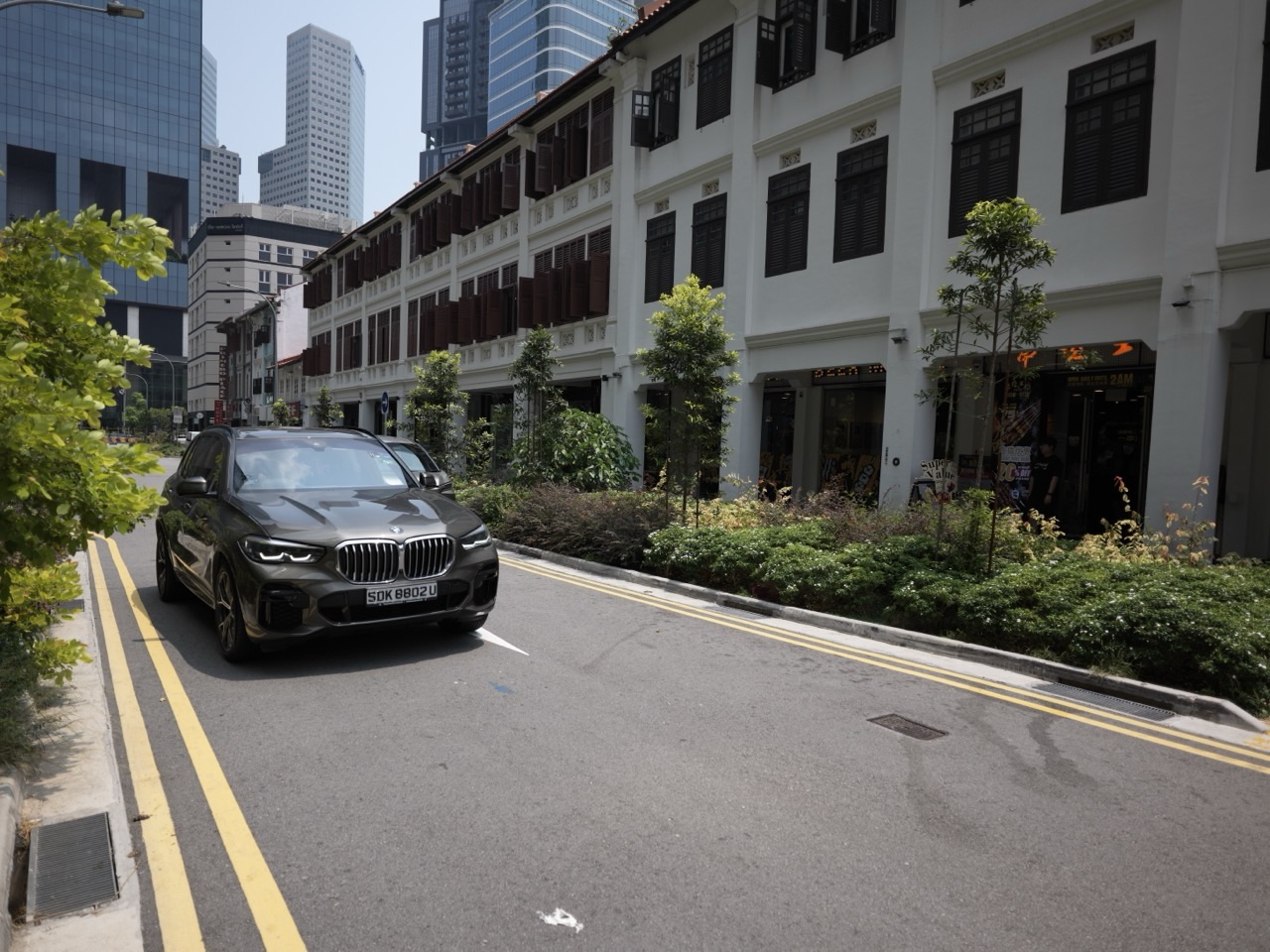
Did you know Rochor had a wet market dating to 1872, while the more famous Sungei Road flea market grew from trading in the 1930s? These were not the same market. That distinction makes Rochor an effective starting point for Secondary 1 G3 History tuition: familiar place names can hide separate institutions, activities and timelines, and the student must learn to tell them apart with evidence.
Secondary 1 G3 History tuition in Rochor helps children understand source inference, chronology, change and continuity, and historical significance. eduKateSG’s premium weekly three-student tutorial is held near Sixth Avenue MRT, not in Rochor, with each 1.5-hour class built around genuine marked school work. Local heritage illustrates thinking skills; the child’s actual school syllabus controls assessment preparation.
The learning approach follows our immutable Clementi small-group tutorial reference. Rochor examples are grounded in the National Library’s historical wet-market study, NHB’s Sungei Road exhibition and NHB’s Little India Heritage Trail.
A Secondary 1 History lesson begins with the source, not a revision pack
The tutor opens the child’s own marked worksheet and asks where the claim stopped being supported. One student may know the date of the old Rochor Market but confuse it with Sungei Road’s later flea market. Another may describe every object in a photograph without inferring anything. A third may treat an oral-history interview as if it represented everyone who ever traded there.
These are different errors. In a three-student lesson each pupil first makes an individual claim, points to evidence and answers a new question after correction. The small group cannot simply present one polished answer for all three students. Teaching is about making the missing reasoning move visible.
G3 is a subject level under Full Subject-Based Banding
G3 describes the demand of the particular school subject, not the entire child’s ability. Lower-secondary History develops chronology, questions, evidence, cause and consequence, and the understanding that people can interpret events differently. A new Secondary 1 learner should not be treated as though they are already sitting a final-year national paper.
The first Singapore-Cambridge Secondary Education Certificate examination begins in 2027. For a child whose national examinations will occur later, school and examination-year requirements must be checked when relevant. The weekly lesson starts with the actual chapter, the child’s marked response and foundational skills.
1872: Rochor Market came long before the flea market
The National Library’s BiblioAsia account dates the construction of Rochor Market to 1872 and its demolition to August 1982. This was a wet market serving the neighbourhood over many generations. An old market is not synonymous with a later open-air flea market simply because both operated around the Sungei Road area.
Ask the pupil to make two labelled timelines. One concerns the wet market, beginning in 1872. The other concerns Sungei Road’s second-hand trade from roughly the 1930s onward. The difference is an elementary but powerful lesson: similar locations and uses do not make two institutions identical.
Why a wet market and a second-hand bazaar are different categories
A wet market typically involves fresh food and household provisions, while Sungei Road’s famous market became known for second-hand merchandise, antiques, clothes and salvaged goods. The precise historical scope must follow its source. If the child writes that a photograph of old clothes proves fresh fish were sold at that particular stall, the conclusion has no evidential bridge.
We teach pupils to identify what a source displays, what can reasonably be inferred and what still needs separate evidence. A neighbourhood is not one undifferentiated economic activity; its markets can differ in dates, goods, sellers and regulation.
The Rochor waterway is a geographical clue, not a complete explanation
Rochor Canal and the nearby river have influenced where roads and informal trading areas developed. A dated map can help locate the watercourse and market, but the mere presence of water does not tell a historian why a particular vendor chose a pitch or how profitable a business was.
The pupil reads the map legend, survey date and changes of street name before comparing it with a later plan. Geography can make an activity plausible; proof of a specific decision usually needs a trade record, contemporary report or the vendor’s own account.
The mid-1930s origins of Sungei Road require qualified wording
The National Heritage Board traces a small trading spot near Sungei Road to the mid-1930s, while explicitly acknowledging that the market’s exact origins are uncertain. A responsible pupil preserves that uncertainty. Writing ‘the market definitely began on 1 January 1935’ would manufacture precision that the source does not provide.
The tutor makes children notice words such as ‘around’, ‘by’, ‘believed’ and ‘approximately’. Those qualifiers are essential historical information. Good evidence writing does not invent an exact date merely because an exact answer seems more confident.
Robinson Petang: a nickname tells us about comparison
The market acquired the nickname Robinson Petang, often explained as ‘Robinson in the afternoon’, a playful contrast with the more affluent Robinson’s department store. NHB describes this as a probable explanation rather than an indisputable origin story.
This is a simple source-interpretation test. The nickname is evidence of how some people referred to the market, but it does not prove the identity or intentions of the first speaker. We can explain a plausible social contrast without pretending to have found the exact moment the phrase was coined.
1942–1945: a market changes in wartime
NHB describes the Sungei Road flea market as popular during the Japanese Occupation, when people sought inexpensive household articles amid shortages. A wartime increase in demand is plausible, but a market history does not reveal the experiences of every family in Singapore.
The student should distinguish source coverage: a market description speaks to traders, goods and the location. A policy notice or family diary would be needed to answer other questions about rationing, enforcement or civilian hardship. Knowing a broad historical period is not enough to establish each person’s experience.
A photograph of a busy bazaar does not measure everyone’s income
A photograph showing stalls, bargaining or pedestrians can document a visible moment of market life. It cannot directly establish a trader’s annual earnings, the safety of every transaction or the economic wellbeing of all households. Even a crowded scene may be a particularly busy day chosen by its photographer.
Students learn that a visual source has strong evidence about visible arrangements and weaker evidence about invisible motives or averages. The tutor asks for one supported observation, one bounded inference and one question that would require another source.
After the Occupation, the ‘Thieves’ Market’ label appeared
The Sungei Road market’s later nickname, Thieves’ Market, reflected public perceptions and reports about some stolen or illicit merchandise. It would be inaccurate to conclude that every object sold there was stolen or that every trader was a criminal.
Historical language matters. A nickname may reveal reputation, humour or stigma; it is not a verified description of each participant. The learner identifies who used the term and which independent records would be required to support a narrower allegation about a particular case.
The karung guni trade provides another historical viewpoint
NHB describes many second-hand sellers as karung guni traders who collected, salvaged or bought used goods for resale. Their activities give us questions about reuse, household consumption and livelihoods that a conventional architectural history might overlook.
A historian should not invent one uniform biography for every seller. Some were long-established, others joined later or traded irregularly. The tutor helps pupils ask who was represented in the source and who might be missing, rather than writing that all peddlers held identical occupations or motives.
Waterloo Street remembers several different community institutions
Near Rochor, the Waterloo Street area includes the Sri Krishnan Temple, associated with 1870, and Kwan Im Thong Hood Cho Temple, associated with 1884. NHB’s Forgotten Histories account also records institutions of several religions in the surrounding nineteenth-century district.
A pupil should not conclude that everyone in Rochor belonged to one community. The history of one road shows diversity of institutions and changing social networks. A building’s opening year cannot directly reveal every worshipper’s background or personal religious practice.
The history of a religious site is not the age of its current facade
A temple can be established in one year and rebuilt, expanded or renovated at later dates. A current photograph is evidence of present-day architecture, not necessarily of the exact materials or appearance of the first shrine. The same caution applies to churches, clan associations and former schools.
The child prepares three questions: when did the institution begin, when was this particular building constructed, and when was the photograph taken? Separating those dates prevents a familiar mistake in school source work.
The Little India precinct is related to Rochor but is not identical
The nearby Serangoon Road and Little India heritage area has a long history of diverse trades, places of worship and communities. The name ‘Little India’ became an official heritage and tourism framing in the 1980s, while activities in the area began much earlier.
We avoid treating the full Little India precinct as if it were precisely bounded by Rochor MRT. A modern tourist label, historic administrative district and everyday neighbourhood name can overlap without being synonymous. Source accuracy includes geography and which area an account actually covers.
A buffalo-related place name is not proof of every local occupation
The Little India Heritage Trail explains that Kerbau Road takes its name from buffaloes associated with the area’s older cattle-related economy. It also records other industries, families and community organisations in the broader precinct.
A child may infer that animals and related trades mattered to parts of the area, but should not conclude that all residents were cattle traders. The tutor teaches the difference between a name as a clue and a comprehensive population record.
Former Tan Teng Niah house: one building can have several meanings
The Little India Heritage Trail identifies the Former House of Tan Teng Niah as a reminder of Chinese enterprise within a district often primarily associated today with Indian heritage. It is a valuable example of a physical source complicating a simplified neighbourhood story.
However, a photograph of the façade cannot by itself reveal a complete business ledger or the daily lives of every person who worked nearby. Students seek the maker, date and provenance of relevant additional records before writing a detailed claim.
1981: the old Tekka Market moves into another phase
NHB describes the decision in 1980 to move the old Tekka Market to a more suitable nearby site, followed by the construction of Zhujiao Centre across the road in 1981, later known as Tekka Centre. The decision, building and subsequent name do not represent one identical event.
This offers a second local comparison with Rochor Market and the Sungei Road flea market. Different markets had distinct histories; some were relocated, some demolished and another ceased trading in a defined zone. The pupil names the place before explaining what changed.
Rochor Centre opened in 1977 as housing with shops
Rochor Centre’s four Housing Board blocks were completed in 1977 and housed both residents and businesses. Later the estate became well known for its brightly coloured façades. Contemporary reports distinguish the completion date from later upgrading and recolouring.
A photograph showing vivid blocks in the 2010s cannot prove they had those exact colours on opening day. We ask pupils to distinguish building, later appearance and memory. A landscape can become iconic long after construction.
A block’s colours are not evidence of how every household felt
The Rochor Centre’s recognisable colour scheme is a useful visual marker of the former estate. Yet one picture does not tell us whether every resident wanted to remain, whether every shop prospered or how the relocation affected each family.
A good Historical Investigation might compare official relocation documents with properly attributed interviews. Each voice is valuable within its scope. We avoid turning a photograph or a dramatic quote into a substitute for wider evidence.
The 2011 decision and later demolition belong to different dates
Plans announced in 2011 set Rochor Centre on a path toward clearance for transport development. Residents subsequently relocated, and demolition works began in June 2018. Students should not write that the entire complex was physically demolished in 2011 simply because that was the announcement year.
An official proposal establishes an intention and policy position. A later site photograph or work report establishes implementation. The distinction between plan and achieved outcome is useful across History, not merely in urban redevelopment.
10 July 2017: the flea market’s final day is an exact milestone
NHB records that the Sungei Road flea market ceased operations on 10 July 2017. This precise closure contrasts with the uncertain exact starting date. A historian can hold both statements simultaneously without inventing a perfect eighty-year timeline.
Children should state ‘around the mid-1930s’ for the early trading spot and the exact documented date for closure. They need not manufacture precision to make the two ends symmetrical. Good historical writing follows the evidence’s own level of certainty.
2016 oral-history interviews: fifteen voices are not all vendors
The National Archives of Singapore interviewed fifteen Sungei Road vendors in 2016, as described in NHB’s online exhibition. Such testimony can illuminate why particular traders stayed, what they sold and how they remembered the market.
An interview is still a particular person’s account, recorded at a particular date. Even fifteen interviews are not automatically a representative sample of everyone who ever traded there. Pupils learn what a source gives—experience and perspective—and what it cannot establish without broader records.
History is written with sources produced for different purposes
A municipal market report, a trader’s remembered story and a modern NHB exhibition were created by different people at different times. An agency report can reveal an administrative decision; an oral history can show remembered experience; a present-day heritage page can synthesise records.
The tutor trains a simple annotation: author, date, audience, purpose, direct claim, and evidence needed to test it. The strongest History answer need not declare one source useless; it should explain which question each is equipped to answer.
Historical significance must say significant to whom
For a wet-market customer, the 1982 demolition could change everyday shopping. For a Sungei Road vendor, the 2017 closure might matter more. For a Rochor Centre household, relocation may be the central change. These are different historical experiences, not a contest over which landmark was more picturesque.
A pupil can compare significance by naming scale, duration, groups affected and consequences. ‘It is famous on social media’ does not by itself prove how an event changed daily life or public institutions.
A focused Historical Investigation in Rochor
One workable question is: ‘What changed in second-hand trading along Sungei Road from the 1930s until 2017?’ The student could compare NHB’s dated exhibition, two original archival photographs and a carefully attributed 2016 vendor interview. Each source would answer a different part of the question.
The pupil should make a table of established facts, plausible inferences and unresolved gaps. A weaker investigation asking whether ‘Rochor was always the best place’ assumes a conclusion and offers no reasonable criterion or time frame.
Transfer the method to the child’s assigned school chapter
Rochor’s markets and neighbourhoods make source skills easier to visualise, but they do not replace the teacher’s official History units. After a local exercise, the tutor substitutes an unfamiliar source on the current prescribed school topic.
The learner must still identify author, date, historical context, a relevant clue and a defensible inference. An answer that simply retells Sungei Road’s history in an unrelated assessment has not transferred the method successfully.
Inside a 1.5-hour premium three-student History tutorial
- First 10 minutes: retrieve a dated fact and one evidence clue from the current school topic.
- Next 15 minutes: read a genuine marked answer and identify the first unsupported inference.
- Next 20 minutes: model how a source’s date and purpose affect the historical claim.
- Next 20 minutes: every pupil independently answers an unfamiliar school-relevant source.
- Next 15 minutes: correct chronology, overgeneralisation and unproved claims.
- Final 10 minutes: write a fresh transfer answer and record an individual repair rule.
The time split is illustrative, not a rigid contract. Some learners need more support with historical vocabulary; others know the facts but cannot interpret sources. The three-student format is valuable when each child practises independently.
A practical eight-week Lower Secondary History learning route
- Week 1: identify current chapters and diagnose authentic written work.
- Week 2: describe what a photograph shows before making a supported inference.
- Week 3: separate source creation date from the event being described.
- Week 4: trace two market histories without merging institutions.
- Week 5: identify purpose, audience and a source’s probable limitations.
- Week 6: explain causes and consequences without skipping decisions.
- Week 7: conduct a small enquiry with different evidence types.
- Week 8: answer a new school-topic source independently and evaluate transfer.
An eight-week outline does not promise a grade. The child should see why a corrected response is stronger and be able to reproduce the improvement on unfamiliar material.
Twelve original fictional source exercises for Rochor
Each miniature source below is original fictional teaching material. It is not a real archival quotation, verified testimony or SEAB examination question. Real historical factual claims elsewhere in this article are linked to official or carefully identified sources.
Practice 1: A wet-market photograph
Fictional source: Fictional 1890 image shows sellers at an open produce market.
Question: Can it establish their annual earnings? Reasoning: No; it shows visible trade at one time.
Independent task: Name a business or municipal source needed.
Practice 2: Two very different markets
Fictional source: Fictional 1936 map labels a wet market and a nearby second-hand pitch.
Question: Are these automatically the same institution? Reasoning: No; compare activities, locations and dates.
Independent task: Write two separate timeline entries.
Practice 3: Early flea trading
Fictional source: Fictional 1936 notice says some vendors gather beside Rochor Canal.
Question: Does it prove an exact first day? Reasoning: No; the date of one notice does not fix the market’s origins.
Independent task: Write a cautious beginning.
Practice 4: A market nickname
Fictional source: Fictional 1940 column jokes about ‘Robinson in the afternoon’.
Question: Can we know who coined the phrase? Reasoning: Not from one later use.
Independent task: Find an earlier independent reference.
Practice 5: A wartime source
Fictional source: Fictional 1943 diary describes a shopper seeking cheap utensils.
Question: Does it stand for every household? Reasoning: One experience cannot show every family’s situation.
Independent task: Identify a contrasting perspective.
Practice 6: A market arrest claim
Fictional source: Fictional 1950 rumour calls all goods stolen.
Question: Can a nickname prove the accusation? Reasoning: No; reputation and specific evidence differ.
Independent task: Suggest independent case records.
Practice 7: A temple building photo
Fictional source: Fictional 1970 picture shows two institutions on Waterloo Street.
Question: Does it prove the original construction year? Reasoning: Not on its own; histories of institution and facade differ.
Independent task: Seek an opening record.
Practice 8: A neighbourhood label
Fictional source: Fictional 1985 tourism leaflet introduces a district name.
Question: Was every activity in the district created in 1985? Reasoning: No; branding and earlier communities are distinct.
Independent task: Give one dated pre-existing institution.
Practice 9: A colourful housing photo
Fictional source: Fictional 2010 image shows four brightly painted blocks.
Question: Were they that colour on opening day in 1977? Reasoning: The photograph cannot establish earlier paint.
Independent task: Find a 1977 photograph.
Practice 10: A 2011 transport plan
Fictional source: Fictional policy map proposes removing a housing complex.
Question: Does it show demolition completed? Reasoning: Proposal is not implementation.
Independent task: Name an execution or later site record.
Practice 11: A 2016 vendor interview
Fictional source: Fictional interviewee recalls selling records at Sungei Road.
Question: Can the speaker represent every seller? Reasoning: It supplies one person’s remembered livelihood.
Independent task: Seek other independent accounts.
Practice 12: A closure notice
Fictional source: Fictional 2017 document announces a market’s final day.
Question: Does the notice date the first day? Reasoning: No, beginning and closing dates require different records.
Independent task: Form a cautious time span.
Six common mistakes in Secondary 1 historical enquiry
- ‘Rochor Market and the Sungei Road flea market opened together’ → place each institution on its own timeline.
- ‘Thieves Market means every trader sold stolen goods’ → separate a nickname from case-specific evidence.
- ‘The 2017 market closure proves it began in 1937’ → the exact beginning remains uncertain.
- ‘A 1980s photograph shows the market during the Japanese Occupation’ → check the photograph’s date.
- ‘Rochor Centre was colourful when it was first completed’ → verify later repainting before assuming.
- ‘The Little India heritage label defines every historical Rochor boundary’ → use appropriate period maps and source scope.
What parents can do with ten minutes of History practice
Ask the child to produce a three-row timeline: one market built in 1872, a second-hand trading area recorded from the mid-1930s, and the flea market’s closure in 2017. Then ask what source supports each row and which date is more approximate. This trains precision without turning the home into another lecture.
For a written inference, ask: ‘Which exact detail makes you think that?’ A good answer identifies a clue, explains it, and admits one limit. That skill is more transferable than copying an attractive but unsupported model paragraph.
Frequently asked questions about Secondary 1 G3 History tuition Rochor
Is the Sungei Road flea market a prescribed SEC History case? It is used here as a familiar source-method example; it should not replace the school’s current curriculum.
Should the child practise a national upper-secondary paper immediately? Not by default. Lower Secondary G3 should establish historical enquiry and accurate understanding before final-year subject choices.
Where is the tuition venue? The referenced premium small group is near Sixth Avenue MRT. Rochor families should assess the journey and school timetable.
What is the most convincing improvement? The child uses evidence to make a new inference correctly on a different, unfamiliar school source without the tutor’s model in front of them.
Official historical sources and further study
The National Library’s wet-market history covers the 1872 Rochor Market and its 1982 demolition. The National Heritage Board’s Sungei Road exhibition explains the mid-1930s beginnings, wartime trading, 2016 interviews and 10 July 2017 closure. NHB’s cultural precinct account, Little India Heritage Trail and Forgotten Histories of community institutions give further perspective. Rochor Centre demolition reporting helps distinguish a housing complex’s opening and later clearance.
School learning should follow the MOE lower-secondary G2/G3 History syllabus; later examination pathways are listed by SEAB. The immutable three-student tuition reference explains the learning model, and parents may enquire via eduKate Singapore with an authentic marked script.
Continue the Secondary 1–4 G3 History learning sequence in Rochor
Secondary 2 G3 History tuition Rochor, Secondary 3 G3 History tuition Rochor, Secondary 4 G3 History tuition Rochor. The next guides develop wartime and post-war source evaluation, upper-secondary causes and reliable paper-specific examination preparation.