
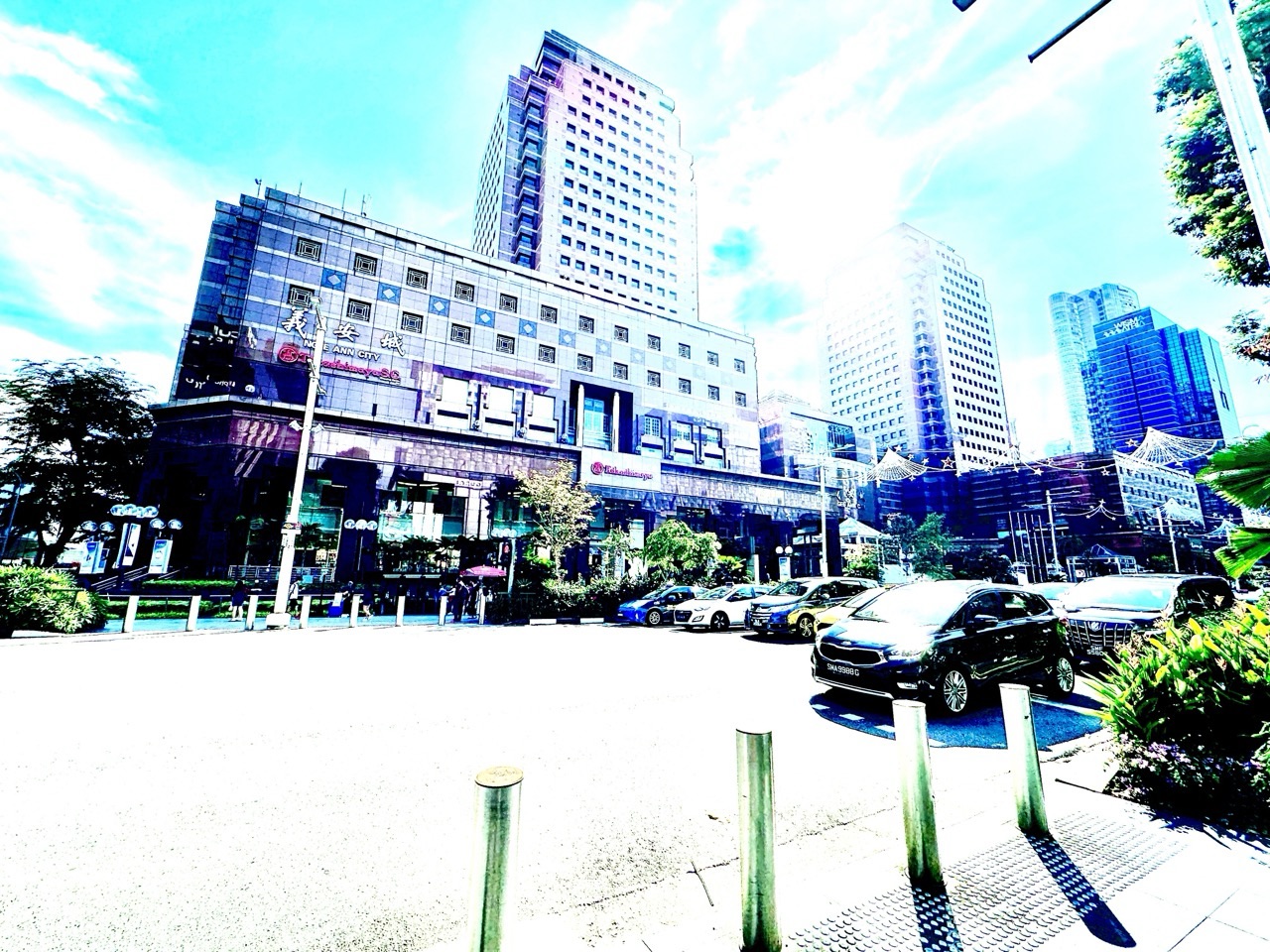
Did you know three historical sources about one Orchard building can all be accurate even if they describe different uses, owners and meanings? The Cathay complex opened before World War II and subsequently served Japanese propaganda functions; MacDonald House was a post-war commercial landmark before it became associated with a deadly 1965 attack. A Secondary 4 G3 History answer succeeds when it controls dates, source purpose and the exact question—not when it repeats a dramatic story.
For Orchard families, eduKateSG’s premium three-student, 1.5-hour weekly History tutorials are held near Sixth Avenue MRT, not on Orchard Road. Lessons begin with the student’s actual examination year, registered subject, school-marked scripts and the precise skill blocking improvement. Orchard case studies illustrate methods; the SEC paper still requires the prescribed international and Southeast Asian History material.
The tutorial model uses the immutable Clementi small-group tuition reference. For 2027, SEAB distinguishes standalone K330 History from K336 Humanities (Social Studies, History). Candidates sitting the 2026 GCE O-Level or a later cohort must use that specific year’s rules.
What happens in a Secondary 4 G3 History tutorial?
A tutor reads a real source-based answer and an essay. The first question is not ‘How many past papers have you done?’ but ‘Where did the answer stop meeting the task?’ A pupil may fail to use contextual evidence, misread a source’s purpose, list sources without synthesis, choose the wrong colonial territory or produce essays with no causal mechanism.
The teaching response differs for each problem. Students practise the missing move, explain why the correction works and then answer a fresh question alone. A three-student class is useful when the tutor can read and respond to the individual thinking rather than write one group answer.
Check the examination year before using a paper code
The Singapore-Cambridge Secondary Education Certificate begins in 2027. Standalone G3 History is K330, while K336 is combined Humanities with Social Studies and History. The older 2026 GCE O-Level reference codes are not a licence to use future paper formats for every learner.
First record the student’s actual examination year, registered code and school coverage. A later cohort may have revised instructions; parents should always use the relevant published SEAB documents instead of treating a 2027 PDF as timeless.
2027 standalone K330 has two separate History papers
The published 2027 K330 specification sets two papers at separate sittings. Each paper lasts 1 hour 50 minutes, carries 50 marks and contributes 50% of the subject. Paper 1 and Paper 2 cover different periods and prescribed units.
The tutor does not build a generic ‘one History paper’ schedule for a K330 candidate. Subject knowledge is divided correctly between Paper 1 and Paper 2, while common evidence-handling skills transfer across them.
K330 Paper 1 is a specified Southeast Asian and interwar study
Paper 1’s published scope is extension of European control in Southeast Asia and challenges to dominance from the 1870s to 1942. British Malaya is compulsory in the stated colonial section; Dutch Indonesia or French Vietnam supplies the syllabus-defined alternative.
The paper also includes post-World War I peace arrangements, Nazi Germany, militarist Japan and developments leading to World War II. Knowing that Singapore has Orchard Road heritage does not turn that neighbourhood into a permitted substitute for prescribed cases.
K330 Paper 2 focuses on the post-war world
Paper 2 covers Cold War developments and decolonisation in Southeast Asia in the period broadly 1940s–1991. Explanations should identify the specific states, movements, actors and decisions relevant to the examination question.
A student who uses the same paragraph on every Cold War question may remember some accurate background but fail to address the particular crisis, turning point or evaluative command. We rebuild context and mechanism separately.
The 2027 K330 source-based section is compulsory
Each K330 paper contains a 30-mark Section A source-based case study with up to six sources and five sub-questions, Q1(a) to Q1(e). The first four questions address specified source tasks and the final sub-question requires analysis, explanation and a judgement using evidence from several sources.
The candidate cannot earn a sound synthesis by merely listing what A, B, C, D and E say. The sources must be grouped around the claim being tested, with the decisive evidence and any relevant historical qualification.
The K330 essay section requires choosing two ten-mark answers
Section B carries 20 marks. Candidates answer two of three essays, ten marks each, in each K330 paper. The questions test the ability to select relevant historical knowledge, explain causation and make evaluations or judgements where appropriate.
Selecting a question is itself a skill. Pupils read the territory, years, issue and command word before choosing the two they can substantiate. A familiar topic with unfamiliar wording is often more dangerous than a less familiar topic with a clear plan.
The 2027 K330 response is typed in a digital answer booklet
SEAB specifies hard-copy question papers with a digital answer booklet for 2027 K330. Students are required to type their answers in that booklet. We practise concise typed paragraphs, accurate source identifiers and an efficient evidence plan.
The tuition computer is not claimed to reproduce the official exam interface. Hardware, permitted functions, special arrangements and procedures come from SEAB and school instructions. A fast but historically unsupported answer is not improved by typing speed.
What combined K336 requires instead
The published 2027 K336 syllabus includes Social Studies: 1 hour 45 minutes, 50 marks, 50%, and History: 1 hour 50 minutes, 50 marks, 50%. The History paper has a 30-mark source-based section and 20-mark essay section, with two ten-mark choices from three.
Those shared section marks should not be mistaken for identical standalone content or identical response-medium instructions. Combined students must protect time for Social Studies and follow the current K336 syllabus, not automatically study every K330 colonial alternative.
A side-by-side subject audit protects scarce revision time
Before doing another paper, write four facts: the actual subject code, the number of History papers, the prescribed case studies and the correct response medium. K330 has two History papers; K336 has one History paper alongside compulsory Social Studies.
Parents sometimes see the phrase ‘G3 History’ on a book and assume it fits both. A tutor should inspect contents and syllabus labels carefully. Using the wrong scope produces activity without appropriate assessment readiness.
Orchard’s Cathay is a history laboratory, not a K330 case
NHB records that the Cathay cinema opened in 1939, the high-rise opened later and the Japanese authorities used the complex for propaganda during the Occupation. A dated source about that building can illustrate how purpose and ownership alter across periods.
For a K330 essay on European war origins, this is not by itself the necessary evidence. The local example teaches the thinking move; the final national-style practice uses authentic sources and historical knowledge from the official prescribed case.
The MacDonald House story shows why chronology is essential
MacDonald House was completed in 1949 as a modern commercial building. A bombing there on 10 March 1965 during Konfrontasi killed three civilians and injured thirty-three; NHB records the event and its regional context. Singapore’s separation from Malaysia followed in August 1965.
A pupil who places the March attack after 9 August is factually wrong even if their paragraph otherwise flows well. Different dates reveal different political settings. The same discipline applies when distinguishing two Cold War crises or the sequence of diplomatic decisions.
A source’s date and the event’s date are two separate things
A later museum page describing a wartime cinema is not itself a 1942 eyewitness account. It can be a useful, well-researched synthesis. A contemporaneous diary is closer to lived experience but may have narrower knowledge.
On each document, we annotate when the event happened, when the source was made, who produced it and which question is being asked. Students should not treat a date in a caption as proof that the physical object originated that year.
Inference begins with a supported claim
A weak source response paraphrases every sentence and ends with a large assumption. A strong inference selects a detail, states what it reasonably suggests and explains the connection. The inference must not claim more than the source can establish.
A 1958 shop advertisement may indicate the qualities a retailer wanted to publicise. It does not prove every shopper was satisfied or all prices were affordable. That distinction is easy to see locally and essential on a new national-paper source.
Purpose must include the maker, audience and context
To analyse purpose, consider who produced the source, who was meant to see it, what the author hoped to achieve and the historical circumstances. A government wartime notice, a private trader’s complaint and a political speech have different relationships with audiences.
A statement such as ‘it was made to tell the truth’ may ignore a persuasive intent; ‘to influence people’ may be too generic. Use source content to identify the specific action, belief or response the maker sought.
Reliability and usefulness cannot be marked with one adjective
Official origin does not guarantee that a claim about outcomes is accurate. Equally, propaganda may be extremely useful for investigating official messaging while being weak evidence of public agreement. A diary may reveal an individual’s experience but not a whole population.
The tutor forces the question into the evaluation: reliable for which historical claim? Useful for which enquiry? A reasoned qualification based on the relevant evidence is much stronger than writing ‘biased, hence unreliable and useless’.
Comparison is about claims on the same issue
Two sources mentioning the same ruler, building or war may still take no common position. Before declaring agreement or disagreement, identify the shared issue and cite the precise statement made by each. Then explain whether their claims align or differ.
The fact that one is a newspaper and another is a speech is relevant to evaluation, but it is not itself an answer to a comparison question. Format and provenance explain why views might differ; they do not replace reading the views.
Corroboration requires genuine additional support
If two websites reuse one archive’s claim, their agreement may not be independent. The same issue arises in a case study: two sources may borrow a rumour or report. Pupils should identify independent evidence where available, or acknowledge the limitation.
Good corroboration specifies what the additional source confirms, rather than asserting ‘both sources are similar’. It may strengthen only one narrow part of an argument, leaving other parts uncertain.
A source synthesis must make a judgement, not a catalogue
For the final source question, make a clear provisional judgement about the proposition. Group supporting and challenging sources, explain the crucial evidence and qualify the overall weight using context, independence and source limitations.
A response that follows A, B, C, D, E mechanically can obscure the question’s central dispute. The tutor teaches the pupil to reorder material by argument and then remove the planning grid during timed practice.
British Malaya cannot be swapped for Dutch Indonesia or French Vietnam
In the K330 colonial section, territorial specificity matters. Authorities, political institutions, resistance and economic arrangements differed across these territories. The syllabus’s either/or country option must be understood instead of revising a blurred ‘European control in Asia’ narrative.
We check actors and dates before essay writing. A student who imports an example from the wrong territory may produce a grammatical paragraph that cannot substantiate the actual question.
The Paris settlement and collective security need causal evidence
A historical explanation of the Paris settlement connects negotiating aims, agreed terms and relevant reactions. For collective security, students should identify institutional capacity, actual decisions, deterrence and responses in the prescribed episode.
The phrase ‘the treaty was unfair’ or ‘the League was weak’ is a conclusion without visible reasoning. An evaluative essay must specify mechanisms and weigh other factors, not simply memorise reputation.
Germany and Japan require their own histories
Authoritarian developments in Germany and militarist developments in Japan occurred in different political and social contexts. Reusing one set of named leaders, domestic events or diplomatic actions for the other is an error of evidence.
A tutor checks separate case timelines before asking how economic pressures, political institutions or aggressive decisions contributed to a wider conflict. Comparison begins with accurate individual cases.
Cold War responses should not be written as inevitable
Knowing the later end of the Cold War can tempt students to overstate what a leader knew during a crisis decades earlier. Good historical reasoning considers perceptions, constraints, available options and responses at the time.
We practise a chain: perceived threat, specific decision, reaction, escalation or reduction. Then ask what alternative factor should temper the conclusion. Broad labels such as ‘fear’ or ‘competition’ are starting ideas, not complete explanations.
Decolonisation must distinguish local movements and external pressure
The growth of a national movement, the response of a colonial authority and the influence of the wider international situation did not occur identically in every Southeast Asian territory. The essay needs an accurate case and the causal relationships relevant to it.
Students who can explain one movement’s decisions concretely should then learn to weigh the role of external circumstances. A region-wide slogan does not replace the history of a particular nation.
Orchard’s cemetery and Ngee Ann City provide a source-purpose analogy
The land that now contains Ngee Ann City was associated with the Teochew Tai Shan Ting cemetery. NHB traces the exhumations, the Ngee Ann Building and the redevelopment that opened as Ngee Ann City in 1993. The organisation’s revenue has supported educational and charitable work.
A contemporary real-estate promotion, a community heritage account and an exhumation record could describe different interests, dates and consequences. The source lesson is multi-perspective evidence, not an assumption that this is part of the K330 Paper 2 syllabus.
When a modern photograph makes the past look completed
An image of today’s Ngee Ann City confirms that certain structures exist at the time it was taken. It does not prove the site was a mall in 1953 or describe how each affected family viewed earlier cemetery redevelopment.
A common History mistake is to project today’s landscape backwards. Date the image; identify earlier land use using relevant historical documents; distinguish proposals from implementations and remembered experiences.
Time management: a sensible but non-official 110-minute plan
A pupil might practise approximately 60–65 minutes on the 30-mark compulsory source-based section, about 20–23 minutes per selected ten-mark essay and a short margin to verify question numbers, source labels and completeness. These are tutorial allocations, not SEAB-prescribed section timings.
We adjust the division after a real attempt. If the child copies huge extracts or spends too long polishing openings, repair planning and evidence selection first. For 2027 K330, typed practice adds a need for paragraph organisation but does not replace historical reasoning.
A six-week correction cycle is more useful than repetition without feedback
Week by week, the tutor checks subject registration, content accuracy, source inference and purpose, comparison and corroboration, synthesis, and selected essays. A final unseen timed task tests whether the skill transfers to material the child has not rehearsed.
This is an adaptable outline, not a grade guarantee. Some students need multiple cycles for factual gaps; others have strong knowledge but a persistent response-selection problem. Parents should receive evidence of the actual obstacle being addressed.
A realistic 90-minute three-student lesson
- First 10 minutes: factual retrieval from the pupil’s registered SEC topic.
- Next 15 minutes: analyse a genuine teacher-marked source or essay and locate the first problem.
- Next 20 minutes: tutor models exactly one missing reasoning or contextual move.
- Next 20 minutes: each pupil attempts an unfamiliar question independently.
- Next 15 minutes: compare evidence and revise the flawed inference, causal link or judgement.
- Final 10 minutes: an unseen transfer task, error log and manageable home assignment.
The structure is an illustration. An academically honest tutor should not claim every learner has identical weaknesses or that three pupils can simply share one completed model response.
An illustrative six-week Secondary 4 examination repair plan
- Week 1: confirm cohort, exact K330/K336 code and mark-script diagnostic.
- Week 2: correct chronology, actor and territory errors in the actual case.
- Week 3: inference, purpose, comparison and reliability drills on unfamiliar sources.
- Week 4: source synthesis with supporting, challenging and qualifying evidence.
- Week 5: selective ten-mark essay planning, causal mechanisms and evaluative criteria.
- Week 6: a timed unfamiliar task, targeted feedback and the next correction route.
A plan may need to be longer if core content has not been taught or foundational writing skills are insecure. We track demonstrated improvement, not an advertised number of worksheets.
Fifteen original fictional source and judgement drills
All miniature passages here are original fictional teaching prompts, not authentic historical quotations, victims’ testimony or actual SEAB examination questions. They demonstrate reasoning techniques before students work on properly sourced prescribed history.
Practice 1: A 1939 cinema advertisement
Fictional source: Fictional pre-war poster promises world-class entertainment to every resident.
Question: Which claim is safe? Reasoning: The poster shows promotional aims, not the opinions or attendance of every resident.
Independent transfer: Find a source that could help measure actual audience response.
Practice 2: A 1942 propaganda announcement
Fictional source: Fictional wartime notice praises the administration and asks citizens to attend a screening.
Question: Is it proof that the public agreed? Reasoning: No. It is valuable for official messaging and possible mobilisation goals.
Independent transfer: Name an independent account of audience experience.
Practice 3: A 1949 bank prospectus
Fictional source: Fictional MacDonald House leaflet calls the building a sign of universal prosperity.
Question: How would you evaluate usefulness? Reasoning: Useful for the bank’s self-presentation but limited for residents’ economic circumstances.
Independent transfer: Compare an employment or wage record.
Practice 4: A 1958 store brochure
Fictional source: Fictional opening advertisement predicts new commerce along Orchard Road.
Question: Can predictions establish outcomes? Reasoning: It shows expectations, not the number or incomes of future customers.
Independent transfer: Write a source-purpose sentence.
Practice 5: A March 1965 newspaper note
Fictional source: Fictional article reports an explosion at a named Orchard building.
Question: What contextual mistake is common? Reasoning: The March date precedes Singapore’s August separation from Malaysia.
Independent transfer: Write the political setting without sensationalism.
Practice 6: A later survivor recollection
Fictional source: Fictional memoir remembers fear and disrupted ordinary life after a violent event.
Question: Can it represent all eyewitnesses? Reasoning: No. It records one later memory and requires sensitive corroboration.
Independent transfer: Name a respectful source limitation.
Practice 7: An 1840s plantation map
Fictional source: Fictional map shows nutmeg plots where later retail buildings stood.
Question: Is the map enough to describe current land use? Reasoning: No. It shows one mapped period and type of representation.
Independent transfer: Suggest a later dated comparison.
Practice 8: A 1950s cemetery redevelopment proposal
Fictional source: Fictional planning note predicts a successful commercial complex.
Question: Does the plan prove the completed 1993 project? Reasoning: No. The proposal and later construction are different stages.
Independent transfer: Identify a completion or opening record.
Practice 9: A colonial policy circular
Fictional source: Fictional British Malaya administrator proposes a reform with claimed benefits.
Question: What must a candidate specify? Reasoning: Place, date, actor, means of implementation and local response.
Independent transfer: Avoid importing Indonesian or Vietnamese facts.
Practice 10: A Paris peace speech
Fictional source: Fictional 1919 negotiator claims the agreement will ensure lasting stability.
Question: Can it prove later peace? Reasoning: It expresses a goal and argument at that date, not the later result.
Independent transfer: Identify a different actor’s response.
Practice 11: A League discussion
Fictional source: Fictional resolution condemns aggression but includes no enforcement action.
Question: What does the source establish? Reasoning: Stated position or debate, not the implementation of collective security.
Independent transfer: Find evidence of actual state action.
Practice 12: An authoritarian party newspaper
Fictional source: Fictional 1930s editorial blames one group for national hardship.
Question: Can it prove the accusation? Reasoning: It is evidence of rhetoric and political purpose, not independent proof.
Independent transfer: Explain why context and audience matter.
Practice 13: A Cold War radio warning
Fictional source: Fictional 1962 broadcast alleges hostile intentions by another country.
Question: Is allegation equal to evidence of intent? Reasoning: No. It can reveal threat perception or strategy; corroboration is needed.
Independent transfer: Propose a diplomatic source to test the claim.
Practice 14: A decolonisation campaign speech
Fictional source: Fictional movement promises immediate prosperity after political change.
Question: What two claims must be separated? Reasoning: The movement’s objectives and later measured outcomes.
Independent transfer: Name a question only later records could answer.
Practice 15: Five documents, one judgement
Fictional source: Fictional source set has two government statements, a memoir, a picture and a later historian’s account.
Question: How can the candidate synthesise? Reasoning: Group evidence by support and challenge; assess independence, context and limits.
Independent transfer: Write a qualified final judgement without listing A–E.
An original ten-mark essay: was collective security the decisive factor?
Original practice question: ‘How far did failures of collective security matter more than the decisions of aggressive states in increasing international tensions during the 1930s?’ This is not a SEAB past-paper question. First define what ‘more important’ means: greater influence on escalation, fewer alternatives or longer-lasting consequences. Then use prescribed cases to explain how institutional constraints influenced state calculations.
A second paragraph weighs decisions by aggressive actors and relevant constraints or responses. The conclusion judges relative influence using the chosen criterion. Merely writing ‘both were important’ avoids rather than answers the evaluative task. The tutor then changes the command word to see whether the student can adapt.
An original ten-mark essay: interpreting Cold War choices
Original practice question: ‘Explain how a government’s response to a perceived threat could intensify a Cold War crisis.’ The candidate chooses a suitable prescribed episode and identifies the threat as perceived at the time, the responding actor’s concrete decision and the mechanism of escalation. The exact historical case, not a generic metaphor, supplies the evidence.
For a follow-up, ask whether the decision or longer-term strategic tension mattered more. The pupil must weigh the processes rather than reproduce a memorised narrative. This is how essay preparation becomes historical reasoning.
Seven useful progress checks for Orchard parents
- The learner knows the correct examination year and registered subject.
- The history folder separates K330 from K336 scope where relevant.
- Dates, historical territories and actors in recent answers are accurate.
- Source responses distinguish inference, purpose, reliability and usefulness.
- A final source judgement integrates evidence from multiple sources.
- An essay explains a causal mechanism and offers a justified conclusion.
- At least one unseen timed attempt shows a corrected skill without a model answer.
Frequently asked questions: Secondary 4 G3 History tuition Orchard
Is this tuition for K330 or K336? The approach can teach shared historical-thinking skills, but the actual syllabus route, examination content and weekly plan must follow the child’s registered subject.
Are Orchard’s Cathay and MacDonald House prescribed SEC case studies? No such claim is made. They are local examples that make source date, political context and evidence limits easier to understand before the national case.
Do 2027 K330 candidates type their answers? Yes, the published standalone K330 syllabus specifies a digital answer booklet with printed question papers. Do not assume this applies unchanged to every other code or cohort.
Is doing more past papers always better? Not when the same factual or reasoning error remains uncorrected. Diagnose first, practise deliberately, then test the skill on a different question.
Where do Orchard students attend lessons? The referenced premium three-student tutorials meet near Sixth Avenue MRT; families need to check the actual journey and timetable.
Official examination and Orchard historical references
The definitive 2027 subject reference is the SEAB G3 directory with separate K330 standalone History syllabus and K336 Humanities (Social Studies, History) syllabus. The local historical illustrations rely on the NHB Cathay Building account, MacDonald House monument record, NHB’s account of the 1965 bombing, Orchard Heritage Trail, Ngee Ann City history and C K Tang history. An Orchard heritage source does not determine exam content.
Learn about the three-student class model from the immutable Clementi tuition reference. For a suitability discussion, eduKate Singapore should be given the child’s actual syllabus code and recent marked History work.
Continue the Secondary 1–4 G3 History learning sequence in Orchard
Secondary 1 G3 History tuition Orchard, Secondary 2 G3 History tuition Orchard, Secondary 3 G3 History tuition Orchard. These stages progress from evidence and chronology through wartime source comparison to accurate upper-secondary knowledge. Secondary 4 concentrates on subject routing, multi-source synthesis and exam-ready explanation.