
eduKate • Bras Basah, Singapore • Secondary 4 Geography • 2026 O-Level and 2027 SEC readiness, source evaluation and independent revision
Choose your reading route
Secondary 4 Geography tuition in Bras Basah should begin with the exact examination paper. The better weekday or weekend arrangement is the one that leaves a student alert enough to correct a recurring error and demonstrate a stronger new answer independently.
2026/2027 paper · Official planning facts · Worked evaluation · Timing · Parent checklist

Contents
Thirteen chapters — examination route, worked judgements and parent decisions
1. The first examination-year decision is the exact Geography subject, not the tuition slot
2. A real planning context: arts, education, heritage and public movement
3. Original exam evaluation: should a fictional cultural street prioritise access or heritage?
4. Worked numerical judgement: when changing values reverses an attractive recommendation
5. A fictional survey with unequal group sizes: percentage accuracy before interpretation
6. A photographed place, a historic record and a current plan may describe different things
7. An original microclimate comparison strengthens cross-topic transfer
8. Why describe, explain and evaluate need different answer structures
9. Weekday or weekend exam tuition should protect the learner’s independent revision
10. A real three-learner exam tutorial requires three individually assessed scripts
11. What a productive ninety-minute Geography revision lesson could look like
12. Four weeks of targeted revision with fewer repeated errors
13. Parent checklist, frequently asked questions and the Bras Basah Geography series
The first examination-year decision is the exact Geography subject, not the tuition slot
Secondary 4 Geography tuition in Bras Basah should begin with the candidate’s actual exam paper and a recently marked question. A student may be taking standalone Geography or Humanities (Social Studies, Geography), and the 2026 GCE and 2027 SEC subject codes differ. The tutor must not assume a textbook or school question from one route is automatically relevant to another.
SEAB’s 2026 O-Level listing includes Geography 2279 and Humanities (Social Studies, Geography) 2260. The 2026 N(A)-Level listing includes Geography 2246 and Humanities (Social Studies, Geography) 2125. For 2027, the SEC G3 listing identifies Geography K329 and Humanities (Social Studies, Geography) K335, while SEC G2 lists Geography K226 and Humanities (Social Studies, Geography) K229. These are official programme references and should guide materials used for each learner.
| Year and level | Standalone Geography | Humanities with Geography |
|---|---|---|
| 2026 GCE O-Level | 2279 | 2260 |
| 2026 GCE N(A)-Level | 2246 | 2125 |
| 2027 SEC G3 | K329 | K335 |
| 2027 SEC G2 | K226 | K229 |
A parent should bring the student’s exact subject registration, the current school unit, the marking rubric or comments and a recent script. A vague enquiry about “Geography exam techniques” is less useful than asking why the child compared the wrong values, omitted an explanation or failed to make a judgement.
The lesson may focus on a skill shared across different syllabuses, such as interpreting source data or evaluating a proposal. But the actual scope, question wording and paper requirements must come from the student’s own course. An effective tutor makes this distinction explicit before recommending a timetable.
Being close to an exam does not make a child automatically in need of more tuition. Where independent performance is already accurate, additional revision time might be better spent consolidating other subjects and protecting rest. A specific weakness is a better justification for lessons than fear of the calendar.
A real planning context: arts, education, heritage and public movement
URA’s 2026 central-area heritage and culture update describes the Bras Basah.Bugis, Fort Canning and Civic District areas as linked arts and cultural precincts. Its account identifies completed enhancements on Queen Street and Bencoolen Street and upcoming works for Waterloo Street, including wider sidewalks, greenery and pockets of public spaces. This is genuine planning context for an upper-secondary Geography question.
The district contains multiple functions. URA’s urban-design guidance emphasises arts, education and heritage together with a pedestrian-friendly public environment. NLB’s Bras Basah history helps explain the continuing presence of educational and cultural institutions. These sources support a description of the district’s roles, but they do not quantify current visitor numbers or prove the precise benefit of every development.
A candidate must distinguish a proposal from a measured result. “URA plans improvements for Waterloo Street” is supported by the cited source. “The improvements have already reduced pedestrian journey times by ten minutes” would require actual completion and measurement evidence. Writing the second as a fact would weaken even an otherwise coherent essay.
That distinction is valuable across the syllabus. A planned coastal defence is not an observed change in flood risk, and an announced green corridor does not establish a biodiversity outcome. Students need to interpret what source language allows rather than turn aspirational planning text into historical fact.
The Bras Basah context makes a memorable practice case, but it must not replace the official school’s required material. An examiner may present an unfamiliar place; the core skill is to handle the source accurately and apply the relevant concept.
Original exam evaluation: should a fictional cultural street prioritise access or heritage?
Here is a completely fictional examination-style scenario, not a current URA proposal. Imagine that a generic heritage street has two possible layouts. Option A retains an extensive set of illustrated existing features but makes only modest accessibility adjustments. Option B creates more continuous step-free movement and public resting space while requiring further assessment of its effect on historic fabric. Both options are imagined; neither has received conservation permission or been costed.
The Geography question is: “Evaluate which option should be preferred, considering different public needs and the available evidence.” A weak answer may simply praise B as modern and accessible. Another weak response may praise A as historic without considering whether all users can navigate the area. A strong answer identifies criteria, weighs trade-offs and states the evidence required to make a defensible recommendation.
| Criterion | Fictional Option A | Fictional Option B | Missing information |
|---|---|---|---|
| Historic visual continuity | More visible features retained | Some reconfiguration proposed | Exact protected requirements |
| Movement accessibility | More limited changes | More step-free features | Detailed access review |
| Everyday street function | Not measured | Not measured | User and delivery evidence |
| Cost and upkeep | Not estimated | Not estimated | Engineering and maintenance plans |
A good response might say: “If the main objective is improving access for people with varied mobility needs, B may be preferable, but it would require evidence of feasibility, compliance and actual user benefits. If conserving the identified architectural character is the decisive priority, A could be favoured. A final judgement needs site-specific technical and community information.”
The key is the conditional reasoning. The student has not refused to judge; they have specified what the decision depends on. A source-based evaluation can reach a bounded conclusion even when evidence is incomplete. What it must not do is invent a cost or claim to speak for every resident.
For independent transfer, replace the historic street with a fictional park or transport hub and have the candidate weigh new criteria. If the learner can do this without repeating the Bras Basah case word-for-word, examination reasoning is improving.
Worked numerical judgement: when changing values reverses an attractive recommendation
A weighted matrix is a useful classroom way to expose the assumptions hidden in a seemingly confident evaluation. It is not a real planning approval, actual public survey or official SEC marking requirement. Give heritage continuity 40% of the weight, accessibility 35% and practical operation 25%. Assign fictional performance ratings on a scale from one to five.
| Fictional criterion | Weight | Option A | Option B |
|---|---|---|---|
| Heritage | 40% | 5 | 3 |
| Accessibility | 35% | 2 | 5 |
| Practical operation | 25% | 3 | 4 |
For A, the weighted result is 5 × 0.40 + 2 × 0.35 + 3 × 0.25 = 2.0 + 0.70 + 0.75 = 3.45 out of 5. B gives 3 × 0.40 + 5 × 0.35 + 4 × 0.25 = 1.2 + 1.75 + 1.0 = 3.95. B wins under those invented criteria. That conclusion tells us only what this simplified model produces.
Now shift the weights to 60% heritage, 20% accessibility and 20% operation. A becomes 5 × 0.60 + 2 × 0.20 + 3 × 0.20 = 4.0. B becomes 3 × 0.60 + 5 × 0.20 + 4 × 0.20 = 3.6. The ranking reverses. Nothing about a real Bras Basah building changed; the hypothetical priorities changed.
The candidate should explain why weighted scoring is not a substitute for evidence. Ratings need a defensible basis. Some constraints, such as safety or legal conservation compliance, may not be appropriate to treat as tradeable preferences. The matrix is a teaching device for revealing sensitivity, not a method of bypassing real rules.
A high-quality concluding sentence could be: “The preferred option depends on the weighting of heritage and access, and any real decision would still require verified technical and social evidence.” The mathematical work supports the evaluation while acknowledging limitations.
Ask every student to create a different set of weights summing to 100% and recalculate the result independently. This shows whether they understand the approach rather than remembering a favourite number.
A fictional survey with unequal group sizes: percentage accuracy before interpretation
A Geography paper may combine a survey table with a planning source and ask for a conclusion. The candidate must compare like with like. In the following fictional exercise, no survey of Bras Basah residents or visitors was undertaken. The values are deliberately chosen to expose a common problem with unequal sample sizes.
| Invented group | Support proposal | Total respondents | Support share |
|---|---|---|---|
| A | 16 | 20 | 80% |
| B | 36 | 60 | 60% |
| Combined | 52 | 80 | 65% |
Group B has more supporters in raw numbers, thirty-six compared with sixteen, but the share in B is lower, 60% rather than 80%. Combining the groups gives 52 out of 80, or 65%. Taking the unweighted average of 80% and 60% would yield 70%, which does not represent the combined group because the sample sizes differ.
Students should not stop after calculating correctly. Who was interviewed? Were both groups defined fairly? Did respondents have equal opportunities to participate? Were questions phrased neutrally? A precise percentage can still be unrepresentative. An examination answer should identify a specific limitation and an appropriate improvement.
A transfer table can contain five supporters out of ten and seventy-two out of ninety. The combined share is 77%, not the arithmetic average of 50% and 80%, which would be 65%. This simple example demonstrates why the denominator matters when groups are unequal.
None of these figures can justify a statement that “65% of Bras Basah residents support the plan”, because the dataset is hypothetical and not a representative survey of any real population. A candidate who makes that distinction is demonstrating good source discipline.
The tutor can turn the exercise into a short evaluated recommendation: the survey data suggest a pattern within the invented respondents, but a real planning decision would need defined stakeholder samples and additional evidence about effects. This converts arithmetic into geographical reasoning.
A photographed place, a historic record and a current plan may describe different things
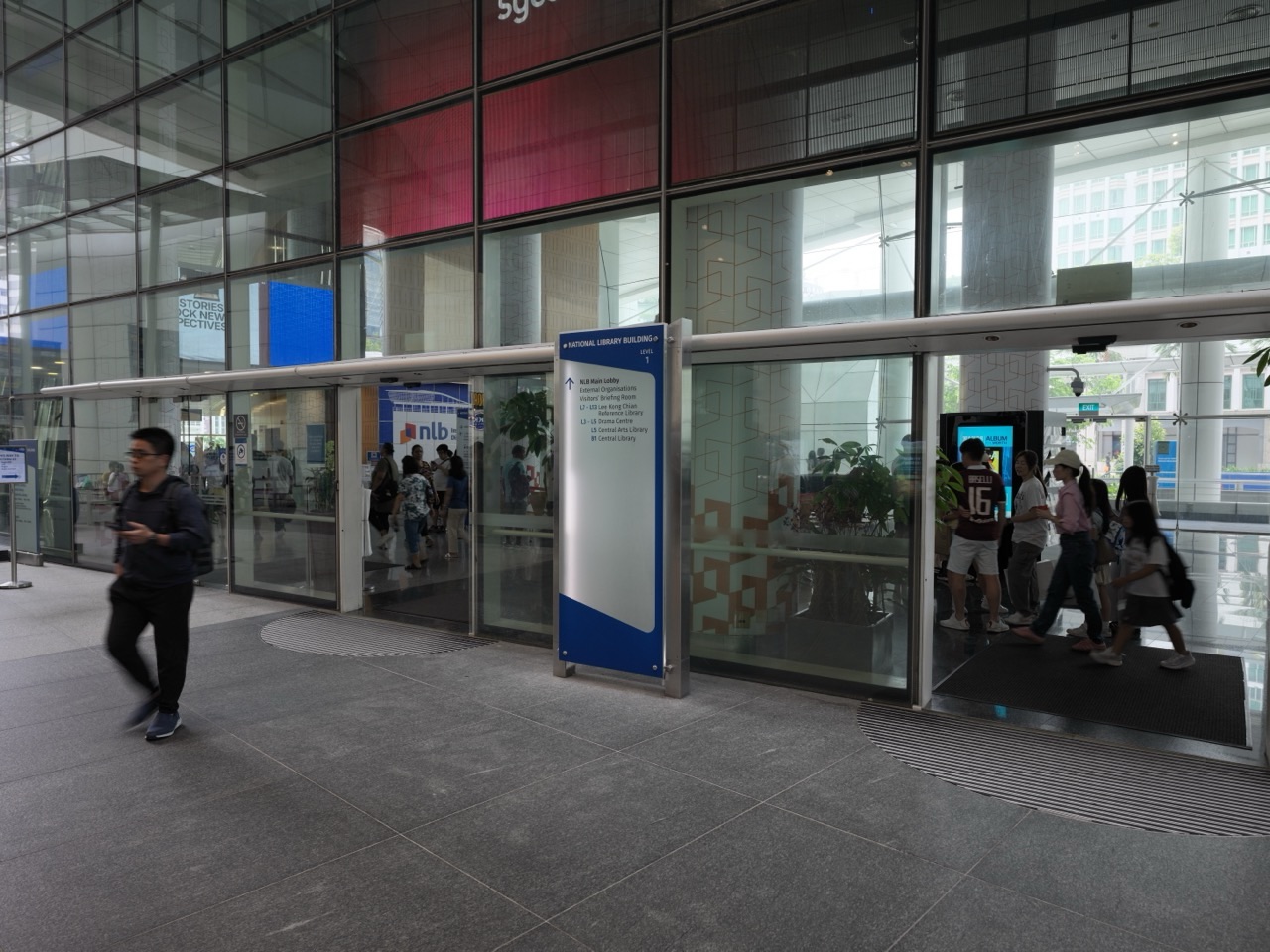
An unfamiliar Geography source pack can contain a present-day photograph of the National Library, a historic NLB map and a URA planning account. These are valuable materials, but they answer different questions. A photograph documents visible features at a time and viewpoint. A historic map provides a representation using older boundaries and categories. A contemporary plan describes present goals and sometimes future actions.
A strong candidate should not treat these sources as a complete before-and-after survey simply because they mention the same broad district. Do they show the same location? Is a building pictured at its old or current site? Are the stated dates event dates or publication dates? Do any sources measure the outcome that the question asks about?
| Source type | Useful claim | Unsupported leap |
|---|---|---|
| National Library photograph | Visible exterior or interior features at the photographed time | All present visitors are satisfied |
| NLB historical map | Historic labels and mapped features | Every current street follows exactly the old arrangement |
| URA 2026 planning account | Announced policies and described project status | All upcoming projects are finished |
| Fictional class survey | Works for rate and reliability practice | Real neighbourhood public opinion |
The student can write a stronger synthesis by assigning each source its proper role. For example: NLB documents the district’s learning heritage, URA explains its current cultural and pedestrian planning direction, and a contemporary photograph provides limited visual evidence of a particular landmark. Together they offer context, but not a measured conclusion about every visitor’s experience.
This is also where students learn that a credible source can still be insufficient for a particular claim. Trustworthiness and relevance are different questions. URA is authoritative about its own plans, but that does not turn a proposed streetscape into an observed pedestrian count.
The best practice uses a second unfamiliar set of sources—perhaps a coastal change diagram and a weather record—so the learner must transfer the logic rather than memorise local phrases.
An original microclimate comparison strengthens cross-topic transfer
For a different type of geographical evidence, create a fictional outdoor-comfort dataset. Imagine two street points X and Y, one exposed to sun and another shaded. The numbers are not measurements in Bras Basah and are not claims about present thermal comfort near the National Library.
| Invented reading | Point X | Point Y |
|---|---|---|
| Air temperature | 33.1°C | 31.7°C |
| Relative humidity | 63% | 70% |
| Wind speed | 0.4 m/s | 1.1 m/s |
X has an air-temperature reading 1.4°C higher than Y. A candidate can state that difference accurately, but should not assert that all people at X feel exactly 1.4°C hotter or that shading alone caused the contrast. Radiation, humidity, wind, personal activities and measurement methods also matter.
The question then becomes one about investigation quality. Were readings made at the same time, with calibrated equipment at comparable height? Could a nearby surface affect the measured air temperature? Were repeated samples taken? If those factors are unknown, a broad causal conclusion would be premature.
A strong exam response may say: “In the fictional reading, X was warmer than Y, but additional standardised observations are needed to assess whether shade consistently contributes to the difference.” This gives an observed result, a possible process and a specific limitation. It is much stronger than the unsupported statement that one place is always more comfortable.
The transfer objective is clear. The same discipline used for a hypothetical public-space survey applies to climate data: inspect units, sampling, variables and evidence limits. Students become better at Geography when these habits survive across topics rather than remaining tied to one local case.
The district’s planned greenery can be discussed as an intended design element from URA’s account, but the invented temperature values must never be described as observed effects of those plans.
Why describe, explain and evaluate need different answer structures
An examination candidate can know a great deal about Bras Basah and still lose marks if the answer ignores the command word. “Describe” may require a pattern or comparison using numbers. “Explain” requires a relevant geographical mechanism. “Evaluate” requires criteria, evidence, competing considerations and a reasoned judgement. Each must be fitted to the actual paper and source information.
Imagine the question is to describe a difference in imagined walkway width. The student should state the relevant widths and compare them. If asked to explain a possible influence on pedestrian movement, they need a process, perhaps how available space affects circulation, while recognising that movement was not directly measured. If asked to evaluate an improvement plan, a conclusion must consider trade-offs and uncertainty.
The Fencing Method helps keep the answer within the task. First identify the requested claim. Next select the source evidence that truly supports it. Then explain the process at the needed depth. Finally inspect the sentence for hidden assumptions and remove anything the source cannot establish.
- Underline the command word and geographical scale.
- Read units, date, axes and any source restrictions.
- Use a direct comparison before proposing an explanation.
- For evaluation, identify which criteria matter and to whom.
- State a supported judgement rather than two disconnected lists.
- Check one limitation and avoid a universal statement without evidence.
A shorter answer that addresses the question precisely may be better than a long essay full of impressive but unrelated history. Students should learn to select case facts, not empty their notebook into every response.
Good small-group teaching makes individual performance visible. Each learner should produce a new response while the tutor records the error pattern. Confidence in discussion does not establish examination readiness unless the child can write the method independently.
Weekday or weekend exam tuition should protect the learner’s independent revision
As examinations approach, the temptation is to add more class hours automatically. A weekday session may be useful if a recently marked paper reveals one clear issue and the student is still alert after school. A weekend session may provide room for a longer source-evaluation question, but a crowded weekend can also reduce independent practice and recovery. Neither format is inherently superior.
| Family situation | Weekday possibility | Weekend possibility | Evidence that matters |
|---|---|---|---|
| Fresh Geography error returned | Prompt correction | Longer reconstruction of a response | New unseen answer improves |
| Late CCA or other commitments | Avoid tired evenings | May be more rested | Independent writing still accurate |
| Weekend short of recovery time | Protects rest | Only if a quiet slot exists | Later retrieval task completed |
| Child already independently prepared | Extra tuition may not help | Extra tuition may not help | Specific residual weakness identified |
Judge the option by what happens after class. Can the student attempt a new unfamiliar question without a model answer open? Does the child retain the method after a day or two? Are repeated errors becoming less common? These are more meaningful indicators than the number of hours spent in tuition.
Try a two-week energy-and-output comparison using similar short tasks at different times. Observe sustained attention and independent completion. One comparison is not a scientific verdict, but the pattern may expose an overly demanding schoolday or an unsuitable weekend schedule.
The examination year should still contain meals, sleep, friends and manageable school obligations. Independent revision needs cognitive space. A family that fills every free hour with tuition may unintentionally remove the very practice time required for transferable learning.
The right tutor is comfortable recommending a shorter intervention, timetable change or no ongoing class when the evidence supports it. Educational need should drive the purchase, not anxious urgency.
A real three-learner exam tutorial requires three individually assessed scripts
The value of a small Geography group lies in targeted observation. One student may struggle to read graph labels; another may calculate correctly but not explain the significance; a third may understand both yet fail to weigh criteria in the conclusion. An effective tutor adapts the lesson to those differences instead of delivering a single uninterrupted speech.
For a source pack about a fictional public-space decision, the first child identifies evidence and dates, the second evaluates quantitative claims and the third challenges the judgement. Roles rotate, then every learner writes an independent response to a changed scenario. The tutor must check all three scripts, not just the loudest voice.
Differentiated pathways can be simple. Repair students rebuild unstable foundational skills. Stabilisation students practise consistency under reasonable time conditions. Extension students evaluate contradictory evidence or design a stronger investigation. The group should not rush a struggling learner or hold a confident learner on easy tasks indefinitely.
Parents should ask how often individual written work is examined, how prompt dependence is recorded and what the next independent question looks like. “We completed three exam papers” does not necessarily mean a child’s reasoning improved. A precise before-and-after example does.
The teaching framework is consistent with eduKate’s attention to small-group learning, but actual Geography availability, class cap, venue and fees must be confirmed. A Bras Basah article does not promise a physical class there or a particular grade.
What a productive ninety-minute Geography revision lesson could look like
An illustrative 90-minute Geography lesson need not contain 90 minutes of continuous full-paper writing. A balanced session can retrieve one old idea, diagnose a recent error, teach a missing principle, practise with a new source and end with an independent response. A brief error review sets a short follow-up task for later in the week.
| Approximate period | Learning stage | Individual evidence |
|---|---|---|
| 10 minutes | Retrieval of earlier concept | Correct response without notes |
| 20 minutes | Inspect marked school error | Specific first failure identified |
| 20 minutes | Teach a new source method | Student can explain the correction |
| 20 minutes | Unseen independent question | Reduced need for hints |
| 10 minutes | Compare competing interpretations | Evidence-based defence |
| 10 minutes | Error log and continuation | Next transfer task defined |
A tutor should not treat the polished model paragraph as the last stage of learning. The model shows what good reasoning can look like. A fresh task with a different source is necessary to establish whether the student can perform independently.
Some children need extra data practice before they can evaluate confidently. Others know the process but omit a final judgement. The lesson should correct those different issues rather than assume every student needs the same packet of notes.
Time pressure should be practised in the actual syllabus context. A universal minute-per-mark rule invented without regard to the student’s examination paper could make revision less relevant. Use the school’s and SEAB’s published structures and adapt timing accordingly.
The best output of ninety minutes is a learner who can say what was wrong, why it was wrong and how the next answer will change. The tutor should make that growth observable.
Four weeks of targeted revision with fewer repeated errors
A four-week plan should begin with the student’s present script and exact subject code. It is not a promise of a fixed grade change. Select two or three repeated errors that are likely to affect exam responses, such as misread data, unsupported causation, weak evaluation or poor time management. Address those before widening to more case studies.
| Week | Revision objective | Independent check |
|---|---|---|
| 1 | Match paper and identify repeated error | Correct source extraction on new question |
| 2 | Repair units, rates and percentage shares | Fresh table interpreted accurately |
| 3 | Build an evaluation with stated criteria | Conditional judgement using new case |
| 4 | Mixed unseen timed practice and feedback | Fewer repeat errors without prompts |
Keep a compact error log with one original answer, one guided correction and one later unseen attempt. If the final attempt is still wrong in the same way, revisit the first principle rather than racing forward. If the child now performs accurately, move towards greater complexity.
Use the district’s planning source as one memorable example, then transfer the method to another urban or environmental context. A student who only remembers the words “Waterloo Street improvements” has not necessarily learnt how to evaluate an unfamiliar proposal. The final week’s task should be different enough to test genuine reasoning.
Reassess the tuition timetable alongside progress. Is a weekday lesson exhausting the student? Is a weekend lesson consuming necessary recovery? Do independent answers improve? A successful plan helps learners work more independently rather than become reliant on repeated adult explanation.
A1 or distinction goals can motivate candidates, but no responsible tutor can guarantee those outcomes. What families can reasonably demand is precise teaching and transparent evidence of improvement.
Parent checklist, frequently asked questions and the Bras Basah Geography series
- Confirm the exact 2026 GCE or 2027 SEC Geography/Humanities subject code.
- Bring a marked school response and the current assessed unit.
- Ask which source, calculation, process or judgement error the tutor will repair first.
- Check that URA’s planned works are not written as completed outcomes.
- Request a fresh independent task after guided teaching and a delayed retrieval check.
- Compare the full weekday and weekend burden, including school, travel, rest and homework.
- Verify tutor, subject availability, actual group size, venue and fees before enrolling.
Are the 2026 O-Level and 2027 SEC Geography codes the same? No. The official 2026 O-Level standalone Geography code is 2279, while 2027 SEC G3 Geography is K329; Humanities combinations also have different codes. Use the exact registration and syllabus.
Is the Waterloo Street improvement programme already finished? The cited URA 2026 source describes upcoming works. Do not treat plans as completed without later verification.
Are the weighted scores and survey percentages real Bras Basah evidence? No. These are fictional teaching examples. They do not represent actual surveys, design approvals or temperatures measured in the district.
Does every Secondary 4 student need extra tuition? No. Support should target an observed learning gap and not displace useful independent study when the learner is already performing accurately.
Is a weekend class automatically best for long evaluation questions? No. A weekend may help a rested student, but weekday corrections can also work. The relevant evidence is an improved unfamiliar answer and a sustainable schedule.
Read the linked Secondary 1 Bras Basah Geography, Secondary 2 and Secondary 3 guides for earlier map, source-comparison and investigation skills. These are different teaching pathways, not one paper with a changed year number.
Official sources: SEAB O-Level 2026 · SEAB N(A)-Level 2026 · SEAB SEC G2 2027 · SEAB SEC G3 2027 · URA heritage and culture plan · URA Bras Basah.Bugis urban-design guidance · NLB Bras Basah learning history. All invented values and options have been marked as fictional, and actual fieldwork requires school-approved methods.
Families may contact eduKate Singapore with the student’s exact Geography paper, one marked question and realistic weekday/weekend availability. Check the tutor, class size, venue, fees and method of measuring independent progress. No operating Bras Basah branch or exam grade is promised. Properly taught kids shine a bright light into the future.