
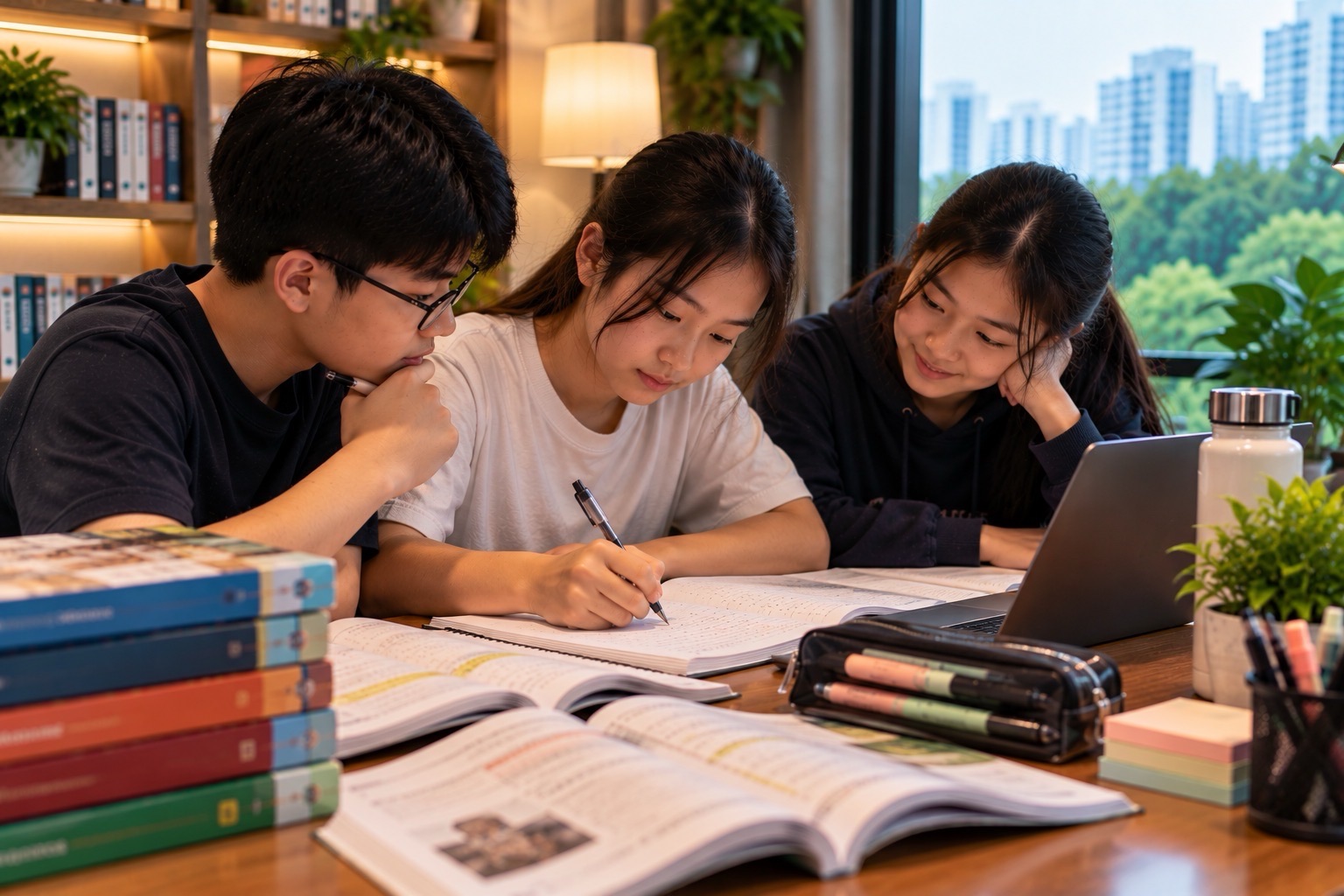
Secondary 4 Science Small Groups Tuition Upper Bukit Timah | Benefits and Consequences. Secondary 4 Science small groups tuition for Upper Bukit Timah families is worth considering when a teenager has an identifiable Science weakness that a compatible three-student group can help repair through close questioning and independent practice. It is not automatically the best investment for every student. A strong self-directed learner, a pupil needing deep individual bridging and a student preparing the wrong syllabus for the available class may all be better served by different arrangements.
The benefits of small groups must be compared with fees, travel, shared tutor attention and the opportunity cost of another scheduled evening. The 2027 SEC framework also requires checking the exact G1, G2 or G3 Science course, not merely the school year. Upper Bukit Timah is the reader community for this guide; it is not a claim that every Secondary 4 Science course or vacant eduKateSG group currently operates there.
Quick parent information: Quick parent decision: identify one repeated mistake from actual marked work, check the syllabus and likely group peers, compare three-pupil tuition with school consultation, one-to-one support and independent revision, verify the real venue and timetable, and use fresh work after four lessons to judge whether the extra commitment adds value.
- Primary decision: is three-pupil tutoring the least burdensome effective support?
- Potential strength: teacher hears each learner’s reasoning and encourages peer critique.
- Primary weakness: attention is shared, so group compatibility matters.
- High-performing learners may need independent exam practice, not more routine tuition.
- Students with deep gaps may need one-to-one bridging before joining peers.
- Upper Bukit Timah is a local information label, not confirmation of a Science class vacancy.
When three-pupil Science tuition beats an extra class—and when it does not
What the parent is really buying in a three-pupil Science group
A parent may choose small-group tuition because three students sounds more attentive than a large class and less expensive than individual tutoring. That can be a sensible starting assumption, but the educational product is not the headcount. It is the tutor’s ability to diagnose the child’s wrong scientific decisions, explain the concept appropriately and verify that the pupil can use it alone afterward. Without those steps, a small class may simply be a quiet worksheet session.
Science offers many opportunities for such feedback. A tutor can ask why a pupil selected a particular circuit relationship, what a Biology graph actually measures or whether a Chemistry observation proves a given product. A student who can explain the scientific reason becomes less reliant on recognising model answers. This kind of close discussion is a potential benefit of three students, provided each learner receives genuine individual attention.
The group can also help teenagers compare alternative interpretations. One pupil proposes a cause, another checks what was measured and the third asks whether the evidence supports the conclusion. But an outspoken learner can dominate unless the tutor protects private first attempts. Every student should then face an unfamiliar final task alone. Shared discussion becomes valuable only when personal reasoning improves.
Upper Bukit Timah parents can ask the provider to describe a typical lesson in these terms, rather than only state a maximum class size. What mistake will the tutor investigate? How will each teenager’s work differ when their gaps are different? What fresh question will demonstrate improvement? A credible answer helps determine whether the proposed group is worth the fee and travel time.
When one-to-one tuition is a better academic match
Some Secondary 4 learners have serious earlier foundations missing. A teenager who struggles with basic numerical proportions while also misunderstanding electricity may need a slower individual sequence than a shared examination-focused class can offer. Another might require a detailed explanation of particle models before unfamiliar Chemistry questions become manageable. One-to-one support can allow the tutor to adjust pace without three competing needs.
A more specific or irregular weakness can also favour individual teaching. The learner may have a unique misunderstanding that requires repeated diagnosis, diagrams and customised examples before peer comparison is useful. A group may still accommodate such a child if the other pupils are compatible, but the provider should demonstrate that the necessary individual time is realistic.
The potential drawback of one-to-one tuition is that it can be more expensive and lacks peer discussion. A child may benefit from hearing alternative explanations in a small group once the foundations become stable. The choice need not be permanent: individual bridging for a limited period could prepare a student to join a matched three-person tutorial later.
Parents should ask what evidence would justify changing the format. If the teenager can retrieve essential concepts and begin unfamiliar problems independently, a group may become appropriate. If the learner still needs extensive scaffolding on most questions, keeping the pace suitable may be more important than the financial attraction of a shared class.
When a larger revision class or independent study may be enough
An academically secure pupil may already interpret diagrams, choose scientific models and correct mistakes with school feedback. That teenager could benefit from broad timed examination practice rather than another concept-heavy small group. A larger revision class may provide structure at lower cost when the student no longer needs close individual diagnosis. Independent practice may be even more efficient when the learner can select relevant tasks accurately.
More tuition can have diminishing returns. A strong student may attend another lesson because classmates are doing so, then spend valuable evening time reviewing material already mastered. The opportunity cost is not only the fee. It includes travel, meals, homework and time that could have been used for independent papers, another subject or sleep.
Parents can test the need before enrolling. Keep two recent marked questions that were genuinely difficult and ask the child to explain why the errors occurred. If the teenager can find the scientific principle, correct it through teacher feedback and solve a fresh problem alone, another recurring tutorial may add little. If the same misconception persists despite sincere practice, targeted feedback may be valuable.
A responsible provider should be comfortable saying no additional tuition is needed in a particular case. The aim is not maximum enrolment. It is a student capable of accurate independent learning, with outside support used only where it adds value.
Group compatibility under SEC Full Subject-Based Banding
Subject-level matching remains important even in an exclusive three-student tutorial. Under the 2027 SEC, Science can be registered at different G-levels and in specified combined pairings or separate Pure subjects. A group containing pupils with significantly different course scope cannot simply use one identical revision pack and claim that all learners receive appropriate examination preparation.
A shared short activity on reading graph axes or identifying experimental controls may be relevant across subjects. But a G2 Physics/Chemistry learner and a G3 Pure Biology student then need different substantive questions. A tutor should prepare syllabus-appropriate tasks and allow enough time to check each response. If the differences are too extensive, the educational value of a common lesson may be limited.
Compatibility also includes readiness and pace. Two students may take the same G3 Science pair yet have very different foundations. One can answer familiar questions but not transfer to new contexts; another may be missing the basic principle; a third may be accurate but slow. The tutor should explain how all three needs will be addressed in the available time or recommend another arrangement.
Parents should look for transparency rather than an assurance that three is always ideal. Ask what the child’s actual school syllabus is, which classmates share it and what individual work will be completed. A sensible placement may help the teenager become more confident; a mismatch can waste revision time and create unnecessary discouragement.
The original marked answer can make a trial educationally accountable
An overall Science grade is a broad outcome, not a teaching plan. A pupil may lose marks because of missing recall, inaccurate model application, weak graph reading, unsupported experimental inference or errors under time pressure. These causes suggest different interventions, and the family can assess whether the tutor has identified the right one by examining the child’s original working.
For instance, a student may know an electricity formula but choose values from the wrong circuit component. A tutor can use contrasting diagrams to rebuild model selection. A Chemistry learner may know gas tests but assume bubbling alone proves a product. A Biology pupil may remember osmosis while misinterpreting the surrounding conditions. Each error has a specific scientific correction that can be checked in an unfamiliar question.
During a four-lesson trial, the tutor can record the original misconception, teach the relevant principle, check delayed recall and require an unassisted changed application. Parents can compare the new question with the baseline, considering whether it is of similar difficulty and whether hints were given. This measures a genuine educational outcome without inventing a guaranteed grade improvement.
If the class cannot explain the child’s original mistake or produce a suitable independent check, the family should reconsider the value. A long attendance record or a stack of marked worksheets is not proof that the underlying misconception has been repaired. A trial should clarify whether the chosen format actually solves the problem for which the parent paid.
How three pupils can practise higher-order scientific thinking
A strong student may need practice evaluating competing scientific explanations rather than repeating a basic topic summary. For example, a Chemistry practical may contain observations consistent with more than one possible reaction. The pupil should identify what is directly observed, choose a plausible mechanism and state what additional evidence would support a definite identification. This requires reasoning, not simply recalling a familiar test name.
Physics can use two similar-looking circuit diagrams with different connections. A learner must decide whether the same relationship applies and why. Biology graphs can test whether a plateau supports a limiting-factor interpretation under the specified conditions. These examples create challenge within the appropriate syllabus by requiring the student to examine assumptions and evidence.
A three-person group can support respectful critique. Each student proposes a response privately, then the group considers which interpretation is strongest and why the others fail. The tutor should correct scientific inaccuracies and ensure that quieter learners have equal opportunities to explain. A final unseen question confirms whether the reasoning is independent.
Extension should not mean arbitrarily assigning out-of-syllabus material. An advanced-looking worksheet can consume time while missing the actual examination demand. The best challenge deepens scientific judgment using concepts the pupil is expected to understand and can explain without a teacher naming the next step.
The consequences of adding another weekly tuition session
A nominal ninety-minute class may require transport, meals, waiting and extra practice, leaving less time for other national-examination subjects and sleep. The family should compare this complete commitment with the educational gain expected. A small group may be valuable for a persistent misconception but not worth the opportunity cost when the child is already self-directed and accurate.
Some students become dependent on adults choosing the next task. A tutor assigns every worksheet, identifies the chapter and announces the correct method, leaving the learner with limited experience deciding how to revise alone. Effective tutoring should gradually shift responsibility towards the teenager through a concise error log and purposeful independent practice.
Fatigue can conceal itself behind high attendance. A student may look busy and motivated but have little energy to retain corrections after the lesson. Families should protect a sustainable timetable with time for school feedback, self-study and rest. More teaching hours are not automatically more learning hours.
Upper Bukit Timah parents should also confirm actual teaching location. A locality-targeted guide is not evidence of a particular eduKateSG Science classroom or vacancy. A nearby class may still be academically mismatched, while a distant group may create excessive travel. Both subject fit and practical feasibility must be evaluated before enrolment.
What a responsible four-lesson comparison should decide
Before the first session, the tutor identifies a genuine recurring error from marked work and explains the proposed repair. The first week should not simply add another full Science paper without diagnosis. The teaching target might be selecting a physical model, interpreting a biological graph or making a supported chemical inference. It should be narrow enough to check meaningfully.
After two lessons, the child should explain the relevant principle in their own words and attempt a contrasting example. The third lesson reduces prompts and tests the model in a different context. The fourth uses a comparable unfamiliar question to see whether the correct method can be chosen independently. A report should identify what improved and what remains uncertain.
Four lessons are an early checkpoint rather than a guaranteed timeframe for a higher national-examination grade. Some conceptual gaps take longer, and an improved graph-reading habit may not immediately alter the overall Science score. Parents should interpret the evidence honestly and avoid comparing a difficult school exam question with an easier practice task as proof of dramatic progress.
The family can then decide whether to continue, change group, use one-to-one bridging, return to school consultation or stop extra tuition. That decision should include travel, sleep and other subject needs. Good tutoring ultimately gives the teenager greater ability to learn independently, including the ability to recognise when regular outside help is no longer necessary.
Four worked Science decision examples for Upper Bukit Timah
Strong pupil completes familiar tasks but not unfamiliar applications
Original difficulty: The same example is repeatedly recognised rather than reasoned through.
Teaching action: Use contrasting models and unassisted changed questions.
Individual check: Student explains a new experiment or diagram independently.
Deep prerequisite gap in a fast three-pupil group
Original difficulty: The available lesson cannot provide adequate individual scaffolding.
Teaching action: Consider individual bridging or a slower matched group.
Individual check: Foundational understanding stabilises before returning to peer study.
G2 Combined and G3 Pure pupils given identical worksheets
Original difficulty: Curriculum matching was not considered.
Teaching action: Check actual registered subject and differentiate content.
Individual check: Every student completes current-course work at the right level.
Extra tuition duplicates effective school revision
Original difficulty: The learner already self-corrects independently.
Teaching action: Compare opportunity cost and consider no new class.
Individual check: Home revision remains accurate and the study week sustainable.
Frequently asked questions for Upper Bukit Timah families
Does this article confirm an eduKateSG Science room in Upper Bukit Timah?
No. Confirm the actual tutor, venue, timetable and vacancy before travelling.
Is three-pupil tuition always better than one-to-one?
No. Individual help can better suit deep or specialised gaps; small groups can support compatible peers.
Does every strong student need advanced tuition?
No. Independent timed practice and school feedback may be sufficient.
Can a three-pupil class guarantee an A grade?
No. It can provide targeted support but not guarantee national-examination results.
What should a four-week trial demonstrate?
Independent progress on a new course-matched question without leading hints.
When is stopping tuition a good outcome?
When the pupil can consistently identify and correct mistakes using school and independent revision.
Three-pupil tuition should be evaluated against the cost of doing nothing extra
A capable Upper Bukit Timah student may already use school feedback effectively, know the required models and practise unfamiliar questions independently. An additional tuition class may feel reassuring but simply repeat what is working. Parents should identify a specific unresolved misconception before choosing a regular paid commitment. The educational question is whether the class adds something the student cannot obtain as efficiently through school and purposeful self-study.
By contrast, a teenager who repeatedly applies an incorrect physical model despite sincere practice may benefit from close diagnostic feedback. A tutor can listen to the child’s original reasoning, use contrasting examples and test a changed question privately. A three-person group can be suitable when peers have compatible needs and individual work remains visible.
Deep foundational gaps may call for individual bridging, and a secure student whose remaining difficulty is timing may benefit from independent paper rehearsal. The tutor should be willing to recommend these alternatives. Being in a premium small group is not a guarantee of progress and is not the right format for every learner.
At a short review, the family should consider both a new independent response and the complete time cost of the class, including travel, meals and homework. A programme worth continuing produces demonstrable learning without compromising other subjects and rest.
The quality of the peer group matters more than its advertised maximum size
Three teenagers can have very different Science courses or levels of prior knowledge. If one pupil takes G2 Combined Science while another needs G3 Pure Physics practice, identical worksheets may be too hard for one and irrelevant or shallow for the other. A responsible tutor should use the correct school-registered subjects and explain how tasks are differentiated.
Even compatible pupils can have different personalities. A quick speaker may supply every formula, leaving a quieter learner little opportunity to make the first decision. Private initial attempts, respectful peer comparison and new individual final tasks are safeguards that make a small group educationally valuable.
Parents can ask what happens when one student needs a long explanation and the others are ready to advance. An honest tutor might use separate retrieval tasks, individual feedback or a change of placement rather than assuming that three seats alone guarantee equal progress.
The longer-term aim is for each learner to identify and correct their own errors through school and independent practice. When this capability becomes reliable, reducing tuition can be a successful outcome rather than a reason to enrol indefinitely.
Check the correct 2026 GCE or 2027 SEC Science syllabus before enrolling
According to SEAB’s official SEC overview, the first Singapore–Cambridge Secondary Education Certificate examinations take place in 2027. The former separate GCE N(T), N(A) and O-Level qualifications are combined within the SEC framework, while candidates sit registered subjects at G1, G2 or G3 levels. The overall examination standards are not changed simply because the certificate name changes. Parents should therefore confirm the child’s actual school subject, level and examination year before buying tuition or selecting old papers.
| Examination route | Relevant official subject code examples | Why the class must check |
|---|---|---|
| 2027 G1 Science | K123 | Integrated G1 Science has its own syllabus, not an assumed abbreviated Pure Science paper. |
| 2027 G2 Science (Physics, Chemistry) | K223 | The correct G2 combination and demand matter. |
| 2027 G2 Science (Physics, Biology) | K224 | The pupil must prepare Biology, not an unrelated Chemistry component. |
| 2027 G2 Science (Chemistry, Biology) | K225 | The specified pairing requires its own programme. |
| 2027 G3 Science (Physics, Chemistry) | K326 | The combined course is distinct from separate Pure subjects. |
| 2027 G3 Science (Physics, Biology) | K327 | The course requires both named disciplines at G3 level. |
| 2027 G3 Science (Chemistry, Biology) | K328 | Chemistry/Biology is another defined subject pairing. |
| 2027 G3 Pure Physics, Chemistry, Biology | K323; K324; K325 | The separate Pure syllabuses have their own coverage and assessment. |
| 2026 GCE O-Level Combined Science examples | 5086; 5087; 5088 | Earlier examination codes are not the 2027 SEC identifiers. |
These codes are documented in SEAB’s 2027 G1 syllabuses for school candidates, 2027 G2 syllabuses and 2027 G3 syllabuses, with earlier subject references in the 2026 GCE O-Level syllabus list. Parents should follow their school’s registered course and the relevant official syllabus, not infer it from a broad tuition title. For a student taking a subject at a particular G-level, the depth, combination and actual paper scheme govern what practice is appropriate.
Older GCE questions can still be educationally useful where scientific concepts overlap. A circuit, reaction model or osmosis question does not become meaningless merely because its original paper used an older code. Nevertheless, each task needs screening for topic coverage and assessment demand before being presented as a faithful practice examination for 2027. Tutors should explain when a past question is for concept retrieval, when it is for unfamiliar application and when it genuinely resembles the student’s current paper.
Group placement is an important consequence of the course match. A student taking G3 Pure Chemistry and one taking G2 Combined Physics/Chemistry may share some principles but have different overall requirements. A group discussion about scientific evidence can sometimes serve both, but independent tasks should reflect each learner’s actual subject and level. When the overlap is too limited or prior knowledge differs substantially, a different group or individual support is more responsible than insisting that all three pupils do the same worksheet.
What the evidence says about small-group tuition—and what it does not say
The eduKateSG immutable Clementi three-pupil teaching reference illustrates the local programme’s small-group approach: close tutoring, sequenced explanations and frequent correction. A three-pupil setting may allow the tutor to observe how each child interprets a question more often than in a large class. Yet the number of seats is not itself the educational outcome. A pupil who follows a completed model answer without making the first decision still needs independent practice.
The independent Education Endowment Foundation small-group tuition review examines research on groups of two to five students and reports an overall positive average impact. Its evidence should not be interpreted as a direct evaluation of eduKateSG, of Singapore Secondary 4 Science, or as a promise of a particular grade or months of learning for an individual pupil. The actionable lesson is that effective implementation depends on diagnostic teaching, good feedback, relevant content and a compatible group.
One potential advantage is peer comparison: a student explains why a model fits, a classmate checks it against the diagram and another notices an unsupported assumption. This can deepen understanding when the tutor ensures that every scientific claim is accurate. The danger is that the confident pupil supplies the answer before others have thought. A responsible teacher makes space for private first attempts, guided discussion and fresh individual work afterward, so everyone practises the reasoning needed under examination conditions.
There is no single best tutoring format for every child. A pupil with deep foundational gaps may need individual bridging; an independently successful teenager may gain more from school consultation or home examination practice. A larger revision group can suit someone who already understands concepts but wants structured practice and timing. Three-pupil tuition is valuable when it solves the diagnosed learning problem with an acceptable cost in time, fees and fatigue, not simply because it is smaller than other classes.
An illustrative 90-minute Science tutorial structured around evidence
| Teaching stage | Approximate minutes | What the teacher should establish |
|---|---|---|
| Delayed retrieval | 10 | A previously corrected concept remains usable without notes. |
| Original marked-work diagnosis | 15 | The first wrong scientific decision is visible. |
| First-principles explanation | 20 | The learner can explain the correct model in their own words. |
| Contrasting application | 20 | Understanding transfers when the scenario changes. |
| Unseen independent response | 15 | Each of the three learners selects and defends a method without prompts. |
| Targeted home task and error log | 10 | A small new retrieval task checks the correction after a delay. |
This is an illustrative teaching design, not an unverified claim that every available tutor follows an identical timetable. Lessons may change pace for school assessments or substantial prerequisites. The important feature is moving from the pupil’s own attempt to precise diagnosis, a sound explanation and independent application. A class where the tutor demonstrates every step before the teenager thinks may produce a completed worksheet without building the ability to select a method alone.
The tutor should gradually remove hints. An insecure learner might first use a labelled diagram and a staged question, then complete a similar problem with fewer cues. The final task should change relevant details: a different circuit, chemical observation or biological condition. If the child can choose the principle and explain it without the tutor naming the topic, the corrected model is becoming more portable. Delayed retrieval at the next session helps test that the improvement survives beyond the immediate lesson.
The six types of Science error parents can ask a tutor to diagnose
| Error type | What may appear in a school response | The first useful repair |
|---|---|---|
| Missing knowledge | Student cannot recall a required concept or relationship. | Explain the prerequisite and check retrieval later. |
| Wrong model | A true rule is used under the wrong conditions. | Contrast examples where the rule works and fails. |
| Graph or diagram error | Axis labels, scale, circuit components or units are misread. | Translate the representation into words before solving. |
| Incomplete causal reasoning | An outcome is stated without the scientific mechanism. | Link question evidence, model and consequence. |
| Unsupported inference | An observation is treated as proof of a named cause or product. | Identify relevant tests, controls and limits of evidence. |
| Exam execution | Correct understanding is disrupted by arithmetic, timing or irrelevant content. | Build a compact checking habit and add timing after accuracy. |
Two pupils can receive the same wrong final mark for different reasons. One may apply a valid Physics equation to the wrong component while the other chooses the correct system but mishandles conversion. A Biology answer may miss its causal link because the student cannot explain the process or because they understand it orally but omit it in writing. The tutor should inspect the student’s original response before revealing the model answer, because copying the correction can conceal the first mistaken assumption.
Parents can support this diagnosis without supplying the solution. Ask what the question gives, what the child believed it asked and why a particular principle seemed relevant. A brief description of the first wrong thought is more actionable than writing ‘careless’ in an error log. For example, ‘I chose the voltage for the whole circuit instead of the named lamp’ identifies the checking habit the student should develop. The next task should test exactly that habit, not simply add another full paper.
Practical Science needs both evidence-based writing and real supervised experience
Practical Science includes safe apparatus handling, observation, accurate measurement, controlling relevant variables and evaluating results. A three-pupil tutorial may help with written experimental planning, graph interpretation and analysis of evidence, but it cannot automatically replace supervised hands-on laboratory work. Parents should ask whether the proposed programme genuinely has suitable equipment, facilities and oversight or whether practical support consists of paper-based reasoning. The school remains important for the real practical experiences required by the official syllabus.
Generic phrases such as ‘human error’ and ‘repeat more’ often fail to identify the actual limitation in a question. A stronger answer describes a plausible measurement problem, procedure weakness or uncontrolled condition supported by the scenario, then proposes a change directly addressing it. Repeating measurements may help when random variation matters, but repeating a comparison where temperature and concentration both changed does not isolate one cause. Scientific judgment includes deciding what the evidence does not yet prove.
Compare the benefits, consequences and available alternatives
| Support route | Potential benefit | Real limitation or opportunity cost |
|---|---|---|
| Three-pupil Science tutorial | Frequent individual reasoning checks plus peer comparison. | Tutor attention is shared; compatibility matters. |
| One-to-one tuition | Intensive repair tailored to a significant individual prerequisite. | May cost more and offer no peer critique. |
| Larger revision class | Broad practice and timing for students with secure foundations. | Usually fewer chances to inspect the first wrong decision. |
| School teacher consultation | Clarification linked directly to current lessons and marked work. | Teacher availability may be limited; focused questions help. |
| Purposeful independent revision | Flexible timing and no extra commute. | Persistent misconceptions can continue without feedback. |
| Additional weekly class | Can repair an unresolved gap that ordinary practice has not fixed. | Travel, homework, fatigue and fees can displace other useful learning. |
A nominal ninety-minute lesson may cost substantially more of the evening after transport, meals, waiting and extra home practice. Secondary 4 students still need time for Mathematics, languages, other examined subjects, school practicals and sleep. A good tutor should prescribe the few questions most likely to test the corrected principle rather than maximise worksheet volume. When a class leaves the teenager too exhausted to practise independently, its overall educational benefit may be limited.
There are consequences to declining help as well. A misconception that repeats despite sincere school and self-study effort can waste preparation time and reduce confidence. The sensible choice is therefore not automatically to add or avoid tuition, but to identify the least burdensome method capable of changing the child’s scientific reasoning. A provider should be willing to recommend school consultation, individual bridging, a different group or no extra lessons when those are more appropriate.
Four lessons as a decision checkpoint, not a grade guarantee
| Checkpoint | Evidence to preserve | What it can show |
|---|---|---|
| Before the first lesson | Original marked responses and two recurring error types. | A specific learning objective exists. |
| After two lessons | The principle explained in the student’s own words. | Understanding beyond copied wording. |
| After three lessons | An unfamiliar question with reduced scaffolding. | Independent transfer of the model. |
| After four lessons | New comparable work and an updated error record. | Whether tutoring should continue, change or stop. |
Four lessons offer an early review interval, not a guarantee of a particular examination result. A narrow misconception may be repaired rapidly, while a deep prerequisite may need longer. Compare questions of similar demand and note the amount of prompting. A student who now interprets graphs correctly has made progress even if Chemistry explanations remain weak. A responsible tutor reports that partial change accurately and does not treat one easier new exercise as proof of a future distinction.
If the same mistake continues, ask whether the tutor diagnosed the wrong issue, the group is mismatched, retrieval practice is missing or the teenager is overloaded. The answer may be a clearer diagram, a different pace, an individual bridge or better coordination with school feedback. Simply assigning another month of identical papers may not change the student’s first scientific decision. Continuing tuition should be justified by demonstrated value, not by an indefinite commitment.
Official sources and further eduKateSG Science reading
- SEAB SEC overview
- SEAB 2027 G1 subjects
- SEAB 2027 G2 subjects
- SEAB 2027 G3 subjects
- SEAB 2026 O-Level syllabuses
- EEF research on small-group tuition
- eduKateSG Physics/Chemistry SEC guide
- eduKateSG Physics/Biology SEC guide
- eduKateSG Chemistry/Biology SEC guide
- eduKateSG G2 Science combinations guide
- eduKateSG immutable three-pupil teaching reference
- eduKateSG Tuition and Teaching Hub
Editorial note: This is independent parent information, not an official MOE or SEAB syllabus. Use the registered Science subject and current official examination requirements. The estate named in the title is the intended reader area, not confirmation of a local classroom, tutor or vacant three-person group. Tuition cannot guarantee a national examination grade.
A considered tuition decision for Upper Bukit Timah parents
A Upper Bukit Timah family should choose a small Science tutorial when the proposed teacher can demonstrate a real course match, an appropriate group and a precise learning problem that the child cannot yet correct independently. The parent should review a fresh question after four sessions and include the impact on other subjects and rest. When school guidance or purposeful home practice already works well, another regular class may be unnecessary. Effective tuition should make the teenager progressively more capable without outside prompts.
Arrange a parent–student consultation
Bring original marked Science work and the school-registered subject. Contact eduKate Singapore · WhatsApp enquiry. Confirm the venue and available group before travelling.
eduKateSG | Three-student tutorials, first-principles Science and independent learning. Properly taught kids shine a bright light into the future.