
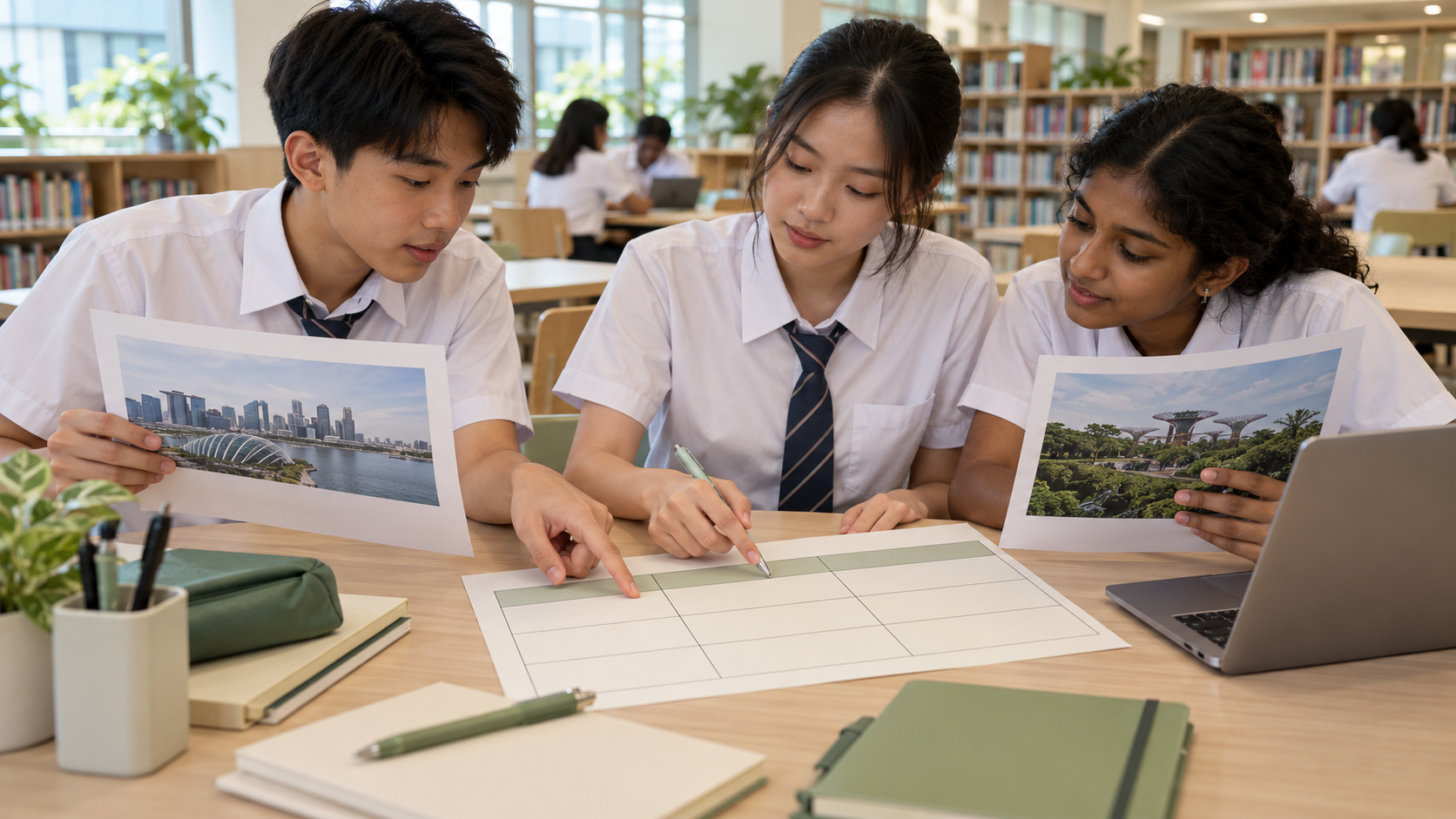
Singapore will update the Code for Fun (CFF) programme for primary and secondary schools in 2027 to strengthen students’ artificial intelligence literacy. The Ministry of Education (MOE) and Infocomm Media Development Authority (IMDA) announced that the revised programme will be made available to all schools, helping children understand technology through computational thinking, practical creation and safe, responsible use of AI.
This development builds on existing teaching rather than introducing coding to Singapore for the first time. Code for Fun was introduced in 2014 and already reaches tens of thousands of students yearly. From 2025, separate AI for Fun modules have offered hands-on experiences with generative AI, smart robots, training data and ethical limitations. The 2027 update aims to integrate AI skills more firmly as baseline capabilities across primary and secondary learning opportunities.
Parents and students should not assume this means every school must run an identical AI course in January, that generative AI may write students’ homework, or that a new compulsory national AI examination has been announced. This guide separates existing Code for Fun and AI for Fun options from the confirmed 2027 programme update. It explains likely learning activities, cyber wellness safeguards, how schools obtain official programme information and what families can practise without expensive hardware.
Updated 31 October 2026. This independent eduKateSG guide explains the announced 2027 Code for Fun update and previously available IMDA modules. It does not replace any individual school’s actual curriculum, programme timetable or academic integrity rules.
Key confirmed facts about 2027
- MOE and IMDA announced the updated Code for Fun programme in their March 2026 Committee of Supply statements, for availability to all schools in 2027.
- The update integrates AI skills as foundational capabilities in primary- and secondary-school digital learning.
- The existing Code for Fun programme already teaches computational thinking, coding, digital making and exposure to emerging technology.
- IMDA’s published upper-primary CFF programme offers ten hours of computational thinking and coding with loops, variables, conditions and debugging.
- The existing secondary-school CFF programme offers ten hours of digital making and prototyping with microcontrollers, using block-based or text-based programming tracks.
- Since 2025, AI for Fun elective opportunities have included two five-hour primary modules on generative AI and smart robots, plus a ten-hour secondary AI module.
- IMDA says primary students may learn AI through activities such as creating digital storybooks, while secondary learners may apply AI to practical real-world problems in the 2027 update.
- MOE’s updated Cyber Wellness content includes evaluating generative AI information and recognising deepfakes.
- Schools, not individual households, receive the standard Code for Fun application instructions through MOE/IMDA channels, generally around September or October under existing programme arrangements.
Limits to claims and expectations
- Availability to all schools is not confirmation that every student at every level receives an identical number of AI lesson hours in January 2027.
- Code for Fun and AI for Fun are related but have historically had different modules and application requirements; old 2025 elective details may change with the 2027 update.
- Students using AI should continue producing honest work and explaining their own reasoning under their school’s rules.
- AI-generated text, images, code and explanations can be wrong or misleading even when they sound confident.
- No new mandatory national AI examination, grade cutoff, paid home equipment requirement or guaranteed career certification has been established by the MOE announcement.
- Schools should verify 2027-specific application and curriculum details rather than rely on an earlier vendor’s advertising package.
Quick navigation
- 1. What exactly is new in 2027?
- 2. The programme existed well before generative AI
- 3. What primary pupils learn through CFF
- 4. Primary AI learning can begin with digital storybooks
- 5. The existing AI for Fun primary modules
- 6. Secondary Code for Fun connects coding with making
- 7. Existing AI for Fun secondary lessons go deeper
- 8. What training data does to an AI system
- 9. Why AI can produce biased results
- 10. Cyber Wellness now includes deepfakes
- 11. Prompts are useful only with verification
- 12. AI should support rather than replace reasoning
- 13. What schools need to organise
- 14. Parents do not need to buy an expensive robot
- 15. How AI connects with English, Mathematics and Science
- 16. A four-week preparation plan for 2027
A useful educational comparison distinguishes what was available before, what is confirmed for 2027, and what each school actually chooses to implement. The examples in this guide are hypothetical teaching situations and do not identify any real child or school.
1. What exactly is new in 2027?
MOE’s March 2026 announcement states that Code for Fun will be updated to strengthen students’ AI skills and made available to all schools in 2027. IMDA describes the integration of AI capabilities as part of baseline digital learning. This is not a claim that coding lessons were absent before. The point is to make AI understanding more central as students encounter generative tools in schoolwork and daily life. Schools will implement opportunities according to their applicable programmes, teaching schedules and official guidance.
Illustrative student example
Example only: A parent sees ‘Code for Fun 2027’ and assumes every Primary 1 student will spend ten hours building a language model during the first school week.
What to do or ask
The official announcement does not provide that timetable. Ask the student’s school which cohort and actual sessions are involved, and keep the broader availability statement accurate.
2. The programme existed well before generative AI
Code for Fun was introduced in 2014 as a joint IMDA and MOE initiative that exposes primary and secondary students to computational thinking and digital making. Its value is not merely training students to type code. They learn to break a problem into parts, identify patterns, create step-by-step procedures and test whether those procedures work. Those skills can support mathematics, science, design and everyday problem-solving. Generative AI adds another dimension, but its popularity should not erase the value of understanding how a basic program actually behaves.
Illustrative student example
Example only: A child says that because chatbots can write Python, learning loops and conditions is no longer necessary.
What to do or ask
Without core concepts, the child may be unable to recognise incorrect code or explain how a system made a decision. Treat AI as an additional learning tool, not a replacement for fundamentals.
3. What primary pupils learn through CFF
IMDA’s published upper-primary Code for Fun offers around ten hours on computational thinking, coding and introductions to emerging technologies. Students work with concepts such as events, loops, variables, functions, conditionals and debugging. These are introduced through age-appropriate visual or block-based programming rather than assuming every pupil must write complex text-based applications. The intended 2027 AI update can build on the same reasoning: understanding inputs, outputs and how simple instructions affect a digital result.
Illustrative student example
Example only: A Primary 5 learner uses a visual block to make a character repeat a movement but cannot yet describe why the motion sometimes stops.
What to do or ask
A teacher can ask the child to inspect the loop condition and test it. The ability to explain the behaviour is more important than whether the animation looks sophisticated.
4. Primary AI learning can begin with digital storybooks
IMDA’s 2026 parliamentary explanation used creating digital storybooks as an example of how primary pupils might explore AI under the updated programme. This is a practical way to connect language, imagination, media and digital reasoning. However, the teacher should set clear limits on which content can be generated and what the pupil must contribute independently. A successful project might include writing an original plot, checking AI-suggested details and explaining how the child revised a draft.
Illustrative student example
Example only: A pupil produces a beautiful illustrated story but cannot identify which words they wrote or why certain scenes make sense.
What to do or ask
Build the activity around authorship and reflection. Ask students to show their ideas, sources and changes rather than letting AI do the whole project.
5. The existing AI for Fun primary modules
IMDA introduced two five-hour AI for Fun options for primary schools from 2025. One addresses generative AI and natural language processing; the other explores smart robots and computer vision, including how sensors and images influence a robot’s responses. These are useful background for understanding what the 2027 update builds on, but schools should check whether the specific arrangement or naming has changed. An existing elective module is not automatically a compulsory new programme for all cohorts.
Illustrative student example
Example only: A parent reads a 2025 programme page showing a five-hour robot module and assumes the 2027 revised curriculum must require exactly five robot hours for every child.
What to do or ask
The published 2027 statement is broader. Verify actual school arrangements instead of treating the older elective format as a universal future mandate.
6. Secondary Code for Fun connects coding with making
IMDA’s current secondary CFF programme offers ten hours focused on inventive thinking, design prototyping and digital making using microcontrollers. Schools can choose block-based or text-based programming tracks, and projects may connect with Applied Learning Programme themes such as sustainable living or transportation. A useful prototype demonstrates an idea, tests real constraints and records what worked and failed. The updated AI emphasis can deepen such work by helping students understand how intelligent systems use data and where their predictions can be unreliable.
Illustrative student example
Example only: A Secondary 1 group creates a sensor-based transport model that responds to a simulated obstacle but sometimes misreads the input.
What to do or ask
Record the circumstances in which the sensor fails and improve the design. The learning is in evidence-based troubleshooting, not pretending the prototype is flawless.
7. Existing AI for Fun secondary lessons go deeper
IMDA’s secondary AI for Fun module from 2025 offers ten hours involving AI training data, bias, social impacts, large language models, custom chatbots, prompt design and applications to themes such as sustainable living. The programme page says learners should first complete Code for Fun or a comparable programme before the AI for Fun module. That background makes the 2027 update understandable without assuming every AI session starts from zero. The final 2027 programme arrangement still depends on the updated official guidance.
Illustrative student example
Example only: A secondary student builds a custom chatbot that gives misleading answers when the test data does not cover a particular situation.
What to do or ask
The project can teach the need to evaluate training examples, test limitations and explain why a plausible answer is not proof of accuracy.
8. What training data does to an AI system
AI systems learn statistical patterns from training data. If that data is limited, inaccurate or unrepresentative, a system may perform poorly when applied to unfamiliar situations. Students can explore this safely using toy examples, such as classifying different shapes or comparing outputs when the number of examples changes. An educational experiment should not involve uploading classmates’ private photographs or personal details. The purpose is to understand how data choices affect behaviour, not to build a powerful surveillance system.
Illustrative student example
Example only: A group trains a simple image classifier using only pictures taken from one angle and then tests it under different lighting.
What to do or ask
The errors reveal how training conditions matter. Ask pupils to document where the system worked and where it failed.
9. Why AI can produce biased results
Bias can emerge when training data reflects incomplete populations, historical patterns or unexamined categories. An AI system might be more accurate for one group of examples than another, or repeat stereotypes embedded in its sources. School lessons should treat this as an opportunity to test claims and make fair comparisons, not as an invitation to identify or shame classmates. Small, anonymised classroom datasets can demonstrate why a model’s output should not be taken as a neutral fact merely because a computer produced it.
Illustrative student example
Example only: A simulated career-advice chatbot repeatedly recommends a narrow set of roles based on a learner’s fictional name instead of interests and abilities.
What to do or ask
Discuss why the response might be unfair, compare alternatives and consider what better evidence or constraints would be needed.
10. Cyber Wellness now includes deepfakes
MOE has updated Character and Citizenship Education cyber-wellness lessons to include validating information generated by AI and identifying deepfakes. A deepfake can use synthetic image, video or audio to create a misleading impression that someone said or did something. Students need habits such as checking the original source, date, context and independent evidence before sharing sensational content. They must also consider the harm caused by creating non-consensual impersonations or embarrassing edited images of classmates.
Illustrative student example
Example only: A student receives a convincing video supposedly showing a teacher making an offensive remark, but it lacks a trustworthy source.
What to do or ask
Do not repost it as proof. Seek a trusted adult or school channel and verify the context without amplifying possible harm.
11. Prompts are useful only with verification
Prompting means giving an AI system clear instructions, context and constraints. A better prompt can produce a more useful draft, but it cannot turn a system into an infallible authority. Students should learn to ask for sources, notice unsupported claims and check important answers against reliable materials. Teachers can compare two AI-generated explanations of the same science concept and ask which parts are supported by evidence. This combines language ability with critical thinking rather than rewarding the longest or most elaborate prompt.
Illustrative student example
Example only: A pupil asks a chatbot for the official examination date and receives a plausible but invented timetable.
What to do or ask
The student should verify the actual SEAB or school notice, not accept a generated calendar because it sounds confident.
12. AI should support rather than replace reasoning
Education aims to build the learner’s ability to solve problems, explain choices and evaluate evidence. If a student lets AI generate every answer, they may achieve a polished-looking output without understanding the subject. A responsible lesson can require pupils to attempt a problem first, use a tool to compare approaches, identify mistakes and submit their own final reasoning. Teachers can also ask learners to explain their work verbally or through a practical demonstration. Such activities help distinguish useful assistance from academic misrepresentation.
Illustrative student example
Example only: A student pastes AI-generated Python code into a project and receives full marks from an automated tool but cannot explain a single function.
What to do or ask
The teacher can ask for debugging, comments and a short reasoning explanation. Understanding the process is more durable than obtaining a working output by accident.
13. What schools need to organise
IMDA’s existing programme pages say MOE government and government-aided schools are eligible to apply for Code for Fun, with instructions generally communicated between September and October each year. Schools may select appropriate modules, cohorts, training delivery arrangements and project themes under the prevailing guidance. The 2027 announcement expands availability of the updated programme, but it does not publish an identical national lesson calendar for all schools. Official school administrators should obtain current instructions rather than assuming older vendor dates remain valid.
Illustrative student example
Example only: A family finds a commercial site claiming every school must sign a particular 2027 coding contract with that company.
What to do or ask
Schools should use MOE/IMDA programme arrangements and approved providers, not an unverified private deadline.
14. Parents do not need to buy an expensive robot
The education programme includes school-based learning options and equipment arrangements, with IMDA and MOE providing support for relevant programmes. A parent may choose independent enrichment, but the official 2027 availability statement is not a requirement to purchase a drone, AI subscription or specialist microcontroller for every child at home. Low-cost practice can involve explaining a simple sequence, spotting a bug, comparing evidence, or designing a safe paper prototype of a technological solution.
Illustrative student example
Example only: A parent feels pressure to buy a costly robot because classmates are discussing an AI module.
What to do or ask
Ask the school what equipment is supplied and what the child actually needs. Focus on reasoning and responsible use before paying for optional extras.
15. How AI connects with English, Mathematics and Science
AI literacy is cross-disciplinary. English language skills help students describe a problem clearly and assess an answer’s accuracy. Mathematics introduces logic, patterns, probability and quantitative comparisons. Science teaches experimentation, control of variables and checking evidence. Art and design add perspective on how a tool communicates and affects people. Code for Fun can bring these skills together through projects, but an AI topic does not automatically replace subject requirements or become a new component of the SEC examination.
Illustrative student example
Example only: A Secondary 2 student tests whether an AI tool can classify materials and discovers the result changes when lighting changes.
What to do or ask
The student can use a science-style investigation and mathematical counts of errors, then explain findings in clear English rather than only display a final model.
16. A four-week preparation plan for 2027
Week one: review the school’s actual CFF or AI-related timetable and identify the relevant age cohort. Week two: practise a simple computational-thinking activity, such as designing steps for a daily task and checking logical conditions. Week three: test an AI-generated claim using official or textbook evidence, and discuss a deepfake or privacy scenario safely. Week four: create a small original project and explain the student’s decisions, mistakes and improvements. This approach requires neither speculative future examinations nor paid commercial software.
Illustrative student example
Example only: A family wants its child to feel confident about the updated programme but has no knowledge of advanced coding.
What to do or ask
Begin with curiosity, safe digital habits and clear explanations. Use official school guidance for the actual course rather than purchase unnecessary equipment.
Four-week home or school learning plan
- Week 1: Practice a simple algorithm and explain the steps, inputs and outputs.
- Week 2: Debug a small program or visual sequence, recording why it failed and how it was corrected.
- Week 3: Compare an AI-generated claim with an authoritative source and discuss a privacy or deepfake scenario.
- Week 4: Create a small original digital story, robot plan or data project, then explain the student’s reasoning and limitations.
A practical parent and student checklist
- Check the school’s actual cohort and current Code for Fun schedule.
- Distinguish the existing CFF and AI for Fun modules from the 2027 update.
- Ask what computational-thinking skills the learner will practise, not just which AI product is used.
- Require students to explain how their work was produced and corrected.
- Avoid uploading identifiable classmate information to public AI tools.
- Compare important AI outputs with textbooks and authoritative evidence.
- Treat deepfakes or online impersonation as safety and cyber wellness issues.
- Check the official equipment and provider arrangements before purchasing extra devices.
- Respect the school’s own permitted AI-use and assignment policies.
- Evaluate learning through understanding, testing and reflection rather than polished outputs alone.
Frequently asked questions
What changes to Code for Fun in 2027?
MOE and IMDA will update it to strengthen foundational AI skills and make the updated programme available to all schools.
Was Code for Fun invented in 2027?
No. The programme started in 2014.
What is primary Code for Fun?
A programme of computational thinking, coding and emerging technology, with the existing upper-primary model offering ten hours.
What is secondary Code for Fun?
An existing ten-hour digital-making and programming experience with prototyping and microcontrollers.
Did AI for Fun already exist before 2027?
Yes. Its elective modules were introduced from 2025.
Will every pupil have the same lessons on 1 January?
MOE announced national availability, not one fixed timetable for every student and school.
Are digital storybooks part of the AI examples?
Yes. IMDA described digital storybook creation as one possible primary learning activity.
What do secondary students learn?
Practical problem solving with AI and existing coding, data and prototyping experiences, according to programme arrangements.
Does the programme cover deepfakes?
MOE’s updated Cyber Wellness lessons address deepfakes and verification of AI-generated information.
Is there a new nationwide AI examination?
No such compulsory national AI examination was announced in these policy statements.
Must a parent buy a robot or paid AI subscription?
No general mandatory household purchase requirement is described by the programme announcement.
Where can schools confirm current applications?
IMDA’s Code for Fun pages and MOE’s current school administration instructions.
Official education sources
These MOE and IMDA resources establish the 2027 announcement and the existing programme architecture. Schools’ updated 2027 instructions take precedence where practical details have changed.
- MOE Committee of Supply 2026: 2027 Code for Fun update
- IMDA: Committee of Supply 2026 AI skills update
- IMDA: Code for Fun programme and existing availability
- IMDA: Code for Fun primary curriculum
- IMDA: Code for Fun secondary curriculum
- IMDA: AI for Fun primary modules from 2025
- IMDA: AI for Fun secondary modules from 2025
- IMDA/MDDI: AI for Fun module launch in 2024
Related eduKateSG articles
- Singapore 2027 | SEC and AI Literacy Family Guide
- Singapore 2027 | Sentinel Cybersecurity Student Programme
- Singapore 2027 | Community Club AI Courses and onePA
Conclusion: learn to think with AI, not surrender thinking to AI
The strongest benefit of Code for Fun is not a child producing impressive software after a few lessons. It is a child becoming more able to reason, test, explain and use digital tools safely. The 2027 AI update can deepen that foundation if schools, teachers and families preserve student understanding, integrity and critical judgement.
Read the current official school information, support age-appropriate curiosity and treat every AI output as something that may need checking. These habits matter across English, Mathematics, Science and the decisions students will make throughout life.