
If you own an HDB flat and are considering an executive condominium in 2027, first identify whether you are buying from a developer or buying an EC that has met its minimum occupation period on the open market. The routes have different eligibility, financing and sale-timing questions. A new EC can involve a construction wait and a deadline to dispose of your existing flat. A resale EC lets you inspect the home, but your current ownership and the EC’s stage still matter.
For any EC, verify the project’s Temporary Occupation Permit date and the applicable minimum occupation period. HDB applies a ten-year MOP to projects whose land sales tender closed on or after 8 May 2026, while ECs in the earlier five-year regime follow their own timelines. Use the rules for the specific project and the people in your application before comparing prices or accepting a payment schedule.
- Check your current HDB flat’s MOP and your household’s ownership history.
- Verify which EC rules apply from the project’s land-tender and TOP dates.
- Compare developer eligibility and levy questions with resale EC eligibility.
- Put both mortgages, stamp duty and the HDB sale on a single calendar.
- Use a worked comparison to weigh a construction wait against an earlier move.
Find the section you need
Jump to the section for a new EC, a resale EC, your current HDB flat, or the price and timing comparison.
Start by naming the transaction you want · Compare eligibility and subsidies before comparing asking prices · Compare the real cost of developer and resale routes · Frequently asked questions from HDB upgraders
Chapters 1–3 · Routes, project dates and eligibility
Chapters 4–7 · Disposal, costs, a worked example and common questions
Executive condominiums can look like other condominium developments when you compare layouts, lifts and shared facilities. The route you are pursuing changes the rules you need to check. A developer purchase comes with an application and eligibility assessment for a new EC. An open-market resale EC has completed its applicable minimum occupation period and is handled as a private-property resale, with conditions that depend on the project’s stage and the purchaser.
Record your current HDB facts before viewing
Check the current flat’s MOP status and who owns or has an interest in it. Note your household’s citizenship, income and prior housing subsidies where relevant. An EC application can depend on everyone listed in the proposed application. Before assuming that a project is open to the household, establish which eligibility scheme and project conditions apply.
Add your preferred move window and the reason it matters. An upgrader who needs space for an older relative in the next year will view construction time differently from a family that can remain in its flat comfortably for longer. Give each requirement a date or a condition. A deadline to arrange care or access may be less flexible than a desire to move during the holidays.
Ask which advantages you would use
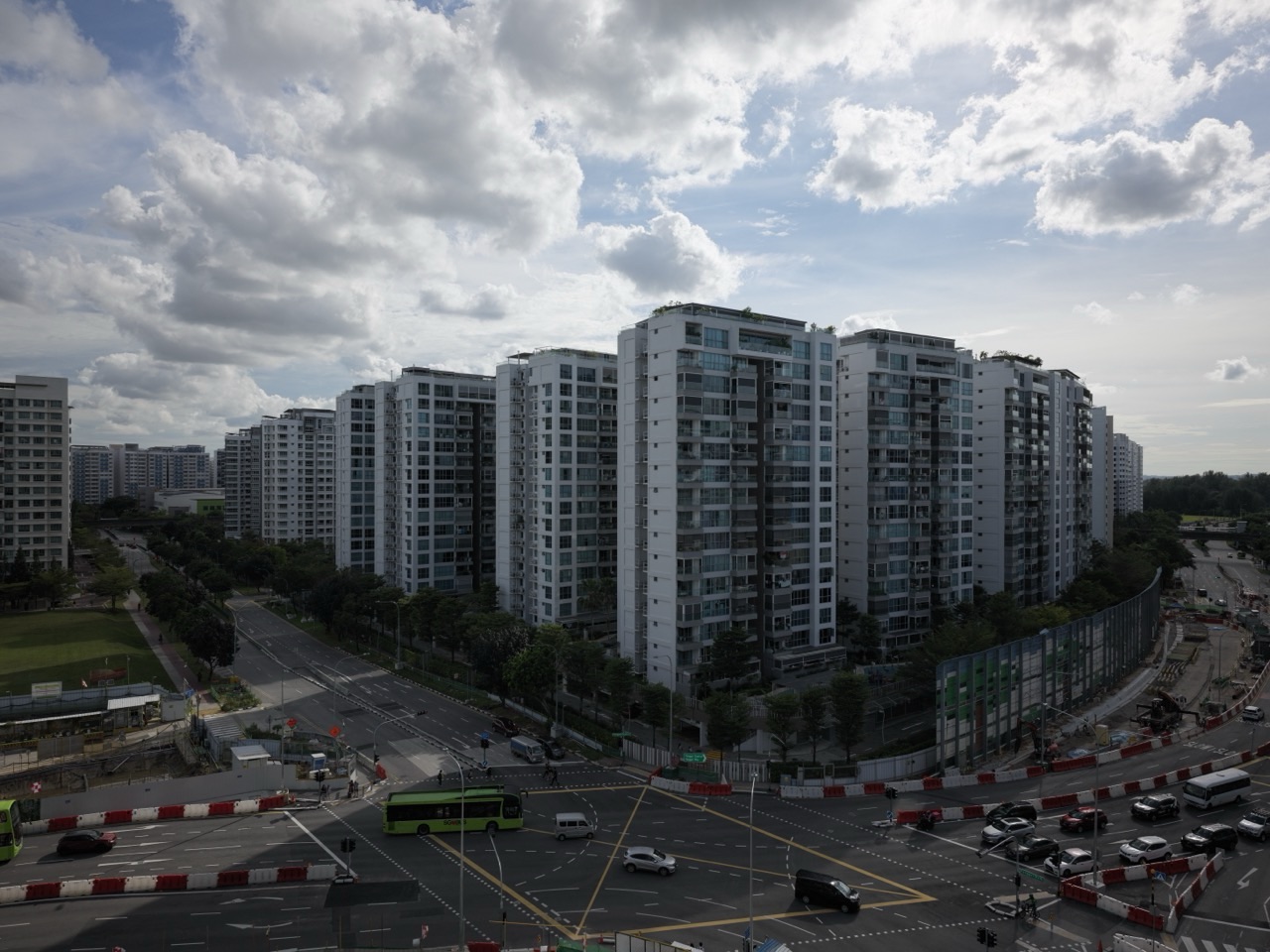
List three things the EC would improve. Extra space only helps if it fits the furniture and routine you want. Facilities only matter to the extent that someone can reach and use them. Look at the route from the tower you are considering to the gate, pick-up point and bus stop. The streetscape photograph shows the relationship between homes, roads and nearby works. For a particular unit, check the walking route from its actual entrance.
Compare each candidate with what you already have. If your current flat has straightforward access, a good layout and familiar care arrangements, name the benefit the move needs to justify. If the current flat has a hard limitation, check which candidate actually solves it. This helps keep the decision about the home and timetable in view while you read the scheme’s rules.
The Temporary Occupation Permit, commonly called TOP, is an important date in HDB’s EC guidance. HDB publishes a list of EC TOP dates and explains how the applicable MOP is measured. Ask the developer or conveyancing lawyer to establish the applicable regime and confirm the date for the project. A marketing year or booking date is a different fact.
Projects in the five-year regime
Under HDB’s guidance, EC owners in the five-year regime may sell on the open market after meeting their MOP. During the period within ten years from TOP, eligible resale buyers must be Singapore Citizens or Permanent Residents. HDB states that the citizenship requirement no longer applies after that period. Check the exact transaction timing and other requirements with the professionals handling the sale.
Projects covered by the 8 May 2026 cutoff
For projects where the land sales tender closed on or after 8 May 2026, HDB specifies a ten-year MOP from TOP. After the MOP has been met, the purchase of an open-market unit within 15 years from TOP is limited to Singapore Citizens and Permanent Residents. The citizenship requirement is lifted after that period under the current rules. The rule turns on when the land tender closed. A unit marketed in 2027 can therefore require a project-specific check.
Put the dates on a personal timeline
If a developer purchase might keep you in the home for longer than you expected, imagine the household at different points in that period. A child might be at a new school, an older relative could move in, or a job might require a different commute. Consider whether the layout and access can adapt without an early sale. Confirm what you can do during the occupation period if a future event is important to your plan.
For a resale candidate, ask for evidence that the seller has met the applicable MOP and that your household can buy at that stage. A listing describing a project as resale-ready should prompt you to check the date and eligibility. Keep the evidence with the unit’s address so that you can compare several projects without accidentally applying one project’s dates to another.
| Project regime | Open-market sale after meeting MOP | Citizenship restriction for eligible open-market buyers |
|---|---|---|
| Five-year MOP projects | After the five-year MOP has been met | Singapore Citizens and Permanent Residents during the first 10 years from TOP |
| Land sales tender closed on or after 8 May 2026 | After the ten-year MOP has been met | Singapore Citizens and Permanent Residents during the first 15 years from TOP |
Contents · Previous chapter · Next chapter
Developer EC eligibility is assessed under HDB’s current rules. Check the applicable family scheme, citizenship, age, income, property ownership history and prior subsidies. Ask which people must be named and how their circumstances are assessed. If your household is a second-timer, check whether a resale levy is payable for your history and purchase route. Obtain the answer before treating the unit price as the whole purchase cost.
Identify the requirements that differ for open-market EC resale
HDB’s open-market guidance says resale EC buyers do not face a monthly household income ceiling. It also says CPF housing grants are unavailable for the resale EC and second-timers do not pay a resale levy when buying an EC that has met its MOP on the open market. Citizenship restrictions depend on the age and regime of the development. If you own an HDB flat, check that it has met its MOP before buying a resale EC and establish what obligations apply to your household.
A household can be eligible for one route and have a different result for the other. For example, an open-market purchase may be available to a household whose income exceeds the developer route’s applicable ceiling, subject to the other conditions. A household that qualifies for both might still face different levies, duties and payment dates. Ask for the amount and the legal treatment before comparing figures.
Keep eligibility separate from the lender’s decision
Ask a financial institution to confirm financing for the exact transaction and ownership sequence. Check when the offer can be relied on, how the existing housing loan enters the assessment, how CPF can be used and what cash is needed at each stage. Do this before applying an online example to your property. A household with confirmed eligibility may still need to change price range after seeing the dated financing schedule.
When choosing between two developments, ask each party to identify the official source for claims about the project’s regime. Record the project name, unit type, applicable dates and the person who verified them. Save the relevant terms before signing. A single page of confirmed facts can make later discussions with your lender, CPF Board and conveyancing lawyer much easier.
Keep the developer application evidence together
Prepare a record of who will apply, who will be listed as an essential occupier if relevant and what eligibility information needs to be verified. Ask the developer how income and prior housing history will be assessed under HDB’s current rules. If someone’s work or family circumstances may change, ask which date and documents govern the assessment. This helps avoid a decision based on a household description that changes before the transaction progresses.
Check whether the project has route-specific application stages or booking terms. Ask which conditions must be met before making a payment and what the paperwork says if the application does not proceed. The developer’s process and the lender’s process run alongside each other. Keep the evidence from both, including the dates through which assessments or offers remain relevant.
Contents · Previous chapter · Next chapter
HDB states that when buying an EC from a developer, persons listed in the application must dispose of their interest in any HDB flat within six months of collecting the EC keys. HDB uses the legal completion date of the disposal for this condition. Put that date on the calendar before assuming that agreeing to sell by the deadline is enough. Check the exact rule, the people affected and how it fits your intended move.
Use the resale EC rules for an open-market purchase
For an owner buying an EC on the open market, HDB sets out different conditions. Its guidance says existing HDB owners must check that they have met the flat’s MOP and should continue living in the flat unless HDB has granted prior approval to rent it out. HDB says Permanent Resident households must dispose of their HDB flats within six months of buying a resale EC. Confirm the treatment for your household and current flat with HDB. If a plan relies on retaining the flat or renting it out, check that permission and any obligations before using the projected rent in your calculations.
Work backwards from legal completion
If your timetable includes a deadline for disposing of the old flat, write down the latest legal completion date and work backwards. Allow for arranging the sale, buyer checks, the transaction process and the move. Ask what can be done before the new keys are available and what requires more certainty about handover. Keep a separate fallback if renovations or repairs delay occupancy in the EC.
Some households can live in the current flat during construction and avoid a rental bridge. They still need to consider an eventual overlap in payments and the time required to complete the old sale. Others may sell earlier and use temporary accommodation. Compare both routes using actual accommodation availability and financing details. A plan to collect keys and sell quickly depends on more than the advertised value of the flat.
Identify what cash you would have if the sale is late
Use a realistic loan redemption and CPF refund estimate. Work out how much cash and usable CPF you can access before the old sale completes. Mark which early EC payments depend on separate funds. If you plan to keep the flat during a transition, ask the bank and lawyer what the current ownership means for financing and any duty. Use IRAS’s latest guidance and confirm the transaction sequence with your lawyer before assuming a particular relief or refund applies.
Contents · Previous chapter · Next chapter
Compare the unit price first. Then include applicable duties, legal costs, any resale levy, essential work, maintenance contributions and the cost of waiting or temporarily carrying two homes. Put loan amounts and payment stages on a dated sheet. Where one property will be ready sooner, estimate how the difference affects rent, the current mortgage or the family’s move.
Read the developer’s payment schedule for the actual project
Ask what payments the contract calls for, when they are triggered and whether the loan or CPF can be used at each point. Treat any payment schedule as project-specific. Verify how the unit will be delivered and allow for inspection and essential setup before occupancy. If you are comparing an anticipated move with an occupied resale unit, the two dates may have very different degrees of certainty.
Inspect a resale project as a working development
Try the lift route with the people who will use it, check the state of the facilities and ask about contributions and approved works. Identify the rooms that may need early repair or alteration and obtain estimates where appropriate. A completed resale unit lets you examine what an entrance, corridor or window is actually like. A few measurements and a repeat visit can reveal whether a premium you are considering pays for a useful feature.
Compare sale evidence at the right level
Use URA private residential transaction data to find relevant sales and compare age, size, layout, tenure and dates. A lower rate per square foot can still mean a higher total price. Ask how each candidate compares with the homes you can actually buy, including other ECs at the same stage and private alternatives where those are within scope. Treat any future value as uncertain and keep it outside the cash schedule you must fund today.
If a purchase appears to depend on a large price gain after a milestone, try a scenario in which prices stay flat. Consider the additional transaction costs and financing that a future move would involve. A home that serves your household well under that scenario gives you more choice if market conditions differ from the expectation.
Inspect what can change between booking and handover
For the developer route, compare the actual plans and specifications with what you see in the showflat. Mark the dimensions of furniture and the clearance needed in rooms your household uses every day. Ask which elements shown are included and which are illustrative. If the property is chosen for an older relative or regular home working, confirm the access and room assumptions before paying for a particular unit.
For an open-market resale unit, compare the exact stack and condition with the completed sales you found. Consider asking whether work that affects the layout has been documented, and which items the seller intends to leave. An advertised move-in condition has to be interpreted against your own requirements. A family may be able to occupy the flat while replacing some finishes, or may need a longer bridge to address something essential.
Contents · Previous chapter · Next chapter
A family needs an extra room and wants an easier trip to care for an older relative. Its developer EC option is priced at an illustrative $1.45 million. A resale EC that the family is eligible to consider is priced at $1.50 million. The family can continue living in its HDB flat while the developer unit is built. The resale candidate can potentially be occupied earlier, after completion and work.
Suppose the developer option needs $32,000 of setup and the resale option needs $22,000. The illustrative subtotals are $1.482 million and $1.522 million before duties, levy if applicable, fees, loan interest, upkeep and other costs. The price gap has narrowed from $50,000 to $40,000. The family makes a separate list of the unknowns that can change the comparison and asks for verified amounts rather than assuming the lower subtotal is decisive.
Compare an earlier move with the work it solves
The resale unit lets one adult establish a separate work space sooner and reduces two weekday journeys. The family tries the routes at the relevant hours and asks what will need to be repaired before it can occupy the unit. The developer EC could still suit the household if it can use the existing flat comfortably during construction and has enough room in the budget to absorb the transition.
Test one difficult month
For the developer route, test the month after key collection if the old flat is still on the market and setup bills arrive. For the resale route, test the earlier completion month if the intended source of cash or CPF is not yet available. Write the amount due, the verified funds and the available alternatives. The preferred home may still be the right choice, but the timing is now visible and the family can revisit the proposed terms before committing.
Make the decision legible
The family writes down what it would pay to move earlier and what would cause it to stay. It confirms the existing flat’s occupation rules, the EC’s project dates and the lender’s treatment of the two transactions. It can then compare the practical value of the second room and shorter journey with the full costs. A shortlist and a confirmed timeline are more useful than a prediction about which category will rise faster in price.
Revisit the comparison if the preferred unit changes
A different stack can change the room dimensions, daily route and price. A different project can change the applicable occupation rules. Update the worksheet rather than reusing conclusions from a unit that is no longer available. The same applies if a seller or developer offers different dates. Check whether the change affects eligibility, financing and the deadline for dealing with the current home.
Give the proposed upgrade a trial day before the decision. Travel to work or a caregiver from the actual area, walk the access route at the time the household would use it and identify what can be measured today. Keep the things that depend on future construction or access arrangements separate. A home that fits the household under a realistic schedule deserves more weight than a promise whose timing nobody can confirm.
Contents · Previous chapter · Next chapter
Does every EC launched in 2027 have a ten-year MOP?
Check the project’s land sales tender closing date and HDB’s rules for that project. HDB applies the ten-year MOP to projects where the tender closed on or after 8 May 2026. The year a development is launched is a separate fact. Verify TOP and the applicable regime before relying on future resale dates.
Can I keep my HDB flat when buying an EC?
The answer depends on which route you take and your household. HDB has a disposal rule for new developer EC purchases and separate conditions for open-market EC purchases, including requirements involving HDB occupation and Permanent Resident households. Confirm your case before assuming you can keep, rent or sell the flat at a chosen date.
Is a resale levy always charged?
Check the prior subsidy history and the route. HDB states that a second-timer buying an EC that has met its MOP on the open market does not pay a resale levy for that purchase. For a developer unit, establish whether a levy applies to your household before comparing total costs.
When should I check stamp duty?
Before committing, ask what duties apply to the people buying, what property interests they hold and what happens under the proposed sequence. IRAS and your conveyancing lawyer can help establish the relevant treatment. Keep duties and any expected refund on different dates in your cash plan.
What documents and dates should I keep together?
- Current HDB ownership and MOP information.
- EC project regime, TOP date and developer or resale eligibility.
- Written loan offer, CPF estimate and dated payment schedule.
- Duties, legal expenses and any levy for the chosen route.
- Existing flat disposal date, new home access and a move fallback.
Review the dates again after choosing a specific unit. The best comparison will let you explain who can buy, which documents control the payments and how the household reaches the next address if the timing changes.
Contents · Previous chapter · Sources and further reading