
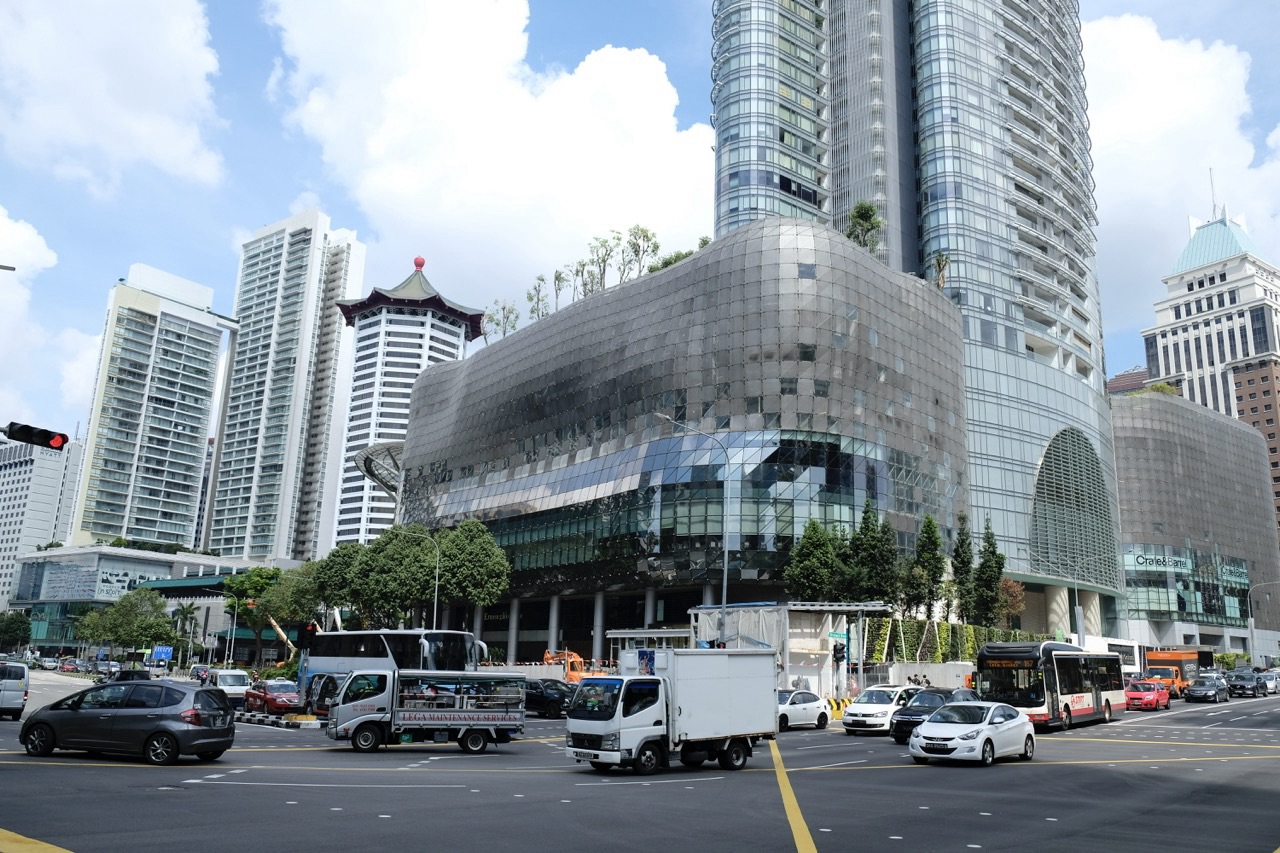
Singapore is moving to ERP 2.0, a satellite-enabled road-pricing system that uses an On-Board Unit (OBU) instead of the older In-Vehicle Unit (IU). The transition is scheduled to complete on 1 January 2027, when the older ERP 1 system is due to be decommissioned. For most Singapore-registered vehicles that are used on mainland public roads, an OBU becomes mandatory from that date. Certain categories, including classic/vintage and restricted-use vehicles, have exceptions.
If you searched for ERP 2.0 Singapore, OBU installation free deadline, LTA OBU booking, new ERP device app, old CashCard compatibility, satellite ERP 2027 or foreign vehicle ERP charges, the first things to identify are the vehicle’s registration category, whether an OBU has been installed, the invitation/free-installation deadline and which payment method is actually compatible. Changing the device does not mean every ERP charge doubles or that distance-based charging automatically starts.
This Singapore Vocabulary article explains the new system, the installation process, the payment and technology terms, and the current 2026-to-2027 transition dates. It is designed to help vehicle owners read LTA notices accurately rather than rely on outdated forum advice. Use LTA’s official ERP 2.0 page for your vehicle-specific deadline.
ERP 2.0 quick answers for Singapore drivers
| Question | Quick answer | What to verify |
|---|---|---|
| What is changing? | Old IU replaced with new GNSS-enabled OBU | Vehicle’s actual installation status |
| When is OBU compulsory? | From 1 January 2027 for most Singapore-registered road vehicles | Exceptions for specified special categories |
| Is installation free? | Eligible existing vehicles can receive free installation within assigned windows | LTA letter and vehicle eligibility lookup |
| Can I use old chip CashCard? | No, conventional chip CashCard for IU is not accepted by OBU | Compatible CEPAS card or backend payment |
| Is the touchscreen compulsory? | Optional for relevant car OBU setups | Vehicle type and chosen display alternative |
| Does installing OBU start distance-based charging? | No automatic change to current congestion-price framework | Current LTA rates and future notices |
| Foreign vehicles without OBU from 2027 | Daily flat rate on ERP operational days | S$3 motorcycle; S$10 other vehicle |
60 Singapore ERP 2.0, OBU and motoring-payment terms
Understanding an ERP notice requires more than recognising the letters. A certificate to register a car, a road-pricing charge, a payment card and an installation appointment describe four different responsibilities. The last column explains how each term affects what the driver should check or do.
| Term | Meaning in plain English | Practical implication |
|---|---|---|
| ERP | Electronic Road Pricing | Singapore system charging motorists at selected congested roads |
| ERP 2.0 | New satellite-enabled Electronic Road Pricing system | Replaces ageing gantry-based ERP 1 |
| LTA | Land Transport Authority | Manages ERP, OBU and relevant vehicle rules |
| MOT | Ministry of Transport | Explains road-pricing strategy and rollout timetable |
| OBU | On-Board Unit | New device replacing vehicle In-Vehicle Units |
| IU | In-Vehicle Unit | Older ERP device to be phased out |
| GNSS | Global Navigation Satellite System | Technology underpinning ERP 2 location capability |
| Antenna | Component receiving positioning signals | Part of OBU system |
| Processing Unit | Device core processing ERP charges and related functions | Installation location depends on vehicle |
| Touchscreen Display | Optional visual display for appropriate car OBU systems | Not compulsory for every supported configuration |
| Motorcycle OBU | OBU configuration for motorcycles | Differs physically from car three-piece setup |
| Three-piece OBU | Antenna, processing unit and touchscreen parts | Touchscreen can be optional for many car drivers |
| Smartphone pairing | Connecting phone to OBU for displayed information | Does not replace the OBU itself |
| Bluetooth | Short-range device pairing protocol | Used in phone/OBU connections |
| ERP 2.0 app | LTA mobile app for OBU-related functions | Not the same as an automatic billing cancellation |
| CarPlay | Apple vehicle infotainment integration | Supported ERP 2.0 app may provide selected features |
| Android Auto | Android infotainment interface | Supported devices can access compatible functions |
| Notification letter | LTA instruction to arrange OBU installation | Contains relevant installation window |
| Free installation | LTA-paid installation for eligible vehicles within permitted window | Depends on vehicle category and invitation timing |
| Installation window | Period allocated for changing the IU | Generally first six-month period plus reminder window |
| Reminder letter | Follow-up installation notice | May add three months of free installation under current rules |
| Authorised workshop | LTA-listed OBU installation provider | Do not rely on a random mechanic offering guaranteed free installation |
| OBU appointment | Scheduled device installation | Can be aligned with vehicle servicing |
| Technical feasibility | Assessment whether OBU can be installed in vehicle | May affect unusual vehicle models or accessories |
| EBD | External Battery Device | Additional power solution for certain vehicle configurations |
| Vehicle registration mark | Vehicle plate number | Used for checking eligibility and arranging service |
| Processing Unit placement | Location of OBU core inside the vehicle | Agree with workshop before work begins |
| Optional accessory | Extra item offered beyond essential installation | Must have meaningful consent before charge |
| IU number | Identifier associated with the older unit | LTA says it can be ported to OBU for existing vehicles |
| OBU number | Identifier of installed new unit | Shown through display, app or OneMotoring services |
| Warranty | Coverage against specified OBU issues | Check actual terms and expiry |
| OBU inspection | Inspection following device issues or LTA notice | Use authorised service centre |
| ERP operational day | Day on which ERP charges can apply | Different from every calendar day |
| ERP operational hours | Time intervals when charging applies | Check current LTA schedule |
| ERP rate | Charge based on road, time and vehicle type | Not one flat price for all journeys |
| Half-hour time band | Interval often used for ERP rates | Entry at 7:59 and 8:01 can differ |
| Gantries | Physical infrastructure under older ERP system | ERP 2.0 can enable locations without large gantries |
| Congestion pricing | Charge used to manage crowded traffic | Not a COE price or road tax |
| Distance-based charge | Charge tied to distance travelled | Do not assume it begins automatically with OBU installation |
| ERP charge history | Record of ERP transactions | Check OneMotoring or payment provider |
| Missed ERP payment | Charge not collected properly | LTA supports specified settlement channels |
| CEPAS card | Compatible stored-value motoring payment technology | Supported motoring cards can work with OBU |
| NETS Motoring Card | Compatible card for ERP and some parking | LTA provides complimentary card on first installation while available |
| Old chip CashCard | Older payment card used with IU | Not compatible with the new OBU |
| Backend payment | ERP payment billed through registered provider | Separate from inserting a physical motoring card |
| AXS Drive | One listed ERP backend payment provider | Check enrolment and exact plan |
| EZ-Link Motoring Service | Another payment arrangement | Different from normal SimplyGo commuter card |
| NETS Virtual CashCard | Backend motoring-payment option | Requires correct registration and funds |
| Season parking | Monthly entitlement to certain parking areas | Existing IU-linked season arrangements can be retained when moved to OBU |
| EPS | Electronic Parking System | Parking technology distinct from road pricing |
| Off-Peak Car (OPC) | Special vehicle use scheme | Future OBU service support is not same as current ERP charge |
| Foreign-registered vehicle | Vehicle registered outside Singapore | OBU optional under current 2026–27 transition rules |
| Foreign daily ERP fee | Flat-rate fee for foreign vehicle without OBU from 2027 | S$3 motorcycles and S$10 others per operational day |
| Classic/Vintage Vehicle (CVV) | Special usage-restricted vehicle scheme | OBU installation not compulsory in this category |
| Restricted-use vehicle | Vehicle operating under special limitations | May be exempt from mandatory OBU |
| Privacy safeguard | Rules limiting access to vehicle-specific data | Read LTA’s stated payment, enforcement and aggregated-data practices |
| Anonymised aggregate data | Traffic information combined without individual identification | Used for transport planning |
| Consent-based app integration | Authorised data access for third-party applications | Third-party apps cannot freely alter OBU payment data |
| OneMotoring | LTA’s official digital vehicle-services site | Primary source for deadlines, authorised workshops and records |
| Effective date | When new legal or technical requirement begins | 1 January 2027 is major ERP 2.0 transition date |
Why Singapore is moving from ERP 1 to ERP 2.0
Singapore introduced electronic road pricing in 1998 to manage congestion on busy roads. The older ERP architecture relies on physical gantries and in-vehicle readers. ERP 2.0 uses Global Navigation Satellite Systems technology and the new OBU, which can provide more flexible management and road information without necessarily requiring large new gantries at every location.
The Ministry of Transport says the replacement responds to the ageing first-generation system and supports more flexible traffic management. But a technology upgrade is not proof that a driver’s charges will immediately be distance-based. LTA says the existing congestion-pricing framework does not change during the transition. Official rates still depend on road, vehicle type and the applicable charging time.
The three parts of a car OBU
| Component | What it does | What a driver should decide |
|---|---|---|
| Antenna | Receives relevant satellite-related signals | Placement and technical feasibility discussed with installer |
| Processing Unit | Operates the system’s core functions | Workshop discusses suitable location in vehicle |
| Touchscreen Display | Shows alerts, charges and supported traffic information | Optional for appropriate car installations; phone app is alternative |
Motorcycles use a different physical OBU configuration from the multi-component car system. Some vehicles may need an External Battery Device, subject to technical assessment by authorised centres. Examples include certain electric vehicle configurations where continuous power supply cannot be assured. A driver should not install a random substitute battery in place of the required solution without checking LTA’s specifications.
How to book and install the new OBU
- 1. Identify your vehicle category. Most Singapore-registered road vehicles must transition; check whether any exemption genuinely applies.
- 2. Check the vehicle’s status and eligible free-installation window. Use LTA’s official OBU booking and workshop lookup.
- 3. Choose an LTA-authorised workshop that supports the vehicle’s make and arrangement.
- 4. Confirm an appointment. LTA says drivers need not wait for the letter before seeking eligible early installation.
- 5. Prepare the car. Clear dashboard areas and ask about installation position, accessories and any power-supply limitations.
- 6. Choose the appropriate touchscreen or phone display arrangement. Ask about any optional charges beforehand.
- 7. Check payment method and transaction history when the OBU is ready.
- 8. Keep the warranty and workshop information in case an inspection or repair is needed.
The official LTA materials explain that eligible existing vehicles are offered a free OBU changeover during their scheduled period, commonly a six-month invitation window plus a reminder period. The precise deadline matters more than a generic advertisement saying ‘free OBU until year-end’. Check the registration number and LTA’s actual invitation status before booking.
What if the free installation deadline was missed?
LTA says the initial free-installation window for eligible vehicles lasts six months. A reminder can provide an additional three months. After the eligible free window, published installation charges before the mandatory transition are S$35 for motorcycles and S$70 for other vehicles, excluding GST. The final amount and eligibility depend on vehicle and installation circumstances. Separately sold optional accessories should not be misrepresented as compulsory just because a motorist is having an OBU fitted.
OBU installation is not compulsory for every exceptional vehicle
The mandatory OBU rollout has defined exceptions. LTA lists classic and vintage vehicles, some restricted-use vehicles, non-mechanically propelled trailers and certain vehicles prohibited from mainland public roads. A classic/vintage owner may choose a free OBU installation where eligible before 31 December 2026, but is not otherwise required to install one. From January 2027, a qualifying classic/vintage vehicle travelling on ERP operational days without OBU may instead be subject to the specified daily flat-rate charge.
The old IU card versus the new payment options
LTA specifically says an old conventional chip CashCard used in the previous IU cannot be used in the OBU. Some CEPAS-based motoring cards are compatible, including designated NETS Motoring Card, NETS FlashPay or EZ-Link Motoring products. Certain backend services can also charge ERP without relying on manual stored-value card insertion, but they require the correct service registration.
| Payment option | How it works | Caution |
|---|---|---|
| Compatible CEPAS motoring card | Stored-value motoring card used with OBU | Check actual card compatibility and balance |
| NETS Motoring Card | Eligible card for ERP and certain parking | Complimentary first-installation supply may be limited |
| AXS Drive | Backend payment service | Check valid signup and charges |
| EZ-Link Motoring Service | Backend motoring payment | Not every commuter EZ-Link product works in a vehicle |
| NETS Virtual CashCard | Account-based backend ERP payment | Verify registered vehicle and linked billing |
| Old chip CashCard | Older IU-era card | Not accepted by OBU |
A driver who successfully pays ERP through an OBU backend arrangement should not assume that every private car park accepts the same backend service. LTA advises keeping a compatible CEPAS card accessible for car parks that require physical card payment. This is another situation where ‘ERP paid’ and ‘parking paid’ are different actions.
Touchscreen or phone: what happens when the phone runs out of battery?
LTA allows relevant motorists to use supported mobile applications in place of an optional car touchscreen. The app can pair through Bluetooth, and certain versions can integrate with Apple CarPlay or Android Auto. Not every app has exactly the same alert and display functions. Importantly, LTA states that when a paired phone loses power or data connectivity, the driver may not see alerts but OBU ERP charges can still be processed. The absence of an alert does not mean the road is free.
If you add a touchscreen after initially declining it, the authorised workshop may charge for that later installation. A driver who wants consistent charge visibility should consider the trade-off before the original appointment, rather than assume the touchscreen and smartphone are always functionally identical.
How ERP prices are calculated during the transition
ERP pricing is designed to manage congestion. The charge for a particular route depends on the pricing location, vehicle type and time. Rates are reviewed periodically and may be adjusted around school-holiday periods. LTA often displays rates in half-hour intervals. A price stated for 7:30am–8:00am ordinarily applies from 7:30am until just before 8:00am, not through an inclusive 8:00am endpoint.
Imagine two fictional drivers who use the same ERP point, one shortly before 8:00am and the other shortly after. They might pay different amounts if the rate changes between the two charging windows. It would be a mistake to read a time-band label as a flat daily fee or as a claim that every driver on a route pays the same rate. The relevant published rate at that location and time controls the charge.
Foreign-registered vehicles: the 2027 daily fee
LTA says foreign-registered vehicles are not required to install an OBU. They may choose to have one fitted from 1 April 2026 at an authorised Singapore workshop, subject to feasibility. The published OBU price for foreign motorists up to the end of 2026 is S$158.70 including GST, separate from workshop installation fees.
From 1 January 2027, a foreign-registered vehicle travelling in Singapore without an OBU faces an ERP flat-rate fee for each ERP operational day. The announced amount is S$3 for a motorcycle and S$10 for other foreign-registered vehicles. This is not a fee charged for every calendar day, nor is it the same as a Vehicle Entry Permit, toll or road tax. Check the official operational day definitions and latest cross-border rules before travelling.
Does ERP 2.0 track every personal journey?
LTA’s current privacy information states that vehicle-specific data is collected for ERP payment, charges and enforcement, while aggregated and anonymised data are used for transport planning and traffic management. Third-party app access requires appropriate permission and is subject to technical restrictions. Drivers can review those safeguards rather than conclude either that no vehicle-related data is processed or that any commercial app can read and modify everything.
An OBU installation notice is not a payment scam invitation
| Message or claim | What to question | Safer next step |
|---|---|---|
| Pay me now to reserve a free OBU | Is this a real authorised workshop and applicable free period? | Use OneMotoring or go.gov.sg/book-obu |
| Touchscreen must be purchased for every car | Is it required for this specific configuration? | Read LTA component options |
| Old CashCard will still work | Is it a conventional chip CashCard? | Check compatibility list |
| You need to change season parking number manually | Is the IU identifier being automatically ported? | Check LTA guidance and permit status |
| OBU immediately charges for every kilometre driven | Has LTA actually announced distance-based pricing? | Consult published ERP framework |
| All foreign drivers must buy OBU in 2026 | Is the foreign-registered installation optional? | Read LTA foreign-vehicle section |
A troubleshooting checklist for existing OBU owners
- Check the OBU transaction history and pairing status using official OneMotoring services.
- If the display is not showing information, distinguish a dead phone or pairing problem from an OBU payment failure.
- If LTA issues an inspection notice, contact an authorised centre or the installing workshop.
- Check whether a compatible card is inserted or a properly registered backend payment arrangement is active.
- Keep the OBU installed with the vehicle; do not move it to another vehicle without authorised procedures.
- Review warranty and workshop records for genuine hardware issues.
- Check current ERP rates on OneMotoring, not the rate printed in an old discussion post.
Common ERP 2.0 misunderstandings
| Misleading claim | Accurate meaning |
|---|---|
| OBU is the same as COE. | OBU is a device; COE is vehicle-registration entitlement. |
| Any old CashCard will fit. | Conventional IU chip CashCards are not supported by OBU. |
| Everyone must purchase a touchscreen. | Touchscreen is optional for relevant car configurations. |
| The app is a substitute for an OBU. | Phone applications can complement a properly installed OBU. |
| No phone charge alert means no ERP charged. | OBU can still process charges without active phone display. |
| All Singapore vehicles including vintage cars must install by January. | Specific exempt categories exist. |
| Every foreign vehicle needs OBU from 2027. | Foreign vehicles may use the announced flat-rate arrangement without OBU. |
| Satellite technology means distance charges begin automatically. | LTA states existing congestion-pricing framework remains during transition. |
Frequently searched ERP 2.0 questions
When is ERP 2.0 compulsory in Singapore?
From 1 January 2027 for most Singapore-registered vehicles used on mainland public roads, subject to LTA’s specified exceptions.
Is OBU installation free?
Eligible existing Singapore-registered vehicles can receive free installation within their allocated LTA invitation and reminder periods. Check the actual vehicle status.
What is the difference between IU and OBU?
IU is the older ERP in-vehicle reader; OBU is the new GNSS-enabled device used for ERP 2.0.
Must I install the touchscreen display?
For relevant car installations it is optional. Drivers may use a supported phone application, with different display capabilities.
Can I use an old chip CashCard in OBU?
No. LTA lists compatible CEPAS motoring cards and backend services instead.
Will ERP 2.0 charge for every kilometre I drive?
Installing OBU does not automatically introduce distance-based ERP. The currently applicable congestion pricing remains subject to LTA’s official announcements.
What do foreign motorists without OBU pay from 2027?
LTA announces S$3 daily for motorcycles and S$10 for other foreign-registered vehicles on each applicable ERP operational day.
Can I install OBU before receiving LTA’s notification?
LTA says motorists may book an eligible early installation at an authorised workshop, subject to free-installation status and conditions.
Does OBU affect HDB season parking?
LTA says the existing IU number can be ported to OBU, so already-linked season parking arrangements generally do not require re-registration solely for the new device.
What if my OBU stops working?
Use authorised inspection or installation-centre support and follow any LTA repair notice, rather than transferring the device independently.
Four practical vocabulary activities
| Practice | What to do | What you should understand |
|---|---|---|
| 1 — Compare | Explain ERP 1 IU versus ERP 2 OBU | Technology and legal requirement differ |
| 2 — Book | Find an authorised workshop and check a fictional invitation letter | Free eligibility and dates matter |
| 3 — Pay | Sort CashCards, CEPAS cards and backend arrangements | Compatibility and parking are separate |
| 4 — Travel | Compare Singapore registered and foreign-registered vehicles | Distinct mandatory-installation rules and 2027 fees |
Related eduKateSG reading
- How Singapore Works | ERP 2.0 Singapore — the technical and policy overview.
- How Singapore Works | Roads, ERP and Cars — why road pricing exists.
- Singapore Vocabulary | COE Prices and Road Tax — ownership costs versus trip charges.
- Singapore Vocabulary | Parking.sg and Season Parking — parking versus ERP.
- Master Vocabulary — accurate language for everyday tasks.
Official LTA and MOT sources
- LTA OneMotoring: ERP 2.0 and OBU — installation, exceptions, payment methods and 2027 transition.
- LTA: book OBU installation — vehicle-specific status and workshops.
- LTA OneMotoring: ERP rates and charges — operational hours and current rates.
- Ministry of Transport: Electronic Road Pricing — purpose and rollout.
- OneMotoring — transaction history, OBU service and vehicle records.
Reviewed 4 November 2026. The 1 January 2027 change described here is scheduled for the future as of publication. Vehicle exemptions, free-installation deadlines, workshop fees, payment compatibility and ERP rates can change. Confirm the exact vehicle’s current requirements with LTA’s live official system.