
A parent wants to pay a child’s polytechnic fees from CPF Ordinary Account savings. The family calls it Government education funding and expects no interest while the child studies. But the CPF Education Loan Scheme is a repayable withdrawal from the CPF member’s own OA. Interest starts from the date of deduction, and the student must restore the principal plus accrued interest in cash, generally beginning a year after leaving studies.
The Gold Standard of CPF Education Loan Scheme Application Services is a responsible journey from comparing alternatives and checking an eligible institution to an accurate withdrawal limit, independent lender consent, tuition payment, understandable accrued interest and actual repayments into the lender’s CPF OA. It protects learning opportunities while honestly describing their effect on family retirement savings.
CPF’s current scheme covers approved full-time subsidised diploma and degree courses. A student ordinarily applies before the semester starts; a separate CPF lender must endorse within fourteen days. CPF requires cash repayment from one year after graduation or termination, within a maximum of twelve years, with a current S$10.90 administrative charge per OA tuition deduction.
Education, CPF lender consent and repayment are separate milestones
The chapters follow alternative study financing, approved courses, Available Withdrawal Limits, lender approval, education disbursement, accrued CPF interest and actual cash repayment into the lender’s OA.
1. Treat the CPF Education Loan as a real loan
Parents may believe that using their Ordinary Account to pay a child’s polytechnic fees is a government bursary. The money is actually withdrawn from the CPF member’s retirement-related savings and must normally be repaid.
The CPF Education Loan Scheme finances eligible subsidised courses using an applicant lender’s OA, with the student obligated to repay principal and accrued interest in cash to that member’s OA. The policy is designed to protect education access without disguising the impact on long-term savings.
Back to Education Loan chapters · Next chapter
2. Consider other support before using CPF OA
A student may have bursary eligibility, Post-Secondary Education Account funds or a subsidised higher education loan. Immediately drawing down family CPF savings can be unnecessarily expensive when another appropriate route protects interest during study.
CPF’s application guide tells users to compare the Post-Secondary Education Account and MOE Higher Education Student Loan (HESL). A Gold Standard front door shows these choices and the actual coverage limits before asking a parent to authorise a retirement-savings withdrawal.
Back to Education Loan chapters · Next chapter
3. Use the current Higher Education Student Loan name
Older university guides may still mention an MOE Tuition Fee Loan as the default. Students starting a 2026–2027 semester should check which financing programme actually exists now.
CPF’s 2026 education-financing article says the MOE Tuition Fee Loan was replaced by HESL in July 2026. HESL generally has no interest during the course of study, unlike CPF’s OA education withdrawal, where foregone OA interest accrues from the deduction date.
Back to Education Loan chapters · Next chapter
4. Check the approved institution first
A private college may call its course a university diploma even though it is not on the CPF Education Loan approved list. A school logo alone does not establish scheme eligibility.
CPF confines the scheme to designated Approved Educational Institutions such as eligible Singapore universities, polytechnics and specified arts or Institute of Technical Education diploma programmes. The service should check the institution and exact course before a lender provides CPF details.
Back to Education Loan chapters · Next chapter
5. Check the correct full-time subsidised course
Part-time students and postgraduate students can have legitimate education needs. Their eligibility for alternative financial support does not mean the same CPF Education Loan rules apply.
The CPF qualification guide limits this loan to approved full-time subsidised diploma and degree courses. An application should not present a part-time private diploma or typical postgraduate qualification as eligible merely because the provider is a recognised education institution.
Back to Education Loan chapters · Next chapter
6. Distinguish tuition from unrelated living costs
A student may face accommodation, transport, food and equipment costs beyond tuition fees. Using CPF OA under this scheme is not a general-purpose cash advance for those expenses.
CPF Education Loan withdrawals are made for eligible subsidised tuition fees, up to the applicable limits. The service should display semester tuition and allowed withdrawal separately from other study costs, directing students to appropriate bursary or loan sources for expenses that the scheme does not cover.
Back to Education Loan chapters · Next chapter
7. Identify whose OA may serve as lender
Students may have some savings in their own OA or ask a parent, spouse, sibling or other relative for help. Those relationships do not all have identical percentage limits.
CPF’s lender guide allows appropriate own, parents’, spouse’s, siblings’ or relatives’ OA savings, subject to requirements. The student is the borrower and the CPF member whose OA is withdrawn is the lender, even when the people are immediate family.
Back to Education Loan chapters · Next chapter
8. Use the special sibling and relative percentage caps
An aunt may offer to pay all university tuition from her CPF savings, not realising the rules impose a narrower limit than for an eligible sibling.
CPF states that approved sibling-lender cases may cover up to 100% of eligible tuition fees. An ordinary relative’s OA may cover up to 10% at a university, 25% at a polytechnic or approved technical diploma, or 50% at an arts institution. The service should apply the actual relationship and course, not one flat limit for every relative.
Back to Education Loan chapters · Next chapter
9. Compute the Available Withdrawal Limit
A CPF member may see S$60,000 in OA and assume all of it can pay education fees. The scheme deliberately limits the available percentage to preserve other CPF purposes.
The Available Withdrawal Limit is the lower of 40% of accumulated eligible OA savings or the remaining available OA balance, subject to tuition fees and applicable rules. Housing-reserved savings and previous education or investment withdrawals can affect the calculation.
Back to Education Loan chapters · Next chapter
10. Do not confuse accumulated OA with today’s balance
A CPF member could have previously used OA for housing and investment. The accumulated OA savings figure has an official definition rather than being the most recent monthly account balance.
CPF explains that accumulated OA considers current OA plus previous education and investment withdrawals, excluding housing withdrawal amounts under the prescribed calculation. A Gold Standard estimator should obtain the authenticated CPF Education dashboard figure rather than multiply the displayed cash balance by 40% without considering the rule.
Back to Education Loan chapters · Next chapter
11. Protect the retirement sum at age fifty-five
An older parent may want to assist a child even though retirement payouts are approaching. Using the remaining OA without regard to Retirement Account requirements can undermine the family member’s basic future income.
CPF requires lenders aged 55 or older to have set aside the prescribed Full Retirement Sum, through applicable cash or cash-plus-property arrangements, before using OA savings for education within the Available Withdrawal Limit. The service should explain this condition respectfully and display alternative study financing if the parent does not qualify.
Back to Education Loan chapters · Next chapter
12. Remember housing commitments also use OA
A family may need the same parent’s OA for monthly HDB instalments and education fees. Allocating the entire available balance toward tuition could lead to later housing cash shortfalls.
CPF’s Available Withdrawal Limit is further constrained by actual OA available after prescribed housing and other reserved amounts. A proper budgeting view shows the future housing obligation and likely term payments without treating CPF savings as unlimited liquidity.
Back to Education Loan chapters · Next chapter
13. Apply before the relevant semester starts
A student may begin the course, pay several fees out of pocket and only later try to apply retroactively for the whole semester. The official scheme has institution-specific application windows.
The CPF application schedule requires submitting before the academic semester starts under published institutional dates. A service should show the actual school, semester, open and closing dates instead of assume one national 31 October deadline.
Back to Education Loan chapters · Next chapter
14. Use the institution’s own 2026 schedule
As of 19 October 2026, some second-semester polytechnic windows remain open while several university and other school windows have already closed. A student could miss a deadline by copying a friend’s institution dates.
For example, CPF’s published 2026–27 second-semester dates show Singapore Polytechnic applications from 17 September to 31 October 2026, while Ngee Ann Polytechnic is 16 September to 28 October and Nanyang Polytechnic 1 September to 31 October, subject to schedule changes. Confirm the live CPF table rather than treat these examples as fixed every year.
Back to Education Loan chapters · Next chapter
15. Submit one application per lender for the course
A family may think it must complete another form every semester once the student begins the degree. That creates unnecessary duplication and can lead to conflicting records.
CPF generally requires one online education-loan application per CPF lender for the entire approved course at the same institution. Subsequent eligible semester fees are deducted automatically if sufficient permitted OA remains. A new approved institution or applicable change can require a new application.
Back to Education Loan chapters · Next chapter
16. Give borrower and lender separate authentication
A parent can agree to fund education but should not be asked to share Singpass credentials with the student or a school adviser. The agreement concerns that parent’s own CPF savings.
CPF requires the student and lender each to have their own Singpass and valid email address for the standard online route, except where the student applies to use their own OA. The service should use separate secure borrower application and lender endorsement stages rather than copy a parent’s OTP into a student’s device.
Back to Education Loan chapters · Next chapter
17. Complete the fourteen-day lender endorsement
A student may submit the online application and assume the financing is approved before the parent’s digital consent has been completed. That can cause a tuition-payment shortfall at the school.
CPF sends the lender a proper endorsement link, ordinarily the day after an eligible submission. The lender must endorse with their own Singpass within 14 days of the student’s application, or the application is automatically rejected. A Gold Standard status distinguishes submitted, endorsement pending, endorsed and approved.
Back to Education Loan chapters · Next chapter
18. Avoid false lender consent
An adult child may know the parent’s identification number and bank details, but this does not authorise use of the parent’s CPF OA without the prescribed consent.
A legitimate application requires genuine lender agreement to the amount and course. The service should not allow a relative or adviser to impersonate the owner of CPF funds, and should make it easy for a lender to review what their savings will finance before endorsing.
Back to Education Loan chapters · Next chapter
19. Make self-lending a genuine distinct option
A student with enough OA savings may use their own account, but the education withdrawal is still repayable and its terms still affect retirement savings.
CPF exempts self-lending applicants from the separate lender endorsement step because borrower and CPF member are the same person. Nevertheless, interest starts when OA is deducted and repayments are due under the scheme. A single identity should not result in the system classifying the transaction as a no-repayment grant.
Back to Education Loan chapters · Next chapter
20. Check the approved fee amount actually paid to the school
The CPF Board transfers authorised tuition withdrawals to the designated educational institution, rather than handing the student unrestricted cash for any purpose.
A correct payment record shows lender OA, institution, semester, tuition amount deducted and student. CPF makes subsequent qualifying deductions subject to OA availability. A notice of approval should not be described as the student having received spending money directly in a personal bank account.
Back to Education Loan chapters · Next chapter
21. Separate administration charges from tuition
Even a lender whose OA exactly covers the advertised semester tuition may see a slightly larger account deduction due to a prescribed administrative charge.
CPF currently lists an S$10.90 administration fee inclusive of GST for each deduction from the lender’s OA. A Gold Standard statement displays the fee and tuition withdrawal separately. The school fee and the Government administrative charge should not be combined into an unexplained amount that appears to be extra tuition.
Back to Education Loan chapters · Next chapter
22. Explain OA interest accrues immediately
Students may think the CPF loan remains entirely interest-free while they study, like some other education loans. That can encourage families to draw down OA savings unnecessarily early.
Under CPF Education Loan rules, accrued interest begins from the date OA savings are withdrawn, at the applicable CPF Ordinary Account interest rate. The CPF 2026 guide discusses the usual OA rate of 2.5% per annum. The exact accumulated amount depends on withdrawal dates, applicable rates and repayment.
Back to Education Loan chapters · Next chapter
23. Distinguish foregone CPF interest from a bank loan fee
The interest due does not work exactly like a commercial loan penalty paid to a bank. The borrower must restore what would have accumulated in the CPF member’s OA if the money had remained there.
CPF says repayment includes the principal withdrawn and accrued OA interest, credited back to the lender’s OA. A service should explain that the lender loses compound savings growth during the withdrawal period, rather than call the charge a discretionary profit retained by a private bank.
Back to Education Loan chapters · Next chapter
24. Keep the student responsible for repayment
A parent may expect the withdrawal to be treated as a permanent gift and never returned. The scheme makes the student borrower responsible for paying the lender’s OA back in cash after the required period.
The CPF repayment rules require the student to repay principal plus interest to the lender’s CPF account. The obligation is not cancelled because the educational qualification was difficult or a family chose not to discuss repayment at enrolment.
Back to Education Loan chapters · Next chapter
25. Start repayment one year after leaving studies
A student who graduates in one month and another who withdraws partway through may have different courses but the same basic rule measuring the repayment start from completion or termination.
CPF generally starts the repayment obligation one year after graduation or leaving the institution, whichever happens earlier. Students normally receive repayment information about three months before the start. The service should show actual exit date and repayment notice rather than assume every student graduates on the original schedule.
Back to Education Loan chapters · Next chapter
26. Allow a maximum twelve-year repayment period
A borrower may want tiny instalments stretching over decades to ease monthly cash flow. The scheme has a maximum term intended to restore the lender’s CPF savings.
CPF Education Loan repayments must be completed within twelve years from the applicable repayment commencement period. A deferment does not create an unlimited extension: it reduces the time left within the original maximum. A service should show a realistic repayment plan and projected balloon balance rather than merely advertise the smallest permitted instalment.
Back to Education Loan chapters · Next chapter
27. Show the minimum monthly payment and normal six-year planning
The scheme can set a repayment amount higher than the minimum when the loan is larger, so that repayment remains manageable within a shorter reasonable period.
CPF’s normal minimum monthly instalment is S$100, with the prescribed repayment notice ordinarily calculating an amount intended to clear the loan in around six years. Borrowers can pay more to reduce accrued interest. A lower monthly amount can increase the total and leave a balance to settle by year twelve.
Back to Education Loan chapters · Next chapter
28. Use cash repayments, not another CPF withdrawal
A graduate with new CPF contributions may assume they can simply use their own growing OA to repay their parent’s education loan. The prescribed repayment method is different.
CPF requires cash repayments through authorised methods rather than using the borrower’s own CPF savings. Payments go to the CPF member lender’s OA. A Gold Standard dashboard should identify who owes money and the actual destination rather than treat every CPF credit or salary contribution as an education-loan repayment.
Back to Education Loan chapters · Next chapter
29. Use GIRO and PayNow through official routes
A borrower may receive a text asking to settle overdue tuition by transferring to a private account. The real repayment arrangement goes through CPF’s approved services.
CPF accepts education-loan repayments through GIRO or PayNow, with Manage Education Loan Repayments for authorised cash payments. Students can set up eGIRO using Singpass. A lender can also make repayments on the student’s behalf through the prescribed route.
Back to Education Loan chapters · Next chapter
30. Distinguish one-off lump sums from monthly instalments
A worker may make a large optional repayment after receiving a bonus and assume the next regular month’s GIRO instalment will automatically be skipped.
CPF cautions that partial lump-sum payments do not replace regular monthly instalments. The borrower should check updated balance and standing instruction, with payment processing time allowed, rather than rely on a screenshot from an unrelated personal transfer.
Back to Education Loan chapters · Next chapter
31. Offer early repayment to reduce accrued interest
A student who receives a scholarship or earns money during their final year may want to reduce the outstanding CPF principal before the ordinary repayment date. This can preserve family savings.
CPF permits early repayment through its enquiry or authorised services, with appropriate effective timing. The borrower should confirm how the payment changes accrued interest and subsequent instalments. The service should encourage accurate informed choice without pressuring a family member to surrender emergency savings.
Back to Education Loan chapters · Next chapter
32. Allow defined repayment deferment circumstances
Some graduates serve full-time National Service, remain in full-time studies or have not found employment. The rules recognise such circumstances but do not make deferral automatic.
CPF permits applications to defer scheduled repayments for eligible full-time students, full-time National Servicemen and unemployed borrowers, with evidence and official decision. A payment that has simply not been made is not the same as a granted deferment. The online case should state when any approved relief starts and ends.
Back to Education Loan chapters · Next chapter
33. Support genuine financial difficulty fairly
A working graduate may still have pressing financial obligations, while another experiences unexpected unemployment. The appropriate public response is an evidenced request rather than inventing income figures.
CPF provides routes to seek up to one year of deferment or reduced instalments in suitable hardship cases, with prescribed explanation and lender consent considerations. The service should distinguish request submitted from approved relief, while continuing to show accrued interest and remaining repayment term.
Back to Education Loan chapters · Next chapter
34. Explain interest continues through deferment
A borrower granted two years of deferment might assume interest pauses as well and the maximum repayment deadline moves later by two years.
CPF says interest continues to accrue during deferment, and the maximum twelve-year period is reduced by the amount of deferment. Instalments after deferment may rise to finish on time. A Gold Standard decision notice should show those consequences before the student accepts a delay.
Back to Education Loan chapters · Next chapter
35. Understand when the CPF lender may waive repayment
An older parent may voluntarily decide not to require a child to repay an education withdrawal. But the CPF system protects retirement savings through statutory conditions before waivers are approved.
CPF allows a lender aged 55 or older who has set aside the Full Retirement Sum in the Retirement Account to request waiver of education-loan repayment under the applicable rules. The lender should use their own Singpass and understand the decision; a student’s verbal claim of parental approval is insufficient.
Back to Education Loan chapters · Next chapter
36. Do not confuse lender waiver with student default
If a student misses payments, the outstanding loan does not automatically become a waived family gift. A lawful waiver requires the eligible lender’s application and CPF’s prescribed conditions.
A Gold Standard dashboard separates arrears, approved deferment, repayment completed and lender waiver. The related notices should tell the borrower and lender what actually happened, with no implication that the interest stops merely because family members privately agree to postpone it.
Back to Education Loan chapters · Next chapter
37. Monitor the lender’s retirement balance
CPF savings support housing, retirement and other approved schemes. An education withdrawal can reduce a parent’s investment in future income, especially close to age fifty-five.
The service should show the lender’s actual available withdrawal amount, previously reserved commitments and retirement-sum qualification. Borrowers should understand repayment is directed back to the lender’s OA, not a generic Government fund. An outcome measure must include preservation or restoration of the CPF member’s savings.
Back to Education Loan chapters · Next chapter
38. Handle school changes and withdrawals clearly
A student may transfer from one approved institution to another or stop attending before graduation. The original approval need not authorise the new institution’s fee deductions without review.
CPF generally requires one application per lender for an approved course at an institution and a new application when changing to another approved institution. If studies are terminated, the repayment-start clock and corresponding notices follow the actual exit, not the original expected graduation date.
Back to Education Loan chapters · Next chapter
39. Give the student’s education dashboard a useful role
A borrower may know the amount initially financed but not how much interest accumulated after several semester deductions or repayments.
CPF provides an authenticated Education dashboard to view outstanding education-loan amounts, loan status, repayment history and relevant documents. A Gold Standard service lets the student and lender reconcile actual transactions without sharing passwords or requesting unverified bank statements from a commercial tuition adviser.
Back to Education Loan chapters · Next chapter
40. Worked example: a parent lends OA for polytechnic
Fictional student Hana is admitted to a full-time subsidised diploma at Singapore Polytechnic, an approved institution. Her father has enough available OA and agrees to lend a permitted amount. Hana applies inside the school’s published 2026 second-semester window and her father endorses through his own Singpass within fourteen days.
CPF subsequently deducts authorised tuition and the S$10.90 fee for the relevant transaction from her father’s OA, subject to availability. Accrued interest begins on each deduction. Hana will normally start repaying cash to her father’s OA one year after graduation or leaving studies and must fully restore principal and interest within the prescribed term. This is a repayable family funding arrangement, not a bursary.
Back to Education Loan chapters · Next chapter
41. Worked example: a relative offers university support
Fictional NUS student Daniel asks an aunt to pay his entire subsidised tuition from her CPF account. The aunt may have sufficient OA but their relationship is not treated the same as an ordinary eligible parent’s or sibling’s.
Under the CPF rule for an eligible relative lender financing university tuition, the maximum generally is 10% of the eligible fees, subject to all other conditions. Daniel should compare any remaining financing gap with bursaries, PSEA and MOE HESL rather than assume the family can simply enter 100% as the loan percentage.
Back to Education Loan chapters · Next chapter
42. Worked example: older lender protects retirement
Fictional CPF member Mr Lim is 57 and wants to help a younger relative with polytechnic fees. His OA balance looks substantial, but he has not set aside the prescribed retirement sum.
Because the lender is older than 55, the CPF Education Loan’s Full Retirement Sum condition matters before OA can be lent. If Mr Lim cannot satisfy it, the service should explain his ineligibility accurately and point the student toward alternative approved education financing. It should not encourage an artificial withdrawal or falsified lender age.
Back to Education Loan chapters · Next chapter
43. Use current institution dates before making promises
The same academic term may have different CPF application windows at Singapore Polytechnic, Ngee Ann Polytechnic, Nanyang Polytechnic or an autonomous university.
As of 19 October 2026, CPF’s published dates for the 2026–27 second semester include Singapore Polytechnic closing on 31 October, Ngee Ann Polytechnic on 28 October and Nanyang Polytechnic on 31 October, subject to official revisions. A quality service embeds the live schedule and avoids referring to a previous year’s September opening as evergreen.
Back to Education Loan chapters · Next chapter
44. Prevent scams involving CPF student financing
A fake adviser may promise to unlock a large CPF balance for unrestricted tuition or require parents to disclose their Singpass login and bank one-time code.
CPF Education Loan applications use legitimate CPF digital services, institution details and separate authenticated lender endorsement. A government service should explain the applicable withdrawal limit, proper account recipient and official transaction reference without routing payments into a private intermediary’s bank account.
Back to Education Loan chapters · Next chapter
45. Measure affordable education and actual OA restoration
An agency could count many loans issued while parents’ retirement savings are depleted, students miss repayments or borrowers never understand that interest began during study.
The Gold Standard measures correct eligible courses, clear alternatives, informed family consent, accurate tuition disbursements, transparent accrued interest and timely repayments back to the lender’s CPF OA. Successful public service supports education without hiding the repayment obligations that make this a loan.
Back to Education Loan chapters
CPF Education Loan compared with other financial help
| Financing option | Source | Important consequence |
|---|---|---|
| CPF Education Loan | Own or qualifying relative’s CPF OA | Student repays principal plus CPF accrued interest in cash to lender’s OA |
| MOE Higher Education Student Loan (HESL) | Approved MOE higher education financing | Generally interest-free during course; terms differ after studies |
| Post-Secondary Education Account | Student’s available PSEA | Approved education uses without ordinary CPF Education Loan borrower repayment |
| Bursary or scholarship | Approved institutional or other programme | Grant/award conditions differ from a repayable loan |
Application and repayment deadlines at a glance
| Event | Relevant timing | What to confirm |
|---|---|---|
| Student applies | Within published institutional window before semester starts | Institution, full-time subsidised course and approved lender |
| Separate lender endorses | Within 14 days of student filing | Lender uses own Singpass |
| Tuition deducted | Approved semester deductions | OA balance, withdrawal limit and S$10.90 charge |
| Repayment begins | 1 year after graduation or study termination | Cash to lender’s OA, including accrued interest |
| Full repayment deadline | Within 12-year maximum | Outstanding balance, monthly repayment and any deferment |
Quick answers for students and CPF lenders
- Is CPF Education Loan a grant? No. Repayment of principal and accrued interest is normally required.
- Can I apply for any overseas or private postgraduate course? No. Only approved full-time subsidised diploma/degree courses qualify.
- Can a parent authorise through the student’s Singpass? No. A separate lender must use their own Singpass and endorse within fourteen days.
- Is CPF interest zero during the course? No. It starts from the OA withdrawal date.
- Does every student reapply each semester? Ordinarily one approved course application per lender suffices, subject to eligibility.
- Can repayments use the graduate’s own CPF savings? No. Repayment must be in cash to the lender’s CPF OA.
- Does an approved deferment stop interest? No. Interest continues and the maximum repayment term is reduced.
An accountable education financing public-service audit
- Have students compared legitimate alternatives including PSEA and 2026 MOE HESL?
- Are only authorised full-time subsidised courses and institutions admitted?
- Does the loan accurately verify the lender’s family relationship and specific percentage limits?
- Is the Available Withdrawal Limit calculated using the correct 40%/balance rule and age-55 FRS protection?
- Does the application follow each institution’s actual semester window?
- Are the student and lender separately authenticated, with endorsement inside 14 days?
- Are semester tuition, S$10.90 transaction charges and individual OA deductions clearly visible?
- Can borrowers see that accrued interest began during study rather than after graduation?
- Does the case show cash repayment start, S$100 minimum and 12-year maximum accurately?
- Are deferments, hardship requests and older-lender waivers considered lawfully and transparently?
- Does the programme measure actual education financed and OA savings restored?
CPF Board sources and related eduKate guides
- CPF Board: Education Loan Scheme overview and eligibility
- CPF Board: Apply for CPF Education Loan
- CPF Board: Current application schedule by institution
- CPF Board: Relationships and sibling/relative loan percentages
- CPF Board: Available Withdrawal Limit and age-55 rule
- CPF Board: One application and lender 14-day endorsement
- CPF Board: Principal and accrued interest repayment
- CPF Board: Repayment year after completion and 12-year maximum
- CPF Board: GIRO and PayNow repayments
- CPF Board: Manage repayments and waiver
- CPF Board: Minimum instalments
- CPF Board: Deferments and financial hardship
- CPF Board: Lender waiver conditions at age 55
- CPF Board: July 2026 MOE HESL alternative
- eduKate: CPF Home Protection Scheme Services
- eduKate: CPF Retirement Payout Services
- eduKate: Public Employment Services
- eduKate: HDB Proximity Housing Grant
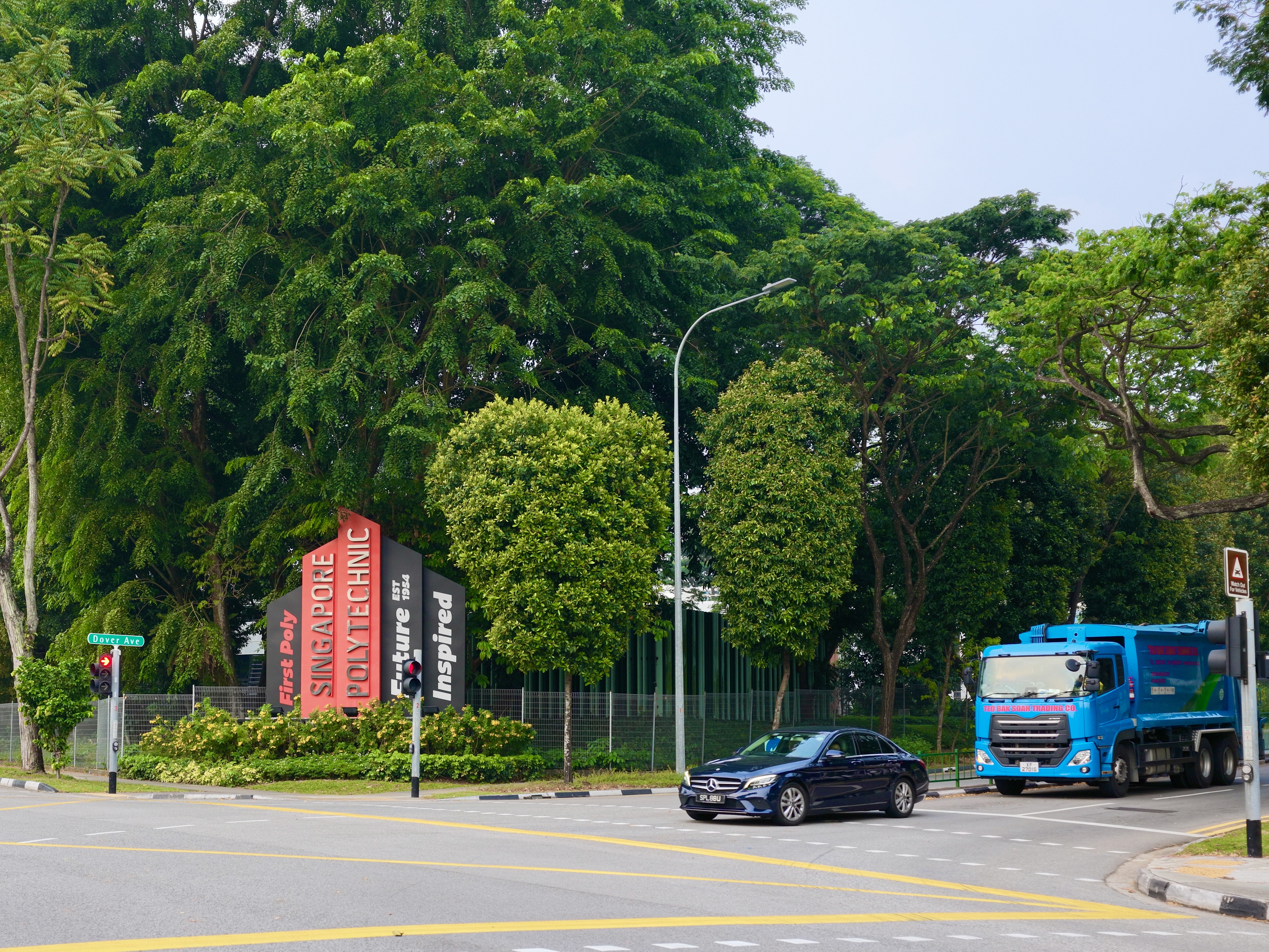
Featured photograph: Singapore Polytechnic campus in Dover, Singapore, showing an education environment. The photograph does not establish that a pictured person received or owes a CPF Education Loan. Part of The Gold Standard | eduKate Singapore and the Sectors and Services Directory. This is educational financial-service guidance, not personal financial advice or an approved loan. CPF Board records and applicable educational institution schedules govern real decisions.