
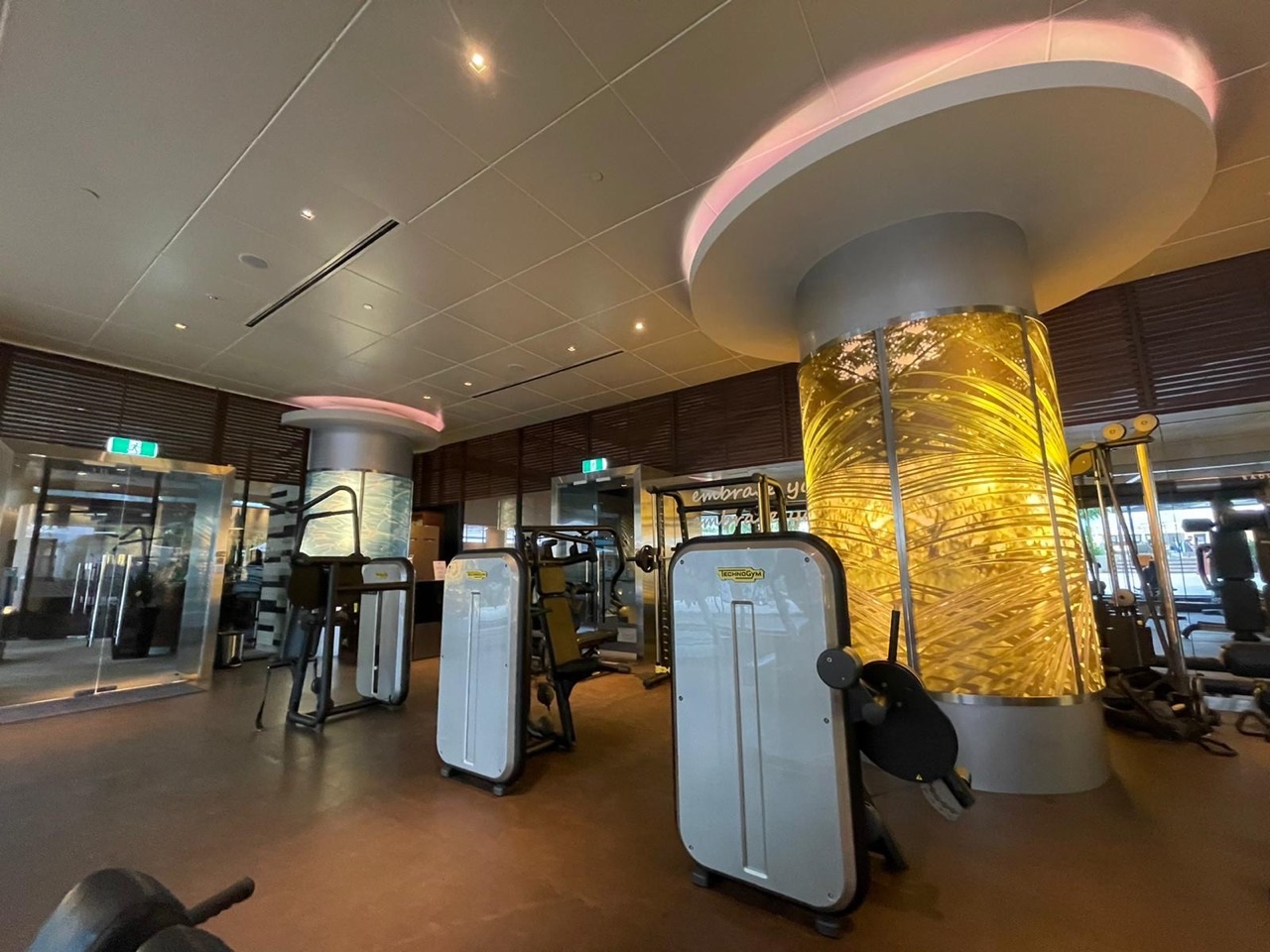
A gym machine is not ready because its display lights up or a weight stack moves once when nobody is using it. The Gold Standard of Gym Equipment Maintenance Services is the disciplined process that keeps equipment suitable for its actual users, detects deterioration, takes unsafe items out of use, performs approved repairs and proves the original function before reopening. A small worn cable or unstable treadmill handrail can matter more than a fresh wipe of the machine’s outer casing.
Imagine a fictional Singapore condominium fitness room with a treadmill, two stationary bicycles and several cable-based strength machines. Residents report that the treadmill belt occasionally slips and the pulldown station produces an unusual click. The facilities contractor cleans every screen, lubricates the visible parts and marks the monthly visit completed. Two weeks later, a cable frays under use. A good maintenance company would have inspected the relevant mechanisms, manufacturer limits, guards, fixings and equipment log, with a clear isolation and return-to-use decision for each machine.
ISO 20957-1:2024 is the current international general safety standard for stationary training equipment, replacing the withdrawn 2013 edition. It applies to indoor training equipment including sports associations, schools, hotels, clubs, gyms and domestic settings, with different classes and product-specific parts. ISO 20957-2:2024 adds requirements for stationary strength training equipment. These are technical standards informing appropriate design and maintenance judgment; citing them does not imply every Singapore gym maintenance visit receives ISO certification.
Quick answer: what makes a gym machine safe to return to use?
A competent technician identifies and addresses the actual fault, checks suitable structural and moving components, restores guards and product-specific safety features, and demonstrates the intended function under an appropriate authorised procedure. A machine that runs briefly or looks clean is not enough. ISO 20957-1:2024 and relevant product-specific parts inform the technical safety framework.
From the reported machine fault to verified reopening
Read the chapters in order to follow inventory, condition inspection, cables, treadmills, competent repair, workplace safety, records and the acceptance decision.
1. Begin with the actual users and setting
A private home treadmill, staffed gym, hotel fitness room, sports club and rehabilitation facility can have different users, equipment, supervision and risk exposure. Identify who operates the machines, age groups, peak usage and whether the facility has trained staff on site. A machine that is suitable for a supervised specialist programme may be inappropriate for unsupervised public use.
The condominium’s room serves residents who may be first-time users. The maintenance plan therefore needs understandable notices and prompt defect isolation rather than assuming an instructor observes every machine during each session.
Back to chapters · Next chapter
2. Separate stationary fitness machines from rented portable sports gear
Gym treadmills, cycles, rowing machines, weight-stack systems and fixed benches differ from racquets, balls and temporary sports kits. They may have motors, drive belts, heavy moving weights and permanent mountings. A contract must name which installed assets receive inspection and which are outside its scope.
Do not claim a general sports equipment delivery and wiping package automatically includes competent service of a treadmill controller or weight-stack cable.
Back to chapters · Next chapter
3. Create a machine-by-machine asset register
Record product type, manufacturer, exact model, serial number, age, owner, location, applicable class or instructions and previous service. Identify individual machines unambiguously. A log stating ‘gym equipment serviced’ gives a future technician little help locating a recurring problem.
Attach inspection and repair history to each machine. The pulldown station with an unusual click should remain traceable even after someone moves adjacent equipment during renovation.
Back to chapters · Next chapter
4. Use the current standard, not an old edition by habit
ISO 20957-1:2024 establishes general safety requirements and test methods and has superseded ISO 20957-1:2013. The family includes product-specific parts for relevant equipment. A technician should understand the current references and manufacturer instructions rather than paste a dated certification claim from a previous supplier’s brochure.
ISO 20957 is not itself proof a particular used machine is safe today. Actual physical condition and properly conducted checks remain essential.
Back to chapters · Next chapter
5. Identify which machines need specialist competence
A mechanical bench adjustment may differ considerably from repairing a motor controller, power wiring, high-tension cable system or electronic braking. Match the work with the product, trained technician and any regulated electrical boundaries. A general cleaner is not automatically qualified to open guarded motor compartments.
Where an electrical installation or rewiring task falls under EMA’s requirements, use an appropriately Licensed Electrical Worker. Maintenance vendors should state their scope instead of quietly modifying building power.
Back to chapters · Next chapter
6. Make user-reported symptoms useful evidence
Residents can report unexpected movement, loud noise, abnormal belt speed, slipping, damaged handles or the machine stopping suddenly. Record when and under what conditions the problem occurs rather than dismissing it because a short unloaded test seems normal.
The treadmill’s slipping behaviour may depend on speed, duration or another condition. A competent technician must decide safe diagnostic methods, not invite residents to recreate the hazard.
Back to chapters · Next chapter
7. Remove unsafe equipment from use promptly
When a machine has a credible safety-critical fault, management should restrict its use pending qualified assessment. Clearly mark it out of service and ensure the restriction is effective; a small paper note can be missed on a busy fitness floor.
Do not restore access because the machine makes the gym appear fuller. An unavailable cable station is preferable to an avoidable injury.
Back to chapters · Next chapter
8. Inspect frames and structural supports
Look for damaged welds, corrosion, loosened joints, bent members and unstable bases as appropriate to the machine. Heavy equipment can become unsafe through repeated loading and movement. The presence of decorative panels may conceal structural changes that need deeper competent assessment.
Follow approved manufacturer methods and do not add improvised bracing or bolts without reviewing the design. A machine repaired cosmetically can still be structurally unsuitable.
Back to chapters · Next chapter
9. Check anchoring and placement where required
Some machines have manufacturer installation or spacing requirements, anchoring arrangements or movement clearances. Confirm the equipment remains on a suitable floor and has not been repositioned into an exit path or unstable location. Stability is part of real use, not solely a workshop specification.
Before a replacement machine is introduced, check the facility’s actual floor, access and permitted layout rather than choose a position because it fits the photograph.
Back to chapters · Next chapter
10. Inspect cables, pulleys and weight stacks together
Strength equipment may use cables, bearings, guides, pulleys, selector pins and weight stacks. Fraying, abnormal wear, damaged pulleys or insecure pins can create abrupt loss of resistance or moving-part hazards. Inspect the whole designed mechanism under appropriate competent procedures.
The pulldown station’s clicking noise is a reason to isolate it and investigate, not to lubricate a random pulley and reissue the machine without reviewing wear.
Back to chapters · Next chapter
11. Verify selector pins and resistance settings
Weight-stack and resistance systems must engage as intended. Check the applicable selector mechanism, markings, pin retention and normal movement. Do not substitute an unapproved pin or allow a user to load the machine through a makeshift bolt.
Demonstrate the correct approved adjustment in the handover, and keep any damaged component out of the next session until properly replaced.
Back to chapters · Next chapter
12. Treat safety guards as essential equipment
Guarding may protect users from exposed belts, pulleys, flywheels, wires and other moving parts. After maintenance, restore manufacturer-designed covers and access panels. A machine can run while a critical guard is missing, but it should not be returned to public use in that condition.
Technicians should document missing or altered guards rather than improvise a piece of plastic of unknown material and claim equivalent protection.
Back to chapters · Next chapter
13. Inspect treadmill deck, belt and drive response
A treadmill may have belt wear, alignment issues, damaged deck surfaces, loose roller components or electrical faults. Follow manufacturer service procedures and appropriate trained testing for the specific model; adjustment of an unfamiliar belt by trial and error can make it less stable.
The condominium’s slipping belt requires an actual competent diagnosis. A treadmill that runs briefly without a person on it is not fully verified for normal safe operation.
Back to chapters · Next chapter
14. Check accessible stop controls and safety devices
Treadmills may have emergency stop controls, safety keys or other product-specific protection. Assess the relevant controls through suitable procedures and confirm they remain available and work as intended. Do not bypass a safety feature simply because users find it inconvenient.
Explain to gym management which devices require ordinary pre-use checks and what conditions mean the machine must stay out of service.
Back to chapters · Next chapter
15. Include stationary cycles and rowing equipment
Exercise bikes and rowing machines have moving resistance, seats, foot straps, cranks and adjustment systems that can loosen or wear. Their applicable manufacturer and product-specific standard requirements differ. Do not copy a treadmill checklist to a rowing machine and mark it complete.
Check that the actual user’s adjustments lock correctly and that visible structural and moving components remain suitable for expected service.
Back to chapters · Next chapter
16. Keep free weights and benches in the programme
Barbells, benches and dumbbell racks may lack electronics but carry significant loads. Check appropriate stability, surface, collars, bars, rack supports and manufacturer instructions. A bent bar or unstable bench should not stay available because ‘only electrical machines need maintenance’.
Distinguish user-replaceable consumables from parts whose failure could cause injury. Staff need a real defect escalation even for seemingly simple equipment.
Back to chapters · Next chapter
17. Assess equipment class and actual intended use
ISO 20957-1 describes classifications for different indoor equipment contexts, with additional specific parts taking priority where applicable. The general standard excludes some outdoor training equipment and generally excludes use by children under fourteen except for defined qualified educational settings.
Do not infer that a commercial machine suitable for adults is a children’s playground device or that a home model is appropriate for unsupervised high-throughput commercial use without suitable product evidence.
Back to chapters · Next chapter
18. Keep manufacturer load and use limitations visible
Machines may have maximum permissible user weight, specific adjustment ranges, operating instructions or restrictions on the intended exercise. Check relevant labels and information for legibility. A faded warning or missing instructions can increase misuse even when the mechanism is functioning.
A maintenance company should report absent labels and obtain appropriate manufacturer information rather than invent its own unsupported capacity figures.
Back to chapters · Next chapter
19. Manage cleaning without damaging equipment
Frequent contact surfaces need appropriate hygiene, but aggressive chemicals can damage padding, coatings, electronics or adhesives. Use product-compatible methods and avoid saturating displays or motors. A cleaner should not leave a wet treadmill platform where someone may slip.
Separate hygiene logs from technical readiness logs. A spotless weight stack is not proof of sound cables, and a thoroughly serviced machine still needs an appropriate cleaning routine.
Back to chapters · Next chapter
20. Protect technicians during maintenance
Inspection can involve heavy weights, electrical energy, pinch points, lifting and running machinery. Establish suitable isolation, supervision, lifting equipment and competent test methods. Workers should be able to stop and refer unusual faults instead of being pressured to release a machine for the next booking.
Singapore MOM’s risk-management guidance supports systematic identification and control of workplace hazards, including non-routine maintenance.
Back to chapters · Next chapter
21. Review access and clearance after every rearrangement
Adding more equipment can narrow routes and put moving parts too close to neighbouring users. Review manufacturer spacing and building escape requirements, especially around doors, clear paths and machines with wide moving ranges.
A facility with more equipment per square metre does not necessarily offer more usable, safe capacity. Reposition or reduce stock where clearances cannot be maintained.
Back to chapters · Next chapter
22. Keep inspection frequency proportionate to use and manufacturer rules
Some machines operate many hours daily, while others sit idle. Maintenance should reflect actual usage, load, condition, service history and manufacturer’s recommendations, plus applicable owner responsibilities. Do not invent one mandatory Singapore monthly technical certification interval for every machine.
Increase relevant checks where a repeated issue appears. A contract that performs fewer but meaningful specialist tests can be stronger than one that repeats superficial wiping every week.
Back to chapters · Next chapter
23. Record defects and replacements accurately
Every inspection should show the actual machine, components checked, concerns found, work performed, parts used and any outstanding restriction. If a machine could not be accessed, say so. Maintenance completion is not the same as defect closure.
Document replacement with compatible parts rather than generic descriptions such as ‘new wire fitted’. A future technician must be able to understand whether the original fault was genuinely addressed.
Back to chapters · Next chapter
24. Choose compatible replacement components
Belts, cables, pulleys, electronic boards, foot pedals and other parts may be specific to a manufacturer’s design. Non-matching replacements can affect resistance, function or safety. Use approved or demonstrably appropriate components and competent repairs, and explain any warranty implications.
If the correct part is unavailable, the service may need to keep the machine closed or recommend replacement rather than fit whatever happens to move.
Back to chapters · Next chapter
25. Define safe verification before reopening
Check the original problem and appropriate intended functions through competent methods after maintenance. This may include control response, movement, protective features or other product-specific operation. Do not make an untrained user serve as the test load of an uncertain repaired machine.
For the slipping treadmill, reopening must depend on the actual mechanical or control issue being competently checked, not the technician’s statement that the belt looks straighter.
Back to chapters · Next chapter
26. Tell users what remains out of service
Communicate restrictions and safe alternatives to the facility manager and front desk. A machine awaiting a control board or specialist review must remain physically unavailable, with a clear owner and realistic next decision. Removing the warning label to improve the gym’s appearance is inappropriate.
The condominium can offer another suitable machine while one is closed, but should not make a false promise that the repair will be complete by a specific hour.
Back to chapters · Next chapter
27. Make quotes and parts costs understandable
Fees can cover scheduled inspection, diagnostics, parts, specialist labour, emergency attendance, disposal and callout charges. State whether certification, warranty, third-party electrical work or a replacement model is outside scope. Avoid a low per-machine fee that excludes all meaningful repairs.
Singapore’s CCS price-transparency guidelines
Back to chapters · Next chapter
28. Use preventive maintenance to inform replacement planning
Repeated breakdowns, unavailable parts and persistent safety problems can make an old machine unsuitable for continued public use. Review lifecycle cost, manufacturer support and the actual risk rather than endlessly replace small pieces. A replacement proposal needs a user and space assessment of its own.
A good provider can advise against further paid repair when the evidence shows a machine should retire.
Back to chapters · Next chapter
29. Measure real training readiness and safety
Count machines genuinely available, repeat failures, unsafe releases avoided, response times, proper parts, verified tests and user complaints. A gym could report high equipment uptime while quietly bypassing safety switches; that would be a poor service outcome.
The gold standard is a facility where users can train with appropriate functioning equipment, and staff know which items are safe, restricted or under review. Reliable maintenance supports exercise without making anyone guess about the machine beneath them.
Worked example: treadmill slippage and a clicking pulley
The condominium logs a treadmill belt slip and an unusual sound from the cable pulldown station. Both machines are restricted pending competent assessment. The maintenance team checks relevant moving components and safety features, reviews manufacturer instructions and prior repairs, and records whether parts or specialist help are required. A loose or frayed cable is treated as a genuine safety concern rather than simply covered with lubricant.
Once appropriate compatible repairs are finished, the technician tests the specific original defects under safe authorised procedures and signs off the relevant return-to-service status. Building management knows which units are ready, which remain unavailable and how to report recurrence. A freshly wiped console is not the acceptance criterion.
Gym equipment maintenance acceptance matrix
| Service expectation | What is checked | What proves readiness |
|---|---|---|
| Correct machine serviced | Model, serial, usage and specific defect identified | Traceable asset and test record |
| Moving parts safe | Cables, pulleys, belts, fasteners and guards reviewed | No known unresolved critical defect |
| Controls function as intended | Manufacturer guidance and safety features applied | Competent operational check |
| People are protected | Unsafe equipment isolated; technician risks managed | Appropriate authorised reopening |
| Lifecycle managed fairly | Parts, costs and recurring faults documented | Clear return or retirement decision |
Practical manager’s safety checklist
Daily: record user reports and remove obviously defective equipment from use. At specialist service: review actual recurring problems, structural and moving parts, suitable components and safety features. At return: keep the service report, confirm the original defect was tested, and ensure users can identify any machine that remains restricted.
Questions gym operators commonly ask
Is ISO 20957-1:2013 still the current general stationary training equipment standard? No. ISO 20957-1:2024 superseded the 2013 edition. Product-specific parts may add or modify requirements.
Can a gym machine be made ready simply by oiling noisy parts? Not necessarily. Noise may be associated with wear or another fault. Competent diagnosis and verification are needed before unsafe equipment returns to use.
Does cleaning equipment certify it safe? No. Hygiene and mechanical or electrical readiness are separate checks, both relevant to a well-managed gym.
Professional standards, Singapore safety and related articles
Authoritative references: ISO 20957-1:2024 Stationary Training Equipment—General Safety and Test Methods; ISO 20957-2:2024 Strength Equipment—Additional Safety Requirements; Singapore CPSO: Safer Sports and Recreation Products; MOM Workplace Risk Management; EMA Licensed Electrical Workers.
Related eduKate services: Sports Equipment Rental Services; Personal Training Services; Appliance Repair Services; Customer Support Services.
Featured photograph: Hotel Exercise Gym Area, existing eduKateSG media library. This is a general example of gym equipment, not a photograph of the fictional maintenance incident.