
A cosmetics importer receives a report that a customer was hospitalised after using a facial cream. The company’s product notification is valid, so a salesperson assumes HSA has already approved the formula and no further report is needed. In Singapore, a cosmetic product-notification acknowledgement is not an HSA safety endorsement, and the supplier retains continuing duties to investigate serious adverse effects, quality defects and product recalls.
The Gold Standard of HSA Cosmetic Adverse Event Reporting Services is a public safeguard connecting an identifiable concern to appropriate medical advice, qualified investigation, prompt regulatory communication, precise batch identification and verified corrective action. It preserves patient privacy and avoids making unsubstantiated causal claims while ensuring genuine warning signals are not buried in customer-service inboxes.
The Health Sciences Authority’s 2026 cosmetic rules require market suppliers to monitor and report serious adverse effects, quality defects and recalls. Under HSA’s published cosmetic vigilance guidance, fatal or life-threatening suspected effects require rapid initial notice generally within seven calendar days, with detailed follow-up, while other reportable serious effects require reporting within fifteen calendar days. The actual events, company awareness dates and current HSA instructions control each case.
From a safety signal to verified consumer protection
A complaint, a serious adverse effect, a product defect and a recall are different regulatory decisions. The chapters follow actual first knowledge, evidence, reporting, batch risk assessment and confirmed removal or safe resumed supply.
1. Safety reports begin with the affected person
A consumer may experience facial swelling or another concerning symptom after using a new cosmetic. The company’s first responsibility is not to minimise the complaint to preserve its reputation but to ensure an appropriate safety response and capture the factual report.
Singapore’s Health Sciences Authority encourages consumers who suspect a side effect to seek a healthcare professional and bring the product for review. A company service should help the person seek timely medical attention for serious symptoms and keep a confidential incident record without attempting to diagnose or treat patients by customer-service message.
Back to cosmetic reporting chapters · Next chapter
2. Do not confuse a PRISM notification with a safety approval
A seller may show a valid cosmetic product notification acknowledgement and claim that HSA personally tested and endorsed every batch. That is incorrect and can conceal the supplier’s continuing responsibility for quality.
Under HSA’s cosmetic notification guidance, successful notification permits the relevant market entry but is not product approval, endorsement or certification of safety by HSA. The company remains responsible for monitoring safety, defects and recall needs. A notification number is the beginning of traceability, not a shield against future evidence.
Back to cosmetic reporting chapters · Next chapter
3. Verify the product is a cosmetic before reporting it as one
A topical moisturiser, decorative makeup item and shampoo can be cosmetics, while a preparation claiming to treat disease or an injected product may belong in a different health-product category.
HSA’s classification guide distinguishes cosmetics from therapeutic claims, injections, eye drops and products consumed orally. A good complaint system checks actual product presentation, ingredients and intended use and routes a misclassified medicine or medical device to the proper regulatory channel.
Back to cosmetic reporting chapters · Next chapter
4. Identify the Singapore person responsible for the supply
A shopper may buy from a retail platform while the underlying imported product is supplied by a local dealer. HSA needs to know which Singapore party made the product available and has the regulatory obligation to investigate.
The HSA cosmetic vigilance framework identifies local manufacturers, importers, distributors and relevant sellers as responsible persons in appropriate cases. A Gold Standard intake records the legal company, relevant notification, model or product variant and the actual supplier chain. A retail storefront’s branding does not by itself identify the registered importer.
Back to cosmetic reporting chapters · Next chapter
5. Treat customer feedback as useful evidence
A purchaser might report skin irritation through a chat channel instead of a formal health incident form. If a company ignores messages that lack a particular subject line, early safety signals may never reach the qualified team.
HSA’s guidance expects companies to have adequate processes to receive, investigate and review adverse effects and defects. A good business system connects customer service, retail outlets, distributors, healthcare professionals and regulatory staff. Reporting clock decisions should not be postponed because a complaint first reached a sales representative.
Back to cosmetic reporting chapters · Next chapter
6. Distinguish adverse effect from product quality defect
A consumer could have an allergic reaction to a correctly manufactured formula. Another might find a foreign substance in an unopened jar without any human reaction. These are different evidence pathways.
HSA’s post-market framework covers adverse effects, product defects and recalls. An adverse effect concerns health impact; a defect concerns potential contamination, adulteration, unsafe quality or nonconformity. A good service can link the records when both exist, but should not force every defect into a fictitious patient report.
Back to cosmetic reporting chapters · Next chapter
7. Recognise a serious adverse effect through its actual outcome
A customer may describe a painful rash as severe, while another experience may cause hospitalisation or persistent loss of function. Severity of discomfort and the statutory seriousness category are not interchangeable.
HSA’s cosmetic reporting guidance treats death, life-threatening events, hospitalisation and persistent or significant disability or incapacity as reportable serious adverse effects. The review should rely on verified information and competent medical assessment where relevant. A customer-service officer should not declare an incident non-serious merely because the purchaser’s complaint sounded emotional.
Back to cosmetic reporting chapters · Next chapter
8. Use the seven-day deadline for fatal or life-threatening cases
Companies need a rapid route for the most serious events and should not wait until all laboratory results, insurer decisions or overseas manufacturer comments arrive.
HSA’s published cosmetic vigilance guidance requires notification of fatal or life-threatening serious adverse effects as soon as possible and no later than seven calendar days after first knowledge, with a detailed report within the following eight days. The service should record awareness date and submission date separately.
Back to cosmetic reporting chapters · Next chapter
9. Use the fifteen-day limit for other reportable serious effects
An incident resulting in hospitalisation may need additional follow-up medical details. That does not give the company an indefinite period to begin communicating with HSA.
The same HSA cosmetic guidance prescribes a detailed report no later than fifteen calendar days from first knowledge for other serious effects involving hospitalisation or persistent/significant disability. The applicable company should give the regulator available facts promptly and submit medically relevant follow-up information through the prescribed process.
Back to cosmetic reporting chapters · Next chapter
10. Do not transfer therapeutic-product timelines without checking
A pharmacist may have experience with prescription medicine reporting and assume the same statutory classification and exclusions always apply to a cosmetic. Product categories have distinct guidance.
HSA publishes separate reporting regimes for therapeutic products, medical devices and cosmetics. The service should display the cosmetic-specific guidance and exact events at issue rather than copy a drug-reporting flow wholesale. Where the product’s true classification is uncertain, seek HSA clarification before declaring it exempt from an obligation.
Back to cosmetic reporting chapters · Next chapter
11. Document first awareness even if the report came from a retailer
A distributor might receive a serious complaint on Monday but forward it to headquarters on Friday. Counting the deadline only from when a senior compliance officer first reads it could undermine the timing requirement.
A robust system timestamps every staff report, identifies its source and promptly escalates potentially serious incidents. The legal reporting clock must be evaluated against the guidance’s knowledge requirement, and the company should not encourage staff to delay creating a case until sufficient evidence has been gathered.
Back to cosmetic reporting chapters · Next chapter
12. Identify the actual product and batch
A customer might name a moisturiser brand that sells several variants, countries of origin or manufacturing lots. Investigating the wrong formulation could miss a specific contaminated batch.
The case should capture brand, product name, variant or shade, manufacturer, batch code, package size, expiry or manufacturing date and source of purchase where known. These are the kinds of information used in HSA’s cosmetic reporting form. A screenshot of an advertisement without the bottle’s batch number may not be enough for a precise product investigation.
Back to cosmetic reporting chapters · Next chapter
13. Gather a clear chronology without claiming causation
A consumer may have used several skincare products in the same week, changed prescription medication or experienced another illness. A regulator needs an understandable timeline rather than a premature legal conclusion.
The service records product application, onset, symptom description, relevant other exposure, medical attention, current outcome and reporter’s source. Medical professionals or qualified company safety assessors may review possible association. A claim that the product definitely caused the illness should be grounded in evidence, not a customer-service template.
Back to cosmetic reporting chapters · Next chapter
14. Use privacy-protective patient identifiers
Reports can include names, age, contact information and private medical facts. The purpose is regulatory follow-up, not public exposure or marketing.
Only authorised regulatory and safety personnel should access case details necessary for assessment. The company should minimise disclosure to retailers and external suppliers, use secure official forms and maintain a lawful audit trail. A public recall notice ordinarily needs product and batch details, not an identifiable patient’s sensitive records.
Back to cosmetic reporting chapters · Next chapter
15. Record non-serious patterns without flooding the serious-event channel
A single mild complaint may not meet mandatory serious reporting, but dozens of similar complaints can become a safety signal deserving prompt review.
HSA’s cosmetic guidance considers high incidence of relevant reactions and emerging concerns in post-market surveillance. The service should preserve non-serious complaint data, compare frequency with units sold and seek regulator advice where a cluster suggests a meaningful risk. Not being automatically reportable does not mean safe to delete the information.
Back to cosmetic reporting chapters · Next chapter
16. Make product defect reports distinct from adverse effect reports
A quality inspector may find discoloured contents or contamination in unopened stock before any consumer uses it. Waiting for a person to be injured would be an irresponsible response.
HSA requires reporting of prescribed product defects and safety issues and the company should promptly contain affected batches. The cosmetic vigilance guidance identifies information such as product, defect description, affected batches, preliminary risk, distribution and corrective actions. A technical quality issue can trigger action even without an existing medical report.
Back to cosmetic reporting chapters · Next chapter
17. Never postpone safety precautions to finish the paperwork
A product may pose a credible immediate risk before laboratory work is complete. A system that requires every box to be populated before allowing risk mitigation can leave consumers exposed.
HSA guidance says firms should take prompt measures to protect the public when a potentially serious defect is identified, even before the full investigation concludes. Suspending affected stock, informing distributors and seeking official advice can be appropriate when supported by risk assessment. Such action must be distinguished from declaring every allegation proven.
Back to cosmetic reporting chapters · Next chapter
18. Conduct a reasoned technical investigation
A reported ingredient issue may concern an undeclared substance, contamination, excessive concentration or storage failure. A trustworthy assessment has to examine the actual product and distribution history.
The company should engage qualified personnel and laboratories as needed, retain chain of custody, compare results with the relevant ASEAN Cosmetic Directive and Singapore requirements, and communicate findings to HSA under the applicable guidance. An overseas manufacturer’s generic compliance certificate cannot replace testing of a suspected affected batch when evidence warrants it.
Back to cosmetic reporting chapters · Next chapter
19. Use the investigation report for genuine corrective action
A company might submit an initial HSA notice promptly and then close the incident without determining how the defect occurred or which other batches could be affected.
The industry guidance provides for a later investigation and risk assessment submission, generally within the prescribed period after the initial report, with explanations of cause, impacted batches, distribution, results and mitigation. A quality portal distinguishes preliminary risk, formal investigation, preventive change and regulator disposition.
Back to cosmetic reporting chapters · Next chapter
20. Do not confuse a voluntary withdrawal with a compulsory recall
A brand may withdraw an old label from sale for marketing reasons. Another product may have to be urgently removed due to a hazard. Both involve stock moving out of the market, but the public communication and legal requirements are different.
HSA assesses the actual safety basis, recall class and distribution level under the cosmetic vigilance framework. A company should not describe a safety recall as a simple branding refresh to avoid informing purchasers, or portray every voluntary commercial withdrawal as proof of contamination.
Back to cosmetic reporting chapters · Next chapter
21. Identify the actual recall batches
One cosmetic line can contain dozens of shades and manufacturing lots. An imprecise notice saying all skincare is dangerous can needlessly frighten customers, while a notice naming only the product line may miss a known affected batch.
The quality system should track the specific brand, variant, batch number, manufacturing date and known distribution destinations. The official recall decision and evidence determine scope. A Gold Standard notice identifies affected goods in a way buyers and retailers can actually check against packaging.
Back to cosmetic reporting chapters · Next chapter
22. Use the August 2026 HSA batch example responsibly
Singapore’s HSA publicly addressed concerns about particular batches of Medicube PDRN Pink Collagen Capsule Cream in August 2026, directing testing and recall of batches where Sudan IV was detected.
On 26 August 2026, HSA instructed recall of specified affected Venus Beauty batches after testing, while unaffected products from other companies could resume sale subject to requirements. The official 28 August 2026 notice demonstrates why model, batch and supplier distinctions matter. It must not be retold as proof every Medicube product was unsafe.
Back to cosmetic reporting chapters · Next chapter
23. Differentiate a recall notice from actual customer reach
A company can issue a PDF to distributors and report that a recall started while affected units remain on shop shelves or have already been sold online.
A good recall system reconciles original units distributed, notices sent, acknowledged shop or platform withdrawals, inventory quarantined, customers informed where required and remaining unrecovered units. The goal is not the number of emails sent; it is demonstrably preventing further use or supply of affected goods.
Back to cosmetic reporting chapters · Next chapter
24. Make distributor communications auditable
An importer may supply major retailers, small salons and multiple online marketplaces. A generic email list may omit a downstream reseller that still holds an affected batch.
The company should maintain current distribution records and use appropriate Dear Purchaser communications and follow-up under HSA guidance. Each recipient’s acknowledgement and corrective action can be recorded. A confidential commercial price list is not necessary in the public recall notice, but the regulator needs traceability of the affected stock.
Back to cosmetic reporting chapters · Next chapter
25. Clarify when supply can resume
A supplier may assume that once one affected batch is removed it can resume all remaining sales without meeting any HSA direction for extra testing or documentation.
The regulator may require evidence, test results or additional controls before a particular batch or product can be returned to sale. HSA’s 2026 example imposed accredited laboratory testing of subsequent intended batches for the specified dye. A Gold Standard service shows suspended, investigated, recalled and authorised resumed supply as distinct statuses.
Back to cosmetic reporting chapters · Next chapter
26. Keep cosmetic notification and batch safety as separate records
A notified lip balm may have its notification valid for a year while a later quality incident affects certain units. Product notification renewal does not cure a contaminant, and a recall does not necessarily cancel all future product variants forever.
HSA’s PRISM notification process and post-market vigilance responsibilities operate together. The service should link product identifier and actual registered local supplier to the incident, preserving independent decisions on reportability, recall and renewal.
Back to cosmetic reporting chapters · Next chapter
27. Respect the two-year supply-record rule
A cosmetics seller may delete old batch sale records once its annual product notification expires. That can undermine tracing a delayed complaint or affected lot.
HSA requires cosmetic product sellers to keep relevant supply records for two years. A Gold Standard business keeps records sufficient to identify where product variants and batches went, while minimising unnecessary personal data. The retention period is not evidence that an item automatically remains safe for exactly two years.
Back to cosmetic reporting chapters · Next chapter
28. Distinguish HSA medical-event reports from ordinary consumer complaints
A consumer may use HSA’s public feedback channels while companies have separate responsibilities to submit the relevant cosmetic adverse-effect or defect forms. An ordinary social media post about a rash is not automatically an official company regulatory filing.
HSA’s adverse event reporting directory describes healthcare-professional and company routes, with a separate manual cosmetic form for company reporting. A service should show the correct recipient and reference while encouraging affected users to seek medical care when necessary.
Back to cosmetic reporting chapters · Next chapter
29. Do not force consumers into technical causality declarations
A person harmed by a product may not know whether a particular preservative or other ingredient is responsible. Demanding a laboratory diagnosis before recording the initial complaint can delay important signals.
The company can document symptoms and the event objectively, then arrange competent follow-up. HSA’s scheme expects substantive assessment by appropriately qualified personnel, not invented certainty from consumers. Where immediate serious symptoms are present, the right first step is medical care.
Back to cosmetic reporting chapters · Next chapter
30. Protect reported evidence from malicious alteration
A complaint may include images of packaging, receipts and a medical letter. A reviewer needs to know which versions were received and when without allowing staff to remove inconvenient facts.
A Gold Standard case stores originals, authenticated updates, laboratory provenance and final decisions with role-based permissions. It avoids exposing identifiable patient information to the public and gives regulator investigators the documented path from first complaint to preventive action.
Back to cosmetic reporting chapters · Next chapter
31. Use advertising controls as part of risk prevention
A seller may claim a cosmetic treats eczema or reverses a medical disorder, even though that moves the claim outside permissible ordinary cosmetic function.
HSA’s regulatory overview requires claims to be appropriate to cosmetics and substantiated, under ASEAN Cosmetic Directive principles. A post-market signal may reveal misunderstanding about how the product was intended to be used. A company should correct misleading claims separately from investigating actual quality and injury.
Back to cosmetic reporting chapters · Next chapter
32. Worked case: a hospitalised consumer after a cream
Fictional local skincare distributor Harbour Glow receives a report on 5 October that a consumer needed hospital care after using a facial cream. The company should help route the consumer to suitable medical follow-up and preserve the product, batch, supplier and actual event facts.
Hospitalisation can meet the serious-adverse-effect reporting category, so Harbour Glow should consider the required detailed company report to HSA within the relevant fifteen-calendar-day framework from first knowledge while investigating causality. It does not tell the consumer that a particular ingredient definitely caused the outcome before competent assessment. The current stock of the implicated batch may require proportionate controls while evidence is evaluated.
Back to cosmetic reporting chapters · Next chapter
33. Worked case: a suspect foreign substance in unopened stock
Fictional retailer Maple Beauty receives five unopened jars of one cosmetic batch showing unusual particles. No person reports an illness yet, but the quality issue may affect many units across the same batch.
The company quarantines the affected stock, informs its responsible supplier and arranges competent assessment, then determines prompt reporting and recall obligations under the cosmetic product-defect guidance. It records the batch and customer distribution. A cosmetic notification acknowledgement would not settle whether the suspected defect is genuine or whether risk-reduction measures are adequate.
Back to cosmetic reporting chapters · Next chapter
34. Worked case: a non-serious cluster across several outlets
Fictional seller Bayside Skincare receives forty reports of short-lived irritation involving one body lotion over several weeks. None of the initial accounts mentions hospitalisation.
The company should not label each as a serious event without evidence, but high-frequency similar complaints deserve investigation. Comparing reports with units sold, variant and batch can identify meaningful patterns and justify escalation to HSA where appropriate. The Gold Standard is competent monitoring and proportionate action, not ignoring all non-hospital reports.
Back to cosmetic reporting chapters · Next chapter
35. Measure risk removed from market rather than reports closed
A regulator or company can log hundreds of customer cases while some serious effects are reported late, contaminated batches remain on shelves or customers cannot identify affected products.
The Gold Standard is accurate early classification, timely regulatory contact, traceable product and patient evidence, documented technical review, proportionate stock action and verified recall reach. Consumers deserve actual risk reduction, not a status label saying investigated while the same hazardous units continue to be sold.
Back to cosmetic reporting chapters
HSA reporting pathways and distinct public outcomes
| Evidence or event | Regulatory response | What it does not prove |
|---|---|---|
| Cosmetic notification acknowledgement | Product entry notified through PRISM | HSA tested or endorsed every unit |
| Life-threatening or fatal suspected cosmetic effect | Urgent serious event reporting, seven-day initial timeline | Final causality established without investigation |
| Hospitalisation or persistent disability effect | Serious effect assessment and fifteen-day reporting | Every isolated mild rash is the same serious event |
| Suspected contaminated batch | Product-defect review, risk control and applicable report | Patient harm must occur before taking action |
| Recall notice issued | Specified affected product/batches identified for removal | All units reached, recovered and risk resolved |
A practical company response checklist
- Provide or advise appropriate urgent medical support where someone may be seriously ill.
- Record the earliest company awareness and who received the complaint.
- Verify product identity, local responsible supplier, batch and notification records.
- Separate reported patient outcomes from suspected product quality problems.
- Assess the applicable seven- or fifteen-day serious effect reporting clock.
- Retain factual medical and customer information securely with limited role access.
- Assess affected stock, distributors and whether immediate suspension is appropriate.
- Send appropriate official reports and medically relevant updates to HSA.
- Reconcile recall notices, recovered items, testing results and authorised resumed sale.
- Preserve traceability, preventive actions and a meaningful final case audit.
Common questions about serious cosmetic adverse events
- Is a valid notification an HSA approval of the product’s safety? No. The supplier remains responsible.
- Does every short-lived irritation demand a mandatory serious event report? Not necessarily; severity, seriousness and emerging patterns differ.
- Can a report be delayed while the manufacturer gathers every test result? Do not delay a required urgent initial notification for complete findings.
- Does a cosmetic recall always include every batch of that brand? The affected product, batches and regulatory risk decision determine scope.
- Can consumers use the company-only cosmetic report form? HSA distinguishes company reporting and appropriate healthcare-professional or public routes.
- Can an unaffected batch resume sale after a recall? Only under the applicable actual HSA conditions and sound product evidence.
Cosmetic vigilance government-service audit
- Can customers report safety concerns without exposing medical details publicly?
- Does the company identify its true legal responsible party and product variant?
- Are staff trained to recognise potentially serious events and urgent reporting deadlines?
- Can a technical reviewer distinguish suspected reaction, product defect and recall?
- Are original reports, batches and laboratory evidence preserved without misleading edits?
- Does the company contact affected distributors and customers by traceable means?
- Is resumed supply distinguished from a merely requested restart?
- Can HSA and suppliers reconcile quantities distributed, stopped and recovered?
- Are non-serious clusters examined when they may indicate a meaningful safety signal?
- Does performance show risk mitigated rather than only complaint cases closed?
HSA authoritative rules and connected eduKate guides
- HSA: Cosmetic products regulatory overview updated August 2026
- HSA: Cosmetic notification is not HSA product endorsement
- HSA: Cosmetic adverse events and product defect reporting guidance
- HSA: Report Adverse Events directory and company forms
- HSA: Healthcare professionals reporting route
- HSA: Consumer safety and suspect cosmetic harm
- HSA: August 2026 actual batch-specific cosmetic recall example
- HSA: ASEAN Cosmetic Directive and ingredient requirements
- HSA: PRISM eService for cosmetics and related submissions
- eduKate: HSA Cosmetic Product Notification Services
- eduKate: Consumer Product Safety Recall Services
- eduKate: Cosmetics Companies
- eduKate: Beauty Salon Services
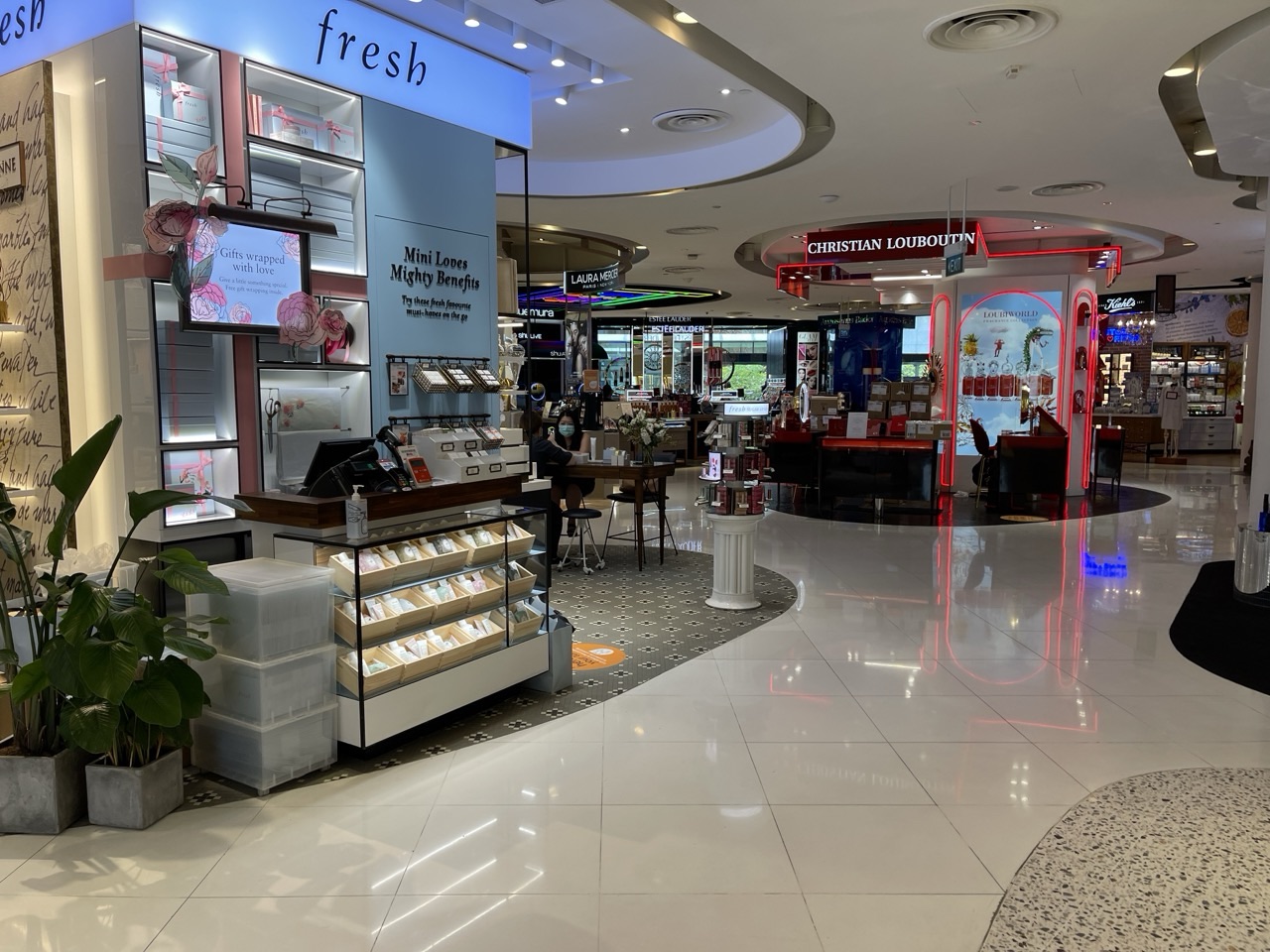
Featured photograph: makeup and skincare counters inside a Singapore shopping mall. It is editorial context, not evidence that any brand or batch shown is unsafe, recalled or linked to the hypothetical cases. Part of The Gold Standard | eduKate Singapore and its Sectors and Services Article Directory. This guide is educational regulatory analysis, not a medical diagnosis. HSA guidance and competent healthcare assessment control actual reporting and treatment.