
The gold standard of kindergarten is a child who becomes more able to join in, communicate, explore and manage everyday tasks with growing confidence. A child can ask for help, share an idea, count something that matters, listen to another person and try again when a first attempt fails. Early learning becomes valuable when those abilities appear beyond the activity in which they were taught.
Kindergarten brings care and teaching together. Play gives children something worth thinking and talking about; adults make the learning accessible, notice what is happening and teach useful next steps. Books, conversation, movement, art, counting and relationships belong in the same educational picture. A workbook can record some learning, but it cannot represent the whole experience.
This root guide connects the kindergarten English, early numeracy, Chinese, Malay and Tamil branches, alongside teaching, early childhood education and the move towards primary school. It follows the purpose of The Gold Standard of Education: capabilities should travel into life. The practical examples below are original illustrations, not age-based diagnostic tests or a compulsory curriculum sequence.
KINDERGARTEN · THE GOLD STANDARD
Find the next useful step
Choose a route for your question. All teaching chapters remain open; expand the chapter index or subject directories when you need them.
- Understand the kindergarten standard — Chapters 1–3: purpose, curriculum and intentional play.
- Build language, literacy and number — Chapters 4–7: talk, print, multilingual learning and quantities.
- Support participation and development — Chapters 8–10: discovery, relationships and inclusion.
- See learning and plan support — Chapters 11–14: observation, a worked example, family partnership and transition.
- Find the connected subject guides — English, early numeracy, Chinese, Malay, Tamil and wider teaching.
Full chapter index · Education parent guide · Gold Standard hub
Chapter index
Chapters 1–3: Purpose, curriculum and play
Chapters 4–6: Communication, literacy and languages
Chapters 7–9: Numeracy, discovery and relationships
Chapters 10–12: Inclusion, observation and a worked example
Chapters 13–15: Support, transition and connected guides
Picture a child building a pretend bus with friends. They decide where passengers sit, count the seats, make a destination sign and explain why the driver needs space. Another child wants a turn at the wheel. The teacher helps the group find a workable arrangement. Language, number, imagination and relationships meet inside one shared purpose.
The educational question is what children are learning to do through that experience. Can they explain a plan more clearly than before? Match one ticket to each passenger? Notice that a seat is missing? Accept help and return to a difficult task? These are useful observations because they point to teachable capabilities rather than the appearance of a busy classroom.
Quality also includes the conditions that make participation possible. Children need adults who know them, clear routines, suitable materials and a way to communicate discomfort or uncertainty. A child watching quietly may be considering how to enter the activity; another may need an invitation, a language model or a less crowded space. The teacher’s response should follow observation rather than a quick label.
For families, begin with a simple question: what is becoming more possible for this child? Ask for an example from the classroom and offer one from home. A child who begins asking a shop assistant for help, explaining a drawing or organising belongings is showing learning in a different setting. Those changes deserve attention alongside early reading and number work.
A broad kindergarten curriculum gives children different ways to understand the world and express ideas. A song invites attention to rhythm and language. A walk invites noticing and questions. Construction invites comparison, balance and explanation. A story invites vocabulary, imagination and discussion of other people’s perspectives. The breadth is purposeful when teachers know what they want children to encounter and practise.
For Singapore context, the Ministry of Education’s Nurturing Early Learners Framework 2022 foregrounds values, social and emotional competencies, and learning dispositions. It identifies five learning areas: Aesthetics and Creative Expression; Discovery of the World; Health, Safety and Motor Skills Development; Language and Literacy; and Numeracy. Language and Literacy covers English and Mother Tongue Languages. Refer to the official framework for its full scope.
The important planning move is to connect an activity with a manageable learning purpose. A pretend shop might emphasise asking and answering questions today. On another occasion, the teacher may focus on making equal groups. Trying to assess every possible skill at once can make observation superficial and the activity overloaded.
A balanced programme also allows children to return to experiences. Familiar materials make it possible to deepen an idea, change a design and use new language. Constant novelty can look impressive without giving children enough time to become capable. Ask how the programme combines intentional teaching, sustained play, routines and opportunities to revisit learning, rather than judging quality by the number of different products sent home.
Play and teaching can support each other. Children contribute interests, choices and ideas; adults arrange possibilities, model a useful action and help children take the next step. The balance changes with the task. A child may need a brief, direct demonstration of how to use a tool, then time to explore what can be made with it.
NAEYC’s Developmentally Appropriate Practice position statement describes an approach attentive to children’s strengths, play, individual characteristics and context. It also addresses family partnership, observation and curriculum decisions. This supports a broad professional lens; it does not mean every child needs an identical activity or that adult instruction should disappear.
Consider a bridge made from blocks. Instead of immediately rebuilding it, an adult might ask where it bends or offer two possible supports to compare. If the child lacks the relevant experience, the adult can demonstrate a support and explain what it does. Then the child tests a version of their own. The interaction adds knowledge while preserving something for the child to decide.
Notice when questions stop helping. Repeated “Why?” questions can become a performance demand, especially when a child is still finding the words. A comment such as “This end keeps moving” can open the same investigation. Leave time for action and response. Good adult participation makes the next attempt more informed and keeps the child involved in the thinking.
Language grows through exchanges that have something to communicate. A child wants another person to understand a plan, remember an event or respond to a question. Give these exchanges enough time. An adult who finishes every sentence may keep the activity moving while removing the child’s opportunity to organise a message.
Start with what the child is attending to. If a child points to a snail, name what can be seen and add one useful idea: “Its body is moving slowly across the leaf.” Invite a response without requiring a full explanation immediately. Later, the child might describe where the snail went or compare it with a picture in a book.
Teach listening as participation rather than constant stillness. A child may need to hear a short instruction, watch a demonstration and then show what to do. If an instruction fails, check its length, vocabulary and the surrounding noise before repeating it more loudly. Break it into meaningful steps and gradually increase the demand when the child can manage the earlier version.
For a small group, make room for different contributions. One child speaks readily, another offers a gesture, and another needs a prompt or a familiar partner. Model how to ask a follow-up question and how to respond to a peer’s idea. The aim is a conversation children can increasingly sustain, rather than a sequence in which each child waits to answer the adult.
Early literacy connects understanding spoken language with learning how print works. Share books, discuss pictures, tell stories and notice useful writing in everyday settings. A name label identifies a person’s place; a sign tells visitors where to go. These examples give print a function before reading becomes a sequence of exercises.
For beginning English reading, provide explicit teaching of the letter–sound relationships in the instructional sequence being used. Model blending and give practice with suitable words and connected text. Do not replace word reading with guessing from a picture. Discuss meaning alongside the taught code so that recognising words and understanding language remain connected.
Writing begins with a message worth recording. Children may draw, make marks, attempt letters or dictate words for an adult to write. Ask what the message should say and who needs it. An adult can model a short label or invitation, while making clear which parts the child produced. A copied sentence and an independently composed message provide different information.
Use a pretend café as an example. A child draws a drink, tells the adult its name and adds a menu label using what they know. The adult supplies an unfamiliar spelling where needed and reads the label back with the child. Later, the child checks whether a friend can find the drink on the menu. Print becomes a shared tool, with a clear reason to improve it.
The Literacy root guide develops word reading, comprehension and writing further. The kindergarten English articles below provide a more focused route into this part of the ecosystem.
Children bring different language experiences to kindergarten. Some use one language most often at home; others move between several languages with different people. Ask families what the child understands, speaks and encounters in print. A child’s confidence in one classroom language does not fully describe their ability to think, communicate or learn.
Create reasons to use the language being taught. A familiar song, a shared story, an exchange during play or a description of an object can provide an accessible entry. Teach useful words and sentence patterns, then return to them in a new situation. Repetition becomes meaningful when children can use the language to achieve something.
Avoid treating all writing systems as if they worked like English. Chinese, Malay and Tamil require language-specific knowledge and teaching. The connected subject guides allow readers to follow those differences in greater detail. A common educational purpose—understanding and communicating—can coexist with different approaches to sounds, characters, letters, spelling and print.
Families can contribute words, stories and everyday experiences without being expected to run a second classroom. Agree a small, realistic opportunity to converse or share a book. When adults use a translation or bilingual resource, check that it conveys the intended meaning. Encourage children to seek clarification and make connections across languages without demanding a polished translation every time.
If a child contributes little in one language, gather observations across settings and talk with the family before drawing conclusions. Consider familiarity, opportunities to use that language and the specific demands of the task. The next step may be a clearer model, a familiar activity or additional professional advice when concerns persist.
Number becomes useful when a child connects words, quantities and actions. Reciting a number sequence is one part of learning; counting a group accurately adds the task of matching each object to one count. Knowing how many there are also matters when objects are rearranged or used for a real purpose.
Set a small table for four pretend guests. Ask the child to provide one cup per guest and check whether anyone is missing one. If a cup is counted twice, organise the objects or move each cup as it is counted. Ask what the final count tells us. The adult’s support should make the relationship visible rather than simply supply the answer.
Compare groups by matching, arranging and discussing. A long, spread-out row can look as though it contains more objects than a compact row. Let the child test that impression by pairing the objects. Talk about more, fewer and the same number in an actual comparison. Then change the arrangement and ask whether the quantity changed.
Numeracy also includes patterns, shapes, position and measurement experiences. Build a repeating pattern and invite the child to explain what repeats. Compare the lengths of two ribbons by aligning their ends. Describe where an object is relative to another. Use age-suitable materials and quantities selected for the child’s current instruction, rather than assuming that a larger number always makes a better lesson.
The important transfer check is a new setting. A child who distributed cups yesterday might distribute paintbrushes today. Observe whether the one-to-one relationship remains available without the same adult prompts. The early numeracy education, tuition and tutor branches offer different routes into supporting that learning.
Young children need opportunities to notice, compare, represent and test ideas with suitable materials. A question about shadows can lead to looking at the same place at different times. A question about a plant can lead to drawing what changes. Begin with what can be observed and distinguish it from what someone thinks might explain it.
Adults can model intellectual care in simple language. “We saw the shadow move; we have not yet checked why” preserves a question for further learning. If an explanation is beyond the immediate activity, consult an appropriate resource and return to it. There is no need to turn every discovery into a formal experiment or present every child’s guess as an established fact.
Movement offers its own learning. Children practise balance, coordination, spatial awareness and responding to others through suitable games and routines. Provide equipment and challenges appropriate to the setting and the individual child. Clear boundaries, supervision and equipment checks remain adult responsibilities; teaching children to be careful does not transfer those responsibilities to them.
Art, music, dance and imaginative play give children ways to make and communicate meaning. Ask about a choice in a picture or invite a variation in a rhythm. A common model can introduce a technique, but identical finished products reveal little about children’s decisions. Keep some work where the child chooses what to represent and how to do it.
Across these experiences, value explanation and revision. A child may move a block, change a colour or alter a movement because the first version did not achieve the intention. Ask what changed. The answer may come through words, a demonstration or the work itself.
Kindergarten is a place to learn how to share space with people whose intentions differ from one’s own. Children need language and supported practice for joining play, declining a request, asking for a turn and repairing a disagreement. A poster about kindness is useful only when adults help children apply its meaning during real interactions.
When two children want the same material, begin by making the situation safe and understandable. Name the immediate problem without assigning a fixed character label. Help each child communicate what they want, then offer a workable next step such as taking turns or finding materials for a joint plan. A forced apology alone may leave the original problem unresolved.
Predictable routines reduce unnecessary uncertainty. Show where belongings go, what happens before outdoor play and how to ask for the toilet. Teach each routine through explanation, modelling and practice. A visual sequence or a familiar phrase can help; remove support only when the child can manage the task, and retain it when it remains useful.
Independence includes knowing when to seek help. A child should not have to manage an unsafe situation, persistent distress or another person’s harmful behaviour alone. Make trusted adults and help-seeking routes clear. The desired progress is a child who can do more for themselves while still expecting adults to provide care and protection.
Observe changes over time and across settings. A child who manages a transition calmly in a small group may need additional help in a crowded corridor. Adjust the conditions and teach the next step rather than interpreting every difficult moment as refusal or lack of effort.
An activity is only a learning opportunity if the child can participate in it. Access may depend on language, sensory conditions, movement, communication, materials or the pace of interaction. Begin with the actual task: what is the child being asked to understand, choose or produce? Then identify the barrier between the child and that purpose.
For a shared story, one child may need a clearer view of the pictures, another may benefit from objects linked to the story, and another may need a quieter position. These supports can preserve the same opportunity to understand and respond. They should be planned with the child’s family and relevant professionals where additional needs require coordinated support.
Provide more than one way to show an idea when the response mode is not itself the learning target. A child might point, sort, build, draw or speak. If the target is explaining orally, that ability still needs teaching and observation. If the target is comparing quantities, an elaborate spoken answer should not become an accidental extra test.
Respect privacy in the process. Discuss a child’s support needs through appropriate school channels, with only the information needed by the people responsible for helping. Photographs, work samples and family details should follow the setting’s consent and privacy practices. Do not turn one child’s difficulty into a public classroom demonstration.
Inclusion also means noticing who remains outside ordinary activities. Ask whether the same children always hold the tools, speak for the group or receive the most challenging questions. Change the structure so that participation is available and worthwhile, then observe what each child can do with that opportunity.
CHAPTER 11 OF 15
11. Observe learning without turning childhood into an examination
Observation should help an adult decide what to teach next. A useful note records the setting, the child’s action, the support provided and a possible next opportunity. “Matched one plate to each of five places after an adult model” says more than “good at maths.” It also avoids claiming independence that has not yet been observed.
Gather a small range of evidence. A conversation, a construction, a drawing, a practical task and a teacher’s note reveal different things. One polished portfolio page may contain substantial adult support. A messy attempt can show a new idea. Interpret the evidence in relation to its purpose rather than treating neatness as a general measure of learning.
Compare the child’s current work with earlier work and the relevant learning goals. Avoid using an informal classroom sample to rank children or diagnose a developmental condition. Children vary in experience and performance, and the conditions of the observation matter. Persistent concerns deserve a careful conversation and appropriate assessment, rather than reassurance or alarm based on one incident.
Share observations with families in usable language. Explain what the child did, what remains difficult and one next opportunity for practice. Invite examples from home that may change the interpretation. A child who says little at school but tells detailed stories at home offers important information about context and support.
A review should result in an action. Continue an effective opportunity, teach a missing skill, change the environment or coordinate further help. Collecting more photographs without making a teaching decision can create a large record while leaving the child’s immediate needs unchanged.
| What to record | Example | Teaching decision |
|---|---|---|
| Task and context | Setting places during pretend play | Keep the purpose clear |
| Child’s action | Placed one cup at each of four seats | Check the matching relationship elsewhere |
| Support provided | Adult pointed to the first empty seat | Try the next task without that prompt |
| Later application | Distributed one brush per painting place | Record whether the skill transferred |
Set up an original teaching scenario using large, age-suitable pretend goods, baskets, blank labels and counters chosen for safe use. Explain the shared purpose: visitors need to find an item and the shopkeepers need to prepare the right quantity. Adapt materials to the children and the setting; the example is a planning illustration rather than a universal lesson prescription.
First invite children to decide what the shop sells and how to arrange it. Listen for the words they use to describe the goods and their reasons for grouping them. An adult might introduce “same,” “different,” “next to” or a particular item name when it helps the conversation. Keep the introduction brief enough for children to return to their own planning.
Next introduce a practical request: “Please put one item in each of these three baskets.” Observe how the child distributes the items and checks the result. If an adult needs to model the matching, record that support. Add a label-making opportunity for children who are ready to represent the goods through drawing, marks, letters or dictated words.
Then introduce a social problem that arises naturally, such as two customers needing the same basket. Help the children communicate and agree a workable arrangement. Do not manufacture prolonged conflict for assessment. The point is to teach useful participation while the activity remains enjoyable and safe.
Finally change one feature on another day. The shop might become a library counter where books need one return slip each. Ask whether children can apply the matching relationship, communicate a request and use a sign without all the earlier prompts. The second setting reveals what has travelled beyond the original play activity.
Families and teachers see different parts of a child’s life. A productive partnership combines those views around a manageable question: what is the child trying to do, what helps and what is the next useful opportunity? Share concrete examples and listen for differences across settings. The difference itself may point to a change in language, familiarity, noise or adult support.
Choose home activities that fit ordinary life. A shared book, sorting familiar objects, helping set the table or explaining a drawing can provide worthwhile practice. Ask one purposeful question and give time for a response. Families do not need to recreate the whole kindergarten day or purchase a succession of materials to make every evening educational.
Additional lessons should address an identified need. Before adding tuition, ask what the child is struggling to do, how the kindergarten is already helping and what the additional teacher would teach differently. Consider the time and energy available for rest, family life and play. The subject tuition and tutor guides below help readers examine the support role rather than assuming every child needs the same extra programme.
Use a simple three-part route. Repair a particular obstacle through clear teaching and suitable support. Stabilise the new ability through familiar and varied practice. Extend it through a new purpose or setting. For example, a child may first learn to ask for a turn with a modelled phrase, then use it in another game, and later negotiate a shared plan with less adult intervention.
If concerns persist, organise a discussion with the kindergarten and relevant qualified professionals. Bring examples of what happens, when it happens and what has already been tried. Avoid attempting a diagnosis from online checklists alone. A clear handover supports the next decision and keeps the child’s experience at the centre.
The move to primary school introduces new routines, spaces and expectations. Preparation should include ways to participate in that environment: asking for help, looking after belongings, understanding a simple instruction and communicating a need. Reading and numeracy remain important, alongside the practical and social abilities that make classroom learning accessible.
Practise a routine in small steps. A child might learn to identify their bag, place an item inside it and check for one needed object before leaving. An adult models the sequence, provides a reminder and observes what the child can manage. Gradually reduce unnecessary prompting, while retaining support that is still needed. Independence grows through taught opportunities.
Introduce change through accurate information from the receiving school. Explain the parts that are known and distinguish them from assumptions about all primary schools. A visit, a picture sequence or a conversation may help when the school provides those options. Do not promise that every day will be easy; explain how the child can find help when something is unfamiliar.
A useful transition handover identifies strengths, communication preferences, effective supports and current learning needs. Share it through the proper school process with family involvement. “Needs reminders” is less helpful than describing the reminder that works and the situation in which it is needed.
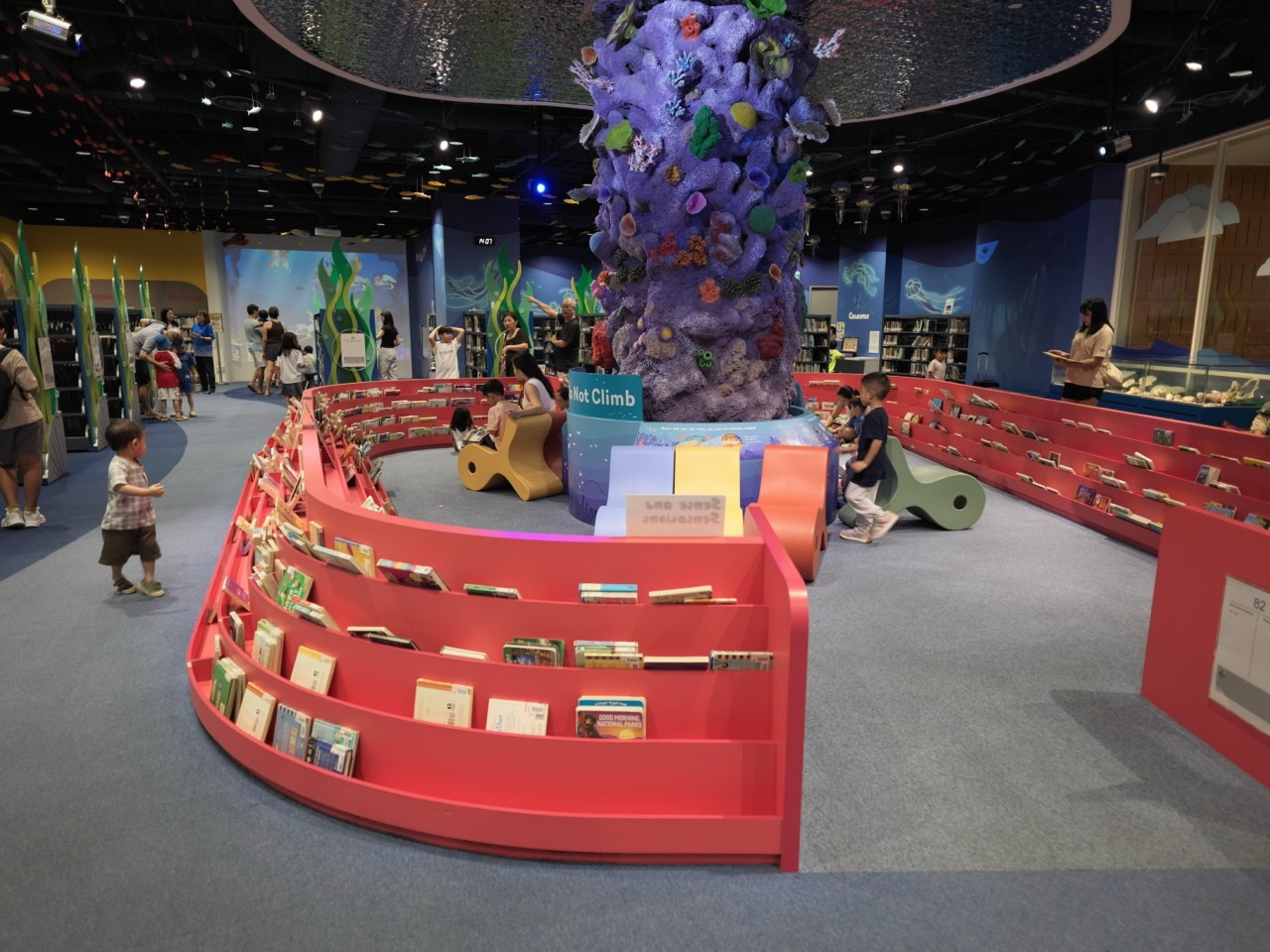
The featured classroom image illustrates the later school setting, rather than a documented kindergarten class. The Secondary 1 Mathematics Clementi guide provides a much later point on the learning journey. Across those stages, the enduring question is whether learners can understand, explain and use what they have been taught.
Does play mean children are left to discover everything alone?
No. Adults plan environments, introduce knowledge, model techniques and support participation. Children also need space to make choices and test ideas. The appropriate balance depends on the purpose, the child and the moment. Look for intentional teaching inside a varied programme.
Should every child leave kindergarten with identical reading skills?
Use the programme’s learning goals and individual observations to plan teaching and support. A single reading performance should not become a complete judgment of readiness. Ask what the child can do, what has been taught and what needs attention next, including language understanding and access to print.
How can parents recognise meaningful progress?
Look for a new capability appearing with less help or in a different setting. The child may explain a problem, distribute objects accurately, join a game or use a familiar reading pattern in a new word. Ask the teacher for examples and share what you notice at home.
When is extra support useful?
When there is a clear purpose, suitable teaching and a way to review whether it helps. Support may involve the classroom environment, family routines, focused instruction or coordinated professional advice. More hours alone do not explain what a child needs to learn.
How should we use the connected articles?
Start with the relevant subject education guide for learning purposes. Read the tuition branch when considering additional instruction, and the tutor branch when examining the teacher’s role and evidence of progress. The broader early childhood and teaching guides help connect subject learning with care, play and participation.
Sources and scope
The Singapore curriculum summary refers to the Ministry of Education’s Nurturing Early Learners Framework 2022. The professional approach to play, individuality and context draws on NAEYC’s Developmentally Appropriate Practice position statement. The examples and review routes are original educational illustrations. They do not set admission requirements, diagnose development or replace an individual support plan.
A strong kindergarten gives children more ways to understand their world and take part in it. The next step is small enough to teach and meaningful enough to use: a question asked, a quantity checked, a story shared or a routine managed. Keep that connection between learning and participation visible as you follow the branches below.
Connected kindergarten article directory
Each subject group links its education, tuition and tutor branches. Use the wider teaching group to connect subject learning with care, environment and participation.
English: education, tuition and the tutor’s role — 3 articles
Early numeracy: education, tuition and the tutor’s role — 3 articles
Chinese: education, tuition and the tutor’s role — 3 articles
Malay: education, tuition and the tutor’s role — 3 articles
Tamil: education, tuition and the tutor’s role — 3 articles
Teaching, early childhood education and safer participation — 7 articles
- The Gold Standard Of Early Childhood Education
- The Gold Standard of Early Childhood Education | Play, Care and Emerging Capabilities
- The Gold Standard of Kindergarten Teachers | Playful Learning, Safe Routines and Child Development
- The Gold Standard of a Ministry of Education | Early Childhood Education, Care and School Readiness
- The Gold Standard of a Ministry of Education | School Playground Equipment Inspections, Safer Surfacing and Verified Reopening
- The Gold Standard of a Ministry of Education | School Recess, Playground Supervision and Safe Unstructured Play
- Gold Standard Practical Case Study 135 | The Playground Swings Passed Their Equipment Checks but the Protective Surface Was Worn Away
Contents · Previous chapter · Continue to the education guide · Reading routes