
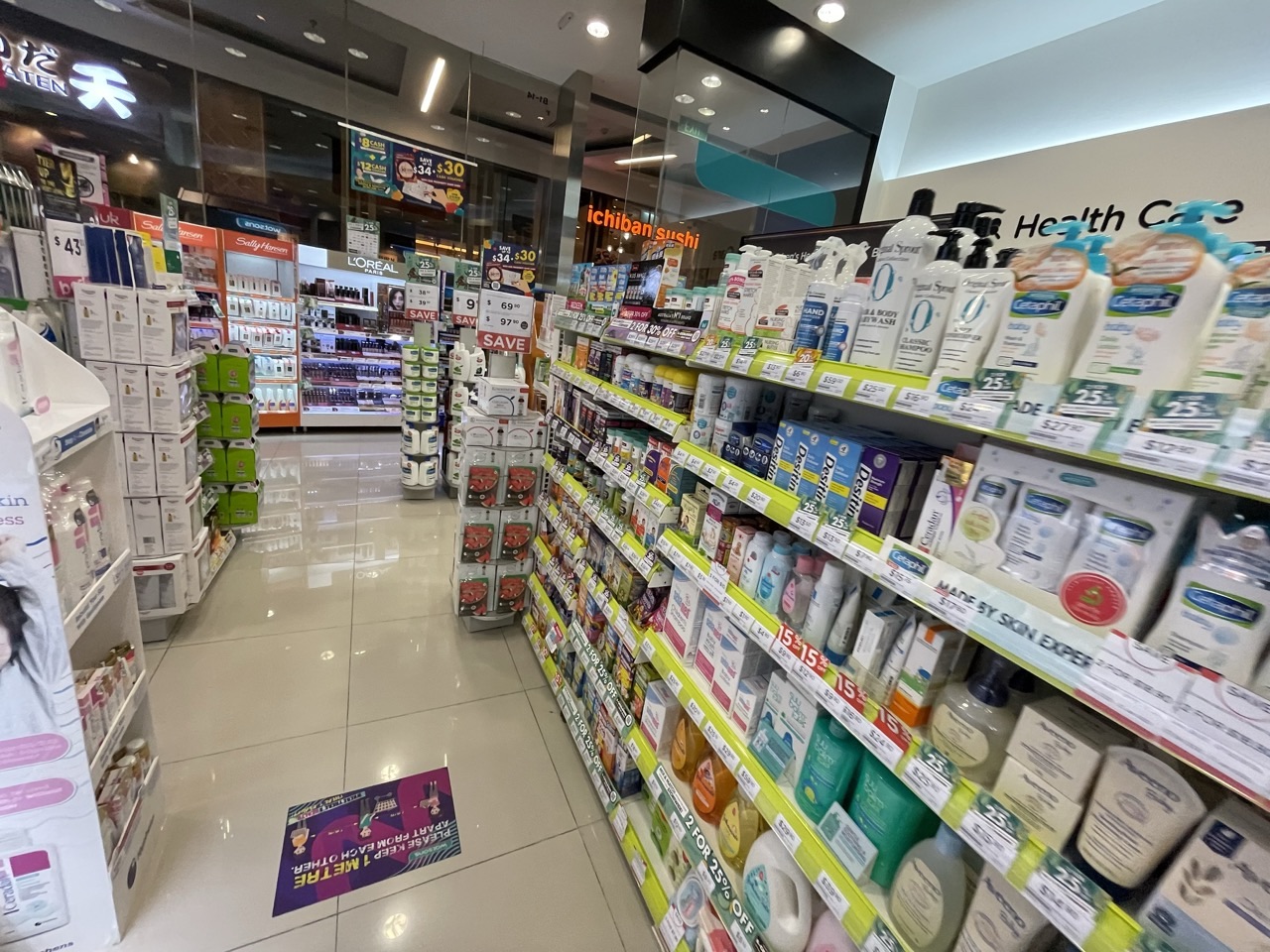
A gold-standard pharmacy company makes sure the correct medicines reach the correct people through appropriately licensed premises, competent pharmacist oversight, accurate records and understandable communication. A shelf full of medicines or an attractive health-app interface is not evidence that prescription decisions, supply restrictions, storage conditions and patient information have been handled correctly. The business must support professional judgement from stock receipt through final authorised supply.
Consider NorthBridge Community Pharmacy, a wholly fictional Singapore retail-pharmacy operator with two outlets. A patient expects a prescription medicine to be ready for collection after receiving a message from its online ordering system. The chosen branch has received the stock, but the allocated item has a batch identifier inconsistent with the dispensing record, while the pharmacist-in-charge is attending an off-site meeting. The company must keep the order in the correct status, arrange competent professional verification and inform the patient accurately. It cannot equate a carton arriving with medicine clinically and legally ready to supply.
The Gold Standard master hub examines companies as systems rather than slogans. Pharmacists discusses individual professional care, Healthcare Companies covers broader provider governance, and Pharmaceutical Cold Chain Logistics addresses specialised transport. This article focuses on the pharmacy company that holds licences, appoints responsible professionals, manages genuine medicine stock and carries patient service through to verified completion.
Find the pharmacy company decision you need
Patients can start with dispensing, pharmacist access and supply status. Pharmacy directors can follow HSA outlet licensing, actual PIC oversight, medication classification, authorised online channels and post-sale support. The index is grouped for quick information retrieval.
Chapter index
Licensing, PIC oversight and branch permissions · Chapters 1–8
- Identify the medicine business before naming the shop
- Know what HSA retail pharmacy licensing covers
- Distinguish POM, P and GSL medicines correctly
- Appoint a real pharmacist-in-charge, not a name on paper
- Verify Singapore Pharmacy Council professional entitlement
- Plan practising-certificate renewal before it interrupts service
- Treat each new outlet as a separate licensing question
- Renew pharmacy licences and register material changes
Stock, prescriptions and professional patient service · Chapters 9–15
- Make the premises support professional dispensing
- Buy genuine therapeutic products through authorised channels
- Keep product identity and batch history intact
- Protect storage conditions with evidence suited to the medicine
- Separate a valid prescription from a completed sale
- Protect patient counselling as a real professional service
- Distinguish legitimate telepharmacy from an ordinary video call
Digital pharmacy, delivery and medicine stewardship · Chapters 16–21
- Treat e-pharmacy as an approved closed-loop service
- Make medicine delivery a traceable but privacy-preserving handover
- Treat vending machines under the correct medicine class
- Handle compounding within the actual approved activity
- Make product recalls and safety notices immediately traceable
- Preserve financial integrity without allowing sales to override care
Patient data, verified results and continuity · Chapters 22–26
1. Identify the medicine business before naming the shop
Not every retailer selling wellness items is a licensed pharmacy, and not every business supplying medicines conducts the same regulated activity. Singapore distinguishes retail pharmacies, wholesalers, manufacturers, healthcare institutions and retailers of General Sale List medicines. The actual product classes and supply method determine the relevant legal permissions, rather than a shop’s brand or its proximity to a clinic.
NorthBridge lists its actual activities separately: retail prescription dispensing, Pharmacy-only medicine supply, general retail health products and any proposed digital services. It avoids describing every shelf item as a prescription therapeutic product. This permits management to ask which licence and qualified person owns each activity. A promotional name that includes the word pharmacy does not answer whether the site and service are licensed under the correct health-products framework.
Back to the chapter index · Next chapter
2. Know what HSA retail pharmacy licensing covers
Under Singapore’s Health Products (Licensing of Retail Pharmacies) Regulations 2016, a retail pharmacy requires HSA licensing to supply relevant Prescription-only and Pharmacy-only therapeutic products and oral dental gums. This is not the same as unrestricted permission to manufacture medicines, import every product, operate medical clinics or open unlimited outlets.
HSA’s March 2026 retail pharmacy overview describes the statutory scope. NorthBridge verifies its licence for each actual outlet, storage arrangement and approved services. When it acquires another shop, its directors do not assume the old licence automatically transfers between companies or premises. Corporate due diligence should make actual HSA records, permissions and necessary amendment applications visible before commercial launch.
Back to the chapter index · Next chapter
3. Distinguish POM, P and GSL medicines correctly
Prescription-only medicines (POM) can only be supplied through the authorised prescription pathway; Pharmacy-only medicines (P) require supply by or under the supervision of a pharmacist within the relevant licensed pharmacy arrangements. General Sale List medicines (GSL) can generally be sold by ordinary retailers without the same pharmacy-only premises restriction. These classes must not be mixed to simplify checkout.
HSA’s medicine-supply category guidance explains the classes. NorthBridge’s system identifies the actual product and supply requirements before staff complete a sale. A customer seeing a medicine listed online has not established that they are eligible to receive it through any mode. The company should never tell an unqualified cashier that a product may be treated as GSL merely because the customer says they have taken it before.
Back to the chapter index · Next chapter
4. Appoint a real pharmacist-in-charge, not a name on paper
HSA requires the licensed retail pharmacy to be under the control and management of a named pharmacist-in-charge (PIC) who is registered with the Singapore Pharmacy Council, holds a valid practising certificate and is actively practising. A company cannot meet that requirement merely by listing an advisory pharmacist who does not meaningfully supervise the licensed operation.
HSA’s pharmacy licence rules and application details describe PIC evidence. NorthBridge ensures professional control, appropriate escalation and truthful arrangements when the PIC is absent or changes. It cannot ask retail managers to substitute their commercial judgement for a statutory pharmacist decision. Company oversight must fund and respect real professional responsibilities.
Back to the chapter index · Next chapter
5. Verify Singapore Pharmacy Council professional entitlement
A pharmacy graduate’s qualification or employment history is not automatically evidence of current Singapore practising authority. Pharmacists must satisfy the Singapore Pharmacy Council’s professional registration and practising-certificate requirements, subject to applicable conditions. The company’s staff roster must reflect who is entitled to perform the actual professional task.
SPC’s official portal and its 2026 PC renewal announcement set out the framework. NorthBridge checks the actual professional status of the person assigned and prepares cover that does not blur accountability. A portrait on a website or an expired certificate is not adequate proof that the branch has the required qualified oversight on a particular day.
Back to the chapter index · Next chapter
6. Plan practising-certificate renewal before it interrupts service
Professional renewal has deadlines and education requirements, and a branch cannot assume a clinician’s certificate remains valid because it was active when they were recruited. The employer needs an organised view of the people and authorisations on which the pharmacy depends, without taking away the professional’s own obligation to renew.
SPC announced on 31 August 2026 that practising certificates then in force expire on 31 December 2026, with the online renewal window for eligible pharmacists running from 1 September to 3 December 2026. NorthBridge supports continuing education and checks renewal progress early instead of planning every pharmacist on continuous shifts until the final day. A company that cannot operate lawfully during leave should reconsider its capacity promise before offering more services.
Back to the chapter index · Next chapter
7. Treat each new outlet as a separate licensing question
Chain pharmacies can benefit from certain streamlined application paths, but a licence held by one branch is not universal permission to start supplying medicines at another address. The actual layout, pharmacist arrangements, approved activities and organisational compliance remain important. A previously licensed brand’s reputation does not replace the new site’s legal steps.
HSA’s new-outlet application guidance describes a Simplified Registration Scheme for qualifying established chains with similar operations. It also says new outlets introducing additional activities such as compounding, medication delivery or telepharmacy do not qualify for that simplified route. NorthBridge checks the real eligibility and follows the appropriate process instead of presenting a proposed outlet as licensed merely because it belongs to the same corporate group.
Back to the chapter index · Next chapter
8. Renew pharmacy licences and register material changes
HSA retail pharmacy licences have a defined period and need renewal before expiry. A company may also need approval for changes to licensed premises, scope or other particulars. A functioning payment terminal and a rented shop do not establish that the legal permission remains valid.
HSA’s March 2026 renewal guidance states that retail pharmacy licences last twelve months and a lapsed licence requires a new application. HSA’s amendment guidance explains changes to activities and premises. NorthBridge maintains owner-assigned licence calendars and ensures commercial expansion is reviewed against the actual approved site and service. Management should not rely solely on automatic renewal assumptions without checking the real status.
Back to the chapter index · Next chapter
9. Make the premises support professional dispensing
A pharmacy’s physical layout and storage are functional controls, not merely interior design choices. HSA considers the dispensing counter, general sales areas and places for prescription and Pharmacy-only medicines, alongside relevant equipment and documents. A crowded shop may look commercially successful while creating confusion or poor separation of professional tasks.
NorthBridge’s managers plan pharmacy premises around the licensed service and the PIC’s professional needs. HSA’s licensing audit description identifies equipment, storage, professional references and record systems as assessment areas. The company should not move regulated stock into an unreviewed corner of a public sales floor to free space for promotions. A safe operating design needs real authorisation and trained people, not simply attractive shelves.
Back to the chapter index · Next chapter
10. Buy genuine therapeutic products through authorised channels
A pharmacy depends on manufacturer, importer and wholesaler compliance, product registration and the actual commercial and regulatory source. A low-cost offer from an unfamiliar intermediary can create authenticity, traceability or handling uncertainty. Supplier due diligence is therefore part of patient care, not merely a finance decision.
NorthBridge keeps a list of approved suppliers and verifies the legal and product details relevant to purchases. If a new vendor offers medicine with unfamiliar packaging, the responsible team assesses the supporting information before ordinary stock allocation. The company cannot declare a medicinal product authentic solely from a printed logo or the supplier’s assertion. Responsible procurement connects legitimate source records, product identity and suitable inventory release.
Back to the chapter index · Next chapter
11. Keep product identity and batch history intact
Medicines may be received as cartons, divided into packs for stock control and ultimately allocated to individual supply transactions. Labels, batch identifiers, storage history and dispensing records need accurate links for appropriate traceability. A unit scanned by a warehouse employee is not necessarily ready for patient supply.
NorthBridge’s fictional shipment contains an inconsistent batch identifier. Rather than overwrite one record to make the two screens agree, its authorised team checks the actual stock, purchase documentation and professional dispensing requirements. The company may need to hold the affected units pending qualified review. Traceability becomes valuable if a product needs withdrawal or if a patient later queries the exact medicine supplied.
Back to the chapter index · Next chapter
12. Protect storage conditions with evidence suited to the medicine
Therapeutic products have different storage needs and applicable stability requirements. Some are sensitive to temperature, light or other conditions. A company should know the real product’s approved requirements, maintain appropriate controlled storage and investigate missing records without inventing one universal temperature safe for every medicine.
NorthBridge verifies its stock records and assigns competent staff to assess anomalies. The Pharmaceutical Cold Chain Logistics guide explains why an apparently normal fridge display cannot replace an appropriate temperature history. The retail operator still needs to know whether a product was accepted under its real conditions. This article deliberately gives no storage parameters, medical treatment or product salvage instructions.
Back to the chapter index · Next chapter
13. Separate a valid prescription from a completed sale
The fact that a prescription has been sent does not mean every necessary professional check, record or counselling step has happened. The patient, product and authorised prescriber information must be handled through the actual applicable system. A generic ecommerce order state cannot substitute for professional dispensing judgement.
NorthBridge gives its pharmacists adequate time and accurate information to complete the lawful supply process. If a prescription detail is unclear, staff use the correct professional route rather than guess to fulfil a commercial target. When a customer sees awaiting review, the company should explain that status honestly. An app that marks a prescription order successful because the payment was authorised can mislead patients if dispensing has not actually been completed.
Back to the chapter index · Next chapter
14. Protect patient counselling as a real professional service
Pharmacists may need to provide patient-appropriate information within their professional remit, including explaining how medicines should be used according to valid instructions. The company should fund privacy, time and access to the right professionals rather than reward only transaction volume. Individual clinical advice belongs to qualified healthcare people.
The Pharmacists guide addresses individual counselling discipline. NorthBridge’s role is to make professional consultation available through lawful arrangements and avoid replacing it with a sales chatbot. No customer should feel compelled to disclose sensitive health information to a general cashier in order to obtain proper professional support. Quality assurance means knowing when a person needs a pharmacist, not pretending every question has a standard retail answer.
Back to the chapter index · Next chapter
15. Distinguish legitimate telepharmacy from an ordinary video call
A retail pharmacy may offer permitted telepharmacy services under the relevant HSA framework, but the scope and pharmacist oversight need actual assessment. Creating a video-chat button does not automatically authorise all prescriptions or patient services to be handled remotely in the same way. Some medicine classes and activities have additional rules.
HSA’s application page requires a PIC declaration for telepharmacy service involving Pharmacy-only medicines where applicable. NorthBridge’s legal and clinical teams determine which activities are authorised at each outlet and how records and privacy will be maintained. It should not describe a general customer-service video agent as a practising pharmacist. Remote convenience must support, rather than bypass, professional safeguards.
Back to the chapter index · Next chapter
16. Treat e-pharmacy as an approved closed-loop service
An e-pharmacy selling POM or P therapeutic products involves more than an online shopping cart and home delivery. HSA sets specific authorisation, secure electronic prescription transfer and validated systems requirements so that the right product reaches the right patient under the correct professional arrangement.
HSA’s e-pharmacy guidance, updated March 2026 explains that qualifying licensed pharmacies or wholesalers need appropriate approval before offering e-pharmacy. NorthBridge should not launch prescription delivery merely because its retail ecommerce platform already accepts payments. Professional controls, validation and the actual licence scope must be addressed before it sells that service.
Back to the chapter index · Next chapter
17. Make medicine delivery a traceable but privacy-preserving handover
A third-party courier may transport medicine without having the legal or professional authority to dispense it. Medicine identity, permitted delivery arrangements, privacy and proof of authorised receipt need the proper chain of responsibilities. A tracking scan cannot decide that dispensing was lawful or that the intended patient received the right item.
HSA’s pharmacy application guidance calls for appropriate procedures and contracts for medication delivery. NorthBridge links the actual prescribed order to an authorised delivery and keeps sensitive details away from people who do not need them. The receiving status should distinguish packed, dispatched, delivered and successfully supplied under the actual process. A wrong-address report deserves meaningful investigation rather than a generic courier completed message.
Back to the chapter index · Next chapter
18. Treat vending machines under the correct medicine class
Medicines sold through automated vending or collection equipment are not subject to one universal rule. General Sale List medicines have different arrangements from Pharmacy-only and Prescription-only products. For regulated pharmacy medicines, the supplier must follow the specific HSA guidance and eligible modes of supply.
HSA’s vending-machine guidance distinguishes GSL, P and POM categories. NorthBridge evaluates any proposed collection machine as a separate licensable or regulated activity under its actual conditions. A warehouse locker designed for ordinary consumer goods cannot simply be repurposed to release prescription medicine because it has a barcode reader. The company’s obligation is lawful access and correct supply, not indiscriminate automation.
Back to the chapter index · Next chapter
19. Handle compounding within the actual approved activity
Some licensed pharmacies may provide appropriate non-sterile compounding activities under prescription and relevant regulatory conditions. That is not equivalent to ordinary retail dispensing or unlimited manufacturing permission. The company needs the actual approved scope, competent professional review and suitable premises and documents.
HSA’s licensed pharmacy application requirements identify compounding as an additional service that must be described in the application where applicable. NorthBridge should not promise a custom preparation from an ordinary stockroom when the activity is not authorised. Individual formulations and clinical decisions are outside this guide. The company’s role is to maintain appropriate permissions, capability and accurate communication.
Back to the chapter index · Next chapter
20. Make product recalls and safety notices immediately traceable
Medicine-related market actions may involve specific products, batches, supply dates or distribution channels. A retail pharmacy needs a way to identify relevant stock and understand which patients or other parties may require lawful follow-up. Issuing a recall notice internally is not proof that affected units have been located and appropriately controlled.
NorthBridge links receiving records to actual product lots and supply transactions with privacy safeguards. When a manufacturer or HSA communicates relevant action, qualified staff evaluate its actual scope. The company should record which stock remains on shelves, which is held and what appropriate patient outreach or other remedy was completed. It cannot call the process closed simply because one email reached the pharmacy manager.
Back to the chapter index · Next chapter
21. Preserve financial integrity without allowing sales to override care
Retail pharmacy companies pay for licensed premises, qualified pharmacists, equipment, storage, inventory, systems, rent and patient support. Commercial promotions can increase turnover but also create pressure to replace professional judgement with targets. A responsible business should distinguish products suitable for general retail marketing from clinical decisions governed by the professional.
NorthBridge reviews financial results alongside dispensing errors, unresolved patient cases and the time needed for counselling. Directors should not reward staff for pushing medicines that are not appropriate for a person’s actual circumstances. A promotion’s profitability does not authorise supply contrary to a medicine’s legal category. The best retail outcome sometimes involves a pharmacist explaining why an item should not be sold through a requested pathway.
Back to the chapter index · Next chapter
22. Make privacy and patient confidence part of the technology design
Pharmacy information can include names, addresses, prescription details, purchase history and other sensitive health-related information. Access, disclosure and retention need lawful purposes and appropriate security. A marketing agency does not automatically gain access to a patient’s dispensing records because it handles the company’s loyalty programme.
PDPC’s organisational guidance gives relevant data protection principles alongside applicable healthcare and pharmacy requirements. NorthBridge separates public product browsing from professional dispensing records and limits employee access by role. Any outsourced technology partner should have a clear contract governing permitted data use and incidents. A pharmacy’s most important customer asset is trust, and patient privacy is a practical part of that trust.
Back to the chapter index · Next chapter
23. Measure actual dispensing readiness rather than ordered stock
An inventory report can show cartons received while patient orders remain held for pharmacist review, batch discrepancy, valid prescription questions or other issues. These stages need separate records. A fast fulfilment ratio that hides unresolved orders creates misleading management incentives.
In the fictional case NorthBridge receives 200 patient-specific fulfilment requests in a reporting period. A total of 176 are appropriately reviewed and confirmed ready under the agreed process, 14 await a qualified documentation or product-identity clarification, and ten remain pending a professional decision. The administrative ready proportion is 176 ÷ 200 = 88%. That does not establish a clinical success rate or that all 176 have been physically supplied. The remaining 24 need real owners and a truthful next step.
Back to the chapter index · Next chapter
24. Support complaints and professional concerns fairly
Patients may report an incorrect bill, a missing item, poor communication or a potentially serious dispensing concern. The company must distinguish ordinary customer-service recovery from matters requiring qualified professional and regulatory assessment. A voucher or refund may address a financial issue but does not replace investigation of a credible medication-safety question.
NorthBridge’s manager records the factual complaint and immediately routes any relevant professional issues to authorised pharmacists. Staff should not dismiss a patient’s report simply because the system shows a completed transaction, nor declare wrongdoing without an appropriate review. The company protects confidentiality while communicating what is verified and what remains open. Good service can acknowledge uncertainty without offering individual clinical advice from unqualified staff.
Back to the chapter index · Next chapter
25. Plan leadership continuity and responsible branch coverage
One pharmacist may be named as PIC while other registered pharmacists undertake professional work. Changes in employment, leave and the company’s network can affect its ability to operate within licensed conditions. A stable chain needs governance that survives a person leaving a role without silently weakening supervision.
NorthBridge maintains approved staffing, operating scope and management records and checks which changes need notification or HSA amendments. It budgets cover for professional education, leave and genuine peak demand. An outlet should not continue as though its oversight arrangement were unchanged when the actual PIC or licensed services change. Responsible planning turns regulatory duties into reliable patient access rather than a last-minute emergency at renewal time.
Back to the chapter index · Next chapter
26. The gold standard is a medicine supplied through verifiable care
NorthBridge’s fictional mismatch is resolved only when the appropriate pharmacist and stock specialists establish the correct identity, actual supply status and patient communication. The business then corrects the premature ordering message and tests whether the same gap could recur at the second branch.
A gold-standard pharmacy company holds the right licence, employs and supports properly authorised pharmacists, protects product identity and data, prices honestly and delivers medicines through appropriate professional safeguards. Its achievement is not how fast a carton passes across the counter. It is that the right product reaches the right person with a defensible record and a real route to help when something is uncertain.
Worked order analysis: requested, professionally reviewed and actually supplied
These quantities are fictional workflow counts, not a clinical care target or a determination that any medicine should be dispensed.
| Fictional pharmacy stage | Requests | What it actually proves |
|---|---|---|
| Patient-specific orders received | 200 | Demand, not supply |
| Reviewed and accepted as ready for proper next stage | 176 | 88% administrative readiness under defined process |
| Held for documentation or product identification | 14 | Further qualified review required |
| Pending professional decision | 10 | Not a completed dispensing outcome |
| Medicines actually supplied to patients | Not established here | Requires separate authorised fulfilment evidence |
Three routes through a pharmacy company decision
For a patient collecting a medicine: Check which branch is responsible, whether the item is actually ready and whether a pharmacist can provide appropriate professional support. An online status indicating ‘received’ or ‘payment accepted’ may not mean the product is lawfully dispensed or available for collection. A suitable pharmacy should be willing to clarify what it can confirm without disclosing another patient’s details or asking the customer to make a clinical judgement.
For a company opening another pharmacy: Begin with the actual HSA licence, PIC, premises and intended activities, not simply the old company’s storefront layout. A chain may qualify for a simplified registration route only under the applicable conditions. Adding e-pharmacy, delivery or compounding can change the correct application. The opening plan should protect required audit, documentation and professional supervision time rather than announce a fixed date before approvals.
For a procurement or logistics manager: Evaluate the legitimate medicine supply chain, source records, lot identification, storage evidence and any outsourced delivery terms. Low prices or fast dispatch are not enough. If one batch record disagrees with the physical package, a reliable process keeps that stock under qualified review and communicates accurate status. Commercial teams must know who may authorise release and how a later product notice reaches the correct units.
Frequently asked questions about pharmacies in Singapore
Can every shop sell General Sale List medicines? HSA generally permits GSL supply by ordinary retailers, but the product and applicable requirements must be assessed. P and POM medicines have different pharmacy and prescription controls.
Does HSA licence one retail-pharmacy brand for every outlet? No. Actual outlet and service permissions matter. Qualifying chains may have a simplified route for some new outlets; it is not universal approval for any new service.
Can pharmacists supply prescriptions through an ordinary online checkout? HSA’s e-pharmacy framework requires appropriate approval and secure validated processes. Online convenience does not substitute for the professional and prescription controls.
Does an item arriving at the pharmacy mean a patient can collect it? Not necessarily. Receiving, professional review, appropriate dispensing and authorised supply are different steps.
How does a consumer know who is responsible for medicine counselling? The licensed pharmacy is managed by an eligible pharmacist-in-charge and should have appropriate arrangements for access to professional advice. Individual medical or medication decisions belong to the proper qualified clinician.
Pharmacy company and patient checklist
- Does the real outlet hold the appropriate current HSA retail pharmacy licence?
- Is the named PIC an active SPC-registered pharmacist with a valid practising certificate?
- Does the business distinguish POM, P and GSL product supply requirements?
- Are professional competence, leave, practising-certificate renewal and branch coverage planned?
- Can receiving records, approved suppliers and product batches be matched accurately?
- Are POM prescriptions and counselling processed through the proper qualified channels?
- Are e-pharmacy, telepharmacy, compounding, delivery and vending services separately reviewed for actual permission?
- Can the firm identify affected medicines during recalls while protecting patient privacy?
- Do customers receive clear status, prices and a meaningful resolution when an order is wrong?
Official HSA and Singapore Pharmacy Council sources
- HSA: Overview of Licensed Retail Pharmacies
- HSA: Licence Application and Pharmacist-in-Charge Requirements
- HSA: Pharmacy Licence Renewal
- HSA: Pharmacy Licence Amendments
- HSA: e-Pharmacy Services and Closed-Loop Prescriptions
- HSA: POM, Pharmacy Only and GSL Medicines
- Singapore Pharmacy Council: 2026 Practising-Certificate Renewal
- eduKate: Pharmacists
- eduKate: Pharmaceutical Cold Chain Logistics
This educational article concerns pharmacy company management, not individual medication, diagnosis, prescription decisions or confirmation that a specific product is safe or permitted for supply. NorthBridge, its patients and figures are fictional. Real dispensing decisions must be made through the appropriate pharmacists, prescribers and current HSA rules.