
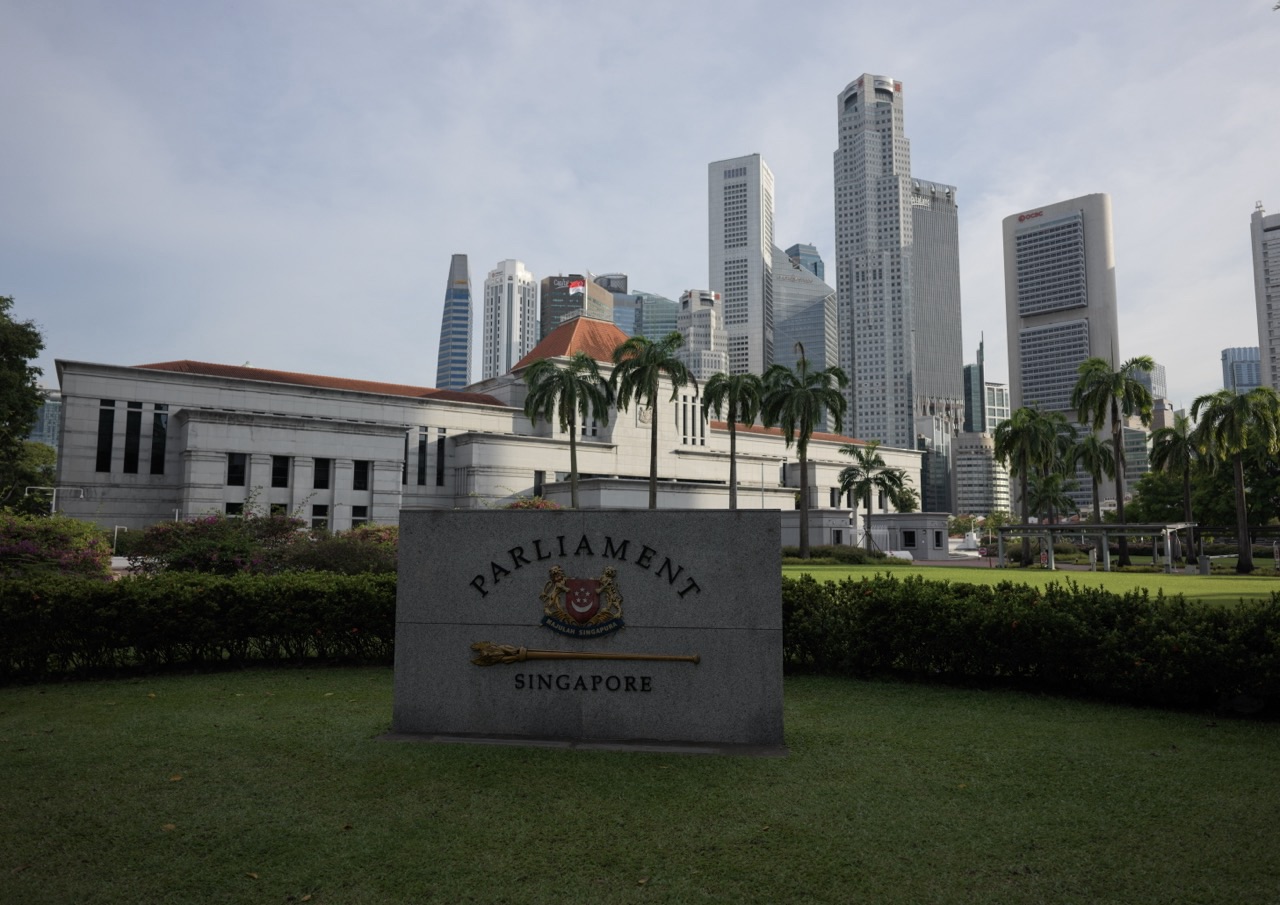
The gold standard of political science is a clear, evidence-led explanation of how power, institutions and collective decisions work. It separates what happened from why it happened and from whether it was justified. A confident opinion is not enough: the reader should be able to inspect the rules, evidence, assumptions and alternatives behind the conclusion.
This subject root connects the eduKate Political Science ecosystem: foundational explanations, teaching, voting mathematics, democracy, international relations and pathways for further study. Start with your question, then follow the relevant branch. The examples are fictional teaching models, not reports of real elections, legal advice or instructions to support a political position.
eduKateSG · The Gold Standard · O–P subject roots
Find your next learning step
Choose a reading route, or work through the guide in order.
ROUTE 3 · CHAPTERS 7–10
Test evidence and explanations
Check behaviour, surveys, comparison and causation.
ROUTE 4 · CHAPTERS 11–14
Follow decisions into life
Connect delivery, international relationships and practical inquiry.
Full chapter index · Try the transfer exercise · Political Science master guide
Full chapter index
1–4: Understand the field
5–6: Read votes and representation
7–10: Test evidence and explanations
11–14: Follow decisions into life
15–16: Continue and check
Political science studies how collective decisions are made, how authority is organised and contested, and how those decisions affect people. Its subject is larger than election night. A permit, a public-service queue, a committee agenda and an international agreement can all reveal political relationships. The useful starting question is not simply who is in charge, but how a particular decision becomes possible.
Imagine a fictional town choosing between longer library opening hours and a new sheltered walkway. Residents disagree, a committee recommends one option, an agency estimates costs and a council authorises expenditure. Calling the result “what the town wanted” hides several questions. Who could participate? Who selected the options? Did the committee have decision-making power or only advisory responsibility? Who must maintain what is built?
This guide uses such small, invented cases to make the reasoning visible. They are not descriptions of Singapore law, actual elections or a particular community. For real institutions, check the applicable official documents and their current dates. The purpose is a transferable method: identify the actors, rules, evidence, competing explanations and consequences before reaching a conclusion.
The gold standard is an explanation another reader can inspect. It makes its assumptions visible, treats disagreement fairly and says what further evidence could change the answer.
Independent subject overview: APSA’s account of political science.
CHAPTER 2 OF 16 · Understand the field
2. Separate observation, explanation and judgement
Three statements can sound similar while doing different work. “The committee chose the walkway” describes an event. “The walkway was chosen because its supporters controlled the agenda” proposes a causal explanation. “The committee should have prioritised library access” makes a judgement about what matters. An excellent answer can contain all three, but it should not quietly substitute one for another.
For description, look for minutes, recorded decisions or other direct evidence. For the causal explanation, ask whether agenda control actually affected the options considered. Perhaps the library extension was outside the committee’s authority, or its cost estimate arrived late. Those alternatives do not prove agenda control irrelevant; they show what the explanation must distinguish.
For the judgement, name the principle. Equal access, greatest total benefit, protection of basic rights and priority for the least served are not interchangeable standards. Two people can accept the same cost figures yet disagree because they give different weight to those principles. More data may clarify the trade-off without removing it.
Political theory is therefore part of political science, not an embarrassing leftover after measurement. It examines concepts and reasons concerning authority, liberty, obligation and justice. Empirical inquiry examines what happens and why. Keeping their relationship explicit helps a reader distinguish an unsupported factual claim from a genuinely difficult ethical disagreement.
Read more about the field’s approaches in the University of Washington’s subject overview.
Power concerns the ability to shape outcomes. Authority concerns a recognised entitlement to make particular decisions. Legitimacy concerns whether that entitlement is regarded as justified or rightful. These concepts overlap, but using them as synonyms loses information. Someone may influence a decision without holding office; an authorised official may struggle to secure cooperation.
In the fictional town, the council may approve the budget while an agency controls the engineering information and a residents’ association mobilises attention. A meeting chair can affect which proposals receive time. None of these observations alone establishes improper conduct. They identify different routes through which influence could operate and suggest evidence to examine.
Make a simple actor record: the actor’s formal role, practical resources, access to information and dependence on others. Then ask where a proposed decision could be delayed, changed or blocked. A formal organisation chart is useful, but it may not show informal advice, working relationships or the capacity to carry out a decision.
Legitimacy requires another distinction. Evidence that people comply does not by itself reveal why they comply. Acceptance, habit, convenience, fear and lack of alternatives can produce superficially similar behaviour. A careful investigation avoids reading a whole population’s beliefs from one observable action. It states what is known about conduct and what remains uncertain about motives.
Institutions organise recurring political activity through rules, roles and expectations. A legislature is not explained by photographing its building. You need to understand who can introduce proposals, how amendments are considered, what constitutes approval and who checks whether procedures have been followed. Rules affect what actors can do, not merely how the final result is announced.
Distinguish the written rule from its implementation. A consultation may formally accept submissions from everyone, yet language, timing, disability access or an unfamiliar submission process may affect practical participation. This does not make the formal rule meaningless. It means that the analysis needs both the stated entitlement and evidence about using it.
In the library case, draw the decision sequence from proposal to operation. Put the responsible institution beside each step: permission, budget, procurement, staffing, opening and review. A failure at one step should not automatically be attributed to another. A council can authorise longer hours without itself being the employer scheduling evening staff.
Institutional comparison becomes stronger when it examines equivalent functions rather than matching names. Two bodies called councils may have different powers. Two differently named agencies may perform similar tasks. Before comparing their performance, establish their responsibilities, resources and legal setting. For a real case, those details require jurisdiction-specific official sources rather than assumptions borrowed from the fictional example.
CHAPTER 5 OF 16 · Read votes and representation
5. Worked example: votes need a decision rule
Suppose 100 valid votes in an invented single-seat contest are divided among candidates A, B and C: A receives 42, B receives 35 and C receives 23. Under a declared plurality rule, the candidate with the most votes wins, so A wins. A has 42 per cent, not a majority of the 100 votes. “Largest share” and “more than half” answer different questions.
Now change the fictional rule to a second round between A and B. Suppose the same 100 people vote, everyone who initially chose A or B keeps that choice, and C’s 23 voters divide seven for A and sixteen for B. The new totals are A = 49 and B = 51. Under that stipulated scenario, B wins the second round.
This is not evidence that actual C voters would divide that way. Their later choices, turnout and eligibility would need observation. Nor does the arithmetic establish that one rule is morally superior. It demonstrates why a claim about a winner must specify the aggregation rule as well as the original preferences.
When reading election reporting, identify the ballot, constituency structure, allocation procedure and denominator before interpreting a percentage. International IDEA’s electoral-system materials offer a route into the range of real designs. Actual systems may include thresholds, multiple seats or other conditions absent from this exercise. Do not transplant its simplified result into a real election without checking those rules.
| Declared model | A | B | C | Result |
|---|---|---|---|---|
| Plurality: initial 100 votes | 42 | 35 | 23 | A has the largest share |
| Illustrative second round: same 100 voters | 49 | 51 | Not on ballot | B has more than half |
Further reading: International IDEA’s electoral-system handbook.
CHAPTER 6 OF 16 · Read votes and representation
6. Worked example: representation and rounding
A different fictional exercise allocates ten seats among three lists with vote shares of 42, 35 and 23 per cent. Declare a largest-remainder rule using a quota equal to the total valid votes divided by ten seats. Here, proportional seat quotas are 4.2, 3.5 and 2.3. Allocate the whole-number parts first: four seats, three seats and two seats.
Nine seats have now been assigned. The remaining seat goes to the largest fractional remainder, 0.5, so the final allocation is A = 4, B = 4 and C = 2. Check the total: ten seats. The corresponding seat shares are 40, 40 and 20 per cent. Exact proportionality is impossible for these particular shares with only ten indivisible seats.
This is a model with a stated rule, no eligibility threshold and one ten-seat district. It is not a description of every proportional electoral system. Another allocation formula, different district sizes or a threshold could change the result. A useful comparison changes one feature at a time so readers can see what produced the difference.
The deeper lesson is about translation. Public preferences, votes, seats, governing coalitions and implemented policies are different stages. A party’s seat share is not automatically its share of decision-making influence, and a governing agreement is not automatically a delivered outcome. Each stage needs its own evidence and explanation.
| List | Exact quota | Whole seats | Remainder | Final seats |
|---|---|---|---|---|
| A | 4.2 | 4 | 0.2 | 4 |
| B | 3.5 | 3 | 0.5 | 4 |
| C | 2.3 | 2 | 0.3 | 2 |
CHAPTER 7 OF 16 · Test evidence and explanations
7. Study political behaviour without guessing motives
Political behaviour includes participation, opinion, voting, organising and other ways people engage with public life. The challenge is to avoid turning an observed pattern into a stereotype about the people involved. A low meeting turnout could reflect satisfaction, dissatisfaction, shift work, caring responsibilities, accessibility barriers or a belief that attendance would not matter.
Begin with a defined question. “Why did fewer residents attend the evening consultation than the afternoon session?” is more investigable than “Why are residents apathetic?” The second wording embeds an explanation before the research has begun. Attendance records, event publicity, transport access and voluntary interviews could help investigate the first question.
Different kinds of evidence reveal different things. A register may show who attended but not what they believed. Interviews can illuminate reasons but may not represent everyone absent. A survey can estimate a distribution if its design supports that task, but an answer to a hypothetical question is not identical to behaviour when real costs are involved.
Keep analysis separate from personal disclosure. A learner can evaluate a survey question or electoral rule without declaring a party preference. In family and classroom discussion, assess whether the reasoning is supported, not whether the student agrees with an adult’s politics. The transferable skill is the ability to explain a claim and reconsider it when the evidence changes.
CHAPTER 8 OF 16 · Test evidence and explanations
8. Check surveys, denominators and missing voices
Imagine an online notice inviting residents to answer a library-hours poll. Two hundred people respond and 140 support later opening. The support rate among respondents is 140 ÷ 200 = 70 per cent. Without a suitable sampling and inference strategy, that does not establish that 70 per cent of all residents support the change.
The missing information is substantial: who saw the invitation, who could respond, how repeat responses were handled, how questions were worded and who chose not to answer. People with strong views may be more likely to participate. Equally, some interested residents may be excluded by the method. A larger response count does not, by itself, repair systematic selection problems.
Online collection is not inherently the issue. An online survey can use different recruitment and sampling designs. Ask how participants entered the sample rather than judging quality from the screen alone. AAPOR’s disclosure guidance is useful because it asks researchers to make methods visible, including the population, recruitment, questions and fieldwork details.
Read every percentage with its denominator. “Support rose by ten percentage points” is different from “support rose by ten per cent.” A change from 40 to 50 per cent is ten percentage points, or a 25 per cent increase relative to the initial 40 per cent. Neither calculation explains why the change occurred. That requires another investigation.
Method checks: AAPOR best practices and disclosure standards.
CHAPTER 9 OF 16 · Test evidence and explanations
9. Compare political systems with a fair question
Comparison can reveal patterns that a single case hides. It can also manufacture confidence when the cases differ in ways the explanation ignores. Start by defining the outcome, the proposed mechanism and the unit being compared. Country, city, agency, election and individual are not interchangeable units of analysis.
Suppose two fictional towns have different consultation participation rates. Town One reports 20 per cent and Town Two reports 35 per cent. Before explaining the gap through civic culture, check whether both rates use the same eligible population, period and definition of participation. One town might count a brief online response while the other counts attendance at a two-hour meeting.
Next inspect competing conditions: publicity, accessible venues, consultation relevance and prior experience with decisions. If those differ alongside the procedure of interest, the raw gap cannot identify the procedure’s independent effect. An honest comparison can still be valuable, but its conclusion should be narrower than a claim of proof.
Historical context matters as well. An institution adopted after a crisis may be responding to circumstances that also affect later outcomes. The past is not simply background decoration; it can shape both the institutional choice and the result. Compare mechanisms and sequences, not just national labels. The related guides on democracy and international relations provide further reading at distinct scales.
CHAPTER 10 OF 16 · Test evidence and explanations
10. Distinguish association from a causal account
A causal question asks what difference something made relative to a credible alternative. Suppose a fictional agency introduces a simpler application form and average waiting time falls from twenty days to twelve. The eight-day decline is real within the stated data. It is not yet evidence that the form caused the entire improvement.
Other changes could matter: fewer applications, extra staff, a different mix of cases or a separate software repair. Evidence that these did not explain the pattern strengthens the proposed account. A credible comparison might examine another office, a phased introduction or detailed records of the process, depending on what is ethically and practically possible.
Consider an illustrative comparison office where waiting time falls from eighteen to fifteen days over the same period. The first office changes by minus eight days; the second changes by minus three. The difference between those changes is minus five days. That arithmetic is straightforward. Its causal interpretation depends on assumptions, including a credible parallel path without the intervention and no other relevant differential change.
A rigorous political explanation names that dependency. It also asks whether an average conceals different experiences among applicants. Evidence can support an improvement while leaving uncertainty about its size, cause or distribution. State each separately. Being precise about limits is a strength, not a retreat into saying that nothing can be known.
For evaluation methods and assumptions, consult Impact Evaluation in Practice. The numbers here are invented for teaching.
CHAPTER 11 OF 16 · Follow decisions into life
11. Follow policy from decision to delivery
Public policy is one important branch of political science. It examines problems, instruments, choices, implementation and consequences. Public administration focuses closely on the organisations and practices that make public decisions operational. Neither can be reduced to the announcement of a new programme.
Return to the fictional library extension. Approval is followed by a staffing arrangement, operating budget, security plan and published timetable. Each is an intermediate requirement. If the doors open later but the transport connection ends earlier, formal opening hours may improve without making access equally useful to every intended visitor.
Separate inputs, activities, outputs and outcomes. Staff time and funds are inputs. Scheduling and running the service are activities. Additional opening hours are an output. Improved access to usable study space is a possible outcome. Counting the output is necessary, but it does not automatically establish the outcome. Ask whether the people the policy was intended to help could actually use it.
Political questions remain throughout delivery. Who defines success? Who can report a problem? Who has authority to adapt the service? What happens when two public goals conflict? This is why an operational detail such as a form, queue or feedback channel can be politically consequential. For readers following this branch, move from institutional explanation to the evidence required for evaluating a specific service.
CHAPTER 12 OF 16 · Follow decisions into life
12. Connect political economy and international relations
Political economy examines how political rules and economic relationships influence each other. A market outcome is not separate from the rules concerning property, contracts, taxation or regulation. Equally, economic resources can affect the ability to organise, obtain information or gain access to decision-makers. Investigating that relationship requires a mechanism, not a blanket claim that money explains everything.
For the fictional town, a walkway could benefit commuters, nearby businesses and people seeking shelter. Costs and maintenance responsibilities may fall elsewhere. Identify who benefits, who pays, when effects occur and which alternatives were considered. The distribution matters even if total estimated benefits are positive. Evaluating that distribution then requires explicit values, as Chapter Two explains.
International relations changes the scale and the institutional setting. States and non-state actors interact across borders through cooperation, competition, agreements and organisations. A domestic procedure with a single recognised authority cannot simply be copied onto a setting where authority is distributed and enforcement arrangements differ.
Use the existing international-relations and diplomacy roots to investigate those questions in depth. This subject root supplies the common reasoning: actors, incentives, information, commitments, institutions and evidence. It does not replace the historical knowledge needed for a particular relationship or conflict. Resist explanations that treat a single leader’s personality as a complete account of a complex international outcome.
CHAPTER 13 OF 16 · Follow decisions into life
13. Build a defensible explanation from sources
A strong source record says where a claim came from, what the source can establish and what it cannot. An official decision document is strong evidence about the recorded decision. It may not independently establish how every participant experienced the process. A personal account can reveal an experience without proving how common it was.
For a small investigation, build a claim ledger with four columns: claim, supporting source, alternative interpretation and unresolved question. This prevents a pile of links from masquerading as an argument. It also shows when several reports repeat one original source rather than provide independent confirmation.
Read documents in time order when sequence matters. A proposal, amended proposal, final approval and later implementation report can contain different figures without necessarily contradicting one another. Record the version and date instead of combining them into an imaginary single document. A real legal or institutional claim needs the current authoritative text for that jurisdiction.
Research ethics belongs in the method from the start. Avoid collecting sensitive personal information for a classroom exercise. Use fictional cases, public documents and appropriately anonymised material where suitable. Do not publish names, private political views or identifiable quotations merely because they make an example vivid. Good explanation protects people while allowing others to inspect the reasoning and the public evidence behind it.
CHAPTER 14 OF 16 · Follow decisions into life
14. Practise transfer with a new case
Try this fresh fictional case. A community centre offers a digital booking service for study rooms. Recorded bookings increase from 400 to 520 per month after launch. Staff call it a 30 per cent improvement in access. A residents’ group says people without reliable internet are finding it harder to book.
First, verify the arithmetic: the increase is 120 bookings, and 120 ÷ 400 = 30 per cent. Next, inspect the claim. Bookings are not necessarily unique users, successful attendance or equitable access. Longer opening hours or more rooms could also contribute. The staff’s number may be correct while the broader interpretation remains unproven.
Ask for the definition of a booking, cancellations, repeat users, available room-hours, actual attendance and alternative booking routes. Do not assume the residents’ concern is either universal or false. Evidence about unsuccessful attempts and the experiences of people using offline routes would help investigate it.
Then write a six-sentence answer: define the outcome; identify the responsible actors; state the observed change; offer two plausible mechanisms; name the most useful additional evidence; explain a value trade-off. A strong answer neither dismisses the improvement nor accepts the headline unquestioningly. It explains what the current evidence supports and what still needs checking. This is learning transferring into life: a usable habit of judgement, not a memorised list of political terms.
Use this root as a junction rather than a replacement for the specialist articles. The Political Science master guide gives a broader tour of the field’s mechanisms. The teaching guide helps a parent, tutor or educator turn those ideas into discussion and assessment. The voting-and-apportionment article develops the mathematical side of translating preferences into collective choices.
For questions about participation, representation and institutional checks, continue into Democracy. For relationships among states and international organisations, use International Relations and its master edition. Diplomacy develops the negotiation and representation branch. Philosophy helps examine the principles used when deciding whether an institution or outcome is justified.
The guides on power, cooperation, institutions and path dependence support the underlying mechanisms. Demography adds a population lens without making population composition a deterministic explanation of politics. The university-course guide helps families inspect study fit; it should not be read as a guarantee of admission, employment or professional qualification.
The links below are grouped by the question they help answer. Choose one branch, carry a concrete question into it, and return here to connect it with the rest. A root is most useful when it reduces search effort without pretending that all specialist knowledge fits on a single page. The subject continues through the connected articles, not through repetition of their full text.
Political Science branch directory
The Gold Standard of Philosophy · The Gold Standard of Education: Learning Transfers into Life
CHAPTER 16 OF 16 · Continue and check
16. Frequently asked questions and a final check
Is political science the same as expressing a political opinion?
No. An opinion can become the starting point for a question, but the inquiry needs concepts, reasons, suitable evidence and explicit limits. Political theory also examines how judgements can be justified; the field is not restricted to counting observable events.
Does a neutral explanation require treating every factual claim as equally credible?
No. Fairness means applying consistent evidential standards, accurately representing positions and acknowledging uncertainty. A claim contradicted by reliable evidence does not acquire equal support merely because someone asserts it. Separate respect for people from evaluation of claims.
Can one case establish a general rule?
Usually a single case supports a more bounded conclusion. It can reveal a process, challenge a universal claim or suggest a mechanism worth testing elsewhere. Generalisation requires an argument about which features travel to other settings and why.
What should a student be able to do after reading?
Analyse an unfamiliar public decision without jumping straight to praise, blame or a slogan. Identify authority, explain the procedure, inspect a number, distinguish evidence from values and name a plausible competing explanation.
Before sharing your answer, check five things: the exact question; the meaning of each key term; the connection between evidence and conclusion; the strongest relevant alternative; and the condition under which you would revise your judgement. That is the gold standard of political science: reasoning that remains useful when the topic, institution or headline changes.
Sources and further reading
| Source | Reading purpose |
|---|---|
| APSA: scope of political science | The discipline’s fields and approaches. |
| University of Washington: political science subfields | Theory, comparison, international relations and methodology. |
| International IDEA: Electoral System Design handbook | Institutional choices and context; check current official rules for real elections. |
| AAPOR: survey research best practices | Sampling, questions and transparency. |
| AAPOR: disclosure standards | Information needed to inspect reported surveys. |
| World Bank: Impact Evaluation in Practice | Counterfactual reasoning and evaluation assumptions. |