
A Singapore factory changes its cleaning chemicals and increases the wash-water volume entering public sewerage. Its manager assumes an old permit from another site and a current SP utilities account together authorise the discharge. They do not. PUB Written Approval is tied to the legal business, physical premises and the actual discharge conditions.
The Gold Standard of PUB Trade Effluent Written Approval Services is an accountable process from identifying industrial wastewater and its legal destination to truthful chemical records, competent technical review, valid permission, effective monitoring and documented change or closure. It protects public sewers and the treatment system that helps Singapore produce NEWater while giving businesses clear practical decisions.
Under PUB’s June 2026 guidance, Written Approval is needed for trade effluent discharged to the public sewer system, normally lasts five years and should be renewed about three months before expiry. Complete permit submissions have an indicative 30-working-day processing target. The permission does not apply to open stormwater drains, which fall under a different environmental regime.
Trade effluent from site-specific proposal to lawful closure
The chapter map distinguishes the discharge point, chemical/process evidence, issued site WA, technical monitoring, renewals and later changes. A valid business registration, water supply account and treatment invoice do not replace legal permission.
1. Start with real industrial used water
A factory can generate process water, cleaning wastewater and ordinary domestic used water within the same building. Those flows may require different controls, even if they leave through nearby pipes. The first government-service task is identifying the source and destination, not checking how much the company’s utility account pays.
PUB defines trade effluent as liquids flowing from trade, manufacturing, engineering or construction works, including matter suspended in the liquid. A Gold Standard form asks what each production activity produces and how the effluent enters the sewerage network; a water bill or an ACRA profile is not a substitute for that classification.
Back to WA guide · Next chapter
2. Separate public sewers from stormwater drains
A site’s outdoor drain may be designed to carry rainwater while the sanitary sewer leads toward public water reclamation. Sending industrial effluent to the wrong connection creates risks that are not cured by holding a permit for another drain.
PUB governs Written Approval for trade effluent entering its public sewerage system. Industrial liquid discharged to open drains, canals or waters can instead engage NEA’s environmental rules. An approval for the public sewer cannot be used to legitimise releases to a surface drain.
Back to WA guide · Next chapter
3. Obtain Written Approval before discharging
An operator might complete an industrial fit-out and start production while the GoBusiness application remains pending. Those expensive commitments do not convert a submission receipt into lawful permission.
Under PUB’s June 2026 rules, trade premises must secure Written Approval before discharging trade effluent into public sewers. Its terms apply to the identified business and site. A reliable record distinguishes application submitted, evidence complete, under assessment and actual permission issued.
Back to WA guide · Next chapter
4. Understand the connection to NEWater and public health
Effluent can look clear while containing substances or loads that interfere with downstream public processes. What leaves one factory can affect the pipes, workers and treatment infrastructure serving the wider city.
Singapore treats used water at Water Reclamation Plants and purifies part of it into NEWater. PUB’s review protects sewer conveyance and treatment integrity. Public explanations should connect the technical requirements to real water security rather than portray them merely as administrative charges.
Back to WA guide · Next chapter
5. Map all significant manufacturing and cleaning operations
A company may list its principal production line yet overlook occasional cleaning, batch changes or a second workstation. That can cause the regulator to assess only part of the actual industrial effluent.
The application needs a description of processes, industrial activity and relevant flow diagrams. It should identify each route producing trade effluent and any existing pretreatment. A complete overview lets PUB ask targeted technical questions and gives the business a usable basis for checking whether later changes need fresh assessment.
Back to WA guide · Next chapter
6. Declare major chemicals and quantities accurately
An operator might describe only ingredients of the final product and omit treatment reagents, cleaning agents or relevant materials stored for periodic work. The missing substances can materially affect the nature of discharged water.
PUB asks for the names and quantities of chemicals used, as well as procedures for managing spent chemicals. The form should link inventory to actual operations and disposal arrangements. A company should never reclassify chemical residues as ordinary wastewater simply to avoid the appropriate waste-handling pathway.
Back to WA guide · Next chapter
7. Do not put spent chemicals into the sewer
A container of used industrial chemical does not become ordinary water merely because it is mixed with another liquid. Dilution or concealment is not a responsible substitute for lawful waste collection.
PUB instructs businesses to dispose of spent chemicals responsibly. Where materials qualify as regulated toxic industrial waste, the operator may need a suitably licensed collector. The separate TIWC regulatory guide explains that route; holding a PUB WA does not replace it.
Back to WA guide · Next chapter
8. Prove any pretreatment system is appropriate
A factory could present a drawing of proposed treatment equipment before installation, but a planned apparatus is not proof that it can actually deliver consistent acceptable effluent.
PUB’s supporting documents include design details of wastewater pretreatment facilities where used. A service should connect process conditions, capacity, responsible professional and relevant test results. This is evidence for regulatory review, not a licence for untrained personnel to improvise chemical treatment or release untested water.
Back to WA guide · Next chapter
9. Use the authenticated GoBusiness application
An outside consultant may help organise process documentation, but a copied company letter and an emailed photograph of machinery do not themselves lodge the official application.
PUB directs new WA applicants to GoBusiness through the permitted Singpass and business authorisation. A trustworthy case identifies the true legal applicant, industrial location and person making declarations. Neither the factory manager nor consultant should share Singpass passwords with an unverified intermediary.
Back to WA guide · Next chapter
10. Do not mistake a draft for complete evidence
An owner might complete the basic questionnaire and budget using a thirty-day approval promise despite never attaching the required process flow and chemical information.
PUB aims to process relevant complete permits within about 30 working days after all required documents are received. The timing does not guarantee approval of an unsuitable discharge. A Gold Standard status page identifies documentation missing, technical review started, site clarification required and the actual issue date.
Back to WA guide · Next chapter
11. Keep the WA linked to one real site
A company can have two industrial branches, both trading under the same name. Wastewater properties and connection points can still differ substantially.
PUB states a Written Approval is valid for the specific business at the location stated in the application. An operator should not copy another branch’s approval number or assume a corporate certificate follows all future premises. Each site’s actual flow and conditions must be verified.
Back to WA guide · Next chapter
12. Calculate the five-year validity and early renewal
A manager may treat the permit as perpetual after five compliant years and miss a renewal while operations continue. That turns an avoidable administrative lapse into a legal problem.
PUB’s guidance states WA generally runs for five years and recommends renewing about three months before expiry. The service should display the actual end date and who owns renewal, with meaningful alerts before that period. A renewal application is not an unrestricted licence to ignore current conditions.
Back to WA guide · Next chapter
13. Use the prescribed renewal route
An existing licensee may create another brand-new GoBusiness record because it cannot find a renew button. Duplicate records can obscure which site permit is current.
For renewals, PUB instructs firms to request the relevant form through its official contact and submit it using FormSG. The renewal should reference the existing approved premises and any changed process details. A Gold Standard service links the current route, not a screenshot of an obsolete portal screen.
Back to WA guide · Next chapter
14. Distinguish renaming a business from restructuring
A company can change its marketing name while retaining the same legal identity, or convert from a sole proprietor to a private limited company. The licensing consequences differ.
PUB generally asks to be notified of a simple name change with updated ACRA evidence. A change of business legal status can require a new WA. An efficient regulator intake asks about changes to UEN, ownership type and operating site rather than automatically force all small branding changes through a complete site reassessment.
Back to WA guide · Next chapter
15. Relocation calls for new location-based approval
A manufacturer may move equipment to a larger unit and carry the old framed Written Approval to the new factory. That paper was granted for the original sewer arrangement, not all possible future facilities.
PUB requires written notice of relocation and a fresh WA application for the new premises. The service should track the old location’s closure, new address and supporting plans. A business must not assume its factory lease or utility activation also authorises new effluent discharge.
Back to WA guide · Next chapter
16. Report increased trade effluent volume
Even where chemical composition remains similar, a production expansion can increase peak flows and place different demand on downstream sewerage.
PUB says operators must inform it of activities increasing effluent volume and provide updated process flow diagrams and supporting information. PUB then assesses whether a new WA is required. The correct process is proactive review, not waiting for an inspection after throughput has doubled.
Back to WA guide · Next chapter
17. Report changed industrial inputs and chemistry
Switching cleaning reagents or production feedstocks might alter wastewater quality without requiring new machinery. The physical factory could look unchanged while its approved discharge assumptions no longer hold.
PUB specifies material changes to major raw materials, chemicals, operations and pretreatment as triggers for notification or reapplication. A good change form captures old and new activities and likely implications. It should not assume every minor purchase order requires a complete application or that major chemical changes require none.
Back to WA guide · Next chapter
18. Know that permission carries continuing quality conditions
An initial site test may show values below statutory limits. A later equipment fault, maintenance failure or inconsistent batch can produce a different outcome.
Trade effluent remains subject to the Sewerage and Drainage (Trade Effluent) Regulations and the issued WA. Companies should maintain appropriate professional monitoring and corrective controls. A current permission is not proof every later sample meets standards; the service must remain able to identify deviations and real remedial work.
Back to WA guide · Next chapter
19. Use accredited testing where relevant
An operator may obtain a cheap untraceable analysis report with no sampling location or test method. A reassuring number is of limited value if nobody knows which water was tested.
PUB points businesses to laboratories accredited by the Singapore Accreditation Council for appropriate independent testing. Samples and reports should be linked to true outfalls, dates and methods. The service should show the accepted result and any valid next sampling obligation instead of promising a universal sampling frequency for every facility.
Back to WA guide · Next chapter
20. Distinguish BOD and TSS from harmful chemicals
Organic and suspended-solids load may be evaluated through specific discharge and tariff arrangements. That is not permission to release every toxic, reactive or otherwise prohibited constituent.
PUB’s Trade Effluent Fee framework can apply to qualifying biochemical oxygen demand (BOD) or total suspended solids (TSS) beyond standard levels under conditions. The fee route is separate from restrictions on harmful substances. A tariff is not a licence to treat the public sewer like an industrial waste disposal facility.
Back to WA guide · Next chapter
21. Assess trade effluent fees individually
A general article might quote a single industrial wastewater fee as though all factories pay the same amount. Real trade effluent characteristics and volumes can differ significantly.
PUB’s TEF framework uses relevant approved parameters and current billing conditions. A properly managed account identifies site, period, permitted concentrations or loads, billing basis and actual amounts. The service should distinguish approval for the TEF arrangement, invoices issued, deposits and paid balances.
Back to WA guide · Next chapter
22. Separate WA from sewer connection permissions
A new industrial site may need physical pipe works before water can lawfully enter a public sewer. The environmental acceptance and engineering work authorisations are not the same.
The PUB application forms include separate Form B and B1 processes for particular work in or connections to public sewerage systems. A WA does not by itself authorise excavation or interference with pipes. A good case dashboard displays both pathways where applicable.
Back to WA guide · Next chapter
23. Manage process failure and abnormal discharge promptly
An unexpected pretreatment fault can change water characteristics before a routine renewal is due. Waiting for the next fee statement could worsen environmental damage.
The business should follow approved incident and environmental response duties and use the relevant PUB or NEA contact. PUB’s 24-hour number is 1800-2255-782 for urgent water-related matters. An accountable record distinguishes risk detected, authority notified as required, process controlled, samples assessed and operations lawfully resumed.
Back to WA guide · Next chapter
24. Reconcile business closure and permit cancellation
When a factory ceases operation, its trade effluent permit can remain on record and a financial deposit may still be held. Closing the company website is not the regulator’s formal cancellation procedure.
PUB instructs businesses to write in when the factory stops operating and to settle outstanding trade effluent fees. Any applicable fee deposit may be returned after reconciliation. A good closure service shows final liabilities and the real WA cancellation date, without implying that a pending request eliminates every prior obligation.
Back to WA guide · Next chapter
25. Treat water reuse changes as real process changes
A business may invest in water reuse to reduce fresh water use and sewer discharges. This can be environmentally beneficial, but the new recirculation system may change actual effluent volume or chemistry.
Engineers should check whether PUB requires updated diagrams or a new WA when the discharge changes. The Water Reuse Engineering guide addresses technical performance, while the PUB decision governs public sewer discharge. The two standards complement each other.
Back to WA guide · Next chapter
26. Worked case: food plant changes its cleaning process
Fictional Seaside Foods operates a lawful washing and processing line under a PUB WA. It wants to add a new detergent and increase output by thirty percent, while the manager proposes to keep the old permit because the company name remains unchanged.
The business documents new chemicals, process diagrams, pretreatment evidence and expected effluent volume, and informs PUB for its determination before material discharge changes. If a new WA is required, it waits for the real decision. It does not assume an increased trade effluent tariff can buy permission to release prohibited contaminants.
Back to WA guide · Next chapter
27. Worked case: a factory relocates
Fictional Bright Harbour Engineering moves its factory from one industrial estate to another. Employees bring pumps and piping, along with the previous site’s WA certificate. The wastewater discharge destination, however, is now at a new sewer connection.
The manager informs PUB of the old premises’ closure and applies for a new Written Approval with correct location and process evidence. Separate sewer-connection permissions may also be required. The outcome is a valid site-specific authorisation, not the recycling of a document with a familiar corporate name.
Back to WA guide · Next chapter
28. Worked case: a test report without permission
Fictional Evergreen Metal Works submits a water sample to a competent laboratory and receives values that appear satisfactory. The owner assumes an acceptable report permits immediate discharge without any written decision.
If the premises proposes trade effluent discharge to public sewerage, a PUB WA remains necessary. The sample can support technical review, but approval, ongoing statutory limits and waste controls are distinct requirements. A Gold Standard system prevents the mistaken leap from evidence collected to permission granted.
Back to WA guide · Next chapter
29. Measure actual protection of water reclamation
A regulator can grant many Written Approvals while sites operate with outdated chemical lists, unreported process changes and unresolved quality deviations. That is not a defensible public outcome.
The Gold Standard measures truthful current industrial records, site-specific permissions, proactive change management, verified effluent quality, licensed disposal for spent chemicals, timely renewals and lawful closure. The value lies in safe water reclamation and predictable legitimate industrial service, not merely applications processed.
Trade wastewater: which authorisation actually applies?
| Activity | Responsible regulatory pathway | Common error |
|---|---|---|
| Industrial effluent to public sewer | PUB site-specific Written Approval | Water bill implies permission |
| Wastewater to open surface drain | Separate NEA discharge requirements | PUB sewer WA covers open drains |
| Spent industrial chemical | Lawful treatment and appropriate licensed waste collector | Dilution makes chemical sewer-safe |
| Physical sewer connection works | Separate PUB engineering notices and permits | WA authorises all excavation |
| Eligible additional organic or solids load | Possible PUB conditional TEF scheme | Extra fee waives all standards |
WA validity, renewals and change assessment
| Record | What is confirmed | Still required |
|---|---|---|
| GoBusiness form submitted | Application received | Complete technical assessment and WA issuance |
| Written Approval issued | Discharge at identified premises within conditions | Continued compliance and monitoring |
| Renewal application lodged | Renewal under review | Issued renewed WA and applicable conditions |
| Processes, chemicals or site changed | Previous conditions may no longer fit | PUB notification and potential fresh application |
| Business ceased operations | Activity stopped | Official cancellation and outstanding fee reconciliation |
What a five-year WA does not guarantee
A long licence term simplifies routine renewal but does not mean every industrial process added within that period is permitted. The trade effluent regulatory framework depends on actual discharge quantity, site and physical or chemical properties. A new raw material, changed pretreatment line or relocated discharge point can alter the conditions on which PUB made its original decision. Operators should review the WA whenever they change production methods, rather than view the five-year expiry as a period without regulatory contact.
A practical internal system should align production change requests with the environmental compliance team. Before approving the new line, the team checks current WA terms and the official PUB change scenarios, prepares updated diagrams where needed and records PUB’s written determination. This prevents a procurement order or factory manager’s informal email from becoming an unauthorised change to a public sewer connection.
How to respond to a missing laboratory result
Suppose an accredited laboratory has delayed its report while the plant commissioning schedule approaches. Staff may want to enter a previous batch’s values so that GoBusiness appears complete. That undermines the evidence on which the regulator relies. A Gold Standard application shows the missing document as pending and asks the accredited laboratory for the valid result, with its sampling method and source clearly identified.
Where the application is incomplete, the business should consider adjusting its commissioning timetable rather than discharge ahead of approval. Once the actual result is available, it can respond to PUB’s request through the permitted channel. The outcome is not just a complete upload: it is a decision based on reliable evidence that the plant’s operating process and intended discharge have been properly assessed.
What to do when a new landlord claims an old permit exists
A new tenant taking over a workshop may be shown a WA issued to the previous operator. The site address matches, but the legal entity, equipment and chemical use may be different. The tenant should not assume that possessing a PDF satisfies the duty. It should identify the previous approval holder and check with PUB whether a new application is needed under the current legal business and process.
If the tenant intends to produce different goods or additional effluent, the original technical assumptions may be inappropriate even if the same sewer connection is used. A careful handover compares current and proposed operations and records the outcome from PUB. Landlord consent, HDB or JTC tenancy documents and a valid water utility account each serve other purposes and do not independently grant trade effluent discharge permission.
Frequently asked questions about PUB Written Approval
- Is PUB WA the same as SP utilities activation? No. A supply account does not permit industrial wastewater discharge.
- Does an approved WA follow a factory when it relocates? No. New premises require PUB assessment and a new WA.
- Can a business simply pay an extra TEF to discharge chemicals? No. The TEF framework does not legalise prohibited wastewater constituents.
- Can an accredited test report replace Written Approval? No. Evidence and permission are separate.
- When should a WA holder renew? PUB encourages beginning around three months before expiry.
- Must operators report a material increase in discharge? Yes, and PUB determines whether new WA is required.
Regulatory service management audit
- Does the regulator identify the true industrial flow and discharge location?
- Are public sewer and open surface drain controls kept separate?
- Do UEN, site address, processes, chemicals and pretreatment details match reality?
- Can applicants distinguish a submitted file from an issued WA?
- Is the actual five-year expiry and three-month renewal planning visible?
- Does the operator report changes in raw materials, volume, layout and legal status appropriately?
- Are laboratory evidence, TEF assessment and continuing quality conditions separate?
- Are spent industrial chemicals handled by the proper authorised route?
- Does closure involve written cancellation and outstanding-bill settlement?
- Do performance metrics show protection of water reclamation rather than licence volume?
PUB and Singapore regulatory references
- PUB: Trade Effluent Written Approval and changes
- PUB: Trade Effluent overview
- PUB: Resources for testing, legislation and applications
- PUB: Used-water and sanitary application form directory
- PUB: Official urgent and routine contacts
- GoBusiness: Official permits application portal
- Singapore Statutes: Trade Effluent Regulations
- NEA: Environmental pollution control
- eduKate: Toxic Industrial Waste Collector Licensing
- eduKate: Water Treatment Companies
- eduKate: Industrial Water Reuse Engineering
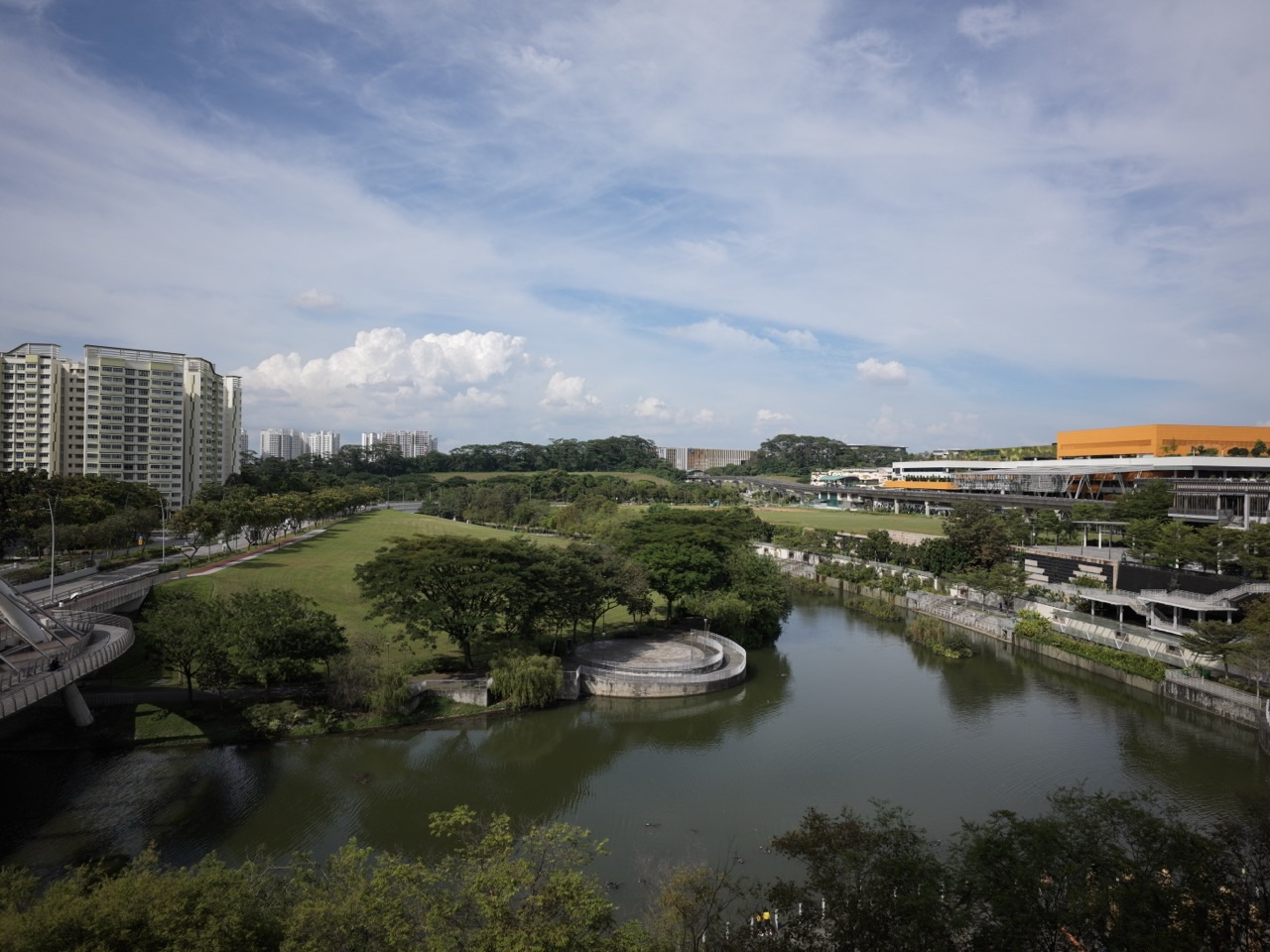
Featured editorial photograph: the landscaped canal at Punggol Waterway Park; it is not a photographed industrial sewer outfall or evidence of a regulated discharge. Part of The Gold Standard | eduKate Singapore and the Sectors and Services Directory. This article is regulatory education, not hazardous waste handling guidance; actual PUB WAs and current law control each real premises.