
A Singapore food company arranges an overseas shipment and learns that its destination requires an official health certificate. The exporter has a food licence and product invoice, so it assumes a certificate can be requested in the same way for every consignment. But Singapore-made food requires the appropriate licensed producer and qualified full-time staff, while imported food forwarded unchanged uses a distinct re-export route with original foreign authority documents, import permits and storage records.
The Gold Standard of SFA Food Export Health Certificate Services is a reliable government pathway from destination requirements and a real export batch to a qualified declaration, properly traced safety evidence, complete GoBusiness filing, authentic SFA-issued certificate and an accountable trade handover. The public service must protect consumer health and lawful trade without promising every overseas border authority will automatically accept a Singapore document.
The Singapore Food Agency’s current export certificate service charges S$20 per Export Health Certificate, for eligible locally manufactured goods or qualifying unchanged imported-food re-exports. It separately offers an S$17.11 Free Sale Certificate, with certified copies at S$9.45. Complete compliant certificate applications are generally assessed within three working days, though some re-export inspections must be arranged at least a week before departure.
The certificate journey from destination requirement to the verified batch
The chapters distinguish Free Sale Certificates, locally manufactured food Export Health Certificates and unchanged imported-food re-export certificates. Follow real producer or warehouse eligibility, official supporting records, three-working-day assessment, payment, authentic document and export handover.
1. Start with the importing country’s actual requirements
A Singapore manufacturer may make compliant food yet see its shipment rejected at a foreign border because the destination expects a particular health certificate format or prior establishment approval. A “Made in Singapore” label or commercial sales invoice does not replace the destination’s official import conditions.
SFA advises exporters to check with overseas importing authorities or customers and its Library of Export Market Requirements before submitting for export certification. The service should identify destination, product, exact consignment, certificate type and any foreign pre-approval before the trader books irreversible freight.
Back to export certificate guide · Next chapter
2. Choose the correct certificate rather than the cheapest document
A buyer may request proof that food may legally be sold in Singapore, while another seeks an official attestation to meet its own health and sanitary import standards. Those requests serve different legal purposes.
SFA offers a Free Sale Certificate (Food) for S$17.11 and Export Health Certificates for S$20 each. Free Sale describes Singapore-law conformity; EHC attests to the applicable destination requirements. A Gold Standard form explains this before charging, so a business does not acquire a valid but useless certificate.
Back to export certificate guide · Next chapter
3. Differentiate local manufacture from re-exported imported goods
One Singapore company manufactures packaged drinks, while another merely stores imported chilled fish and forwards the same unopened boxes overseas. They should not be asked to make identical origin and process declarations.
SFA has an EHC for locally manufactured food and a separate EHC for unchanged imported-food re-exports. Re-export attestation requires the products not be processed, repacked or relabelled in Singapore. A quality front door classifies the actual activity rather than infer manufacture from the exporter’s Singapore address.
Back to export certificate guide · Next chapter
4. Use authentic overseas destination instructions
An importer may request a certificate using terminology from an older trade agreement or an outdated national form. Foreign competent authorities can change templates and preapproval rules.
SFA says some markets require government-to-government certification or a specific certificate format, including certain European Union cases. The exporter should verify the actual current rule and intended recipient. An SFA official certificate remains subject to the foreign authority’s acceptance; Singapore issuance alone cannot guarantee the overseas customs decision.
Back to export certificate guide · Next chapter
5. Verify that foreign pre-export approvals are in place
An overseas market may require manufacturer accreditation or product registration before accepting the physical goods. A health certificate cannot retroactively approve a factory that was not recognised for the product.
SFA’s commercial exports guidance directs traders to check for establishment and product preapprovals with the importing authority. A government workflow should show approval obtained, pending or not required, with real effective dates. A favourable Singapore food facility audit should not be presented as permission from every foreign jurisdiction.
Back to export certificate guide · Next chapter
6. Identify the real local manufacturing establishment
A Singapore trading company may buy products from another licensed food factory and assume it can apply for a locally manufactured EHC by claiming that the exporter itself produced the goods. That could break source traceability.
SFA’s ordinary local-production EHC route is for SFA-licensed establishments that actually produce the local goods and appoint a suitable Qualified Person. The certificate should identify the responsible producing site and accurate product details instead of confusing the wholesaler, brand owner and manufacturer.
Back to export certificate guide · Next chapter
7. Keep food business licensing separate from the export document
An ACRA company registration demonstrates the existence of a business, not permission for food processing or a guarantee that products meet the intended destination’s health rules.
SFA requires an appropriately licensed local food processing establishment for relevant EHCs. A portal should check actual licence class, site address and current status before accepting the QP’s export declaration. A valid manufacturing licence is a prerequisite where required, but is not itself the consignment-specific health certificate.
Back to export certificate guide · Next chapter
8. Appoint a full-time Qualified Person for local exports
The legal exporter may employ production, sales and warehouse staff, but one accountable technically qualified person must verify destination standards and actual batch conformity. An unrelated consultant cannot simply lend their professional name.
SFA requires the ordinary local EHC applicant to appoint a QP who is employed full-time by the company. The person oversees the relevant processes and signs the consignment declaration. A Gold Standard application must check the real appointment and employment connection before treating the supporting statement as reliable.
Back to export certificate guide · Next chapter
9. Distinguish the QP’s Food Safety Course Level 3
A food handler who has completed the basic food hygiene course may safely perform prescribed kitchen tasks without being prepared to manage export monitoring, foreign requirements and laboratory custody documentation.
SFA requires the relevant EHC QP to have passed WSQ Food Safety Course Level 3. That qualification is distinct from the entry-level Level 1 required of ordinary food handlers. The government service should store genuine training credentials and avoid marking every trained cook as automatically authorised to make an export health declaration.
Back to export certificate guide · Next chapter
10. Complete separate SFA export-process training
An experienced food hygiene supervisor may still need instruction on destination-market checks, official sampling and chain of custody. Export certification involves evidence that goes beyond keeping the kitchen clean.
SFA requires the QP to attend its training covering export processes, sampling, sample custody and checking importing-country requirements. The application should show Level 3 completed and SFA export training completed as separate steps. A statement saying years of experience is not a substitute for the published combined requirements.
Back to export certificate guide · Next chapter
11. Build a market-specific monitoring programme
The same processed food may be sold domestically and abroad, but a foreign regulator can apply different contaminant limits, labelling and laboratory testing obligations. One generic checklist cannot prove every market’s compliance.
SFA requires an appropriate food safety monitoring system for local EHC products, including meat, seafood, dairy and processed goods as applicable. The manufacturer should map every export market’s approved requirements to the product and production process. A marketing logo or product award does not satisfy the actual testing evidence.
Back to export certificate guide · Next chapter
12. Use a sampling plan with chain of custody
A laboratory test performed on a similar earlier batch cannot necessarily certify the shipment leaving Singapore today. The authority needs to know what was sampled, how it was labelled and how its integrity was maintained.
The QP must establish sampling and testing procedures and evidence of the custody chain from the factory to a recognised laboratory where required. A Gold Standard record links sample identifier, production lot, tested characteristic and result. It should not attach a certificate from an unrelated batch simply because the name of the product looks similar.
Back to export certificate guide · Next chapter
13. Prepare product and process evidence before applying
Some exporters only discover after submitting that SFA needs ingredient information, process flow records, photographs or certificates of origin for relevant raw materials. That can delay both the government application and booked logistics.
SFA’s application process calls for the QP declaration and category-appropriate supporting material, including foreign or local raw material health certificates where relevant. A useful intake checklist is tailored by product and market rather than forcing every applicant to upload the same unrelated file package.
Back to export certificate guide · Next chapter
14. Make the export declaration consignment-specific
A manufacturer might export the same SKU every month and be tempted to copy the previous certificate details, even when lot number, quantity, consignee or processing dates have changed.
The QP declares conformity for each consignment requiring certification. A Gold Standard service binds the declaration to actual goods, destination, batch, quantity and supporting documents. It should show when the declaration was made and by whom, not allow a document reference from a prior shipment to prove a different one.
Back to export certificate guide · Next chapter
15. Provide an appropriate traceability and recall plan
A health certificate records verified conditions at issuance, but contamination or labelling errors can be discovered later. Exporters should know which other batches and clients may be affected when a receiving market alerts them.
SFA expects a traceability and recall plan for the relevant EHC operations. The programme should connect lot codes, storage, overseas buyer, shipping records and retained quality evidence. The public service should assess whether a real rejected batch can be located, not only whether a file is named Recall Policy.
Back to export certificate guide · Next chapter
16. Know when veterinary endorsement is appropriate
Animal-derived products can fall within importing-country regimes requiring a veterinarian’s signature. An exporter selecting a generic template merely because it is quicker may receive a document the buyer cannot use.
SFA’s GoBusiness application includes Export of food products (Veterinarian), coded EXPORTVET, for cases requiring official veterinary endorsement. The exporter must check the actual destination condition. A service should not suggest every processed snack needs veterinary certification or that this option waives other food controls.
Back to export certificate guide · Next chapter
17. Use proper authorised GoBusiness access
A freight forwarder can advise on trade documents, but a food health declaration is the responsibility of the appropriate legal exporter and qualified staff. Access should not depend on handing over a director’s password to a courier.
SFA accepts export certificate applications via GoBusiness using legitimate Singpass or Corppass access and necessary business authorisations. The submitting party should review producer, product, destination and declarations before filing. A saved GoBusiness draft is not an issued certificate.
Back to export certificate guide · Next chapter
18. State the ordinary three-working-day processing target
A company may reserve a cargo flight two days away because a website says health certificates are quick. The published period is an administrative standard for a complete complying consignment, not a guarantee that a missing foreign approval will be ignored.
SFA states three working days for eligible complete EHC submissions that satisfy importing-country conditions. Additional inspections, clarification or missing documents can alter the real timing. A dashboard should show application received, documents complete, QP query, assessed and issued separately.
Back to export certificate guide · Next chapter
19. Keep S$20 official document fees distinct from other charges
Testing, certified copies, courier service, freight and professional assistance can create substantial export costs. They are not additional SFA health certificate fees merely because they appear on the same commercial invoice.
The official EHC fee is S$20 per document, while a Certified True Copy is S$9.45. A Free Sale Certificate costs S$17.11. An accurate payment summary separates government certificate charges from transport, storage, lab analysis and private consultancy fees so a new exporter understands what is legally mandatory.
Back to export certificate guide · Next chapter
20. Reconcile GIRO payment and issuance
An importer may be told the EHC application has been approved while the business’s GIRO deduction has not yet been processed. A submitted document reference is not necessarily the official paid certificate.
SFA describes certificate and copy fees being deducted by GIRO through its prescribed system. A Gold Standard service distinguishes application accepted, approved for issuance, payment posted and certificate available. A private agent’s invoice cannot serve as official proof of Government fee settlement.
Back to export certificate guide · Next chapter
21. Use genuine watermark or letterhead document formats
A product may meet safety criteria but its certificate cannot be used if it is reproduced through an unsupported printer or altered PDF file. A health certificate is a legal attestation, not a brand-colour marketing sheet.
SFA supports watermarked certificate printing with compatible equipment and requires the Digital Document Reader introduced for previewing those watermarked documents from April 2025. Some letterhead-format certificates are sent by registered mail. A service should explain the correct output and verify references rather than recommend editing scanned copies.
Back to export certificate guide · Next chapter
22. Recognise the separate re-export certificate route
A Singapore cold store may hold unopened imported products before they are shipped to a third market. The appropriate evidence concerns the original import, unchanged package and storage in Singapore, not a claimed Singapore manufacturing process.
SFA’s re-export EHC attests that goods were imported and re-exported without further processing, repacking or relabelling, with appropriate hygiene and temperature controls. The applicant should first confirm the destination authority accepts that form, rather than select it because no local factory is involved.
Back to export certificate guide · Next chapter
23. Check SFA import permit and original foreign source papers
Imported food may have arrived lawfully but the exporter can no longer find its consignment-specific approval or origin health documents. A mere supplier invoice may not satisfy the re-export evidence standard.
SFA requires a valid original SFA import permit and official competent-authority documentation from the country or region of origin for qualifying unchanged re-exports. The records should match the actual foreign producer, product and batch. A service should prompt genuine retrieval and reconciliation rather than allow an invented permit number.
Back to export certificate guide · Next chapter
24. Do not process or relabel imported goods while claiming unchanged status
A wholesaler might open cartons and divide products into smaller retail packages, then try to apply for the unchanged re-export health certificate because the fish was still physically imported.
SFA’s default attestation requires that original packaging and labels remain intact. Further processing, repacking or relabelling removes the foundation of the unchanged-product route. The exporter must pursue the correct regulatory process for altered goods and not submit photographs intended to conceal the changes.
Back to export certificate guide · Next chapter
25. Use licensed or registered storage by food category
A food exporter may hold fish in an ordinary office storeroom with an air conditioner and consider it acceptable cold-chain storage. The actual facility type, licensing and temperature monitoring matter.
SFA requires imported meat or seafood for re-export to be stored at suitably SFA-licensed food establishments or cold stores, and processed foods at appropriately registered warehouses. The service should identify actual location, traceable temperature controls and contamination prevention measures, not simply the trading company’s registered address.
Back to export certificate guide · Next chapter
26. Reconcile imported quantities with quantities being re-exported
An exporter may import 300 cases, sell 100 locally and propose to send 250 cases onward. Those figures do not reconcile without an additional legitimate source of stock.
SFA requires evidence that re-exported quantity does not exceed the lawful imported quantity. A Gold Standard system shows imported units, domestic sales, spoiled or disposed goods and remaining batch balance. It should not combine different product lots or suppliers to create a fictitious eligible quantity.
Back to export certificate guide · Next chapter
27. Arrange first-time or new-market inspection early
A trader may meet all documentary requirements but be a first-time re-exporter or sending the goods to a country not previously supplied. It should not assume the usual three working days covers an additional scheduled physical inspection.
SFA requires inspection for first-time exporters, new products and new destinations in the re-export route. It instructs affected businesses to contact SFA at least one week before the shipment’s intended departure. A practical case screen displays the actual inspection booking before confirming freight timing.
Back to export certificate guide · Next chapter
28. Designate an accountable re-export contact
The QP qualifications for locally manufactured food should not be copied mechanically into the unchanged re-export process, but the re-exporter still needs someone who understands market requirements, inventory and cold storage.
SFA tells re-exporters to appoint a responsible staff contact for destination compliance, monitoring, accepted certificate format and consignment declarations. The service should preserve the individual and employer’s identity while maintaining a traceable link to storage and import records. A broker’s commercial promise alone is not sufficient accountability.
Back to export certificate guide · Next chapter
29. Prepare real evidence for the re-export application
A re-export applicant might state that the goods are unchanged but lack photos of expiry dates, records of original import quantity or written acceptance of the destination’s certificate format.
SFA lists supporting documents including accepted template evidence, storage location, imported-versus-exported quantities and legible consignment photographs. A Gold Standard workflow checks these before GoBusiness filing. It should not accept a blank generic declaration where the foreign authority requires additional specifics.
Back to export certificate guide · Next chapter
30. Keep Singapore Customs export permission separate
The Health Certificate is an official food-related attestation. It does not automatically authorise commercial cargo departure, replace a required TradeNet declaration or settle other trade-control obligations.
The appropriate Customs export route, product codes and carriage documents remain separate. The related eduKate Customs Import and Export Permit guide covers those checks. A public service directory should show certificate issued, Customs cleared and cargo departed as different operational states, preventing a certificate receipt from being mistaken for universal freight authorisation.
Back to export certificate guide · Next chapter
31. Preserve consignment identity through shipment changes
An exporter can change freight vessel, customer, quantity or lot composition after filing. If the current certificate no longer describes the goods being shipped, the official attestation may not be reliable.
A quality record maintains exporter, importer, destination, product, batch, quantity, and actual supporting documents. Material changes should be resolved through SFA’s prescribed correction or new-certification procedure. A sales administrator must not alter a watermarked certificate image or overwrite a signed QP declaration without official authority.
Back to export certificate guide · Next chapter
32. Do not guarantee foreign customs clearance
An SFA certificate is issued by Singapore’s food regulator. The destination country retains authority to decide whether the shipment meets its actual import requirements upon arrival.
The service should distinguish SFA certification, export declaration, physical dispatch, foreign inspection and release. If the destination rejects goods, the firm needs the proper authority’s reason and traceable lot evidence. A Gold Standard notice avoids claiming that purchasing the S$20 document guarantees every subsequent decision.
Back to export certificate guide · Next chapter
33. Treat an overseas food rejection as a possible recall signal
A batch rejected for safety reasons can indicate a wider product issue, while a rejection for an incorrect document format may have a different remedy. Both require accurate evidence and appropriate official advice.
The QP and establishment need to trace products made from related ingredients and shipped to other destinations where a real safety problem exists. A public service should link rejection findings, relevant lab evidence, compliant correction steps and recall actions without recommending deceptive relabelling or altering test results.
Back to export certificate guide · Next chapter
34. Worked example: local processed dairy food
Fictional manufacturer Harbour Fresh Foods has an SFA-licensed Singapore food-processing facility and wants to export a locally produced shelf-stable dairy drink. Its foreign buyer requires a Health Certificate for each consignment and specific product test evidence.
Harbour confirms importing-country requirements, appoints a full-time employee who passed FSC Level 3 and SFA export training, creates a lot-specific monitoring and sampling record, and applies via GoBusiness. If SFA approves its complete application, the S$20 fee and appropriate watermark or letterhead document process follow. The buyer still must satisfy all destination border rules.
Back to export certificate guide · Next chapter
35. Worked example: unaltered fish shipment through Singapore
Fictional trader Crescent Seafood imports sealed cartons of chilled fish with official source certification and an SFA import permit. They are kept in an authorised cold store and later shipped, unchanged, to another country which accepts SFA’s re-export health certificate.
The firm reconciles remaining quantity, confirms the original labels and packing, arranges any required SFA inspection a week ahead, supplies legitimate evidence and applies for the unchanged re-export EHC. If the trader repacks fish into retail trays, that route is no longer supported by the unchanged-product claim.
Back to export certificate guide · Next chapter
36. Measure defensible food certification and actual trade outcomes
A regulatory office could issue certificates quickly while exporters use outdated destination templates, sample the wrong batch or report re-export volumes that exceed imports. Those cases undermine trust despite prompt electronic processing.
The Gold Standard is a genuine official statement matched to the correct food, producer or licensed re-exporter, real consignment, applicable market standard, reliable sampling or source documents and traceable overseas outcome. Measure first-time accurate submissions, verified goods and corrected rejections rather than merely certificate counts.
Back to export certificate guide
SFA’s three separate food export certificates
| Certificate | Purpose | Government charge |
|---|---|---|
| Free Sale Certificate (Food) | Attests compliance with Singapore food laws for permitted sale | S$17.11 |
| Export Health Certificate | Confirms locally manufactured product against importing-market rules | S$20 |
| Export Health Certificate — re-export | Confirms eligible imported food is forwarded unchanged under proper conditions | S$20 |
| Certified True Copy | Authorised copy of issued certificate | S$9.45 each |
Local EHC versus unchanged imported-food re-export
| Evidence | Local manufacturing EHC | Imported-food re-export EHC |
|---|---|---|
| Eligible operation | Licensed Singapore food manufacturer or processor | Qualifying licensed or registered storage establishment |
| Authorised person | Full-time QP with FSC Level 3 and SFA export-process training | Designated responsible staff contact for re-export |
| Core product evidence | Local process, lot, testing and relevant safety monitoring | SFA import permit and source-country authority documents |
| Packaging status | Final manufactured product meets destination requirements | No local repacking, relabelling or further processing |
| Possible site or goods inspection | As required by SFA or importing country | First-time, new goods or new market; arrange at least a week ahead |
| Ordinary complete-case assessment target | 3 working days | 3 working days |
Certificate issuance and goods admission are not identical
| Stage | What it establishes | Remaining decision |
|---|---|---|
| Market and pre-approval checked | Known foreign documentary requirements | Actual eligible shipment still needs proof |
| GoBusiness submission accepted | Evidence lodged for SFA review | Government certificate not yet issued |
| SFA certificate issued and fee paid | Official health attestation available | Singapore Customs and foreign clearance separate |
| Goods dispatched | Physical shipment started | Destination authority may inspect or reject |
| Foreign release authorised | Consignment admitted under importing rules | Later food safety recall duties may still apply |
Questions before applying for an Export Health Certificate
- Does every overseas food sale require an SFA EHC? No. Confirm the importing authority’s requirement.
- Can Free Sale and EHC documents replace each other? Not automatically; they attest different facts.
- Must an ordinary locally producing EHC applicant have a QP? Yes, with the prescribed full-time employment and training criteria.
- Can a re-exporter relabel imported seafood first? Not under the unchanged-food EHC route.
- Does the three-day processing target guarantee any application succeeds? No. Only complete compliant submissions meet that expectation.
- Does an SFA health certificate replace Customs export permission? No. They are separate legal transactions.
Food export certificate service quality audit
- Does the exporter check the actual overseas import rule and official document type before applying?
- Is the local manufacturing facility or foreign source and re-export store correctly identified?
- Can the QP’s full-time status, FSC Level 3 and agency process training be confirmed for local goods?
- Do batches, samples, lab reports, ingredient, processing and destination information match?
- Do unchanged re-exports have valid original permits and preserved intact labelling?
- Are import and re-export quantities independently reconciled by batch?
- Are required first-time or new-market inspections arranged a week before intended shipment?
- Does the portal distinguish S$20 EHC, S$17.11 Free Sale and certified copy charges accurately?
- Can exporters obtain genuine watermarked or letterhead-format issued certificates?
- Are Singapore health certification, export permit, foreign approval and recall outcomes traceable?
SFA and trade authority guidance with connected eduKate articles
- SFA: All export certificate types, requirements, fees and SFA reviews
- SFA: Export and transhipment of commercial food
- SFA: Foreign export-market requirements library
- SFA: Food manufacturing licensing requirements
- SFA: Food Establishment Operator safety responsibilities
- SFA: Commercial import and required Singapore import permits
- SFA: WSQ Food Safety Course Level 3 for technical personnel
- GoBusiness: Authorised SFA certificates application service
- Singapore Customs: Export control and permit services
- eduKate: Food Import Licence Services
- eduKate: Customs Import and Export Permit Services
- eduKate: Food Handler Registration Services
- eduKate: Food Processing Gold Standard
- eduKate: Food Importers and Exporters
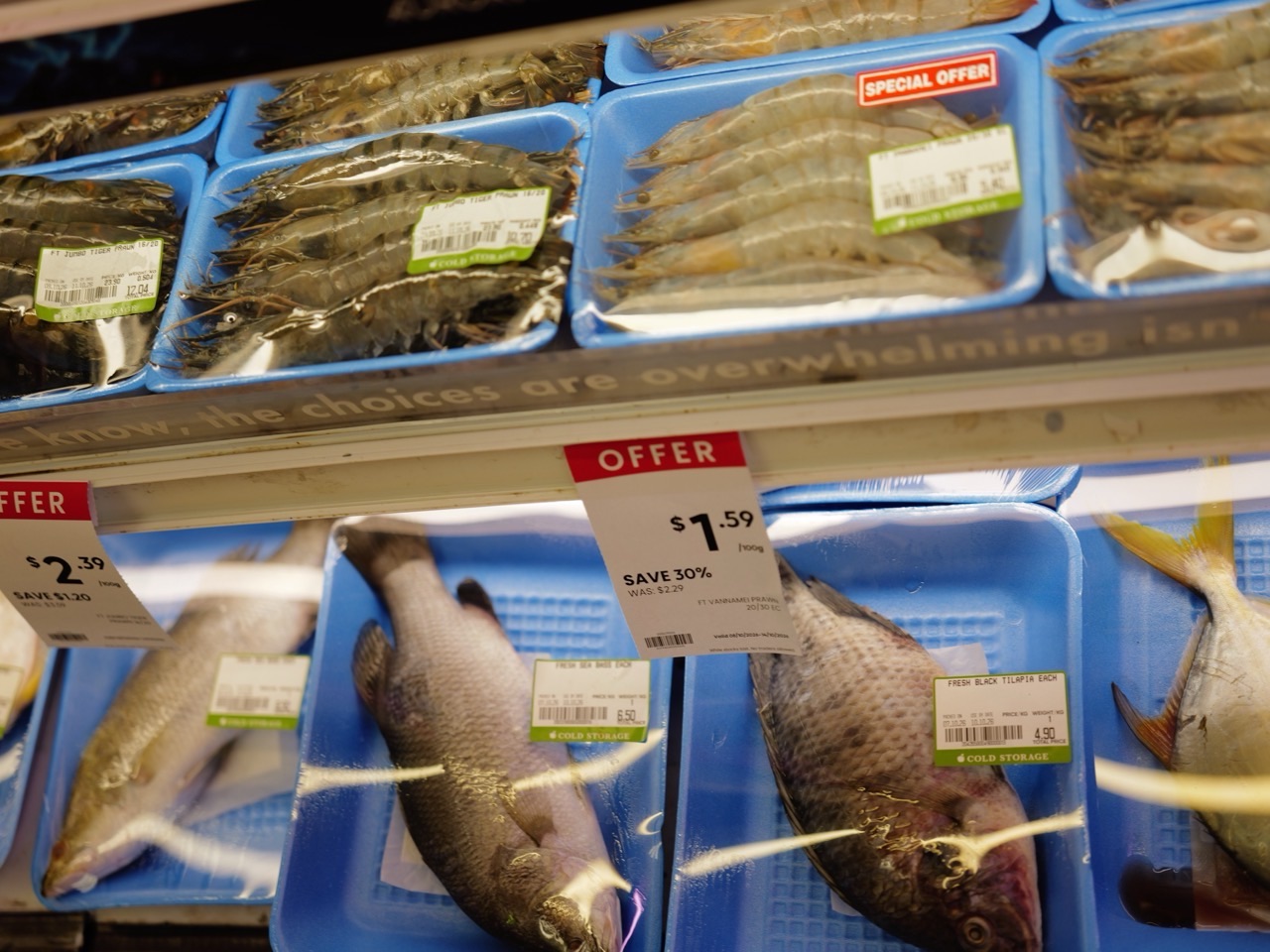
Featured photograph: packaged fish and prawns in a supermarket chilled section, for editorial food safety context. It does not depict an identified export consignment or establish that any displayed products hold an SFA certificate. Part of The Gold Standard | eduKate Singapore and Sectors and Services Directory. Actual SFA evidence, Customs clearances, importing-country rules and real certificate terms determine individual shipments.