
A Singapore exporter of industrial components has a valid Customs Account and a shipment booked for next week. The commercial invoice describes the goods as ordinary electronics, but the item’s technical characteristics may fall under the strategic goods control list. A supplier assures the company that a standard export declaration is enough. If the goods are controlled, that reassurance is unsafe: the Strategic Goods (Control) Act imposes additional checks on transfer, end-user and destination.
The Gold Standard of Singapore Customs Strategic Goods Control Permit Services is a dependable journey from correct goods or technology classification to end-user screening, appropriate individual or bulk permission, secure customs declaration and traceable lawful transfer. It supports legitimate international business without permitting inappropriate re-export, brokering or electronic transmission to bypass Singapore’s security rules.
Singapore Customs’ overview updated 2 October 2026 describes the law and an upcoming Strategic Goods (Control) Order 2026 effective 1 December 2026. That future control list is not automatically in force for October transactions. Physical Individual Permit requests normally need five working days of advance submission, while controlled Intangible Transfer of Technology has a seven-working-day lead requirement.
From the product’s true classification to a lawful transfer
The chapters distinguish the strategic goods control list, physical export, conditional transit exemptions, controlled electronic transfers, Bulk Permit facilitation and separate brokering. An ordinary Customs Account or freight booking is not the same as strategic trade authorisation.
1. Begin with the actual goods and technology
A Singapore exporter may sell ordinary industrial components that have legitimate civilian uses but also meet the technical description of controlled dual-use equipment. The commercial term electronics or scientific supplies is insufficient to establish whether controls apply. The service should classify the real product and transaction before shipping.
Singapore Customs publishes the Strategic Goods Control framework. It encompasses certain military and dual-use goods, software and technologies. Classification should be supported by the governing list and technical evidence, not an informal supplier assurance or a marketing category chosen to avoid review.
Back to trade compliance chapters · Next chapter
2. Use the correct rule effective on the transaction date
Trade-control lists change. An exporter might rely on a technical classification from a prior product shipment even after the control schedule has been amended, creating avoidable uncertainty.
Customs’ October 2026 overview identifies a new Strategic Goods (Control) Order 2026 that takes effect on 1 December 2026. As of 21 October 2026, that future order is not yet the operative list for an October export. A Gold Standard portal dates its classification decisions and alerts users to upcoming changes.
Back to trade compliance chapters · Next chapter
3. Separate physical goods and intangible technology
A controlled item may be shipped in a container, while related software or technical files can be transmitted electronically. A system that asks only for a shipping bill may overlook transactions with no freight movement.
The Strategic Goods (Control) Act covers physical export, transit, transhipment, intangible transfer and relevant brokering. A public questionnaire should ask what moves, where it originates, who can access it, and whether the transfer is electronic. The appropriate permission can exist even when a warehouse never handles an object.
Back to trade compliance chapters · Next chapter
4. Explain individual-permit scope before shipment
A one-off sale to an overseas business may require transaction-specific review, not a generic licence allowing an indefinite stream of shipments to unrelated customers.
The Individual Permit route applies to controlled physical exports, re-exports, transit and transhipment in prescribed circumstances. The application should identify the precise goods, value, recipient, intended use and relevant shipping or transit route. Approval for a shipment does not automatically authorise different goods or another end-user.
Back to trade compliance chapters · Next chapter
5. File at least five working days before the physical transfer
A forwarder may book cargo for departure tomorrow and assume a Customs registration number makes the strategic permit immediate. Technical and end-user review takes time.
Customs directs applicants to lodge relevant Individual Permit requests at least five working days before loading for export, re-export or transhipment, or before the arrival of goods in transit. Most complete applications are processed within around five working days, but sensitive goods, destinations and parties can take longer. A submission receipt is not permission to load.
Back to trade compliance chapters · Next chapter
6. Classify transit differently from transhipment
Cargo remaining on the same aircraft or vessel is not identical to goods unloaded into a Free Trade Zone before loading on a different conveyance. The physical handling can change the legal path.
Customs defines transit as movement through Singapore on the same conveyance without unloading; transhipment involves unloading and further carriage under the applicable through documentation. A Gold Standard declaration should ask how cargo moves and whether it enters an FTZ instead of labeling every port stop as export.
Back to trade compliance chapters · Next chapter
7. Apply the conditional FTZ time exemptions correctly
An importer may have heard that controlled cargo can remain in a Free Trade Zone without a permit and assume the duration never matters. The exemptions are technical and conditional, not a blanket right to store sensitive goods.
For strategic goods not on the specified Fourth or Fifth Schedules, Customs lists exemptions when the applicable FTZ and transit conditions are met. Key outer time limits are 45 days for arrival by sea and 21 days for arrival by air. The relevant schedule, handling route and time all matter. Goods outside the criteria still require the appropriate permit.
Back to trade compliance chapters · Next chapter
8. Do not treat exemption as absence of records
A transaction can fall within a prescribed permit exemption and still be subject to document review or Customs enquiry. An operator should retain the relevant cargo and commercial record rather than claim that exempt means untraceable.
Customs states authorities may request documents or notification even where a permit exemption is available. A service should show the specific exemption relied upon, assessment date and supporting shipment facts. It should avoid a generic checkbox that removes all further duties without a defensible basis.
Back to trade compliance chapters · Next chapter
9. Make the catch-all control a substantive safeguard
An item can be outside the published strategic goods list yet still present a controlled end-use concern. A seller must not ignore credible information about weapons-of-mass-destruction use merely because a catalogue label appears benign.
The SGCA catch-all provision applies when Customs notifies the trader, or the trader knows or has reasonable grounds to suspect specified nuclear, chemical, biological or related missile activities. The individual-permit guide requires a permit in such circumstances. Responsible operators escalate suspicious cases to qualified compliance staff and Customs.
Back to trade compliance chapters · Next chapter
10. Identify the real end-user rather than the first buyer alone
The named purchaser may be a trading intermediary, distributor or group company. The actual user could be a separate organisation elsewhere, and approval conditions may depend on that relationship.
Customs requires supporting end-user statements or certificates where relevant, together with consignee, final user and company details. A Gold Standard application should distinguish exporter, freight forwarder, consignee, intermediate buyer and final end-user. It should not take a dealer’s commercial address as conclusive evidence of ultimate use.
Back to trade compliance chapters · Next chapter
11. Keep commercial documents consistent
Contracts, invoices, packing lists, bills of lading and technical descriptions may be prepared by different people. Mismatched product descriptions and quantity can make a valid-looking permit unreliable for the actual shipment.
Customs lists business transaction documents as possible permit support. A credible portal reconciles goods descriptions, model, end-user, shipment dates and movement method before final filing, and allows a lawful amendment when plans change. Backdating a document or substituting a product after approval should never be presented as a routine shortcut.
Back to trade compliance chapters · Next chapter
12. Verify originating-country re-transfer restrictions
Some imported equipment and technology are subject to supplier-country export or re-export conditions. A Singapore seller may need supporting authority from the originating jurisdiction in addition to the local strategic goods permission.
Customs may request the origin-country export licence or confirmation that re-transfer controls do not apply. The public service should explain the evidence dependency while avoiding a claim that Singapore Customs can grant permission for another country’s separate legal requirements. A lawful local permit does not erase conditions imposed by other competent jurisdictions.
Back to trade compliance chapters · Next chapter
13. Collect an end-user statement relevant to the goods
A generic letter declaring good intentions may not answer the specific questions required for a sensitive transaction. The correct form can depend on the goods and destination.
Customs provides a general End-User Statement and other certificates for prescribed controlled transactions. It may also require import authorisation for categories such as Munitions List or WMD-related items. A Gold Standard form shows the actual required supporting document and verifies its signatory, while protecting sensitive technical and commercial data.
Back to trade compliance chapters · Next chapter
14. Use accurate product specifications without publishing sensitive know-how
Customs must understand the technical characteristics that determine classification, but a public educational article need not reproduce operational instructions for sensitive equipment.
The authority requests technical specifications, datasheets, model information or appropriate write-ups as evidence. A responsible compliance service gives a controlled secure upload route and access restrictions, rather than encourage applicants to post proprietary designs or sensitive technical drawings in public comments.
Back to trade compliance chapters · Next chapter
15. Distinguish physical Individual Permits from ITT Permits
Controlled technical information can be made accessible to overseas collaborators through email, file-sharing platforms or a computer server located in Singapore. No customs gate has to be crossed by a physical package.
The Intangible Transfer of Technology guide requires separate permission where applicable. A Gold Standard intake should establish whether information is being electronically transmitted or made available abroad, instead of allowing an ordinary export-declaration form to conceal an ITT.
Back to trade compliance chapters · Next chapter
16. Respect the seven-working-day ITT filing lead
A research or industrial collaboration may schedule a remote transfer of controlled technical information on a fixed day. A company cannot assume that because there is no shipment to clear, no application lead time matters.
Customs directs applicants to submit an ITT Individual Permit at least seven working days before transmission. Most complete requests take around seven working days for processing, subject to complexity. An approved ITT Individual Permit is generally valid for one year, and ordinary TradeNet cargo declarations are not required for that approved ITT period.
Back to trade compliance chapters · Next chapter
17. Keep permitted ITT scope and system access aligned
A permit for a specified controlled technical transfer to an identified recipient should not be interpreted as unrestricted access for every account within a multinational organisation.
The service should record approved technology description, foreign recipients, relevant locations, permitted duration and any conditions, using the actual Customs decision. A company should coordinate information-security access controls with its legally approved scope, without assuming that placing a file behind a login makes the transfer unregulated.
Back to trade compliance chapters · Next chapter
18. Use Bulk Permits only when the firm qualifies
A high-volume exporter may want fewer transaction-by-transaction delays, while a first-time trader with weak compliance systems may be unprepared for the obligations of a strategic trade bulk approval.
The Strategic Trade Scheme Bulk Permit suits high-volume or short-lead businesses with good records, registered trader status, at least an Enhanced TradeFIRST band and an effective Internal Compliance Programme. A bulk permission is not an automatic entitlement based solely on shipment count.
Back to trade compliance chapters · Next chapter
19. Make the seven Internal Compliance Programme elements clear
A company may prepare a glossy compliance policy yet have no accountable staff or actual checking of products and end-users. Bulk Permit facilitation relies on demonstrable internal control.
Customs specifies company commitment, appointed Strategic Goods Control Officers, product screening, end-user screening, recordkeeping, awareness and training, and internal audits. A Gold Standard assessment tests whether those elements work in daily decisions, not just whether seven headings appear in a PDF.
Back to trade compliance chapters · Next chapter
20. Treat TradeFIRST assessment as genuine validation
A successful annual financial audit is useful but does not establish the particular customs-control programme readiness needed for the Bulk Permit.
Customs reviews the applicant’s TradeFIRST self-assessment and conducts a site validation of the compliance programme. It then communicates the assessment result and final band. A status page should show submitted, validation scheduled, evidence requested, assessed and permitted as separate states, rather than report bulk approval upon receiving an application pack.
Back to trade compliance chapters · Next chapter
21. Do not confuse Bulk Permit and TradeNet shipment declaration
A company can hold a valid Bulk Permit with pre-approved products and end-users but still need to make the relevant declaration before lodging a particular shipment.
Customs says approved bulk transactions require a TradeNet permit before cargo lodgement with port or air handling operators. For goods subject to other competent-authority controls, a single TradeNet application may be routed to multiple authorities. The service should verify the approved bulk scope and actual consignment declaration independently.
Back to trade compliance chapters · Next chapter
22. Track relevant changes within fourteen days
Compliance programme officers and corporate structures can change before a Bulk Permit expires. If Customs continues to rely on stale screening arrangements, the original approval no longer reflects who controls the operation.
Bulk Permit holders must inform Singapore Customs within fourteen days of relevant changes to the ICP, structure, processes, trade compliance team or Strategic Goods Control Officers. A Gold Standard dashboard prompts for the updated documents and records confirmation of the change, instead of assuming a valid expiry date excuses all intervening reporting.
Back to trade compliance chapters · Next chapter
23. Keep transaction records for at least five years
An importer or Customs investigator may need to reconstruct the legal basis for a prior shipment long after the cargo moved. Missing end-user statements or invoices weaken the meaning of an approval.
Customs requires Bulk Permit holders to keep relevant strategic trade transaction records for at least five years. A dependable system links permit scope, end-user, supporting commercial documents, declarations, review and any corrective decision while restricting access to sensitive data.
Back to trade compliance chapters · Next chapter
24. Keep brokering registration a separate legal route
An intermediary located in Singapore may help negotiate a controlled overseas-to-overseas transfer even though no goods physically enter a Singapore warehouse. A cargo-only intake would miss that activity.
Customs’ 2026 permit overview requires applicable brokering registration at least fourteen working days before brokering, with additional brokering permits in prescribed cases. This is distinct from a physical Individual Permit and from an ordinary commercial company registration.
Back to trade compliance chapters · Next chapter
25. Use Preliminary Advice before irreversible commercial commitments
A trader may negotiate delivery dates or purchase expensive equipment before knowing whether the specific controlled transfer is likely to be approved. A preliminary assessment can prevent a costly lawful transaction from being structured on unsupported assumptions.
The Customs Preliminary Advice service accepts detailed goods, contract, end-user and licensing information and generally processes complete requests in about seven working days. The response is guidance on likely approval, not the permit that authorises the later controlled shipment.
Back to trade compliance chapters · Next chapter
26. Screen sanctioned entities and destination restrictions
A destination or intermediary can be subject to UN Security Council restrictions. An otherwise technically classified item should not proceed just because the buyer offers immediate payment.
The Customs framework includes sanctioned lists and red flags. Bulk Permit terms explicitly prohibit transfers to relevant UNSC-sanctioned countries or entities. A proper screening record captures the actual decision and escalation, rather than giving sales staff a checkbox to declare sanctions irrelevant.
Back to trade compliance chapters · Next chapter
27. Make red flags a trigger for review, not an accusation
An unusual delivery route, reluctant disclosure of the end-user or inconsistent technical description can warrant further enquiry. That does not automatically prove the counterparty is engaged in unlawful activity.
A Gold Standard system records reasonable concerns, requests lawful clarification and routes unresolved risk to qualified compliance staff or Customs. It avoids defamatory conclusions and preserves an auditable rationale for proceeding or not proceeding. The goal is strong preventive control and legitimate trade, not indiscriminate suspicion of every international buyer.
Back to trade compliance chapters · Next chapter
28. Protect security and business information in applications
A strategic goods permit may contain sensitive product specifications, supplier contracts, end-user organisations and technologies. Uncontrolled email forwarding or public sharing can harm both legitimate businesses and wider safety.
The permit service should use authorised channels, role-based access, secure handling and retention under the governing requirements. A broker or freight agent should see only information necessary for their permitted duties and should never demand Singpass or corporate account authentication secrets.
Back to trade compliance chapters · Next chapter
29. Worked case: controlled equipment and an export booking
Fictional Singapore distributor Meridian Industrial Solutions sells a regulated dual-use industrial item to a documented foreign customer. The logistics team proposes shipping it the following day because the container is ready. Its compliance officer identifies strategic classification and the real overseas end-user.
Meridian must use the applicable Individual Permit pathway and submit the complete request at least five working days before loading, allowing for additional Customs review. It gathers lawful technical descriptions, end-user statement, contract and shipping details and waits for actual approval before release. An ordinary export permit or freight invoice does not waive the SGCA requirement.
Back to trade compliance chapters · Next chapter
30. Worked case: overseas engineer accessing a Singapore server
Fictional technology company Harbour Research maintains controlled technical files on a server in Singapore. A collaboration partner based overseas requests access to specified documents. No physical consignment crosses the port.
If the files are within the controlled strategic technology rules, providing foreign access can be an Intangible Transfer. Harbour Research checks the actual control classification, recipient and purpose, applies for the necessary ITT permission at least seven working days before granting access and follows the issued scope. Commercial cybersecurity settings alone do not replace the permit.
Back to trade compliance chapters · Next chapter
31. Worked case: high-volume distributor using a Bulk Permit
Fictional operator Punggol Trade Components has recurring export orders to pre-approved commercial recipients. It has registered trader status and a documented Internal Compliance Programme, and seeks the relevant TradeFIRST assessment.
Only after Customs has issued a Bulk Permit for specified goods, parties and destinations may Punggol Trade apply for the transaction’s TradeNet permit close to cargo lodgement under the bulk terms. If a new end-user or technology is outside scope, the firm must obtain the required appropriate approval instead of borrowing a previous transaction’s authorisation.
Back to trade compliance chapters · Next chapter
32. Measure lawful transfer and documented end use
A public portal can issue many permits while exporters misunderstand electronic-transfer rules, end-user data are inaccurate or Bulk Permit holders stop updating internal controls. The number of approvals alone is not a security or trade-service success.
The Gold Standard is a properly classified transaction, actual checked destination and end-use, timely appropriate authorisation, secure declaration, honest change reporting and traceable lawful completion. Efficient trade is valuable when it preserves the controls that make Singapore a trusted global trading hub.
Back to trade compliance chapters
Strategic Goods Control permits compared
| Permission | When relevant | Timing or continuing duty |
|---|---|---|
| Individual Permit | Specified physical export, re-export, transit or transhipment | Apply ≥5 working days before relevant loading/arrival |
| ITT Individual Permit | Controlled technology electronically provided overseas | Apply ≥7 working days before transfer; approved permit ordinarily 1 year |
| STS Bulk Permit | Pre-approved multiple controlled transactions by a qualifying business | TradeFIRST Enhanced+ and functioning ICP; TradeNet per consignment |
| Brokering registration | Prescribed facilitating overseas-to-overseas transfers | Generally register ≥14 working days before activity |
| Preliminary Advice | Early review of a possible controlled transaction | Typically ~7 working days for complete documents; not an authorising permit |
Cargo FTZ exemption is conditional, not universal
| Transport arrival | Maximum under applicable specific exemption | Other conditions |
|---|---|---|
| Sea | 45 days | Not in specified Schedule; correct FTZ/transit handling |
| Air | 21 days | Not in specified Schedule; correct FTZ/transit handling |
| Unlisted goods with WMD catch-all concern | No automatic ordinary exemption | Individual Permit may still be compulsory |
Six questions to resolve before committing to export
- Is every electronic item exempt? No; actual technical characteristics, list and catch-all rules matter.
- Does the new 2026 Control Order apply on 21 October? Its published effective date is 1 December 2026.
- Does physical transit always require an Individual Permit? There are specific conditional exemptions, not blanket ones.
- Can controlled technology be emailed without permission? Electronic transmission or foreign server access may require ITT authorisation.
- Does a Bulk Permit replace every shipment’s TradeNet declaration? No. Transaction declarations remain required.
- Does Preliminary Advice authorise shipping? No; it is an early assessment, not a permit.
A trustworthy strategic trade service audit
- Is actual product or technology classified against the list effective on transfer date?
- Does the service distinguish export, transit, transhipment, ITT and brokering accurately?
- Are end-user, buyer, consignee and destination identified rather than conflated?
- Are catch-all concerns and applicable UN sanctions screened lawfully?
- Does the portal show correct 5-day, 7-day or 14-day advance application windows?
- Are FTZ 45-/21-day exemptions limited to eligible schedules and conditions?
- Is a Bulk Permit granted only after appropriate TradeFIRST/ICP review?
- Are Bulk Permit goods and end-users compared against each cargo TradeNet declaration?
- Can the company report changes within 14 days and preserve records for five years?
- Does closure demonstrate lawful transfer and actual documentary reconciliation rather than simply successful filing?
Customs official guidance and connected Gold Standards
- Singapore Customs: Strategic Goods Control overview updated October 2026
- Singapore Customs: Individual Permit and conditional FTZ exemptions
- Singapore Customs: Strategic permit and brokering route overview
- Singapore Customs: Intangible Transfer of Technology permits
- Singapore Customs: Bulk Permit, TradeFIRST and ICP requirements
- Singapore Customs: Preliminary Advice before controlled transactions
- Singapore Customs: October 2026 resource and control guides
- Singapore Customs: Transhipment and Customs Account requirements
- Singapore Statutes: Strategic Goods (Control) Act
- eduKate: Customs Import and Export Permit Services
- eduKate: Customs Temporary Import Permit Services
- eduKate: International Trade
- eduKate: Certificate of Origin Application Services
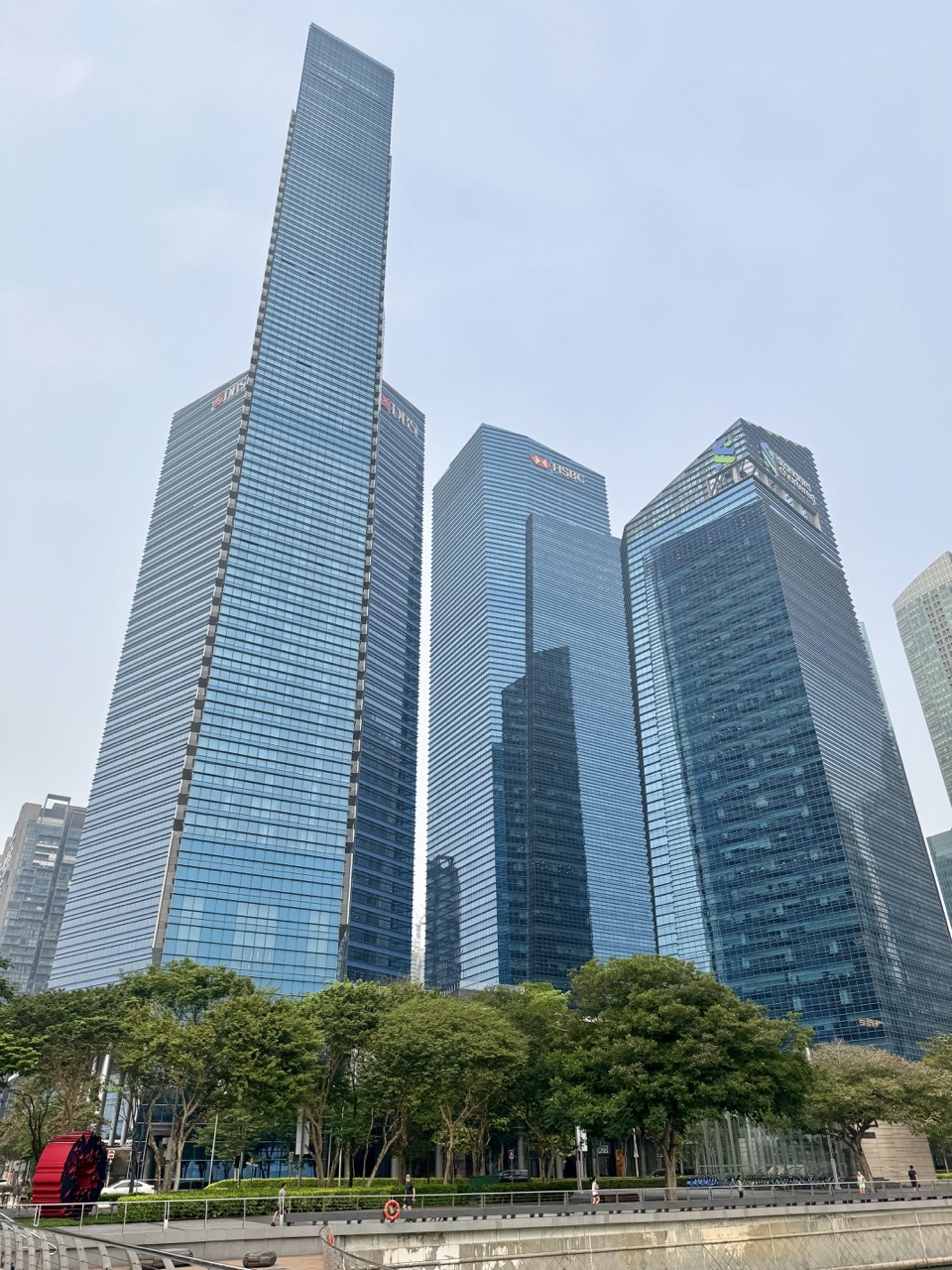
Featured editorial photograph: central Singapore commercial and financial district, illustrating the business context of trade compliance. It does not depict a specific controlled consignment, exporter or strategic-goods inspection. Part of The Gold Standard | eduKate Singapore and the Sectors and Services Directory. This guide is explanatory compliance information, not approval to transfer any goods or technology. Singapore Customs and applicable law determine all actual permissions.