
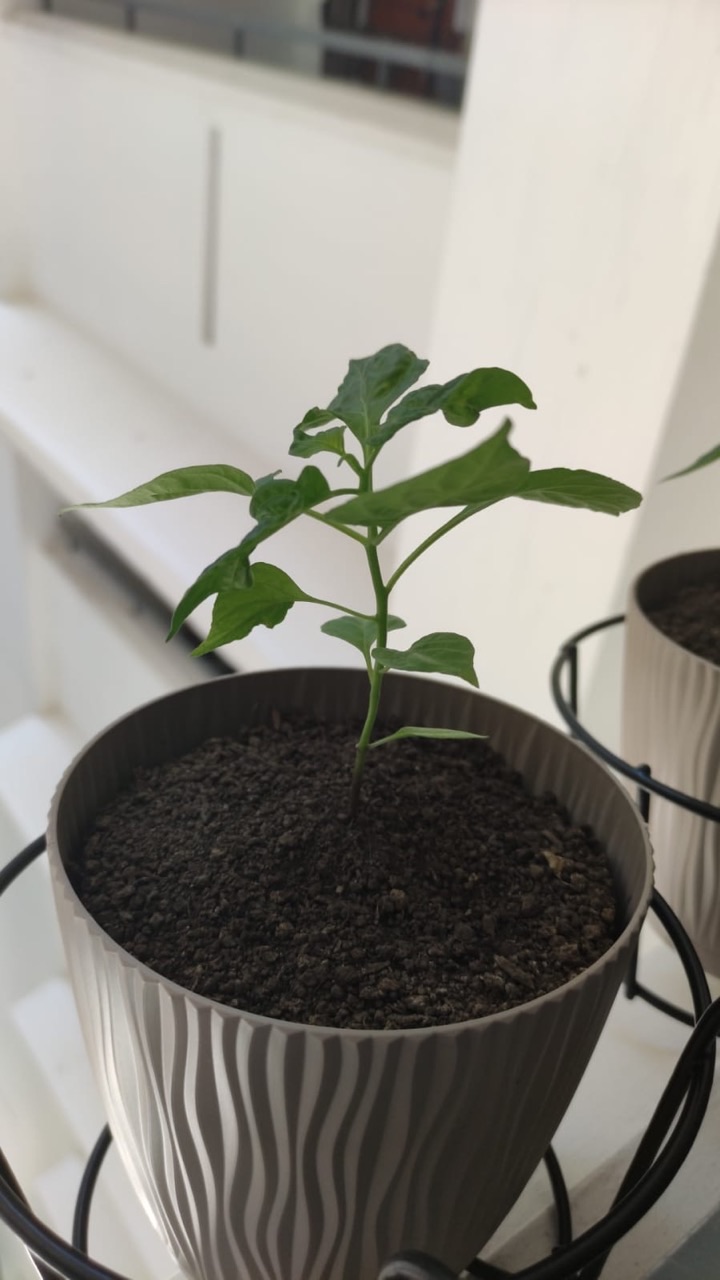
Teaching Biology well means helping learners understand how living things are organised, obtain materials and energy, regulate processes, reproduce, change over generations and interact with environments. The most valuable lesson is not a longer list of terms: it is the ability to connect a visible observation with a biological mechanism and judge what evidence actually supports.
Our running example is a fictional classroom seedling comparison. Some plants appear taller under different growing conditions, but taller does not automatically mean healthier. Students learn to ask what height measures, what else changed, how photosynthesis relates to growth and what a fair comparison would require. All numbers used here are invented for learning.
The eduKate Gold Standard hub explains why effective management and consistent execution matter more than appearance. This Biology teaching guide translates that principle into careful observation, accurate models, ethical investigation, honest data and transfer to new living systems.
Find the biological question
Read from a living organism to its cellular explanation or jump to the teaching problem your class is working through.
Chapter index
Ask and observe living systems · Chapters 1–4
Cells and biological processes · Chapters 5–10
- Explain diffusion, osmosis and active transport separately
- Connect photosynthesis to energy and matter
- Show respiration as a continuous cellular process
- Teach biological enzymes through mechanism and conditions
- Make plant transport and human systems comparable but not interchangeable
- Teach homeostasis as control with feedback
Inheritance and ecology · Chapters 11–13
Ethics, evidence and transfer · Chapters 14–16
1. Begin with a living question students can investigate
A Biology teacher places two photographs of seedlings side by side. One group appears taller, yet its stems look thinner and leaves look paler. A student says, ‘These plants grew better because they are taller.’ The teacher asks whether height alone establishes health, photosynthetic rate or long-term survival. This is the beginning of scientific inquiry: identify what was observed, what was inferred and what evidence might distinguish a better-supported explanation.
The running case uses fictional seedlings grown under different light conditions. We do not present the numbers as real measurements or promise that all species respond in the same way. Biology teaching should move learners between organisms they can observe, cellular processes they must model and ecological or evolutionary explanations that take longer to test. The aim is not a collection of facts about plants, but a dependable way to build an explanation and recognise its limits.
Back to chapter index · Next chapter
2. Teach characteristics of life without a misleading checklist
Students may learn that living organisms show nutrition, respiration, excretion, growth, reproduction, response and movement. Those categories are useful, but a rigid checklist can cause confusion. A dormant seed may not visibly grow today; an individual that cannot reproduce can still be alive; plants move and respond in ways quite different from animals. The teacher should explain biological processes over appropriate time scales instead of judging life by one moment’s visible behaviour.
Compare a living seed, a rock and a battery-operated toy. The toy moves and consumes electrical energy, but its movement does not make it an organism. A seed might be metabolically quiet yet retain living cells. Ask which observations or tests would help support the classification and what ethical and practical constraints apply. Good teaching develops a concept of organised living systems rather than a memorised word list applied mechanically.
Back to chapter index · Next chapter
3. Connect cell structures with their functions
Draw a simplified plant cell and an animal cell using labelled diagrams that are suitable for the syllabus. A cell membrane regulates movement of materials; many plant cells have a cellulose wall that contributes support; chloroplasts in photosynthetic tissues contain the machinery for photosynthesis. These statements belong to a biological model, and teachers should not imply every cell has every feature.
Ask why a mature red blood cell in a human and a photosynthetic leaf cell differ in structure and role, taking care with species and cell type. Then invite learners to classify which features are universal to the relevant category and which are specialised. Memorising a list of organelles can help identification, but the gold standard is connecting form, scale and function. Students should be able to predict how a change in one structure might affect the cell’s ability to perform a task.
Back to chapter index · Next chapter
4. Teach microscopy as measurement and interpretation
A microscope image is not self-explanatory. Students need to know the specimen, approximate scale, magnification and limitations of preparation. A learner who draws a cell without a scale or label may create a beautiful picture but cannot use it to reason about size. Use appropriate prepared specimens or vetted images under approved laboratory practice, and explain that stain, lighting and sectioning affect what appears visible.
For an invented image, if a 10 mm image on a page represents an actual structure 0.05 mm long, the magnification is 10 ÷ 0.05 = 200 times, provided both lengths refer to the same feature and unit. Ask students why converting units is essential. Discuss the difference between magnification and resolution: making an image bigger does not reveal details beyond the resolving power of the instrument. This is a transferable scientific measurement habit.
Back to chapter index · Next chapter
5. Explain diffusion, osmosis and active transport separately
Particles can spread by diffusion down an appropriate concentration gradient. Osmosis concerns net movement of water across a partially permeable membrane due to differences in water potential. Active transport uses energy to move substances across membranes against the relevant gradient through biological transport mechanisms. Students may confuse the three because textbook diagrams all feature arrows. The teacher should explain what moves, why and under which conditions.
Use a paper model of a cell membrane, labelled concentration regions and carefully stated assumptions. Avoid telling students that water always moves from ‘dilute to concentrated’ without specifying the membrane and solute conditions. For a living cell, osmotic consequences depend on cell type, cell wall and surroundings. The student should explain a prediction with the biological mechanism, not merely draw an arrow towards a word they memorised.
Back to chapter index · Next chapter
6. Connect photosynthesis to energy and matter
Photosynthesis converts light energy to chemical energy stored in organic molecules, using carbon dioxide and water in the overall process and releasing oxygen in oxygenic photosynthesis. It does not mean a plant gets most of its dry mass from soil. Teachers can represent the overall relationship clearly while explaining that actual cellular pathways involve multiple stages and are more complex than one arrow on a page.
When observing seedling growth under different lighting, ask whether a taller plant necessarily photosynthesised more. Under low light, some plants may elongate as part of an acclimation response; height alone does not measure carbon fixation or plant health. Leaf condition, biomass, light exposure, water and plant species would matter to a stronger inference. A useful Biology lesson makes students cautious about selecting a visually impressive but biologically misleading proxy.
Back to chapter index · Next chapter
7. Show respiration as a continuous cellular process
Students sometimes say plants photosynthesise by day and respire only at night. This confuses a light-dependent process with respiration, which living plant cells perform as they need usable energy. Photosynthesis and cellular respiration are distinct processes even though their overall material relationships can be introduced together at school level. A teacher should explain that net exchange of gases for a leaf depends on several concurrent processes and conditions.
Ask the class to compare a leaf in bright light and one in darkness using a diagram of sources and sinks for carbon dioxide and oxygen, with clearly stated simplifications. Then ask what an observation of net gas exchange would or would not prove about gross photosynthesis and respiration separately. This is a useful bridge to biological systems thinking: an organism’s visible result often reflects several processes occurring at once.
Back to chapter index · Next chapter
8. Teach biological enzymes through mechanism and conditions
An enzyme is a biological catalyst that affects reaction rate through its molecular structure and interaction with substrates under suitable conditions. Learners often memorise a single ‘optimum temperature’ curve and assume it applies to every enzyme and organism. Instead, explain that enzyme activity depends on the particular enzyme, pH, temperature, substrate availability and other conditions. Very high temperatures can alter protein structure; low temperatures may reduce rates without necessarily causing permanent denaturation.
Use a fictional set of reaction-rate readings and ask which variable changes, which remains controlled and whether the graph supports a specific optimum within the tested range. A peak among four measured points does not prove that the exact true optimum is at that point. A teacher can extend into models of active sites and specificity appropriate to the syllabus. Students should be able to explain the pattern, not simply copy the familiar bell-shaped graph.
Back to chapter index · Next chapter
9. Make plant transport and human systems comparable but not interchangeable
A vascular plant moves water and dissolved mineral ions through specialised tissues, with transpiration contributing to water movement. A human circulatory system moves blood through vessels using a heart as a pump. Both involve transport but work through different structures and mechanisms. Comparisons are educational when they reveal a shared function without treating plant xylem as if it were a human artery.
Ask learners to compare what is transported, the driving influences and the destination in a table. Then identify where the analogy breaks down. The teacher can introduce tissue structure, exchange surfaces and diffusion distances as underlying constraints. Accurate comparison prevents students from memorising biological parts as disconnected names. It also shows why the shape and organisation of living systems often relate to their function.
Back to chapter index · Next chapter
10. Teach homeostasis as control with feedback
An organism can maintain internal conditions within suitable ranges despite changes outside. Students sometimes interpret homeostasis as keeping one number absolutely fixed. In reality, regulation involves sensing, effectors, feedback and variation. Introduce a simplified negative-feedback model for a familiar physiological variable, clearly distinguishing the model from advice for managing an individual’s health.
Students can identify a change, detector, coordinating pathway and corrective response, then explain why the response tends to oppose the original change. Emphasise that human health conditions and treatments require qualified professional assessment. A classroom diagram is not an instrument for diagnosing another student. The intellectual target is feedback in living systems, not personal medical speculation.
Back to chapter index · Next chapter
11. Explain reproduction and inheritance without treating people as traits
Genetics lessons often begin with simple dominant and recessive allele examples. Such models can teach segregation and probability, but many actual traits involve multiple genes, environmental influences and more complicated inheritance. Teachers should label a simplified cross as a model and avoid treating it as a prediction of an identifiable classmate’s appearance, ability or health.
A paper exercise can use a fictional plant trait with explicitly defined inheritance assumptions. Students calculate genotype probabilities and compare them with possible observed variation. Ask why probabilities describe expected patterns across many offspring rather than guaranteeing the outcome of one individual. A strong Biology course combines precision with restraint: it teaches heredity without suggesting that a person’s complex characteristics can be read from one classroom square.
Back to chapter index · Next chapter
12. Teach evolution through populations and evidence
Evolutionary change concerns heritable variation across generations in populations, not the idea that an individual organism changes because it ‘tries hard enough’ or ‘needs’ a feature. A teaching model can describe variation, differential survival or reproduction and changing frequencies under specified conditions. It should make room for mutation, selection, genetic drift and other processes at the level appropriate to the course.
An invented simulation with differently coloured counters can help learners track changing proportions across generations, but they should distinguish the simulation’s built-in rules from the complexity of real populations. Ask what evidence—from fossils, genetic comparisons, observed change or other scientific work—would be relevant to a particular evolutionary claim. Biology teaching should not treat unsupported personal opinion as equivalent to convergent scientific evidence.
Back to chapter index · Next chapter
13. Build ecology through flows and interactions
A food web is not just a diagram of who eats whom. It connects producers, consumers and decomposers with energy transfer and material cycling in an ecological system. Arrows in food webs generally show the direction of energy transfer from the organism eaten to the consumer. Students who draw arrows backward may know the species names while misunderstanding the relationship.
Use a small fictional pond community with algae, insect larvae, fish and birds. Ask how a change in one group might affect others, and discuss why ecosystems have indirect interactions and limitations to simple predictions. Avoid claiming that removing a single species always causes one predetermined effect. Teach sampling, habitat context and ecological scale. A strong learner should be able to explain why an ecological claim requires observations over time rather than one attractive diagram.
Back to chapter index · Next chapter
14. Make biology practical work ethically sound and safe
Investigating living systems raises questions beyond those in a mathematical model: humane treatment of organisms, biosafety, consent in human studies, disposal of biological materials and accuracy of records. School practical work should follow approved risk assessments, qualified supervision, specimen handling guidance and institutional ethics requirements. Do not culture unidentified microorganisms from an environment or handle human samples outside properly authorised settings.
Use safe alternatives such as plant observation, prepared slides, vetted datasets and computer models where they meet the objective. If a study involves classmates, avoid collecting unnecessary personal health information and obtain appropriate permissions. A useful lab notebook records what was actually observed, when it was measured, the sample and the limitations. Students should never be encouraged to fabricate values to obtain a perfect-looking result. Scientific integrity is part of biological literacy.
Back to chapter index · Next chapter
15. Interpret variation, averages and small samples honestly
Biological specimens vary. If three seedlings in one condition measure 8, 9 and 8 cm and three in another measure 11, 10 and 12 cm after seven days, the means are approximately 8.33 cm and 11 cm. Those fictional numbers show a difference in measured height. They do not prove that the second condition produced healthier plants, higher photosynthesis or a causal difference from light alone.
Students should inspect variation, how plants were assigned to groups, whether starting heights matched, how watering and temperature were controlled and whether measurements were consistent. Averages do not erase differences among individuals. In higher-level work, students can learn about uncertainty, replication and appropriate statistical inference. At every level, they should stop short of claims their study design cannot support.
Back to chapter index · Next chapter
16. Test learning with a new biological system
After studying the seedlings, present a new scenario involving a pond plant, an aquatic food web or a cell membrane, appropriate to the syllabus. The student must identify a specific question, explain relevant biological structures or processes, choose meaningful evidence and state limits. The ability to repeat ‘more light means better growth’ is not a success if the new task demands a different explanation.
Use misconceptions to plan the next instruction: perhaps the pupil confuses photosynthesis with respiration, treats height as equivalent to biomass, or mistakes a model drawing for a microscope observation. Each problem requires a different repair. The gold standard of Biology teaching is a consistent journey from life as observed to cellular and ecological mechanisms, rigorous practical reasoning and an independent explanation that can be revised when better evidence appears.
Worked Biology enquiry: are taller seedlings healthier?
This is an invented six-plant dataset, not the results of an actual classroom trial. The fictional seedlings are measured after seven days under two described light conditions. Different plant species and conditions may produce different responses. Height alone is not a measure of total growth, photosynthetic rate or plant health.
| Seedling | Illustrative light condition | Height after 7 days (cm) |
|---|---|---|
| A1 | Longer light exposure | 8 |
| A2 | Longer light exposure | 9 |
| A3 | Longer light exposure | 8 |
| B1 | Shorter light exposure | 11 |
| B2 | Shorter light exposure | 10 |
| B3 | Shorter light exposure | 12 |
Calculate and interpret: Mean height A = (8 + 9 + 8) ÷ 3 = 25/3 ≈ 8.33 cm. Mean height B = (11 + 10 + 12) ÷ 3 = 11.0 cm. The observed model difference is about 2.67 cm. It does not establish that low light is better. Some seedlings elongate in response to inadequate light, and stronger experimental inference would need appropriately matched starting conditions, random allocation, suitable replication and additional measures such as leaf condition or dry biomass. This is the disciplinary lesson: measurement is evidence for a specific claim, not permission to claim everything.
A practical four-lesson sequence
- Lesson 1 — Ask: distinguish what the seedlings look like from the claim that one group is healthier; identify useful measurements.
- Lesson 2 — Explain: connect light, photosynthesis, respiration and plant structure using appropriate models.
- Lesson 3 — Investigate: plan a safe, fair observation with suitable controls, replication and ethical handling.
- Lesson 4 — Evaluate: calculate a summary, assess limitations and apply the thinking to a different organism or environment.
Frequently asked questions about Biology teaching
Does a taller plant prove better growth?
Not by itself. Height is one measurable trait; healthy development, biomass, leaf condition and physiological function may differ, and environmental responses can make plants taller under suboptimal conditions.
How do photosynthesis and respiration differ?
Photosynthesis uses light energy to help build energy-containing organic compounds in photosynthetic organisms, while cellular respiration supports energy release and use in cells. Plants perform respiration as well as photosynthesis.
Is a microscopic image the same thing as a cell model?
No. A microscope image records features resolved under particular preparation and optics; a model selects and simplifies structures for explanation. Learners should know which representation they are using.
Should students memorise Biology definitions?
Accurate vocabulary matters, but learners must also apply terms to explain mechanisms, interpret practical results, and recognise exceptions and limitations.
How do we protect students during Biology practicals?
Use approved school risk assessments, supervision, suitable specimens and ethical permissions. Avoid informal culturing of unknown microorganisms or unsupervised biological sample handling.
Verified 2027 SEC Biology syllabus context
SEAB’s official 2027 school-candidate listing includes G3 Biology K325 and the combined G3 subjects K327 (Physics, Biology) and K328 (Chemistry, Biology). G2 offers K224 (Physics, Biology) and K225 (Chemistry, Biology). G1 lists Science K123 without a separate Biology subject. Assessment content and practical requirements should be taken from the exact applicable syllabus.
- 2027 G1 SEC school-candidate subjects
- 2027 G2 SEC school-candidate subjects
- 2027 G3 SEC school-candidate subjects
Keep reading within the eduKate ecosystem
- G3 Biology Parent Guide | 2027 SEC
- Cell Structure, Specialised Cells and Microscopy
- Diffusion, Osmosis and Active Transport
- Ecology, Food Chains and Food Webs
- Junior College 1 Biology Education | Gold Standard
- Pure and Combined Sciences | 2027 SEC Choices
- Teaching Chemistry | Particles, Reactions and Safety
- The Gold Standard master hub
Biology teaching reaches its gold standard when a pupil can move from a living observation to an accurate mechanism and then return to the real organism with a testable, ethically responsible explanation. A learner who recognises limitations and revises an inference has learned to practise Biology, not simply to remember it.