
Onomastics studies names and their history, forms, functions and social use. Its gold standard is not guessing the meaning of a familiar surname: it is preserving what a source says, identifying who or what was named and explaining how confident we can be about any proposed origin or name change.
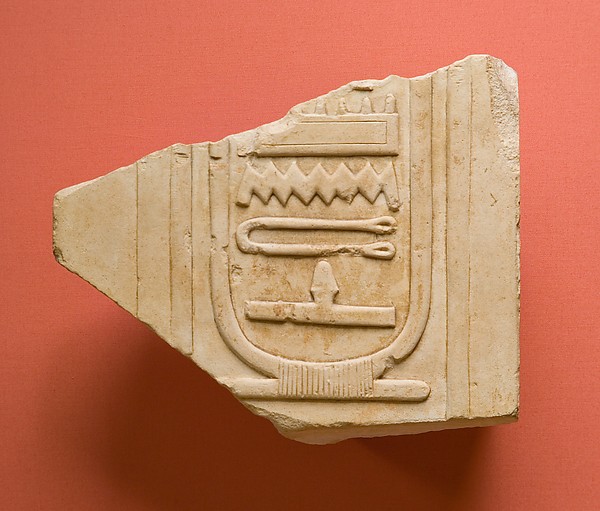
The running case is wholly fictional: Reed Ford on a 1910 map, Reed Ferry Road in a 1934 directory and Old Crossing in a later oral account. The real featured image is a separate ancient Egyptian name-bearing relief from The Met, not an illustration of Reed Ford.
The International Council of Onomastic Sciences and UN Geographical Names publications provide terminology and naming-research context. The eduKate Gold Standard requires a repeatable move from recorded label to checked interpretation.
Find the onomastic question
Navigate to a naming issue or follow the full fictional place-name investigation.
Chapter index
Recorded forms and naming systems · Chapters 1–5
Name changes, etymology and identity · Chapters 6–10
Material and data evidence · Chapters 11–13
Public naming, chronology and transfer · Chapters 14–16
1. Why names are evidence, not a complete history
Our fictional source packet uses Reed Ford on a 1910 map, Reed Ferry Road in a 1934 directory and Old Crossing in a later recollection. A name is a recorded expression used by a source producer; whether these expressions identify the same place requires additional investigation. First record the exact text, date, medium, institution and geographical scope. Then propose relationships with confidence labels rather than deleting variants. The International Council of Onomastic Sciences describes onomastics as research into names and supplies vocabulary for its many branches.
Ask students whether a 1910 map label establishes that the bridge was built in 1910. It does not: a first surviving attestation and a date of creation are different claims. Draw a separate timeline for named forms and evidence of the underlying feature. Give the class another hypothetical map with a similar but not identical road name elsewhere to test false matching. A correct answer keeps the two roads separate pending geographic evidence.
2. Classify name types without losing the source
An anthroponym is a name of a human being, a toponym is a place-name, a hodonym is a road or street name, and a hydronym names a river or other body of water. The ICOS terminology page notes that definitions and usages may vary across scholarly traditions. Use these categories to decide what research question applies; do not present the Greek-derived words as substitutes for understanding evidence.
Provide an invented source card with a person’s name A. Reed, a river named Red Water and a road called Reed Ferry Road. Students classify the strings and explain what would establish each referent. The road’s name does not prove which Reed family owned the bank. The river name does not show the water’s actual colour in every season. Classification creates useful questions but never completes the historical explanation.
3. Separate name forms, identities and entities
A place may carry a local nickname, a legally adopted road designation and an older name in different languages. A person may appear under an initial, nickname or romanised spelling. One name string may denote multiple people or sites, and a single person or site may have several forms. Databases that merge all similar strings into one entity can destroy this distinction. Preserve the form exactly as attested alongside an explicit, source-backed identity hypothesis.
In the Reed Ford exercise, store three name attestations before deciding whether they denote one geographic object. Then introduce two unrelated fictional people called Mei Tan. The class must not merge those people because the display names match. This links Onomastics to Prosopography: a name occurrence is raw historical evidence, whereas an identified person or place is a reconstruction needing justification. Ask pupils to state what change would make them revise an earlier entity match.
4. Understand pronunciation and writing across languages
A written historical name does not automatically disclose pronunciation. One script can encode sounds differently from another, and romanisation choices may change between writers and eras. Transliteration maps written characters according to a convention, while transcription can represent speech sounds. These approaches serve different purposes. A modernised spelling may be practical for searches but should not replace the form found in a historical letter, sign or map.
Create a fictional bilingual directory with two recorded versions and state explicitly that pronunciation is unknown. Students record the scripts and transliteration convention before proposing equivalence. An etymology based only on modern English-looking syllables is not enough. Ask what independent linguistic sources or local oral testimony, gathered with permission, could improve the analysis. The answer should preserve uncertainty rather than invent a confident spoken form.
5. Find who had authority to name a place
Official names may be standardised by governments or naming authorities, while community usage can preserve alternatives. A mapmaker’s label is evidence for the label that maker used, not necessarily a legal notice that a place was renamed. The UN Group of Experts on Geographical Names provides guidance on place-naming authorities, official languages and source records. Those guidelines address administrative clarity but do not erase the historical value of vernacular place-names.
Tell pupils that the 1934 directory calls a road Reed Ferry Road. What would prove an official renaming rather than an informal convention or different geographic feature? Students should seek a dated administrative notice, a street gazette or corroborated maps. A later document is useful as evidence of usage by that date, but cannot establish an earlier legal act solely through a printed title. Distinguish the legal name, the recorded name and a local descriptive name.
6. Teach endonyms and exonyms carefully
An endonym is a name used locally for a geographical feature, whereas an exonym is used in another linguistic setting under particular circumstances. The categories depend on language and usage, not on an assumption that one community’s label is the only authentic way to speak. UNGEGN publications discuss these distinctions and provide multilingual terminology for map editors.
Give two documented modern place-name forms from different languages and ask whose usage each reflects. Then return to the fictional historical case: the presence of Old Crossing in one oral account does not establish that all residents used it. The learner should ask when the speaker used the name and who else did. A respectful classroom does not dismiss a community’s local form merely because a standard map uses a different label.
7. Recognise name change as a documented historical event
Two different maps can refer to differently named features, overlapping labels or the same place at different times. The source pair alone does not always prove renaming. An official decision, contemporaneous announcement or correspondence may establish an administrative change. Equally, a local nickname can survive after an official change. Historians should distinguish first documented occurrence, first confirmed official use and the dates of proposed or completed changes.
Build a four-column worksheet: recorded form, dated source, claimed identity and corroboration needed. If a 1934 directory first shows the word Ferry, students may infer that its compiler used the name by 1934, not that a road was necessarily renamed that year. Ask learners what would disprove the assumed continuity with Reed Ford. A historical map showing distinct road alignments would be important counterevidence.
8. Investigate etymology without a convenient legend
A road called Reed Ferry may be connected to plants, a landowner, a transport service or an earlier word later reinterpreted by speakers. Modern spelling resembles English words, but resemblance is not etymological proof. Sound change, earlier spellings, document genre and local language history all matter. Teachers should avoid presenting one attractive explanation as a fact solely because a dictionary offers a matching meaning.
Give students two rival fictional hypotheses: reed beds beside a ford versus a ferry operator named Reed. Ask which historic land records, early maps, transport notices or linguistic attestations would distinguish them. If neither route is supported, the correct published conclusion remains uncertain. This teaches a general research skill: naming a plausible cause is the beginning of source work, not the end of it.
9. Separate surname origins from personal ancestry
A name type may have a documented etymology without every bearer sharing a common recent ancestor. Occupational and place-derived surnames can arise independently in different communities, and families can change names through adoption, marriage, migration or administrative records. A surname cannot be used alone to deduce someone’s ethnicity, religion, profession, genetic lineage or entitlement to an historical emblem.
Offer a fictional claim that all people called Reed descend from one ferry owner. Ask students for the genealogical documentation required to support even one particular line. Connecting a person to a historic bearer is a separate chain of evidence from explaining the meaning of the surname itself. The class should be rewarded for distinguishing the two questions and refraining from guesses about living classmates’ identities.
10. Treat chosen names and pseudonyms with dignity
Artists, writers and ordinary people may use pen names, aliases, nicknames or legally changed names for different reasons. Older sources may identify someone in a way they no longer use; an archive might need to preserve that historical record while presenting access information respectfully. A teacher should not treat variations as proof of deception, nor insist students reveal private background information to illustrate a naming pattern.
Use fictional creators with clearly invented pen names. Ask what a library catalogue should record for discovery and how citations should attribute works. Distinguish a public pseudonym from a confidential identity. The exercise shows that onomastics is a study of naming practices, not a classroom permission to investigate people’s private personal histories. Consent and source purpose remain essential.
11. Read names inscribed on real material objects
Historical names survive on seals, coins, monumental inscriptions and manuscripts. The featured real example is a Met limestone relief with cartouches naming Akhenaten, Aten and Kiya. This object is not a document from fictional Reed Ford, nor does its royal and religious context match a modern road directory. It illustrates how identifying a name on an artefact requires knowledge of script, object date, setting and museum cataloguing.
Students first describe the visible inscription and carved medium, then consult the museum’s transcription and attribution rather than inventing an English reading from hieroglyphic shapes. Distinguish object creation from the lifetime of a person named in it. A name carved on stone can be authentic material evidence yet still require careful contextual interpretation. That is precisely why Onomastics benefits from Epigraphy and Archival Studies.
12. Build a source-linked names database
A useful dataset should record source ID, original name form, language or script when known, date range, putative entity, coordinates or place description, and a confidence note. Search-friendly normalisation is valuable but should be stored separately. Silent replacement of variants with modern official names hides the history the student aims to investigate.
Create five invented rows, two for Reed Ford and Ferry Road and three for unrelated namesakes. Introduce a ‘same entity?’ field with values confirmed, possible and unconfirmed. Ask students how many unique places are represented. They cannot give an exact answer without resolving ambiguous mappings. The database remains useful if it clearly separates source attestations from reconciled entities; false certainty is more harmful than an honest unknown.
13. Map historical names without manufacturing precise points
A small-scale map may locate a name near a watercourse without identifying an exact coordinate. A modern GIS marker can look precise even if the historical source supports only an approximate stretch. Teachers should distinguish feature geometry, label placement and a modern pin used for visual convenience. Scale, projection and cartographic intent matter before any historical location is assigned.
In the fictional case, map Reed Ford as a broad candidate zone until a route survey, bridge record or larger-scale plan supports a narrower position. Compare this with Reed Ferry Road’s later alignment and ask whether they overlap meaningfully. If not, the naming hypothesis weakens. Students should be able to explain why georeferencing helps research yet cannot repair missing historical evidence on its own.
14. Analyse contested naming decisions without partisan caricature
Public names are shaped by memory, planning, language, identity, accessibility and political authority. A proposed name change can have costs and benefits for navigation and local attachment. Teachers should distinguish the stated policy rationale, residents’ documented perspectives and actual legal outcome instead of attributing motives without evidence.
Draft a fictional consultation on changing Reed Ferry Road to Riverside Walk. One stakeholder values historical continuity, another emergency-service clarity and another multilingual accessibility. Students evaluate reasons and relevant sources without declaring that disagreement proves bad faith. The task is not to persuade a real neighbourhood; it is to learn how naming systems interact with people and institutions while making empirical and normative claims explicit.
15. Use historical dates without inventing a name’s birthday
The date of a map’s publication is not necessarily the date a name was first spoken or coined. Even a first known attestation establishes at most that the label was in use by a point under a reliable source interpretation. A later record may copy an earlier document, and a historical name can survive in memory after official renaming. These temporal layers must not collapse into one creation year.
Ask learners to place the 1910 map, 1934 directory and later recollection on a line that distinguishes source production from name use. Then add an undated oral-history account and ask whether it can be assigned one exact point. The answer requires context and careful uncertainty. This chapter ties naming evidence to the chronology skills taught elsewhere in the Gold Standard series.
16. Assess an unfamiliar name puzzle independently
Students receive a different invented packet: Willow Bay in an old harbour map, Willow Wharf in a later register and a landholder surnamed Willow in a separate record. They must classify the name types, record spelling and dates, propose possible geographic or personal links and identify tests for each. A similarity of spelling is not sufficient to merge the places or attach the name to the landholder.
The final response should provide a short source table, two possible etymologies, a confidence statement and a plan to search relevant maps or administrative documents. A strong pupil can say ‘unresolved’ with good reasons and explain what evidence would change that judgement. That is the gold standard of onomastic teaching: precise attention to source forms and human naming practices, without invented histories.
Worked name-evidence table: five attestations, unresolved links
The following names, records and dates are invented. Each statement describes a source attestation rather than a verified history of a real place or person.
| Fictional source | Attested name | What is established | What is still a hypothesis |
|---|---|---|---|
| 1910 map | Reed Ford | Label appears near a river | Position and whether it became the road |
| 1934 directory | Reed Ferry Road | Directory uses that road label | Date of any official renaming |
| Oral account | Old Crossing | Narrator uses a different name | Use by the broader community |
| Parish entry | A. Reed | Occurrence of a human name | Relationship to a place-name |
| Property note | Eliza Reed | A separate named individual | Whether she was a historic namesake |
The student who merges every Reed entry has conflated place-name etymology and person identity. A better result preserves each source and requests independent geographic or genealogical evidence for the proposed links.
Four lessons that develop independent naming research
- Lesson 1: record exact forms and classify names by the type of entity they denote.
- Lesson 2: compare dated sources, languages and naming authorities; identify variants and possible false matches.
- Lesson 3: investigate competing etymologies and explain why first attestation is not date of origin.
- Lesson 4: apply the method to a new fictional town with a disputed road name and unresolved person link.
Source audit: three names across four kinds of evidence
The 1910 map names ‘Reed Ford’, the 1934 directory names ‘Reed Ferry Road’ and a later narrator says ‘Old Crossing’. They might refer to different stages of one crossing, a road approaching an older ford or several neighbouring features. Students build two separate columns: attested written form and proposed real-world referent. Neither source automatically establishes equivalence. A bridge construction plan could show whether the ford and later bridge shared an alignment, while an official notice could establish the date when an administrative road name changed. The exercise is intentionally fictional and no existing road is being identified.
Give pupils a new invented engineering drawing showing a bridge 200 metres upstream from the position indicated by the older map. Ask whether their earlier merged identity still holds. They should consider map scale, drawing accuracy and the possibility of two crossings. An apparent contradiction is useful evidence for revising a hypothesis. Strong work documents why a match was rejected, rather than silently deleting it from the database. The teacher can evaluate whether the student is reasoning about place identities or merely matching similar character strings.
Competing etymologies: test the direction of an explanation
The name ‘Reed’ could derive from a water plant, a local person’s surname or a different historical linguistic source. A fictional parish entry names A. Reed; another land record names Eliza Reed. Those occurrences do not automatically prove that a person founded or named the crossing. Neither does a modern dictionary defining ‘reed’ establish that plants grew there. Students can generate a simple hypothesis table that lists each possible explanation, the earliest source supporting it, and evidence that might challenge it.
Add a hypothetical ferry licence issued to a person named Reed decades after a crossing was already labelled Reed Ford. This supports the existence of a later named operator but not necessarily a personal-name origin for the earlier place. Reverse-causation is a genuine possibility: people sometimes adopt names associated with places. Learners should practise asking whether the apparent source of a name is actually later than its first attestation. Where no explanation can be verified, a responsible glossary says ‘origin uncertain’ rather than selecting the most entertaining story.
The naming register: preserve strings and hypotheses separately
A durable digital record needs the name exactly as seen, its script, source date, repository identifier, type of named entity and the entity or location it might represent. Standardised spelling can help users discover material, but it should not overwrite the original text. In the fictional crossing case, ‘Reed Ferry Road’ should remain linked to the 1934 directory even if a modern database uses ‘Riverside Way’. The historic form is evidence in its own right, not a spelling error to be corrected out of existence.
Ask students to include a confidence status such as confirmed, proposed or unresolved, with a source citation for each relationship. A person record named Reed should not be merged with the road merely because it shares a token. Place entities and people have different evidential criteria. A teacher can assess competence by introducing a second Reed Ferry Road in an adjacent fictional town and checking whether pupils keep the two entities separate unless a geographic relationship is documented. The resulting register should help another scholar reproduce or revise every major decision.
Ethical public naming and the limits of source authority
A local naming consultation may include historical preservation, navigation clarity, language accessibility and residents’ attachment to an older name. These are legitimate but not identical considerations. A student’s preferred outcome should be distinguished from factual claims about the past. If the class considers a hypothetical renaming from Reed Ferry Road to Riverside Walk, the exercise should identify who has authority to decide and whose views have actually been sought, instead of assuming that one newspaper quotation represents an entire community.
Students can draft two short reports: a factual history of what the sources show and a separate recommendation explaining its values and trade-offs. The first might say the directory used Reed Ferry Road in 1934; the second might recommend preserving the old wording on an interpretive sign. Neither establishes a legal renaming by itself. This dual-output task is an excellent test of the distinction between empirical onomastics and public policy. It also prevents the course from slipping into personal advocacy when historical evidence is incomplete.
A source card for an auditable name study
| Field | Fictional entry | What it prevents |
|---|---|---|
| Original name | Reed Ferry Road | Loss of historic wording |
| Source | 1934 directory, hypothetical entry | Unattributed assertions |
| Entity type | Road name / hodonym | Confusing a person with a road |
| Proposed identity | Possibly associated with Reed Ford | Premature database merges |
| Confidence | Unresolved | Unjustified certainty |
| Next research action | Compare contemporary survey plans | Unstructured guessing |
Frequently asked questions
Does one name have only one spelling or referent?
No. Names can vary by script, pronunciation, period and community, and one form can refer to different people or places.
Does the first recorded name prove when it was created?
No. It records usage by the date of that source, assuming the date and attribution are reliable.
Can name meaning establish family ancestry?
No. Etymology of a name type and evidence of a person’s genealogy are distinct questions.
What is the best assessment?
A new named-entity puzzle requiring source citations, competing explanations and a bounded conclusion.
Professional naming sources
- International Council of Onomastic Sciences terminology
- UNGEGN publications and terminology
- UNGEGN guidelines for geographical names
- The Met: Relief with cartouches naming Akhenaten, Aten and Kiya
Related eduKate fields
- Teaching Linguistics
- Teaching Genealogy
- Teaching Prosopography
- Teaching Historical Cartography
- The Gold Standard master hub
The Gold Standard of Teaching Onomastics is reached when a student can distinguish an actual recorded name from a reconstructed identity and explain what evidence a historical origin story still needs.