
A tourist visits Orchard Road, buys a S$600 watch and assumes the cashier can hand back the nine per cent GST in cash immediately. Another visitor combines small receipts from unrelated shops to reach S$100, while a third checks in a suitcase containing the purchases before going to the airport refund kiosk. These are different mistakes in Singapore’s electronic Tourist Refund Scheme: eligibility, retailer recording, minimum spend, airport verification and final payment must all align.
The Gold Standard of Tourist GST Refund Services is a fair public journey from a genuine eligible visitor and qualifying retail purchase to correct eTRS records, safe presentation of goods, honest departure declarations, a transparent handling fee and a refund that reaches the claimant. It helps travellers avoid surprise disqualifications while protecting public GST revenue from false claims, fabricated purchases and commercial exports disguised as tourist shopping.
Singapore’s Inland Revenue Authority of Singapore (IRAS) administers the electronic Tourist Refund Scheme (eTRS). Current rules include a S$100 minimum purchase, exit with the goods through Changi or Seletar Airport within two months of purchase, and departure within twelve hours after airport refund approval. The refund is not available merely because a shop charges GST. This guide addresses tourists’ individual claims, not separate import/export permits or GST returns for business operators.
The tourist refund from retail checkout to actual repayment
A GST receipt, retailer eTRS transaction, airport claim approval and actual net refund are four different events. The chapters explain the visitor tests, S$100 threshold, Customs verification, two-month export window, twelve-hour departure rule and available payout methods.
1. Check actual visitor eligibility before shopping
A shopper can hold a foreign passport yet be working, studying or residing under a Singapore pass. The passport’s nationality alone does not establish that the person qualifies for the visitor tax refund scheme.
IRAS requires a claimant to be at least 16 on purchase date, neither a Singapore citizen nor Permanent Resident, and not part of the departing aircraft crew. The person must also avoid the scheme’s defined Specified Person disqualifications. A Gold Standard retailer checks eligibility before recording an eTRS transaction instead of promising every overseas passport a refund.
Back to refund guide · Next chapter
2. Know the three-month Specified Person exclusion
A foreign worker may leave Singapore shortly after their pass ends and call themselves a tourist on the departure date. The scheme’s exclusion can extend backward from the shopping transaction, so simply showing a cancelled pass is not necessarily enough.
IRAS excludes people with prescribed work passes, Dependant’s, Long-Term Visit or Student’s Pass, and certain other official passes on the purchase date, within the preceding three months, or on airport refund-claim date. The service should explain this window without assuming that a former resident becomes eligible the moment an employment pass expires.
Back to refund guide · Next chapter
3. Do not assume all overseas diplomats qualify
A visitor might have a foreign-government identity card or work for an international organisation in Singapore. There are prescribed exclusions involving diplomatic staff and certain family members, not just ordinary employment passes.
IRAS defines additional Specified Persons holding certain MFA-issued identification cards, including relevant diplomatic, consular and international organisation staff and their spouses or dependent children. A proper merchant eligibility assessment refers to the current official categories rather than infer tourist status solely from a passport cover or a person’s airline itinerary.
Back to refund guide · Next chapter
4. Confirm the shop participates in eTRS
Many retailers in Singapore are GST-registered yet do not participate in the voluntary Tourist Refund Scheme. A shopper can spend a large amount in such a shop and still have no eTRS transaction to claim later.
IRAS says eTRS participation is voluntary for retailers. A visitor should ask before buying and look for an approved participation sign, such as those of authorised central refund operators, then have the sale recorded at purchase. A GST tax invoice by itself does not prove a shop can create the required eTRS record.
Back to refund guide · Next chapter
5. Distinguish GST registration from eTRS participation
A shop may correctly charge nine per cent GST on a product and print its GST registration number while not being enrolled in eTRS. The tax collection is lawful but the tourist refund transaction may not be available.
The IRAS retailer guide distinguishes normal GST duties from the additional tourist-refund role. A Gold Standard receipt should identify the participating merchant, relevant GST number, purchase and registered tourist data, and not describe every GST-charged sale as refundable.
Back to refund guide · Next chapter
6. Use the S$100 minimum on the right price basis
Someone might calculate S$100 before GST and assume a sale of S$99 including GST is eligible. The published threshold uses the total price including tax.
IRAS requires eligible purchases totalling at least S$100 including GST under its transaction rules. A sale for S$98 including GST does not qualify on its own. The service should use accurate invoice totals and avoid making a private ‘refund threshold’ charge to bridge an otherwise ineligible purchase.
Back to refund guide · Next chapter
7. Combine at most three same-day invoices correctly
A visitor may buy cosmetics and accessories across different stores and add every receipt in a single spreadsheet. The official grouping rule is more restrictive and can depend on the same tax-registered shop identity.
IRAS permits combining up to three receipts or invoices from the same calendar day, with the same GST registration number and shop name, to reach S$100. A S$45, S$35 and S$25 set from the same eligible retailer totals S$105; receipts from unrelated retailers should not be combined as if they had one seller.
Back to refund guide · Next chapter
8. Retain the original purchase identity
One family member may pay for the goods while another presents a different passport at the airport to request a refund. That can make the eTRS record inconsistent with the actual tourist claimant.
IRAS requires the retailer to capture the original passport in person at purchase; images and photocopies are not acceptable. The seller also checks the visitor’s electronic Visit Pass where required. The records should match the actual purchaser and later airport claimant rather than use whichever family member is most convenient at departure.
Back to refund guide · Next chapter
9. Make the electronic Visit Pass accessible at purchase
Foreign short-term visitors may receive the e-Pass by email after entry but not know where to find it while shopping. A merchant should not substitute a fictional arrival card number or a passport photo for the required status check.
IRAS tells participating retailers to check the tourist’s original passport and ICA electronic Visit Pass in person. The ICA retrieval service can help legitimate visitors access the current entry information. An SG Arrival Card acknowledgement and actual e-Pass are distinct documents.
Back to refund guide · Next chapter
10. Issue a real eTRS transaction at the time of sale
A salesperson might promise to create an eTRS record after the tourist has flown home, especially when the shop is busy. That undermines the prescribed connection between passport, retailer and specific goods.
IRAS directs participating retailers to issue the eTRS transaction at the time of purchase. The merchant’s digital system associates the tourist’s passport and qualifying goods. A Gold Standard point-of-sale workflow confirms creation before the customer leaves the counter and provides a legitimate method for resolving a technical error promptly.
Back to refund guide · Next chapter
11. Protect passport information from casual circulation
A retail employee may ask tourists to send passport photos to a personal messaging account so that a refund can be ‘processed later’. That increases the risk of identity misuse and may not satisfy the original-passport requirement anyway.
A regulated eTRS operator should capture required details through its approved sale process, use access controls and avoid retaining unrelated passport images or sharing them with third-party marketers. The service needs a clear privacy explanation, especially because these transactions are linked to international travel and immigration status.
Back to refund guide · Next chapter
12. Distinguish the central refund agency from IRAS
Visitors may see Global Blue or another agency’s branding and assume a private counter can override eligibility or government rules. Participating intermediaries handle prescribed transactions, not make new law.
IRAS lists approved central refund agencies, including Global Blue Singapore and Global Tax Free, under the current voluntary retailer scheme. The agency operates the refund processing service, subject to IRAS rules and handling fees. A Gold Standard case identifies retailer, agency, transaction, claim and payment as distinct records.
Back to refund guide · Next chapter
13. Ensure the goods qualify, not just the transaction amount
A tourist might purchase a hotel room, spa package, meal and pair of shoes in one shopping district and assume the combined receipts can produce a GST refund. Services and many consumed goods are excluded.
IRAS generally permits eligible standard-rated goods taken overseas but excludes services, accommodation, goods consumed wholly or partly in Singapore, commercial exports and goods exported by freight. The merchant should classify actual sale items honestly instead of entering a restaurant bill or service fee as a boxed retail product.
Back to refund guide · Next chapter
14. Keep goods intended for personal travel distinct from business exports
A buyer may purchase a large batch of identical electronics for resale overseas and try to claim the tourist GST refund by carrying the goods through Changi. The scheme is not a replacement for commercial export customs and GST rules.
IRAS expressly excludes goods exported for business or commercial purposes from the tourist refund. An honest service should ask about the nature of the purchases when appropriate and route commercial exporters to the relevant legal trade process. A boarding pass does not transform business stock into personal tourist shopping.
Back to refund guide · Next chapter
15. Respect the airport-only departure rule
A visitor may buy eligible goods in Singapore and leave by bus through Woodlands or travel on a cruise from the port. These departures are not covered by the ordinary eTRS airport claim route.
IRAS allows the scheme for goods departing Singapore through Changi International Airport or Seletar Airport. A land or sea departure generally does not qualify, regardless of whether the shopper holds a valid passport and retail invoice. A pre-purchase checklist should ask the actual planned exit point before promising a refund.
Back to refund guide · Next chapter
16. Export the goods within two months of purchase
A shopper may buy a valuable watch early in a lengthy stay and plan to fly out three months later. The product may be unused, but the timing condition still matters.
IRAS requires tourists to take the goods out of Singapore within two months of their purchase date through the approved departure airports. A Gold Standard retailer can explain that date at sale and show the purchase date on the eTRS record. A visitor should not be advised to backdate a purchase or use a replacement receipt to disguise a late exit.
Back to refund guide · Next chapter
17. Keep the goods available for Customs inspection
A tourist may check in a suitcase containing the purchased jewellery, shoes or electronics before applying at the airport eTRS kiosk. If Customs selects the items for physical inspection, they may no longer be available.
The scheme permits Customs to direct the claimant to present actual purchases, original invoices and a boarding pass or confirmed air ticket. Travellers should complete the relevant pre-check-in claim steps while checked baggage goods remain accessible, and follow airport-specific instructions for hand-carried items. An unverified photograph cannot substitute for demanded physical goods.
Back to refund guide · Next chapter
18. Use the airport self-help kiosk with the actual passport
An eTRS record created at the retailer is not yet an approved airport refund. The tourist must identify themselves at departure and choose the purchases they are genuinely bringing out.
IRAS’s airport procedure requires the claimant to scan their passport at the eTRS self-help kiosk, make eligibility declarations and select matching purchases. A useful kiosk clearly displays each retailer transaction and gives a correction or Customs assistance route when a record is missing.
Back to refund guide · Next chapter
19. Recognise the red-channel Customs inspection result
A passenger may see an inspection instruction on the kiosk and mistakenly regard it as final refusal. The claim may require Customs verification rather than merely another online button.
IRAS explains that selected visitors must bring the goods, original receipts and boarding evidence to the Customs Inspection counter. Customs may review items, documentation and whether the traveller meets the scheme conditions. A Gold Standard system labels inspection required and final approved or rejected outcome separately.
Back to refund guide · Next chapter
20. Do not invent an inspection exemption for sealed products
Some shops assure tourists that sealed, boxed or very expensive products are never inspected because the barcode has been stored electronically. That would misrepresent Customs’ role.
The airport process can select any qualifying goods for inspection under the regulations. A retailer should explain that packaging and a digital receipt do not remove the need to produce actual goods if requested. A visitor should keep products available and avoid opening or consuming goods intended for refund eligibility in Singapore.
Back to refund guide · Next chapter
21. Depart within twelve hours after refund approval
A tourist could obtain airport refund approval and then decide to remain in Singapore for another day after a flight cancellation. That timing can affect the conditions of the approved claim.
IRAS requires departing with the goods within twelve hours of obtaining GST refund approval. A Gold Standard airport interface should prominently display this condition and direct travellers with delayed or cancelled flights to official Customs and refund-agency guidance rather than assume an approval lasts indefinitely.
Back to refund guide · Next chapter
22. Request the refund within the prescribed two-month window
Even after airport approval, there is a deadline for actually claiming the money from the approved central refund counter operator. A tourist should not treat the kiosk acknowledgement as proof every refund channel is settled.
IRAS requires the approved refund to be claimed from the relevant operator within two months of approval. The service should show the real approved amount, chosen method, claim receipt and payment status so visitors can follow up without approaching an unrelated travel agent.
Back to refund guide · Next chapter
23. Explain that the refund is less than the GST paid
A traveller may calculate nine per cent of a shop’s price and expect the same sum as their airport refund. First, GST included in a retail price is not nine per cent of that total. Second, the scheme deducts the processing agency’s handling fee.
For a S$1,090 item sold including nine per cent GST, the GST component is S$90 (S$1,090 × 9/109), not S$98.10. IRAS states the actual traveller refund is less than GST paid after the handling charge. The checkout and kiosk should disclose the fee rather than promise an automatic nine-per-cent cashback.
Back to refund guide · Next chapter
24. Show the total handling fee before the traveller chooses
Retailers may use different central refund arrangements. A passenger deserves to know that the final payment can differ even when the tax component is identical.
IRAS requires participating retailers to explain the refund process and any handling fee. A Gold Standard receipt or eTRS review shows purchase amount, GST paid, handling deductions, approved payout and chosen refund method. A private consultant’s additional service fee should not be disguised as an official airport charge.
Back to refund guide · Next chapter
25. Offer Changi’s permitted payout methods accurately
A visitor might want immediate cash while another prefers card credit. Not every method is available at every Singapore departure location.
IRAS currently lists credit-card refund, Alipay refund and cash refund for Changi Airport. Cash recipients must follow the prescribed process at the GST cash refund counter in the departure transit lounge after immigration. A person should not expect a shop cashier to hand over the airport refund before the traveller has completed the claim.
Back to refund guide · Next chapter
26. Give Seletar the narrower method choice
A tourist flying from Seletar may read a Changi-focused guide and plan to collect banknotes at an airport cash counter that does not provide that option.
The current IRAS guidance lists credit-card or Alipay refunds at Seletar, not the same cash option as Changi. A properly localised eTRS interface checks the departure airport first and offers only appropriate valid payment methods.
Back to refund guide · Next chapter
27. Explain credit-card and Alipay settlement timing
A tourist may complete a valid refund before boarding but see no new money on the card statement the next day. That does not automatically indicate rejection.
IRAS states approved credit-card refunds are normally credited within ten days, while Alipay refunds are generally paid immediately to the chosen account. A public service should show approval, sent for payment and actual receipt separately, and provide the correct reference and agency contact for genuine delays.
Back to refund guide · Next chapter
28. Let tourists confirm the transaction online
A retailer can forget to create a record or type the wrong passport number; the traveller might only discover the discrepancy at the airport. An early, trustworthy enquiry reduces avoidable departure stress.
IRAS identifies the eTRS e-Services and the corresponding app for authorised transaction checks. A traveller should match the retailer, date and goods against their own actual purchase and use official merchant support before departure when a record is absent, rather than buy a replacement transaction from a third party.
Back to refund guide · Next chapter
29. Avoid treating the refund as a retailer’s return policy
A tourist can legitimately return an item to a shop before leaving Singapore. That commercial refund can change the original eligible purchase and invalidate or alter an earlier eTRS record.
A Gold Standard retailer should reconcile cancelled sales, exchanges and price adjustments with the corresponding eTRS transaction through the approved operator system. The merchant’s own exchange conditions and the Government GST refund are related records but not interchangeable. A traveller should not present a refunded purchase at the airport as if it were still held.
Back to refund guide · Next chapter
30. Be precise about partial consumption
A shopper may buy imported chocolates and eat half during the holiday, then try to claim a refund on the full package because the remaining half is being exported.
IRAS excludes goods wholly or partly consumed in Singapore. A public guide should explain this plainly before purchase and not suggest repacking or omitting the consumed quantity from inspection declarations. A consumer can still enjoy the goods locally, but that may mean the tourist refund conditions are not met.
Back to refund guide · Next chapter
31. Protect traveller identity while deterring fraud
A retailer might retain scanned passports for unrelated marketing, while airport checks legitimately need to prevent fictitious claims. Both excessive data collection and weak identity checks undermine public trust.
The eTRS model uses the original passport and electronic Visit Pass to tie purchases and airport claims to a real visitor. Operators should follow approved access and privacy controls, with genuine claim review when records do not match. A traveller should never send banking login credentials to an unsolicited purported refund officer.
Back to refund guide · Next chapter
32. Do not encourage false departure declarations
A visitor may seek airport approval for goods that were already mailed home, remained with a relative or were sold to another person. Carrying a genuine receipt does not satisfy the requirement that the claimant physically export the relevant goods.
IRAS and Singapore Customs investigate fraudulent eTRS conduct and treat deliberate false declarations seriously. A responsible refund service states that goods must be legitimately exported as prescribed and supports an honest rejection or correction route. It must not advise people to produce somebody else’s watch or substitute photographs when actual inspection is required.
Back to refund guide · Next chapter
33. Worked example: three qualifying receipts from one retailer
Fictional tourist Hana visits a participating Orchard Road retailer on 19 October 2026 and buys three items in separate same-day purchases: S$45, S$35 and S$25, all GST-inclusive. The seller has the same GST registration number and shop name for all three records. The combined total is S$105, meeting IRAS’s three-invoice threshold if all other conditions are met.
Hana shows her original passport and ICA e-Pass in person, requests the proper eTRS transaction, and leaves with the unconsumed goods. Before her Changi flight within two months, she uses the self-help kiosk and produces goods if selected for inspection. She receives the approved net refund after handling fees rather than expecting nine per cent of S$105 in cash at the original shop.
Back to refund guide · Next chapter
34. Worked example: a visitor no longer qualifies after a former pass
Fictional shopper Daniel held a Singapore Employment Pass that ceased several weeks before his new shopping trip. He now carries a foreign passport and books a flight home, believing he is a normal tourist.
The IRAS Specified Person test can exclude people who held a prescribed pass in the three months immediately before purchase, even if the pass has since expired. Daniel should check actual eligibility rather than submit a false eTRS claim. A commercial agent’s assurance that passport nationality alone makes a person eligible would be unsafe and inaccurate.
Back to refund guide · Next chapter
35. Worked example: the watched suitcase goes to check-in too early
Fictional visitor Amira buys a luxury bag and packs it into checked luggage. At Changi she checks the suitcase in first, then walks to the eTRS kiosk where the claim is selected for Customs inspection.
Because the actual bag is no longer accessible, Customs cannot easily verify the purchase. A better service reminds travellers to process the relevant eTRS claim and any inspection while checked-baggage purchases are still available under airport procedure. The shopper needs the original item and invoice, not merely the photo and retailer message.
Back to refund guide · Next chapter
36. Measure legitimate refunds received, not just kiosk scans
An airport system can process many scans while travellers have the wrong passport record, expect cash at Seletar or never receive card credits. Counting submitted applications alone is insufficient.
The Gold Standard measures eligibility checked at sale, correct retailer eTRS records, honest export validation, clear handling fees, lawful Customs inspections and funds actually received. It should make Singapore shopping understandable for visitors without turning an ordinary GST refund into either a tourist trap or a loophole for commercial exporters.
Eligibility and timing checklist
| Condition | Current rule | Common error |
|---|---|---|
| Age and status | 16+, genuine qualifying tourist | Assuming any foreign passport qualifies |
| Spending | ≥S$100 including GST, permitted aggregation of 3 same-day same-retailer invoices | Combining unrelated shops |
| Purchase identification | Original passport and applicable e-Pass in person | Using a phone picture |
| Export route | Changi or Seletar Airport within 2 months of purchase | Land or sea departure |
| After claim approval | Depart with goods within 12 hours | Staying several days after approval |
| Cash claim deadline | Within 2 months of approved claim | Assuming no expiry |
Available airport refund methods
| Departure location | Methods | Important note |
|---|---|---|
| Changi | Credit card, Alipay, cash | Cash collection at official post-immigration refund counter |
| Seletar | Credit card, Alipay | No ordinary Changi-style cash counter method |
| Credit-card settlement | Usually within 10 days | Receipt is not immediate bank credit |
| Alipay settlement | Generally immediate | Use correct nominated account |
Five common tourist refund questions
- Can all GST-registered shops issue an eTRS refund? No. Retailer participation is voluntary.
- Is S$100 before or after tax? The qualifying minimum includes GST.
- Are hotel stays or meals refundable? Services and goods consumed in Singapore are excluded.
- Can a tourist claim after departing by bus? No. The ordinary scheme is limited to departure via Changi or Seletar Airport.
- Does a S$1,090 tax-inclusive purchase return S$98.10? No. GST included is S$90 at 9%, with handling fees reducing the refund further.
- Can Customs ask to see the actual goods? Yes. Keep them accessible for inspection.
Public tax refund service audit
- Does the retailer check actual tourist, pass and age eligibility before issuing eTRS?
- Is a participating retailer distinguished from ordinary GST registration?
- Can the checkout enforce the same-day, three-receipt and same-GST-number rules?
- Does every qualifying transaction link the original passport and real purchase?
- Are ineligible services, consumed goods, business exports and freight properly excluded?
- Can an airport kiosk show goods selected, eligibility declaration and Customs inspection status?
- Are two-month export and twelve-hour departure windows clear?
- Do consumers see the actual GST component and handling deduction?
- Are Changi versus Seletar methods and payment timing stated accurately?
- Can fraud be prevented while genuine tourists receive a reliable refund?
IRAS and Customs official sources with eduKate reading
- IRAS: Tourist Refund Scheme 2026 eligibility and airport process
- IRAS: Tourist Refund Scheme for participating retailers
- IRAS: Official eTRS purchase and transaction enquiry portal
- ICA: Retrieve the electronic Visit Pass
- Singapore Customs: Visitor customs declarations and GST rules
- IRAS: Current Singapore GST rate
- Changi Airport: Shopping and departure facilities
- eduKate: SG Arrival Card Submission Services
- eduKate: Customs Import and Export Permit Services
- eduKate: Taxpayer Services
- eduKate: Stamp Duty E-Stamping Services
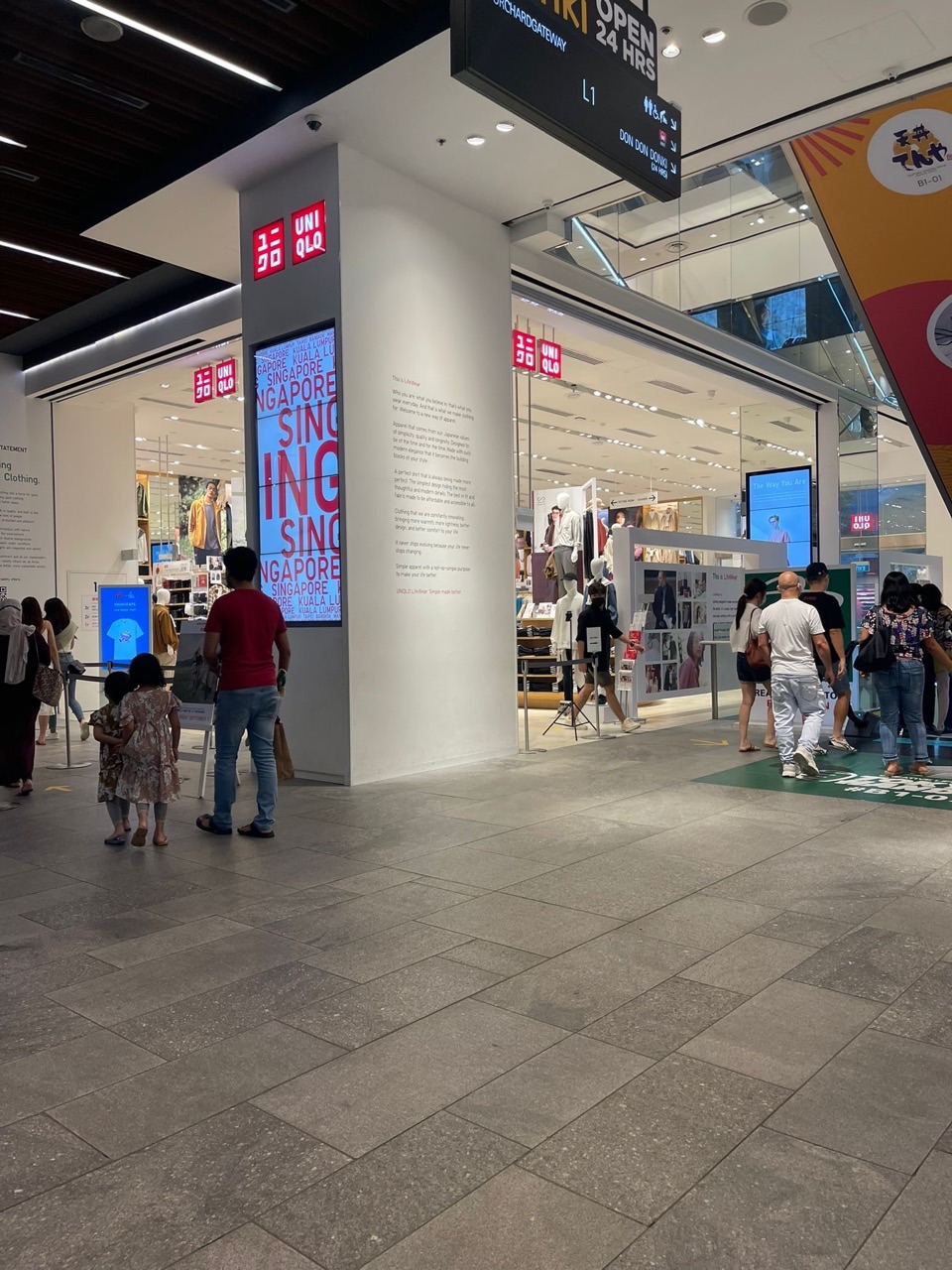
Featured photograph: shoppers at 313@somerset on Orchard Road, Singapore, used as shopping context. It does not establish that an individual pictured person qualifies for an IRAS tax refund. Part of The Gold Standard | eduKate Singapore and the Sectors and Services Directory. The actual IRAS scheme, Customs checks and authorised refund records govern eligibility; this is educational public-service analysis, not a claim approval.