
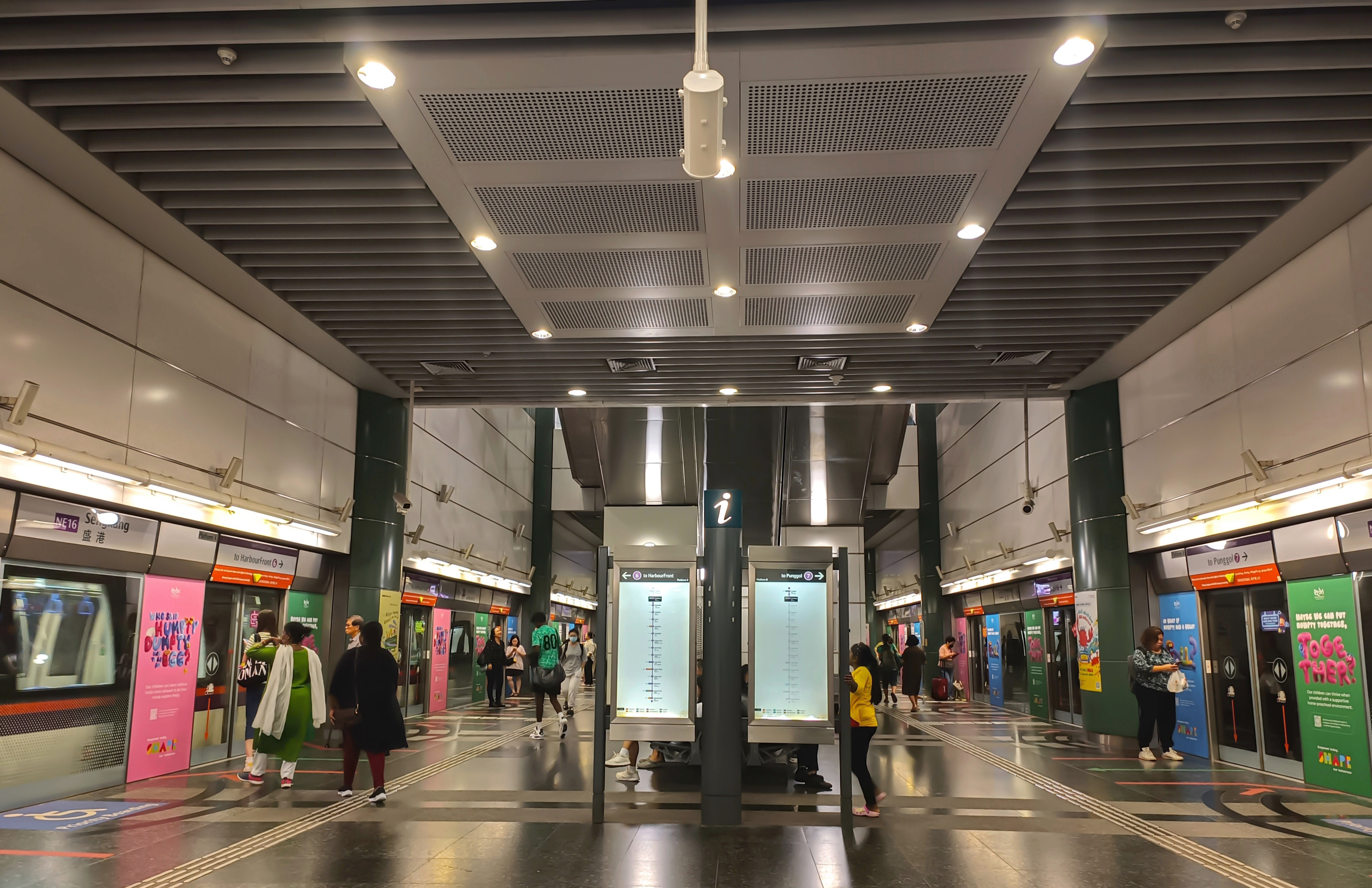
The best free things to do in Sengkang include walking through Sengkang Riverside Park, observing its constructed wetland and fruit trees, and enjoying the river views from appropriate public paths. For an indoor day, Sengkang Public Library in Compass One is a useful family destination near Sengkang MRT. The essential planning detail is that Sengkang Riverside Park has three different plots: the Visitor and Mangrove plots are approached from Kupang LRT, while the Civic plot is approached from Farmway LRT.
Sengkang is especially good for families who enjoy a short outing that connects nature, neighbourhood life and learning. Yet a ‘Sengkang park’ search does not always tell you which entrance to choose, how far to walk or whether an advertised activity is paid. This guide explains the differences between an easy riverside visit, a longer cycling route, an indoor library plan and organised sports. It also distinguishes accessible paths from the pond areas, which NParks lists as not wheelchair accessible.
- Best free outdoor highlight: Sengkang Riverside Park’s river, constructed wetland and fruit-themed boardwalk.
- Choose the right LRT: Kupang for the Visitor or Mangrove plot; Farmway for the Civic plot.
- Best family nature activity: watch mangrove birds and dragonflies without leaving designated public paths.
- Best larger viewpoint: Sengkang Riverside Bridge, a 290-metre crossing described by NParks.
- Best indoor rainy-day alternative: Sengkang Public Library across two levels of Compass One.
- Best active choice: cycling on permitted trails or a booked sports activity, according to the relevant provider.
- Important park rules: fishing is prohibited in Sengkang Riverside Park; the pond areas are not wheelchair accessible.
- Build a small itinerary around one park section, one rest or food stop and a practical return route.
For the wider estate and other possibilities, see Things to do in Singapore | Sengkang. This companion article is designed for people looking for a concrete plan, not merely a long catalogue of names.
1. Sengkang Riverside Park: three plots, one important planning decision
Sengkang Riverside Park covers 21.3 hectares at the junction of Anchorvale Street and Sungei Punggol. NParks describes a constructed wetland, mangrove birds, fruit trees and a prominent bridge. The park is open 24 hours, although visitors should still judge daylight, weather and path conditions for their chosen activity. Its location on the North Eastern Riverine Loop and Round Island Route makes it appealing to walkers and cyclists.
The most important practical fact is that the park has a Visitor plot, a Mangrove plot and a Civic plot. NParks directs visitors to Kupang LRT for the Visitor or Mangrove plots and to Farmway LRT for the Civic plot; both are described as approximately five-minute approaches from the relevant station. A visitor who selects the wrong LRT stop may face an unwanted detour, particularly with a stroller or an elderly relative.
Choose the plot first and the station second. Ask which feature matters most: nature observation, a shorter waterfront walk or a connection to nearby facilities. Use NParks’ official Sengkang Riverside Park page as the primary starting point for routes, accessibility and park rules.
2. What makes a constructed wetland interesting?
NParks describes Sengkang Riverside Park’s man-made wetland as one of the largest constructed wetlands in Singapore. It supports birdlife, damselflies and various plants. This is a useful place to correct a misunderstanding: the word ‘natural’ does not always mean an environment was never designed by people. A constructed habitat can be deliberately arranged to create useful conditions for plants and animals.
The experience is enjoyable because different scales are visible together. A child may see open water, nearby vegetation and an insect hovering over the path. An adult may notice how a managed wetland sits near roads, public housing and transport routes. Both observations belong to the same story of a town designed to include green space.
Stay on public paths and do not enter wetlands or pond areas. Observation does not require touching roots, catching insects or crossing a barrier. Invite children to describe what they see and ask why certain plants grow in wet ground. The aim is curiosity supported by evidence, not a scavenger hunt that disturbs the habitat.
3. Fruit-themed boardwalk and more than twenty kinds of fruit trees
NParks lists over twenty species of fruit trees in Sengkang Riverside Park, including mango, starfruit, longan, tamarind and white dragonfruit. The park’s fruit-themed boardwalk is an appealing way for families to connect familiar food words with the living plants from which those foods originate. A fruit may be easy to recognise on a plate but surprisingly unfamiliar when seen growing.
Ask children how a mango tree differs from a longan tree. They may notice leaf shape, canopy, trunk or branching. If a tree has no fruit at the time of the visit, that is not a problem; it creates a question about seasons, growth and how a plant develops. The most important rule is to look, not pick or taste anything from public planting.
This is a particularly good outing for developing language. Words such as ‘wetland’, ‘canopy’, ‘seed’, ‘species’ and ‘observation’ become meaningful when attached to objects or experiences. A parent can model one complete sentence—’The plant has broad leaves beside the wetland’—and invite the child to add a detail. Learning feels natural when it begins with something actually seen.
4. Sengkang Riverside Bridge: a view and a connection
NParks describes Sengkang Riverside Bridge as a 290-metre structure connecting the park’s banks and Punggol Reservoir, with elevated views of the surroundings. The bridge is a useful viewpoint for families who enjoy observing how a river, public paths and built infrastructure relate. It is also a place where an apparently simple crossing can become more exposed to wind and weather than the paths under trees.
From a safe public position, ask why bridges are important in a town divided by waterways. Without crossings, people may need longer journeys to reach the same destination. Bridges create convenience but must also provide sufficient width, barriers, maintenance and safe approaches. A child who sees a bridge as more than a photograph is learning to read the built environment.
Keep children away from railings and do not block narrow sections for photographs. During lightning or severe rain, move toward a substantial building rather than lingering on an exposed crossing. A scenic bridge should be enjoyed under appropriate conditions, not treated as an obligation to complete regardless of the weather.
5. Birdwatching at Sengkang Riverside Park
NParks highlights mangrove birds such as Purple Heron, Little Tern and Collared Kingfisher as possible sightings. The park also supports damselflies and dragonflies, including species whose colours can be striking. None of these should be promised as guaranteed sightings. Animals move according to habitat, weather and their own behaviour, so a visit may offer different experiences on different days.
The best practical technique is to stop walking for a moment, listen and scan the edge of vegetation. Ask a child to notice the difference between a bird resting, searching for food or flying across an open space. Use binoculars if the family owns a pair, but do not make special equipment a condition of enjoying the outing.
Do not feed birds or enter planted areas to get closer. Photography is enjoyable, but a living animal’s comfort matters more than an image. If a bird moves away from the group, step back instead of following. These small habits protect the park for residents and wildlife alike.
6. Fishing is not allowed: a fact families should know
The presence of water does not automatically make a place a fishing ground. NParks specifically states ‘Do not fish’ in its Sengkang Riverside Park visitor rules. This is an important detail because many park guides focus on the view and omit restrictions. Families should not arrive with fishing gear and assume they can cast from any convenient bridge or bank.
Fishing rules differ across Singapore’s reservoirs, rivers and designated fishing locations. The correct approach is to use PUB or the responsible park agency’s published information for a specific permitted site. Do not infer permission by observing somebody else holding a fishing rod. An unauthorised activity remains unauthorised even if others appear to be doing it.
For a child who asks why fishing is restricted, offer a useful question: what other purposes does the park serve? Wildlife habitat, shared paths, water management and public safety all interact. Understanding the reason behind a rule is more helpful than treating the sign as an arbitrary obstacle.
7. Accessibility: why the pond areas are the exception
NParks marks Sengkang Riverside Park as wheelchair accessible but adds a precise exception: only the pond areas are not wheelchair accessible. This illustrates why a general accessibility label is never enough for planning. A park can offer suitable paths in many places and still have an area that some people cannot use comfortably or safely.
Families travelling with a stroller, wheelchair or mobility aid should choose the accessible plot and route deliberately. Check the approach from Kupang or Farmway LRT, the location of toilets, the availability of seating and the distance to a sensible turnaround point. Do not assume that a photo of a boardwalk reveals the entire route’s surface and slope.
An inclusive outing does not mean everybody must cover the same distance. It means people can participate comfortably and choose what they enjoy. A shorter accessible section with water views may be better than a longer route that excludes one relative. Ask the person concerned what works for them instead of making a decision based only on an online accessibility icon.
8. Kupang versus Farmway LRT: make the map useful
People searching for Sengkang Riverside Park often ask which LRT station to use. The answer is not one universally best station. Kupang serves the Visitor and Mangrove plots, while Farmway serves the Civic plot. These are different starting points for different goals. Before departure, identify the intended part of the park and choose the route that serves it.
This is particularly important when several family members are arriving separately. Saying ‘meet at Sengkang Riverside Park’ is too vague for a large site. Agree on the LRT station, a specific exit or a recognisable public feature. If somebody’s phone has low battery, make the meeting place simple enough to remember.
For school-age children, planning this journey is a practical lesson in reading routes. Give them the park map and ask which station they would choose for a mangrove observation visit. They can explain their choice and compare it with a possible route for the Civic plot. This turns a transport detail into spatial reasoning.
9. Sengkang MRT, LRT and the town centre
Sengkang MRT on the North East Line connects with the Sengkang LRT network and the surrounding town centre. For a first-time visitor, this means the journey may involve both an MRT ride and a short LRT connection depending on the destination. The park’s plot-specific approach should be planned as a real journey, not guessed from the fact that Sengkang MRT appears on the broader park information.
The town centre also offers food, retail and public services. A family can choose to make Compass One the meeting point and then travel onward, or use the LRT to reach the park directly from a more convenient station. What matters is a clear route and a return option, especially during hot or wet weather.
Ask older children to read the line and station names before leaving. Encourage them to distinguish a transfer from an exit. These are small skills, but they build the confidence to travel thoughtfully and reduce the number of last-minute decisions adults must make during the outing.
10. Sengkang Public Library: a calm indoor alternative
Sengkang Public Library is situated in the Compass One shopping mall, across levels three and four. Official public information confirms that the library expanded during its 2017 revamp and continues to serve the growing neighbourhood. It is an attractive indoor option for parents who want a meaningful outing without requiring outdoor conditions to cooperate.
Let a child browse at their own pace. Some may prefer stories, others books about nature, transport, animals or crafts. A visitor who has been to Riverside Park might enjoy finding a book about wetlands or birds, but the activity should not feel like a compulsory extension of school. The freedom to choose makes a library outing worthwhile.
Individual programmes, study spaces and borrowing conditions follow NLB’s current arrangements. Verify opening and event details before travelling for a particular class. The building’s location near Sengkang MRT and retail facilities makes it convenient for a meal or errands, but the library is worth visiting as a destination in its own right. National Library Board’s official library information.
11. Compass One: shelter, food and a meeting point
Compass One at 1 Sengkang Square offers shopping and food facilities alongside the public library. For an outdoor-first itinerary, it can be an indoor fallback if rain develops or the group needs to rest. For a rainy-day plan, it may be the primary destination. Avoid promising a specific tenant or promotion without checking the current store directory.
A family with preschoolers may choose to read and have a simple meal, while teenagers might enjoy browsing or meeting friends within agreed boundaries. Neither activity requires treating shopping as a compulsory purchase. The building is useful because it provides choices and a predictable place to meet near the town’s transport network.
Separate the idea of ‘free access’ from ‘everything is free’. Walking through a mall is different from paying for entertainment, food or a class. If the family wants a low-cost outing, decide what purchases are planned before leaving home. That small conversation can prevent a relaxing afternoon from turning into constant negotiation.
12. Sengkang Sports Centre and booked activities
Sports facilities in the Sengkang and Anchorvale area add another category of things to do. Residents and visitors may consider swimming, sports lessons or other active recreation, subject to the specific venue’s schedule and availability. These should not be treated as guaranteed walk-in activities merely because the building appears on an online map.
Before promising a child a swim or a sports session, check the current operator’s facilities, maintenance closures, booking rules, admission charges and supervision requirements. A scheduled activity is different from an ordinary free park walk. The clearest plan makes that distinction before the family arrives at the gate.
For active families, a sport-specific visit may be the better choice than adding a river walk afterwards. Swimming and exercise can be tiring, especially for young children. Leave space for a meal, rest and the trip home. An outing is more enjoyable when every activity has enough time to be appreciated.
13. Cycling along permitted riverside routes
Sengkang Riverside Park is part of the wider Park Connector Network, including links relevant to the Round Island Route. NParks lists cycling and inline skating as activities at the park. These connections are attractive to experienced cyclists, but that does not mean every natural area, bridge or pedestrian space is unrestricted. Follow local signs, dismount where required and use shared paths respectfully.
For beginners, a short out-and-back route is better than a grand attempt to cover several towns. Check bicycle size, brakes, helmet fit, path conditions and a safe turning point. A family should know where it will finish and how it will get home if somebody becomes tired. Do not rely on an old route video when park works or diversions can change.
Teach children that a bicycle does not automatically have priority over people walking. Slow at crossings and near crowds. If the aim is a peaceful wetland observation visit, walking may be the more appropriate way to enjoy it. Cycling and birdwatching can both be good outings, but they have different rhythms.
14. A short outing with young children
A preschool child may enjoy seeing a dragonfly or watching water from a safe path for only a short time. That is enough. Choose the park plot nearest the intended feature and build in opportunities to stop. A child who is tired, thirsty or hungry will not become more interested because an adult insists that a famous boardwalk must be reached.
Explain the plan in simple terms before leaving: ‘We will take the LRT, walk beside the river and look for birds, then return for lunch.’ A clear sequence reduces uncertainty. Adults should keep children away from steep water edges and maintain supervision on bridges, wet paths and open spaces.
If the weather is unsuitable, substitute a library visit instead of forcing the outdoor outing. Small children do not need a long itinerary to have a good day. A gentle shared experience can create a positive relationship with public parks and encourage future exploration.
15. A visit for primary pupils and teenagers
Primary children can record three observations and one question. At the wetland, they might notice insect colours, tree shapes or the difference between river and pond. Ask them to make a sentence that uses a precise noun and a useful verb. For example: ‘The dragonfly hovered beside the reeds.’ Such language grows more naturally through experience than through memorised word lists alone.
Teenagers can take on planning responsibilities. Ask them to choose between Kupang and Farmway, check weather conditions and identify a route that will not enter inaccessible pond areas for a wheelchair user. They can explain their decisions and revise them after comparing the official map with the family’s actual needs.
An older student may also investigate the constructed wetland as an example of urban design. What functions does a wetland serve? Who maintains it? How can visitors benefit without harming the habitat? The most interesting response will often connect ecological, civic and practical considerations rather than giving a single textbook definition.
16. A comfortable outing for seniors or mobility-limited visitors
Some visitors are delighted by a long walk. Others want a short stretch of greenery and a place to sit. Sengkang Riverside Park can support both types of experience when the route is chosen carefully. NParks’ wheelchair accessibility statement comes with the pond-area exception, and the different plots mean that an unsuitable entrance may add unnecessary travel.
Choose a section with a clear return path and keep water, shade and toilet availability in mind. Discuss whether a brief walk followed by a meal or library visit is preferable to a longer outing. An elderly relative’s enjoyment may come from conversation and fresh air rather than from reaching a particular distant viewpoint.
If anybody uses a mobility aid, inspect step-free approaches and current notices in advance. Do not interpret a general park description as a guarantee that every slope or boardwalk is comfortable. An inclusive itinerary protects the independence and dignity of all members of the group.
17. Free outings and the costs that can quietly appear
Ordinary public access to a park does not require a ticket. A family can visit Sengkang Riverside Park, observe birds and enjoy the scenery with little spending beyond transport. However, a day can become more expensive when it includes dining, rented equipment, special sports activities, parking or repeated small purchases.
Decide whether the main outing should be free-first or a planned paid activity. If it is a free-first day, choose the river walk and pack drinking water. If it is a sports session, make the booking central and avoid pressuring the family to squeeze another activity in. Clear expectations matter more than chasing the lowest possible total.
Children can practise budgeting without being made anxious about money. Give them a simple choice between two affordable meal plans or explain why the family has decided to enjoy a park instead of buying tickets. A free outing is not an inferior outing: it can provide exercise, discovery and time together.
18. Rain, lightning and the right backup plan
Riverside paths and exposed bridges can become unsafe during thunderstorms. If lightning threatens, stop outdoor recreation and seek substantial shelter. Do not stand under a tree, linger on a bridge or assume a small open shelter provides the same protection as a proper building. Wet ground and reduced visibility also make cycling and walking more demanding.
A good weather backup is one you would genuinely enjoy even if the park is cancelled. Sengkang Public Library and food at Compass One can form a satisfying outing. Check the library’s latest details and choose one quiet purpose for the visit. It may be a reading session rather than an elaborate programme.
If conditions improve, decide whether a short outdoor walk is still sensible. Do not feel bound to complete an itinerary prepared in the morning. The ability to change plans safely is one of the most valuable habits a family can demonstrate to children.
19. What Sengkang teaches about a modern town
Sengkang’s landscape connects newer residential development with river corridors, public transport and green space. A person walking through Riverside Park can ask how planners place nature near housing without allowing all parts of the natural environment to be used for every activity. The constructed wetland and no-fishing rule offer different aspects of the same answer: public resources require thoughtful management.
At the library, children can see another shared resource at work. Books, quiet spaces and learning programmes are organised so residents of many ages can benefit. At the LRT, they can observe how local transport extends the reach of an MRT interchange. These are examples of a town as a system rather than a collection of unrelated buildings.
Connect one observation from each setting. A park path helps people move through greenery; the LRT helps them reach the park; the library gives another destination when the weather changes. The connection is more useful than memorising separate facts about each building.
20. Leave the wetland and shared paths as you found them
Good visitors protect the experience for the next family. Stay on designated paths, do not fish, feed wildlife, release animals or collect plants. If a child sees an interesting insect or seed, suggest photographing or sketching it rather than removing it. Such small habits allow urban nature to remain attractive and functional over time.
Be considerate of others. A group taking photographs should not block a bridge, and cyclists should slow around walkers and children. Quiet observers should not have to compete with loud music for a chance to hear birds. Public places work when nobody behaves as though their private activity is more important than everybody else’s.
The most satisfying Sengkang outing is often modest: a walk through one plot, a conversation about a bird or fruit tree, and a comfortable journey home. That leaves plenty to discover on the next visit, with different family members or in another season.
Four Sengkang itineraries for different needs
The free one-hour or two-hour nature outing
Choose Kupang LRT for the Visitor or Mangrove plot. Take a manageable walk, observe wetland plants and possible birds, then return by a clear path. Do not enter pond areas or fish.
The family bridge and fruit-tree outing
Select a suitable riverside section and enjoy views from public routes. Point out fruit trees and discuss the different plant names. End early if children are tired rather than adding a sports session.
A rainy-day book and meal visit
Make Sengkang Public Library at Compass One the main destination, with a meal nearby. Check NLB opening and programme arrangements. This plan works without waiting for the park to dry.
A planned active half-day
Choose cycling or a booked sports activity as the anchor, verify the rules and operator hours, and let the rest of the day remain flexible. A successful activity does not need an additional long walk.
Frequently asked questions about Sengkang
What are the best free things to do in Sengkang?
Visit Sengkang Riverside Park for river views, wetlands, fruit trees and short nature walks.
Which LRT should I take to Sengkang Riverside Park?
Use Kupang for Visitor and Mangrove plots or Farmway for the Civic plot, according to NParks.
Is Sengkang Riverside Park free?
Ordinary public park entry is free; transport, food, paid sports facilities and special activities are separate expenses.
Is the park open at night?
NParks lists it as open 24 hours. Choose safe lighting and conditions for the particular route.
How big is Sengkang Riverside Park?
NParks lists the park at 21.3 hectares.
How long is Sengkang Riverside Bridge?
NParks describes the bridge as 290 metres.
What wildlife can we see?
Possible sightings include herons, terns, kingfishers, damselflies and dragonflies. None are guaranteed.
Are there fruit trees in the park?
Yes. NParks reports over twenty types, including mango, starfruit, longan, tamarind and dragonfruit.
Can I fish in Sengkang Riverside Park?
No. NParks expressly prohibits fishing within Sengkang Riverside Park.
Is the park wheelchair accessible?
NParks lists it as accessible, with pond areas excluded. Plan a specific suitable route.
Can families cycle there?
Cycling and inline skating are listed activities on suitable routes. Obey park signage and shared-path etiquette.
Where is Sengkang Public Library?
In Compass One shopping mall, across levels three and four, near the town’s transport interchange.
What can we do in Sengkang when it rains?
Sengkang Public Library and suitable indoor food or retail facilities at Compass One are practical options.
Where is Compass One?
At 1 Sengkang Square, beside Sengkang MRT and LRT connections.
Are swimming and sports free?
Do not assume so. Individual sports facilities and programmes have their own admission, booking and maintenance conditions.
What is best for toddlers?
Choose a short accessible park section or a relaxed library visit with toilets, seating and an easy return.
Is Sengkang Riverside Park suitable for seniors?
Yes for suitable routes; account for surface, distance, rest points and the inaccessible pond areas.
What should I bring?
Water, comfortable shoes, weather protection, a charged phone and a clear meeting and return plan.
What can secondary students learn here?
Constructed wetlands, urban biodiversity, river crossings, public transport planning and the rules of shared spaces.
Where can I check current park changes?
Use NParks for park notices, NLB for the library, and the relevant sports operator for bookings.
Continue exploring Sengkang with eduKateSG
- Things to do in Singapore | Sengkang
- Sengkang Riverside Park | Kupang or Farmway LRT?
- Sengkang West LRT Loop | Half-Day Itinerary
- History of Singapore | Sengkang
- Interesting Places near Sengkang MRT
Official information and update note
Checked 6 November 2026. The park’s three-plot access, opening times, 21.3-hectare size, 290-metre bridge, fruit trees, accessibility exception and no-fishing rule come from NParks: Sengkang Riverside Park. For the library use NLB and for facility programmes check the relevant operator. Current on-site signs and agency advisories override any static article.