
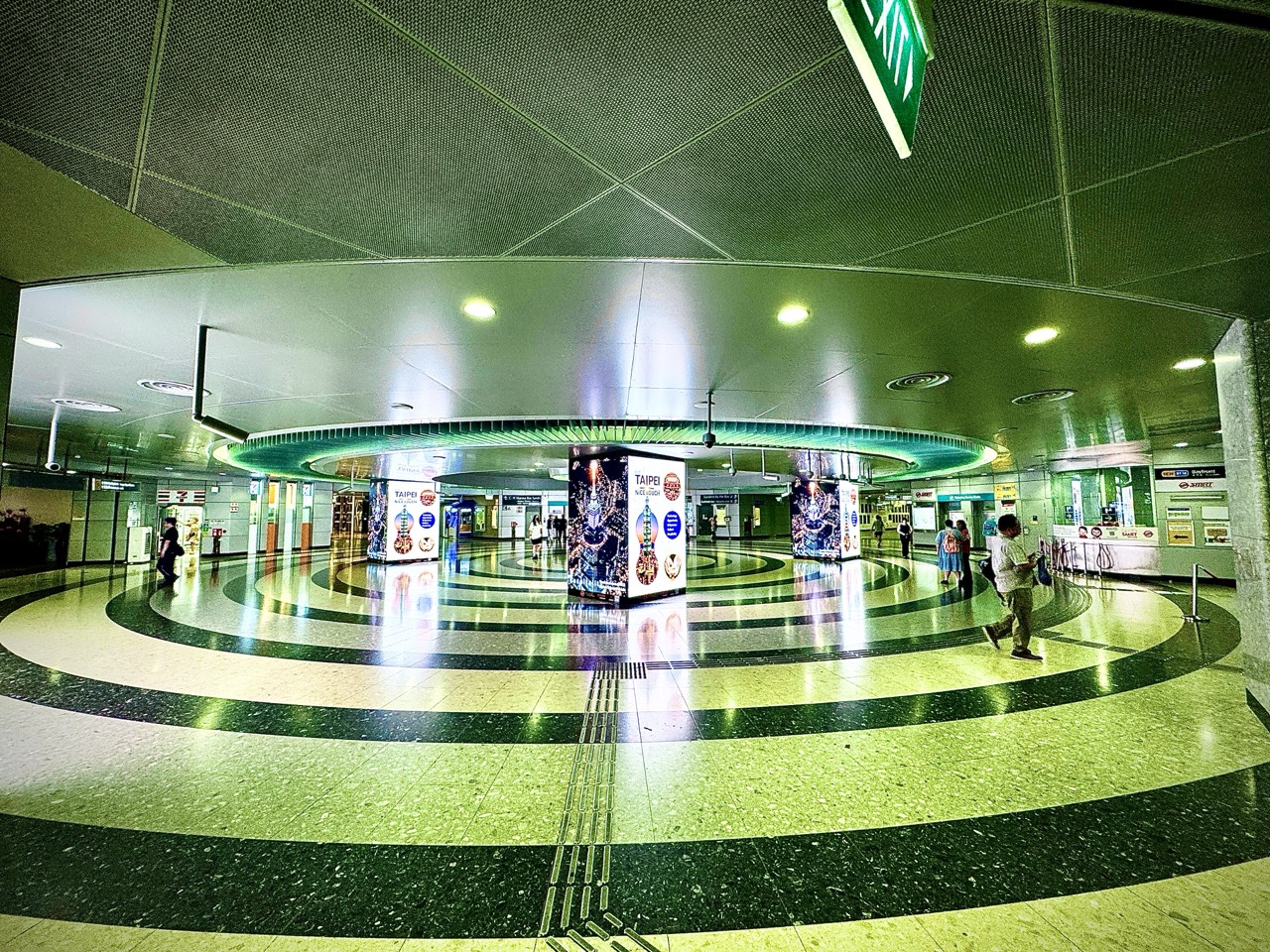
Things to do near Bayfront MRT for free: cross from Exit B into the outdoor Gardens by the Bay, visit the Supertree Grove, enjoy Garden Rhapsody at 7.45pm or 8.45pm on ordinary evenings, walk the Marina Bay Sands waterfront and see the free Spectra light-and-water show at the Event Plaza. Bayfront (CE1/DT16) connects the Circle and Downtown Lines. The outdoor gardens and waterfront offer a rewarding family evening without a conservatory ticket, observation-deck ticket or luxury dinner.
For a simple evening, choose one show as your anchor. A garden-first visit is Bayfront MRT Exit B → Dragonfly or Meadow Bridge → Supertree Grove → Garden Rhapsody, then return with the weather and crowds in mind. A skyline-first visit is Bayfront exits C or D → Marina Bay Sands waterfront → Spectra at Event Plaza. Combining both can be enjoyable if you allow substantial walking and waiting time, but they are separate show locations. Important 2026 change: Christmas Wonderland operates 27 November 2026–3 January 2027 with ticketed event areas, so a normally free Supertree Grove viewpoint may be affected. The operator identifies alternative free viewing areas for non-ticket holders.
Quick answers:
- Station: Bayfront CE1/DT16, Circle Line branch and Downtown Line interchange.
- Gardens by the Bay: Exit B, underground linkway, then Dragonfly or Meadow Bridge.
- Marina Bay Sands and Spectra: exits C/D for The Shoppes and waterfront Event Plaza.
- Garden Rhapsody: normally 7.45pm and 8.45pm, free show; festive schedules and viewing access differ.
- Spectra: free approximately 15-minute light-and-water show at Event Plaza; check current showtime listing.
- Outdoor gardens: typically 5am–2am daily, with event-specific restrictions.
- Paid extras: Flower Dome, Cloud Forest, OCBC Skyway, Supertree Observatory, SkyPark Observation Deck and most museum exhibitions.
- Important festive dates: Christmas Wonderland 27 Nov 2026–3 Jan 2027; do not assume all normal free viewpoints remain open without tickets.
First decision: do you want gardens, skyline or both?
Bayfront is one station serving two very different visitor experiences. To one side are the outdoor landscapes and conservatories of Gardens by the Bay. To another are the Marina Bay Sands towers, The Shoppes, ArtScience Museum, Event Plaza and waterfront promenade. Both are impressive; neither side is made easier by choosing the wrong exit or trying to visit everything in an hour.
Choose the day according to people rather than a list. Families with preschoolers may prefer one free show and an early return. Adults who enjoy photography may want a longer dusk-to-night walk. A visitor with limited mobility may prioritise a sheltered approach and one convenient place to sit. Someone carrying shopping bags may find a multi-kilometre outdoor circuit much less attractive than it appeared online.
| Visitor priority | Choose | Keep in mind |
|---|---|---|
| Free plants and Supertrees | Exit B | Outdoor distances and weather |
| Waterfront skyline photographs | Exits C or D | Crowds around Event Plaza |
| Evening light show | One of Garden Rhapsody or Spectra | Different places and times |
| ArtScience Museum exhibitions | Exit D | Ticketing and operating hours |
| Special conservatory experience | Exit B via Gardens | Paid admission and maintenance |
The most useful itinerary starts with a single outcome: see a free show, learn something about plants, experience the skyline, or attend a particular booked attraction. Once that decision is made, the station exit and the route become much clearer.
Which Bayfront MRT exit should you take?
Bayfront is CE1/DT16. Marina Bay Sands identifies Exit B with Gardens by the Bay and exits C/D with its shopping and waterfront attractions. The Gardens operator says to follow the underground linkway from Exit B, emerge and cross either Dragonfly Bridge or Meadow Bridge into the Gardens. For the Event Plaza, Marina Bay Sands says exits C/D connect to the property, then follow the waterfront signs.
Do not assume that a building visible above ground is best reached by walking directly towards it across an open plaza. Large integrated developments have several controlled connections, roads and ramps. Follow current station wayfinding to the specific venue. If you are meeting another family, name a precise public landmark, not simply “Bayfront exit”, because people can leave through different sides and end up far apart.
ArtScience Museum’s operator specifies Bayfront Exit D as the preferred approach and estimates a seven-minute walk from there. The same source gives longer estimated paths from other exits, a useful reminder that choosing the right exit changes how the journey feels. These timings are indicative, not promises for a stroller, mobility aid or a crowd.
For night visits, plan your return route before the show starts. Crowds can be significant immediately after a popular performance, and families can end up walking the wrong way when trying to avoid a queue. A short pause before returning to the station may be more comfortable than joining the first rush.
For detailed exit orientation, use eduKate’s Bayfront MRT station guide and the Marina Bay Sands official directions.
Free stop 1: Dragonfly Bridge, Meadow Bridge and the arrival landscape
Arriving from Exit B, you cross into the landscape of Gardens by the Bay by one of the signed pedestrian bridges. The transition is a valuable part of the visit. A few minutes earlier, you were underground among trains, escalators and advertisements. Now the view opens to water, plants and unusually shaped structures. Children often enjoy that contrast even before reaching a named attraction.
Stop briefly at a safe viewing point to identify features: the bridge, its supports, the planted banks, signs guiding visitors and the taller Supertrees in the distance. Ask why a city garden needs bridges. They can separate walking routes from water, protect parts of a landscape and help people move between zones. These are simple everyday engineering questions worth considering without turning the outing into a lesson plan.
Do not stop where you block cyclists, other pedestrians or the bridge approaches. Weather matters because the bridges are outside. If rain starts or lightning is nearby, find appropriate shelter rather than waiting on an open bridge. A waterfront view can be beautiful and still be an unsuitable place to remain during a storm.
The gardens are extensive. You do not need to reach every feature on the first visit. The natural starting point for a short walk is the part of the outdoor gardens closest to your chosen bridge. Even a 20-minute stroll can feel worthwhile if you pay attention to the vegetation, views and atmosphere.
Gardens by the Bay’s official train directions explain the bridge routes and the alternative Thomson–East Coast Line entrance via Gardens by the Bay MRT.
Free stop 2: Supertree Grove and vertical gardens
Supertree Grove is one of the recognisable sights of modern Singapore. The Gardens operator says that 12 of its 18 Supertrees are located in the Grove and that structures can rise to approximately 50 metres. They are not simply decorative towers: planting around their vertical forms is part of an unusual botanical display, with ferns, orchids, bromeliads and other plants.
The free visitor experience includes standing in appropriate public areas and observing the structures from below, when no ticketed event changes access. The OCBC Skyway and Supertree Observatory are separately ticketed elevated experiences. Do not confuse free admission to the Grove with free access to the walkway high among the trees. A photograph taken from above may have been made at a paid attraction.
Children can identify the difference between a conventional tree and an engineered structure designed to support plants. Ask where the vegetation grows and what kind of support it requires. A teenager might ask why designers chose to make plants visible on vertical surfaces rather than only at ground level. The answer involves a mixture of display, landscape design, maintenance and visitor experience; it is not enough to say “because it looks futuristic”.
Supertree Grove is listed as open from 5am–2am daily, with the ordinary lights switched off around 11.30pm, but special events may alter entry or zones. Those operating details do not mean every elevated attraction stays open throughout the night. Read the current Supertree Grove visitor page.
If visiting with a preschooler, choose a viewing point that avoids long standing or a rushed return. The grove’s scale can be appreciated without immediately joining a queue for the Skyway.
Garden Rhapsody: showtimes, cost and a November 2026 warning
Garden Rhapsody is the free light-and-music show associated with the Supertrees. The ordinary daily times are 7.45pm and 8.45pm. From 1–26 November 2026 the Gardens lists the programme Garden Waltz. The Christmas Special is scheduled from 27 November 2026 to 3 January 2027, with additional shows on selected dates. These differences matter for visitors who read outdated “same show every evening” descriptions.
Free admission to the light show does not always mean unrestricted access to the usual central viewing area. During Christmas Wonderland, 27 November 2026–3 January 2027, ticketed event spaces cover the Supertree Grove and Meadow. Gardens by the Bay expressly tells non-ticket holders to use vantage points at World of Plants for the light show. A family should not arrive at the usual spot during the festive event and assume it will be accessible without buying tickets.
The operator lists extra 9.35pm shows during 27 November–11 December and 31 December–3 January, with additional 7.10pm and 9.35pm sessions on 23–27 December. Because this schedule is date-dependent, check the official Garden Rhapsody page instead of repeating a timetable from an old social-media post.
Arrive with time to reach the permitted viewing area without rushing. Choose a sensible place where children can see without having to stand on furniture or crowd barriers. If the weather is unsafe, reschedule or use a different sheltered outing. Missing a free show is less important than remaining safe in a storm.
Enjoy the music but remember that the performance is a public shared experience. Keep paths clear for other visitors and avoid projecting your own sound over the programme.
Free stop 3: World of Plants, Dragonfly Lake and outdoor gardens
It is easy to treat Gardens by the Bay as a single backdrop to a light show. In fact the outdoor landscapes contain several zones designed around plants, water, culture and ecology. World of Plants, Heritage Gardens and the lakes are useful options for a free visit when the public paths are open. The Gardens lists outdoor garden opening hours generally from 5am to 2am, but access to some areas can vary during private or ticketed events.
A quieter route can include a short walk around planted areas before the evening crowds gather. Read an interpretive sign, identify one unfamiliar plant and observe how the landscape changes between open areas and shaded paths. There is no need to walk the entire site to appreciate it. Visitors looking for peace may be happier choosing a small zone than standing with hundreds of people at a single famous photo point.
For children, the landscape is an opportunity to distinguish living organisms from artificial structures. A Supertree is engineered; the plant growing upon it is alive. A lake is part of a designed garden, yet it supports living systems. Ask what visitors can observe directly and what would need scientific measurement. It is a small but important difference between curiosity and evidence.
Keep to public paths and avoid disturbing planting or wildlife. Do not enter water features or step into planting beds for photographs. Wear suitable footwear and use insect protection where appropriate. During heavy rain, move away from open water and exposed areas. The goal is to enjoy a living landscape, not complete every metre of it.
For up-to-date opening and closure notices, consult the Gardens opening-hours page.
Free stop 4: Active Garden and family-friendly public space
Gardens by the Bay also has an Active Garden and PropNex Family Zone, a free landscaped community area with play and recreational elements. The operator highlights an inclusive themed playground, outdoor fitness equipment, interactive musical features and a community edible garden. It gives families a different reason to visit the Gardens beyond watching the Supertrees.
This zone is not necessarily immediately next to the part of the Grove where you intend to watch a light show. Check the park map and decide whether the walk is sensible for your group. The published opening hours are generally 5am–2am, but equipment and facilities may be subject to closures and safe-use limits. A general area being open late does not mean every playground feature is appropriate for a toddler in darkness.
Parents can set one simple goal: allow the children time to explore a suitable play area, then leave while the group is still comfortable. Do not treat the active zone as an obligation to visit if your day is already full of bridges, light shows and dinner. Time spent playing is valuable without needing to be combined with every nearby attraction.
The community garden also invites questions about where food comes from, how plants use water and why shared public space needs rules. Children may respond to a smell, leaf shape or musical feature. Instead of reciting scientific terms, ask the child to say what they noticed and why it surprised them.
See the official Active Garden and Family Zone page. It describes facilities and gives current access information.
Marina Bay Sands waterfront: a separate free skyline experience
On the Marina Bay Sands side of the station, the waterfront promenade offers views of the bay and the city skyline. This is the natural choice for visitors who want wide photographs of buildings, reflections and changing light near sunset. It is not the same place as Supertree Grove. Choosing the correct side of the station prevents an unnecessary round trip through the underground connections.
For this route, use Bayfront exits C/D towards The Shoppes and follow the operator’s signs to the Event Plaza and waterfront promenade. The wide public area is especially popular around showtime. Find a place to stand that does not block entrances, circulation routes or an accessible passage. A camera tripod, large bag or group photo can inconvenience others if positioned in the middle of the promenade.
Try looking at how the skyline changes before and after dusk. In daylight, the outlines and materials of buildings are easier to read. At night, reflections and lighting change their appearance. A child can describe that difference using precise words such as silhouette, reflection, pattern and scale. A teenager can ask why urban architecture is often lit in particular ways and how a waterfront public space helps visitors experience it.
There is no requirement to buy food or go into a hotel to enjoy the public waterfront. The hotel’s guest-only facilities and some observation areas have different access rules. Do not suggest that a free promenade walk gives access to the famous Infinity Pool or the SkyPark Observation Deck. These are separate experiences with specific eligibility or tickets.
Spectra: the free light-and-water show at Event Plaza
Spectra is Marina Bay Sands’ free light-and-water show at the Event Plaza. The operator describes a roughly 15-minute outdoor performance combining fountain effects, music, light and projections. Its regular timetable has been listed as 8pm and 9pm, with an additional 10pm show on Fridays and Saturdays. Operating details may change around major events and temporary closures, so check the current Spectra official page close to your visit.
The important practical distinction is that Spectra takes place on the waterfront side of Marina Bay Sands, while Garden Rhapsody takes place at Gardens by the Bay. If you have a small child or only an hour, choose one show. A plan to view both should include time for the journey between them, crowds gathering, and the return to the MRT.
A family can use the show as the anchor of a low-cost evening. Arrive, see the bay, watch the programme and head home. This avoids long queues and unnecessary spending. The challenge is usually not ticketing—it is finding an appropriate standing place and staying comfortable in a busy outdoor environment.
Before the show, explain the difference between a live fountain-based presentation and a video displayed on a screen. Ask children what makes water appear to move in patterns, and how sound and timing shape the experience. They can observe synchronisation without pretending to know the full engineering behind it.
During lightning or heavy rain, safety comes before the performance. Event management and onsite notices override a previously published schedule. A free show should never require guests to ignore a safety announcement.
Ticketed extras: how to tell what your money buys
Visitors searching “free things to do near Bayfront MRT” frequently see recommendations for the Flower Dome, Cloud Forest, OCBC Skyway, Supertree Observatory, ArtScience Museum and SkyPark Observation Deck. These can be worthwhile, but they are not interchangeable with the free outdoor garden or promenade. Each has separate pricing, operating hours and possible maintenance closures.
The Gardens FAQ distinguishes attraction rates for residents and non-residents and between children and adults. It also differentiates the conservatories, Skyway and Observatory. When comparing family costs, use the correct residency and age category and consider the full group rather than the price of a single adult ticket.
ArtScience Museum at 6 Bayfront Avenue has free general access to the museum venue, with separately charged exhibitions; the operator currently lists general opening at 9am–6pm with last entry at 5pm. That is different from claiming every exhibition can be viewed free. Check the current exhibition and ticketing page, especially if the family is travelling specifically to see a headline installation.
SkyPark Observation Deck is another paid experience. It is not the same as the hotel’s rooftop pool, which is restricted to hotel guests. A ticket may offer a view, not unrestricted access to all areas atop the building. Examine the specific inclusions before purchase.
The most useful rule is simple: pay for one experience you genuinely want, not for a collection of extras that looks impressive on a travel website. The free garden and waterfront are satisfying in their own right. A ticket should be a deliberate upgrade, not a requirement for the day to feel successful.
November and December 2026 changes that affect a ‘free’ visit
Seasonal events make the Bayfront area lively but also create confusion. From 27 November 2026 to 3 January 2027, Christmas Wonderland is scheduled for Supertree Grove and The Meadow from 6.30pm to 11pm, with paid admission. The Gardens’ announcement says ticket prices for that edition are being released separately. Do not advertise the event as free simply because the Supertrees are normally in a free outdoor garden.
During the event, the operator says non-ticket holders can still enjoy Garden Rhapsody from World of Plants vantage points. The exact path into or around a festival area may change with crowd control. Read official signs and follow staff directions rather than attempting to pass an event barrier to reach a familiar free viewing position.
Garden Rhapsody also changes programme: Garden Waltz runs through 26 November, while the Christmas Special begins 27 November. Extra shows are scheduled on selected dates. The daily schedule can therefore differ by week even though the central light-show concept remains the same.
Some visitors may prefer to visit before 27 November if their priority is simply to stand at the usual Grove viewpoint without festival ticketing. Others may value the paid seasonal fairground. Neither plan is inherently better; the important part is understanding the price and access conditions before setting off.
School-holiday crowds can be significant, so allow more time for crossings, toilet visits and train queues. Parents should keep a clear meeting point and avoid promising a fixed arrival time based on an ideal empty-path walking estimate.
Itineraries: one hour, sunset, family evening and ticketed visit
One hour, no ticket: Gardens and the Supertrees
Use Bayfront Exit B, follow the underground linkway and cross the signed bridge. Walk through a manageable section of the outdoor Gardens, see the Supertrees, take a few photographs and return. This is a simple daytime outing for someone who does not need to wait for the light show. If the weather is very hot, shorten the distance.
Sunset to night: one free show
Arrive shortly before dusk, enjoy the outdoor garden landscape or the Marina Bay Sands waterfront, and remain on the same side for one show. At the Gardens choose Garden Rhapsody. At the Event Plaza choose Spectra. Check current performance times before leaving home and allow enough time to reach the viewing area without running.
Two to three hours: family garden evening
Begin with one outdoor garden zone and an unhurried meal or snack, then view the Supertree programme. Decide ahead of time whether you are buying a conservatory ticket; if not, do not spend the evening browsing ticket counters. For preschoolers, an early finish may be wiser than waiting for a second performance.
Half-day with a museum
Book or choose a suitable ArtScience Museum exhibition, finish the indoor portion by its opening-hour constraints, then move to the waterfront for the skyline. Do not assume that a museum remaining open until 6pm means every ticketed exhibition can be entered at 5.55pm. Use the operator’s last-entry times.
Special festive evening
Read the Christmas Wonderland ticket terms and decide whether you want the paid event or a free distant Garden Rhapsody viewpoint. Do not promise children the festival rides unless you have checked that they are included or ticketed separately. Leave time for crowd control and the return journey.
Accessibility, public comfort and weather
Bayfront has extensive rail, shopping and outdoor infrastructure, but its attractions are spread across a large landscape. A visit described as “near MRT” can still involve long open-air stretches. Those distances matter for older adults, families with strollers and wheelchair users. Choose the shortest route that actually includes the experience you want.
For accessible access, consult the current station exit and operator route information before visiting. The Gardens has its own mobility and wheelchair services, with published operating hours. Ramps, bridges and lift locations can change with maintenance or events. Do not assume the entire garden route is level simply because the station connects by an underground linkway.
Parents should identify toilets and a shaded or air-conditioned rest stop early. Carry water, especially when walking before sunset. If a family member is tired, skip an optional second show. Public spaces are shared with visitors carrying luggage, people pushing strollers and those who need to move slowly; leave accessible routes unobstructed.
When lightning is nearby, avoid exposed bridges, open lawns and waterfront positions. Move to a safe building rather than remaining under a small outdoor shelter or lone tree. Rain can also make outdoor steps and paving slippery. An evening can still be enjoyable with a short indoor stop, but do not treat bad weather as a challenge to be beaten by persistence.
During large events, security barriers may redirect pedestrians. Treat official onsite signs as more current than any written article, including this one. A useful guide helps you adapt, not insist on following an old route when conditions change.
What children can learn: plants, engineering and the idea of public space
Bayfront is one of the most accessible places to connect nature and engineering to everyday observation. At the Gardens, living plants grow across a landscape that is carefully planned and maintained. At the waterfront, the skyline and light show show how design, construction and human decisions alter the way a city feels. Both sides can teach children without turning the outing into a formal field trip.
Ages 5–8: five clear words
Introduce words such as bridge, reflection, garden, pattern and structure. Let the child point to a real example of each. Ask them to explain one difference between a living tree and a Supertree. Accept a simple observation first, then add vocabulary only if it helps the child communicate more precisely.
Ages 9–12: compare real objects with designed systems
Why does a garden need water management? Why are bridges positioned where they are? How does a changing light sequence affect the appearance of a building? Children can make a three-column table of observations, questions and information to check. A science explanation should not leap beyond the evidence of what they actually saw.
Secondary students: think about public value
Consider why a city would invest in large public gardens near a commercial and tourist district. Who benefits from free access? Which areas charge for premium experiences, and how might those revenues support operations? These are reasonable questions, not assertions about the exact financial model. Research would be needed to answer them responsibly.
At home: describe one design choice
Invite each person to pick a feature—a bridge, Supertree, planted bed, skyline façade or light display—and explain the problem it appears to address. This practise of connecting observation to purpose builds thinking and language naturally. A free evening can create useful knowledge when you give children time to describe it in their own words.
Did you know? Distinctions that prevent confusion
There are two famous free shows, not one. Garden Rhapsody belongs to Gardens by the Bay; Spectra belongs to Marina Bay Sands’ Event Plaza. They require different paths from Bayfront MRT and have separate schedules.
Supertree Grove can be free while the Skyway is ticketed. Public outdoor access and a paid elevated view are different products. Check the zone you’re entering.
The same garden can change access rules during an event. Christmas Wonderland is ticketed, and non-ticket holders are directed to alternative viewpoints for the otherwise free light show.
Bayfront MRT and Gardens by the Bay MRT are separate stations. Bayfront CE1/DT16 leads into the garden from the northern/western side via Exit B; Gardens by the Bay TE22 provides a different approach. The better station depends on your exact first stop.
Free museum entry does not necessarily mean free exhibition access. ArtScience Museum’s general entry arrangement is distinct from tickets for individual exhibitions.
Frequently asked questions about Bayfront MRT activities
What can I do near Bayfront MRT for free?
Walk through the outdoor Gardens by the Bay, view the Supertree Grove when public access permits, explore the waterfront and watch Garden Rhapsody or Spectra under their current free-show rules.
Which Bayfront MRT exit leads to Gardens by the Bay?
Exit B, followed by the underground linkway and Dragonfly or Meadow Bridge, according to the Gardens operator.
What time is Garden Rhapsody in November 2026?
Usually 7.45pm and 8.45pm daily. The November programme is Garden Waltz through 26 November, followed by Christmas Special from 27 November. Festive dates have additional shows.
Is Garden Rhapsody still free during Christmas Wonderland?
The show remains free to view from specified alternative locations, but Supertree Grove event areas may require a Christmas Wonderland ticket. The Gardens directs non-ticket holders to World of Plants viewing points.
What time does Spectra run?
The Marina Bay Sands programme generally runs 8pm and 9pm, with an extra Friday/Saturday 10pm show. Check current official notices because events can affect the schedule.
Can I watch Garden Rhapsody and Spectra on the same night?
Possibly, with suitable planning and enough walking time. They are not in the same location, so do not treat back-to-back showtimes as a guaranteed easy transfer, especially with children.
Is the SkyPark observation deck free?
No, the observation deck is ticketed. The hotel Infinity Pool has separate hotel-guest restrictions.
Is ArtScience Museum free?
General museum-venue access is free under its current notice, but selected exhibitions charge separately. Verify the specific experience before visiting.
Are the outdoor gardens open at night?
Many official outdoor garden areas are listed 5am–2am, but access can be restricted for events, maintenance and safety. That is not the opening time for ticketed conservatories.
Is Bayfront a good place for young children?
Yes, if you choose one manageable zone, allow rest and avoid keeping very young children out for multiple late shows.
What happens if it rains?
Seek suitable shelter, check live show notices and avoid exposed areas during lightning. A cancelled outdoor plan is preferable to unsafe conditions.
Is there a free playground?
The Active Garden and Family Zone includes free outdoor facilities, with current conditions and access rules published by Gardens by the Bay. It is a separate destination from the central show-viewing area.
Official sources and related eduKate reading
Checked 6 November 2026. Show times, festival access, attraction prices and maintenance conditions may change. For date-specific visits, the operator’s live notice always takes precedence over a general guide.
- Gardens by the Bay — Exit B and bridge directions
- Gardens by the Bay — outdoor gardens and attraction hours
- Garden Rhapsody — ordinary and 2026 festive schedules
- Christmas Wonderland — ticketed dates and location
- Marina Bay Sands — free Spectra light-and-water show
- ArtScience Museum — opening hours, access and ticket rules
- Active Garden and PropNex Family Zone
- eduKate — Bayfront MRT Guide
- eduKate — free Sentosa Boardwalk from HarbourFront
The best Bayfront outing is one you can complete calmly: choose the side of the MRT that serves your main interest, budget realistically, make space for the weather and enjoy one place rather than racing through every attraction. There is always another evening to return.