
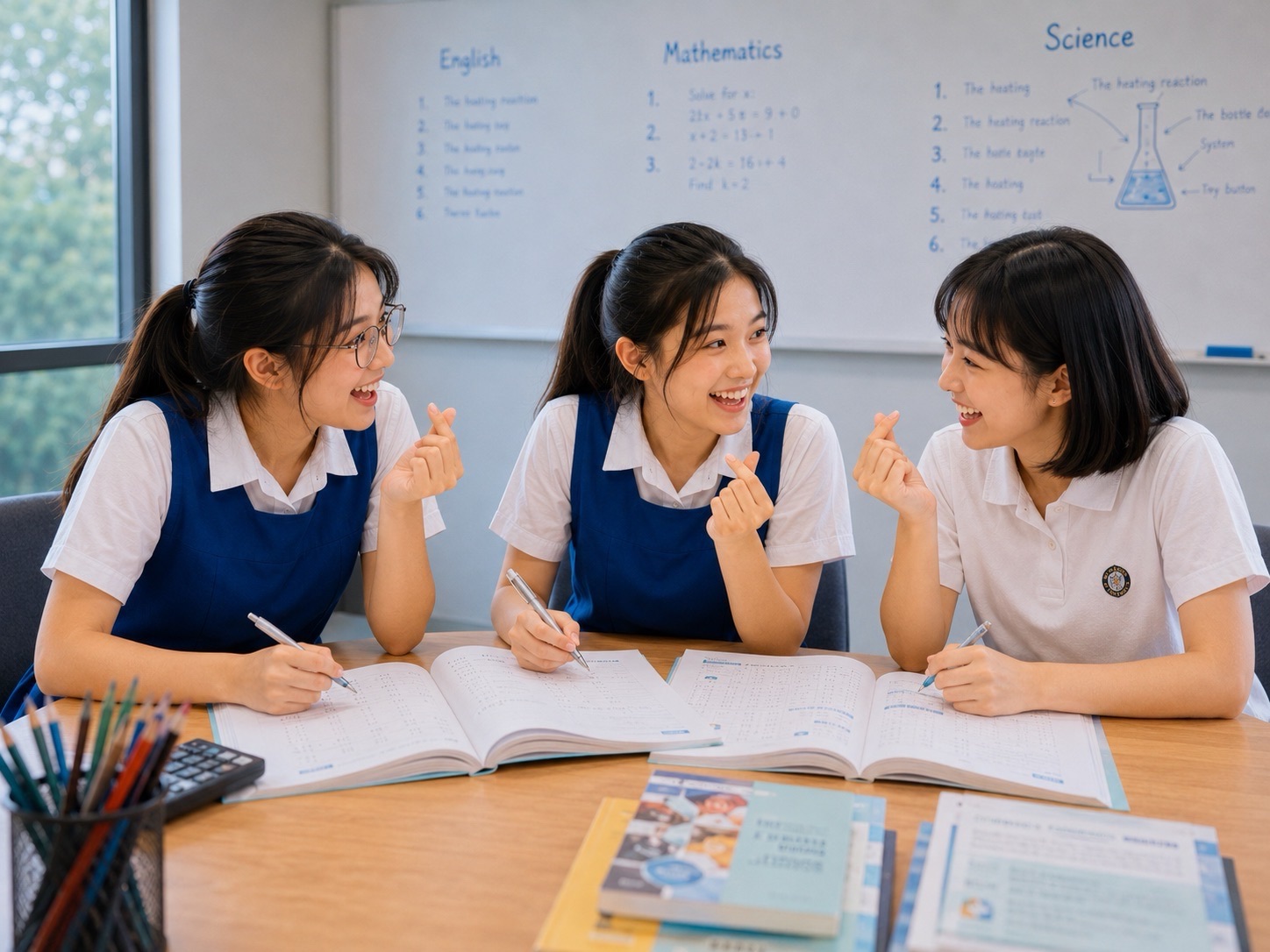
Toa Payoh students can learn more from group projects when teams agree on a clear question, distribute meaningful roles, set realistic deadlines and make every member’s reasoning visible. Good group work is not simply dividing a presentation into four separate slides. It requires listening, combining evidence, resolving uncertainty and producing one coherent answer that the members can explain together.
Singapore’s education emphasis on 21st Century Competencies includes communication, collaboration and information skills. For Primary and Secondary students, a fair project should protect both team outcomes and individual learning: each pupil needs an achievable contribution, access to support and a way to raise concerns when work is uneven. This guide provides practical project routines for Toa Payoh families and school groups, while the actual teacher’s instructions, assessment criteria, consent rules and permitted digital tools always take priority.
- Start with the exact project question and teacher’s rubric
- Agree on the team’s shared outcome before dividing individual tasks
- Create roles based on actual work, strengths and opportunities to learn
- Write a one-page agreement on deadlines, communication and checking
- Make tasks small enough that completion can be observed
- Use shared evidence and consistent definitions across contributions
- Check privacy, copyright, academic integrity and school tool rules
- Resolve conflict through evidence, listening and a clear next decision
- Do not let one high-performing pupil complete the entire assignment
- Make space for quieter students and legitimate additional support needs
- Review progress through checkpoints rather than last-night emergencies
- Prepare every member to explain the combined conclusion independently
Definition lock: collaboration is shared thinking and accountable contribution
A student group project is an assigned learning task that requires coordinated contributions toward one outcome. Fairness means meaningful access and transparent responsibilities, not necessarily identical word counts. This article is a practical guide, not an official scoring rubric, permission to bypass school policies or authority to expose classmates’ private information.
Part One: build a group that knows what it is doing
Group work is a learning process, not an allocation exercise
A project becomes collaborative when students must connect their thinking to produce a shared outcome. Simply telling one pupil to write the introduction, another to find images and another to design slides may divide labour without developing understanding. The final work can become a patchwork whose parts do not answer the same question.
Begin with a common definition of the task. What does the question ask, what product is required and what will count as a good answer? Every member should be able to explain those demands before taking an individual role.
A group assignment can teach communication, planning, evidence evaluation and responsibility, but these benefits do not appear automatically. Teachers may provide structures, while students need to practise them. A group that finishes quickly through one person’s effort may learn less than one that coordinates appropriately.
Parents can ask the child what their team is trying to discover or produce, not only which slide they have been assigned. If the learner cannot state the shared purpose, the team may have divided tasks too early.
The first success criterion is common understanding. A group project works better when each student knows why their part matters to the final answer and can see how the other parts connect.
Read the rubric together before delegating
A teacher may require research, an experiment design, oral presentation, a written report or a practical prototype. The rubric determines which tasks matter. Students should not assume that a polished video will compensate for missing analysis if the learning objective concerns reasoning with evidence.
Ask each member to read the project instructions and identify the action verbs. Describe, compare, investigate and evaluate demand different kinds of work. Then check whether the planned output satisfies the required format, topic and time constraints.
Write a short checklist of required components. Include only information supported by the task: perhaps the research question, evidence, argument, source acknowledgments, presentation and reflection. Avoid adding elaborate effects that the teacher did not request.
A common mistake is using a generic internet template before understanding the actual assignment. The template can make a group feel organised even when it is solving the wrong question. Use the rubric as the reference point for every major decision.
When instructions are unclear, the team should nominate a member to seek clarification respectfully. Do not resolve ambiguity by inventing school rules or relying entirely on what another class supposedly did last year.
Agree on one clear shared project question
A group often begins with several interesting ideas. If everyone researches a different topic, the finished product may lack coherence. The team needs one workable question with an appropriate scope, even when its final presentation contains multiple perspectives.
For a hypothetical local project, a group might ask how a community reading space supports different types of student learning. One member could examine published information, another compare appropriate examples and another plan a clear explanation. Their contributions need a common central question.
Avoid questions too broad for the available time. Everything about Toa Payoh or how education will change forever cannot be answered convincingly in a small school assignment. A narrow question allows more precise evidence and a defensible conclusion.
Ask what would count as a satisfactory answer. If the group cannot identify relevant evidence, the question may need revision. A useful team should be willing to refine a topic before investing hours in searching or design.
The shared question belongs at the top of the project plan. Every member should return to it when deciding whether to include a photograph, statistic, quotation or anecdote.
Roles should distribute meaningful responsibility
A fair team may need a coordinator, researcher, writer, fact-checker or presenter, depending on the task. These are functions, not permanent labels for students. A member should understand what their role contributes and what happens if a task becomes unexpectedly difficult.
Do not assign all intellectual decisions to the most academically confident pupil while others merely decorate the slides. That may produce an attractive submission but reduce learning opportunities and create resentment. Roles can be matched to readiness while still offering a suitable stretch.
Some tasks need collaboration rather than one owner. A central argument should be discussed by everyone, while one person may organise the final wording. A complicated calculation may be checked by two members. Important tasks should have a clear responsible person without making the whole project depend on a single student.
Ask students to list responsibilities in observable terms: locate two suitable sources, draft one paragraph explaining a claim, review figure labels or rehearse the combined explanation. A title such as research leader is not enough if no actual action is specified.
Rotate small responsibilities where practical. Students should learn different aspects of coordination over time instead of becoming permanently known as the fast writer, quiet designer or person who always submits files.
Build a one-page team agreement
A team agreement does not need to resemble a commercial contract. It can be a short page recording the shared question, members, tasks, deadlines, communication channel and the person responsible for final submission. The purpose is clarity rather than punishment.
Agree how decisions will be made when opinions differ. Some choices can be discussed until consensus; others may need a teacher’s direction or a reasonable vote. The group should know which person has authority for a technical requirement before disagreement becomes personal.
Set expectations for communication. Students should say when they cannot meet a deadline early enough for the group to respond. Silence until the submission evening makes the entire team vulnerable and may cause unfair pressure.
Follow school-approved platforms. A group agreement should not require children to join an unapproved public chat, expose private contact details or use a service that the school has not permitted. Adult oversight and school rules matter, particularly for younger pupils.
Review the agreement after the first checkpoint. Plans can be adjusted when actual evidence shows that a task requires more time. A flexible agreement is more useful than a rigid document that nobody revisits.
Deadlines should allow time for integration
The final submission deadline is not the only date that matters. A team needs time to combine drafts, resolve inconsistencies, verify claims and rehearse the explanation. If individual parts arrive only minutes before submission, the group has no opportunity to produce one coherent piece.
Work backwards from the teacher’s confirmed deadline. Choose a date for first contributions, another for integrated review and a final check before submission. Allow realistic margins for school, CCA, travel and family responsibilities.
Use small milestones rather than vague promises. Find and assess two sources by Tuesday is easier to verify than finish research soon. A specific checkpoint also allows the team to identify when someone needs help rather than discovering the problem on the final night.
Do not require every member to be available online at every hour. Students have different schedules and caregiving arrangements. Agree on realistic times and a way to share progress asynchronously through the school-approved platform.
The most important deadline is the one that protects the quality of the shared thinking. A project that includes checking and integration time is more educational than a collection of last-minute files assembled through panic.
Fair contribution is not identical contribution
Students have different strengths, starting points and access needs. Fairness does not require every person to produce exactly the same number of words or slides. It requires meaningful responsibility, an appropriate opportunity to learn and transparent agreement on what each contribution includes.
One pupil may organise a complex dataset while another explains the results clearly. Their workloads cannot be compared by slide count alone. Ask what each task demands and whether it is appropriate to the learner’s capabilities and the project requirements.
At the same time, unequal readiness should not justify permanent exclusion. A quieter member may be able to research a precise example, ask useful questions or present a short section with support. Teachers can help identify an appropriate role where needed.
Avoid using labels such as lazy or useless before checking the actual obstacles. A student may be uncertain about instructions, lack access to a shared file or need additional explanation. A useful team investigates the specific problem and agrees on a correction.
The best evidence of fairness is that every member can identify their contribution, explain its relevance and describe how the group supported the combined result.
Checkpoints should expose problems without humiliation
A checkpoint is a short review of actual work. Each member describes what is complete, what remains uncertain and what support is needed. It should not become a public contest over who has worked hardest. The aim is to keep the project on course.
Ask for evidence appropriate to the task: a paragraph draft, source record, calculations, sketch or test result. Vague statements that work is nearly done provide little information. A visible early draft allows the team to spot misunderstandings before they spread.
The group should distinguish a missed deadline from a recurring problem. A single delay may be manageable; repeated non-response may require teacher support. Respond proportionately, documenting facts without attacking a classmate’s character.
When a member reports difficulty, identify the smallest next step. They may need a clearer question, a shorter assigned task or access to the correct file. A correction is useful when it makes future progress possible.
Celebrate meaningful improvements such as a weak draft becoming clear after feedback. Project work should teach students how to revise and collaborate, not only how to survive a deadline.
Use shared sources rather than contradictory claims
Different team members may research separately, but the evidence must support a coherent conclusion. A group can accidentally combine an old historical date, a current planning document and an unverified social-media claim as though all describe the same moment.
Create a small shared source log. Record who issued the information, when it was published, what claim it supports and how it is used. That prevents one member from pasting a polished statement that the others cannot trace.
For a Toa Payoh historical question, a National Library Board article may establish the past role of a public library while a current official notice may describe a service arrangement. The team should not convert a future plan into a claim about a completed development.
Use original wording when explaining the evidence and provide required attribution. If an image or table has reuse conditions, check them. A beautiful graphic does not become free to republish simply because a student includes a link below it.
Each member should be able to identify the main sources supporting the team’s central claims. This creates collective ownership of the reasoning rather than a bibliography assembled by one person after everyone else has finished.
Combine drafts into one voice and one argument
A common group-project weakness is the abrupt shift between independent pieces. One section may use a formal tone while another contains casual notes. More importantly, two sections may contradict each other or repeat the same example without advancing the argument.
Before editing sentences, place the claims in a logical sequence. What must the audience understand first? Which evidence supports the central point? Where should alternatives or limitations appear? This structure should come from the shared research question.
Choose a member or pair to lead integration, but allow everyone to review substantive changes. Editing should not quietly change what another member meant or remove essential evidence. The purpose is coherence and accuracy.
Ask the team to read the combined draft from beginning to end. Does each section lead naturally to the next? Does the conclusion answer the question promised in the introduction? A smooth transition cannot rescue an unsupported claim.
Only after the structure works should the team polish vocabulary, slide layout and presentation effects. Clear reasoning earns its place before decorative design.
Part Two: conflict, fairness, integrity and digital teamwork
Disagreement can improve the project when handled well
Students may disagree about a claim, method, design or deadline. Disagreement is not automatically failure. A team can learn to distinguish the shared objective from individual preferences, then compare alternatives using reasons and evidence.
Start by restating the decision. Is the group choosing a research question, deciding whether a source is reliable or allocating remaining work? Clear framing prevents a debate about slide colours from becoming a dispute about personal loyalty.
Invite each person to explain their concern without interruption. Then ask which criteria should govern the choice. A source should be judged by relevance and reliability, while a design decision may involve clarity and accessibility.
If consensus is not possible, follow the teacher’s decision procedures or seek appropriate guidance. Students should not be expected to resolve serious interpersonal problems alone, especially where intimidation or harassment occurs.
After a decision, record what was agreed and who will act. Repeating the same argument without a new reason or new evidence wastes time. The aim is a better project and a more respectful working relationship.
When one student does all the work
A common group-project problem occurs when one capable student begins completing every task. The finished submission may appear strong, but other members lose learning opportunities and the student carrying the work becomes exhausted or resentful.
Begin by examining the agreed roles. Were tasks sufficiently clear and realistic? Did members have access to the source materials? Did someone misunderstand the teacher’s expectations? The first remedy may be a smaller, more specific responsibility rather than a general accusation.
The overburdened member should not be required to hide the problem or finish every missing section silently. A calm checkpoint can identify overdue work and offer a reasonable redistribution with clear deadlines.
If the pattern persists, inform the teacher factually and through the school’s proper channel. Provide the agreed tasks and progress evidence without insulting classmates. The teacher is responsible for decisions about assessment or intervention.
A successful outcome is not simply that the fastest pupil gets more control. It is that the group finds a fairer way for members to contribute, learn and account for what they have done.
Help quieter students contribute meaningfully
A quieter child may think carefully but speak less during group meetings. Lack of volume is not proof of lack of interest or ability. A well-managed group creates space for written suggestions, prepared speaking turns and meaningful responsibilities.
Ask every member to offer an idea before the team settles its central plan. A student who needs more time can submit a short note through the school-approved channel. The group should consider the idea on its merits, not only the speaker’s confidence.
Some pupils need additional support to access a task. The team should follow teacher guidance and respect privacy rather than publicly discussing personal circumstances. Appropriate accommodations and clear tasks can support fair participation.
Do not force all members to present identical lengths of speech when that is not required by the rubric. At the same time, do not permanently exclude someone from explaining the work. Provide suitable preparation and opportunities for growth.
The key question is whether each student can understand the shared result and take an appropriate role. Inclusion is educationally meaningful when it creates genuine participation, not a decorative name on the title slide.
Academic integrity applies to every member
Group work does not remove the obligation to credit sources and follow school rules. A copied paragraph, invented interview or unverified statistic can affect the entire project, even if only one member introduced it. The team needs a shared expectation of honesty.
Use a source log that records where important claims came from. When a member submits a draft, ask which parts are their original interpretation and which depend on external material. A citation should be accurate, not invented after the writing is complete.
Do not allow a parent or paid provider to rewrite a student’s assigned contribution and conceal the assistance. Adults can ask questions, model a method and provide appropriate feedback, but the learner’s intellectual work should remain their own.
Where the teacher permits joint editing, students may improve one another’s wording while keeping the meaning faithful. Editing should not silently turn uncertain evidence into a confident factual claim.
Integrity is a practical teamwork skill. The group learns to trust that contributions are traceable, that uncertainty can be admitted and that the final product represents genuine work rather than an impressive imitation.
Online collaboration requires privacy and sensible boundaries
Shared documents and school-approved platforms can help groups coordinate across different timetables. They also create risks when students share personal details, grant public access accidentally or assume everyone can use the same tool. The teacher’s technology rules must govern the workflow.
Use access settings appropriate to the group and school. Do not publish classmates’ phone numbers, home addresses, photographs or private messages as project evidence without proper permission. A simple research assignment does not justify unnecessary collection of personal information.
Keep messages focused on the task and communicate at reasonable hours. A teammate who is offline during a family obligation should not automatically be accused of neglecting the project. Agree on response expectations in advance.
Save versions and identify which draft is current. Confusion between files can cause accidental loss of work or duplication. A reliable shared workflow is easier to manage than a long chain of screenshots with no clear owner.
Digital collaboration should make thinking and responsibilities visible while respecting boundaries. It should not become an excuse to monitor classmates constantly or bypass the school when serious problems arise.
Part Three: AI tools, presenting and final quality checks
Use AI or online tools only within school rules
Generative AI systems can suggest outlines, draft sentences and summarise material, but they can also invent sources, misstate facts or produce text that the learner does not understand. A group should not silently submit generated work as its own intellectual contribution when the school’s rules do not permit it.
Begin with the teacher’s directions. Is any AI assistance permitted, and if so what must be disclosed? The answer may differ between a research task, coding exercise or assessed writing project. A general online guide cannot grant permission on behalf of the school.
Treat AI-generated claims as leads for verification rather than evidence. Members should open the original source and confirm that it exists and supports the exact statement. A plausible citation without a real supporting document does not belong in the reference list.
Avoid uploading private school documents, classmates’ information or identifiable photographs to public services without authorisation. Protecting data and using a technology responsibly is part of digital citizenship, not an optional final check.
The group should remain able to explain its final reasoning independently. Tools may support permitted tasks, but they should not conceal that the students have not actually understood the question or developed the answer.
Every presenter should understand the entire argument
A presentation can fail when pupils memorise only their own slide. If someone asks a question about the overall conclusion, several members may be unable to explain how the pieces connect. Rehearsal should therefore focus on shared understanding before polished speech.
Ask every student to state the project question, strongest evidence and main conclusion in a few sentences. They need not deliver identical speeches. They should understand the common argument well enough to answer a reasonable follow-up.
Arrange speakers to create a logical sequence rather than divide slide numbers equally by habit. Some sections may require more explanation. Follow the teacher’s requirements for participation and presentation length instead of assuming one uniform division is compulsory.
Practise transitions between speakers. A student should introduce the next idea by explaining how it follows from the previous one. Decorative transitions and sound effects are no substitute for coherent reasoning.
After rehearsal, ask which claim was unclear and what evidence would improve it. The strongest final preparation often involves revising the argument rather than repeating the presentation another ten times.
Check the final product against the original question
Before submission, reopen the rubric and the shared project question. Ask whether the final answer is relevant, sufficiently supported and correctly formatted. A beautiful slide deck can still omit an essential comparison or fail to address the intended audience.
Review source links, names, dates and figures. Make sure historical information is not presented as current and that any permission or attribution requirements are satisfied. A group should be willing to remove an impressive but unsupported claim.
Inspect the transitions between sections. Does each paragraph or slide contribute something distinct? Have two students repeated the same example while leaving another important point unexplained? Integration is an intellectual task, not only a layout task.
Confirm the submission procedure through the school’s actual instructions. A complete shared file may still need a designated member to submit it using the appropriate platform or format. The team should not assume saving equals submitting.
End with one factual reflection about the process. What went well, which obstacle required coordination and what should change next time? Those lessons can improve future teamwork even after the specific project is over.
What parents can do without completing the assignment
Parents can help a child understand instructions, plan time, use approved resources and rehearse clear communication. They should not become invisible extra group members who write a complete section, design the final argument or contact classmates to demand work. The school task is intended to develop student capability.
Ask what the child has contributed and where they need support. Help them form a respectful question or identify the next manageable step. If there is persistent non-participation or a serious interpersonal concern, use the teacher’s appropriate communication channel rather than escalating conflict among families.
Preserve the student’s own writing and reasoning. Feedback can identify an unclear paragraph or unsupported claim, but the learner should attempt the revision. A successful adult contribution makes the student more independent at the next checkpoint.
A six-week project teamwork programme
Week one begins with the rubric, shared question and team agreement. Every student explains the expected outcome. Week two assigns specific tasks and creates a simple source log, with members identifying the evidence that their contributions require.
Week three holds an early checkpoint and addresses the first scheduling or interpretation problems. Week four integrates the draft so it becomes one argument rather than separate files. Use teacher guidance when conflicts are serious or responsibilities remain persistently unfulfilled.
Week five reviews claims, source attributions, permissions and the structure of the presentation. Week six rehearses explanations, verifies final submission and reflects on what each member learned. The stages can be compressed or expanded according to the actual school deadline.
Frequently asked questions for Toa Payoh student teams
Must everyone produce the same number of slides? Not necessarily. A fair division depends on meaningful tasks, learning opportunities and the teacher’s assessment requirements. An equal slide count can conceal unequal effort or understanding.
What if one member does not submit their part? Check whether the responsibility was clear and realistic, communicate a specific next step and document facts. Raise persistent issues with the teacher rather than shaming the student publicly.
Can AI write a group-project section? Follow the school’s exact rules and any required disclosure. Generated text and references need checking; a system that writes the answer without student understanding defeats the learning purpose.
How should quieter students be included? Offer prepared turns, written contributions and clear, suitable tasks while following any school guidance for additional support needs. Participation is not measured only by speaking volume.
Can families help with research? Parents may guide planning, questions and safe source evaluation, but should not secretly complete the child’s assigned work or invent evidence.
What shows good teamwork? Members understand the same central question, have meaningful responsibilities, resolve issues respectfully, support one another and can explain the combined conclusion.
Your next step: organise one real project checkpoint
Ask your child to show the actual project question, their assigned task and the next agreed deadline. Have them explain how their contribution supports the group conclusion and which source or evidence will be used. If they cannot answer, that is a useful question to bring to the next team meeting rather than a reason to do the task for them.
Official sources and related eduKateSG reading
MOE — 21st Century Competencies
MOE — Education Conversations and Collaborative Learning
SEAB — Involving Students in Assessment and Student Agency
MOE — 2026 Announcements and AI Literacy
eduKateSG — School Project Research and Reliable Sources
eduKateSG — CCA, Sports and Arts Build Student Character
eduKateSG — Secondary 1 Mathematics Tutor Clementi | Small Groups Tutorials
Arrange a parent–student consultation
eduKateSG offers premium three-student small-group tutorials by appointment at 8 Fourth Avenue, Singapore 268674, near Sixth Avenue MRT. Toa Payoh families can discuss a student’s individual project-learning gaps while respecting the school’s academic integrity and group-assessment rules.
Chat with eduKateSG on WhatsApp
Properly taught kids shine a bright light into the future.