
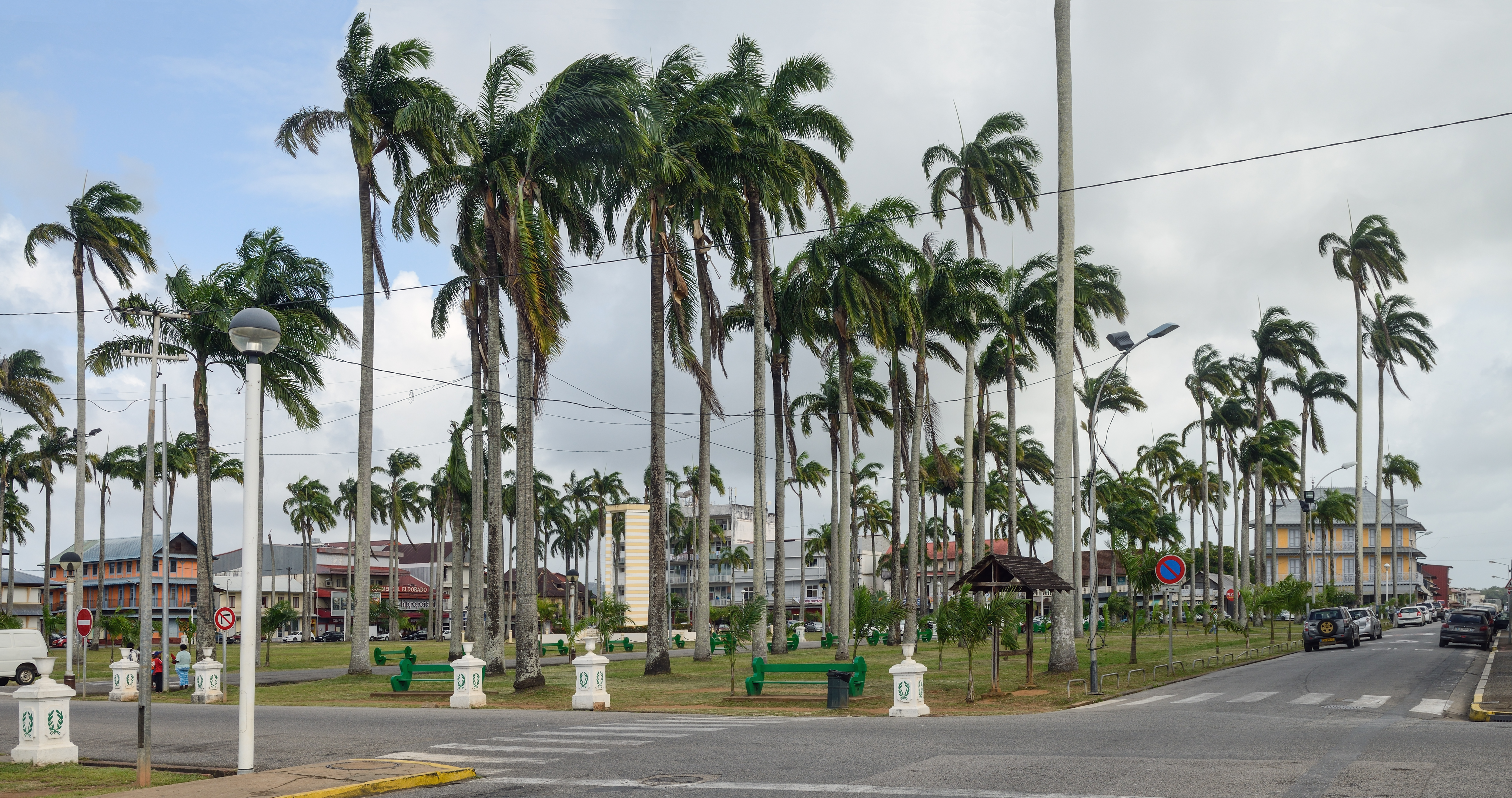
Quick answer: Ten places that help explain French Guiana are Cayenne’s Place des Palmistes and old town; the Guiana Space Centre at Kourou; the Îles du Salut, where French penal history remains visible; Saint-Laurent-du-Maroni’s Transportation Camp; the Maroni River; the Kaw-Roura marshland; Cacao’s Hmong community and market; Awala-Yalimapo’s protected turtle beaches; the remote village of Saül and its Amazonian forest trails; and Montagne des Singes near Kourou. These are choices across a large territory, not a ten-stop one-day route.
French Guiana is an overseas department and region of France on the northeast coast of South America. It is home to Indigenous peoples, Afro-descended and Bushinengue communities, Creole culture, Hmong families and people with many other histories. Its scenery encompasses coastal wetlands, rivers, beaches, older town centres and immense tropical forest. The same territory contains Europe’s spaceport, but a rocket launch does not define the experiences of everyone living in French Guiana.
Plan for geography, permits and safety. The Centre Spatial Guyanais offers a free guided industrial-base visit with advance booking, age limits and mission-dependent cancellations; the separate visitor attraction has its own opening and ticket arrangements. The remote Amazonian interior may require small-plane or river-boat travel, with a local guide and appropriate health preparation. Île du Diable, despite its fame, is not open to visitors because of dangerous currents. Respect both conservation rules and the communities whose cultural and historical sites you choose to visit.
Space-centre access, closed prison island and remote travel
CNES requires advance registration for the industrial base visit, which is generally limited to people aged eight and above and is suspended around launches. Île du Diable is closed to visitors owing to dangerous currents, while permitted river and forest travel requires competent local operators, suitable health preparation and current access rules. Always verify before booking.
eduKate · World travel and learning
Find your reading route through French Guiana
From Cayenne and the spaceport to historical river communities, wetlands and the Amazonian interior.
ROUTE 1 · PLACES 1–3
Cayenne, Kourou, space and the Îles du Salut
Compare the places and follow the Next links.
ROUTE 2 · PLACES 4–6
Maroni border country and historical memory
Compare the places and follow the Next links.
ROUTE 3 · PLACES 7–10
Wetlands, community culture and interior forest
Compare the places and follow the Next links.
Ten places to discover
These ten sites have different opening, transport, conservation and cultural requirements. A memorable short trip is built by selecting a few that suit your actual dates and interests.
| Place | What makes it worthwhile? |
|---|---|
| 1. Cayenne old town, Place des Palmistes and the market | Begin with the capital’s civic square, food culture and living city history. |
| 2. Guiana Space Centre, Kourou, and Guyaspace Expérience | Understand rockets and space operations through an authorised visitor programme. |
| 3. Îles du Salut: Île Royale and Île Saint-Joseph | Visit accessible former penal-colony islands without attempting Devil’s Island. |
| 4. Saint-Laurent-du-Maroni and the Camp de la Transportation | Understand a colonial penal institution through the town’s surviving historic buildings. |
| 5. The Maroni River and community-led pirogue journeys | Learn how a river connects people, ecosystems and a changing international border. |
| 6. Kaw-Roura marshes and guided wildlife excursions | Discover a great coastal wetland without turning wild animals into guaranteed sightings. |
| 7. Cacao village and the Hmong community market | Learn how migration, agriculture and cultural adaptation helped shape a rural settlement. |
| 8. Awala-Yalimapo, Les Hattes and the Amana nature reserve | Understand marine turtle nesting alongside living Kali’na cultural landscapes. |
| 9. Saül village and the Amazonian forest trail network | Discover a remote forest community through planned and locally guided walking. |
| 10. Montagne des Singes forest and Kourou’s nearby nature routes | See a forested hill near the space centre without confusing science access with open park entry. |
1. Cayenne old town, Place des Palmistes and the market
Why this place deserves time. Cayenne is French Guiana’s capital and a strong introduction to the territory’s human geography. Place des Palmistes, its tall royal palms and surrounding streets form a public meeting place, while markets and older buildings provide a window into food, trade, cultural expression and colonial history. A careful walk can reveal connections between the coastal location, transport infrastructure and the needs of residents. The city is not simply a staging area for excursions to space facilities or rainforest: it is a living community with its own neighbourhoods, artists and businesses.
What to notice. Observe the arrangement of palms, public monuments, shaded paths and surrounding commercial buildings without assuming that every façade is the same age. The wider centre includes places where people shop, commute and spend time together, which makes it valuable for observing contemporary urban life. At the market, look for how produce, prepared food and crafts are organised and ask vendors respectfully about a particular item when they are free. Avoid identifying a product’s ethnic origin from appearance alone; cultural traditions are more varied than a tourist label.
The learning question. Map the city centre, waterfront and surrounding roads and ask why public life developed near these connections. Then choose one locally sold ingredient and trace its possible supply chain: was it grown nearby, brought from an inland community or imported? That exercise helps explain the relationship between geography and everyday economics. A historical plaque may provide a date or name; the personal experiences of workers, merchants and community members require additional trustworthy sources. Keep observations and interpretations separate.
Access and planning
Use public walking routes, check the current market and museum opening schedules and respect active government premises. Tropical heat and rainfall make water, sun protection and a flexible itinerary important even within a compact city centre. Ask permission before photographing identifiable people, and do not enter private homes or working commercial courtyards for a better photograph. A Cayenne heritage half day provides a useful foundation before more complicated trips elsewhere.
2. Guiana Space Centre, Kourou, and Guyaspace Expérience
Why this place deserves time. The Centre Spatial Guyanais, Europe’s spaceport near Kourou, is one of French Guiana’s most distinctive scientific and engineering locations. It supports European launch operations, satellite preparation and a broad network of specialists, infrastructure and safety services. CNES offers a structured visitor programme explaining its facilities, while the separate Guyaspace Expérience attraction interprets spaceflight with exhibits. This is an excellent place to link science with transport and global communications; it should not imply that a spacecraft launches every time someone visits the territory.
What to notice. On a correctly booked guided base tour, observe only the buildings and launch-related areas permitted by security staff. The tour explains how satellites and launchers are prepared and how environmental requirements are managed. Vehicles, secure perimeters, control systems and observation areas have specific functions. If a mission is active, the route may be shortened or changed, and a rocket or launch pad should not be approached without authorisation. Photographs may be restricted in sensitive areas.
The learning question. Draw a simplified sequence from satellite preparation through rocket assembly, flight safety and orbit. Ask why a launch requires weather monitoring, communication networks, emergency plans and a broad secure land area, rather than just a powerful engine. Kourou’s location near the equator is useful context for studying some orbital launch choices, but avoid asserting that every mission follows an identical trajectory. An operational tour makes engineering constraints visible in the same way a careful worked science problem makes assumptions visible.
Access and planning
CNES states that the industrial-base guided visit is free, lasts about three hours, requires booking at least 48 business hours ahead and is generally for ages eight and older. A younger child may be eligible for different visitor-centre activities rather than the full industrial circuit. Tours are suspended the day before, the day of and the day after launches, and routes can vary. The separate Guyaspace Expérience museum has different tickets. Check current identity requirements and security rules before travelling.
3. Îles du Salut: Île Royale and Île Saint-Joseph
Why this place deserves time. The Îles du Salut lie offshore from Kourou and hold difficult heritage associated with France’s former penal-colony system. Île Royale and Île Saint-Joseph contain remains of buildings and spaces linked to imprisonment, administration and the lives of prisoners. The island group also includes Île du Diable, which has a particularly famous association with the imprisonment of Alfred Dreyfus. France’s national tourism service makes an important distinction: Île du Diable is not open to visitors because strong currents make access unsafe. A responsible article must not describe it as a normal excursion stop.
What to notice. On permitted paths on Île Royale or Île Saint-Joseph, compare old stonework, administration or hospital remains and views toward the surrounding ocean. Look for the ways buildings were positioned relative to transport landings and island slopes, and consider the physical constraints of holding people offshore. Not all remains are stable or interpretable without historical context; do not enter ruins or climb walls that are closed. The sea between the islands may look short to cross while containing dangerous currents.
The learning question. Ask how a penal system used isolation and maritime transport as forms of control. Compare the surviving architecture with written accounts of imprisonment, punishment and eventual reform. Popular films and books can spark interest but may rearrange historical facts for storytelling, so a museum or archival source is essential for precise claims. The islands also create a question about present-day heritage ethics: how can visitors learn about suffering without turning a prison into entertainment?
Access and planning
Arrange a legitimate boat excursion from an authorised operator in Kourou and confirm the specific island landings, ferry departure, sea state and visitor facilities. Follow local conservation and historic-site instructions. Do not attempt to swim or take a private boat to Île du Diable. Weather and marine conditions can cancel a trip, making a space-centre or town activity a more sensible alternative.
4. Saint-Laurent-du-Maroni and the Camp de la Transportation
Why this place deserves time. Saint-Laurent-du-Maroni is a major town beside the Maroni River near the border with Suriname. The former Camp de la Transportation and its associated heritage form one of French Guiana’s most significant places for understanding the historical penal colony. France’s tourism service notes that convicted people themselves helped build the penal infrastructure and that an adjoining museum uses prisoners’ accounts to convey the conditions they faced. The town is more than this painful history: its current communities, streets and river connections continue to shape daily life.
What to notice. From an authorised museum or guided tour, observe the former courtyards, cell arrangements and administrative spaces without treating them as dramatic backdrops for staged photographs. The design itself can help explain confinement, surveillance and the movement of people. Historic buildings may be restored or used for cultural activities today, so distinguish original fabric from later interventions. Along public town streets, notice the present waterfront and civic life without assuming residents identify themselves primarily with the prison history.
The learning question. Compare a penal institution’s surviving walls with a historical testimony about daily life inside it. What can the building prove directly, and what needs documentary evidence? Ask how forced labour and colonial authority shaped local infrastructure and how this history is remembered in a contemporary community. A strong account recognises the humanity of prisoners and others affected, rather than simplifying their experiences into adventure folklore.
Access and planning
Check the present opening, ticketing and guided-tour arrangements of the Camp de la Transportation or its museum. Respect restrictions on fragile rooms and heritage artefacts, and obtain consent for photographs of people. Saint-Laurent is a different travel region from Cayenne and Kourou; allow appropriate road time. Trips along the Maroni River require separate operator and border planning.
5. The Maroni River and community-led pirogue journeys
Why this place deserves time. The Maroni, also called the Marowijne farther downstream, forms much of the frontier between French Guiana and Suriname. It is a vital transport corridor for communities living along the water, including Indigenous and Bushinengue groups with rich and varied histories. France’s official tourism service highlights pirogue travel as a way to explore river landscapes, but a river trip must not be presented as permission to enter villages or cultural sites uninvited. Rivers are working routes used for goods, family travel and everyday public services, not simply scenic transport for tourists.
What to notice. From a qualified local pirogue, observe the width of the river, changes in banks, forest vegetation and the way settlements relate to landing points. Respect people travelling or working in their own boats. Differences in water level, currents and weather can change the practical route. At a community stop offered through a legitimate local host, listen to the guide’s explanation of local customs and ask before any recording or photography. Avoid describing distinct communities as if they had one uniform language or way of life.
The learning question. Trace a hypothetical journey to obtain a household supply, receive medical care or attend a school when no continuous road connects every settlement. Ask why a river is both a transport network and a national border and what formal permissions may apply when crossing it. Compare road, air and pirogue journeys without using straight-line distance as an unrealistic estimate. Local voices are important historical and social sources; a short tour cannot represent the whole community.
Access and planning
Use an experienced, reputable pirogue operator with proper safety equipment, appropriate permits and a plan for changing rain and river conditions. A trip into remote areas may require extended time and carefully arranged lodging. Do not cross into Suriname without checking immigration and customs conditions for your nationality. Community visits should be arranged through consent-based local hosting, not casual landing at homes or ceremonial places.
6. Kaw-Roura marshes and guided wildlife excursions
Why this place deserves time. The Réserve naturelle nationale des marais de Kaw-Roura is an important wetland on the coast of French Guiana, encompassing freshwater marshes, channels and forested margins. Its biodiversity includes birds, reptiles, aquatic plants and other wildlife adapted to seasonally changing water levels. France’s national tourism site recommends a pirogue trip through the Kaw marshes as a way to appreciate an environment that differs dramatically from upland Amazonian forest. Conservation protection matters because an intact-looking marsh can still be sensitive to noise, boat damage or disturbance.
What to notice. From an authorised guided boat, notice how open water, grasses and forest edges form different habitats. You may hear or see birds, caimans or other animals, but sightings depend on time and conditions and should never be guaranteed. Do not lean toward wildlife, feed animals or use intrusive flash at night. Water that appears still may hide underwater plants, changing depth and hazards to navigation. A guide’s local knowledge is valuable for safety as well as for interpreting habitats.
The learning question. Draw a simple cross-section showing marsh vegetation, a water channel and the nearby forest edge. Ask why each zone supports different organisms and how the wet and drier seasons can change their distribution. A night-time observation does not establish population numbers or whether an individual animal is healthy. The strongest lesson is that long-term surveys and protected-area rules are needed to understand an ecosystem properly.
Access and planning
Book a licensed or locally recommended operator who follows reserve protections, provides life jackets and chooses a safe route for the day’s water conditions. Weather, visibility and conservation rules can change access. Take insect protection and appropriate clothing without harming waterways with careless chemical use. Do not travel alone into remote channels based on a general map or seek wildlife through unauthorised night approaches.
7. Cacao village and the Hmong community market
Why this place deserves time. Cacao is a village inland from the coastal towns, well known for its Hmong community and market traditions. Families of Hmong origin settled in French Guiana in the later twentieth century, building agricultural livelihoods and maintaining aspects of their cultural heritage in a new environment. France’s official visitor material describes a Sunday visit to Cacao as part of a broader French Guiana itinerary. The market is not an ethnic performance produced for tourists: it is a living social and commercial activity that provides a useful window into food, horticulture, trade and identity.
What to notice. From public market space, observe vegetables, prepared foods, crafts and the way people meet or exchange goods. Some products may have cross-cultural histories, so ask a willing seller rather than deciding that every item must come from one ethnic tradition. Gardens and farm plots nearby can show how crops adapt to a humid tropical climate, but these are working private places. Do not photograph children, elders or food preparation without permission, and avoid wandering into residents’ courtyards.
The learning question. Choose a fruit or vegetable and trace the work required to grow, transport and sell it in a humid environment. Ask what changes when farming knowledge developed elsewhere is adapted to different rainfall, soil and market conditions. A respectful historical inquiry would draw on Hmong community accounts and reliable migration research instead of describing a family’s identity solely through one market day. Compare a rural market with Cayenne’s larger urban trade network.
Access and planning
The village is especially associated with a Sunday market, but verify current market hours, events and local access rather than assuming every stall opens every week. Travelling by road requires time and weather awareness. Support locally run businesses without treating homes or farmland as attractions open to everyone. Community-led guided visits can provide more thoughtful interpretation than a short uninvited visit.
8. Awala-Yalimapo, Les Hattes and the Amana nature reserve
Why this place deserves time. On the northwest coast, Awala-Yalimapo and the nearby Les Hattes beach are known for marine turtle nesting, while the Réserve naturelle nationale de l’Amana protects important coastal habitat. Green turtles and leatherback turtles may nest at different times in the season, and the event is a major conservation concern. The area is also home to Kali’na Indigenous communities with their own history, knowledge, governance and cultural lives. A meaningful visit should recognise those communities as hosts and residents, not as a tourist attraction or a source of uninvited portraits.
What to notice. From permitted beach paths or an authorised turtle-watching programme, observe shoreline vegetation, waves and the signs that identify protected nesting areas. If turtle activity is present, watch at a distance and follow local lighting, noise and photography rules. Sand can contain nests that are not visibly marked, so stay on accepted visitor routes. A beach can be physically beautiful yet unsuitable for casual swimming because of currents or wildlife restrictions.
The learning question. Make a timeline showing how adult turtles return to nesting beaches, lay eggs and hatchlings eventually reach the water. Ask why lights, touching, crowding and vehicles can interfere with reproduction. Separate a sighting on one night from the long-term scientific monitoring needed to assess a population. A second learning question concerns how Indigenous knowledge, conservation agencies and visitors can cooperate without assuming that one community speaks with a single voice.
Access and planning
Check current turtle seasons and local reserve rules directly; older visitor articles describe spring and summer activity but cannot promise sightings. Do not use flash, white lights or drones near nesting turtles, and never touch eggs or hatchlings. Seek a recognised conservation guide and ask permission for any community visit or cultural photograph. The coast’s swimming conditions and cross-border road logistics require independent assessment.
9. Saül village and the Amazonian forest trail network
Why this place deserves time. Saül is a small commune in the heart of French Guiana that has developed facilities for nature-based visitors, including lodging and an extensive network of marked forest trails. The Parc amazonien de Guyane highlights the village in its ‘Amazonie pour tous’ project, which sought to improve access for visitors with different needs. Unlike a day trip to a coastal forest, getting to Saül typically requires a flight or carefully arranged transport and enough time to explore safely. The village’s residents and businesses are part of the experience; forest tourism is a livelihood as well as a scientific and conservation interest.
What to notice. Follow current signed paths rather than assuming every forest track is a recreational trail. Look for canopy layers, roots, fungi, insects and changes in light and water between open clearings and dense forest. Listen to a knowledgeable guide without picking plants or disturbing animals. Even a short route can be humid and slippery, and birds or mammals may be hard to see. A lack of wildlife sightings does not make an intact tropical forest unimportant.
The learning question. Compare a marked trail, an informal forest track and an aircraft route on a map: they answer different transport and safety needs. Ask how researchers study biodiversity in dense forest, where animals may remain hidden, and why repeated observations are better than a single species checklist. The park’s accessibility work provides a further question: what adaptations could make some nature experiences possible for more visitors while still protecting the environment?
Access and planning
Contact local guesthouses or guides and check the national park’s current walking maps, trail conditions and visitor advice. Flights, baggage and lodging may be limited, and weather may affect arrival and departure. The park’s Saül guide notes that forest trails are marked while other tracks may not be; never rely on an unmarked shortcut. Remote travel requires health preparation, suitable equipment and a plan for delays.
10. Montagne des Singes forest and Kourou’s nearby nature routes
Why this place deserves time. Montagne des Singes is a forested hill near Kourou associated with a walking trail and viewpoints. Its location close to the spaceport provides an illuminating contrast: a region of specialist aerospace infrastructure exists next to a tropical forest ecosystem with birds, plants and wildlife. CNES’s 2026 visitor programmes have included guided outdoor experiences in the broader space-centre environment, but those scheduled programmes are separate from ordinary public forest trails and cannot be assumed to be available at all times. The site is an opportunity to learn about ecology and careful land management alongside technology.
What to notice. From authorised open routes, observe the changes between more exposed lower ground and shaded forest along the hill. Look for birds or insects without expecting a monkey sighting simply because of the hill’s name. A viewpoint may show the surrounding forest and distant built infrastructure, but controlled launch facilities are not open to spontaneous exploration. Follow any security signs and do not launch a drone near the spaceport.
The learning question. Ask how land managers can balance protected habitat, scientific research and industrial activity in the same region. Compare the role of an ordinary natural trail with a guided spaceport installation visit: both teach, but each has different entry rules and hazards. A simple contour sketch also demonstrates why a hill trail can be longer and more strenuous than it appears on a road map.
Access and planning
Check the current local visitor or forestry authority’s trail-status information before setting off, and take water, insect protection and suitable shoes. Any CNES-organised outdoor programme requires the booking and permissions listed for that specific event, and should not be conflated with general public access to the secured base. Stay out of restricted launch areas and stop when weather or conditions make walking unsafe.
Plan a thoughtful French Guiana journey
Pick one or two realistic regions. Cayenne and Kourou make a practical combination for city culture, space history and a possible Îles du Salut crossing. Saint-Laurent-du-Maroni and Maroni journeys require a western itinerary. Kaw, Cacao, Awala-Yalimapo and Saül occupy different landscapes and transport networks; they should not be squeezed into one short day.
Book the space centre correctly. CNES’s industrial guided visit is free with advance reservation, a minimum age of eight and mission-dependent access. The Guyaspace Expérience exhibit has separate ticketing. Launches are not guaranteed, and launch-viewing permissions must be arranged through current official information. Never enter an operational spaceport facility without authorisation.
Be accurate about the penal-colony heritage. The Îles du Salut and Camp de la Transportation tell related but different stories. Only Île Royale and Île Saint-Joseph are ordinary accessible stops, subject to actual boat arrangements; Île du Diable is closed to visitors. Respect the suffering represented by the former prison system rather than turning it into fictional adventure.
Respect river and Indigenous community permission. Maroni pirogue excursions should be arranged with experienced, insured local operators and consent-based cultural visits. Awala-Yalimapo and other settlements remain living communities. Crossing into Suriname is an international border movement with its own entry rules; a scenic boat ride does not waive immigration requirements.
Prepare for tropical health conditions. Seek appropriate current government or travel-clinic guidance about yellow-fever vaccination, mosquito-borne infections, any malaria risks relevant to remote destinations, medication, drinking water and heat. Medical facilities and rescue options can be very different between Cayenne and deep forest areas. Do not use a general travel blog as an entry-health certificate.
Choose wildlife viewing that protects habitat. Marsh caimans, forest birds and marine turtles are wild and cannot be guaranteed. Follow reserve signs, turtle nesting restrictions and guide instructions. Bright flash, unpermitted night excursions, feeding or handling animals may harm wildlife and can breach protections.
Arrange remote forest travel with margins. Saül’s accommodation and paths can be rewarding, but the village needs dedicated flight or boat planning, equipment, current maps and time for possible delays. Never improvise an overnight Amazonian forest route because a straight-line map distance appears short.
Frequently asked questions
Is French Guiana a separate independent country?
No. French Guiana is an overseas department and region of France in South America. Travellers should check the French overseas-territory entry rules relevant to their nationality and route.
Can I visit Devil’s Island in the Îles du Salut?
No. The French national tourism authority explains that Île du Diable is not open to visitors because of dangerous currents. Authorised excursions may instead visit Île Royale and Île Saint-Joseph.
Can children visit the Guiana Space Centre?
The industrial guided base tour has an official minimum age of eight and requires advance booking. CNES lists some separate visitor-centre activities for younger accompanied children.
Will there be a rocket launch during my visit?
There is no guarantee. Launch schedules can change, special viewing arrangements may require reservations, and industrial tours can be suspended around launch days.
Can I see leatherback turtles at Awala-Yalimapo every night?
No. Nesting is seasonal and sightings of wild turtles cannot be guaranteed. Use an authorised conservation guide and follow current rules on lights, distance and beach access.
Is a Maroni River journey the same as a guided forest trek?
No. A pirogue journey is a water-transport and cultural experience whose safety and border rules differ from those of a forest trail. Both require suitable local arrangements.
Can Saül be visited as a short drive from Cayenne?
No ordinary continuous road journey should be assumed. Saül is a remote forest community that generally requires air travel and advance lodging and trail arrangements.
How can I learn about French Guiana without a demanding jungle trek?
Cayenne’s historic centre, the Guyaspace Expérience museum, authorised space-centre tours and approved heritage attractions can all offer strong learning experiences. Choose each according to its opening and physical access.
Build understanding through evidence
French Guiana makes an unusual travel classroom because the same destination connects urban history, penal-colony memory, European launch engineering and Amazonian biodiversity. Each subject calls for different evidence. Rocket systems require operational and scientific explanations, penal sites require historical records and the experiences of people who were imprisoned, wetlands need conservation research, and community traditions require local consent and voices. A good journey does not treat one of those perspectives as a substitute for all the others.
A family learning exercise can compare a day in Cayenne, a river outing from Saint-Laurent-du-Maroni and a forest stay in Saül, then calculate why transport mode and reliable schedules are as important as straight-line distance. Explain the assumptions clearly rather than guessing. This evidence-based approach also underpins eduKate’s Secondary 1 Mathematics Tutor Clementi | Small Groups Tutorials.
Continue learning about French Guiana
Top 10 Things to Do When Visiting and Touring French Guiana · Top 10 Things to Learn When Visiting and Touring French Guiana · World Country Directory
Sources and current information
Sources checked on 20 October 2026 (Singapore time). The official guides support geographical and historical descriptions, but they do not guarantee admission, scheduled launches, safe trails, river access, turtle sightings or inter-island boat conditions. Always confirm the specific site’s current rules before travelling.
Featured photograph: Place des Palmistes, Cayenne, by Cayambe, 3 April 2013, CC BY-SA 4.0, via Wikimedia Commons. Original photograph used unchanged; the archival image does not establish present opening or safety conditions.

- Explore France — What to see in French Guiana
- Explore France — French Guiana tourism and heritage
- Explore France — Îles du Salut, Maroni and penal-colony sites
- CNES — Guiana Space Centre guided installation tours
- CNES — Guyaspace Expérience museum
- CNES — Launch attendance and visitor conditions
- CNES — 2026 authorised guided outdoor visitor programmes
- Explore France — River tours, Cacao and Kaw marshes
- Explore France — The slower French Guiana itinerary
- Parc amazonien de Guyane — Saül and ecotourism
- Parc amazonien de Guyane — Saül trails and visitor guide
- Explore France — Marine turtle conservation and viewing