
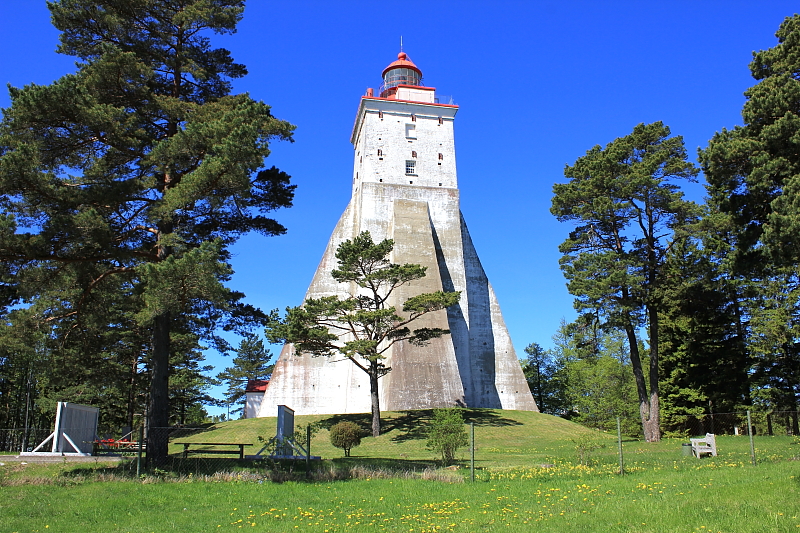
What are the best places to visit on Hiiumaa? Start with Kõpu Lighthouse, then discover the western headland around Ristna, the northern lighthouse at Tahkuna, Kärdla’s small-town life, Kassari and Sääretirp, the Orjaku birdwatching trails, Suuremõisa Manor, the Windtower Experience Centre, Viscosa Cultural Factory and the island’s restful northern beaches. Together, these ten places tell a story about shipping, work, forests, wetlands and how islanders live today—not simply where to take a picture.
Hiiumaa is Estonia’s second-largest island and a very different holiday from a hurried sequence of attractions. It is known for wooded roads, a remarkable group of lighthouses, quiet shores and a strong local sense of place. A three-to-four-day stay suits a first visit; extra days help if you prefer walking, birdwatching or cultural events. Choose a base and group your stops by region rather than driving from north to south several times a day.
Visitor planning note, October 2026: Lighthouse climbing, museums, performances, ferries, cafés and outdoor activities have distinct operating rules and schedules. The stops below are established attractions, not claims that every venue is open at this moment. Check operator information before travel, especially on arrival and departure days. Local conservation rules and sea conditions should override any route described in a blog.


A Hiiumaa travel plan that leaves room to enjoy the island
It can be tempting to turn Hiiumaa into a ‘three lighthouses in one day’ challenge, because the names Kõpu, Ristna and Tahkuna appear everywhere. That is possible in a logistical sense for some visitors, but it misses the reason to go. Each lighthouse relates to a different stretch of coast and a different chapter of navigation history. A harbour café, an unexpected exhibition or a few minutes listening to coastal wind may give just as much understanding as another staircase.
For a first visit, build a simple rhythm. On day one, let the arrival and town become the experience. On day two, follow the western lighthouse and culture route. On day three, explore Kassari and the wetland landscape. If time allows, reserve another day for Tahkuna or a forest-and-beach outing. This structure keeps journeys humane, and it works even when a venue changes its opening hours at short notice.
The ten Hiiumaa places at a glance
- 1. Kõpu Lighthouse and the Kõpu Peninsula — Western Hiiumaa, Kõpu Peninsula
- 2. Ristna Lighthouse, Kalana and the Western Surf Coast — Far west, near Kalana and the Ristna headland
- 3. Tahkuna Lighthouse and the Northern Headland — Northern tip of Hiiumaa
- 4. Kärdla Town, Hiiumaa Museum and Harbour — Northeastern Hiiumaa, the main town
- 5. Kassari Island and the Sääretirp Headland — Southeastern Hiiumaa, via the Kassari causeway
- 6. Orjaku Birdwatching Tower and Käina Bay Nature Trails — Southeast, near Käina Bay and Kassari
- 7. Suuremõisa Manor, Park and Heritage Landscape — Eastern Hiiumaa, inland from Heltermaa
- 8. Windtower Experience Centre in Käina — Käina, southern Hiiumaa
- 9. Viscosa Cultural Factory at Kõrgessaare — Northwestern Hiiumaa, Kõrgessaare
- 10. Luidja and Tõrvanina Beaches, Forest Walks and Quiet Coast — North and northwestern Hiiumaa
The ten places below are not arranged as a single driving loop. For each, you will find the location, reason to visit, useful access cautions and one idea that turns the experience into meaningful knowledge. Select a few that match your travel style, and use the itineraries later in this article to put geographically sensible days together.
1. Kõpu Lighthouse and the Kõpu Peninsula
Where: Western Hiiumaa, Kõpu Peninsula. Best for: Maritime history, island panoramas and forests.
You can recognise Kõpu Lighthouse without knowing anything about ships. Its distinctive squat stone form rises above forest on western Hiiumaa, a monument built for a serious purpose: helping mariners navigate a complicated Baltic coast. The origins of the lighthouse go back to the sixteenth century, and its long working history explains how important the routes past the island have been. Unlike a picturesque lighthouse inserted as a decorative feature, Kõpu belongs to the infrastructure of safety. It is also one of those places where you can understand why elevation matters even when a tower is not exceptionally tall.
Approach the site as two experiences: the outside heritage landscape, which can be appreciated from ground level, and the climb, which may require tickets, a seasonal opening and suitability for narrow, steep historic stairs. Do not promise that everyone in your group will manage the ascent; a good family visit can consist of a short walk, a photograph and a conversation about navigation. The surrounding woods make a useful contrast with the sea; even a brief stop shows how an island can be forested rather than all beaches and cliffs. In cold, wet or windy conditions, check entry arrangements and stay within authorised paths.
Ask children to imagine a night sea before modern satellite navigation. What would a light set high above the surrounding coastline tell a crew? How would wind, fog or a curved coastline change what could be seen? Compare Kõpu’s stone construction with the metal towers at Ristna and Tahkuna later in the journey: the different materials and eras reveal changes in engineering. You may notice how photographs emphasise the landmark but leave out the shipping routes that make it meaningful. A good place guide teaches you to see both the symbol and its everyday purpose.
Route tip: Combine Kõpu with Ristna and a stop in the western forest, rather than returning from the main town twice. Always confirm access, and treat private land and nature reserves with care.
Back to all ten places · Next location
2. Ristna Lighthouse, Kalana and the Western Surf Coast
Where: Far west, near Kalana and the Ristna headland. Best for: Navigation, coastal weather and dramatic Baltic landscapes.
The western edge of Hiiumaa tells a different story from sheltered harbours. Around Ristna, the Baltic is open, the wind is part of the experience and the waves can be impressive. Ristna Lighthouse was brought from France in the nineteenth century as a metal structure and later strengthened. It complements Kõpu rather than simply duplicating it: the sites solve maritime visibility problems in different ways. Nearby Kalana and the headland introduce coastal communities, fishing history and outdoor sports associated with more exposed water, making this an excellent place to pause and consider the practical power of the sea.
Choose a viewpoint or beach walk that fits the day’s weather rather than treating the best-looking wave as an invitation to swim. Surfing and similar activities need appropriate instruction, equipment and an honest assessment of sea conditions. Lighthouses can have limited visiting hours; admire Ristna from its permitted grounds if climbing is unavailable. If driving around the peninsula, use designated parking and remember that narrow local roads serve residents. A half-day combining Kõpu and Ristna often makes more sense than visiting them on separate days, but avoid overstuffing it with faraway attractions.
Ristna offers a practical lesson about complementary systems. Kõpu’s elevated beacon can be impressive, yet fog and shoreline geography create particular constraints. A second navigational aid changes a sailor’s information about the coast. Ask what happens when a technology works beautifully in some weather but not others. The coastline is also a reminder that words such as ‘Baltic beach’ do not mean warm or gentle conditions. Look at the colour and direction of waves, watch wind moving across vegetation, and think about why local knowledge is essential when travelling on water.
Route tip: An unhurried western peninsula day can include Ristna, Kõpu and a suitable Kalana viewpoint. Always confirm access, and treat private land and nature reserves with care.
Back to all ten places · Next location
3. Tahkuna Lighthouse and the Northern Headland
Where: Northern tip of Hiiumaa. Best for: Industrial-age engineering, remembrance and a quiet coast.
Tahkuna Lighthouse stands on Hiiumaa’s northernmost peninsula, a graceful metal landmark associated with the nineteenth century’s developing navigational network. Its design and prefabricated construction show how engineering ideas and materials moved across Europe. The headland also carries important historical and commemorative layers, including a memorial connected with the 1994 sinking of the ferry Estonia. That makes this place more than another panoramic photo stop. The contrast between a working beacon, an open sea and a site of remembrance deserves time and an appropriate tone.
Check whether lighthouse entry is operating before making the climb the centre of your day. The outer area can be interesting without climbing, but the coast is exposed and the ground may be uneven. Approach memorials respectfully: read their context, avoid casual posing and be considerate if others are visiting to remember people they lost. If travelling with children, talk about what a memorial is before arriving so the visit does not become a surprise lesson at somebody else’s expense. Combine Tahkuna with Kärdla or north-coast woods rather than adding an unnecessary cross-island detour.
Here, three different kinds of evidence sit near one another. The lighthouse records technological choices; the coastline explains maritime risk; a memorial shows how a community responds to tragedy. Students can compare what a sign is designed to do—warn, explain, remember—without assuming every object has the same emotional meaning. A memorial is not a disaster attraction. Treat the historical account accurately, make space for silence, and choose how much detail is appropriate for younger travellers.
Route tip: Group the northern peninsula with Kärdla if starting from the main town. Always confirm access, and treat private land and nature reserves with care.
Back to all ten places · Next location
4. Kärdla Town, Hiiumaa Museum and Harbour
Where: Northeastern Hiiumaa, the main town. Best for: Local culture, daily life and a relaxed base.
Kärdla makes a particularly good base for a first visit because it introduces the living island between longer scenic outings. The main square, small businesses, harbour approaches and streets of the town speak to modern Hiiumaa as much as the lighthouses speak to maritime history. Hiiumaa Museum’s Long House, associated with the former broadcloth factory, links the island’s cultural memory to industrial and domestic life. Pause here and you begin to understand why an island destination is not simply its coast: education, work, shops, services and social spaces all matter to the people who live here.
Spend time walking the centre, checking the museum’s changing exhibitions and choosing an ordinary local meal rather than rushing through in search of the next photogenic stop. Shops, cafés and galleries may be seasonal; check before arranging lunch around a specific address. When near the harbour, respect working areas and do not obstruct loading or storage zones. Families who have spent the morning on windy headlands often appreciate an easy town afternoon, and people who need a less demanding walking day can break it into short accessible sections. The experience of the town is still valuable even when the museum is closed.
Consider how a factory shapes a settlement. Where do workers live? Which roads connect workplaces, schools and the port? What happens to a community when a major industry changes? Kärdla invites questions about economic transitions that are rarely visible in a ‘top ten views’ postcard. A simple exercise is to notice three things that serve residents rather than tourists. Those details make a travel article more truthful because they help visitors see that an island is a home, not a backdrop.
Route tip: Keep the arrival afternoon for Kärdla or a nearby museum; save the remote peninsula drives for later. Always confirm access, and treat private land and nature reserves with care.
Back to all ten places · Next location
5. Kassari Island and the Sääretirp Headland
Where: Southeastern Hiiumaa, via the Kassari causeway. Best for: Gentle nature, shorelines and wide coastal views.
Kassari is connected to the main island and has its own quieter rhythm. At Sääretirp, a narrow tongue of land extends into coastal waters and draws visitors who enjoy expansive views and unusual shoreline shapes. The landscape is wonderfully photogenic but should not be mistaken for a paved promenade. Pebbles, wet sections and changeable conditions alter how far people can walk comfortably. The main reward is the sensation of the landscape narrowing towards the sea, with vegetation, shallow water and open horizon making a very different impression from the dense forests of the Kõpu peninsula.
Plan this as a shore walk with a turning point, not a goal to reach the absolute tip at any cost. Check wind and the condition of the path, bring footwear that grips damp or irregular surfaces, and keep children within easy reach. Sensitive coastal plants, birds and grazing lands need a respectful distance; do not leave the established route to reach a favourite angle from a social-media photograph. Kassari pairs naturally with the nearby Orjaku birdwatching area or Käina, making an appealing day for families who prefer shorter journeys.
Notice what a headland is and how it differs from a sandy beach or the edge of a high cliff. Try tracing the coastline on a map, then compare its smooth line with the actual irregularities underfoot. Why do stones, vegetation and shallow water occur together here? Not every question needs an instant scientific answer; observation may come first. A careful visitor also learns to stop at a safe distance, allowing a beautiful landscape to remain a landscape rather than a challenge to be conquered.
Route tip: Pair Kassari’s headland with Orjaku and check whether the shore walk suits the weather. Always confirm access, and treat private land and nature reserves with care.
Back to all ten places · Next location
6. Orjaku Birdwatching Tower and Käina Bay Nature Trails
Where: Southeast, near Käina Bay and Kassari. Best for: Migratory birds, wetlands and family-friendly observation.
Orjaku is a wonderful stop for anyone who wants to look closely rather than travel quickly. The birdwatching tower and surrounding study trails overlook wetland habitat associated with Käina Bay, an important gathering place for migrating waterbirds. Even when there are few birds visible, the reeds, open water, platforms and interpretation signs help explain why different habitats matter. For children, it is an opportunity to learn to watch patiently; for adults, it is a break from roads, museums and shopping. Birdlife is seasonal, however, and an interesting habitat is not a guarantee of a spectacular flock.
Choose the short or longer designated trail based on mobility, weather and group energy. The official Orjaku study trail includes boardwalk sections, but not every part should be assumed step-free or suitable for pushchairs without checking. Take binoculars if you have them, keep voices low near roosting birds, and never move beyond barriers for a closer photograph. If the tower is busy, wait rather than crowding someone who is observing. Combine Orjaku with Sääretirp, Käina or an easy harbour stop and let the island’s southeast be a day of short distances and slow appreciation.
Bird migration is a way to understand that Hiiumaa is linked to a world much larger than itself. A bird may pause at a shallow coastal bay because it needs food and shelter while crossing regions. Why is water depth important? What role do reeds play? How might land-use changes affect the place? Explain that a migration season is a pattern, not a schedule that guarantees a particular species on a particular afternoon. Such thinking builds respect for natural variability as well as for scientific evidence.
Route tip: Take binoculars if possible, then use the southeast as a walking and nature day. Always confirm access, and treat private land and nature reserves with care.
Back to all ten places · Next location
7. Suuremõisa Manor, Park and Heritage Landscape
Where: Eastern Hiiumaa, inland from Heltermaa. Best for: Architecture, rural history and designed landscapes.
Suuremõisa Manor brings an elegant architectural chapter to an island often associated with windswept beaches. The Baroque manor complex was built in the eighteenth century and has long been part of the area’s educational and community life. Its park, associated buildings and historical interiors offer a perspective on social hierarchy, estate economies and changes after the old manor system. The difference from a medieval lighthouse or town museum is useful: this is a place where land ownership, agriculture and education help tell the story of the island beyond seafaring.
Check the current timetable for guided or independent interior access, and remember that parts of the complex are used for education or other everyday functions. Walking in the permitted park can be rewarding even when an interior visit is unavailable, but respect private or institutional areas and signs. Suuremõisa makes sense near a ferry arrival at Heltermaa or on a day that includes Käina, rather than as a late addition to a long western-coast tour. If rain changes your outdoor plans, choose an authorised indoor heritage visit rather than crossing the island repeatedly in poor visibility.
Ask who built a manor, who maintained it and how the buildings were later reused. A stately exterior may suggest one kind of historical story, yet the people who cooked, cleaned, farmed and taught are equally important. The modern educational use of historic spaces offers a hopeful example of adaptation. Travelling with children, look for differences between formal gardens and natural woodland, and discuss why a manor complex is more than the main house in the photograph.
Route tip: Consider this on the drive from Heltermaa or alongside Käina attractions. Always confirm access, and treat private land and nature reserves with care.
Back to all ten places · Next location
8. Windtower Experience Centre in Käina
Where: Käina, southern Hiiumaa. Best for: Hands-on island learning and rainy-day family time.
The Windtower Experience Centre is a strong choice for a family that wants a day of discovery without relying entirely on sunshine. Its interactive exhibits explore Hiiumaa’s identity, nature, sea and stories in ways that invite questions rather than passive reading. The modern setting is intentionally different from the island’s old lighthouses and manor buildings. It shows that learning about a place can involve play, senses and scientific explanation as well as historic objects. A climbing wall is part of the broader activity offer, but equipment, supervision and participation rules need checking rather than assuming every visitor can use it.
Treat the centre as a half-day option or a comfortable indoor anchor when wind makes exposed coastal sightseeing unpleasant. Confirm entrance times, booking needs, any age or height requirements for climbing and whether all interactive sections are running. Families with young children can focus on exhibition activities and let older visitors pursue more physically demanding options when suitable. The best pairing is a nearby southeast-coast walk or Suuremõisa rather than a long day zigzagging from the western headlands. Leave time to discuss one thing each person learned before heading on.
Interactive spaces are most valuable when a visitor does more than press buttons. Pick one feature—wind, underwater habitats, a coastal livelihood or a local legend—and ask what it teaches through experience that a paragraph alone might not. Does a simulation accurately represent every real condition? What can a hands-on model simplify, and what should you still check against scientific evidence? This distinction helps young learners enjoy the activity without confusing a model with the real world.
Route tip: Use Käina as a flexible indoor stop rather than racing across the island to beat weather. Always confirm access, and treat private land and nature reserves with care.
Back to all ten places · Next location
9. Viscosa Cultural Factory at Kõrgessaare
Where: Northwestern Hiiumaa, Kõrgessaare. Best for: Creative culture and industrial transformation.
In Kõrgessaare, the Viscosa Cultural Factory illustrates an unusual but important part of island life: old industrial buildings can become places of new creativity. The complex began as an artificial-silk venture, passed through a fish-processing phase and is being adapted for exhibitions, performances, workshops and social gathering. Unlike a fully restored museum that presents a completed story, Viscosa openly feels like a place in transition. That is part of its interest. The architecture still hints at production, while an evolving programme shows how contemporary residents and artists may reuse what earlier generations built.
Look up the programme for your actual dates. A concert, guided tour, food service and free exhibition are different activities, and not all are available at every hour or season. Some areas of a gradually restored industrial complex may be closed or unsuitable to enter; respect the directions of staff and current safety barriers. Pair Viscosa with western or northern attractions, or use it as a cultural counterpoint after a lighthouse day. Visitors who prefer the quiet of the countryside can still appreciate the exterior and story without booking a loud evening event.
Why does a place preserve an industrial building rather than demolish it? The answer may involve heritage, material reuse, community identity and the economic potential of culture. Think about how jobs changed across the site’s different phases. This is a useful reminder that an island is not outside modern development. People there make choices about what to conserve, what to adapt and how to balance visitor interest with daily local needs. Such choices are as worthy of a travel story as a sunset.
Route tip: Pair this creative stop with the western or northern half of your trip. Always confirm access, and treat private land and nature reserves with care.
Back to all ten places · Next location
10. Luidja and Tõrvanina Beaches, Forest Walks and Quiet Coast
Where: North and northwestern Hiiumaa. Best for: Beaches, relaxation and soft-paced landscape time.
Hiiumaa is celebrated for beaches, yet two beaches on the same island can feel utterly different. Around Luidja and Tõrvanina, stretches of sand and wooded hinterland offer a gentle counterweight to historic towers and indoor attractions. Walking at the edge of the forest, feeling the change from shelter to open coast and watching the Baltic weather become simple pleasures when there is no urgent next appointment. Neither beach needs to be turned into an expensive activity. The value is in the place itself and in having enough time to notice it.
Choose the beach that works with your route and conditions, not a photograph promising tropical water. The Baltic can be cold, currents and weather vary, and lifeguard coverage should never be assumed. If swimming, follow local signs and evaluate conditions with appropriate care. Take rubbish with you, keep off fragile dunes and avoid damaging coastal vegetation to find an isolated patch. A picnic can be lovely but check where it is permitted, especially near protected habitats. These shores also make good alternatives when another attraction has an unexpected closure.
An island beach illustrates that freedom and responsibility belong together. It is easy to enjoy a view precisely because a coastal ecosystem is working quietly: dunes accumulate sand, vegetation holds parts of the shore in place and woodland changes the microclimate. Compare the sheltered side of a path with an exposed stretch of beach. What do you see and feel differently? Practising such small observations is one way a holiday can improve scientific curiosity without turning every pause into a formal lesson.
Route tip: Add a relaxed beach afternoon to a region you are already exploring. Always confirm access, and treat private land and nature reserves with care.
How to plan two, three or four days on Hiiumaa
Two days: an achievable first taste
On the arrival day, keep things simple: reach Hiiumaa, explore Kärdla and choose either the Long House museum or a relaxed shore walk. If you are arriving from the mainland at Heltermaa and the timing is comfortable, Suuremõisa may fit naturally before the town. On day two, head west to Kõpu Lighthouse and Ristna, with one carefully chosen beach, forest or cultural stop. This gives history, town life and a coastal landscape without pretending that two days cover the island completely.
The main mistake is spending the first afternoon trying to see every lighthouse. That leaves little margin for ferry delays or fatigue, and it turns a quiet island holiday into an exercise in driving. A single excellent western day and one enjoyable town afternoon are a stronger introduction than hurried checks at six different car parks.
Three days: coast, town and wetlands
Use day one for Kärdla and, depending on your arrival direction, Suuremõisa. Day two can take in the western lighthouses, a confirmed Viscosa programme or a forest-and-beach break. For day three, explore Käina and Kassari: Orjaku’s birdwatching platforms, Sääretirp’s slender shore, and the Windtower if you want a thoughtful indoor activity. This is especially workable for families because every day has a different tempo. If the weather closes an exposed viewpoint, use a museum or short nature route without insisting on completing the list.
Four days or longer: give the northern coast its own time
Add Tahkuna Lighthouse, an appropriate museum or memorial stop and another short section of coast on day four. Travellers who enjoy walking may extend the stay for marked nature trails; those who prefer cultural events could shape an evening around Viscosa if a performance is scheduled. Make time for unplanned meals and conversation. Hiiumaa’s attraction is partly that it does not demand a hurried programme, and forcing ten places into a single road trip would undermine that strength.
Getting to Hiiumaa and moving around safely
For visitors coming from mainland Estonia, the main ferry route connects Rohuküla with Heltermaa on Hiiumaa. Another route runs between Triigi on Saaremaa and Sõru on southern Hiiumaa. They are different ports and different services; double-check the ferry ticket so that the departure location, vehicle arrangements and arrival side of the island match your actual itinerary. The Estonian government’s transport information identifies both routes, and operator schedules should be consulted close to departure.
Some travellers use flights serving Kärdla, but availability can vary, and a flight should not be assumed as a guaranteed shortcut from any origin. When booking a vehicle ferry, examine check-in requirements, whether bicycles need reservations and what happens when weather delays a crossing. If travelling with children, keep snacks, layers and a practical buffer for the journey. If combining Saaremaa and Hiiumaa, organise the Sõru–Triigi leg intentionally; do not assume an island ferry operates with the same frequency as an urban bus.
Public transport connects settlements, yet remote lighthouse routes, nature trails and evening performances may be inconvenient without a car or an organised tour. Cycling is a rewarding option when planned with the right distances and road safety precautions. Small roads are shared with residents, delivery vehicles and seasonal visitors. Research a safe route, carry a light and repair essentials, and remember that wind can make a modest map distance feel surprisingly long. Avoid parking across drives, rural gates or working harbour spaces.
Best season, family choices and accessibility
Late spring through early autumn generally brings more daylight and the widest range of visitor services, but Hiiumaa remains appealing beyond that period to people who appreciate quiet forests and winter light. The trade-off is real: climbing access to a lighthouse, exhibitions, cafés or ferries may be more limited, while icy paths and a brisk coastal wind change how much time people can safely spend outdoors. A beach is always worth observing from a safe path, but swimming conditions are a separate question.
Families may enjoy the Windtower, a short Orjaku study route, a Kärdla museum and one lighthouse rather than a full collection of steep climbs. The historic staircases at towers are not equivalent to a modern accessible lift. Ask individual attractions about wheelchair access, pram suitability, step-free galleries and toilets instead of assuming facilities from a photograph. Nature trails can include roots, pebbles and boardwalks; even a trail described as ‘easy’ may be unsuitable for some visitors after rain.
For responsible wildlife watching, quiet observation is more valuable than closeness. Käina Bay’s birds need undisturbed feeding and rest. Avoid loud drones, off-trail shortcuts or attempts to flush birds into flight for a dramatic image. Beach vegetation also protects fragile ground, so choose established routes and take your rubbish away. Hiiumaa forms part of the UNESCO-recognised West Estonian Archipelago Biosphere Reserve, a living region of people and nature; this is not the same as saying every attraction on the island is a World Heritage monument.
What students and curious adults can learn here
Hiiumaa turns abstract school topics into ordinary travel observations. The three lighthouses let you compare stone and metal construction and talk about how people solved navigation challenges before modern satellites. Kärdla and Viscosa tell industrial stories, from cloth and factory work to education and creative reuse. Orjaku and Sääretirp show water, bird habitat and changing shorelines. At Suuremõisa, you can consider estates, labour and the later use of old buildings. None of this requires memorising a page of dates while standing in a car park.
A useful habit is to observe, infer and verify. First describe what you actually see. Next suggest why it might be that way. Finally look at a sign, museum label or official source to test the idea. The habit also protects travellers from overconfident travel advice: a lighthouse visible from the road does not prove you can climb it, and a sunny summer photograph does not prove the sea is safe in another season. The result is a more enjoyable holiday and a more accurate understanding of the place.
English–Chinese words for an island trip
- lighthouse — 灯塔 — dēngtǎ
- island — 岛屿 — dǎoyǔ
- peninsula — 半岛 — bàndǎo
- harbour — 港口 — gǎngkǒu
- forest — 森林 — sēnlín
- wetland — 湿地 — shīdì
- migratory birds — 候鸟 — hòuniǎo
- birdwatching — 观鸟 — guānniǎo
- heritage — 文化遗产 — wénhuà yíchǎn
- ferry — 渡轮 — dùlún
- navigation — 航海导航 — hánghǎi dǎoháng
- observation — 观察 — guānchá
- ecosystem — 生态系统 — shēngtài xìtǒng
Use one or two words at each actual destination. Say ‘lighthouse’ when Kõpu comes into view, ‘wetland’ at Orjaku and ‘harbour’ as you arrive at a ferry port. Meaning is easier to remember when anchored to a real experience rather than presented as a list to repeat in a classroom. Travellers who speak other languages can add their own translations and use the same observation method.
Frequently asked questions about visiting Hiiumaa
How many days should I spend on Hiiumaa?
Three to four days provides a comfortable first trip, with time for the western lighthouses, Kärdla, the southeastern nature landscape and a northern excursion. Two days can still be rewarding if you do not try to see everything. Allow extra time for walking, slow meals and changes in ferry or coastal weather.
Where is Hiiumaa?
Hiiumaa is an island in western Estonia in the Baltic Sea. It is Estonia’s second-largest island, separate from Saaremaa. The main mainland ferry connects Rohuküla and Heltermaa; another ferry connects Sõru on Hiiumaa to Triigi on Saaremaa. Always verify the route and sailing with its operator.
What is Hiiumaa famous for?
The island is well known for its historic lighthouses, especially Kõpu, as well as its forests, sandy shores, quiet communities and opportunities to observe birds. Kärdla, Suuremõisa and creative places such as Viscosa make it much more than a lighthouse destination.
Can I climb all three Hiiumaa lighthouses?
Do not assume that. Kõpu, Ristna and Tahkuna may have different seasonal hours, ticketing rules and staircase suitability. Check current details individually and remember that appreciating a lighthouse from outside can be the right choice for visitors who cannot or do not want to climb.
Is Hiiumaa suitable for children?
Yes, with realistic activity choices. The Windtower offers interactive learning, Kärdla can be visited at a gentle pace, and designated sections of Orjaku are suitable for a family nature outing. Choose safe beach activities and supervise children around lighthouses, cliff edges and coastal water.
Where can I see birds on Hiiumaa?
Orjaku’s platforms and study trails around Käina Bay are a sensible place to begin. Migration is seasonal and wild birds are unpredictable, so never treat a species sighting as guaranteed. Stay on designated paths and avoid actions that disturb resting or feeding birds.
Can I visit without a car?
Parts of Hiiumaa can be explored using public transport, walking and cycling, but services to remote nature areas and lighthouse sites may be limited. Check the day’s timetable and consider a guided tour if your preferred itinerary spans several remote regions. Avoid assuming distances on a map translate into frequent buses.
Is the sea warm enough for swimming?
Water temperature and sea conditions vary throughout the year. A pale sandy beach does not mean warm, calm or supervised water. Check posted beach guidance and current conditions; walking, photography and a beach picnic can be rewarding without swimming.
What makes Hiiumaa different from Saaremaa?
Both are Estonian islands with strong maritime traditions. Hiiumaa is particularly associated with its three prominent lighthouses, wooded roads, low-key beaches and places such as Kassari and Orjaku. Saaremaa has its own distinct castle, meteorite crater, windmills and southern peninsula. Visiting both is worthwhile when transport time allows.
What is the simplest itinerary mistake to avoid?
Avoid crossing the island repeatedly because you selected sights by popularity rather than geography. Group Kõpu with Ristna, Käina with Kassari and Orjaku, and Tahkuna with Kärdla. Keep ferry and weather buffers, and allow ordinary local life to be part of the visit.
Official Hiiumaa information and related travel guides
These official destination and transport sources provide the best starting points for checking venue access, seasonal programmes and departure information. The guide was compiled in October 2026; operating arrangements for a future holiday must be checked again shortly before travel.
- Visit Estonia — Hiiumaa island
- Hiiumaa Destination — Attractions and lighthouse background
- Hiiumaa Destination — Ten experiences
- Hiiumaa Destination — Orjaku Birdwatching Tower
- Hiiumaa Destination — Orjaku study trail
- Hiiumaa Destination — Island highlights and routes
- Viscosa Culture Factory — History and transformation
- Estonia Ministry of Regional Affairs — Ferry routes
- eduKate — Top 10 Places to Visit When Touring Saaremaa
- eduKate — Top 10 Places to Visit When Touring Estonia
- eduKate — World Travel & Luxury Hub
Main photograph: Kõpu Lighthouse, Hiiumaa, by Kalervo Kinnunen, Wikimedia Commons, Creative Commons Attribution 2.5, unmodified. The 2011 image is credited for its historic subject and does not represent current opening or access.
The most memorable Hiiumaa journey may be the one in which you choose fewer places and see more. Follow the line of a lighthouse through forest, watch the birds from an appropriate distance, talk over an ordinary island lunch and notice how communities adapt their old buildings for new uses. Those are the experiences that make a quieter Baltic island feel like somewhere real.