
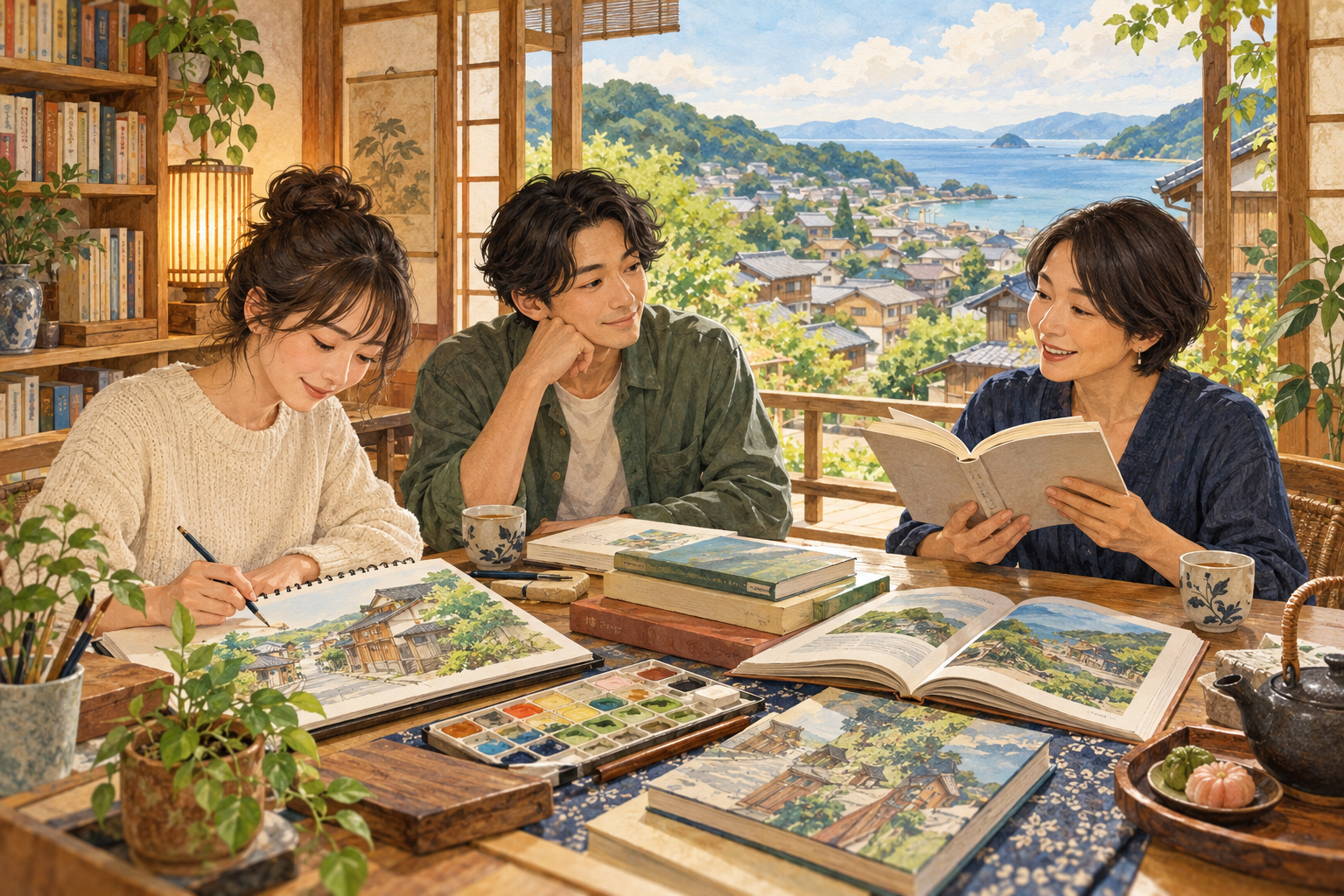
Did you know that a first Japan trip becomes more enjoyable when you choose a few complementary bases rather than every famous city? Ten places to visit when touring Japan are Tokyo, Kyoto, Osaka, Nara, Hiroshima, Miyajima, Kanazawa, Takayama, Nikko and Hakone. They connect neighbourhood life, religious heritage, historical townscapes and very different regional landscapes.
For a first Japan itinerary, Tokyo with one carefully chosen nearby outing and a Kansai stay around Kyoto, Osaka or Nara creates a clear structure. Hiroshima and Miyajima form another pairing, while Kanazawa and Takayama deserve realistic regional connections. This Japan travel guide offers ten choices, not ten compulsory stops in a short holiday.
The best places to visit in Japan reward noticing small details as well as famous sights. Choose a substantial cultural visit, leave room for ordinary streets and meals, and check the actual transport connections. A garden, a shopping street and a museum tell different stories; enjoying those differences is more rewarding than rushing between them.
Current travel and access context. Information checked on 14 October 2026. Confirm reservations, local visitor rules and transport before travel, and follow current weather and natural-hazard alerts. A convenient rail network does not remove the need to account for luggage, station transfers and the last local service. Read current advice.
EXPLORE JAPAN
Find your reading route
Compare the places and choose a manageable, informed route.
Japan at a glance
| Place | What it adds | Planning context |
|---|---|---|
| Tokyo | Neighbourhoods, museums and contemporary city life | A substantial first base |
| Kyoto | Religious heritage and historical urban landscapes | Select a few places rather than every temple |
| Osaka | Urban energy and a distinctive city atmosphere | A Kansai city base |
| Nara | Historical religious places and park landscapes | A focused Kansai visit |
| Hiroshima | Peace remembrance and a living city | Give interpretation and reflection time |
| Miyajima | An island setting and religious heritage | Plan the crossing and return |
| Kanazawa | Gardens, craft and historical districts | A deliberate regional stay |
| Takayama | A regional town and mountain surroundings | Check the exact onward route |
| Nikko | Religious architecture and wooded landscapes | Choose heritage or nature by the day’s demands |
| Hakone | Landscape, collections and hot-spring choices | A separately planned regional stay |
Full contents
Tokyo is easier to understand district by district. Choose a museum, market or architectural theme and explore the surrounding area instead of crossing the city repeatedly for short stops.
Historical religious spaces and contemporary shopping streets have different purposes. Respect worship, private property and photography instructions, and use interpretation to connect what you see with the city’s history.
Access and planning checks
Build the day around realistic transit and walking time. One well-explored neighbourhood often leaves a stronger memory than six hurried station exits.
Kyoto rewards careful attention to gardens, religious architecture and the streets between them. Ask how spaces were used and what their design encourages you to notice.
Temples and shrines are not interchangeable attractions. Admissions, photography and worship rules vary, while residential streets should not be treated as unrestricted photo sets.
Access and planning checks
Choose a coherent local cluster and leave time for meals. Popular places may be crowded, so pace the day without assuming an early arrival guarantees solitude.
Osaka offers a contemporary urban chapter that contrasts usefully with Kyoto. Food, public spaces and cultural collections can make the city meaningful beyond a single brightly lit street.
Choose a neighbourhood walk or museum that adds context. A shopping or entertainment district is also a workplace and community space, not simply scenery for visitors.
Access and planning checks
Check accommodation access and the actual route to planned outings. Osaka can support regional travel, but give the city itself time rather than leaving every morning.
Nara brings religious heritage and landscape together at a scale that suits a thoughtful day. A guided explanation helps connect buildings, sculpture and historical purpose.
Select the interiors that interest you and follow their rules. Around deer, keep a respectful distance and use only authorised feeding arrangements; familiar photographs do not make animals predictable.
Access and planning checks
Walking distances and weather still matter. Allow time to pause instead of attaching Nara to an already crowded Kyoto schedule.
Hiroshima’s remembrance sites deserve attentive reading and an unhurried pace. The museum and memorial setting help connect historical events with human experiences rather than a simple landmark checklist.
For families, discuss the subject beforehand in appropriate language. Leave room for reflection afterwards, and do not rush directly from emotionally demanding interpretation into another intensive visit.
Access and planning checks
The city also has contemporary life and cultural places beyond remembrance. Give those their own time without diminishing the seriousness of the historical visit.
Miyajima adds a different landscape to a Hiroshima stay. Religious architecture, shoreline and terrain are most interesting when considered together.
Tides change familiar views, while individual structures and uphill outings have separate access arrangements. Do not assume every photograph can be reproduced at any time.
Access and planning checks
Confirm ferry connections and return timing. A modest island visit can be satisfying without adding a demanding mountain walk.
Kanazawa offers an opportunity to connect gardens and craft with historical urban life. Choose a collection or guided district visit that explains materials, work and patronage.
Historical streets contain private and working spaces. Respect access and photography rules, and avoid treating all attractive buildings as open museums.
Access and planning checks
Plan the onward connection before fixing accommodation. Kanazawa deserves time as a place, not only an overnight link between major cities.
Takayama offers a smaller-town chapter with streets, craft and regional historical interpretation. A slow walk can reveal details missed in a hurried excursion.
Markets and cultural displays operate on their own schedules. Confirm current arrangements and ask about the actual context of a building or object rather than assuming every feature is equally old.
Access and planning checks
The surrounding mountains influence weather and transport. Allow realistic journey time and do not treat a distant landscape outing as a quick addition.
Nikko can offer rich architectural detail alongside a wooded setting. Begin with interpretation of the religious complex rather than focusing only on decoration.
An architectural circuit and a wider lake or mountain outing require different transport and walking plans. Choose the experience that fits the time available.
Access and planning checks
Check stairs, local buses and seasonal conditions. Nikko can be a considered outing from Tokyo, but an overnight stay may suit a slower regional visit.
Hakone is a region of different experiences, not one attraction with a single entrance. Museums, landscapes and bathing facilities should be chosen according to interest.
A view of Mount Fuji is weather-dependent, never a booking entitlement. Transport services and specialist activities also have their own operating conditions.
Access and planning checks
Confirm bathing rules, accommodation access and the complete local route. A relaxed stay is often more enjoyable than trying to complete every advertised circuit.
Make informed planning choices
Choose Tokyo and a Kansai base as one introduction, Hiroshima with Miyajima as another chapter, or a regional sequence through Kanazawa and Takayama. Nikko and Hakone are distinct nearby choices with local journeys of their own. Compare the actual fares and reservations needed rather than assuming one rail product is automatically best. Leave time for station changes, luggage and meals, recheck weather, and protect the final airport connection with a buffer.
Do we need to visit all ten?
No. This selection offers variety, not a measured ranking or compulsory circuit. Choose by geography, interests, mobility and current conditions. Leaving an attractive place for another trip can make the present holiday more enjoyable.
What should we confirm before booking?
Check authoritative travel advice first, then the exact transfer, admission or permissions, available facilities and cancellation arrangements. Ask about gradients, stairs, equipment and return transport where these affect your group. A promotional itinerary cannot establish present access or safety.
How can families learn without overloading the day?
Choose one question for an outing. How does a town use water? What does a historical building communicate? How does a habitat change with season? Let each person describe one observation, then use reliable interpretation to connect it with an explanation.
When is the best time to visit?
Match dates to the precise region and activity. City visits, exposed walks and water activities have different needs. Check seasonal operation and current conditions before departure; national climate summaries cannot establish that a particular outing is suitable.
Continue exploring
Top 10 Things to Do When Visiting and Touring Japan
Top 10 Things to Learn When Visiting and Touring Japan
At eduKate, we enjoy learning that makes the world easier to understand. Geography, history, science and vocabulary become more meaningful when connected with concrete places. Notice a detail, ask a useful question and check the explanation; the world becomes more interesting when its parts begin to fit together.
Explore eduKate’s structured small-group learning approach in Singapore
Sources and current checks
Destination and travel information checked on 14 October 2026. These links support further reading and fresh verification. Historical or promotional material establishes context, not present schedules, facilities or safe access. Follow official notices and confirm arrangements directly before booking.