
Quick answer: The most meaningful Saint Helena places span three themes: Jamestown, Jacob’s Ladder and High Knoll Fort reveal a remote harbour and its engineering; Longwood House, Napoleon’s former tomb and Plantation House tell different histories of the island; Diana’s Peak, Millennium Forest and Sandy Bay reveal exceptionally varied natural settings. Rupert’s Valley adds an important heritage subject, but port operations determine when any public access is possible.
Saint Helena is a British Overseas Territory in the South Atlantic, far from continental land and connected to the world by scheduled transport and maritime operations. It is known for Napoleon Bonaparte’s exile, but the island’s history also includes local communities, international trade, coerced labour and the stories of Africans brought there after their removal from slave ships. Its conservation projects are equally important to understand. A travel guide that only repeats one famous biography misses the island’s depth.
This top-ten guide is a reading and planning menu, not a claim that all sites are open on one day. Steep stairs, active government property, disease-sensitive forest habitats and port restrictions require very different preparations. Before booking, check Saint Helena Government’s entry-permit information, local transport timetables, official environmental rules, opening hours, international payment-card limitations and the travel conditions relevant to your nationality.
Check current transport and port-access rules
Saint Helena Government published revised bus arrangements in October 2026 and continues to restrict Rupert’s Bay during certain cargo operations. Read the current transport notices and port safety guidance before planning a visit.
eduKate · World heritage and learning
Find your reading route through Saint Helena
Three regional themes, ten places and one practical planning guide.
ROUTE 1 · PLACES 1–3
Jamestown and the harbour’s engineering history
Read the places before continuing to the next section.
ROUTE 2 · PLACES 4–6
Napoleonic heritage, fort and Plantation House
Read the places before continuing to the next section.
ROUTE 3 · PLACES 7–10
Cloud forest, restoration and the southern coast
Read the places before continuing to the next section.
Choose your ten places
The index compares places with different types of history, physical demands and permission requirements. Use it to choose your own manageable route.
| Place | Learning focus |
|---|---|
| 1. Jamestown Main Street and Museum of Saint Helena | Town and maritime society |
| 2. Jacob’s Ladder | Engineering and topography |
| 3. High Knoll Fort | Defence and island geography |
| 4. Longwood House and Napoleon’s exile history | Exile and documentation |
| 5. Napoleon’s former tomb site | Memorials and historical dates |
| 6. Plantation House and Jonathan’s giant tortoises | Civic heritage and animal welfare |
| 7. Diana’s Peak National Park and cloud forest | Cloud forest ecology |
| 8. Millennium Forest restoration landscape | Restoration and local science |
| 9. Sandy Bay and volcanic south-coast scenery | Volcanic landforms |
| 10. Rupert’s Valley historic coastline and managed cargo port | Maritime memory and working-port safety |
1. Jamestown Main Street and Museum of Saint Helena
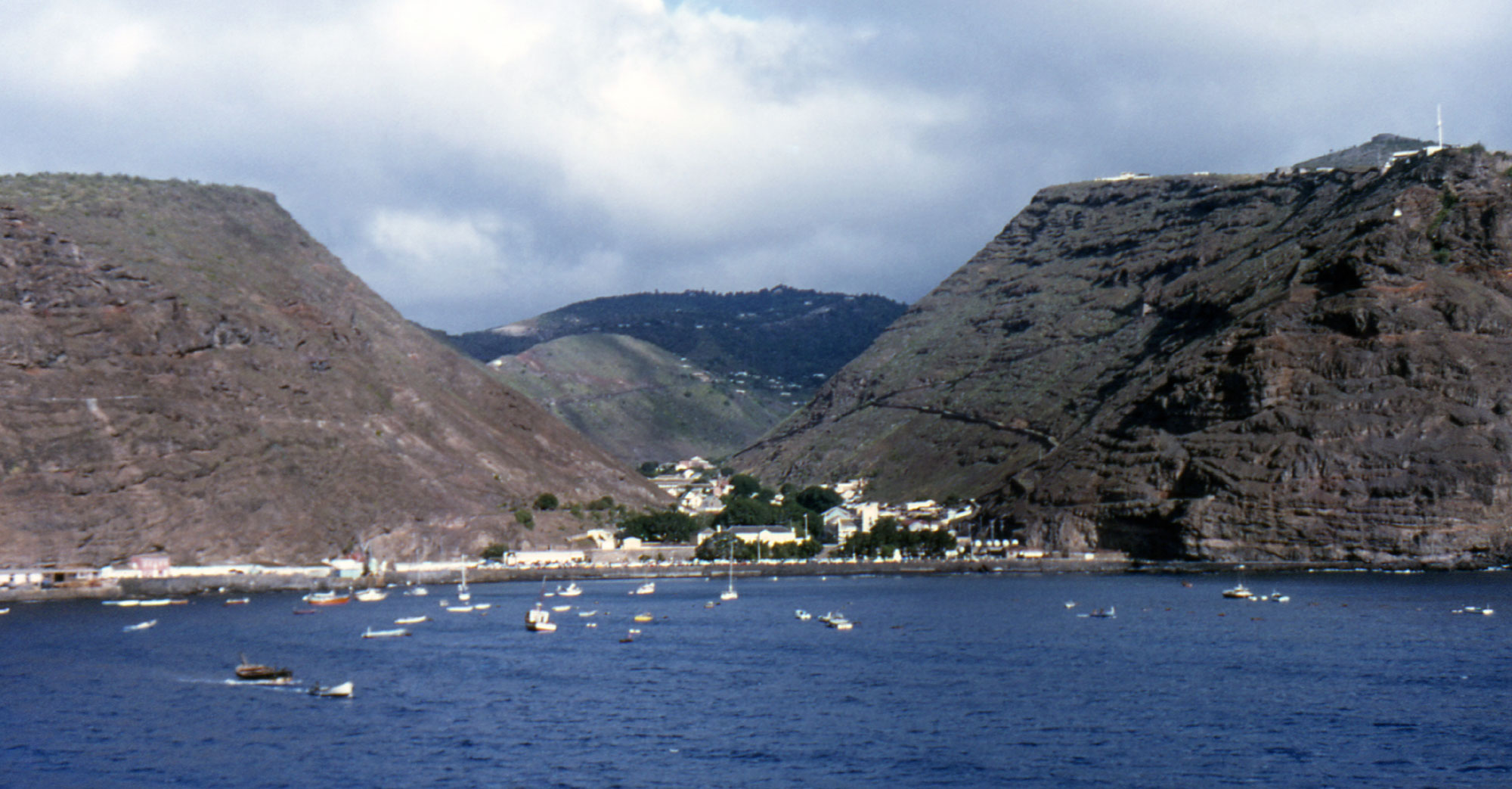
Why this place deserves time. Jamestown lies in a narrow valley opening onto James Bay, creating a remarkable setting for the island’s main town. Its streets, churches, public offices and museum introduce Saint Helena as a living South Atlantic community rather than simply the site of a famous European exile. The valley has long shaped maritime trade and access; limited flat land means the town’s buildings, roads and quays occupy a compact space. The Museum of Saint Helena helps explain settlement, the island’s changing role in ocean travel and everyday island life.
What to notice. Walk along authorised public streets and look at how buildings occupy the valley floor while roads climb steep slopes. Compare historic façades with modern commercial and community functions, and notice the different ways people use the harbour. In the museum, identify the types of evidence on display: photographs, artefacts, maps and dated records. Avoid guessing that every old structure was built in the same century or represents only one community.
The learning question. Sketch a map of town, valley, hillside road and landing area. Why is the bay important even when the coast is exposed? What additional evidence would be needed to understand the islanders who worked in the harbour and those whose histories were often overlooked in official accounts?
Access and planning
Check museum hours and current government visitor advice. Some buildings are active offices and working docks, not unrestricted tourist attractions. Hot sun, steep streets and traffic justify an unhurried walking plan.
2. Jacob’s Ladder
Why this place deserves time. Jacob’s Ladder is a steep staircase of 699 steps linking Jamestown with Ladder Hill. It occupies the alignment of a former inclined-plane railway used to move goods between elevations. The surviving staircase makes a practical engineering problem visible: the town lies low in a confined valley, while transport and defence routes needed to reach much higher ground. It is a landmark that can be studied without actually climbing it, since the ascent is physically demanding.
What to notice. From the base, observe the extraordinary incline and how the stairs form a near-straight route up the rock face. Compare its path with the winding road alternatives. During a climb, footwear, balance and hydration matter more than an attractive view. The surfaces can be affected by maintenance, weather and heavy use, so no published account should promise unrestricted access.
The learning question. Draw a side-view diagram showing an inclined route and a longer winding road. Ask when mechanical haulage would have been preferable to people carrying goods and how modern transport has changed the calculation. A useful explanation distinguishes the railway’s former function from the present staircase.
Access and planning
Check current access and your own mobility before climbing. Do not attempt the steps during unsafe weather or simply to complete a challenge. A safe view from below can be enough, and a road alternative may suit families.
3. High Knoll Fort
Why this place deserves time. High Knoll Fort is a historic defensive landmark on elevated ground above the island’s central valleys. As one of Saint Helena’s recognised historic conservation areas, it helps explain the strategic importance placed on this remote harbour and its approaches. The fort is not simply a place for panoramic photography: its high walls, routes and enclosed spaces were designed around security, water, supplies and communication. The site can complement a study of Jamestown’s lower town and the historic use of harbour infrastructure.
What to notice. At lawful viewpoints, examine the relationship between existing walls and nearby terrain. Ask which details are original, which have been repaired and which areas are restricted because of conservation. The presence of substantial masonry does not guarantee an inner staircase, roof or arch is structurally safe. A windy hilltop can be significantly less comfortable than the sheltered streets of Jamestown.
The learning question. Mark the fort and Jamestown on a map. What routes might an observer monitor from the fort, and what are the practical limits of visibility in fog? Discuss why a building designed for defence has a complicated relationship with the island’s colonial past and its residents.
Access and planning
Confirm current site access with Saint Helena’s visitor authorities. Avoid damaged stonework, closed chambers and exposed edges. A qualified historical guide is preferable when the protected structure has only limited public interpretation.
4. Longwood House and Napoleon’s exile history
Why this place deserves time. Longwood House was Napoleon Bonaparte’s residence during much of his exile on Saint Helena, ending with his death in 1821. The house, historic grounds and curated interiors belong to the French Domains heritage preserved on the British island. The site gives direct context for the final years of a major figure in European history, but it should not displace the island’s wider story of local communities and maritime life. Official heritage interpretation can distinguish genuine period evidence from later restoration and popular legends.
What to notice. From permitted rooms and pathways, consider how everyday domestic life was organised under the constraints of exile. Observe furniture, building materials and the exposed upland setting, looking for explanations of what survives and what was recreated. An old portrait or table alone cannot establish exactly what happened in a room; archival context is essential.
The learning question. Construct a timeline from the exile beginning in 1815 to Napoleon’s death in 1821. Separate documented events from accounts written later. Ask how geography and the limited communications of the era shaped life at Longwood and the way news travelled to Europe.
Access and planning
Check the current opening arrangements through the Fondation Napoléon or site managers. Autumn 2026 public transport changes may affect Longwood-area journeys. Do not assume every room is open or a return bus will be waiting.
5. Napoleon’s former tomb site
Why this place deserves time. The sheltered valley that held Napoleon’s original grave is a separate place from Longwood House. He was buried on Saint Helena in 1821, and his remains were returned to France in 1840. The present Saint Helena site is therefore a former tomb and memorial, not the location of his body today. That clear distinction matters in an educational travel guide and helps explain why physical memorials, museums and archives offer different kinds of evidence about the same person.
What to notice. Observe the quiet landscape and any authorised interpretation with the respect appropriate to a commemorative place. Compare the valley’s planted features and walking approach with the more exposed ground around Longwood. Do not infer that all visible features date from the burial ceremony; memorial sites can be maintained and altered through generations.
The learning question. Ask why a place retains cultural importance after a burial is moved. A simple exercise could compare the island site and the later tomb in Paris, identifying the different dates and purposes of each. Use official sources for claims about the transfer rather than retelling speculation.
Access and planning
The French Domains provide separate admission and visiting rules for the former tomb. Confirm opening, route conditions and a reliable return journey before travelling. Do not enter closed grounds or damage planted areas.
6. Plantation House and Jonathan’s giant tortoises
Why this place deserves time. Plantation House is the Saint Helena Governor’s official residence, and its grounds are known for long-lived giant tortoises, including Jonathan. The place is attractive because it connects government heritage, landscape management and the remarkable survival of an individual animal whose life spans changing generations. Visitors should remember that the estate is a working residence and that the tortoises are living creatures with welfare needs, not props for close-up photographs or feeding.
What to notice. From areas expressly opened to visitors, examine the relationship between the old house, gardens and animal habitats. Watch the tortoises at a respectful distance without crowding, touching or offering food. Popular estimates of Jonathan’s age reflect historical knowledge and are not an exact recorded birth date.
The learning question. Consider how a community can estimate an animal’s great age using dated photographs, veterinary records and other evidence. Why should a natural-history account distinguish an estimate from a directly measured fact? A second question is how an official home can balance conservation, work and limited public access.
Access and planning
Contact the Governor’s Office or tourism service for tours, opening and tortoise rules. Saint Helena Government revised routes involving Plantation House in October 2026; verify the current bus or taxi connection. Respect all residential restrictions.
7. Diana’s Peak National Park and cloud forest
Why this place deserves time. Saint Helena’s high central peaks support a cloud-forest environment very different from the island’s dry lower coast. Diana’s Peak National Park protects vulnerable habitats with native and endemic species that occur naturally in very few places. Government conservation programmes have documented threats from introduced organisms and plant diseases. This is a living scientific conservation project: the value lies in learning how ecosystems are monitored, protected and restored, not in acquiring a guaranteed summit photograph.
What to notice. On an authorised maintained trail, notice fog, humidity and vegetation changes with elevation. Dense growth can conceal slippery ground, and cloud may remove an apparently reliable viewpoint. Foot cleaning stations and closed nursery areas can be vital to preventing plant pathogens from spreading, even when such measures seem inconvenient.
The learning question. Compare the high forest with a dry coastal landscape. How might moisture, temperature and exposure affect the plant community? Ask why conserving a species involves protecting soil, water, genetic diversity and its habitat rather than planting a single tree. Local scientific work provides stronger evidence than casual wildlife guesses.
Access and planning
Check government and national-park notices for current biosecurity rules and path closure. Use experienced local guidance for steep or unfamiliar routes, and stay away from protected plant plots. No traveller should bypass disinfection measures.
8. Millennium Forest restoration landscape
Why this place deserves time. Millennium Forest is a community-supported effort to rebuild native woodland, especially Saint Helena’s emblematic gumwood. The landscape reflects damage and environmental changes over many generations, together with deliberate restoration work by local conservation organisations and volunteers. It provides an especially good lesson in hope grounded in science: recovery needs seeds, care, protection from invasive species and repeated monitoring rather than simply planting trees and expecting every individual to thrive.
What to notice. Along lawful routes, compare planted trees of different sizes with nearby exposed ground. Look at how soil, wind and water may affect seedlings and the way conservation teams protect young plants. If there is an authorised nursery or education programme, ask about plant origins and care while respecting restricted areas.
The learning question. Write down the stages of a long-term restoration project: collect suitable seed, propagate, select habitats, plant, protect and monitor. Why might a species need continuing assistance even after a large number of saplings have been planted? Compare this task with conservation of the cloud forest, where different conditions and diseases require different approaches.
Access and planning
Check Saint Helena National Trust and government guidance for visits or guided planting opportunities. Do not independently move seedlings, take seeds, enter closed plots or claim that a newly planted area is already a complete original forest.
9. Sandy Bay and volcanic south-coast scenery
Why this place deserves time. Sandy Bay is known for some of the island’s striking volcanic landforms and exposed coast, offering a vivid comparison with Jamestown’s sheltered valley and the wet uplands. The area falls within government conservation planning and includes habitats and rock formations that deserve protection. An approved road viewpoint or local guided walk can make the story of geology accessible without turning an unstable ridge or dangerous sea into a recreational target.
What to notice. From safe public ground, compare ridges, rock colours and patterns of erosion. The sea may produce powerful swell, and a beach name is not evidence of safe swimming. Different parts of the landscape support different vegetation, reminding visitors that Saint Helena’s many microclimates can exist surprisingly close together.
The learning question. Draw a simplified profile from a highland slope to the sea. Ask how repeated eruptions in the distant geological past and long periods of weathering may have shaped today’s terrain. Explain what cannot be concluded about the age of a rock from its colour alone. Compare the setting with Millennium Forest, where current human intervention is visible.
Access and planning
Use official routes and do not enter closed nature areas or descend cliff shortcuts. Assess road and walking conditions before departure, especially after heavy rain or strong winds. Leave fragile features where they are.
10. Rupert’s Valley historic coastline and managed cargo port
Why this place deserves time. Rupert’s Valley has a complex maritime history and connects Saint Helena to the experiences of Africans who were brought to the island after the interception of slave-trading vessels. Historical and archaeological interpretation should be handled with care and with due respect for human lives, burial places and descendant communities. Today, the valley also contains the island’s principal managed cargo infrastructure, so any visitor activity is subject to port safety rules.
What to notice. From specifically authorised public locations, compare the bay’s sheltered features with the working jetty and freight yards. Historic interpretation should focus on reliable records, conservation and respectful remembrance rather than entering archaeological or burial spaces. Modern cargo operations are legitimate work, not a performance staged for tourism.
The learning question. Ask what can be learned about maritime life from a port today and what historical records are needed to investigate earlier forced migration and liberation. Consider why memorial and archaeological areas require consultation and protection. A responsible explanation can acknowledge suffering and later community life without sensationalism.
Access and planning
Saint Helena Port Control may close the entire bay and beach at the highest cargo security level. The government’s September 2026 notice reaffirmed these temporary restrictions. Check current announcements, never enter a fenced or closed area and choose a remote-history learning activity if access is unavailable.
Plan a thoughtful Saint Helena journey
Verify entry permission and intercontinental transport. Saint Helena uses its own permission and visa arrangements, and visitors may travel through countries with additional transit rules. Its isolated location makes cancelled services consequential. Confirm the government’s entry conditions and plan sufficient flexibility.
Start with Jamestown. Its museum, public streets and Jacob’s Ladder offer contrasting accessible or challenging experiences. The town makes a sensible first base for food, transport information, currency arrangements and local guides. Do not treat a historic port as unrestricted.
Plan Napoleon’s heritage visits separately. Longwood House and the former tomb have different ticketing and opening conditions. Historic interiors may be protected from photography or closed for maintenance. Confirm access through the French Domains before planning a timed route.
Read the October 2026 bus changes. Saint Helena Government updated services affecting Longwood and Plantation House, and its later routes may differ from old brochures. A taxi or arranged guide can be sensible when the public timetable cannot accommodate a return.
Protect ecological restoration. Cloud-forest trails and Millennium Forest may have plant disease or access controls. Clean shoes when instructed, remain on permitted tracks and do not enter restricted nurseries. Conservation applies to the habitat as a whole, not just attractive individual plants.
Respect Rupert’s port security. When the cargo access level rises, Rupert’s bay and beach are closed to public entry. Port Control rules override tourism descriptions. The area’s history can be studied through authorised museum or community interpretation when access is prohibited.
Prepare island payment options. The government notes that foreign Visa and Mastercard acceptance is growing but not universal. Confirm accommodation, transport and local payment options in advance to avoid unnecessary disruption.
Respect both historic memory and current community life. The island’s Saints are not a supporting cast for stories of Napoleon. Take time with the museum, local guides and the complex experiences associated with earlier island trade, migration and conservation efforts.
Frequently asked questions
Is Saint Helena part of South Africa?
No. Saint Helena is a British Overseas Territory in the South Atlantic with its own entry arrangements and local government.
How many steps are on Jacob’s Ladder?
There are 699 steep steps. The ascent is strenuous and not appropriate for every traveller.
Is Napoleon still buried on Saint Helena?
No. Napoleon died there in 1821, but his remains were moved to France in 1840. His former burial location on the island is a memorial.
Can I visit Jonathan at Plantation House?
Viewing may be possible only under current authorised arrangements for the Governor’s official residence. Do not touch or feed the giant tortoises.
Are all national-park trails always open?
No. Conservation teams sometimes restrict access for plant diseases, restoration and weather. Check official notices, biosecurity requirements and current route status.
Is Rupert’s beach open during cargo operations?
It can be fully closed under port security rules. Check the latest access level with Port Control before any visit.
Can I rely on international credit cards everywhere?
No. The government states acceptance is increasing but not universal. Arrange suitable payment methods with providers before your trip.
How long should I spend on the island?
The time required depends on confirmed flights, heritage opening, mobility and weather. A few days let you study distinct town, history and ecology themes without unrealistic rushing.
Build understanding through evidence
Saint Helena rewards an evidence-led trip. Physical engineering at Jacob’s Ladder, documented history at Longwood, conservation science at Diana’s Peak, and present-day harbour operations answer different questions. A strong journal records what is directly observed, what a specialist or exhibit explains, and which matters need fresh official confirmation. It makes no claim that one short visit establishes the full history of the Saints or the health of every island ecosystem.
For a family geography exercise, trace Jamestown, Longwood and the cloud forest on a map. Explain how elevation and bus schedules alter actual travel time, and show every assumption rather than guessing. The same emphasis on explaining reasoning and evidence features in eduKate’s Secondary 1 Mathematics Tutor Clementi | Small Groups Tutorials.
Continue learning about Saint Helena
Top 10 Things to Do When Visiting and Touring Saint Helena · Top 10 Things to Learn When Visiting and Touring Saint Helena · World Country Directory
Featured photograph: Archival Jamestown view (1985), Andrew Neaum, CC BY-SA 3.0, via Wikimedia Commons. The image is historical; current conditions may differ.

Sources and current information
Sources reviewed on 18 October 2026 (Singapore time). Historic and conservation descriptions do not guarantee public access, permitted entry or available transport. Refer to the latest government notices, site managers and relevant travel advisories before any remote-island journey.
- Saint Helena Government — Visiting information
- Saint Helena Government — Entry permits
- Saint Helena Government — October 2026 public transport changes
- Saint Helena Government — Rupert’s Bay access levels
- Saint Helena Government — Latest cargo-port restriction notice
- Saint Helena Government — National Conservation Areas
- Saint Helena Government — Biosecurity and plant disease
- Saint Helena Government — Millennium Forest conservation
- Fondation Napoléon — French Domains access and heritage
- Saint Helena Airport — Island attractions map