
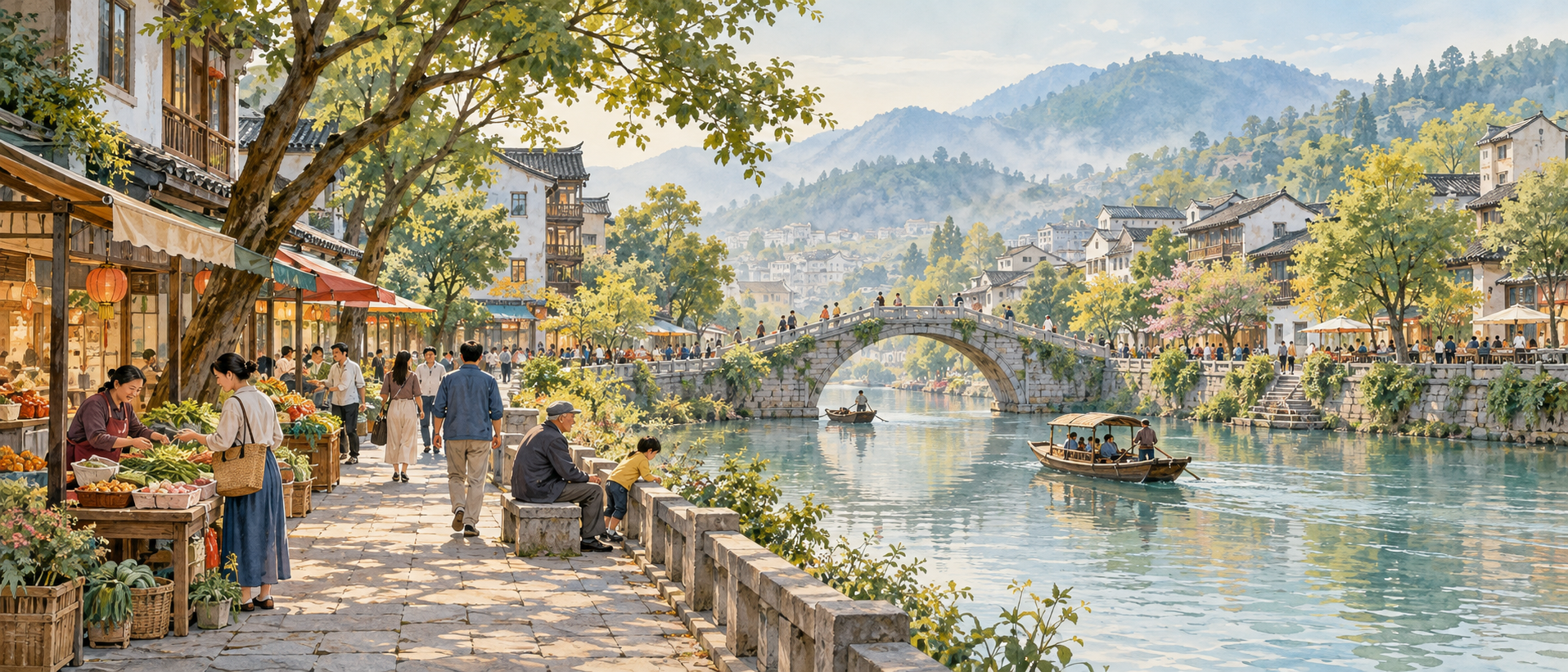
China is not a checklist you can finish in a week, and that is excellent news for the curious traveller. The best things to do when visiting and touring China may begin with Beijing’s Forbidden City and the Great Wall, but they continue through Xi’an’s archaeological heritage, Shanghai’s waterfront, Hangzhou’s West Lake, Chengdu’s teahouses and the astonishing landscapes of Guilin. The art lies in choosing a route that lets you see how these places connect.
This first-time China travel guide brings together ten memorable experiences, realistic China itinerary ideas, heritage context, food and rail travel tips, and the practical details that can transform a good trip. You will also find current ticketing and immigration sources, English–中文 vocabulary and ways to avoid common planning mistakes. Rather than promise to ‘do China’ in one breathless holiday, select a few cities and give them time to become real.
Before booking: Entry eligibility is passport- and itinerary-specific. China’s visa-free transit arrangements are not equivalent to unconditional tourist visa exemption; the official National Immigration Administration explains qualifying nationalities, ports, third-destination tickets and permitted areas. Major attractions such as the Palace Museum may require advance real-name reservations. Details were researched for this guide on 8 October 2026; re-check opening times, permits, transport and conditions for the actual travel dates.
eduKateSG · A WORLD WORTH UNDERSTANDING
Your China journey, one rewarding region at a time
Imperial capitals, living streets, waterways, tea and landscapes become unforgettable when the route makes sense.
China at a glance
China’s vastness is the first practical fact. Beijing and Xi’an create a strong history-focused introduction; Shanghai can anchor an eastern urban and garden route; Chengdu gives access to Sichuan culture and conservation; Guilin and Yangshuo introduce a southern karst landscape. These are different regional chapters, not ten stops on one simple metropolitan sightseeing ticket.
Fast rail can make some city pairs convenient, but station travel, identity checks, reservations and ordinary fatigue still occupy time. The train journey should serve the experience, not become the point of the trip. A thoughtful itinerary plans realistic days and leaves room for a quiet neighbourhood meal.
The best discoveries may be modest: a person preparing tea, a waterside bridge seen in changing light, a museum label that corrects an assumption. Pair grand monuments with everyday observation, and the scale of the country becomes more manageable.
- First 6–8 days: Focus on Beijing plus Xi’an, or Shanghai with Hangzhou and Suzhou.
- First-time headline experiences: A booked Palace Museum visit and a sensible Great Wall section, rather than many rushed day trips.
- Good regional extensions: Chengdu for Sichuan and panda conservation; Guilin for karst landscapes; Dunhuang for Silk Road art.
- Important practical step: Confirm visa status and online reservations with official providers before booking tickets or trains.
Know before you go
Review visa and transit rules for your actual passport, arrival and departure ports. The National Immigration Administration’s August 2026 guidance describes a 240-hour visa-free transit programme with specific eligibility and onward-ticket requirements. A direct return to the country from which you arrived may not satisfy a third-destination transit condition; do not rely on a social-media explanation.
China’s visitor experience increasingly involves advance bookings and identity-based admission. The Palace Museum’s official visitor information says day-of tickets are not sold; foreign visitors generally use passport information for reservations. The Chengdu panda base also operates its own booking and identification rules. Secure reservations through legitimate official or authorised channels and check the current instructions.
Plan digital navigation and payment options before arrival, but retain a lawful backup for situations when an app or mobile connection fails. Check train rules, accommodation registration arrangements, emergency contacts and current local advisories. In crowded heritage spaces, observe entry directions and do not assume drone or photography permissions.
1. Spend a full morning inside Beijing’s Palace Museum
Beijing’s Forbidden City, now the Palace Museum, rewards a visit that begins with a plan. The long sequence of gates, courtyards, ceremonial spaces and collections is more interesting when you understand how imperial architecture arranged authority. A rushed photograph in the largest courtyard tells only part of the story.
Choose a visitor trail that fits your walking stamina and give one or two galleries genuine attention. What was a courtyard designed to communicate? How did everyday work support life within the palace? The scale becomes human when you look closely at materials, restoration and the objects that remain.
The official museum guidance is important: there is a real-name reservation system, passport details for foreign visitors and no same-day ticket sales. Some galleries and special exhibits have additional rules. Treat booking as a core part of the experience, not a task to solve after arriving at the gate.
Make it memorable: Reserve a legitimate admission slot, choose a half-day or longer official trail and allow time for one focused exhibition.
Check before going: Use the Palace Museum’s official ticket guidance; check closure days, actual passport requirements and the date-specific entry slot.
2. Choose one Great Wall section and understand its terrain
The Great Wall is not a single continuous promenade next to downtown Beijing. It is an extensive historic system, and different sections provide different combinations of restoration, steepness, crowd levels and transport. Choose the one that fits your group rather than chasing the most dramatic social-media photograph.
At Badaling, the wall’s relationship to ridges and defensive geography becomes immediately clear. Beijing’s official visitor site publishes details for that area, including seasonal opening information. Other sections may involve different operators, different access rules and substantially different trail demands.
Observe how the wall follows the land. The view over mountains is magnificent, but the engineering response to steep terrain is equally revealing. Ask why watchtowers sit where they do, and consider how weather, restoration and visitor impact affect a monument of this scale.
Make it memorable: Give the wall a dedicated day with a reliable round-trip plan and suitable footwear.
Check before going: Confirm the exact section, entry system, transport, weather and steps; do not transfer one section’s rules to another.
3. Walk a Beijing hutong without treating residents as an exhibit
After the scale of imperial Beijing, a hutong neighbourhood changes the viewpoint. Narrow lanes, courtyards, small businesses and everyday rhythms reveal parts of urban life that palaces cannot. Historic neighbourhoods also change over time, and preservation debates are part of their present identity.
Choose a modest walking route and take time to notice the relationship between lanes, entrances and shared space. A local guide can explain the architectural history, but the homes remain private homes. Photographing an open doorway is not an automatic invitation to photograph someone inside.
A slower day might combine a heritage walk with a small museum, market or neighbourhood meal. That rhythm lets Beijing feel inhabited and contemporary. Leave the camera down now and then, and you may remember the place more clearly.
Make it memorable: Explore one well-documented hutong district on foot and pair it with a small, carefully chosen cultural stop.
Check before going: Respect private homes, posted restrictions and visitor congestion; use confirmed routes rather than entering courtyards uninvited.
4. Meet Xi’an through its terracotta figures and city history
Xi’an connects a traveller with ancient capitals, archaeology and routes of cultural exchange. The famous terracotta figures associated with the Mausoleum of the First Qin Emperor are extraordinary partly because they express both large-scale organisation and individual variation. Look beyond the headline of ‘thousands of soldiers’ to the craftsmanship and archaeological method.
A well-paced day at the site includes time for museum interpretation, not only the main excavation view. Consider what survives, what had to be reconstructed and what remains uncertain. Archaeology is a record of questions being answered slowly, often over generations.
Xi’an itself deserves time beyond the mausoleum. Historic city structures, neighbourhood food traditions and museums can provide context for the longer history. It pairs well with Beijing on a history-centred trip, provided you allow time for the intercity journey and the transfer to the archaeological site.
Make it memorable: Spend a full archaeological day and reserve a separate city-history block instead of dashing back to the station.
Check before going: Verify the attraction’s current official ticket channel, identity rules, transport and venue restrictions.
5. Watch Shanghai’s Bund become a conversation across the river
Shanghai’s Bund offers one of the clearest visual conversations between historic commercial architecture and a more recent skyline. The river divides the picture but links the city’s stories. Visit by daylight to read the building details; return at a different hour if you want to experience the change in light.
A waterfront photograph is a good start, not the whole day. Museums, contemporary art, neighbourhood lanes and food streets reveal a metropolis with many overlapping histories. Choose a cluster rather than repeatedly crossing a city of enormous distances.
Shanghai is also a useful place to learn modern travel routines. Metro navigation, railway stations and mobile-service arrangements matter almost as much as the attraction list. A visitor who has solved those essentials can spend more time looking and less time anxiously checking the phone.
Make it memorable: Pair a Bund walk with one neighbourhood or museum that tells a different part of Shanghai’s story.
Check before going: Check local attraction opening times, public-event crowd controls and the real distance between districts.
6. Slow down along Suzhou’s gardens and canals
Suzhou is often introduced by its classical gardens and waterways, and both deserve attention. In a traditional garden, the visitor is guided through framed views, rocks, plants, water and architecture in a carefully constructed sequence. The pleasure comes from moving slowly enough to notice how each view is composed.
Canal streets add another layer. They explain how waterways influenced commerce and urban life, while reminding visitors that a photogenic lane can still be a place where people live and work. Avoid reducing Suzhou to a picturesque backdrop, and choose an authorised visit rather than a crowded grab for a private doorway.
Suzhou can combine naturally with an eastern-China route based in Shanghai, but ticket capacity and train arrangements still require care. One excellent garden and a measured canal walk may be more rewarding than a race through an overly long list.
Make it memorable: Visit one carefully chosen classical garden and a canal neighbourhood, leaving time to examine the details.
Check before going: Confirm garden reservations, opening conditions, train stations and whether canal activities are operating.
7. Discover why Hangzhou’s West Lake inspired poets
West Lake is not just a scenic waterfront. UNESCO describes it as a cultural landscape that has influenced poets, artists, garden design and ideas of harmony between nature and human intervention for centuries. Causeways, hills, pagodas, pavilions and planted landscapes create a sequence of views that change as you move.
Walk a manageable lakeside section rather than insisting on circling the entire lake at speed. Give your eyes time to understand how a bridge, an island or a distant hill changes the frame. The landscape has been shaped by generations of decisions, and recognising that makes it even more beautiful.
Hangzhou also offers a chance to think about tea culture and hospitality, though specific farms and tea activities vary in access. Pair a lake morning with one well-chosen cultural afternoon and let the place remain calmer than your schedule.
Make it memorable: Follow part of a causeway, read the UNESCO landscape description and choose one hosted tea or heritage experience.
Check before going: Expect busy holiday periods; confirm any boat, museum or hosted tea reservation before travelling.
8. Let Chengdu teach you about Sichuan life and panda conservation
Chengdu is often presented as the home of giant pandas, and that is a compelling reason to visit. At the Chengdu Research Base of Giant Panda Breeding, however, the deeper story concerns animal care, breeding research, habitats and conservation education. Watch what the animals choose to do rather than expecting them to perform on demand.
Plan around the base’s official ticket rules and visit etiquette. The organisation publishes real-name booking information and instructions for admission. A panda encounter should never involve feeding, touching, loud behaviour or attempts to attract an animal’s attention for a photograph.
Beyond the base, spend time understanding Sichuan’s famous food traditions and tea culture. Regional dishes make more sense when you learn about ingredients, balance and the way people share meals. A teahouse afternoon may say as much about Chengdu as an entire second attraction list.
Make it memorable: Combine a properly booked panda-base visit with one unhurried Sichuan food or teahouse experience.
Check before going: Verify the official booking system, identity documents, visit times and welfare rules; do not expect guaranteed animal activity.
9. See the karst landscape of Guilin and Yangshuo from the ground
The hills and rivers around Guilin and Yangshuo are among China’s most recognisable landscapes. Limestone formations rise above fields and waterways, making geology visible in unforgettable shapes. But the region is not one fixed photograph. Light, rain, river levels and agricultural life alter what a visitor actually sees.
Choose an organised river perspective or a village-area walking or cycling outing appropriate to the conditions. Ask how the karst formed and how local people use the land. Understanding a landscape’s geology does not diminish its beauty; it gives you more ways to enjoy it.
Water safety and local access deserve care. River activities may be altered by weather and flow. Respect farmland and villages as working environments, and avoid entering fields merely to recreate an image. A relaxed overnight stay may reward visitors more than a long excursion from a distant city.
Make it memorable: Select one river or countryside experience and make time to observe the geology as well as the scenery.
Check before going: Confirm weather, water conditions, responsible operators and actual transfer times between Guilin and Yangshuo.
10. Read Silk Road history in Dunhuang’s cave art
Dunhuang, on the historic networks commonly called the Silk Roads, opens a very different chapter of Chinese travel. The Mogao Caves preserve remarkable Buddhist art and historical evidence of cultural exchange. Their significance lies not only in the imagery but also in the effort required to protect fragile interiors over time.
An informed visit benefits from learning before arrival. Why were cave temples created? How did patronage, travel and religious traditions change the paintings? What does conservation mean when light, humidity and crowds can damage irreplaceable work?
Because heritage access may use scheduled visits, ticket controls and conservation-led restrictions, this is not a place for spontaneous assumptions. Allow Dunhuang its own regional trip rather than trying to attach it as an easy day excursion from Xi’an or Beijing.
Make it memorable: Study the art and conservation history, then use the authorised visitor route if you schedule the region.
Check before going: Confirm official ticketing and any cave-access limitations; do not photograph or touch fragile heritage against venue rules.
Choose your route before your reservations
Beijing and Xi’an: seven to nine days of history
Give Beijing sufficient time for the Palace Museum, a Great Wall day and a neighbourhood or museum day. Continue by a suitable confirmed train or flight to Xi’an, allowing dedicated time for the terracotta site and the city. This route has a coherent historical spine.
Shanghai, Suzhou and Hangzhou: six to eight days in the east
Base yourself sensibly and use rail connections to visit one or both nearby cultural destinations. Shanghai provides modern urban energy, Suzhou slows the pace through gardens and water, and Hangzhou develops a lake-and-landscape theme. Do not overestimate how much a day trip can contain.
Chengdu plus a chosen regional focus
Plan time for the panda base, Sichuan food and local life, then decide whether another suitable destination deserves its own days. Avoid adding Guilin, Dunhuang and the east coast simply because they appear on a national list.
Guilin or Dunhuang: a specialist journey
Choose Guilin and Yangshuo for karst scenery and countryside experiences, or Dunhuang for art, desert landscapes and Silk Road history. Both reward several nights and careful logistics, not a last-minute add-on to a short Beijing weekend.
Small planning decisions that make a big difference
Check nationality-specific visa and transit conditions through official Chinese immigration information. The 240-hour visa-free transit framework has specific conditions and is not a general promise of ten days in China for every traveller. For any stay longer than eligibility allows, obtain the appropriate entry permission in advance.
Attractions increasingly ask visitors to reserve with valid identity documents. Store the booking confirmations, use the same identity information during reservation and entry, and confirm whether the operator accepts a physical passport or another valid document. Do not rely on tickets from an unverified reseller, especially for restricted heritage institutions.
Train stations can be substantial transport hubs. Leave time to reach the correct station, complete identity checks and board. Prepare digital maps, a permitted payment method, charging, translations of accommodation addresses and an alternative when mobile data fails. All these are small tasks that create a relaxed travel day.
- Verify passport, visa or transit eligibility with the National Immigration Administration.
- Reserve major museums and animal-research attractions using official or authorised channels.
- Keep your booking identity consistent with your travel document.
- Choose a small number of connected cities rather than ten scattered provinces.
- Confirm the right railway station, boarding time and luggage rules.
- Set up maps, communications and workable payment methods before arrival.
- Respect neighbourhood privacy and cultural site photography restrictions.
- Check weather and conservation requirements for walls, caves, rivers and protected areas.
Twelve helpful English–中文 travel words
These are practical translations for readers who move between English and Chinese. Names and local speech may differ, so confirm pronunciation or ask a local professional when it matters.
| English | 中文 | In practice |
|---|---|---|
| hello | 你好 | Nǐ hǎo: a useful greeting. |
| thank you | 谢谢 | Xièxie: thank someone for help. |
| train station | 火车站 | Huǒchēzhàn: confirm which station. |
| high-speed rail | 高铁 | Gāotiě: check your departure terminal. |
| ticket | 门票 | Ménpiào: may require advance booking. |
| reservation | 预约 | Yùyuē: commonly required at museums. |
| passport | 护照 | Hùzhào: needed for many visitor bookings. |
| museum | 博物馆 | Bówùguǎn: check the closure day. |
| scenic area | 景区 | Jǐngqū: read entrance rules. |
| vegetarian | 素食 | Sùshí: explain meal preferences clearly. |
| restroom | 洗手间 | Xǐshǒujiān: practical when travelling. |
| help | 帮助 | Bāngzhù: ask staff for assistance. |
Keep a travel notebook that sees more
Give each city one question rather than one hundred photos. In Beijing ask how architecture expresses authority. In Suzhou ask how a garden controls your view. In Chengdu ask what the panda base teaches about animal welfare. In Dunhuang ask how preservation changes access. Your notes will become an original journey instead of a collage of famous names.
The other good habit is to leave one place uncrowded by plans. The hour spent noticing steam rising from a bowl of noodles, listening to conversations in a teahouse or tracing a reflection in West Lake may reveal more than a rushed extra admission ticket. Good travel is ambitious about understanding, not merely about quantity.
Frequently asked questions about China
What is the best China itinerary for first-time visitors?
Beijing plus Xi’an is a strong history-focused introduction. Shanghai with Suzhou and Hangzhou is an excellent alternative for cities, gardens and landscapes. Choose by interest and length of stay.
Do I need a visa to visit China in 2026?
It depends on nationality, purpose, route, length of stay and the specific immigration policy. The 240-hour transit scheme has important restrictions; verify directly with the National Immigration Administration or appropriate consular channel.
Can I buy Forbidden City tickets at the gate?
The Palace Museum’s official guidance says it does not sell same-day tickets and requires advance identity-linked reservations. Follow the current official booking instructions.
Is the Great Wall a half-day stop from Beijing?
Some sections are reachable as day trips, but travel time, terrain, weather and crowds mean a dedicated day is usually more comfortable. Choose the specific section before planning transport.
Can I visit Chengdu, Guilin and Dunhuang in one week?
It is possible to travel large distances, but a week attempting all three will be dominated by transfers. Give one region room and save the others for another journey.
Official reading and the next destination
Use these official and institutional sources to confirm current rules and learn more about the places in this guide. A linked organisation may change its timetable, conditions and admission rules after publication.
- China — official national tourism site
- National Immigration Administration — August 2026 transit policy
- Palace Museum — official visitor guidance
- Palace Museum — official reservations
- Beijing government — Badaling Great Wall
- Chengdu Research Base of Giant Panda Breeding — visitor tickets
- UNESCO — West Lake Cultural Landscape of Hangzhou
- UNESCO — China World Heritage properties
Follow the alphabetical journey: Chile ← China → Colombia. Find every published country in the World Country Directory, or explore the World Travel Hub.
Prefer a city-level reading plan? Browse the World City Experiences Directory, and compare your route with the wider City Places Directory.