
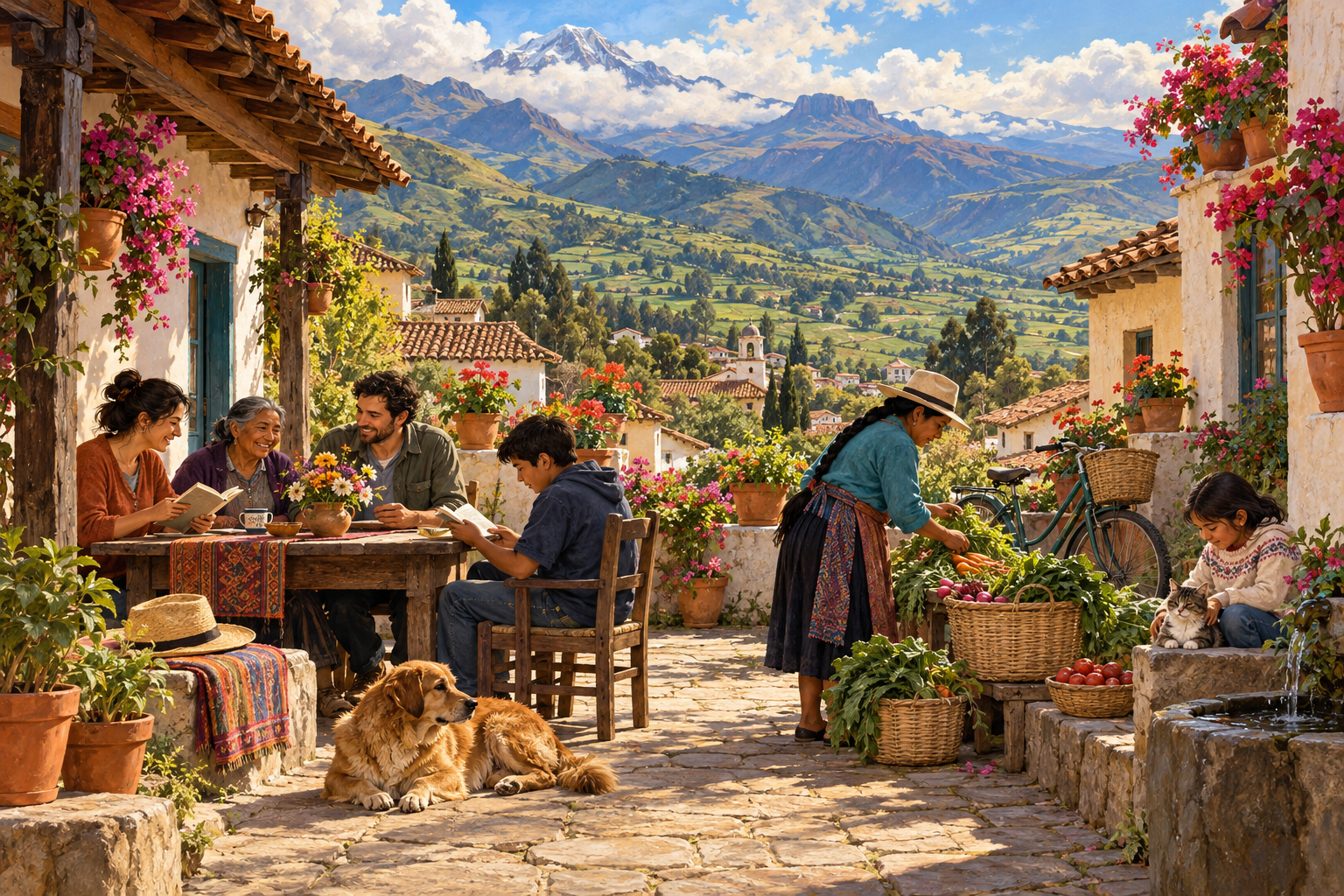
Ecuador gives an adventurous traveller four remarkably different worlds to consider: Andean cities, Pacific coast, Amazon rainforest and the volcanic Galápagos Islands. The best things to do when visiting and touring Ecuador range from Quito’s UNESCO-listed historic centre and Cuenca’s riverfront streets to the landscapes of Cotopaxi and Quilotoa, the waterfalls near Baños, community-led Amazon learning and carefully managed wildlife experiences on the Galápagos Islands. These destinations are extraordinary, but they cannot all be squeezed responsibly into a short holiday.
This Ecuador travel guide combines ten meaningful attractions and cultural experiences, first-time Ecuador itinerary suggestions, official Galápagos entry steps, altitude and nature planning, and the serious regional security advisories relevant in October 2026. Whether you are researching Quito things to do, an Andes volcano itinerary, Galápagos wildlife holidays or Ecuador travel safety, start by choosing a coherent geographical chapter and reading the warnings. Travel is better when you understand the place—and when a plan can change for reasons that genuinely matter.
Before booking, 9 October 2026: UK FCDO advice updated 2 October 2026 advises against all but essential travel to several coastal provinces, including Guayas, Manabí and Esmeraldas, and most areas within 20 km of the Colombia border. A 60-day state of emergency from 15 September includes Pichincha, home to Quito, alongside seven other provinces. The Galápagos require a Transit Control Card, biosecurity checks and park-entry procedures beyond mainland requirements; consult current official rates and rules. Verify the latest official safety and booking information for your actual dates.
eduKateSG · A WORLD WORTH UNDERSTANDING
Find your own way through Ecuador
UNESCO cities, volcanoes, highland communities and island evolution—with regional security and conservation guiding every choice.
Ecuador at a glance
Ecuador straddles the equator on South America’s west coast. Its capital, Quito, sits high in the Andes, and the southern historic city of Cuenca provides another urban heritage chapter. Volcanic highlands, lakes and cloud forests extend through the mainland interior; rivers on the eastern slopes feed Amazon basin habitats. The Galápagos archipelago lies about a thousand kilometres offshore and needs its own flight and protected-area arrangements.
An Ecuador travel itinerary that includes Quito and nearby mountain destinations can feel coherent, but altitude changes rapidly and a road that looks short may climb or descend dramatically. Cuenca and Cajas belong to a southern mountain journey. The Amazon is not a day-trip extension to the Galápagos, nor should the islands be treated as an ordinary domestic flight with no added paperwork.
Before choosing activities, look at the current security map. Some tempting coastal destinations lie in regions where the UK advises against non-essential travel. The guide highlights their geography and culture without treating warnings as trivial. Responsible travellers leave unsafe routes out of the schedule even when beautiful photographs exist.
- Historic cities: Quito and Cuenca are both UNESCO World Heritage cities, yet offer different Andean experiences.
- Mainland nature: Choose a limited selection from Cotopaxi, Quilotoa, Baños or Cajas based on conditions and altitude.
- Amazon: Consider verified community-led activities in appropriately assessed regions; do not improvise border-area travel.
- Galápagos: Fly from mainland Ecuador, obtain the Transit Control Card, meet biosecurity rules and pay the current protected-area fee.
Safety, wildlife and local respect
The FCDO’s current Ecuador advice makes essential distinctions. It advises against all but essential travel to Esmeraldas, Manabí, Santa Elena, Guayas, El Oro, Los Ríos and Santo Domingo de los Tsáchilas, as well as most places within 20 kilometres of the Colombian border, with stated exceptions in Carchi. Transit within Guayaquil airport’s airside area is exempt from the Guayas restriction, but that does not mean an unrestricted city excursion is advised.
The government declared an emergency starting 15 September 2026 in several provinces, including Pichincha, where Quito is located. Expect possible additional security checks, changing local restrictions and police presence. The FCDO also noted 2026–27 El Niño conditions in its October update, making weather and rainfall planning particularly important. Even a city that is not covered by a blanket all-but-essential warning can require careful local judgment.
Altitude, geology and marine life add different safety questions. Quito is approximately 2,850 metres above sea level; many volcano activities are higher. Travellers may need acclimatisation and medical advice. Galápagos operators must follow rules designed to protect endemic species, while boat weather and currents vary by island. Entry and access notices can change independently from the mainland security situation.
1. Walk Quito’s World Heritage streets with time for their stories
Quito’s historic centre stands high on the slopes of the Andes and is recognised by UNESCO for its remarkable urban fabric and artistic heritage. Churches, plazas, monasteries and busy streets tell stories of pre-Hispanic life, colonial planning, artistic exchange and a contemporary capital. Do not mistake the most ornate church interior for the entire history of the city.
Walk a manageable historic route with a reputable guide who can explain the Quito school of art and the relationship between Indigenous and European traditions. Ask how the topography shaped the streets and why restoration matters. Some buildings remain places of worship, while public squares are also spaces used by residents.
Altitude changes how a first day feels. Take it gently, drink water, and leave time to adjust rather than racing upstairs to every viewpoint. The September emergency declaration includes Pichincha, so the immediate local security situation, transport and public-event restrictions should be checked before setting out.
Experience it thoughtfully: Choose a focused historic-centre walk and one carefully selected interior, with ample acclimatisation time.
Check before going: Read current emergency and district-level advice, confirm cultural-site hours and avoid unassessed after-dark routes.
2. Use the equator near Quito as a science question
A visit to the equatorial zone north of Quito can be playful and educational. Maps and monuments invite the question of what an imaginary line actually means: latitude is a measurement used to describe position on Earth, not a visible stripe naturally running across the ground. That idea can open a fascinating conversation about geography and navigation.
At visitor attractions marketed as the Middle of the World, separate scientific explanations from theatrical experiments. Ask how surveyors located positions historically and why modern satellite measurements can refine them. A good visit leaves you with more curiosity about Earth’s shape and the night sky rather than a collection of unsupported demonstrations.
The equatorial area is an excursion that requires safe ground transport and realistic time from the city. As with any stop around Quito, check the state of emergency, road advice and attraction hours rather than relying on an old day-trip itinerary.
Experience it thoughtfully: Pair a responsibly organised equator-focused visit with time to learn about surveying and latitude.
Check before going: Verify actual attraction opening, transport, the difference between scientific measurements and promotional claims, and local security.
3. Learn from Otavalo’s artists and market makers
Otavalo’s market and highland textile traditions are well known, but the deeper experience involves meeting craftspeople as contemporary economic and cultural participants. Fabrics, weaving, music and food connect local identity with trade, design and household work. Treat the maker of an object as someone with expertise, not a prop in a colourful market photograph.
Ask how a pattern is produced and what materials or techniques have changed. A responsible guide or host can help explain the place of Indigenous communities without reducing all local culture to a single costume or souvenir. Respectful bargaining never requires demeaning the labour behind a handmade item.
Otavalo is a separate journey from Quito, and the road conditions and precise security picture deserve assessment. Areas near the Colombia border have strong warnings, so do not casually continue north simply because a map shows another beautiful town. Learn the specific route before travel.
Experience it thoughtfully: Choose a hosted market or craft-learning experience and support named makers with fair purchases.
Check before going: Check the actual route and warnings, market schedule, photography permission and transport.
4. Appreciate Cotopaxi without treating a volcano as a playground
Cotopaxi is one of Ecuador’s extraordinary volcanic landscapes, often pictured as an immense snow-covered cone. Its park and surrounding high-altitude habitats can provide a lesson in geology, climate and ecosystem change. But a striking summit photograph says little about the effort and risk of altitude, weather or possible volcanic activity.
A lower-level, authorised park experience may be more suitable than an ambitious summit outing. Pay attention to the grassland ecosystem, light and changing cloud, and ask a trained local naturalist how vegetation adjusts to elevation. National park rules are part of protecting a living landscape, not simply obstacles to an adventure.
Mountaineering requires specialist skill, equipment, permits and current hazard assessment. Even a short scenic visit can be cold, windy or physically taxing for people newly arrived from sea level. Acclimatise and select activities that fit your group’s health and experience.
Experience it thoughtfully: Choose a realistic guided nature route and make geology and high-altitude ecology the focus.
Check before going: Check volcano monitoring, park permissions, weather, altitude risk and emergency arrangements before leaving your base.
5. See Quilotoa’s crater lake as a geological landscape
Quilotoa is known for a striking lake within a volcanic crater. Its colours shift with light and conditions, making it a powerful visual reminder of how explosive volcanic events can leave a distinct basin. The famous view is only the first sentence of the geological story.
Ask how water entered the crater, why the slope is steep and how highland communities relate to the surrounding landscape. A guide can help you notice the difference between a scenic viewpoint and a demanding descent that must later be climbed in reverse. An easy-looking downhill route may become strenuous on the way back.
Cloud, rain and road conditions can change quickly in the Andes. Choose a viewpoint or walk appropriate to your group. Do not treat the lake as a guaranteed swimming destination; water access, steep paths and local restrictions require proper guidance.
Experience it thoughtfully: Make the viewpoint a meaningful science and culture stop, with a hike only when fitness and conditions permit.
Check before going: Confirm safe routes, weather, altitude, steep ascent back and community or park access rules.
6. Enjoy Baños’s waterfalls with an active safety plan
Baños de Agua Santa occupies a setting of mountains, rivers and waterfalls and is a familiar base for outdoor experiences. The change in vegetation and climate from the highest Andean routes can be dramatic. A good day might focus on one waterfall corridor and a relaxing food stop rather than every advertised thrill activity.
Observe the power of moving water and its relationship with the surrounding slopes. Bridges, viewpoints and river paths tell a story of how people adapt to steep terrain. A local guide can explain where access is currently managed and which landscapes have changed after rain or construction.
Adventure tourism is a specialist service, not a spontaneous dare. Rafting, canyoning, zip lines and steep paths require reputable operators, safety equipment and assessment of rainfall. If the river is high or an attraction is closed, a quieter town day is an entirely sensible alternative.
Experience it thoughtfully: Choose one verified waterfall walk or supervised activity and leave flexibility for rain.
Check before going: Check route, river levels, licensed operator, equipment, health needs and any local restrictions.
7. Read Cuenca’s historic centre through its four rivers
Cuenca’s UNESCO-listed historic centre lies in an Andean valley with a distinctive street plan, cathedrals, public spaces and the nearby archaeological setting of Pumapungo. UNESCO explains how Cañari, Inca and Spanish histories contributed to the city. The presence of four rivers gives its urban landscape a relationship with water that is worth exploring slowly.
Choose a walk that connects a square, a museum and a river-edge public space. The shape of the city becomes clearer when you notice how people move from streets towards the Tomebamba. Architecture is not only about facades; it shows how a living city adapts older buildings to new needs.
A visit to a craft studio can introduce regional hat-making and other skills, though the familiar ‘Panama hat’ is historically associated with Ecuadorian manufacture. Credit makers and ask how the objects are produced rather than treating an artisan’s workshop as a photo stage.
Experience it thoughtfully: Give Cuenca at least a full cultural day, with a river walk and one verified museum or craft experience.
Check before going: Check the exact districts, current security advice, museum operations and respectful access to workshops.
8. Explore Cajas as a high-altitude wetland and water story
Cajas National Park near Cuenca has a high-altitude landscape of lakes, páramo vegetation and changing weather. It is an instructive counterpoint to Ecuador’s rainforests and coastline. The ecosystem plays important roles in water storage and biodiversity and can be appreciated through carefully chosen established trails.
A guided walk can help identify the plants and the relationship between peat-like soils, rainfall and downstream waterways. Small details often matter more than a long checklist of viewpoints: a sponge-like ground surface, a sudden cloud or the quiet of a lake can teach you how vulnerable an upland landscape can be.
The elevation and cold demand preparation. Fog may reduce navigation visibility, and exposed paths become uncomfortable quickly in rain or wind. Choose an authorised route suited to fitness and acclimatisation, with a clear return time and transport arrangement.
Experience it thoughtfully: Select one manageable park trail and learn how the landscape supports water and wildlife.
Check before going: Confirm park access, weather, altitude, appropriate clothing and current route restrictions.
9. Learn from an Amazon community-led experience in a suitable region
Ecuador’s eastern Amazon region contains extraordinary biodiversity and multiple Indigenous communities, each with distinct languages and knowledge. A forest visit can be a powerful learning experience when hosts lead and consent to what is shared. Do not assume one guide’s presentation represents all Amazonian societies.
Ask about forest ecology, river use and everyday livelihoods through experiences genuinely run or approved by local people. Wildlife observations should leave animals undisturbed, and cultural experiences should respect the right to decline photographs or questions. The best guide is someone who helps visitors understand why some spaces must remain private.
Security and health are essential constraints. Avoid improvising journeys towards the Colombia border and choose routes against current regional advice. Remote travel involves transport, communication and medical planning; a jungle-themed hotel advertisement does not prove a particular road or community visit is safe.
Experience it thoughtfully: Prioritise verified community-led interpretation and ecological learning over a maximal wildlife checklist.
Check before going: Check province-specific warnings, trusted local operators, water conditions, health advice and access consent.
10. Discover Galápagos as a place where wildlife sets the rules
The Galápagos Islands are a world-famous natural heritage landscape where volcanic origins, distinctive animals and the history of evolutionary science intersect. An island visit can be extraordinary, but the point is not to touch a sea lion, crowd an iguana or demand that birds pose for a camera. Protected-area rules exist to allow wildlife to behave naturally.
Ecuador’s official tourism authority explains that visitors normally fly from Quito or Guayaquil to Baltra or San Cristóbal. Before boarding, passengers need a Transit Control Card and biosecurity luggage checks; on arrival there is a Galápagos National Park entry levy. The precise charges, insurance requirements and allowable visitor arrangements must be checked on current official pages, since older translated pages show differing dates.
Choose a land-based or vessel-based itinerary according to your budget, mobility and desired species, using authorised nature interpretation. Routes differ by island, and some wildlife appears seasonally or in particular habitats. A respectful traveller follows marked paths, distances and restrictions even when a curious animal approaches.
Experience it thoughtfully: Give the islands multiple dedicated days and invest in legal, conservation-focused guiding rather than rushing through an add-on.
Check before going: Check current Transit Control Card, park fees, biosecurity, insurance or entry rules, operator permits and boat weather.
Routes that allow the place to matter
Four to six days: a Quito-centred highland introduction
Begin with an easy acclimatisation day and a historic centre visit, then choose one equator or craft-focused outing and one well-assessed nature day. Emergency rules in Pichincha make local security updates part of the morning plan.
Seven to ten days: a coherent Andean journey
Consider Quito with carefully chosen Cotopaxi or Quilotoa experiences, then a separate Cuenca/Cajas extension only if transfers fit. Baños can be another planned chapter, but do not automatically add all mountain stops to one short week.
A dedicated Galápagos holiday
Allocate time for flights and necessary controls, then choose several days of ethical, guided island wildlife learning. Avoid putting the islands into a schedule that collapses if one mainland connection is delayed. Review the mainland airport transfer against current warnings.
A community-led Amazon exploration in an appropriate area
Research the exact province, guides and safety arrangements. Choose a hosted experience with legitimate community consent and adequate transport and health cover rather than combining it with a road trip through the warned northern border region.
Practical planning details
Start with the FCDO’s October 2026 warning map and your own government’s advisory. The current Ecuador warning differentiates specific coastal provinces from much of the highlands; a September state of emergency also affects Pichincha, among other areas. This is not a blanket reason to declare every Ecuador destination identical, but it is a strong reason to research exact roads and districts rather than relying on general reassurance.
Ecuador’s official travel portal describes a generally six-month passport-validity expectation for foreign visitors and nationality-based visa requirements. Island visits add their own rules, including biosecurity, Transit Control Card and national park charges. The Galápagos official Spanish and English pages have shown different updates, so consult the live park and migration instructions rather than relying on a quoted price.
Elevation and weather are different from urban security. Build your first Quito day gently, then increase effort cautiously if you are suited to the altitude. Check volcanic alerts and rainfall forecasts before mountain outings, and never enter protected areas without permission or wander away from a licensed guide on sensitive islands.
- Check the latest Ecuador regional warning and 2026 state-of-emergency conditions for exact locations.
- Do not plan normal sightseeing in coastal provinces covered by advice against non-essential travel.
- Verify nationality-specific passport, visa and transit requirements.
- Allow time to adjust to Quito’s altitude before strenuous highland activity.
- Check park and volcano alerts before hiking at Cotopaxi or another volcanic area.
- For Galápagos, confirm the Transit Control Card, biosecurity checks, park levy and insurance rules.
- Use community-approved Indigenous cultural experiences and observe wildlife from proper distances.
- Carry contingency time for weather, road conditions and flight or boat disruption.
Useful English–中文 travel vocabulary
These terms support English–Chinese research. They do not replace local Indigenous languages, consent, park rules or qualified travel advice.
| English | 中文 | Practical use |
|---|---|---|
| highlands | 高地 | Altitude changes how a day feels. |
| volcano | 火山 | Check warnings and park access. |
| crater lake | 火山口湖 | Stay on safe routes. |
| historic centre | 历史中心 | A working city, not a museum stage. |
| craft market | 手工艺市场 | Respect artisans and ask permission. |
| cloud forest | 云雾森林 | Weather can shift quickly. |
| Amazon rainforest | 亚马孙雨林 | Seek community-led access. |
| wildlife | 野生动物 | Never feed or touch wild animals. |
| biosecurity | 生物安全 | Critical in the Galápagos. |
| transit card | 过境管理卡 | A separate island document. |
| travel advisory | 旅行安全建议 | Read exact regional warnings. |
| altitude sickness | 高原反应 | Know symptoms and seek medical guidance. |
A travel notebook that understands more
Make a map using four categories: Andean cities, highland ecology, Amazon communities and Galápagos wildlife. Then draw a second layer containing time, altitude, security conditions and access requirements. That second layer may not be photogenic, but it determines whether the first one becomes a safe and meaningful experience.
Write down one thing learned from a person rather than a plaque. A Cuenca craftsperson, a knowledgeable highland guide or an authorised island naturalist can turn an attractive place into an understandable one. Give credit and use consent before sharing anyone’s words or photograph.
Frequently asked questions
Is Ecuador safe for tourism everywhere in October 2026?
No. The UK advises against all but essential travel in several coastal provinces and much of the Colombia-border area, while a state of emergency affects other locations including Pichincha. Use exact current travel advice.
What should I visit on my first Ecuador trip?
A measured Quito and highland itinerary is one option; Cuenca and Cajas offer another. Galápagos deserves a distinct, properly planned journey.
Do I need special documents for Galápagos?
Yes. The official tourism guidance describes a Transit Control Card, biosecurity controls and a park-entry levy. Check the latest applicable fees, insurance and visitor rules.
Is Quito at high altitude?
Yes. It lies around 2,850 metres above sea level. Travellers should allow adjustment and consider medical guidance before exertion.
Can I see mainland Ecuador and every Galápagos island in one week?
No. A good trip selects a coherent mainland region or gives Galápagos multiple dedicated days. Transfers, conservation rules and seasonal conditions make a national sprint unsuitable.
Official references and onward reading
The sources below are official travel, tourism and UNESCO references. Entry requirements, risk warnings and site operations change; re-check the live pages before treating a journey as appropriate.
- Ecuador Travel — official tourism ministry portal
- Ecuador Travel — trip planning and entry
- Ecuador Travel — Galápagos region and arrival procedures
- Ecuador Travel — current visitor requirements and biosecurity
- UNESCO — City of Quito
- UNESCO — Historic Centre of Cuenca
- UNESCO — Galápagos Islands
- UK FCDO — Ecuador warnings, updated 2 October 2026
- UK FCDO — Ecuador regional risk breakdown
- UK FCDO — Ecuador safety, weather and state of emergency
Continue alphabetically: Dominican Republic ← Ecuador → Egypt. Return to the World Country Directory, or browse the World Travel Hub.