
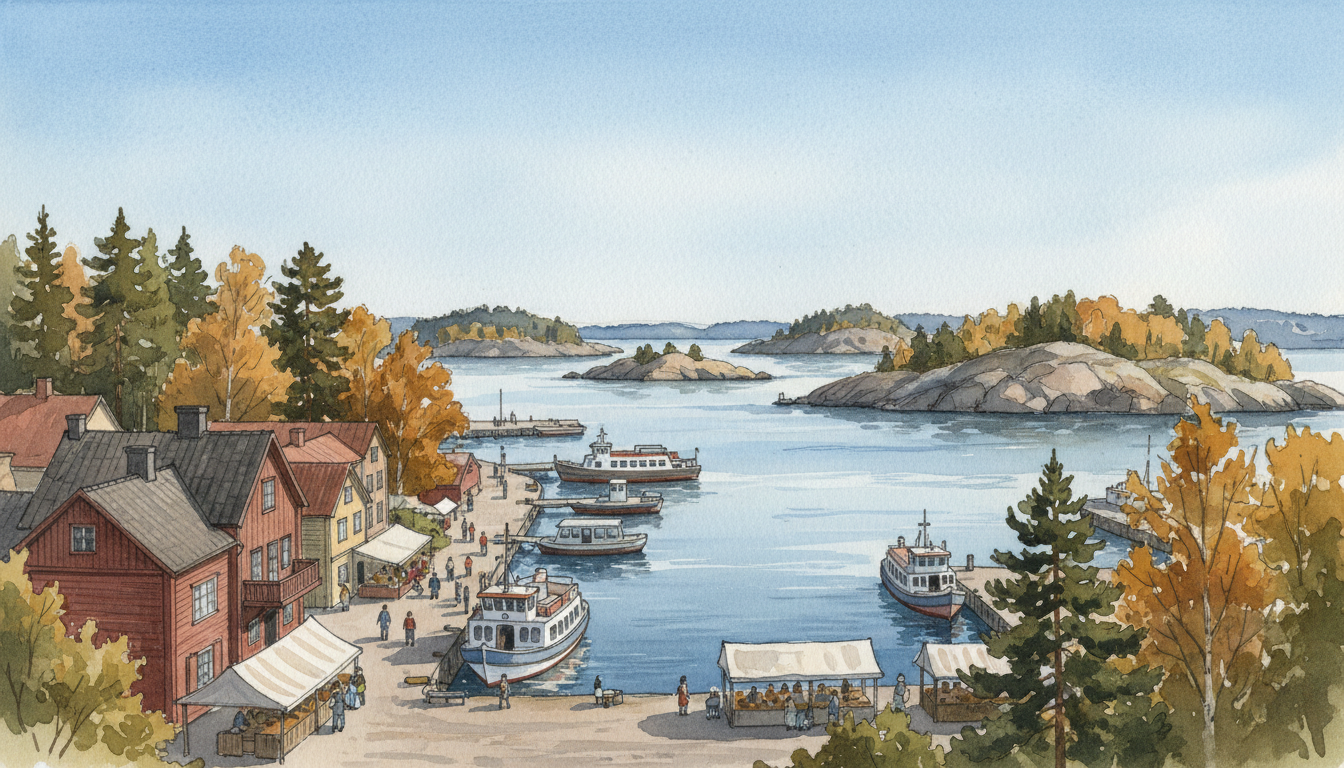
Finland makes some of its most memorable experiences feel wonderfully simple: the light across Helsinki’s harbour, the quiet of a lakeside sauna, a wooden town where old houses still hold everyday life, or a forest path with just enough snow to make you notice your footsteps. The best things to do when visiting and touring Finland include discovering Helsinki’s design culture, taking the ferry to Suomenlinna, exploring Porvoo or Old Rauma, travelling through the Turku Archipelago, enjoying Finnish Lakeland and watching for the northern lights in Lapland. There is also new reason to look closely at architecture: the Aalto Works joined UNESCO’s World Heritage List in 2026.
This Finland travel guide brings ten meaningful experiences together with realistic seven-to-fourteen-day itineraries, current Schengen entry rules, seasonal planning, winter safety, public sauna etiquette and helpful travel vocabulary. Whether you are researching Helsinki things to do, Suomenlinna fortress, a Finland northern lights holiday, Rovaniemi family activities, Saimaa lakes, Koli National Park or Finnish design, the best first decision is seasonal and regional. Summer lakes and Arctic winter darkness offer very different journeys; neither needs to be rushed to make it memorable.
Travel details checked 9 October 2026: Finland is in the Schengen area, uses the euro and applies nationality-specific visas and the common 90-in-180-day rule for eligible short-stay travellers. The EU Entry/Exit System is being implemented and may collect biometrics at external borders. Visit Finland describes northern-lights viewing as seasonal, approximately late August through April, with no sighting guaranteed. Finland’s UNESCO list contains eight properties after the 2026 inscription of the Aalto Works. Reconfirm entry, opening, weather and access details for your actual dates.
eduKateSG · A WORLD WORTH UNDERSTANDING
Experience Finland one region at a time
Nordic architecture, lakes and forests, a living sauna tradition and the possibility—not promise—of Arctic lights.
Finland at a glance
Finland’s four broad tourism regions are Helsinki, Lakeland, the coast and archipelago, and Lapland. The capital offers urban design, museums, market halls and quick access to maritime heritage. The western and southern coasts contain archipelago settlements, castles and wooden towns, while the inland lake district offers forest, cottages and waterways. Farther north, Lapland changes dramatically with the season.
Intercity rail links make Helsinki, Tampere and several other cities practical components of a journey, but a Lapland expedition from the south still needs dedicated travel time. A road line on a map cannot guarantee a comfortable winter transfer, and boats to small islands may run on seasonal schedules. Choose a few destinations that can be properly enjoyed rather than repeatedly repacking between far-apart regions.
UNESCO recognises eight World Heritage properties in Finland, including Suomenlinna, Old Rauma, the Kvarken Archipelago and, newly in 2026, the serial property Aalto Works. That last inscription includes thirteen architecturally significant component sites across Finland. Separate UNESCO intangible heritage recognition protects Finnish sauna culture; a practice sustained by living people is not the same category as a protected building.
- First city visit: Three or four days in Helsinki, with Suomenlinna and one design or cultural experience.
- Coast and history: Porvoo, Turku and Old Rauma work as distinct southern or western chapters.
- Nature and relaxation: Tampere and the Lake Saimaa or Koli region need their own seasonally appropriate route.
- Lapland: Northern lights are weather-dependent; Arctic winter requires real clothing, guiding and daylight planning.
Safety, weather and cultural respect
Finland is part of the Schengen area. The UK FCDO explains that qualifying British visitors can use a 90-day allowance across any rolling 180 days and that previous stays in other Schengen countries count. Other nationalities must check their own entry rules. The EU Entry/Exit System’s roll-out can require biometrics at external borders, making extra arrival time sensible. Finland’s euro currency does not change any passport or visa requirements.
Outdoor conditions vary extraordinarily. In summer, long daylight can tempt visitors to overexert; in autumn or winter, cold, ice, limited daylight and rapidly changing weather can make even a familiar path difficult. A frozen lake is not automatically safe to walk across. Use marked trails, professional advice and appropriate cold-weather clothing, and follow the instructions of park managers or licensed activity operators.
Lapland wildlife and culture need respect. Reindeer may be present near roads, especially in northern areas; drive appropriately and avoid pursuing wildlife for photographs. Northern lights require suitable darkness, solar activity and clear skies, none of which can be guaranteed. Near the eastern border, check current frontier restrictions and do not treat a national park or scenic route as permission to cross into Russia.
1. Discover Helsinki through design, markets and public architecture
Helsinki rewards an unhurried city introduction. Its centre mixes neoclassical public spaces, modern design, waterfront markets, contemporary museums and an excellent public-library culture. The most interesting question is not simply what a building looks like, but what it enables people to do. A library such as Oodi can make civic life, learning and thoughtful architecture feel unusually tangible.
Choose a comfortable walking cluster between the city centre, a harbour setting and one museum or design-related space. Finland’s architecture belongs to everyday routines as well as formal exhibitions. Watch how people use transport, public seating and parks; a quiet detail may tell you as much about the city as a major monument.
A market hall or bakery is a welcoming place to try local food without turning a whole day into a consumption list. Ask about regional ingredients and the people who prepare them. Winter daylight and summer crowds demand different pacing, so treat the city as an adaptable place rather than a fixed route.
Make the experience meaningful: Choose one design or history museum, a central walk and a leisurely food experience.
Check before going: Check current museum hours, seasonal market opening, public transport and icy walking surfaces.
2. Take the ferry to Suomenlinna as a maritime history lesson
Suomenlinna is a UNESCO World Heritage fortress spread across islands just offshore from Helsinki. Its fortifications were built and adapted during changing periods of Swedish, Russian and Finnish control. The island setting makes a powerful lesson in defensive geography, international politics and changing approaches to coastal infrastructure.
A ferry ride is part of the story, but visitors should read the fortress as a living place rather than a permanently open museum. People reside and work there, and the protected walls and paths require appropriate care. An official visitor route can explain why the fortification was positioned as it was and what parts were added over time.
Wind and sea conditions change the experience, especially in winter. Check ferry timetables, services and weather before leaving central Helsinki. Even in summer, allow time to wander beyond the first viewpoint without intruding into private areas.
Make the experience meaningful: Use a verified ferry service and one clear heritage walking route, leaving time for the island’s atmosphere.
Check before going: Check current ferry tickets and timetable, slippery paths, public-versus-private areas and seasonal museum openings.
3. Spend a calm day among Porvoo’s wooden houses and riverside history
Porvoo is known for its old wooden buildings, colourful riverside storehouses and streets that reward slow exploration. The town is a useful contrast to Helsinki’s metropolitan scale. Instead of photographing each painted wall as an identical postcard, ask how rivers, trade and timber construction shaped the settlement.
Look at the street plan and notice how weather and light change old wood surfaces. A small museum, craft studio or local guide can explain how buildings were maintained and adapted for modern use. The town is not frozen in a single historical period; everyday cafés and homes continue to give it life.
Porvoo is often approached as a day excursion from Helsinki, but transport modes and times vary by season. Choose a modest route, wear suitable shoes for historic streets and enjoy a meal without having to leave immediately for another distant attraction.
Make the experience meaningful: Give the old town a thoughtful walk and a locally hosted food or craft encounter.
Check before going: Confirm buses or seasonal boat services, museum opening and safe walking surfaces.
4. Explore Turku’s history and archipelago one island at a time
Turku is one of Finland’s historically significant cities, with a castle, cathedral and a riverside cultural landscape. A first visit can connect those sites with modern food, museums and urban life. Begin by asking how the river shaped the city’s connections to other Baltic ports and the surrounding archipelago.
The Turku Archipelago contains a vast network of islands and waterways. Visiting it well takes more planning than a quick ferry symbol on a map might suggest. Some island connections involve bridges, regional ferries or seasonal routes, and not all operate at the same frequency year-round.
Choose one island or coastal locality that fits your group and the actual timetable. Maritime habitats and community spaces need respect. A peaceful harbour meal and a guided look at archipelago ecology are often more rewarding than racing through multiple departures in one day.
Make the experience meaningful: Combine Turku’s urban heritage with one carefully selected archipelago extension.
Check before going: Check exact ferry and road routes, season, wind conditions, vehicle booking and local island opening.
5. Walk Old Rauma and see why ordinary wooden streets are World Heritage
Old Rauma is a UNESCO World Heritage property recognised for its well-preserved Nordic wooden-town character. A walk among houses, shops and narrow streets reveals how living settlements can preserve historic structures without becoming empty museums. Its value comes from the urban fabric as a whole, not just a single famous building.
Ask how timber buildings are maintained in a changing climate and how residents balance modern needs with heritage rules. A small local museum or knowledgeable guide can make architectural details meaningful. Avoid entering private courtyards for photographs, even when the buildings look inviting.
Rauma belongs to a west-coast itinerary rather than a casual Helsinki lunchtime excursion. Give it time to reveal markets, craft traditions and its relationship with the broader coastal landscape. Responsible heritage tourism is about living continuity, not simply counting old houses.
Make the experience meaningful: Walk the historic core and ask what it takes to maintain a wooden town for present-day life.
Check before going: Check museum hours, conservation rules, parking, winter conditions and private-space boundaries.
6. Enjoy Tampere’s sauna culture with the right etiquette
Tampere is widely associated with Finnish public-sauna culture, and a visit can combine this living tradition with lakes, industrial heritage and contemporary food. Sauna is not merely a novelty activity; it is a social practice with particular customs and different forms of experience. UNESCO inscribed sauna culture in Finland on its Intangible Cultural Heritage list in 2020.
Before entering, learn the venue’s expectations for washing, clothing or swimwear, quiet behaviour and shared spaces. Some saunas are mixed-gender and require swimwear; others have separate facilities or different rules. A respectful visitor follows the local operator rather than imposing a single idea of a ‘Finnish sauna’ on every establishment.
Cooling off is not a dare. Cold-water plunges carry health risks, and access to lakes or ice openings is governed by safety arrangements. You can enjoy the heat, architecture and relaxation without entering water beyond your ability or medical suitability.
Make the experience meaningful: Book an appropriate public sauna and learn the rules from the venue before the first session.
Check before going: Confirm opening, swimwear requirements, personal health considerations and safe water access.
7. Spend a summer chapter in Finnish Lakeland and Lake Saimaa
Finnish Lakeland is a remarkable maze of lakes, forest, cottages, islands and connecting waterways. Visit Finland highlights cottage life, saunas and seasonal lake activities as central experiences. Lake Saimaa and the wider region invite a slower approach: one base, one boat or walking activity and enough hours to enjoy the landscape.
Ask how lakes and forests shape the way communities live. Local food, fishing traditions and conservation work offer insight beyond a view from a jetty. A small guided nature excursion can reveal the importance of shoreline vegetation, water quality and habitats associated with the rare Saimaa ringed seal.
Boats, fishing and swimming need appropriate permissions and equipment. Cold water can be hazardous even when the air is warm; ice in winter introduces a completely different safety regime. Do not assume a summer rental activity operates through autumn or spring.
Make the experience meaningful: Choose a lakeside base with one properly managed water or forest experience and plenty of rest.
Check before going: Check boating qualifications, life jackets, cold-water safety, seasonal transport and local conservation rules.
8. Visit Koli National Park as a landscape of Finnish art and geology
Koli National Park in eastern Finland is celebrated for views across Lake Pielinen and rolling forested hills. The landscape has inspired artists and visitors over generations, but its ecological and geological significance deserves as much attention as the panorama. It is especially memorable when you take time to notice changes in forest, rock and water.
Choose a marked viewpoint route appropriate to weather and physical ability. Natural surfaces and exposed areas can be slippery, and daylight in winter is limited. A ranger or official trail description should help determine whether a walk is suited to your group.
The Koli region merits a distinct Lakeland or eastern Finland chapter. A single photograph taken at the viewpoint does not capture its deeper relationship with forests, rural livelihoods and artistic history. Bring a notebook, not just a camera.
Make the experience meaningful: Follow one established park route and explore why the scenery matters to Finnish cultural memory.
Check before going: Verify Metsähallitus trail status, snow or ice, daylight, weather and local transport.
9. Discover the newly inscribed Aalto Works in a living design landscape
Finland’s newest major World Heritage development is especially relevant for design-minded travellers. UNESCO inscribed the Aalto Works as a serial property in 2026, bringing Finland’s World Heritage total to eight. The thirteen component sites are spread across different locations, including Finlandia Hall and other Helsinki buildings, Paimio Sanatorium and work in Jyväskylä and elsewhere.
Alvar Aalto’s architecture is worth studying not merely for shapes but for its interest in materials, light, human use and the relationship between buildings and their surroundings. A town hall, an auditorium and a health-related building solve different problems. They are not interchangeable items on a photograph scavenger hunt.
Some of the listed buildings are working institutions, residences or sites with limited public access. Inscription does not mean anyone can enter all thirteen without booking. Choose one or two accessible places near your actual route and read UNESCO’s component list before planning.
Make the experience meaningful: Select a publicly accessible Aalto site and learn how design decisions respond to people and place.
Check before going: Confirm the precise component location, permitted tour and actual entry restrictions; the serial property is not one site.
10. Experience Lapland with winter honesty and respect for Sámi culture
Finnish Lapland brings wide northern landscapes, winter darkness, reindeer and opportunities to see the aurora borealis. Rovaniemi is a familiar starting point for family activities, while other parts of Lapland offer very different wilderness and cultural settings. Visit Finland describes the northern lights season broadly from late August to April, but solar activity, cloud and darkness determine what appears on a given night.
Choose a responsibly organised outdoor experience rather than believing every advertised tour can guarantee green skies. Proper boots and layers are essential. Driving on icy roads or crossing frozen lakes without expertise creates risks unrelated to the beauty of the landscape. Reindeer and other animals must be observed without harassment.
Sámi heritage requires particularly careful language. The Sámi are Indigenous people with living communities, languages and rights, not a tourism costume. Seek Sámi-led experiences where genuinely offered and respect the distinction between commercial winter attractions and community-controlled culture.
Make the experience meaningful: Allow several nights for Lapland and choose safe guided winter or summer nature activities without demanding an aurora sighting.
Check before going: Verify snow and road safety, clothing, daylight, operator welfare standards and cultural permission.
Routes that respect distance and season
Four or five days: Helsinki, Suomenlinna and Porvoo
Base yourself in Helsinki, explore urban design and food, give Suomenlinna a half-day or longer, and make a dedicated Porvoo visit if transport and weather allow. This is an excellent first Finland trip with low logistical pressure.
Seven to ten days: Helsinki, Turku and the west coast
Begin in Helsinki, continue to Turku for river heritage and a select archipelago island, and add Old Rauma if the time available is sufficient. Match ferries to seasonal schedules rather than trying to visit every coastal town.
A week in Lakeland: Tampere, Saimaa and Koli
Plan a sauna experience, a carefully chosen cottage or lake stay and one national park walk. Travel times between these destinations still need planning. The route is especially rewarding when you do not change accommodation every night.
Five to seven nights for a dedicated Lapland winter visit
Choose one northern base and properly guided winter activities, leaving multiple evenings as opportunities for aurora viewing. Never guarantee lights on a particular night, and do not fill every short daylight period with strenuous excursions.
Aalto architecture itinerary for design enthusiasts
Use UNESCO’s thirteen component-site list to choose publicly visitable Helsinki, Jyväskylä or other locations. This may be a multi-city special-interest journey; avoid assuming a private or institutional building operates as a drop-in museum.
Practical travel planning
Finland follows Schengen short-stay rules. The FCDO’s August 2026 entry page explains the 90-in-180-day allowance for qualifying British travellers and the implementation of biometric Entry/Exit System checks. Different nationalities must verify their eligibility through Finnish or EU official channels. Plan documentation for the entire Schengen journey, not only time spent in Finland.
Season matters more than a generic best-month recommendation. Long summer days are excellent for lakes and archipelago travel, while autumn foliage and aurora opportunities give other reasons to visit. Winter brings snow and limited light, particularly in Lapland; spring can include thawing ice and slippery surfaces. A reliable itinerary begins with weather, daylight and activity skill requirements.
Book rail, national park services and island crossings from legitimate sources. National park trails are free to explore in many cases, but guided activities, lodging and specific attractions have their own admission and opening arrangements. Respect private cottage areas, wilderness wildlife and the living cultural practices of the communities you visit.
- Confirm visa or visa-free entitlement, Schengen days and EES border procedures.
- Use euro pricing and official or reputable regional transport schedules.
- Match destinations to daylight, snow and seasonal ferry availability.
- Do not cross unassessed frozen lakes or enter remote winter terrain without expertise.
- Follow national park trails and avoid disturbing protected wildlife.
- Treat aurora sightings as possible, never guaranteed.
- Observe the actual sauna’s etiquette and any water or health restrictions.
- Choose publicly accessible UNESCO or Aalto buildings rather than assuming every component is open.
Twelve English–中文 travel words
Translations support bilingual English–Chinese readers. Finnish and Swedish local names, Sámi community permissions and official activity instructions require their own attention.
| English | 中文 | Use |
|---|---|---|
| archipelago | 群岛 | Ferries and weather shape travel. |
| fortress | 要塞 | Suomenlinna is living World Heritage. |
| wooden town | 木结构城镇 | Respect private homes and heritage. |
| sauna | 桑拿 | Learn venue-specific etiquette. |
| lakeside cottage | 湖畔小屋 | Seasonal services vary. |
| national park | 国家公园 | Use marked routes. |
| northern lights | 北极光 | No guaranteed sighting. |
| snow and ice | 冰雪 | Outdoor safety changes with season. |
| design architecture | 设计建筑 | Look at form and human use. |
| World Heritage | 世界遗产 | New Aalto Works inscription in 2026. |
| Schengen area | 申根区 | Prior travel days count. |
| reindeer | 驯鹿 | Observe without disturbing. |
A learning notebook beyond the postcard
Keep a Finland notebook with four chapters: city design, maritime heritage, lakes and forests, and northern nature. In each place, ask how the landscape or building has been shaped to support daily life. The library, ferry, sauna and cottage may look unrelated, but each reveals something about people organising shared space.
At the end of the trip, note the moments when you chose not to force an outcome. Perhaps cloud hid the aurora, ice changed a walking plan or a working Aalto building was not open. Those decisions are part of a responsible visit, and often leave more space for an unexpected memory.
Questions before visiting
How many days do I need for Finland?
Four or five days works well for Helsinki and a nearby excursion. A week to two weeks can add a Lakeland, west-coast or Lapland chapter without rushing.
Is Finland in the Schengen area?
Yes. Eligible short-stay travellers must account for time in other Schengen countries, and new EES biometric procedures may apply.
When can I see the northern lights in Finland?
Visit Finland describes a viewing season roughly from late August to April. Clear skies, darkness and solar conditions matter; no observation is guaranteed.
What new Finnish UNESCO site was inscribed in 2026?
Aalto Works, a serial architectural World Heritage property with thirteen component locations, increased Finland’s World Heritage total to eight.
Can visitors walk onto Finnish lakes when they are frozen?
Not without reliable local safety knowledge. Ice thickness and conditions vary, and the appropriate way to experience winter water is through trained guides and approved locations.
Original references and the next country
These official and UNESCO links support the heritage and travel details. Each venue, ferry and activity retains its own live conditions and admission rules: verify before acting.
- Visit Finland — official national tourism guide
- Visit Finland — Finnish Lakeland travel
- Visit Finland — northern lights season and practical guide
- Visit Finland — northern lights and four travel regions
- UNESCO — Finland’s eight World Heritage properties
- UNESCO — Aalto Works, inscribed 2026
- UNESCO — component locations of the Aalto Works
- UNESCO — Fortress of Suomenlinna
- UNESCO — Old Rauma
- UNESCO — Finnish sauna culture (intangible heritage)
- UK FCDO — Finland travel advice
- UK FCDO — Finland Schengen and EES entry information
Continue alphabetically: Fiji ← Finland → France. Return to the World Country Directory or explore the World Travel Hub.