
A student in Al Mirfa may know how to subtract numbers, measure elapsed time and read a graph, yet be unsure when a single examination question combines all three. The problem is not always a shortage of practice. It may be a broken connection between previously learned ideas that has never been noticed and taught explicitly.
Families comparing private Maths tutors in Al Mirfa, English tuition, Arabic lessons, Science support, home tutoring and small-group classes should ask a useful question: which learning connection will this lesson repair, and can my child solve a new question without hints afterward? That matters more than the number of worksheets completed beside an adult.
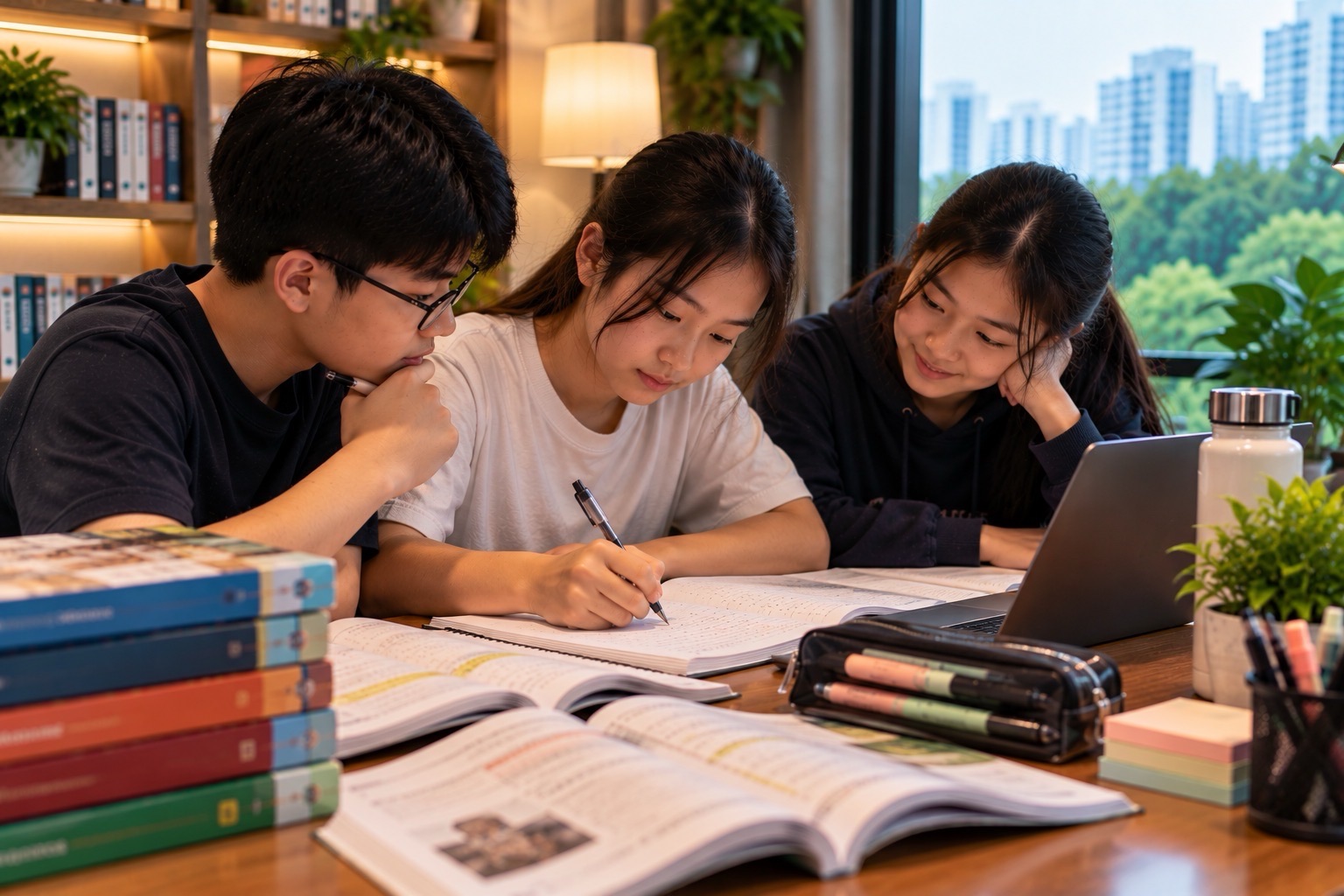
This eduKate Singapore editorial guide is for parents evaluating tuition in Al Mirfa, Abu Dhabi’s Al Dhafra region. It does not claim that eduKate operates a physical tuition centre there. Our premium Singapore teaching model deliberately uses three-student small groups, diagnosis before tuition, first-principles explanations, close feedback and independent checks. Those principles can help families assess local or online tutoring.
Al Mirfa’s coast makes an interesting learning doorway
Abu Dhabi’s official tourism portal describes Al Mirfa as a coastal town in Al Dhafra, known for Mirfa Beach and the Al Dhafra Watersports Festival. The event celebrates activities including rowing, sailing and aspects of Emirati seafaring heritage.
The shoreline is an engaging place to think about time, rates, direction, maps and scientific observations. But a classroom problem about waves or a fictional boat must be labelled as such. An invented table is not a real tide prediction, travel-time estimate, weather warning or maritime safety instruction.
Good tutoring uses the story to introduce a concept and then changes the setting. A student who understands a rate in a fictional rowing exercise should be able to apply the same relationship to pages read per hour.
The local reference sparks curiosity; transfer shows independent understanding.
School choices require curriculum matching
Al Mirfa belongs to Abu Dhabi emirate, where the Abu Dhabi Department of Education and Knowledge, or ADEK, regulates private schools and publishes relevant curriculum policies.
A tutor should confirm the learner’s grade or year, current textbook, language of instruction, examination requirements and recent original workings before choosing practice.
Two pupils of the same age may attend schools with different approved curricula. They could encounter the same mathematical topics in different sequences or need different written conventions.
A Primary child learning time units needs a different explanation from an older examination candidate analysing graphs under timed conditions. A learner who knows the concept but misreads English command words needs a different intervention from one who never understood the concept.
The first tuition question is therefore not “How advanced can we go?” but “Which precise skill is needed next in this child’s actual programme?”
A report-card mark is only one piece of evidence
Imagine two students who both lose marks in a Mathematics test. One calculates average speed correctly whenever the question uses hours but becomes uncertain when time is given in minutes. Another converts units accurately but interprets a distance–time graph incorrectly.
Both might be described as weak in speed questions. Yet the first learner needs a fractions and unit-conversion repair, while the second needs help connecting graphs to relationships.
A tutor should inspect the original mistakes and ask what the child thought each quantity represented.
Then present an unfamiliar question without announcing its chapter. Can the learner identify what is known, decide on a method and check units?
A precise diagnosis is easier to teach and measure than “needs more Maths practice”.
A calm first consultation
Begin with one question the pupil solved confidently. Ask the child to explain the method and what the final answer means. This reveals strengths the tutor can build upon.
Next examine one mistake before immediately displaying the correct working. Where did the uncertainty begin? Was the question misread? Was an older skill forgotten? Was the arithmetic itself inaccurate?
Finally give a fresh, related problem. The tutor should observe the pupil’s independent first attempt and offer only the smallest useful hint.
The meeting should end with one or two clear learning targets and a sensible review point.
For parents who want tuition to be structured and worth the time, this is a better starting position than enrolling in a long programme without knowing which difficulty needs repair.
A fictional rowing exercise: distance, time and speed
Imagine a classroom story in which a fictional rowing team travels twelve kilometres in forty minutes at a constant average speed. This is not a real Al Mirfa race distance, performance figure or event result.
Forty minutes is two thirds of an hour. Average speed is twelve divided by two thirds, or eighteen kilometres per hour.
The tutor should ask the child to identify the units before calculating. Why is dividing twelve by forty not directly an answer in kilometres per hour?
Now reverse the question. At the same assumed average speed, how long would an imaginary journey of nine kilometres take? Nine divided by eighteen gives half an hour, or thirty minutes.
A learner who understands the relationship can move between distance, speed and time without memorising a separate trick for every unknown.
A fresh context involving reading pages should then test transfer.
Elapsed time is not ordinary decimal subtraction
A fictional school session starts at 9:35 a.m. and ends at 10:20 a.m. Its duration is forty-five minutes.
A pupil may subtract the displayed clock digits and obtain a misleading answer by treating minutes as if each hour contained one hundred of them.
A tutor can use a clock or number line: twenty-five minutes to ten o’clock, plus twenty more minutes.
Now ask for the ending time of a fictional fifty-minute session beginning at 11:40 a.m. The result is 12:30 p.m.
The child should understand how an hour boundary works and why time uses groups of sixty minutes.
Then introduce a new timetable without the diagram. A correct independent result is evidence of a useful repair.
These are invented school times, not real Al Mirfa festival schedules.
Fractions of an hour are part of speed calculations
Thirty minutes is one half of an hour; fifteen minutes is one quarter; forty-five minutes is three quarters.
These equivalents connect clocks, fractions, decimals and rates.
Suppose a fictional boat moves six kilometres in twenty minutes at a constant average rate. Twenty minutes is one third of an hour, so the rate is eighteen kilometres per hour.
The tutor can show the same relation using a table: twenty minutes, six kilometres; forty minutes, twelve; sixty minutes, eighteen.
Now change the duration to thirty minutes while keeping the rate. The distance becomes nine kilometres.
The learner should be able to reason with the table and check the answer rather than simply divide whichever numbers appear first.
Average speed does not mean identical speed every moment
A student might say that a fictional journey averaging eighteen kilometres per hour must have travelled at precisely that speed throughout.
But average speed over an interval is total distance divided by total elapsed time. The actual speed may vary during the journey.
A tutor can create a simple imaginary example: a vehicle travels ten kilometres in the first hour and fourteen kilometres in the second. The average speed across two hours is twelve kilometres per hour.
That does not mean every part of the journey occurred at twelve kilometres per hour.
For an older student, compare different durations and distances and ask how a weighted overall average is determined.
The focus is the meaning of a summary rate and the assumptions of the model.
A graph can show a changing relationship
Consider a completely fictional cumulative-distance model d = 6t, with distance in kilometres and time in hours.
The table gives zero kilometres at zero hours, six at one hour and twelve at two. The graph is a straight line through the origin.
The slope represents six kilometres per hour in this simplified constant-rate model.
Now suppose the recorded cumulative distance already stood at five kilometres at the start of an interval. The model becomes d = 6t + 5.
The graph now begins at five while retaining the same slope.
The tutor should ask which term represents rate and which represents the starting quantity.
Then use a new graph with pages read or classroom points to confirm that the pupil understands slope and intercept independently.
A real tide table is not a fictional Maths table
Official tourism information for the Al Dhafra coast may show environmental or waterfront context. Actual marine decisions depend on current conditions and authoritative local advice.
The following values are a purely fictional Maths dataset: at four equal observation intervals, a classroom variable is recorded as ten, fourteen, twelve and sixteen units.
The learner can calculate changes of plus four, minus two and plus four. The pattern is not a constant-rate line, even though a simple average can be calculated.
The total of these four observations is fifty-two, and their mean is thirteen units.
These figures must never be used to infer Al Mirfa tide times, water depths, wave heights or safe boating conditions.
The lesson is about data interpretation, not maritime forecasting.
Means hide the shape of a dataset
Compare the invented observations of ten, fourteen, twelve and sixteen with another fictional set of thirteen, thirteen, thirteen and thirteen.
Both sets have mean thirteen, but the first varies and the second is constant.
A child may calculate the mean correctly while claiming every observation equals it. The tutor should explain that the mean is a summary, not every individual value.
Draw bar charts and compare the range. The first set ranges from ten to sixteen, a spread of six; the second has a range of zero.
Then change the context to reading minutes or Science measurements and ask the learner to interpret another dataset independently.
Statistical knowledge becomes useful when a child knows what the result actually describes.
Graph scales can change appearances
Imagine the same fictional data drawn twice. One graph’s vertical axis begins at zero; another begins near the smallest value.
The second may make differences look much larger even though the measurements are identical.
A tutor can teach the learner to read the axis labels, units, scale intervals and numbers before describing a pattern.
What is measured? Were the observations made at comparable intervals? Is the quantity a total, a rate or a percentage?
The student should not simply say a line is steep without knowing what the axes represent.
Then present a fresh graph from an unrelated school topic. Can the child spot misleading presentation and explain the evidence without hints?
This skill supports Maths, Science and critical reading.
Fractions and percentages rely on a changing whole
Suppose a fictional set of forty maritime-themed illustrations contains ten pictures of boats. The boat share is 10/40, or 25%.
Now add ten illustrations of other subjects. The boat count remains ten, but the total becomes fifty. Its new share is 20%.
A pupil who keeps saying 25% has not identified the changed denominator.
The tutor can draw a bar model showing how the same part becomes a smaller share of the larger whole.
Now reverse the task: fifteen boats represent 30% of a fictional picture collection. How many pictures are there in total? Fifty.
These are imaginary classroom objects, not Al Mirfa festival participation data.
A new unrelated problem should test part–whole understanding.
Percentages do not automatically cancel
A fictional amount of 200 units increases by 10% to 220. A subsequent 10% decrease leaves 198, not 200.
The second percentage uses the new amount as its base. The combined multiplier is 1.10 × 0.90 = 0.99.
A tutor can contrast that with adding twenty units and then subtracting twenty units, which returns to the original.
Now reverse the first step. If 220 is the result after a 10% increase, what was the starting quantity? Divide by 1.10 to obtain 200.
Ask the learner to state what each percentage is a percentage of before performing the arithmetic.
The values are fictional and not ticket prices, hotel rates, local costs or tuition fees.
A ratio gives structure to several quantities
Imagine three fictional sets of illustrated objects in a ratio of 2:3:5, with a total of one hundred.
There are ten equal ratio parts. Each part is ten, so the groups contain twenty, thirty and fifty.
They represent 20%, 30% and 50% of the whole. A tutor can use a bar model, fractions and a table to show the same relation.
Now change the total to 160 while preserving the ratio. The groups become thirty-two, forty-eight and eighty.
The counts have changed, but the proportions remain fixed. Then add ten objects to only the first category. The ratio no longer remains the same.
This is the difference between proportional scaling and adding a fixed amount.
A new problem with books or classroom groups tests transfer.
Algebra is a compact expression of a familiar relationship
Let x represent one part in the ratio 2:3:5. The three fictional quantities are 2x, 3x and 5x.
If their total is 180, then 2x + 3x + 5x = 180. Combining terms gives 10x = 180 and x = 18.
The groups contain thirty-six, fifty-four and ninety, adding to 180.
The tutor should ask what x means and why the coefficients add to ten. Symbols should preserve the part–whole relationship.
Now use a new ratio of 4:3:1 with total ninety-six. The child should independently obtain 8y = 96 and group sizes of forty-eight, thirty-six and twelve.
This connects fractions, ratios and equations rather than teaching each as a separate trick.
Why brackets matter in algebra
A common mistake is writing 3(x + 4) = 3x + 4. The correct expansion is 3x + 12.
Draw three groups, each containing x and four extra units. The four appears in every group, so there are twelve extra units altogether.
Compare that with 3x + 4, where four is added only once outside the three groups.
Then present 2(y − 5), which expands to 2y − 10. The negative part must also be multiplied.
A tutor should require a fresh independent expansion and revisit the idea after several days.
A corrected notebook line is not a reliable sign of mastery unless the underlying grouping is understood.
The fraction bar can change the equation
Compare x/2 + 3 = 11 with (x + 3)/2 = 11.
For the first, subtract three, leaving x/2 = 8, so x = 16.
For the second, multiply by two to obtain x + 3 = 22, giving x = 19.
The expressions look similar but group the quantities differently.
A tutor can ask the child to say each statement aloud and use a diagram to show what is divided by two.
Then change the numbers and remove the model. Can the learner solve a new pair independently?
This is the bridge between Primary fraction concepts and later algebraic manipulation.
Science: observation is not explanation
A child sees droplets forming on the outside of a cool glass and says the glass must be leaking.
A tutor can explain that water vapour in the surrounding air may condense into liquid on a sufficiently cool surface. The observation is the droplets; condensation is a relevant mechanism.
Now introduce a bathroom mirror misting during a warm shower. Can the student explain the connection without the tutor supplying the term?
Compare the process with evaporation from a wet surface.
The child should distinguish the two changes rather than memorise a list of terms.
A useful Science lesson moves from an observation through a scientific model to an unfamiliar application.
A fair test needs relevant controls
Imagine two fictional shallow containers of water with different exposed surface areas. A student wants to test whether surface area influences evaporation.
The tutor should ask which other conditions must remain as similar as practical: temperature, humidity, air movement, material and observation period could all matter.
The learner names the factor changed and the outcome measured, then writes a conclusion that stays within the evidence.
A single small comparison does not establish that surface area is the only influence on evaporation under every condition.
Change the topic to plant growth or material absorbency. Can the student identify controls in a new experiment independently?
That is the real value of first-principles Science teaching.
Reading the festival description carefully
Abu Dhabi’s official tourism guide says Al Mirfa hosts the Al Dhafra Watersports Festival, with water-based activities and cultural events.
A student might write that every family visiting Al Mirfa participates in a sailing competition. The tourism source does not support that.
A tutor should ask which words express possibility, what the source states and whether the proposed conclusion is broader than the evidence.
Likewise, a description of an annual event does not by itself establish the schedule of the next edition. Future event dates should be checked with a current official announcement.
This is a reading lesson about scope, timing and evidence.
Then use an unrelated school notice. Can the child distinguish reported facts from assumptions without hints?
English writing: a paragraph needs an explanation
Consider the draft: “The festival has activities. The sea is interesting. The town is important.” The sentences mention a topic but do not build a clear argument.
The tutor can ask what the question wants and which source detail is relevant. A paragraph might explain how the festival combines contemporary water sports with Emirati maritime traditions, as described by the tourism authority.
The child should state a point, select a supporting detail and explain its relevance.
Do not invent participant counts, exact event dates or economic effects absent from the source.
Then change the task to a Science experiment or fictional timetable. The learner should produce a new claim–evidence–explanation paragraph independently.
This is more useful than simply adding advanced adjectives.
Arabic tutoring needs a precise literacy target
A student can read Arabic fluently and still struggle to summarise the main idea of a passage. Another understands the text orally but writes an answer that copies sentences without responding to the question.
The tutor should separate reading fluency, vocabulary, grammar, comprehension and written composition.
Use the child’s actual school material. Ask for an oral summary, identify textual evidence and construct a concise answer in the expected register.
After modelling one example, change the passage and reduce hints.
The independent response is the useful evidence of learning. Memorising a polished paragraph alone is not the same as being able to understand and communicate meaning.
Why eduKate uses a group of three
At eduKate Singapore, premium small-group tutorials deliberately contain three pupils. One may use a clock to solve elapsed time, another a number line and a third a fraction table.
The tutor can compare those approaches while checking each child’s actual working.
Peer explanation can help, but each student should solve an unfamiliar problem independently after the discussion.
Al Mirfa parents comparing local small groups should ask how the tutor notices quiet uncertainty and provides individual feedback.
The group size matters because of the teaching attention it enables, not because the number automatically guarantees higher marks.
When private tutoring may suit better
One-to-one tuition can benefit a learner who needs intensive foundation repair, individual pacing or a private space to explain confusion.
Its value depends on how the teacher uses the attention. An adult completing every problem can make a lesson look successful while the child remains dependent.
Ask what happens after a worked example. Does the pupil complete a changed task without hints? Is the same concept checked after a delay?
A tutor should change the representation if the misconception persists instead of repeating the same demonstration.
Good private teaching gradually makes its own assistance less necessary for the particular skill.
Home, online and centre lessons
Home tutoring may reduce journeys where the family has a quiet workspace. Online sessions can work when the tutor sees original calculations, diagrams and paragraphs and gives responsive feedback.
A centre can provide a dedicated learning environment and purposeful peer interaction, but transport and fatigue are part of the total cost.
Parents should assess active learner time, not simply class length. Does the child choose a method, attempt a fresh question and explain the result?
A polished presentation is not evidence of independent understanding. A new unaided solution is more informative.
Choose a format that fits both the school programme and a sustainable family timetable.
A purposeful ninety-minute tutorial
An illustrative session begins with retrieval from older learning. The student attempts short questions before viewing any model answer.
The tutor then explains one missing relationship and guides practice while gradually reducing hints.
A fresh independent task changes the numbers, wording or context. Mixed-topic questions require method selection instead of giving away the chapter.
The session closes with one error review and a manageable continuation task for another day.
Timing should adapt to the child’s age and readiness, but retrieval, explanation, practice, feedback and independent checking should remain.
The parent’s measure is what capability changed during the lesson.
Three tuition routes: repair, maintain and progress
Repair: A missing prerequisite blocks current learning. Find it, explain it and reconnect it to schoolwork.
Maintain: The pupil understands but performs inconsistently. Spaced retrieval, checking routines and mixed-topic questions can improve reliability.
Progress: A secure learner is ready for deeper reasoning, unfamiliar applications and alternative methods rather than racing through chapters.
A child can need repair in elapsed-time fractions while progressing confidently in English. These routes describe skills rather than the person’s whole ability.
The tutor should update the approach when independent work shows changed readiness.
A six-week review before a long package
Week 1: Confirm the curriculum, inspect original work and choose a precise learning goal.
Week 2: Teach the missing prerequisite with a clear model.
Week 3: Reconnect it to present schoolwork and withdraw hints gradually.
Week 4: Test retrieval after several days without displaying the old answer.
Week 5: Transfer the concept to a different context, representation or set of units.
Week 6: Compare fresh independent work with the baseline and decide whether tuition should continue, adjust or reduce.
This is a review process, not a promise of a particular mark in six weeks. The goal is evidence that the student can do more without help.
An honest progress note helps parents decide
A useful report might say: “The learner understood average speed but used forty minutes as 0.40 hours. We converted minutes to fractional hours with a clock and then checked a new rate problem independently.”
That describes the misconception, the teaching and the unaided result.
“Completed speed revision” reports activity without proving understanding.
A later lesson should check whether the concept is retained after a delay. If the error returns, the tutor should change the retrieval plan.
Clear reporting makes it possible to judge whether paid tuition remains useful.
Protect the complete schoolweek
Al Mirfa families may balance school, homework, journeys and other activities. Extra tuition should not consume every free evening automatically.
One focused tutorial and two short independent retrieval attempts on separate days may suit some learners. Older examination candidates may need more sustained mixed or timed work depending on the syllabus.
The child must practise when the tutor is absent. Otherwise correct pages may hide fragile independence.
Protect reading, rest and family time. Sustainable learning continuity matters more than a permanently crowded calendar.
Questions to ask an Al Mirfa tutor
- Which exact school curriculum, year and assessment will the lessons follow?
- What original student work will you inspect before choosing topics?
- How do you distinguish time-conversion difficulty from misunderstanding average speed?
- Will the pupil solve a different question without hints?
- Can you connect fractions, rates, graphs and scientific data?
- How do you distinguish invented classroom data from genuine local festival or environmental information?
- In a small group, how will every learner receive individual feedback?
- When would you recommend reducing or ending tuition?
A specific teaching demonstration is more useful than a promise of guaranteed examination marks.
When tuition may not be necessary
A pupil who understands schoolwork, practises independently and progresses reliably may not need more academic classes. Enrichment can be worthwhile with a clear purpose, but should not be automatic.
If the timetable is exhausting, another class may leave less time for consolidation. Broader concerns outside ordinary subject tutoring may need school staff or suitably qualified professionals.
A responsible tutor can recommend reducing support when the original target is secure.
The educational objective is an increasingly independent learner, not permanent reliance on extra instruction.
Frequently asked questions
Is Al Mirfa part of Abu Dhabi’s Al Dhafra region?
Yes. Abu Dhabi’s official tourism portal describes it as a coastal town in the western Al Dhafra region.
Which private-school regulator applies?
ADEK oversees private schools in Abu Dhabi emirate. The child’s actual school programme still determines the tuition content.
Can watersports provide a Maths example?
Yes, with clearly invented distances, times and rates. Classroom values must never be presented as real race results, sailing instructions or safety information.
Is one-to-one always better than a group of three?
No. Private lessons can support intensive repair; a carefully managed small group can provide peer explanations and close personal feedback.
Are past examination papers enough?
No. They help with paper familiarity and timing, but missing concepts need direct teaching and delayed retrieval.
What progress should parents measure?
Independent starts, accurate time and unit conversion, clearer explanations, fewer recurring errors and knowledge retained after a delay.
When should tuition stop?
When the target skill is secure and the student can maintain and transfer it independently, fewer sessions may be appropriate.
Official sources and the eduKate learning route
The official Experience Abu Dhabi guide to Al Mirfa documents the town’s coastline and cultural festival context. The Mirfa Beach guide provides additional coastal information. ADEK’s private-school portal provides school-regulation context. All timetable figures, graph values, speeds and other numbers used in this tutorial are fictional learning exercises rather than real marine observations.
The immutable eduKate teaching reference is Secondary 1 Mathematics Tutor Clementi | Small Groups Tutorials. Continue with Tuition | Ghayathi, Tuition | Ruwais and Tuition | Liwa.
eduKate Singapore’s physical premium three-student tutoring operates in Singapore, not Al Mirfa. The same useful standard applies anywhere: diagnose the missing relationship, teach it clearly and check that a new problem can be completed independently.