
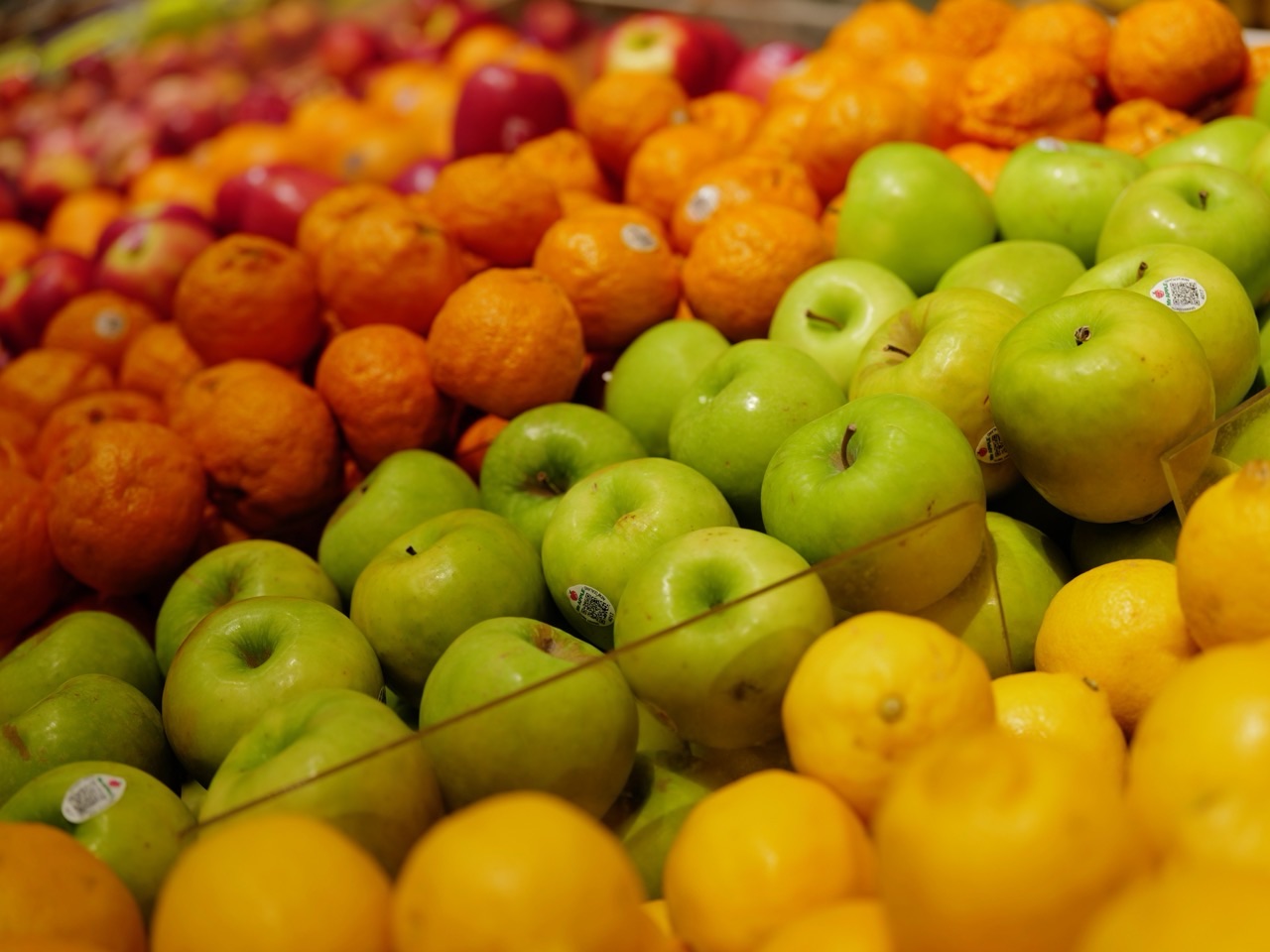
A tiny word on a price label can change the whole conversation. Are those oranges priced each, by the bag or by the kilogram? Once you know what to ask, the numbers become much friendlier. A clear “Is that price for one piece or for the whole pack?” can save several rounds of guessing.
Grocery shopping vocabulary helps you name the amount you want, understand how an item is sold and check what you will pay. This guide explains each, per kilogram, loose, pack, bunch, dozen, unit price and total, with English for asking for a smaller quantity, confirming a weight and discussing a substitution. The aim is to make your request easy for another person to understand.
Start with the quick vocabulary table if you are heading to the shops, or use the conversations and exercises to practise at home. All price labels, transactions and dialogues below are invented learning examples, not current shop prices. Read the actual label and ask the seller when the unit or conditions are unclear.
Find the phrase you need
Choose a reading route, then practise one request aloud.
- Read the label — Check the product, price unit and amount.
- Name your quantity — Choose package words and clear questions.
- Confirm the offer — Check prices, limits and substitutions.
- Practise and transfer — Use dialogues, exercises and a new setting.
Groceries are food and other everyday household supplies bought from a shop. Produce, in a grocery setting, commonly refers to fruit and vegetables. A stall is an individual selling space in a market; an aisle is a passage between rows of shelves. These words help you describe where you are looking, but the most useful transaction words tell you how much you want.
| Word or phrase | Meaning in this setting | Original example |
|---|---|---|
| each | For every individual item | Are the mangoes two dollars each? |
| per kilogram | For every kilogram of the product | Is the price shown per kilogram? |
| loose | Available as separate items rather than a fixed retail pack | Can I buy the carrots loose? |
| pack | A packaged group or quantity | How many pieces are in this pack? |
| bunch | A group held or growing together | I would like one small bunch of coriander. |
| dozen | A group of twelve | Does this carton contain a dozen eggs? |
| weigh | Measure how heavy something is | Could you weigh these tomatoes, please? |
| approximately | Close to the stated amount | I would like approximately half a kilogram. |
| unit price | Price expressed for a specified measure or count | What unit is used for this unit price? |
| total | The full amount being counted or charged | What is the total for both bags? |
| substitute | Replace one item with another | Please ask before you substitute a different size. |
Learn the words with their partners: a bunch of herbs, a pack of noodles, two bottles of milk and half a kilogram of potatoes. The whole phrase gives you something usable at the counter. A list of isolated nouns is harder to turn into a request when somebody is waiting for an answer.
Each points to an individual item. In the fictional label “Mangoes: $2 each,” one mango costs two dollars and three cost six dollars, assuming no other offer applies. The item is the counting unit. The weight of each mango is not needed to interpret that particular label.
Per introduces a rate: an amount for every stated unit. “Tomatoes: $6 per kilogram” gives a price for one kilogram. It does not say that every customer must buy exactly one kilogram. If buying by weight is available, half a kilogram would cost three dollars at that rate, before any other charges or applicable adjustments.
Per pack points to the package. If a label says “$4 per pack,” look for the quantity inside. A pack might contain several pieces or a stated weight. “How many are in one pack?” and “What is the weight of this pack?” ask different questions, both of which may matter.
Notice the difference between “two dollars each” and “two dollars for three.” The first states a price for one item. The second describes a price for a group of three under the stated offer. Do not silently turn a group offer into a one-item price without checking whether single items are sold on the same terms.
Useful clarification: “Does that price apply to one piece, one pack or one kilogram?” Give the seller the possible meanings you are trying to separate. Pointing to the exact label while asking can make the answer quicker. A number without its unit is only part of the message.
A kilogram is 1,000 grams. Kilo is a common shortened form of kilogram in conversation. Half a kilogram is 500 grams; a quarter of a kilogram is 250 grams. You can say “five hundred grams” instead of “half a kilo” if that is easier to say clearly.
The abbreviations g and kg commonly appear beside weights. Read “750 g” as “seven hundred and fifty grams” and “1.5 kg” as “one point five kilograms” or “one and a half kilograms.” These are different ways to express the same amount, not different quantities.
| Written amount | One clear spoken version | Equivalent amount |
|---|---|---|
| 250 g | Two hundred and fifty grams | A quarter of a kilogram |
| 500 g | Five hundred grams | Half a kilogram |
| 750 g | Seven hundred and fifty grams | Three quarters of a kilogram |
| 1 kg | One kilogram | One thousand grams |
| 1.5 kg | One and a half kilograms | Fifteen hundred grams |
When listening, repeat the unit as well as the number. “Did you say fifteen hundred grams?” is more useful than “Did you say fifteen hundred?” The second question leaves the measure unstated. You can also ask the seller to show the amount on the label or display.
Keep decimal quantities separate from counts. “One point five kilograms of potatoes” describes a weight. “One and a half potatoes” describes pieces. The shared number does not make the requests interchangeable. The noun and unit tell the listener which kind of amount you mean.
For volume, litre and millilitre are useful companions. A litre is 1,000 millilitres. A 500 ml bottle is a bottle holding half a litre. In a request such as “two 500 ml bottles,” two tells the seller how many bottles and 500 ml identifies the size of each one.
Packaging words often make an uncountable product easier to order. Rice is usually discussed as an amount of rice, but you can ask for a bag of rice. Milk is an amount of liquid, while a bottle of milk is a countable container. “Two bags” and “two bottles” are clear only when the product and size are also understood.
A bunch describes a group, often attached or gathered together. Herbs and grapes are familiar examples. A bunch is not a fixed universal weight. If the size matters, ask “How much does this bunch weigh?” or “Is a smaller bunch available?” The word alone does not establish how many servings it will provide.
A head can refer to one whole lettuce, cabbage or similar plant part in a grocery conversation. A clove is one separate segment of garlic; a bulb is the whole garlic unit containing cloves. “Two cloves” and “two bulbs” can therefore produce very different shopping baskets.
A dozen means twelve, so half a dozen means six. A carton is a container, and its count can vary. “One carton of eggs” does not necessarily mean a dozen eggs. Look for the printed count or ask how many eggs the carton contains before using carton and dozen as if they were equivalent.
Words such as punnet, tub, jar and tin can appear on labels. Punnet is used in some varieties of English for a small fruit container. Tin and can may both describe a metal food container. If the local word is unfamiliar, pointing and asking “Is this the small container?” is a perfectly useful repair.
Try building a complete request: “Could I have two bulbs of garlic and one small bunch of coriander, please?” It combines exact counts with a size preference. If the seller offers a larger bunch, you can ask about its price and decide rather than treating the word small as a measured guarantee.
Loose often means the product is available outside a fixed retail pack. It does not automatically mean that the shop charges by weight. Loose items can be priced individually, by a count-based offer or by weight. The next question is therefore “Are these sold individually or by weight?”
Prepacked items are already packaged before you choose them. A fixed-weight pack displays a stated quantity, such as 500 g. Other packs can have different individual weights and prices. Read the particular label rather than assuming that two packages of the same product contain identical amounts.
Sold by weight means the charge depends on the measured amount at the stated rate. Weigh is the verb for measuring weight; weight is the noun for the amount measured. “Could you weigh this?” asks for an action. “What is its weight?” asks for the resulting information.
Net weight refers to the product amount excluding its packaging. Gross weight includes packaging. Drained weight, when displayed for a product packed in liquid, refers to the amount after that liquid is drained. These labels describe different quantities; use the one relevant to the comparison you are making.
For language practice, imagine two similar jars with different net and drained weights. Asking “Does this number refer to the contents including the liquid, or to the drained product?” is a more careful question than deciding from the largest printed number alone. The actual product label supplies the details.
At a market, a simple request is “Could I have about 500 grams, please?” About gives some flexibility around the target. If you have a firm limit, add it separately: “Please keep the total under five dollars.” The seller may need to confirm whether both requests can be met.
How many asks about countable items: “How many apples are in the bag?” How much asks about an amount or a price: “How much rice do you need?” and “How much is this bag?” Context tells you whether the second speaker is asking about quantity or money.
You can remove that ambiguity by naming the measure. “What is the price of this bag?” asks about money. “How much does this bag weigh?” asks about weight. “How many pieces are inside?” asks about count. These questions are especially helpful when a label contains several numbers.
Some product words work differently depending on meaning. Chicken can refer to meat as an amount or to a whole bird as an item. “How much chicken?” and “How many chickens?” are consequently not interchangeable questions. Add the form you want: pieces, whole birds or a stated weight of meat.
Size questions can be about the container or the individual pieces. “Do you have a smaller pack?” requests a smaller packaged quantity. “Do you have smaller potatoes?” requests smaller individual potatoes. A smaller pack could still contain large potatoes, so choose the noun that identifies your actual preference.
You do not need elaborate grammar to be polite. “Could I have…?” and “I would like…” are useful beginnings. Add the product, amount and one necessary condition: “I would like 250 grams of these mushrooms, please, in a separate bag.” That is already a complete and helpful request.
The selling price tells you the stated amount charged for the item or package under the label’s conditions. A unit price expresses a price for a specified measure or count so that different quantities can be compared. The unit price may therefore be different from the amount charged for the pack you actually choose.
The Competition and Consumer Commission of Singapore’s unit-pricing guide explains that comparison prices can use weight, volume or number. For a shopper, the practical reading task is to identify the unit beside each price before comparing two labels. The actual label and offer conditions still matter.
Here is an invented comparison: Pack A contains 500 g and costs $4. Pack B contains 1 kg and costs $7. Pack A has the lower selling price. Pack B has the lower price per kilogram: seven dollars instead of eight. “Cheaper per kilogram” and “cheaper to buy today” answer different questions.
Neither comparison settles how much you should purchase. You may need only the smaller amount, have limited storage or prefer one product’s characteristics. In conversation, distinguish “Which has the lower unit price?” from “Which pack fits the amount I need?” This keeps a price comparison connected to your actual request.
Make the units agree. A label showing price per 100 g cannot be directly compared numerically with a label showing price per kilogram. One kilogram contains ten lots of 100 g. In a fictional example, $0.80 per 100 g equals $8 per kilogram. Reading the unit prevents the smaller displayed number from misleading you.
Total describes the combined amount being charged or counted. Ask “Is that the total for all three items?” if you are unsure what is included. In a receipt discussion, name the line you are checking: “I selected one pack, but this line shows two. Could we check the quantity?” Keep the request factual and specific.
Approximately, about and roughly usually allow a small difference around a stated amount. “About 600 grams” sets a target without demanding an exact match. For produce made of whole pieces, the seller may show you a weight above or below that target and ask whether it is acceptable.
Exactly indicates a precise amount. Before insisting on exactness, consider whether the product is divided in a way that allows it. “Can you sell exactly 500 grams?” asks about that possibility. If the seller says the available pack is 520 grams, you can accept it or choose another option; the original request has not automatically been satisfied.
No more than sets an upper boundary. “No more than 500 grams” is different from “about 500 grams.” Likewise, “at least six apples” sets a minimum, while “exactly six apples” fixes the count. These small phrases tell the other person which differences you are willing to accept.
Separate a spending limit from a weight preference. “I would like around half a kilogram, but please do not exceed six dollars” gives two conditions. If the price makes that combination impossible, the seller needs to discuss a smaller quantity or a different choice. A useful follow-up is “How much could I buy within that amount?”
Confirmation closes the loop: “This bag is 540 grams and costs $3.24. Is that okay?” A clear response is “Yes, that amount is fine” or “Could we reduce it a little?” You are agreeing to the specific offer just stated. The numbers in this example are invented to practise listening and response.
Separate means kept apart. “Please put the onions and tomatoes in separate bags” describes packaging, not necessarily separate payments. If you need two transactions, say “Could I pay for these separately?” Naming the action helps prevent a reasonable but different interpretation.
Split means divide into parts. “Could you split this quantity between two bags?” asks for one amount to be divided. “Could I have two bags of 500 grams each?” asks for two specified amounts, one kilogram altogether. The word each is doing important work in the second request.
Out of stock means the requested product is not currently available in stock. A substitute is a replacement offered instead. “Would you like a different brand?” asks about one possible change. Another brand may also come in a different size, so check both the product identity and quantity before agreeing.
For an online order, a clear note might say: “If this 500 g pack is unavailable, please contact me before substituting another size.” Whether the platform or retailer can follow that request depends on its actual options. Use the available controls and read the seller’s stated substitution process.
An alternative may solve the same shopping need without being identical. “Do you have another small pack?” leaves the brand open while preserving size as a priority. “I need this brand, but a different pack size is fine” makes the opposite choice. Say which feature matters rather than assuming the seller can infer it.
Conversation one checks the price unit. Customer: “Excuse me, is that price for one orange or for the bag?” Seller: “For the bag. There are four oranges inside.” Customer: “Thank you. I would like one bag, please.” The customer first resolves the unit, then makes the purchase request.
Now change the seller’s answer: “It is per kilogram. These are loose oranges.” A suitable reply is “Could you weigh three of them and tell me the total?” You have specified a count for selection while asking for the resulting weight-based charge. Three oranges do not establish a fixed weight in advance.
Conversation two distinguishes a target from a limit. Customer: “Could I have about 500 grams of these tomatoes?” Seller: “This selection is 560 grams.” Customer: “That is fine if the total stays under four dollars. Could you confirm the price?” The customer accepts flexibility in weight while retaining a spending condition.
For a stricter request, change the response: “Thank you, but I need no more than 500 grams. Could we choose a smaller amount?” This is clear without accusing the seller of making a mistake. The original word about allowed flexibility; the revised sentence explains a different boundary.
Conversation three handles a substitution. Seller: “The six-egg carton is unavailable. Would you like a twelve-egg carton?” Customer: “I only need six eggs. Do you have another six-egg pack?” Seller: “Yes, in a different brand.” Customer: “What is the price of that pack?” The replacement is checked against the customer’s quantity need.
After reading aloud, cover the customer lines and rebuild them from the purpose: check the unit, request a quantity, state a limit or ask about a substitute. You can use different words as long as the meaning survives. That is a stronger test than remembering one dialogue word for word.
Exercise one: an invented label reads “Pears: $1.50 each.” You want four pears. What unit is being used, and what is the price before any other offer or charge? Write one sentence asking for the quantity and one sentence confirming the price.
Exercise two: two invented packs of the same comparable product are available. Pack A is 250 g for $3; Pack B is 500 g for $5. Which has the lower selling price? Which has the lower price per kilogram? Explain why those answers need not be the same.
Exercise three: repair “I need two garlic.” You mean two whole bulbs, not two separate cloves. Make the request precise. Then write a different request for two cloves so that another person could distinguish the amounts.
Exercise four: a shopper asks for “two bags of 300 grams each.” What is the combined requested weight? How would you change the request if you wanted 300 grams altogether, divided between two bags? Keep the word total or altogether in the second version.
Exercise five: the seller says “This is 620 grams,” after you requested about 600 grams. You are willing to accept that amount if the total is within your spending limit. Write a reply that names the limit and asks for confirmation instead of guessing the final charge.
Exercise six: your chosen pack is unavailable. A replacement contains twice the amount. Write a polite response asking whether a smaller alternative is available. Then state what the seller still needs to tell you before you can decide whether to accept it.
Answers and explanations
Answer one: the unit is one pear. Four pears cost $6 under the stated assumptions. Possible sentences: “Could I have four pears, please?” and “Is the total six dollars for these four?” Repeating the count makes it clear which quantity your price question refers to.
Answer two: Pack A has the lower selling price at $3. Its price per kilogram is $12; Pack B’s is $10. Pack B therefore has the lower unit price. The selling price compares what you pay for each whole pack; the unit price compares the cost of equal amounts.
Answer three: “Could I have two bulbs of garlic, please?” asks for two whole bulbs. “Could I have two cloves of garlic, please?” asks for two individual segments. The measure word carries the distinction; the product name remains the same.
Answer four: two lots of 300 grams give 600 grams altogether. For the smaller combined amount, say “Could I have 300 grams in total, divided between two bags?” If the division needs to be equal, add “150 grams in each bag.” Make that extra condition explicit.
Answer five: “That weight is fine if the total is no more than five dollars. Could you confirm the price?” Five dollars is an invented limit for this answer. Your real sentence would use your actual limit. The seller still needs to confirm whether the offered amount meets it.
Answer six: “Thank you. I need a smaller quantity. Is another small pack available, and what would it cost?” You still need the replacement’s product, size and price. If a particular brand or other feature is essential to your request, check that too before agreeing.
Practise a small loop: read a label, identify the product and unit, make one request, then confirm the offered amount. On another day, change the packaging or quantity and repeat. Using the same words in a new situation shows whether you understand them beyond the first example.
For children learning with an adult, use a pretend shop with empty packaging or written cards. Let the learner ask “How many are in the pack?” before choosing. Change one card from each to per pack and discuss what changed. The purpose is careful reading and clear speech, not buying extra items for practice.
If you enjoy the wider setting, How Singapore Works: Supermarkets explores the system behind the shopping trip. For another task where quantities and labels matter, try Furniture Assembly Instructions and Hardware Terms. Continue through the Vocabulary hub for more everyday language practice.
A successful grocery request gives the other person enough information to respond: the product, the quantity, the unit and any important condition. When something is unclear, ask about that one missing detail. A friendly question can turn an uncertain label into a clear decision, and every repeat makes the next conversation easier.