
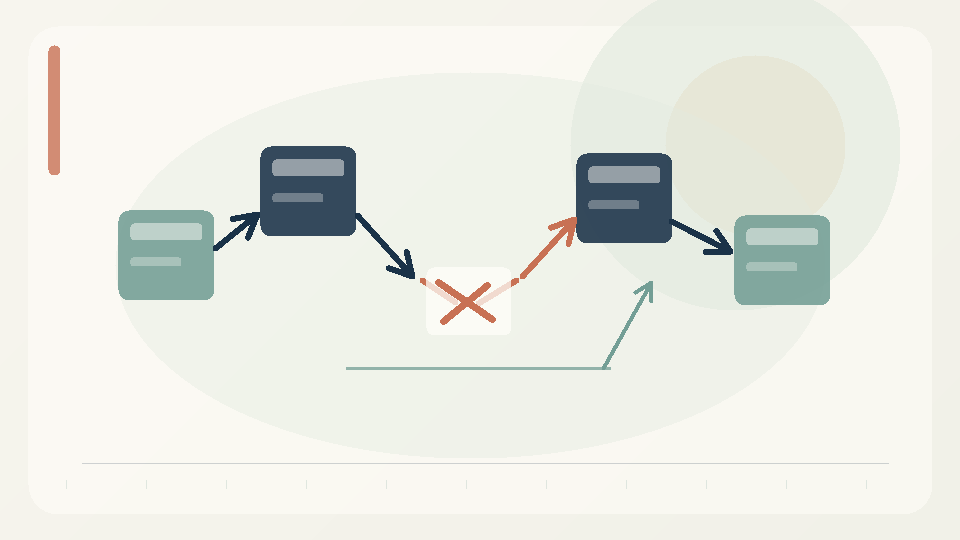
What is a supply chain? A supply chain is the connected network of organisations, people, activities, information and resources involved in producing a product or service and delivering it to the final customer. It can include raw-material suppliers, manufacturers, component makers, warehouses, transport companies, retailers, software providers and after-sales services. A supply chain is therefore much more than a truck carrying a box.
A simple product can depend on a surprisingly complex chain. A mobile phone may use minerals sourced in one country, chips fabricated in another, components assembled across several locations and software and logistics services supplied by different firms. Delays or shortages at one critical point can affect production and delivery elsewhere.
Quick notes: Supply chains connect sourcing, production, storage, transport, distribution and returns. A supplier provides an input; a manufacturer transforms inputs; a distributor moves products through the network; and a retailer sells to customers. A logistics network manages movement and storage. Resilience means the chain can prepare for, respond to and recover from disruption—not that it can never fail.
How a supply chain works
- Plan demand: estimate what customers may need and when they may need it.
- Source materials: buy raw materials, components and services from suppliers that meet quality, cost and compliance requirements.
- Make or assemble: convert inputs into finished products through manufacturing, processing, packaging or service operations.
- Store inventory: hold materials and finished goods in warehouses, distribution centres or other suitable locations.
- Transport and distribute: move goods by road, rail, sea or air, coordinating customs and delivery schedules where relevant.
- Sell and deliver: retailers, platforms or service providers make the product available to customers.
- Handle returns and recovery: manage repairs, recycling, reverse logistics, recalls and end-of-life products.
The stages do not always happen in one straight line. A manufacturer may source from several suppliers, outsource assembly, send components to another country for processing, and ship finished products to multiple markets. Information and money move alongside physical goods. Effective supply-chain management therefore coordinates materials, data, payments, capacity and risk.
Supply chain versus logistics
Logistics is the planning and execution of moving and storing goods, services and related information. Supply-chain management is broader: it coordinates the entire network, including sourcing, supplier relationships, procurement, production planning, inventory, logistics, customer needs and returns.
A logistics team may optimise the route for a shipment. A supply-chain team may decide whether the company should have two suppliers, where to locate inventory, how much safety stock to hold and how a factory should respond if a port closes. Logistics is a major part of supply chains, but the terms are not interchangeable.
What is the difference between a supplier and a manufacturer?
A supplier provides materials, components, equipment or services needed by another organisation. A manufacturer transforms materials or components into products. One company may perform both roles, and a company may be a supplier to one customer while acting as a manufacturer for another.
Supply chains are often described in tiers. A Tier 1 supplier sells directly to the focal manufacturer. Tier 2 suppliers provide inputs to Tier 1 suppliers, and Tier 3 suppliers may sit further upstream. The deeper tiers can be difficult to map, yet a disruption at a distant source can still affect the final product.
Upstream, downstream and the value chain
Upstream activities generally involve inputs and suppliers before a product reaches the focal company. Downstream activities include distribution, sales, use, service and disposal after production. A value chain looks at the activities through which value is created, delivered and supported. The terms overlap, but they highlight different perspectives.
The same organisation may be upstream for its customer and downstream for its own supplier. A food processor, for example, buys ingredients from farms and sells packaged products to retailers. Understanding where a company sits helps identify who depends on it and which partners create critical value.
Why inventory matters
Inventory is the stock of materials, components, work in progress and finished products held by an organisation. Too little inventory can cause production stoppages or missed customer orders. Too much inventory ties up cash, uses storage space and can become obsolete or spoil. The right level depends on demand uncertainty, supplier reliability, lead time, product life and the cost of a shortage.
Safety stock
Safety stock is additional inventory held to protect against uncertainty in demand or supply lead time. It can reduce the risk of stockouts, but it is not free: it costs money to buy, store, insure and manage. Businesses need to decide which products justify extra stock and which can be replenished reliably.
Just-in-time inventory
Just-in-time approaches aim to receive materials close to when they are needed, reducing inventory and waste. They can improve efficiency when processes and suppliers are dependable. However, a very lean system can be vulnerable if a key supplier or transport route is disrupted. A business must consider efficiency and resilience together.
What is a supply-chain disruption?
A disruption is an event or condition that interrupts the normal flow of materials, production, information or deliveries. Causes include extreme weather, port congestion, factory fires, machinery failure, cyberattacks, labour shortages, disease outbreaks, trade restrictions, geopolitical events and sudden changes in demand.
A disruption at one node can spread through the network. If a specialist component is unavailable, an entire product line may stop even when all other parts are in stock. If a port is congested, shipments may miss production windows. If a supplier’s software is compromised, orders, invoices or production schedules may become unreliable.
How supply chains become more resilient
- Map dependencies: identify critical products, suppliers, locations, transport routes and single points of failure, including deeper supplier tiers where practical.
- Diversify carefully: consider alternative suppliers, routes or facilities, while checking quality, origin, compliance and the cost of maintaining alternatives.
- Hold strategic buffers: use safety stock or reserve capacity for items whose absence would stop critical operations.
- Improve visibility: share reliable forecasts, shipment status, inventory levels and risk information across partners.
- Prepare response plans: assign decision-makers and define how to reroute, substitute, prioritise customers or restart production.
- Learn from incidents: review what failed, how quickly the chain recovered and which controls need improvement.
Resilience is not the same as making every stage local or holding unlimited inventory. A company may become less resilient if it relies on one domestic source, or more resilient through a diverse international network. The OECD notes that resilience requires managing risk rather than assuming that reducing trade links automatically makes a chain stronger.
What are supply-chain bottlenecks?
A bottleneck is a point in a process or network whose capacity limits the overall flow. It may be a machine with insufficient production capacity, a shortage of skilled workers, a port with limited handling slots, a single certified supplier or a regulatory inspection delay. Improving a non-bottleneck step may not increase total output if the constraint remains unchanged.
Managers should identify where orders queue, where utilisation is consistently high, where lead times vary and where one failure stops many downstream activities. A bottleneck may move when the organisation changes production, suppliers or demand.
How technology supports supply chains
Supply-chain systems can connect purchasing, inventory, production, transport, billing and customer orders. Enterprise resource planning systems coordinate internal functions; warehouse-management systems track stock movements; transport-management systems help plan shipments; tracking sensors and data platforms can improve visibility; and analytics can help forecast demand or spot anomalies.
Technology does not automatically create accurate information. Data can be delayed, incomplete or entered incorrectly. A dashboard may show a shipment as moving even when the underlying scan is stale. Good management combines reliable data, clear ownership, sensible processes and human escalation when the system detects a problem.
Sustainable supply chains
A supply chain affects more than price and speed. Environmental and social impacts can occur during raw-material extraction, manufacturing, energy use, transport, packaging, labour, product use and disposal. Businesses may assess emissions, water use, waste, worker safety, human rights and traceability across suppliers.
A product that appears low-carbon at the factory gate may have substantial impacts upstream or during use. A company should make clear what boundary it measures and avoid claiming that a product is sustainable based on only one stage. Measurement, supplier engagement and credible verification matter.
A practical supply-chain example: a loaf of bread
A loaf of bread may begin with a farmer growing wheat. Grain is harvested, transported, stored and milled into flour. A bakery buys flour, yeast, salt and packaging, then schedules production, bakes and packs the bread. A distributor delivers it to supermarkets and shops, which manage shelf space and demand. Unsold products may be discounted, donated or disposed of under food-safety rules.
The chain depends on weather, harvest yield, mill capacity, energy, transport, packaging, food standards, labour, refrigeration where relevant, customer demand and store ordering. A shortage of one ingredient or a transport interruption can affect availability even when the bakery itself is operating normally.
Frequently asked questions about supply chains
What is a supply chain in simple words?
It is the network that gets a product from its raw materials through production and delivery to the customer, including the information and services needed along the way.
What is the difference between supply chain and logistics?
Logistics focuses on movement and storage. Supply-chain management coordinates a wider network including sourcing, production, suppliers, inventory, logistics and returns.
Why do supply chains fail?
They can be disrupted by supplier shortages, transport problems, extreme weather, cyber incidents, labour issues, demand shocks or other events.
What is a supply-chain bottleneck?
It is the constrained point that limits the amount or speed of goods and information flowing through the wider process.
What is supply-chain resilience?
It is the ability to prepare for, respond to and recover from disruption while maintaining or restoring important flows.
Does buying locally always make a supply chain safer?
No. Local sourcing can reduce some transport exposure, but resilience depends on the number of suppliers, capacity, geography, inputs, infrastructure and other risks.
Continue learning at eduKateSG
To understand the role of cross-border movement, read Singapore’s TradeNet and Paperless Trade Economy and Customs, GST and Import Procedures. For how trade barriers influence costs, see Tariffs and Trade Barriers Explained.
Sources and further reading
The OECD Global Value and Supply Chains page explains cross-border production and resilience. The OECD Supply Chain Resilience Review discusses how firms and governments can navigate supply risks. The World Trade Organization provides context on international trade rules. This article is a general introduction; actual supply-chain designs depend on product, industry and regulatory requirements.