
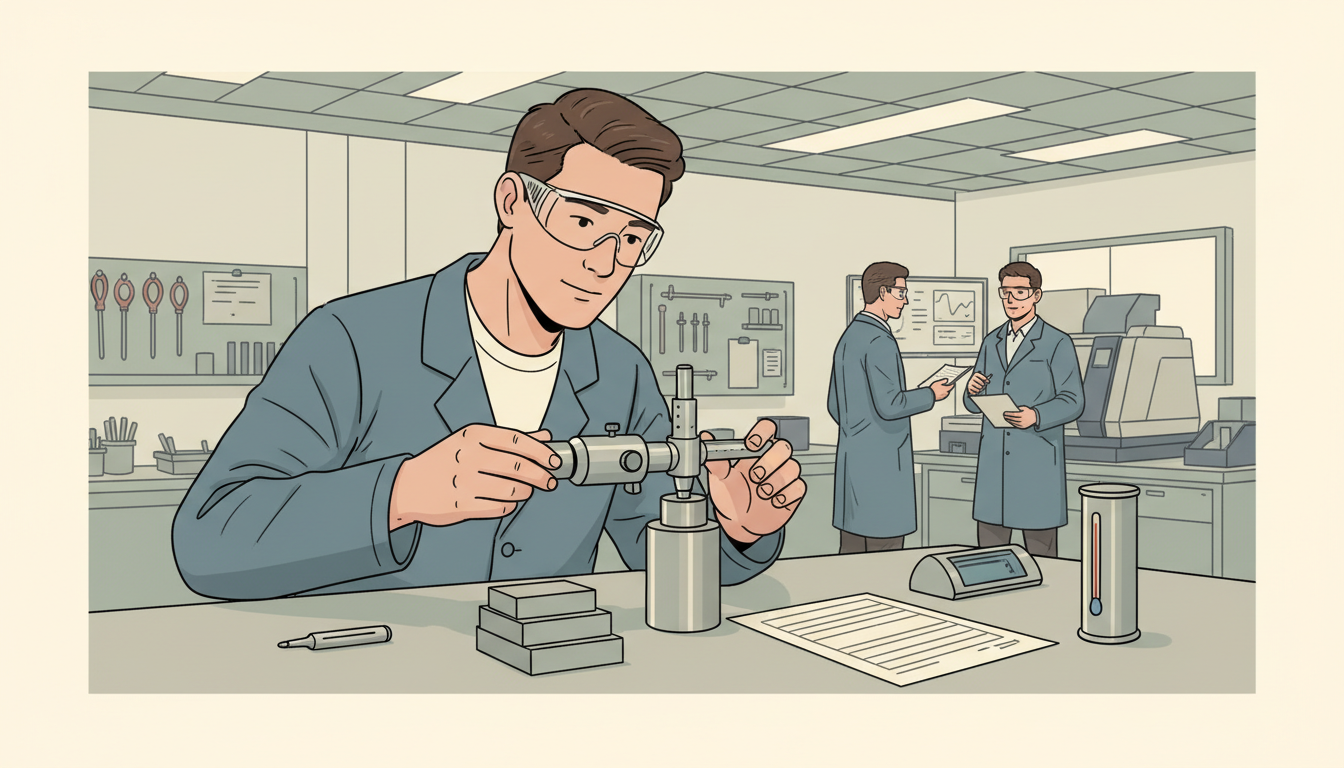
What is PG3 Electronics? PG3 means Posting Group 3, used for entry to Singapore secondary schools. G3 Electronics is a separate upper-secondary examinable subject under the 2027 Singapore–Cambridge Secondary Education Certificate (SEC). SEAB identifies it as K353 (previous reference 6063), with a two-hour written paper worth 70% and a 32-hour supervised electronic project worth 30%. “PG3 Electronics” is a parent’s way of describing a possible pathway—not the formal syllabus title.
Did you know? A sensor that notices light does not make a lamp turn on by magic. An electronic system needs a way to detect a condition, process the information and respond. Understanding the relationship among inputs, circuits, components and outputs is what makes Electronics interesting. The subject teaches students to ask not just “Does it work?” but “Why does it work, and how could we test it?”
The next question for families is often whether studying Electronics helps with junior college (JC), polytechnic or university engineering. It may be valuable preparation, but it is not an automatic admission entitlement and does not replace future Mathematics, Science or course-specific qualifications. This guide maps the real school subject, its assessments, useful practice and the routes worth exploring.
Independent eduKateSG parent and learner guide, reviewed 24 October 2026 against the official 2027 SEAB G3 list, subject-specific teaching references and MOE post-secondary announcements. Follow your school’s authorised electrical safety, coursework and examination-year instructions.
The quick answer: G3 Electronics and future pathways
| Question | Useful answer |
|---|---|
| Is PG3 Electronics a national exam? | No. PG3 is a posting group; the examination is G3 Electronics K353. |
| What is examined in 2027? | Paper 1 written (2 hours, 70%) and Paper 2 supervised project (32 hours, 30%). |
| Is this just Computing? | No. Electronics studies electrical/electronic systems, while Computing K349 has distinct software-focused aims. |
| Can every PG3 learner take it? | Not automatically. Availability and eligibility depend on the school’s actual offer. |
| What happens after SEC? | First SEC results in January 2028; applicants use the new Post-Secondary Admissions Exercise. |
| What might it lead toward? | Qualifying JC, polytechnic or later university studies related to engineering and technology. |
Choose what you need: PG3 and G3 · what Electronics teaches · 2027 assessment · worked example · JC/Poly/Uni · FAQ.
1. Posting Group 3 is not the same as a G3 Electronics registration
A Secondary 2 pupil might enjoy STEM projects and ask to select Electronics for upper secondary. Their PG3 school entry makes that interest understandable, but it does not automatically secure this elective. Under Full Subject-Based Banding, posting groups guide entry and initial levels; the school offers particular subjects and combinations according to its facilities, timetable, criteria and provisions.
Always check the formal SEC code. In the 2027 G3 catalogue Electronics is K353; Computing is K349; Design & Technology is K345. A student’s favourite robotics activity may draw on all three ideas but does not mean the national papers are interchangeable.
For the overall system, begin with What is PG3 | MOE and SEAB Syllabus. A child’s original posting category is not a universal description of every later subject or degree opportunity.
2. What Electronics really teaches
An electronic system has a purpose
A simple system might read a light-related signal, make a comparison and trigger an indication. In words, it has an input, processing stage and output. Students should understand what each part does and what kind of evidence would establish whether the whole system responds correctly.
Electricity is a quantitative subject
Current, voltage, resistance and other electrical quantities have distinct meanings and units. The relationships among them depend on the circuit conditions. Strong learners interpret a circuit diagram before choosing a formula. Careful Mathematics makes Electronics clearer, but using an equation without understanding the physical system can produce a plausible-looking wrong answer.
Analogue and digital ideas are related but not identical
Analogue circuits may respond to continuously varying signals. Digital electronics often uses states and logic to produce decisions. If a signal crosses a threshold, the system may switch from one response to another. Students must learn what the threshold means and why noise, component behaviour or a flawed rule can affect reliability.
Components must be understood in context
A resistor, capacitor, semiconductor device or transducer has a specific role, but naming it alone is not enough. The question is how a component behaves in the relevant system and why it was selected. Technical knowledge serves the function rather than becoming a shopping list of parts.
Engineering tests turn a prototype into evidence
A demonstration may work once by chance. A better engineering evaluation compares observed results with a defined requirement, describes the test conditions and notes the limitation. “The LED flashed” is one observation; “the output changed under the specified input condition in repeated tests” is a more useful claim.
3. The real 2027 Electronics K353 examination
| Component | 2027 K353 requirement | What it measures |
|---|---|---|
| Paper 1 — Written | 2 hours; 100 raw marks; 70% | Electronic systems, fundamentals, analogue/digital reasoning, and applied structured questions. |
| Paper 1 Section A | 40 marks from compulsory shorter questions | Accurate concepts, calculations and interpretation. |
| Paper 1 Section B | 60 marks from four compulsory longer questions | Connected explanations, design and analysis. |
| Paper 2 — Project | 32 supervised hours; 100 raw marks; 30% | Design, safe development, testing and an authentic documented electronic prototype. |
The assessment weighting is easy to misunderstand. Electronics includes substantial hands-on work, but the written paper contributes 70% of the final assessment. Students need sound theory and reasoning as well as the ability to explain the project they personally complete. Buying an impressive kit does not automatically prepare someone for the syllabus.
SEAB’s official 2027 directory and the syllabus cover identify Electronics as K353. An archived parent guide notes an inconsistency in some running headers of the linked PDF, which appear to use K352. K352 is the separately listed Drama code; school registration should follow the official subject directory and the correct Electronics syllabus cover, not an inconsistent running header.
For precise details, read the K353 32-hour project and theory guide and check the current official SEAB syllabus.
4. A tiny numerical example: every unit tells a story
Consider a hypothetical resistor with 1,000 ohms of resistance. If a simplified ideal condition places 3 volts across it, Ohm’s law gives I = V ÷ R = 3 ÷ 1,000 = 0.003 amperes, or 3 milliamperes. This is a calculation illustration, not instructions for assembling an electrical circuit.
Why is the conversion worth checking? One ampere equals 1,000 milliamperes. Writing 3 amperes instead of 3 milliamperes would be a thousandfold error. A student who memorised only “divide 3 by 1,000” might miss the physical implications. A student who labels quantities and units can check whether the answer is sensible.
Did you know? A correct calculation does not prove that a real circuit will behave exactly like an ideal example. Components may have tolerances and circuit conditions may differ. Engineers identify their assumptions and test actual performance using authorised equipment under supervision.
5. A logic example: the alarm that should not trigger
Imagine a fictional school design exercise: a low-voltage simulated indicator should turn on only when both a permission signal and a sensor signal are active. In simple Boolean logic, the intended output is Permission AND Sensor. It must remain off whenever either signal is inactive.
| Permission | Sensor | Expected output |
|---|---|---|
| Off | Off | Off |
| Off | On | Off |
| On | Off | Off |
| On | On | On |
The table is a specification, not a real electrical schematic. If a candidate’s logical model outputs “On” whenever either input is active, they have implemented OR rather than AND. That is a conceptual mistake, not a soldering problem. Testing all four combinations helps expose it.
This is where digital reasoning and engineering verification meet. The learner should predict expected results first, then compare them with observed outcomes from a teacher-approved simulation or supervised exercise. Safety and an accurate specification come before constructing hardware.
6. What does the 32-hour project really require?
An authentic project must address an assessed problem and produce evidence of the candidate’s engineering process. Under the official requirements, students work through planning, research, design and development, modelling where relevant, prototype construction, testing and reflection. Both a physical prototype and its explanatory documentation matter.
The school controls the prescribed project, equipment, supervision, safety measures, permitted software and candidate-authorship requirements. Families should not build the hardware, create the technical drawings or write the report for the child. A student’s ability to explain an unsuccessful test and improve a design can be stronger evidence of learning than an adult-made prototype that appears flawless.
At home, safe preparation can involve paper block diagrams, explanation of Boolean conditions, unit conversion and non-operational hypothetical test tables. Never experiment with mains electricity or hazardous workshop equipment without qualified supervision.
7. How Electronics differs from Computing and D&T
| Subject | 2027 SEC code | Typical emphasis |
|---|---|---|
| Electronics | K353 | Circuit theory, electronic components, digital/analogue systems and a supervised electronic project. |
| Computing | K349 | Computational thinking, programming, systems and software-oriented problem solving. |
| Design & Technology | K345 | User needs, materials, structures, mechanisms, product design and a separately structured design project. |
A student who loves coding might enjoy Electronics, but skill in Python does not establish understanding of current or semiconductors. A student who likes constructing models might enjoy D&T without preferring circuit calculations. The useful question is which form of thinking and which assessment genuinely match the child’s interest and readiness.
Read Electronics versus Computing and D&T, What is PG3 Computing? and What is PG3 Design and Technology?.
8. From Secondary 1 to Secondary 4
| Stage | What develops | Useful checkpoint |
|---|---|---|
| Secondary 1 | Basic measurement, algebra, Science reasoning and digital literacy. | Can the learner explain input, process and output? |
| Secondary 2 | Reliable graphs, simple circuit concepts in appropriate school lessons, logic and choice of electives. | Does the learner ask how a system can fail? |
| Secondary 3 | Where offered, G3 Electronics theory and supervised project preparation. | Can the student connect circuit diagrams with the purpose? |
| Secondary 4 | Structured written solutions, authenticated project evidence and 2027 SEC readiness. | Can the candidate explain and test a requirement independently? |
Students do not need to rush into specialised electronics kits in Secondary 1. Understanding algebra, units, cause and effect, and the logic of a system makes later technical learning easier. Short explanations with targeted correction build more confidence than a large pile of superficially completed projects.
9. What if a student wants JC or MI?
MOE says the first SEC results will be released in January 2028 and students will apply through the new Post-Secondary Admissions Exercise (PSE). JC entry from 2028 follows revised L1R4 criteria, with a gross threshold of 16 and specified language, Mathematics/Science and Humanities subject-group rules. Qualifying does not ensure a place at any particular JC.
Do not automatically assume Electronics can be counted in a specific required JC subject-group position; verify its official classification. A student hoping for a Physics/Mathematics-based JC combination must also satisfy the particular college’s subject prerequisites. Electronics may provide useful context but cannot replace those conditions.
For a future engineering interest, Mathematics and Physics readiness may be highly relevant. The student should consider those subjects alongside their complete SEC workload, school offerings and preferred post-secondary institution.
10. Polytechnic: applied electronic systems and engineering
Relevant diploma fields to explore may include electrical and electronic engineering, automation, robotics, mechatronics, telecommunications, semiconductor technology, computing-related engineering and other technical courses offered by polytechnics. These programme labels vary, and every course has its own minimum entry requirements and available places.
From 2028, MOE has announced an ELR2B2 reform allowing an eligible G2 subject in the final best-subject position and adjusting the aggregate cut-off to 22. This broadens admission routes but does not remove course-specific English, Mathematics and Science prerequisites.
A polytechnic learner may build or analyse systems, troubleshoot faults and document practical work. Strong learning includes safety, teamwork, data interpretation and reliable testing as well as circuit skills. Some diploma holders can later apply for university degrees, subject to recognised qualifications and programme rules.
11. University: Electronics is a foundation, not an entrance ticket
Later academic interests might include electrical engineering, computer engineering, applied physics, robotics, embedded systems, communications engineering or other technology fields. University programmes ordinarily assess the applicant’s post-secondary qualifications—A-Level results, recognised diplomas or other accepted routes—plus Mathematics/Science prerequisites and competitive selection.
Studying G3 Electronics K353 is not a universal prerequisite for engineering degrees, nor does it guarantee admission. Some students discover electrical engineering after studying other secondary subjects. Conversely, a strong Electronics student still needs to meet the university’s later qualification requirements.
Work backwards from the degree or diploma of genuine interest. Confirm which qualifications and subjects the institution accepts, then choose a sustainable school-level programme that builds readiness while leaving room for changing interests.
12. Common Electronics learning problems
- Units without meaning: confusing amperes with milliamperes or volts with current.
- Component vocabulary only: naming parts without explaining their functions in a particular system.
- Wrong decision logic: confusing AND with OR or overlooking a boundary case.
- Memorised formulas: selecting an equation without matching its physical assumptions.
- Unreliable evidence: claiming a prototype is “fully tested” after one demonstration.
- Documentation gaps: failing to record why a component or design choice changed.
- Unsafe independence: performing prohibited or hazardous construction outside supervision.
- Assessment confusion: preparing for a generic robotics challenge instead of the K353 written and project requirements.
The best correction asks what the system was supposed to do, what it actually did and which assumption failed. A clearly explained unsuccessful test can be more educational than copying a flawless circuit diagram from someone else.
13. A four-week Electronics foundation plan
| Week | Safe learning task | What success looks like |
|---|---|---|
| 1 — Describe | Draw conceptual block diagrams for two familiar systems. | Inputs, processing and outputs have clear purposes. |
| 2 — Calculate | Practise voltage, current, resistance and unit conversions using hypothetical values. | Every calculation states the assumptions and units. |
| 3 — Predict | Build truth tables for simple digital decisions. | All cases match the required condition. |
| 4 — Evaluate | Compare fictional prototype results with specifications and limitations. | The learner explains which evidence supports an improvement. |
Formal practical building must follow the school’s supervision and safety instructions. Parents can ask questions and support time management without doing the candidate’s assessed project work.
14. Five questions before choosing G3 Electronics
- Does the school offer 2027 G3 Electronics K353, and how are candidates selected?
- Is the student interested in technical explanations, not only attractive gadgets?
- Can they manage a 70% theory paper as well as authentic 32-hour project work?
- How will Mathematics, Physics, English and other subject commitments fit together?
- Which JC or polytechnic entry requirements should be checked for the student’s possible interests?
15. Did you know? Electronics questions answered
Is PG3 Electronics a formal SEAB examination?
No. PG3 is a posting group. The formal 2027 G3 Electronics syllabus is K353.
Is the Electronics code K352?
No. The SEAB G3 directory identifies K353 as Electronics and K352 as Drama. Check the directory and cover if a PDF running header looks inconsistent.
Does Electronics consist mainly of making a circuit?
No. The written theory paper is worth 70%; the supervised project is 30%.
How long is the assessed project?
The 2027 K353 supervised project is specified as 32 hours, subject to the school’s official assessment instructions.
Can parents build the candidate’s project at home?
They should not complete assessed hardware or documentation on the learner’s behalf. Supervision and authenticity rules apply.
Is Electronics the same as Computing?
No. There is conceptual overlap, but K353 and K349 examine different content and tasks.
Do all PG3 students qualify for Electronics?
No. The school decides what it offers and its subject-choice eligibility conditions.
Will Electronics guarantee a JC engineering-related combination?
No. JC entry and H2 subject prerequisites must be checked independently.
Can Electronics support a polytechnic engineering interest?
Yes, potentially as preparation, but the diploma’s minimum entry requirements and admission outcome still matter.
Is Electronics required for every engineering degree?
No universal school-subject requirement applies. Universities evaluate accepted later qualifications and the specific degree’s prerequisites.
16. Official information and related eduKate reading
- SEAB 2027 G3 Electronics K353
- MOE revised JC L1R4 requirements
- MOE first SEC results and the 2028 PSE
- SEC Electronics: two-hour theory and 32-hour project
- Electronics compared with Computing and D&T
- Can a child take Electronics with G2 Mathematics?
- Helping students who find Electronics difficult
- How careful Secondary 1 foundations are built
Explore the next PG3 subject pathways
PG3 Exercise and Sports Science · PG3 Biotechnology · PG3 Design Studies · PG3 Computing
The enduring advantage of Electronics is a practical form of curiosity: describe a system, predict its behaviour, test it safely and change your explanation when the evidence disagrees. That mindset stays valuable well beyond the examination.