
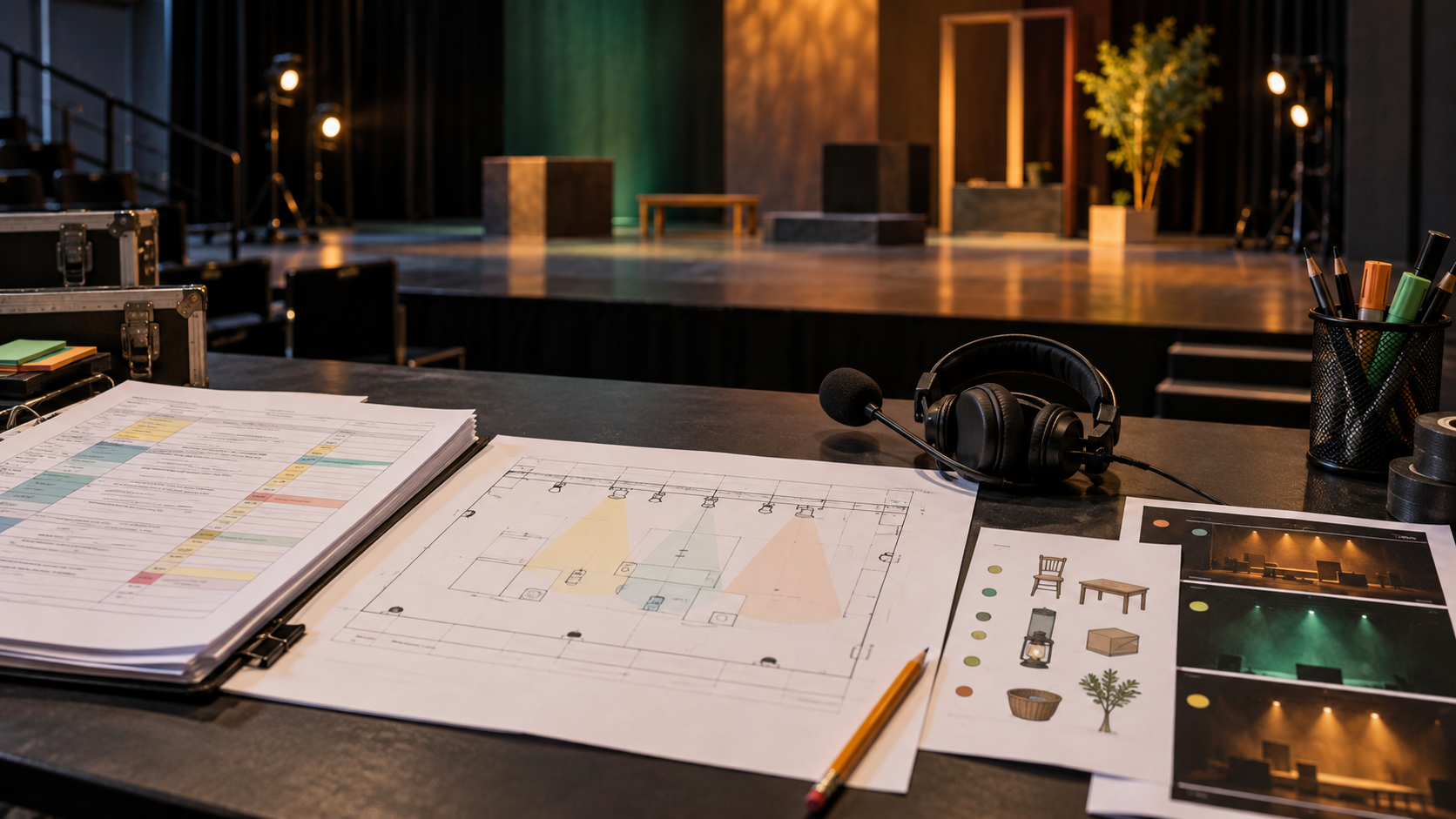
After PSLE results, if your child likes making stage sets, controlling lighting, operating sound, building props, managing curtains or organising a theatre performance, shortlist secondary schools accepting their eligible PG1, PG2 or PG3 Posting Group first. Then check where pupils actually learn backstage production rather than assuming that every Drama CCA is only acting. ACS (Independent)’s Drama Club describes costume creation, sets, lighting and sound; Temasek Secondary’s Serious Play Drama includes prop masters, costume and makeup roles; Kuo Chuan Presbyterian Secondary’s Infocomm Tech Club explicitly teaches sound, lighting and backstage stage-crew skills. Admission to a school does not guarantee every backstage specialisation or production role.
Compare the real Secondary 1 CCA intake, beginner training, school shows, technical safety, rehearsal frequency, transport and academic support before ranking up to six genuinely suitable schools. Dunman Secondary teaches stagecraft within StageArts Drama, while Yio Chu Kang Secondary describes set and lighting design alongside acting and scriptwriting. A technical backstage interest can be nurtured through several club types, but no theatre showcase guarantees a national competition place or a future performing-arts qualification. Check current school information and choose realistic historical cut-off-point alternatives alongside preferred schools.
- Check the official PSLE Score, eligible Posting Group and S1 Option Form before researching CCAs.
- Distinguish acting, drama stagecraft, media production, theatre operations and formal Arts subjects.
- Verify ordinary newcomer access to sets, props, costumes, sound and stage lighting.
- Compare ACS (Independent), Temasek, Dunman, Yio Chu Kang and Kuo Chuan Presbyterian examples.
- Ask how pupils learn cue sheets, collaboration, timing, safety and professional conduct.
- Confirm rehearsal and event schedules, selected crew roles, equipment and material costs.
- Compare whole-school academic teaching, travel, wellbeing and the child’s genuine interests.
- Rank six eligible schools in true preference order, with appropriate historical COP alternatives.
Definition lock: stagecraft is the art and organisation behind a performance
Stagecraft covers the technical and creative work that helps a play or school event function. Students may design a set, handle props, organise costumes, prepare lighting cues or support sound. These responsibilities differ from playing a character on stage, although a Drama Club may teach both. A school that advertises drama should not automatically be assumed to have a separate stage-crew team available to all entrants.
Ask what the pupil will actually do. A child may love backstage work because it allows them to contribute without being the main performer. Another might enjoy designing scenery but not operating audio equipment. A good school offers appropriate introductory responsibilities and teaches how each role supports a shared production.
Parent action: Identify whether the child prefers sets, costumes, sound, lighting, direction or acting.
Posting Group is not a measure of theatre ability
PG1, PG2 and PG3 are school-admission routes under Full Subject-Based Banding. They do not measure a pupil’s eye for design, sense of timing or ability to organise a production. Individual G1, G2 and G3 subjects have different academic demand, and students with different starting routes can contribute to theatre in diverse ways.
Read the actual S1 Option Form before adding a school because of its drama history. A child with a strong portfolio of miniature sets or primary-school productions does not automatically bypass ordinary PSLE admission rules. A formal DSA-Sec performing-arts selection, where available, is a separate process. Academic support and school eligibility still matter.
Parent action: Separate the school-entry route from the pupil’s practical and creative strengths.
ACS (Independent) Drama explicitly includes technical production
ACS (Independent)’s Drama Club page, updated in August 2026, says Secondary 1 to 4 members may learn acting and contribute to sets, costumes, lighting and sound design. The school’s description places backstage work alongside communication, creativity and performance, giving parents a clear example of a Drama CCA that is not only about performing speeches.
Ask what newcomers are trained to do and whether particular technical roles are allocated to older or experienced students. The school still has its own admissions eligibility and CCA arrangements; a promising backstage description is not a guarantee of entry. A child should understand the difference between being a general member and receiving a specialised production assignment.
Parent action: Verify ACS (Independent) school eligibility, first-year membership and technical-role allocation separately.
Temasek Serious Play has diverse production roles
Temasek Secondary’s Drama CCA, called Serious Play, includes students who take on roles such as directors, actors, costume and makeup artists, and prop masters. The school describes production work at events and Singapore Youth Festival participation. Its current club involves rehearsals twice weekly and other training experiences, subject to updated schedules.
These activities can suit a child who wants to work creatively without always appearing on stage. But a production may require different roles from year to year, and a selected role is not guaranteed when joining. Ask how the teachers introduce beginners, how groups collaborate and how pupils gain responsibility over time.
Parent action: Ask Temasek which backstage activities incoming Secondary 1 pupils learn and how roles rotate.
Dunman’s StageArts teaches stagecraft and acting together
Dunman Secondary’s current StageArts Drama information includes stagecraft, improvisation, articulation, voice projection and physical theatre. It lists Tuesday and Friday sessions in its published schedule. Students learn to make artistic choices while preparing productions, rather than treat acting and technical work as unrelated tasks.
Parents should ask how much practical production planning is available to a pupil who prefers backstage design. A child who wishes to understand lighting might also be taught basic acting to appreciate performers’ needs; that can be useful. The actual balance of activities should be verified with the incoming cohort’s teacher-in-charge.
Parent action: Ask whether stagecraft is a regular beginner skill or concentrated around show preparation.
Yio Chu Kang connects stage roles in English Drama
Yio Chu Kang Secondary’s 2025 performing-arts feature describes English Drama Club work involving scriptwriting, props, set and lighting design and stage management alongside acting. This is a useful illustration of how the same production can involve pupils with strengths in English, design, organisation and technology.
However, the feature records one particular school year, not a guarantee that every activity or performance will repeat in 2027. Ask the school what its current Drama Club teaches to new members, whether students can focus on technical work and how stage management roles are supervised. Treat earlier festival recognitions as history rather than a promise.
Parent action: Ask for an ordinary first-year task that combines performance and backstage teamwork.
Kuo Chuan Presbyterian offers a media-technology route
Kuo Chuan Presbyterian Secondary’s Infocomm Tech Club states that members develop sound, lighting and backstage-management skills to support live events. It also teaches storyboarding, video editing and audio-visual equipment use. A pupil who enjoys theatre technology but dislikes acting might find a practical fit through this club rather than a Drama CCA.
Ask what the current first-year intake learns and whether backstage responsibilities are given to beginners or selected technicians. Its published Tuesday and Friday schedule helps illustrate a possible time commitment but should be reconfirmed for 2027. A media-tech club may have limited time for theatre, so examine the entire programme instead of only one line.
Parent action: Compare technical theatre duties with the club’s other media and software training.
A rehearsal and a public show teach different things
Practice may involve reading scripts, preparing cues, making props or testing equipment in a classroom. A public production introduces an audience, venue rules, deadlines and the need for reliable teamwork. The pupil should learn gradually before being responsible for an important piece of technical equipment during a school-wide event.
Ask schools how they move students from practice to live responsibilities. Not every member needs to operate a lighting desk in the first term to benefit from a club. A smaller classroom task can help a young learner understand why careful preparation and communication matter.
Parent action: Ask how the club trains and supervises newcomers before public events.
Lighting design must serve the story and people on stage
A school lighting cue can help the audience notice an action, understand time or follow a change in mood. Effective design is not the same as using every colour and effect available. Pupils may first learn about visibility and timing before making more complex artistic choices.
Ask how teachers connect lighting decisions to the actual script and performance. A child who understands why a cue is needed is developing artistic judgement; one who only presses a button on request has a narrower role. The school should explain both the creative purpose and the safety boundaries for equipment.
Parent action: Ask what one lighting change communicates to an audience and how its timing is checked.
Sound for a play is different from composing an album
Stage audio may involve microphones, background ambience, recorded effects and ensuring that dialogue is audible. This differs from a music-production club focused on recording original songs. Both use sound technology, but their goals and working conditions are different.
Ask whether the child will learn to balance a microphone, prepare a sound cue, monitor a performance or create original effects. A technically minded pupil may enjoy live-event reliability more than composing music. Parents should match the actual school experience to that interest rather than choose based on the word audio alone.
Parent action: Distinguish live theatre sound, music recording and school assembly AV duties.
A cue sheet is an organisation tool, not just paperwork
A stage cue sheet records what should happen and when, helping different people coordinate a performance. Pupils can learn to identify triggers, communicate clearly and avoid conflicting actions. The sheet should be understandable to the people using it, even when the production changes during rehearsals.
Ask how the school teaches technical planning and what occurs if a cue is missed. A useful exercise might involve a short scene with simple, clearly documented lighting and sound changes. Students learn to revise instructions after feedback and to keep an accurate record rather than rely entirely on memory.
Parent action: Ask the pupil to explain how one cue is triggered and who needs the information.
Stage managers coordinate rather than simply give orders
Stage management can involve understanding a production schedule, ensuring people have the right information and communicating changes calmly. A student who likes organising classmates may find this appealing, but the role requires listening and responsibility, not just authority.
Ask how younger students are trained and supervised before taking on complex coordinating roles. A senior stage manager’s work should not be presented as an automatic first-year position. Pupils can begin with reliable small tasks and grow as they learn to collaborate respectfully with performers and crew.
Parent action: Ask what a beginner could do to help a rehearsal run safely and smoothly.
Props need design, continuity and responsible handling
A prop may be an object used by a performer to support an action or setting. Students can learn to select, make, label, store and check props so they are ready for each scene. The work combines design choices with practical organisation and safety.
Ask how the school teaches pupils to assess suitability rather than simply make an attractive object. A prop that is heavy, fragile or difficult to use might distract performers or create avoidable risk. Appropriate teacher supervision and clear procedures are important, particularly when students work with tools or unfamiliar materials.
Parent action: Ask what makes a prop suitable for its performer and scene.
Costumes and makeup involve consent and respect
Costume decisions can help an audience understand character, time or social context. Students may learn planning, material choices and collaboration with performers. Makeup and fitting work involves personal boundaries, hygiene and proper teacher guidance rather than unrestricted handling of other people’s appearance.
Ask whether pupils are taught to consult performers, respect cultural representations and use appropriate safe products. A student interested in fashion could find meaningful work in costume design, but a CCA’s public production does not guarantee everyone a dedicated costume role. The child should value how design supports the story.
Parent action: Ask how costume choices are explained, approved and managed respectfully.
Set design connects drawing to physical constraints
A set can suggest a location while supporting movement, visibility and the technical needs of a performance. Pupils might begin with sketches or simple models and learn how an idea changes when the actual stage, storage or resources are limited. A beautiful drawing is not automatically a buildable stage.
Ask how a school guides beginners from concept to approved construction under trained supervision. A pupil can learn to measure spaces, check scale and revise a model without handling hazardous building equipment. Practical learning depends on safe decisions and clear communication with the wider production team.
Parent action: Ask what constraints a set designer needs to consider before anything is built.
Backstage safety must take priority over spectacle
Stages may contain electrical equipment, cables, raised areas and stored materials. Young students should not climb lighting rigs or operate potentially hazardous machinery independently merely because their CCA involves production. Technical roles need school rules, suitable training and responsible adult supervision.
Ask the receiving school what beginners are authorised to handle and how venue safety is managed. A professional-looking lighting system is not evidence that every new member may operate it. Learning to recognise one’s limits is an important part of theatre competence.
Parent action: Check technical permissions, training and supervision before assuming any equipment access.
Stagecraft can develop English and script understanding
A backstage team needs to know what a scene means before deciding which props, lighting or sound cues will help it. Reading a script involves identifying characters, time, mood, important actions and instructions. A pupil who enjoys technical production may discover that close reading improves practical work.
Ask whether the school connects drama tasks with comprehension and communication, rather than treating English as irrelevant to technical students. A child who finds reading challenging may benefit from being shown how textual details affect a set or cue. Stagecraft can motivate literacy, but formal English teaching remains necessary.
Parent action: Ask the pupil which line or action in a script justifies a particular stage choice.
Mathematics and measurement matter behind the scenes
A set or prop may require attention to scale, length, height, time and quantity. A sound cue must occur at a particular moment; a rehearsal schedule has finite minutes. Practical theatre work can make numerical reasoning useful even when it does not involve advanced calculations.
Ask how the school teaches pupils to measure and plan accurately. A student who enjoys the creative idea may still need help with units or proportions. Good technical learning uses real constraints and allows the pupil to explain a calculation rather than only copy a senior member’s work.
Parent action: Ask which measurement or timing decision makes the production safer or clearer.
A technical role is not automatically a performing-arts examination
A Drama CCA might teach stagecraft without offering a national examined theatre-production subject. Some secondary schools have distinctive Arts programmes, but their academic courses and admission requirements differ. A stage-crew activity should not be treated as evidence that a child will obtain a professional theatre credential.
Ask what formal courses the school actually offers and what is available to the incoming Secondary 1 pupil. A young person may enjoy backstage work for four years while studying a broad academic curriculum. That is a legitimate educational path without a premature professional commitment.
Parent action: Separate club production experience from examinable courses and career qualifications.
School media technicians and drama technicians have overlapping tasks
A school audio-visual team may assist assemblies, events and recorded presentations, while a drama crew supports a story and its performers. Both can involve microphones, lighting and cue management, but the priorities vary. A child attracted to the technology might enjoy one more than the other.
Ask how Kuo Chuan Presbyterian or another school integrates event support with creative stage design. Some learners want practical troubleshooting and reliable audio; others want to interpret a script with theatrical effects. Matching the child’s actual interest prevents an unsuitable CCA selection.
Parent action: Ask whether the child prefers technical service or creative theatrical design.
A stage production needs disciplined teamwork
Actors, technicians, costume helpers, teachers and stage managers depend on one another. A technical cue may fail when communication is unclear, even if the equipment works. Students can learn to share responsibilities, check instructions and respond constructively rather than blame the nearest teammate.
Ask how teachers manage group roles and whether beginners are allowed to contribute. A good production team teaches pupils to listen and correct errors calmly. This can help a quiet student develop belonging without demanding public acting roles.
Parent action: Ask how a backstage student communicates a problem during rehearsal.
Theatre props and lighting can support cultural storytelling
Schools sometimes perform stories drawn from local heritage and different cultures. Ang Mo Kio Secondary’s Drama Club described 2025 performances of Singaporean legends, illustrating how stage arts can connect theatre with History and literature. Sets, props and costumes should help communicate a story accurately and respectfully.
Ask whether the school teaches research and consultation before representing cultural symbols. A pupil should not simply borrow a dramatic object without understanding its meaning. Art education can deepen cultural appreciation when students question assumptions and avoid stereotypes.
Parent action: Ask what evidence supports the setting or costume design for a historical story.
A show schedule is not the same as a weekly club meeting
Drama clubs often train weekly but may increase rehearsals before a performance or competition. Temasek’s published twice-weekly practice provides a reference, while Dunman lists two regular sessions. The actual upcoming school year may involve extra run-throughs and event duties.
Ask about the normal timetable and any performance-season commitments. A student who loves stagecraft still needs homework time and rest. Parents should not assume all late days occur on the published weekly schedule. Realistic planning helps the pupil remain engaged rather than become exhausted.
Parent action: Ask when extra rehearsals occur and how late the child may return home.
Competition awards should not determine school fit
Drama CCAs may publish results from Singapore Youth Festival and other events. These reflect past productions and cohorts. They do not guarantee that every new pupil will perform, hold a technical role or receive the same recognition. A club may teach valuable craft even without winning a certificate.
Ask what members learn during ordinary weeks and how work is assessed. Some pupils may contribute through careful prop preparation or audio cues that do not appear in publicity photographs. The child’s growth matters more than comparing school trophy lists.
Parent action: Evaluate the quality of regular practice separately from past awards.
Copyright affects scripts, music and visual projections
A school production may use existing plays, recorded music, images or video projections. Public performances and recordings can require appropriate rights or permissions, and the fact that an item is available online does not automatically allow unrestricted reuse. Students should learn these boundaries while creating technical effects.
Ask how school staff select approved source material and instruct members about originality. A young stage designer can make their own simple backdrop or sound effect instead of using copyrighted content without permission. Responsible production is a useful part of creative education.
Parent action: Ask who owns each script, image or recording included in the show.
Student recording and publicity need consent
A performance may be photographed or filmed by school media teams, while classmates appear in costume and on stage. The ability to record does not automatically allow the video to be posted to any personal account. The school should explain where official recordings belong and what publication permissions apply.
Ask how club members protect privacy and avoid sharing rehearsal footage without approval. A pupil may be proud of the work but should respect other performers’ choices. Good creative teamwork includes safeguarding people’s images and personal details.
Parent action: Check the school’s current rules for recording and posting production material.
A beginner can learn without handling complex equipment
A Secondary 1 student might start with keeping cue notes, organising approved props or observing the sound operator under teacher guidance. More specialised technical responsibilities can develop with training and maturity. Parents should not treat limited first-year equipment access as proof that the programme is weak.
Ask whether there is a clear progression and how the club assesses readiness. A pupil who learns why a job matters before taking responsibility for it is gaining valuable skills. The aim is safe independent capability over time, not an immediate claim of professional competence.
Parent action: Request an example of the first backstage task a newcomer is permitted to do.
Stagecraft is collaborative problem-solving, not only art
A rehearsal may reveal that a scene change takes too long or a prop blocks movement. The crew can investigate the cause and revise the plan within available resources. A useful educational outcome is the ability to test a solution, communicate with the performers and check whether the change works.
Ask whether teachers invite students to evaluate difficulties rather than simply follow orders. An imperfect rehearsal can teach careful observation and responsible decision-making. The same habits can transfer to school projects, while the subject-specific skills remain distinct.
Parent action: Ask what the crew changed after identifying a rehearsal problem.
Stage work should not force a child into a future profession
A twelve-year-old who loves lighting or props may later prefer engineering, design, filmmaking, theatre or another field. Secondary school should help them explore and understand their interests without promising entry into professional arts work. Even a respected competition award does not decide a career.
Ask which skills the pupil enjoys practising repeatedly, rather than which job the family imagines. A broad academic environment with a supportive CCA can be a better fit than a distant school chosen solely for a professional-looking production venue.
Parent action: Choose meaningful present learning instead of a fixed professional destination.
A long journey can undermine a good production club
School shows may involve rehearsals beyond regular CCA time or event preparation at another venue. A school that is convenient at ordinary dismissal may be challenging after a late performance. Parents should ask about typical finish times and the travel arrangements for pupils.
Test the door-to-door journey and consider the child’s meals, sleep, homework and family responsibilities. A near-home school with thoughtful stagecraft training may be preferable to a distant school whose selected backstage roles are uncertain. School fit must remain practical every week.
Parent action: Compare ordinary CCA days with a late production or performance day.
Past cut-off points and CCA places are separate uncertainties
A school’s previous-year PSLE cut-off point records the last admitted student in the relevant Posting Group in a completed exercise. It can change with demand and vacancies. A strong drama club does not guarantee the next applicant a school place, and being posted there does not automatically secure a particular backstage role.
MOE advises including two or three genuinely suitable schools with historical cut-offs less stringent than the child’s score among the six choices. These should provide appropriate overall teaching and a workable commute. Keep school admission, CCA allocation and specialist technical roles as distinct decisions.
Parent action: Record the admission risk and backstage opportunity separately in the shortlist.
A family should rank schools in genuine preference order
Normal S1 Posting uses an ordered list, and school choice order is one of the standard tie-breakers for equal-score applicants after citizenship and before balloting. Parents should not place a school first solely on a rumour that the Drama Club prioritises first-choice applicants.
Discuss with the child whether they would still enjoy attending a school if the first-choice stage crew role was unavailable. Consider academics, school culture, friends and travel. Every selected school should remain an acceptable everyday environment, not an unresearched name chosen as a backup.
Parent action: Confirm the six school names and codes in the real preferred order.
The best stagecraft school helps the child contribute responsibly
Stagecraft can develop creativity, organisation, technical judgement and a sense of belonging. Some pupils may eventually specialise in theatre production; others will use the skills in school events, design or teamwork. Neither outcome requires immediate awards or expensive equipment.
Choose among eligible schools using current first-year access, safe teaching, whole-child academic support, real rehearsals and a manageable routine. After posting, help the pupil settle before demanding a major production role. The lasting benefit is becoming someone who can plan carefully, collaborate respectfully and make a creative idea work in practice.
Parent action: Choose the school where stage interest becomes safe, thoughtful and enjoyable learning.
Frequently asked questions about stagecraft and secondary school choice
Does every Drama CCA teach lighting and sound?
No. Stagecraft, acting and technical roles vary by school. Check the actual activities.
Does ACS Independent describe backstage training?
Its 2026 Drama Club page includes sets, costume, lighting and sound design.
Does Temasek Drama have props and costume roles?
Yes. Its Serious Play CCA describes prop masters, costume and makeup roles.
Can an Infocomm Club teach stage crew skills?
Yes. Kuo Chuan Presbyterian’s current club specifically includes sound, lighting and backstage support.
Does PG1 restrict theatre creativity?
Posting Group is an admissions route, not a measure of creative potential.
Are first-year students guaranteed technical console roles?
No. Access depends on training, supervision and production needs.
Does stagecraft guarantee a theatre examination subject?
No. CCA work and formal school subject offerings are separate.
Are extra rehearsals common before performances?
They may occur. Verify current school schedules and event duties.
Do past SYF awards guarantee a role or school admission?
No. Awards and admission depend on separate processes.
Should a family buy lighting equipment for the child?
Not without school requirements and appropriate safety guidance.
Are previous COPs guaranteed?
No. Historical score ranges can shift.
How should parents rank six schools?
By genuine preference among eligible schools, including realistic and suitable alternatives.
Official school CCA information and further parent guides
Temasek Secondary Serious Play Drama
Dunman Secondary StageArts Drama
Yio Chu Kang Secondary Performing Arts
Kuo Chuan Presbyterian Infocomm Tech Club
Ang Mo Kio Secondary Drama Club
Hua Yi Secondary English Drama and Debate Society
eduKateSG Art, Music, Dance and Theatre school choices
eduKateSG Photography and Media Clubs school choices
Reviewed 5 November 2026. Drama CCA activities, technical responsibilities, training sessions, performance schedules and school admissions may change for the 2027 incoming cohort. Confirm current school arrangements; previous COPs are historical rather than guaranteed entry thresholds.