
Looking for sunglasses on Orchard Road, Singapore, or a convenient optical shop where you can try prescription glasses? Start with verified stores rather than wandering through every mall. OWNDAYS lists branches at ION Orchard, The Heeren, Takashimaya Shopping Centre and 313@somerset. Sunglass Hut lists counters at TANGS, Isetan Scotts, Takashimaya and Paragon. That gives you a useful choice between optical-service shops and fashion-sunglasses retailers, all within the broader Orchard shopping corridor.
The most important shopping rule comes before the brand name: a good pair should fit comfortably and provide suitable ultraviolet protection. The American Academy of Ophthalmology recommends sunglasses labelled 100% UV protection or UV400. Dark lenses and fashionable frames are not proof of UV performance. If you need corrective lenses, your prescription and the intended use of the glasses matter just as much as the appearance.
This October 2026 eduKateSG guide combines verified store locations, a manageable walking plan, buying and fitting advice, and photographs from the site’s Orchard Road image collection. The photograph of eyeglasses below illustrates eyewear shopping; it is not represented as a photograph of a named Orchard retailer’s stock. Check exact stock, eye-test appointments, promotions and opening hours with each shop before making a special trip.
Quick answer: where to buy sunglasses or prescription glasses on Orchard Road
- OWNDAYS ION Orchard: 2 Orchard Turn, #B2-69, with glasses, contact-lens-related services, lens replacement and maintenance listed by the brand.
- OWNDAYS The Heeren: 260 Orchard Road, #01-03; useful for a stop along the central Orchard stretch.
- OWNDAYS Takashimaya Shopping Centre: 391 Orchard Road, #B1-30, at Ngee Ann City.
- OWNDAYS 313@somerset: 313 Orchard Road, #B2-42/43, near Somerset MRT.
- Sunglass Hut: official Singapore store locator lists Takashimaya Level 1, TANGS Orchard Levels 1 and 3, Isetan Level 3, and Metro Paragon Level 3.
- Orchard MRT works for the ION–TANGS–Shaw House end; Somerset MRT works for 313@somerset and the central shopping corridor.
- A branded frame is not automatically the best frame for your face, needs or budget.
- Confirm actual lens features, fitting, final price, servicing and returns before paying.

Sunglasses or prescription eyewear: decide what you need before choosing a shop
There are at least four distinct purchases that people group together under the word glasses. Fashion sunglasses are primarily about sunlight, appearance and comfort. Prescription spectacles correct vision. Prescription sunglasses combine vision correction with sun protection. Non-prescription clear lenses may be purchased as accessories, but a claim about filtering light or improving vision requires more than a fashion label.
Your needs change the shopping route. Someone with a recent valid prescription might first visit an optical retailer to ask about lens options and whether the chosen frame can accept that prescription. Someone comparing non-prescription designer sunglasses may prefer a department-store counter that lets them try several shapes in one stop. A parent shopping for a child needs a comfortable, durable fit and reliable UV protection, not simply a miniature version of an adult fashion accessory.
Think about what you actually do. Are the glasses for walking between MRT exits and malls? For long outdoor outings? For driving in daylight? For travel and beach exposure? For running? Or for a particular outfit? The most suitable frame may differ for each situation. Make your top two uses explicit before you spend money.
UV protection: the specification that matters more than the tint
The American Academy of Ophthalmology advises people to choose sunglasses offering 100% ultraviolet protection or marked UV400. Those labels relate to harmful ultraviolet radiation, not how dark the lens appears. A very dark lens without adequate UV protection should not be treated as a protective choice merely because it makes the surroundings look dimmer.
When a salesperson describes lenses as polarised, ask about UV protection separately. Polarisation reduces certain kinds of reflected glare; it does not, by itself, tell you whether the lens has adequate UV blocking. The two features solve different problems. This distinction is worth knowing when a shop offers a higher-priced lens upgrade.
Large lenses and wraparound designs may reduce the amount of sunlight reaching the eyes from the sides. They can also fit differently from small fashion frames. Try them on instead of choosing by dimensions alone. For children, comfort and the ability to keep the glasses on during ordinary play are especially important.
No sunglasses make it safe to look directly at the sun. Solar viewing requires specially designed protection and is a different subject entirely. A responsible shopping guide should make that boundary clear rather than promising that any premium lens solves every sunlight problem.
How to read a sunglasses label without being distracted by jargon
Start with written UV information. Does the product clearly state 100% UV protection, UV400, or protection against both UVA and UVB? Ask the retailer to explain what the label covers. A brief, understandable answer is more useful than a string of unexplained product terms.
Next, consider tint. Grey, brown and other colours can change colour perception and contrast, but the colour itself is not proof of UV quality. Choose the view that is comfortable for your ordinary use, and do not assume that a lens called high contrast will suit everyone. Try looking at a neutral wall, a distant sign and a brightly lit area.
Then ask whether the lenses are polarised, photochromic or prescription-compatible. Polarised lenses can reduce reflected glare, for example on water or a bright road surface. Photochromic lenses change tint in response to light conditions but vary in how they behave behind vehicle windscreens. Prescription compatibility depends on the frame, lens shape and prescription.
Finally, check the practical product information: material, care instructions, included case, cleaning cloth, warranty scope, adjustment service and replacement availability. These features often determine whether you enjoy wearing the glasses six months after purchase.
OWNDAYS ION Orchard: a practical first stop for optical services
OWNDAYS lists its ION Orchard store at 2 Orchard Turn, #B2-69. Its official page identifies eyewear, lenses and maintenance-related services. That makes the store a useful starting point for shoppers who need more than a fashion-sunglasses display.
Before visiting, decide whether you need a new prescription assessment, new frames using an existing prescription, replacement lenses, or simply sunglasses without prescription. These are different transactions. Bring your existing spectacles when relevant: the frame shape, lens fit and daily comfort can help explain what you like and what you want to change.
ION is especially convenient when arriving by Orchard MRT, because the station connects into the shopping complex. The mall also gives you an indoor option when a thunderstorm changes a walking plan. If the first store does not have a suitable fit or colour, do not turn a sensible purchase into a hurried one; the Orchard corridor offers other comparison stops.
Use the official OWNDAYS ION Orchard location page to confirm services and hours before travel. Brand websites can change their details, and they are a stronger source for current shop information than an old screenshot or social-media comment.
The Heeren: useful if you are already walking past Orchard Central
OWNDAYS The Heeren is listed at 260 Orchard Road, #01-03. The brand announced the location’s March 2026 opening, and its current shop page carries the Orchard Road address. This is a useful distinction because store directories found online can mix historic tenants with current ones.
The Heeren sits in the middle shopping stretch, giving you another optical stop without automatically returning to ION. It suits a route where you enter around Somerset, browse a fashion store or café, and compare frames on the way toward the larger malls.
A practical idea is to try a few frames at the first shop, write down the size and shape you liked, and compare later. Avoid taking or posting photographs of other customers without permission. For personal fitting photographs, ask the retailer whether photographs are permitted.
An eyewear purchase benefits from a calm comparison. What looks exciting in a mirror for five seconds may feel heavy or slip down after twenty minutes. Good fit is more important than winning a quick decision while the shop is crowded.
OWNDAYS Takashimaya: combine an optical stop with Ngee Ann City
OWNDAYS identifies a premium concept store at Takashimaya Shopping Centre, 391 Orchard Road, #B1-30. This provides another confirmed location inside Ngee Ann City, a major retail landmark that is easy to recognise from Orchard Road.
The advantage here is not that every store carries the same frame stock. It is the opportunity to compare a fitting-oriented store with nearby department-store counters and other fashion retail categories. Shop formats differ: an optical store may focus on prescription requirements, while a fashion counter may primarily support sunglass selection.
The building is large. Know whether you are going to the Takashimaya department store, Takashimaya Shopping Centre, or a different Ngee Ann City unit. These descriptions are often used loosely in conversation but refer to different parts of the retail complex. A precise unit number saves unnecessary searching.
If this is your only stop, plan enough time to have a frame adjusted, understand the lens specifications and ask about collection or fulfilment arrangements if the requested configuration is not immediately ready.
OWNDAYS 313@somerset: convenient for a Somerset MRT shopping trip
The confirmed 313@somerset location is 313 Orchard Road, #B2-42/43. It works well if you are arriving through Somerset MRT rather than Orchard MRT, particularly for shoppers who want to combine eyewear with nearby fashion and dining.
A common mistake is to begin a long shopping day at the wrong end of Orchard, then spend more energy walking than comparing products. There is no prize for visiting every mall. If your list contains only glasses and lunch, 313@somerset may be a perfectly reasonable starting point.
Use the retailer’s official store finder for the current branch details. Ask in advance about appointments if you need a more involved vision assessment, and verify whether your specific lens request can be completed during the visit.
In a city where weather changes quickly, an MRT-linked shopping plan also makes the day less fragile. Shopping for glasses should be a useful errand, not an endurance exercise.
Sunglass Hut: comparing fashion sunglasses at department-store counters
Sunglass Hut’s official Singapore store locator identifies outlets or counters at Takashimaya Level 1, TANGS Orchard Levels 1 and 3, Isetan Level 3 and Metro Paragon Level 3. These places span familiar Orchard landmarks. The specific operating arrangement, brands and stock at each counter may change, so check the current locator.
A multi-brand counter can help you compare styles, bridge fits and lens shapes in a short session. Try the same outfit in two different frame styles. A wide rectangular frame, a rounded silhouette and an angular frame may produce very different impressions even when all fit correctly.
You should still ask the same functional questions: What UV standard is stated? Is this exact pair polarised? Is there an included case? What does the manufacturer’s warranty cover? Can a damaged part be repaired or replaced? Are there rules about returning eyewear after purchase?
Start with Sunglass Hut Singapore’s official store list, not a dated map pin, especially when the planned stop is a counter inside another retailer.
TANGS, Shaw House, Paragon and Takashimaya: which area is most useful?
TANGS is close to Orchard MRT and ION. That makes it a sensible first stop for someone who wants to compare eyewear and then shop for beauty or fashion. Shaw House is nearby and contains Isetan Scotts, another location shown in Sunglass Hut’s store list.
Paragon lies farther down Orchard Road. Its Metro department-store counters offer another setting for fashion-sunglasses shopping. Nearby Ngee Ann City adds Takashimaya and the OWNDAYS premium concept store. You do not need to treat these places as independent excursions; they sit along one shopping corridor.
The best route is driven by your product, not by a mall ranking. If you have an optical requirement, begin at a suitable optical shop. If the product is a branded fashion pair, make the department-store comparison first. If both, compare within the same neighbourhood and resist buying at the first mirror.
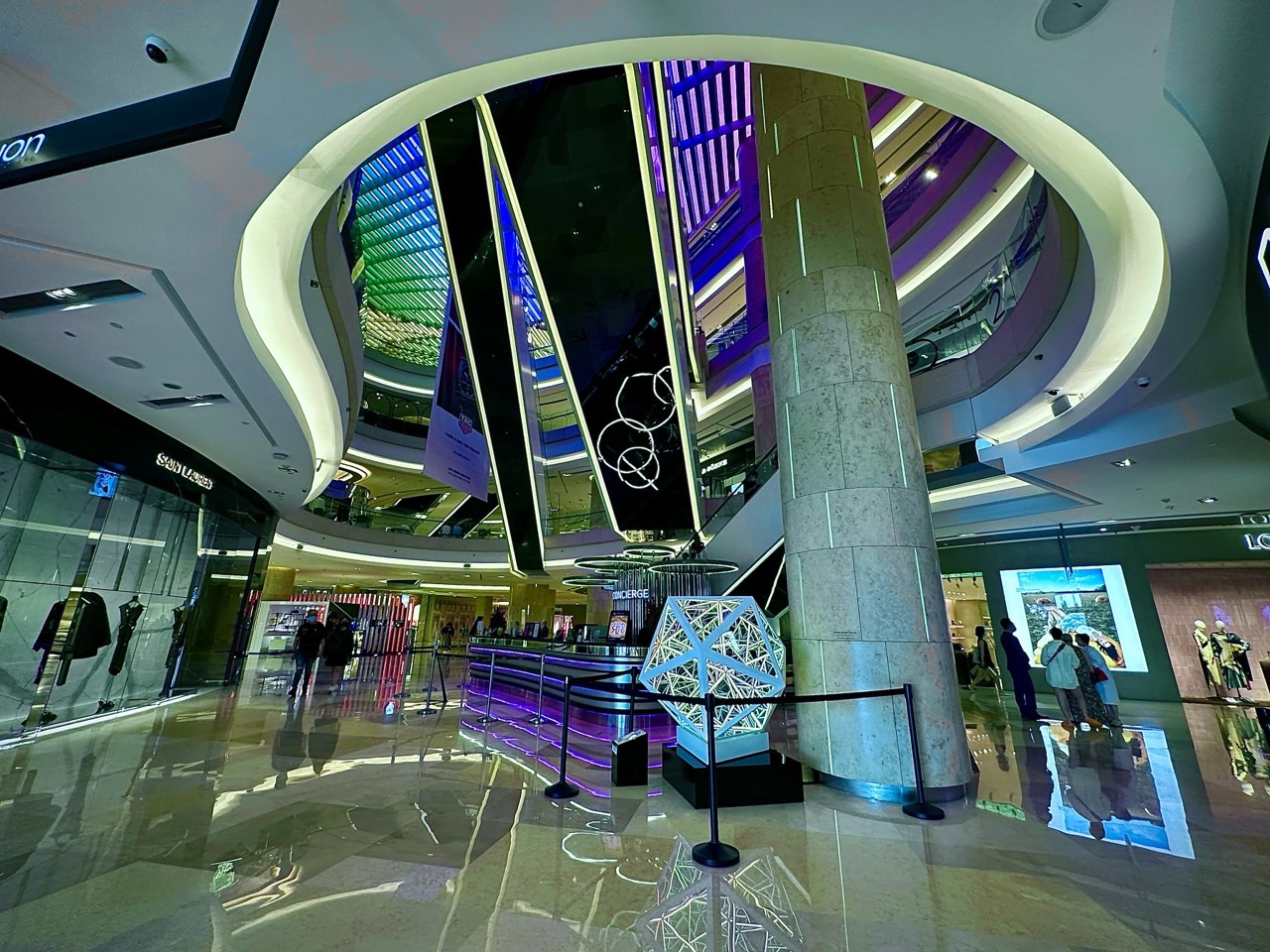
Mall photographs in this guide illustrate the geography and the shopping environment. They do not claim that a particular frame shown in advertising is in stock today.

A simple three-stop eyewear shopping route
For a focused outing, begin at ION Orchard or TANGS after arriving at Orchard MRT. Visit the store or counter that matches your product need. Spend time trying a small number of promising frames rather than pulling every shape from the shelf.
Walk towards Shaw House if you want another fashion-counter comparison, or continue to Ngee Ann City for the Takashimaya and optical options. Stop for a drink or a seated break. The frame you thought was perfect at the first shop is easier to evaluate after you have seen another reasonable option.
If you still need a third comparison, head towards The Heeren or 313@somerset and finish at Somerset MRT. This is a directional shopping suggestion, not a claim of a weatherproof, fully underground corridor. Some of the journey is outdoors; use shelter and current crossings.
For transport orientation, see eduKateSG’s Orchard MRT exit guide and Orchard Road walking itinerary.
How to tell whether a frame fits well
Start with the bridge. The glasses should sit stably on your nose without requiring you to constantly push them back. A frame can appear correctly sized from the front while pinching at the temples or pressing on the bridge.
Next, check the temple arms. They should not dig into the sides of your head. Move your head gently, look down at something and walk a few steps if the shop allows it. Sunglasses that fall forward during an ordinary movement are unlikely to become more comfortable after purchase.
Consider the lens coverage. Very small lenses may offer a fashionable appearance but less peripheral coverage. Larger lenses can offer more coverage while adding weight. A properly fitted wraparound style may suit active outdoor use better than a loose fashion frame.
Finally, ask whether the frame can be adjusted by the shop. Adjustment options differ by material and design. Do not attempt to bend a new frame aggressively yourself. A brief professional fitting can turn a merely acceptable pair into one you are happy to wear.
Prescription sunglasses: ask about the lens, not just the frame
If you need vision correction, tell the staff at the beginning. Some frame designs are unsuitable for particular prescriptions, lens thicknesses or multifocal requirements. A frame that accepts non-prescription tinted lenses may not be equally practical once corrective optics are added.
Bring an up-to-date prescription when available, and discuss whether the store needs to carry out a current check. Do not assume that a past reading from another device is sufficient for every lens type. Optical measurements involve more than the lens power: alignment, fitting height and the relationship between your face and frame all matter.
Ask the shop to quote the entire configuration, not only the frame. A price that excludes lens upgrades or coatings can be misleading. Understand whether the quote covers fitting, adjustments and after-sales care.
For people who alternate between indoor work and outdoor errands, two pairs may be simpler than trying to force one product to do everything. Others prefer a compatible photochromic option. The sensible choice is the one that meets actual use with an acceptable compromise.
Polarised sunglasses: when the extra feature is useful
Polarised lenses can reduce certain kinds of reflected glare. This may help on a bright day when looking across a road surface or water. Yet a feature that is helpful in one situation can create compromises in another. Some digital screens become hard to read from particular angles through polarised lenses.
If you regularly consult an in-car display, phone or electronic equipment, test the relevant screen before deciding. Do not assume that every polarised lens interacts with every screen in the same way. Lens and display technology differ.
Most importantly, retain the UV question as a separate test. A shopper who asks only whether a lens is polarised may leave without having checked the basic sun-protection claim.
There is also no need to make polarisation a status symbol. If a comfortable, adequately UV-protective non-polarised pair suits your actual routine, it may be a rational purchase.
Shopping for children: make comfort and habits part of the decision
Children need a frame they will actually keep on. Lightweight construction, a stable bridge and a comfortable fit may matter more than a fashionable logo. Let the child look around, move gently and explain whether a point feels uncomfortable.
Check UV-protection information with the same care used for adult sunglasses. A toy-like appearance or fun tint is not evidence of protective quality. A hat and sensible outdoor habits remain valuable companions to sunglasses.
For prescription eyewear, involve an appropriately qualified eye-care professional and follow the child’s prescribed needs. Do not substitute a general shopping article for a diagnosis or a clinical examination.
Parents can make this an easy learning activity: compare two frames, read labels and ask the child to explain the difference between what is attractive and what is useful. It is a surprisingly good introduction to evidence-based consumer decisions.
Cost and value: why the cheapest and most expensive pairs are not automatic winners
It is tempting to search for the cheapest sunglasses on Orchard Road, or to assume that the most expensive pair must offer the best protection. Neither shortcut is dependable. First confirm UV performance, fit and suitability. Then compare brand, materials, workmanship and after-sales support.
A higher price may relate to design, manufacturing, branding, retail service or specialty optics. The specific benefits need to be demonstrated. If you cannot explain what changes between two models, ask for a clear comparison before paying more.
Price also depends on whether you need prescription lenses. A base frame cost tells only part of that story. Request an itemised quote, understand whether tax is included and ask which services are bundled.
Before choosing, ask yourself a practical question: would I still buy this frame if its logo were hidden? The answer does not have to be yes, because fashion can matter, but the question helps separate the product’s function from the excitement of the shopping environment.
Lenses, coatings and marketing promises
Some lenses are sold with scratch-resistant coatings, anti-reflective coatings, water-repellent finishes or photochromic behaviour. Different coatings have different jobs. A coating designed for convenience is not automatically a substitute for an appropriate prescription or UV specification.
Ask which claims come from the lens manufacturer and what is covered in writing. If someone says a lens is completely scratch-proof, seek clarification. Everyday eyewear still benefits from careful handling and a protective case.
Blue-light claims deserve similar scrutiny. Do not assume that a fashionable label means a product treats eyestrain or improves sleep. The causes of visual discomfort can include prescription issues, screen habits, dry eyes and many other factors. Seek proper assessment when symptoms persist.
A store can be helpful without promising miracles. The strongest advice usually sounds ordinary: correct fit, known specifications, sensible care and a purchase that matches your real routine.
After-sales support: questions worth asking at the counter
What happens if the nose pads need adjustment? Can the store tighten a loose screw? Is a replacement temple available? If the lens is scratched, is replacement possible, and what might it cost? These are practical questions that matter after the initial excitement fades.
Ask about warranties in terms of what they actually cover, not merely how long the headline period lasts. Manufacturing defects, accidental damage, normal wear, and changes of mind can be treated differently.
Keep the receipt, prescription record where relevant, and product details. If the shop provides a case, use it. Wiping dusty lenses with unsuitable fabric can cause unnecessary abrasion; follow the care instructions supplied with the product.
If you are a visitor leaving Singapore soon, ask whether any adjustments or collection will be completed before departure. A low price is not useful if the item cannot be ready or serviced when you need it.
Shopping thoughtfully in a crowded city-centre mall
Orchard Road is designed to encourage browsing. Displays, lighting and visual merchandising make products feel special. Enjoy that experience, but give yourself permission to make a decision slowly.
Try not to sample too many shapes without taking notes. After fifteen similar frames, the differences blur together. Narrow your choice to three, compare fit and comfort, and take a short break. If one frame continues to make sense afterwards, you have a stronger decision.
Consider carrying your own prescription, a small note of preferred frame measurements and a list of questions. This removes a great deal of friction. A shop assistant can help more effectively when you can explain the main problem you are trying to solve.
If a salesperson offers a limited-time promotion, verify the qualifying products, final amount, exclusions and return terms. There is no need to treat a disappearing offer as a reason to ignore lens or fitting suitability.
Tourist shoppers: GST, receipts and the point of purchase
International visitors sometimes ask whether eyewear purchases can qualify for Singapore’s Tourist Refund Scheme. Eligibility depends on the scheme’s current rules, participating retailers and the purchaser’s circumstances. It is not an automatic discount at every Orchard store.
Before paying, ask the retailer whether the particular purchase participates and what documentation is required. Keep the original records and check the latest conditions published by the Inland Revenue Authority of Singapore. Avoid assuming that a store’s price tag already includes a refund.
Visitors using prescription or customised eyewear should also ask about lead times. A retailer may need time to manufacture or fit lenses, and airport departure schedules are unforgiving. Plan enough buffer rather than leaving a specialised purchase until the last afternoon.
Read the IRAS Tourist Refund Scheme information/consumers/tourist-refund-scheme) for authoritative requirements.
A purchase checklist to use before paying
- Does the lens have clear written 100% UV or UV400 protection information?
- Is this pair prescription or non-prescription, and is that what I need?
- Does the frame stay comfortable on my nose and behind my ears?
- Can I look down and move normally without the frame slipping?
- Do I actually want polarisation, and have I checked display compatibility?
- What is included in the final price?
- Does the purchase include a case, cloth or fitting service?
- What does the warranty cover and exclude?
- How will repairs, adjustments and returns work?
- Can I verify the retailer, product details and receipt?
- If ordering prescription lenses, when will the finished product be available?
- Do I prefer this pair after comparing alternatives, not only in the first excited minute?
Common questions about buying glasses on Orchard Road
Is there an optical shop connected to Orchard MRT?
OWNDAYS lists an ION Orchard location at #B2-69, and ION is connected with Orchard MRT. A station-connected mall is convenient, but use current signage for the correct exit and internal floor route. Retail locations and floor access can change during renovation.
Where can I compare sunglasses near TANGS?
Sunglass Hut’s official list identifies counters at TANGS Orchard, Isetan Scotts, Takashimaya and Paragon. This makes the TANGS–Shaw House area one starting point. The exact brands and stock can differ by counter; call ahead if you are searching for a particular model.
Does UV400 mean the lenses are polarised?
No. UV protection and polarisation describe different features. A pair may have one, both or neither. Read the actual lens specification instead of relying on the colour of the lens or a salesperson’s shorthand.
Are darker sunglasses better for my eyes?
Not automatically. Dark appearance is not proof of adequate UV blocking. The eye-health recommendation is to choose lenses with documented 100% UV or UV400 protection.
Can I get prescription sunglasses at an Orchard optical store?
Many optical retailers offer prescription-related services, but suitability depends on the particular frame, prescription and lens options. Ask OWNDAYS or another qualified optical provider about your specific configuration. Do not infer same-day availability from the presence of a store.
Is it better to start at Orchard MRT or Somerset MRT?
Start at Orchard MRT if your first stop is ION, TANGS or Shaw House. Somerset MRT is convenient for 313@somerset and the surrounding shops. If your only purpose is glasses, choose the station closest to your confirmed retailer.
Where can I buy children’s sunglasses?
Ask a reputable eyewear retailer for appropriately sized, UV-protective options. A store directory cannot guarantee a particular children’s model is currently available. Comfort, coverage and willingness to wear the pair matter.
Is the most expensive designer pair the best?
Not necessarily. The best purchase depends on UV performance, fit, frame quality, intended use, after-sales support and what the purchaser values. Designer branding can be part of the preference, but it does not replace checking functional specifications.
Should I buy sunglasses while visiting Singapore?
Yes, if the pair meets your needs and fits your plans; there is no requirement to shop for them here. Visitors should pay attention to warranty geography, tax-refund eligibility where relevant, and collection timing for prescription lenses.
What if I cannot decide between two frames?
Record the model names, take a short break and revisit the choice. Compare comfort, protection, repairability and price separately. A thoughtful delay is usually cheaper than buying a pair you will rarely wear.
Related Orchard Road guides on eduKateSG
Read the Orchard Road shopping mall guide to understand the main destinations, the Orchard MRT exit guide for navigation, and the Orchard Road luxury shopping guide if you are researching designer accessories rather than optical service.
For a different purchase category, use Where to Buy Watches and Jewellery on Orchard Road. Each guide has its own purpose; this one is specifically about eyewear, UV protection, optical-shop access and fitting.
Sources and further reading
- American Academy of Ophthalmology: The Sun, UV Light and Your Eyes
- OWNDAYS Singapore store locator
- OWNDAYS ION Orchard official store
- OWNDAYS The Heeren official store
- Sunglass Hut Singapore official location directory
- ION Orchard shop directory
- IRAS Singapore Tourist Refund Scheme/consumers/tourist-refund-scheme)
Updated October 2026. Store and unit information was checked against official retailer listings. Photographs show the shopping environments and eyewear imagery indicated in their captions; they do not establish stock, services or prices inside a specific shop. This is consumer information, not an individual eye examination.