
Did you know? A childcare system can announce hundreds of new places and still leave families without safe, affordable care. A ‘place’ only helps when its age group, location, hours, staffing and support actually fit a child’s needs.
Quick answer: Childcare systems fail when safe, inclusive and developmentally appropriate care cannot be delivered reliably. Failures may concern capacity, affordability, educator support, safeguarding, oversight or the link between policy and everyday family experience.
This guide is written for parents, educators and general readers. It uses fictional examples for clarity and directs readers to authoritative international and Singapore-specific resources, while recognising that actual regulations vary by country.
The chain: family need → usable place → supported staff → safe everyday care → early learning → parent communication → oversight → improvement.
Choose your reading route
- 1. What does childcare-system failure mean?
- 2. Care, protection and learning are one connected system
- 3. Capacity on paper is not available capacity
- 4. Why childcare shortages differ by neighbourhood
- 5. Affordability is more than the advertised fee
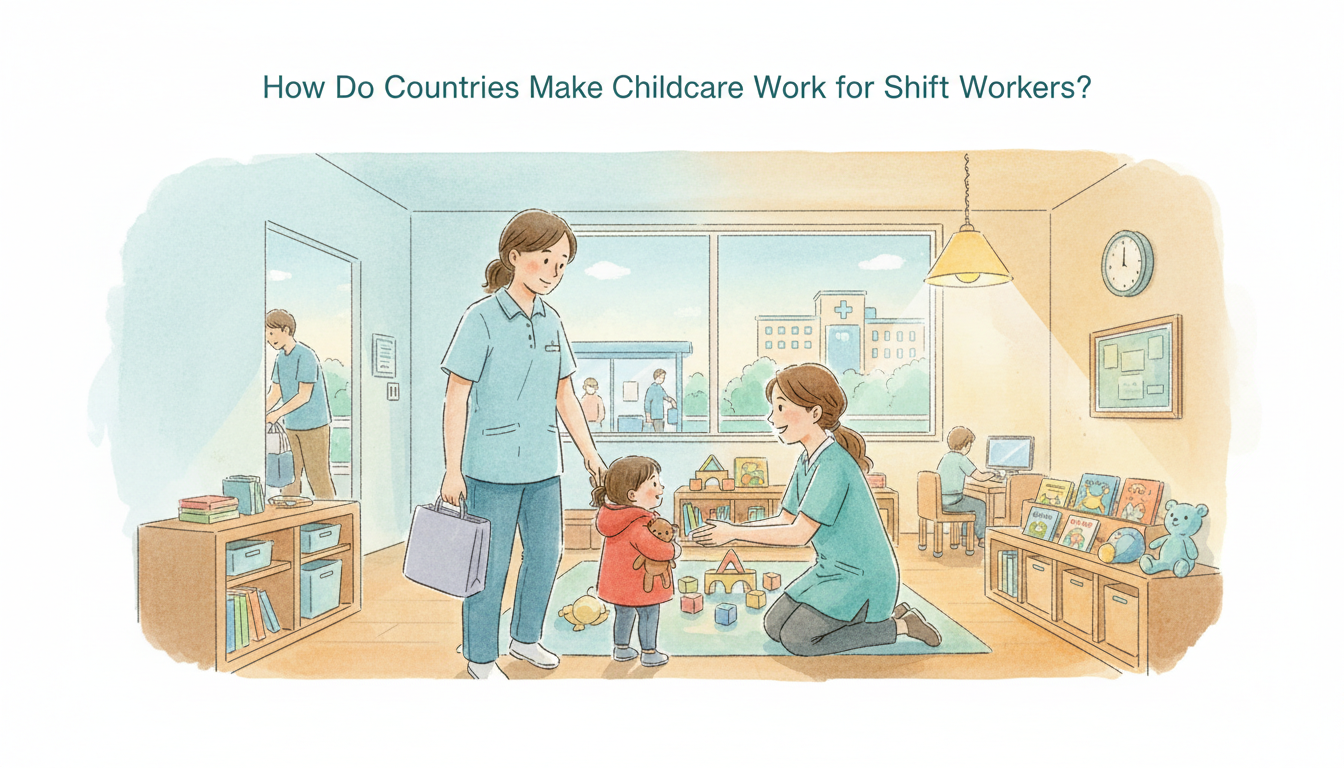
- 6. Shift workers and irregular schedules
- 7. Why staffing numbers are not the whole story
- 8. Turnover damages continuity of relationships
- 9. When teacher training does not prepare staff for practice
- 10. Why child safety depends on daily systems
- 11. Small handover failures can become serious
- 12. Illness, hygiene and staffing are connected
- 13. How inclusion can fail quietly
- 14. Play is not an optional reward after worksheets
- 15. Why inspection scores may miss daily reality
- 16. When complaints have nowhere to go
- 17. Subsidies alone cannot create qualified places
- 18. The hidden cost of excessive administrative work
- 19. Family-centre communication can break down
- 20. Fictional case: the district with hundreds of empty seats
- 21. Fictional case: the centre with a staffing chart but no backup
- 22. What a childcare quality scorecard should include
- 23. A realistic plan for repairing childcare systems
- 24. What parents can ask before choosing a centre
- Frequently asked questions
- Primary sources
What does childcare-system failure mean?
Did you know? A city can have childcare centres with empty places while parents struggle to find one usable place near their homes, workplaces or public transport. The missing link may be the age group accepted, hours offered, affordability or the capacity to accommodate a child’s needs.
Quick answer: Childcare systems fail when safe, developmentally appropriate care is unavailable, unaffordable, unreliable or disconnected from families’ practical circumstances. Failure may involve staffing, physical safety, weak oversight, exclusion, inadequate support for educators or ineffective communication with parents.
Do not confuse an isolated inconvenience with a systemic breakdown, and never assume a whole profession has failed because one centre faces a problem. Identify what happened, who was affected and what evidence supports the claim.
Care, protection and learning are one connected system
Young children need more than supervision. The WHO nurturing-care framework identifies good health, adequate nutrition, safety and security, responsive caregiving and opportunities for early learning as related needs. A centre that scores highly on one dimension can still be weak in another.
Childcare arrangements vary: infant care, centre-based early-years programmes, home-based carers and preschool education may operate under different rules. Some services are primarily for working parents’ schedules, but all should consider children’s wellbeing.
A useful chain is family need → safe and available place → qualified and supported educators → daily care and communication → child development → oversight and improvement. Every link matters.
Capacity on paper is not available capacity
A centre may be licensed for a maximum number of children but lack the age-specific staff or room needed to accept an additional infant. Another may advertise places yet not operate during the hours a parent needs.
Simply reporting the number of approved seats hides ratios, group sizes, staff leave, physical room suitability and waiting-list management. Responsible planning distinguishes funded capacity, licensed capacity, staffed capacity and genuinely available places.
Collect local data about age bands, location, operating hours and actual vacancies. Counting all places as interchangeable can send investment to the wrong neighbourhood or age group.
Why childcare shortages differ by neighbourhood
A new residential estate may add families more quickly than nearby centres can open, hire or expand. Older districts can have the opposite problem: available places that do not match current needs. Public transport, housing costs and commuting patterns complicate the geography.
A citywide statistic that places are plentiful is therefore not sufficient. Families experience childcare as a daily journey involving drop-off, pick-up, work schedules and emergency travel.
Map demand by neighbourhood, age, hours and accessibility. Combine planned residential growth with local provider capacity and staff availability rather than forecasting from total population alone.
Affordability is more than the advertised fee
Parents may face enrolment deposits, transport charges, meals, special activities, late-collection fees and income lost from changing work schedules. A subsidy may reduce published fees without covering all practical costs.
Means-tested support can help but may itself create barriers if applications are confusing, income evidence is difficult to obtain or decisions arrive after a parent needs care. The income used for eligibility might also change during a period of unemployment or irregular work.
Use household-level affordability measures that account for eligible support and real out-of-pocket costs. A place is not genuinely accessible when the family cannot reliably keep using it.
Shift workers and irregular schedules
Many childcare schedules assume predictable weekday work. Healthcare, transport, hospitality and other workers may start early, finish late or change shifts. An eight-hour programme may not cover travel or handover time even when the parent’s contracted shift lasts eight hours.
Extended hours create staffing, safety and wellbeing challenges of their own. Children also need dependable routines and adequate rest; simply keeping a centre open all night is not automatically a high-quality solution.
Flexible arrangements require deliberate design, sufficiently supported carers, clear collection procedures and transparent information about additional charges or availability.
Why staffing numbers are not the whole story
Suitable staffing depends on age, group needs, qualifications, experience and requirements set by the relevant regulator. A headcount can appear adequate on an annual average while certain rooms are understaffed during breaks, illness or staff transitions.
Educators must also perform non-contact duties such as preparation, hygiene, communication and documentation. Planning only the adult-to-child interaction minutes can create constant overload.
Review actual rosters, group coverage, training and substitution plans. Jurisdiction-specific staffing ratios and licence conditions must be checked against the current local rules rather than guessed from a generic international guide.
Turnover damages continuity of relationships
Infants and young children often benefit from predictable, responsive interactions with familiar caregivers. Frequent staff changes can disrupt relationships and make it harder for educators to notice emerging needs.
Turnover also transfers costs to remaining staff, who must introduce new colleagues to children’s routines, allergies, communication preferences and support plans. Poor working conditions can create another wave of departures.
Good retention involves fair treatment, professional growth, manageable workloads and effective leadership. Stability matters because childcare quality emerges in ordinary repeated interactions, not just in inspection-day presentations.
When teacher training does not prepare staff for practice
Qualifications matter, but a certificate does not by itself ensure confident responses to difficult situations. Educators need practical knowledge of developmentally appropriate activities, child protection, inclusion, communication and emergency procedures.
Professional development works best when new knowledge is practised with observation, feedback and mentoring. Requiring staff to sit through frequent courses without time to apply them can create more paperwork than improvement.
Assess what educators can safely do in real situations, while recognising the roles and competencies specific to infant care, early childhood education and specialist support.
Why child safety depends on daily systems
Safety is more than a written policy. It depends on secure premises, appropriate supervision, safe sleep and hygiene arrangements, food and allergy procedures, incident reporting, authorised collection and staff who know how to act when something changes.
The right details vary by age and local regulations. A toddler group may need different environmental safeguards from an infant room. Checks should focus on real practice rather than assuming that a signature on an induction form means all staff can respond appropriately.
Where a child may be in immediate danger, follow local safeguarding and emergency procedures. An article cannot substitute for current centre-specific policies or competent authorities.
Small handover failures can become serious
A child may have a recently changed allergy-management plan, medication instruction or collection arrangement. If an update remains only in one staff member’s memory, a substitute may act on old information.
A safe handover identifies what changed, which people need to know, how acknowledgement is recorded and what happens if the responsible person is unavailable. Sensitive information should be shared only with staff who require it for care.
Clear records and active confirmation are more dependable than assuming that a message sent has been received and understood.
Illness, hygiene and staffing are connected
In childcare settings, close interaction and shared facilities make sensible infection-control and hygiene routines important. Different illnesses require different responses, and local public-health guidance may determine exclusion, reporting or cleaning requirements.
A centre can have detailed cleaning checklists and still lack adequate staffing to carry them out consistently. Similarly, confusing absence policies can cause avoidable conflict between parents and staff.
Responsible systems explain routines, follow appropriate health guidance and ensure workers have time and materials to implement them. Do not use a generic blog to decide whether a particular sick child needs urgent medical assessment.
How inclusion can fail quietly
Children have diverse communication styles, abilities, sensory needs, languages and family circumstances. A centre may claim that everyone is welcome yet have no practical way to make adjustments or seek specialist support.
An inclusive system discusses reasonable accommodations, staff training, family partnerships and appropriate referrals where necessary. Inclusion cannot be judged solely by counting how many children were offered a place.
The goal is meaningful and safe participation, while recognising that some children may need coordinated services and that specialist assessments should be undertaken by appropriately qualified professionals.
Play is not an optional reward after worksheets
Children learn through interactions, exploration, language, movement and play. Age-appropriate early learning differs from formal school teaching. A centre can advertise impressive academic worksheets while offering too little responsive conversation or free exploration.
Singapore’s ECDA Early Years Development Framework 2023, for birth to age three, emphasises holistic cognitive, communication, physical and social-emotional development. Its specific curriculum guidance is for educators working with that age range, not a universal national curriculum for all countries.
Care quality should ask whether everyday experiences fit children’s developmental stage, rather than equating more printed tasks with more learning.
Why inspection scores may miss daily reality
Licensing, inspections and quality-assurance systems are important, but scheduled or periodic checks capture limited moments. Centre performance can vary across rooms, shifts and periods of staff change.
Administrators should distinguish legal compliance, quality improvement and the outcomes families experience. A passing licence assessment should not be interpreted as a guarantee that incidents can never occur; a reported concern should not automatically be treated as proven misconduct.
Strong oversight includes proportionate risk checks, transparent complaint routes, investigation when warranted, follow-up actions and staff support for maintaining standards every day.
When complaints have nowhere to go
Parents may hesitate to report a problem if they fear conflict, losing a scarce place or being dismissed. Staff may worry that raising an unsafe practice will be viewed as disloyalty.
Centres should explain internal complaint processes and relevant external regulatory channels, with protections for confidentiality where appropriate. Allegations involving child safety require timely, competent handling rather than casual speculation or public accusation.
A trustworthy system tells people how concerns are acknowledged, investigated, corrected and escalated. Feedback is not a marketing problem to suppress.
Subsidies alone cannot create qualified places
Financial assistance can reduce fees, but if a district lacks appropriate premises or qualified staff, families still cannot obtain the care they need. Conversely, new buildings without affordability support may remain out of reach.
The joint UNESCO–UNICEF global early childhood report published in 2024 emphasises equitable access and quality together. Policy has to coordinate financing, infrastructure, workforce development, appropriate standards and family support.
Judge reform by usable, safe care and children’s experiences—not only by spending, announced places or the average advertised price.
The hidden cost of excessive administrative work
Documentation supports safeguarding, accountability and learning, but duplicate forms and badly designed reporting tools can consume time that caregivers should spend with children.
Digitisation can help if systems are usable and privacy-preserving, yet it can also create more interruptions if staff constantly enter the same data into incompatible platforms. Relevant requirements must still be met.
Review what each record is for, who relies on it and whether it can be collected once and used safely. Simplify duplication without discarding essential child protection or legal records.
Family-centre communication can break down
Parents may need concise updates about routines, nutrition, wellbeing and developmental observations. Educators need accurate information from families about changes in needs, schedules or authorised caregivers.
When communication relies only on long group chats, urgent information can be buried among photos and event reminders. On the other hand, intrusive requests for constant updates can distract staff from caring for children.
Agree on what requires immediate contact, what belongs in routine reporting and which channels are appropriate for sensitive information. Strong communication prioritises clarity and trust over message volume.
Fictional case: the district with hundreds of empty seats
Imagine a fictional district called Westmere. Officials announce 250 unused childcare places while parents say they have waited months. Reviewers discover that most vacancies are for older preschool children, but most applicants need infant care near a newly built residential estate.
The mismatch was not fraud or parental confusion. The dashboard had combined places that were not interchangeable. The district improves age-specific forecasting, staff development and local expansion plans.
The lesson is to measure the kind of capacity families can actually use.
Fictional case: the centre with a staffing chart but no backup
In fictional Brookfield Centre, every roster appears to meet local staffing expectations at the start of term. During an unexpectedly busy week, illness and emergency leave create gaps. Staff reassignments happen by word of mouth, and handovers become inconsistent.
Managers establish a qualified substitute pool, clear incident escalation and dependable information transfer. They also review whether the usual staffing plan had enough resilience for predictable absence.
This case illustrates why a compliant annual schedule may be inadequate as an operational safety system.
What a childcare quality scorecard should include
A balanced scorecard can track safe care, quality of caregiver-child interaction, usable places by age and location, affordability, staff qualifications and retention, inclusion, incident response and meaningful parent engagement.
Look carefully at denominators. Counting complaints without considering reporting confidence may mislead: a centre with an open reporting culture might document more minor incidents while learning faster than one that discourages reporting.
Data should be privacy-protective and interpreted alongside inspections, professional judgement and families’ experiences.
A realistic plan for repairing childcare systems
Start by mapping actual family needs, age-specific availability and affordability. Identify staffing and safety risks immediately. Support workforce retention and professional mentoring. Align public financing with usable capacity, not just construction announcements. Improve accessible communication, inspection follow-up and inclusion support.
Test whether parents can actually enrol, children receive responsive care, staff can work sustainably and issues are corrected. Expand what works; revise what does not. Do not treat a national policy announcement as proof that a centre-level implementation problem has been fixed.
The goal is reliable early care that supports both children and caregivers over time.
What parents can ask before choosing a centre
Ask about the actual age-group place available, opening hours, daily routines, staff continuity, inclusion arrangements, payment terms, incident reporting and authorised collection procedures. Observe whether educators interact warmly and responsively with children.
Check licensing and published quality information through the proper local regulator. In Singapore, ECDA oversees early childhood development services, and its resources help educators and families understand quality expectations. Do not assume rules from another country apply automatically.
Being informed does not mean expecting an incident-free world. It means knowing how the centre prevents risks, responds to them and welcomes reasonable questions.
Frequently asked questions
Is a shortage of childcare places always a funding problem?
No. Location, age bands, staffing, premises, hours and transport can create shortages even when funds or nominal places exist.
Is childcare the same as preschool education?
They overlap but are not identical. Specific services and legal requirements vary by jurisdiction and age group.
Does a licence prove that every daily practice is safe?
A licence indicates compliance within an applicable framework; it cannot guarantee that risks or incidents will never arise.
Do more worksheets mean better early learning?
Not automatically. Developmentally appropriate play, language, relationships, exploration and responsive caregiving are important.
Why do staff working conditions affect children?
Turnover, excessive workloads and inadequate support can undermine continuity of care, attention and safe handovers.
What should parents do about an urgent safety concern?
Use immediate local emergency and safeguarding channels as appropriate, and follow official centre and regulatory reporting procedures rather than relying on a generic online article.
Primary sources and further reading
International frameworks explain principles of nurturing care and early learning. National regulators set binding requirements for specific services, age groups and centres. Always use current local regulatory guidance for operational and legal questions.
- UNESCO–UNICEF, Global Report on Early Childhood Care and Education (2024)
- UNICEF, The Right to a Strong Foundation
- WHO, Nurturing Care for Early Childhood Development
- WHO, Nurturing Care Practice Guide (2023)
- ECDA Singapore, Early Years Development Framework 2023
- ECDA, Mission and Scope of Early Childhood Services
Related systems
- The Gold Standard of Early Childhood Education | Play, Care and Capabilities
- Why Education Systems Fail | When Schooling Stops Becoming Learning
- Why Labour Markets Fail | Job Matching, Wages and Protection
- Why Public Procurement Fails | Tender Design and Accountability
Final thought: Childcare quality cannot be engineered only from the top or purchased only with new buildings. It is created every day through safe environments, reliable staff, responsive relationships and informed cooperation with families.