
Why go Casuarina Primary School? Because its school garden is not merely decoration: Casuarina Primary identifies Nature-based Education as its Applied Learning Programme and HE’ARTS@CAPS as its Learning for Life arts programme. For a child in Pasir Ris who enjoys exploring outdoors, observing small living things, drawing, dancing or telling stories, the combination is particularly worth investigating. It offers two complementary routes into learning: look closely at the world and express what you discover.
Parents searching for a Casuarina Primary School review, Pasir Ris Primary 1 registration, Casuarina Primary nature-based Science learning, or HE’ARTS@CAPS arts and drama should start with three practical facts: the campus is at 30 Pasir Ris Street 41; the nature ALP is described as school-wide and cross-disciplinary; and the arts LLP aims to involve children through age-appropriate experiences across levels, with extra talent-development opportunities for those identified with aptitude. These give parents something more useful to ask about than whether the school is famous.
Did you know? Casuarina’s published nature programme uses gardens as learning spaces, with themes of nature exploration, conservation and learning through nature. Its arts programme connects digital art and music, speech and drama, heritage art, dance and music. A child might be invited to examine a plant carefully in one part of school life and learn to communicate a thoughtful response in another. The programmes are documented; the exact activities for each future cohort should be confirmed with the school.
Casuarina at a glance: the facts that matter first
| School and area | Casuarina Primary School, 30 Pasir Ris Street 41, Singapore 518935 |
|---|---|
| Applied Learning Programme | Nature-based Education (NBE): real-world inquiry, care for the environment and learning across subjects |
| Learning for Life Programme | HE’ARTS@CAPS: holistic education through arts, including expression and appreciation of heritage |
| School learning contexts | Gardens and natural settings; published examples include environmental inquiry and conservation activities |
| Arts access | The programme aims for all levels; additional talent-development opportunities are separate |
| Daily reality | Pasir Ris Street 41 school travel, bus and caregiver arrangements, student care and learning support |
| Admission | Use the MOE P1 registration portal for the applicable year and phase |
Why the garden is a stronger clue than a programme label
A child discovers a leaf with a hole. The easy response is to provide the answer: perhaps an insect ate it. A more interesting education begins when the adult asks what the pupil actually sees, what other explanations exist and how a reasonable observation could distinguish them. This small example is illustrative, not a description of a specific timetabled lesson, but it shows the kind of inquiry Casuarina says it wants to nurture.
According to the school’s Nature-based Education programme, last updated 21 August 2026, inquiry is intended to help pupils construct meaning through direct experiences rather than only hear explanations. Natural materials and the school garden provide contexts for linking Science with other subjects. Environmental protection and responsible behaviour also matter: pupils learn that their choices affect the environment they share.
This distinction is useful for parents. The appeal is not simply that a school has plants. It is the possibility that pupils use those plants to ask questions, gather information and communicate evidence. A child who likes animals may learn that curiosity includes patience. A child who enjoys drawing might learn to describe the same object more precisely after sketching it. A child who likes Mathematics might compare growth or classify observations. These are possibilities grounded in the programme’s aim, not guarantees about an individual class.
Three lenses: explore, conserve and connect
Explore: let the child ask the first question
The school explains that pupils explore its gardens and are encouraged to make discoveries. There is a particular benefit in giving a beginner something real to observe before asking them to use abstract vocabulary. In a carefully taught sequence, a pupil can move from “This one looks different” to a comparison of shapes, parts, growth conditions or patterns. Good questions matter as much as correct words.
Conserve: learning that other people share this place
The school’s descriptions refer to its CAPS Go Green initiatives and to pupils taking part in environmental responsibilities such as recycling and keeping shared areas clean. Student leaders have taken on additional conservation-related duties in the published examples. A parent should ask what all pupils learn through these habits and which responsibilities are taken by selected ambassadors or CCA members.
Connect: make nature useful to English, Science and values
An observation is stronger when a pupil can explain it in a complete sentence. A question is stronger when the child can identify evidence. Nature may motivate a reluctant writer to produce a description; it may give a confident speaker something more exact to say. Casuarina explicitly frames the environment as a context for learning across disciplines, rather than a standalone topic confined to a particular Science period.
Did you know the official site also includes older programme examples?
The school’s nature page contains photographs and activity descriptions from earlier years, including older excursion destinations. That is useful history but not evidence that every listed trip is still running in 2026 or will be offered to a future P3 or P5 cohort. Families should verify current outings, transport and risk-management arrangements with the school. We are therefore treating named historical activities as examples of programme direction, not as guaranteed current entitlements.
That distinction matters whenever parents compare schools. An archived photograph can be genuine and still be out of date. Look for the current year’s official calendar and ask the teacher what pupils at your child’s level will experience now.
HE’ARTS@CAPS: nature is not the school’s only identity
The school’s HE’ARTS@CAPS programme, updated 11 May 2026 brings another kind of learning into the picture. It names artistic expression, understanding cultural heritage and strengthening inter-ethnic bonds. The programme combines aesthetics with digital art and music, speech and drama, heritage art, dance and other school experiences. For parents who want their child to explore communication and culture alongside academic subjects, that is a meaningful point of difference.
A child who is reluctant to speak in a large group may find acting out a role less intimidating than answering a teacher’s question about themselves. Another may enjoy painting while still learning how to accept feedback and revise an idea. A third may discover something about a different community through music or dance. Those are independent examples of why arts education can matter; no parent should assume a given school guarantees the same response in every child.
The arts page says it aims to involve all pupils in a progressive programme, while the school’s Talent Development Programme provides additional opportunities for pupils identified with aptitude. Whole-school exposure and selected enrichment are different things. Ask which specific arts experiences belong to ordinary curriculum and what the route is for a child who develops strong interest later.
Who is likely to enjoy learning here?
- The young naturalist: enjoys watching insects, plants, weather or animals and is willing to slow down to notice details.
- The creative observer: likes nature and art, and may enjoy moving between looking carefully and making something expressive.
- The child learning to speak: could benefit from arts activities that give a shared topic, role or performance context for communication.
- The environmentally responsible helper: is beginning to understand that caring for surroundings is an everyday action, not only an annual event.
- The Pasir Ris family: can sustain the Street 41 journey and after-school routine without turning each morning into a race.
What if your child loves nature but finds academic work difficult?
A school programme does not replace foundational teaching. A P2 learner can be fascinated by butterflies while still needing specific help to decode unfamiliar words. A P4 child can enjoy environmental projects but struggle to organise a written explanation. That is why the family should ask how classroom teachers diagnose and teach English and Mathematics, how feedback reaches parents, and what appropriate support is available.
The Casuarina Programme for Active Learning page describes Primary 1 and 2 experiences in physical and aesthetic domains with social-emotional aims. These can help a younger child adapt to classroom life, but a parent should not assume they are specialised therapeutic services. Discuss any specific learning, language or support requirement directly with the school.
Does the MOE Kindergarten on-site create guaranteed entry?
Casuarina also has MOE Kindergarten @ Casuarina, which began operating in 2024. Co-location may make the campus familiar and support an organised family routine. It does not, by itself, mean every kindergarten child automatically receives a Primary 1 place. Check MOE’s precise Phase 2A or other applicable eligibility criteria for the registration year, and never infer an admission guarantee from proximity alone.
Visit the school as if it were an ordinary Tuesday
The school’s official contact page confirms the Pasir Ris Street 41 address. Its transport details list bus routes in the area, including services along Pasir Ris Street 41 and Drive 6. But a service appearing on a school website does not prove that it suits your child’s morning routine. Time the journey from the actual home entrance to the right gate, and include walking, rain, pickup and student care.
At the open house, look for the ordinary details: Where are P1 bags kept? How do young pupils seek help? What happens if a child feels unsure outside the classroom? Is there time to read or relax after school? Children learn better when the surrounding rhythm is sustainable.
Six questions worth asking the school
- What nature-learning activities are included for all pupils at each level in the coming school year?
- Which excursions or hydroponics activities on the website are historical examples, and which are on the current calendar?
- How does the school help pupils turn observations into stronger English, Mathematics and Science reasoning?
- What arts lessons are offered to all pupils, and which HE’ARTS or talent-development roles require selection?
- How are quieter pupils supported in drama, collaborative work and outdoor investigations?
- Which school-day, student-care, language-support and access arrangements apply to our child’s specific intake?
Admission and the 2027 policy change: check the right year
A school can fit a child beautifully without a place being guaranteed. The official MOE Primary 1 registration portal provides phase eligibility, the recognised home address, vacancies, balloting and separate arrangements for international students. The 2026 exercise was for Primary 1 entry in 2027, and the next exercise takes place in 2027 for children entering P1 in 2028.
MOE announced on 10 September 2026 that, beginning with the 2027 P1 exercise, most schools will reserve 60 places for Phase 2C rather than 40. Schools with fewer than 180 P1 places retain 40. A two-track Phase 2C system applies only to 12 named schools; do not assume it applies to every school. These changes do not retroactively alter 2026 admission results. Read MOE’s 10 September 2026 announcement and check the individual school’s rules for the actual registration year.
Our conclusion: Casuarina Primary School deserves a place on a family’s shortlist when a child may thrive by exploring the natural world and communicating through different art forms. The programme names are promising; the decisive questions are what pupils actually experience, how teachers support beginners and whether a Pasir Ris school day fits the family. A good school is a good fitting school.
Keep exploring: the existing guides and the four-school companion series
The existing Why go Casuarina Primary School? profile remains the school-facts foundation. Read its companion How to decide which Primary School to go to? for the admission-and-daily-life decision. This article looks more closely at the programmes and the kind of child who may benefit from them.
Compare sibling perspectives: Cedar Primary School · Chongzheng Primary School · Chua Chu Kang Primary School. These are alternatives for a family shortlist, not an educational ranking.
See also the broader Why go Swiss Cottage Secondary School? school-fit series. For primary school, apply the separate MOE P1 registration rules; secondary posting works differently.
Sources and fact-check boundary — 9 October 2026
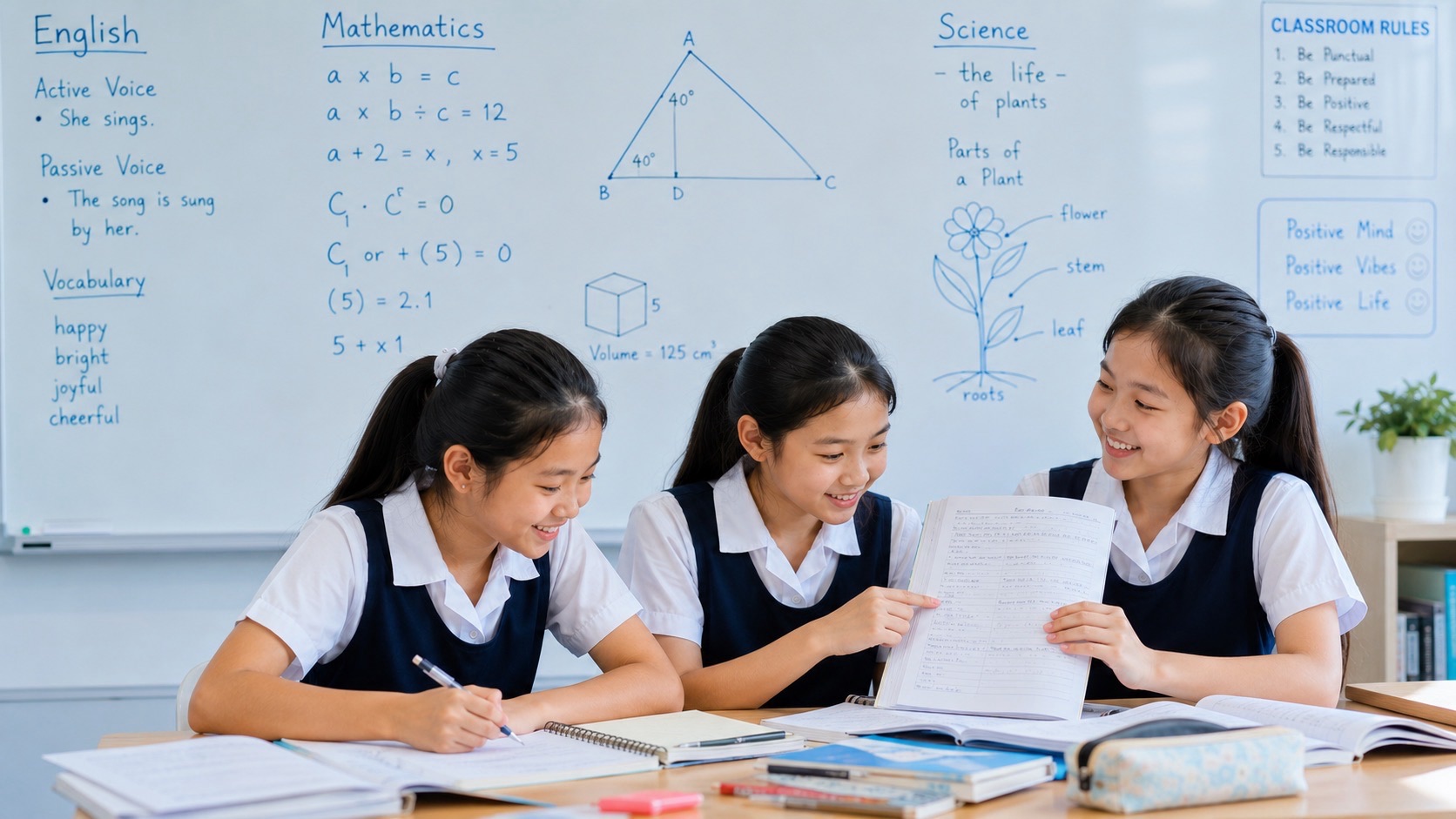
Facts checked using Casuarina’s nature ALP, HE’ARTS LLP, PAL, contact and address, MK overview and MOE P1 guidance. Older learning journeys shown on official pages are explicitly treated as historical examples. Child-fit scenarios are eduKate editorial illustrations, not measured outcomes, endorsements or individual programme/admission promises. The featured three-student photo is illustrative eduKate classroom photography, not school-identifiable pupils.