
Why go Evergreen Primary School? Its most compelling 2026 story is the way it connects hands-on sustainability and Science with an unusually rich Art and Music learning journey. Primary 3 pupils explore food growing using hydroponics and aquaponics; P4 pupils design self-watering systems; P5 pupils build rainwater harvesters. Alongside these projects, the school offers arts experiences such as the Arts Carousel, museum-based learning and instrumental programmes. For a Woodlands child who likes questioning how things work and also enjoys making, drawing or music, these give the family concrete reasons to shortlist the school.
If you are looking for an Evergreen Primary School review, comparing Primary 1 schools near Woodlands Circle or Admiralty, or researching Greenovators, STEM sustainability, hydroponics, aquaponics, Art and Music LLP and ukulele or keyboard lessons, start with school-specific evidence. Evergreen Primary is at 31 Woodlands Circle, Singapore 738908. Its official 2026 Science page describes real level-based projects; its Aesthetics page explains school-wide arts exposure and progressive instrument learning. That combination may fit a child whose curiosity is both scientific and creative, if the commute and everyday teaching arrangements also work.
Did you know? Evergreen’s project progression is particularly easy for parents to understand: P3 Farm to Table uses hydroponics and aquaponics, P4 self-watering designs explore caring for plants and conserving resources, and P5 rainwater harvesters ask how collected water might be reused. The Science department also lists a separate P6 solar-oven STEM challenge. Those are related but distinct learning experiences; it would be misleading to present all four as one compulsory, identical Applied Learning Programme for every cohort.
Quick school facts for the parent shortlist
| School and location | Evergreen Primary School, 31 Woodlands Circle, Singapore 738908 |
|---|---|
| Applied learning direction | STEM and Sustainability; earlier MOE programme descriptions use Environmental Innovators and Agents of Change |
| P3 Science context | Farm to Table: hydroponics and aquaponics |
| P4 Science context | Design and build self-watering systems |
| P5 Science context | Rainwater harvesters and water conservation |
| P6 STEM challenge | Solar oven design and testing, in the Science department’s STEM Challenges across levels |
| Aesthetic learning | Art and Music, Kodály-based music, Arts Carousel, P4 museum-based art journey |
| Progressive instruments | P3–P6 examples include ukulele, keyboard, cajon and STOMP |
| Official school enquiries | Woodlands Circle campus; check latest bus, gates and student-care details before registration |
| Admissions | MOE’s current P1 rules, applicable phase, vacancies and balloting |
What is the difference between a fun Science activity and a good Science lesson?
A child can enjoy planting vegetables without really understanding why the vegetables grow. A young inventor might construct an impressive rainwater harvester yet have no clear answer to where the water goes, whether the container can hold it or what would happen in a drought. The opportunity for learning arises when the teacher helps pupils observe, compare, ask better questions and connect a result to evidence.
Evergreen Primary’s Science department page, updated 4 August 2026 describes authentic inquiry and collaboration as its approach. Its ALP is grouped under Sustainability and STEM, with practical project work across Primary 3 to 5. That is useful because parents can ask precise questions about the progression instead of depending on the phrase “innovative Science”.
The school also describes separate level-based STEM challenges, such as P3 boat design, P4 self-watering plant systems, P5 rainwater harvesters and a P6 solar oven. These learning examples are published by the school, but a future cohort’s schedule, particular resources and external competition participation must still be checked. The value lies in the reasoning and feedback, not in the possession of a clever-looking model.
Primary 3: Farm to Table, the food system in miniature
At P3, the school reports that pupils grow vegetables using hydroponics and aquaponics. Hydroponics grows plants without soil by providing nutrients through water-based methods; aquaponics connects aquatic animals and plants within a managed system. These are complex real-world ideas made approachable through observing living things and changing conditions.
A pupil might ask why plants need nutrients, what happens if water conditions change and how food growing in an urban setting differs from farming in soil. The child learns that technology can help manage scarcity, but every design also has limits, costs and requirements. Singapore’s food-security concerns become a reason to learn Science rather than an isolated newspaper headline.
The parent should ask what pupils are expected to measure, explain or record. Is the child observing a demonstration, managing part of a growing system, comparing different conditions or completing an investigation? All may have educational value, but they do not ask exactly the same skills of the learner.
Primary 4: a self-watering system is a lesson about trade-offs
The school says P4 pupils design and build self-watering systems. It is a practical introduction to how plant water needs and system design interact. If a plant needs moisture, a learner may imagine a reservoir, a wick or another method of controlling water flow. Then the idea must be checked: too little water is a problem, but too much can also be harmful.
That teaches more than construction. The pupil has to work with constraints, learn from what actually happens, and explain whether a change improved the result. These habits connect naturally to Mathematics measurement, Science concepts and the ability to write clear observations. A family should look for examples of a pupil reasoning through a failure, not only the final assembled product.
Primary 5: collecting rainwater invites systems thinking
Evergreen’s P5 rainwater-harvester work is a concrete way to explore water conservation. Children can consider where rain falls, how it flows, whether collection is efficient, and how water might be used responsibly. The project can lead to questions about storage, safety, evaporation and environmental constraints.
A rainwater collection model is not a claim that the water can automatically be used for drinking. The education is about water systems and resource management, not certification of potable water. A thoughtful teacher can use the difference between a working school model and a full-scale public system as a lesson in scientific caution.
The school also describes a World Water Day assembly and interactive questions about water conservation. These broader experiences complement the physical project, but it is worth asking how pupils connect the campaign message to their own design or evidence.
Primary 6: why a solar oven belongs in the learning story
The P6 Solar Oven is listed under the Science department’s level-based STEM Challenges. It involves harnessing renewable energy through design and testing. The distinction matters: it is a school-published STEM challenge, but the same page lists the ALP’s main P3–P5 examples separately. Parents should not combine everything into a made-up universal P1–P6 project guarantee.
The solar oven gives older pupils an opportunity to reason about sunlight, energy transfer, materials, insulation and measurement. It also creates an excellent explanation task: what evidence suggests that one design worked better than another, and what other variables may have affected the result? A child who can answer that has learned more than how to make the oven hot.
Did you know Science leadership can involve measuring food waste?
The official page describes Science Leaders taking part in a Food For Thought initiative. These pupil leaders attend a food-waste workshop, investigate discarded food during recess and share key findings through canteen screens and posters. This is especially worth noting because a school project becomes stronger when pupils move from concern to observation and communication.
However, Science Leader roles are not the same as ordinary Science lessons for every pupil. The school’s termly recycling drives are described as a broader eco-stewardship activity, while the Food For Thought investigation is led by student leaders. Parents should ask which opportunities are whole-cohort and how selected positions are allocated.
It is valuable for a child to discover that advocacy requires accuracy. An environmental poster can be enthusiastic and still make a claim too broadly. Collecting information, checking it and expressing it clearly are habits that matter across school and adulthood. This is the kind of intellectual discipline a sustainability programme can encourage when taught well.
The other side of Evergreen: Art and Music as a serious learning route
The school’s 2026 Aesthetics Department page describes a deliberately progressive curriculum in both Art and Music. The aim is not simply to offer a concert or attractive wall decorations. Pupils learn to look, listen, create and respond, with opportunities to improve their technical and expressive skills.
Art lessons are described as inquiry-based, encouraging pupils to interpret artworks and experiment with media. Music education draws on the Kodály approach, which uses singing, rhythm, movement and solfege to develop musical understanding. These teaching approaches suggest families should ask how children’s responses are guided: can the pupil explain why a piece of music feels different or why two visual works use colour differently?
Three school-specific arts experiences worth asking about
The Arts Carousel: the school becomes a gallery
Evergreen describes an Arts Carousel that displays pupils’ artwork across school spaces. This can give young artists a reason to take pride in a work and consider what they want a viewer to notice. It also makes art visible to children who may not be in an arts CCA, helping them see that creativity belongs in the ordinary school environment.
Primary 4 museum-based learning: seeing art in its original context
The school’s aesthetics description says Primary 4 pupils visit local art museums to discuss works, consider artistic intentions and build visual literacy. When a child encounters an artwork in a museum, it can prompt different questions from seeing a reproduction on a screen. What materials were used? What was the artist trying to express? What information might be missing? The trip is a published school example; verify venue and schedule for the intended year.
P3–P6 instrumental learning: listen, practise and contribute
Evergreen lists instruments and performance approaches including ukulele, keyboard, cajon and STOMP within a progressive P3–P6 instrumental-learning programme. For pupils, the experience can involve rhythm, coordination, confidence and learning to work with others in an ensemble. It is not evidence that each child will play every listed instrument for the same number of lessons; ask for the current sequence by level.
The school also describes an aesthetics assembly once a term to expose pupils to high-quality performances, including curated partner activities. The normal art-and-music curriculum, the termly experience and selected CCA routes should be evaluated separately rather than treated as one programme.
What if the child loves art more than Science—or Science more than art?
That is perfectly reasonable. A school may have two complementary strengths without expecting every pupil to prefer both. A child who loves drawing can find a reason to ask scientific questions while sketching a plant. A young engineer might enjoy music because rhythm offers another kind of pattern. But families should not force a convenient narrative onto the child. School choice should expand possibilities, not assign a specialist identity at age six.
A child who enjoys Science may later discover they enjoy making music; an arts-focused child may become curious about engineering after constructing a self-watering system. The purpose of broad experiences is to provide genuine opportunities for discovery and transfer, supported by strong English, Mathematics and Mother Tongue foundations.
How core academic learning connects without disappearing behind enrichment
A learner can build a model and still struggle to explain the reasoning in a sentence. Another can speak well but have difficulty checking a numerical result. A good primary school needs to diagnose and teach these foundations rather than hope that participation in projects will repair them automatically.
Evergreen’s 2026 programme directory provides separate pages for English Language, Mathematics and Mother Tongue. Families should investigate the normal academic curriculum and any relevant support, especially if the child has already shown a gap in reading, writing, number sense, attention or confidence.
A lesson feels useful when connections are visible. The P4 self-watering project can provide a context for reading procedures, measuring quantities, sketching a diagram or describing cause and effect. The teacher’s job is to keep those skills explicit. The child’s job is not to perform excellence but to make a sensible next step.
Which family might find Evergreen Primary a good fit?
- The hands-on Science learner: is curious about food, water, plants and how designed systems behave.
- The child who likes building and improving: may enjoy moving from a first model to an observed result and a stronger second attempt.
- The artistic explorer: enjoys seeing, interpreting and creating work in different media or musical styles.
- The pupil who wants a broader identity: might benefit from meaningful Science, music, art and citizenship opportunities without requiring early specialisation.
- The Woodlands family: can make 31 Woodlands Circle work as a manageable school-day journey with suitable adult pickup and after-school support.
What might make another school fit better?
A distinctive learning profile is not a universal guarantee. Another school may be closer, offer a particular support option or have a confirmed programme that is essential for this child. A pupil who enjoys Science may prefer a school whose projects are paced differently. Parents should ask how the school handles group work, classroom routines and feedback, especially if the child becomes overwhelmed by noisy activities or struggles when written work is demanding.
The school’s Student Development and Well-Being page emphasises varied experiences across six primary years and the child’s character, social-emotional competencies and sense of purpose. The direction is promising, but families should still discuss individual support needs and how the school responds to a pupil who is not thriving in the first term.
Getting to 31 Woodlands Circle: the everyday fit test
The official contact page, updated 4 August 2026 confirms the address and school enquiries. Do not confuse Evergreen Primary with Evergreen Secondary, or with Admiralty Primary, even though these schools are in the wider Woodlands area. School names and similar neighbourhood landmarks are not substitutes for confirming the exact campus.
Before the family makes a decision, time the route during an actual school morning. Check how the child will get to the correct gate, whether a reliable bus service is available and how dismissal works. A family’s plan should include a wet-weather alternative, care arrangements after school and enough evening time for play, reading and sleep.
The school publishes yearly parent materials about P1 orientation and transport, but future-intake timings can differ from a past year. Confirm the new notice rather than lifting an outdated date or dismissal rule into a promise for the next cohort.
Seven useful questions for the open house
- Are the P3 Farm to Table, P4 self-watering and P5 rainwater-harvesting programmes planned for the coming cohort?
- Which science and sustainability activities are available to all pupils, and which are led by selected Science Leaders?
- What is the difference between the ALP programme, level-based STEM challenges and after-school competitions?
- How do pupils record measurements and explain evidence during their projects, not simply complete a model?
- Which arts and music modules are available to all pupils, and how are P3–P6 instrumental experiences sequenced?
- What are the entry and commitment requirements for arts CCAs, including the Art Talent Club?
- What school-day, gate, student-care, transport and learning-support details are confirmed for our actual intake year?
Primary 1 admission: programme fit does not replace eligibility
Use the MOE Primary 1 registration portal for phase eligibility, address conditions, vacancies and ballot rules. The 2026 registration exercise was for Primary 1 entry in 2027. From the 2027 exercise (for 2028 admission), MOE generally raises the minimum reserved Phase 2C places from 40 to 60, with an exception for schools whose intake is below 180. The separate two-track scheme applies only to twelve named schools and must not be assumed here. See MOE’s dated September 2026 announcement.
A previous year’s ballot may indicate demand, but it does not promise an outcome. Build a shortlist of schools your child could genuinely enjoy attending, including realistic alternatives. The emotional security of having several acceptable options is worth more than treating one school name as the only valid result.
Our family verdict: Evergreen Primary School is a credible fit-first option for children who might enjoy turning scientific questions into working models while also exploring music and visual art. Its P3–P5 project sequence and arts curriculum give parents unusually specific evidence to investigate. The final answer depends on everyday teaching, programme access, individual support and the Woodlands commute. A good school is a good fitting school.
Connected school guides and sibling articles
Read the established Why go Evergreen Primary School? profile and How to decide which Primary School to go to? | Evergreen Primary School alongside this programme-focused article. Together they explain the broader school record, the practical admissions and family decision, and what these specific learning experiences might mean to a child.
Compare the other three newly connected schools: East Spring Primary School · Elias Park Primary School · Endeavour Primary School. For a Woodlands-area comparison, see also Admiralty Primary School — Design Thinking and Growth Mindset. These are distinct learning environments to consider, not ranking positions.
The wider Why go Swiss Cottage Secondary School? project asks the same fit-first question later in the education journey, using the appropriate Secondary 1 posting rules rather than P1 admissions.
Sources and editorial fact check — 9 October 2026
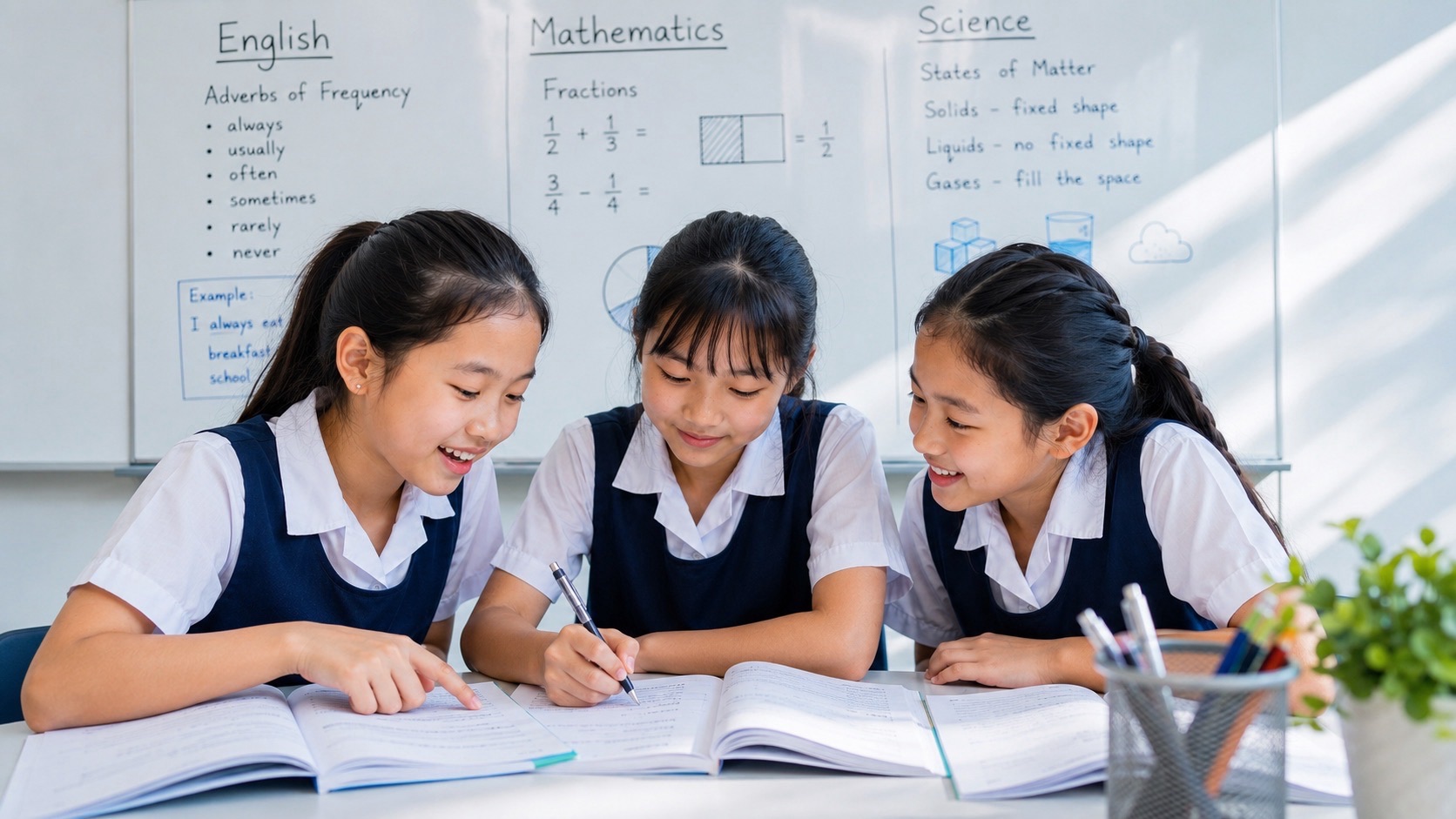
Verified school sources: Evergreen Primary Science (August 2026), Aesthetics Department (August 2026), Student Development (August 2026), school programme directory, school address and contact and MOE P1 registration. Whole-school learning is separated from selected Science Leader, CCA and competition opportunities. The activities and access described reflect current school publications, not a guarantee for later intakes. Illustrative learning interpretations and suitability judgments are independent eduKate editorial guidance. The featured classroom photograph is illustrative and does not identify Evergreen Primary pupils.