
Why go Raffles Institution for Years 5 and 6? RI may interest a student who wants an A-Level education with opportunities to deepen an academic interest, explore unfamiliar fields and contribute to a lively learning community. A useful college decision connects those possibilities with the work you want to do, rather than beginning and ending with the school’s name.
Did you know? Raffles Institution publishes a Gap Day Enrichment Learning Menu with short modules that students can sign up for according to their interests. It is one example of how the Years 5–6 experience can extend beyond a subject combination. The interesting question is what you would choose to explore and how that experience could develop your understanding.
Should we shortlist Raffles Institution, Years 5–6?
Our fit assessment: Raffles Institution, Years 5–6 is worth investigating for an A-Level learner who wants academic breadth and can manage substantial independent commitments. Start with the actual programme and the learner’s starting qualification, then compare it with one realistic alternative. This is eduKate’s decision guidance; the institutional links below provide the admission and programme evidence.
| Decision | What this route means for the learner |
|---|---|
| Learning route | Year 5–6 academic choices with Gap Day and enrichment opportunities; distinguish ordinary curriculum from selected research or talent programmes |
| Entry: what to establish | Establish the applicable intake and route before checking subject prerequisites. JAE applies to the O-Level-era pathway; for the first SEC cohort entering in 2028, MOE has announced the Post-Secondary Admissions Exercise (PSE), while DSA-JC continues separately. Read the revised JC criteria for 2028. Integrated Programme progression does not replace the admissions rules for external applicants. |
| Campus and commute | 1 Raffles Institution Lane. Test the door-to-door journey at the actual start and finish times, including practical work or CCA. |
| Cost: compare the full commitment | Check the RI fees and financial-aid page for the student’s citizenship and intake. Its notice updated 13 October 2026 says AY2027 fees will be updated by 15 December 2026; do not treat an older year’s figures as an AY2027 quote. Add transport, devices, CCA expenses and any optional programme or overseas activity; assess financial assistance separately. |
| Next qualification or professional step | Map your H2 subjects to the prerequisites of two possible university courses. Historical posting ranges and college admission do not guarantee a later degree place. |
What should we test before choosing?
Choose one realistic enrichment commitment and ask how subject consultation, CCA and independent work fit around it.
When might another route fit better?
A rich enrichment menu creates choices, not a requirement to join everything. Compare another JC if a more manageable timetable or shorter journey supports your learning better.
A practical shortlisting decision
Keep this option on the shortlist when the learner can explain why the curriculum suits them, the entry route is established, and the full cost and weekly journey are workable. Before accepting an offer, compare the same four points against another named programme. Resolve any unanswered admission, funding or progression condition in writing with the responsible institution.
Sources and intake checks: Years 5–6 academic information · Year 5 admissions · enrichment overview · Gap Day Learning Menu · Raffles Humanities Programme · E W Barker sports science research programme. Published programme facts and our fit assessment serve different purposes. A historical score, sample fee or possible progression route should not be read as an offer for the next intake.
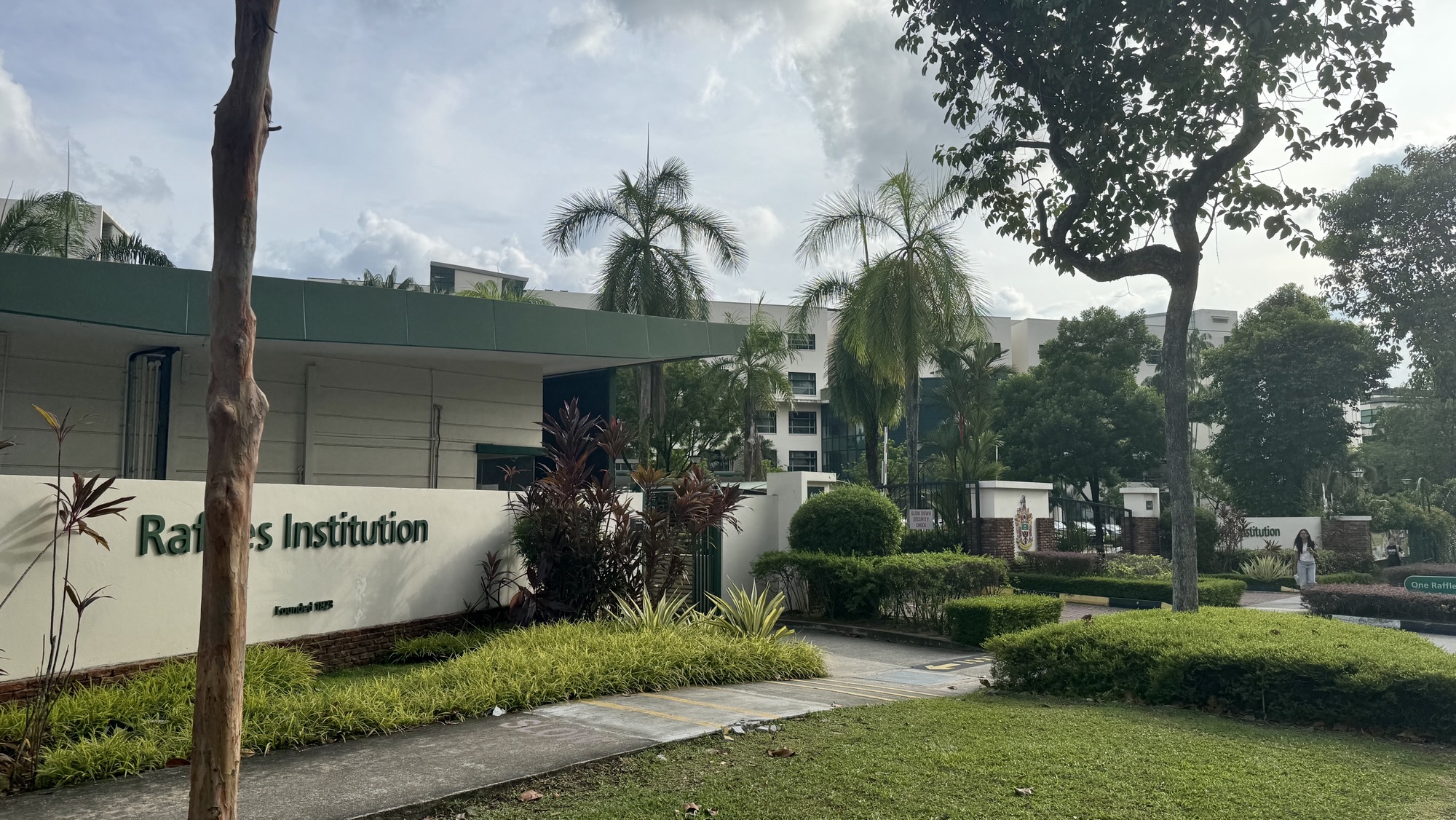
For families comparing Raffles Institution’s pre-university route with other Singapore JC options, this guide brings the official pathway, selected learning opportunities and practical decision exercises together. Check current admissions and curriculum documents for your intake. The header photograph is an editorial eduKate Secondary education image; it does not depict RI students or campus.
eduKateSG · Why go · JC and pre-university
Find your next learning step
Choose a route below, or read the full guide in order. Begin with the official pathway, then explore subjects, deeper learning and daily life.
Choose your reading route
Understand the pathway: sections 1–6
Explore subjects and learning: sections 7–11
Discover deeper enquiry: sections 12–16
Build your daily experience: sections 17–21
Plan your next step: sections 22–26
This profile concerns RI’s Years 5 and 6, the A-Level stage described in its official academic information. Read the separate Years 1–4 pages if you are exploring secondary-level entry.
Naming the stage matters because one school can have programmes serving different ages and purposes. A subject or experience described for a younger cohort should not automatically be treated as a senior-year opportunity.
Write your intended stage and intake year at the top of your notes. Then gather the sources relevant to that decision: admissions, the current A-Level curriculum document and the programme you want to investigate.
A student entering through a published Year 5 route should examine that route directly. You do not need to reconstruct every earlier year of the Raffles Programme before asking a useful question about the stage you are considering.
For an original first-step exercise, finish this sentence: “I am investigating Years 5–6 because I want to understand…” Name a learning activity, a subject possibility or an experience.
This sentence will change as you discover more. Its purpose is to give your reading direction.
A clear beginning is encouraging. You can appreciate the institution’s broader history while keeping attention on the actual educational stage and decision in front of you.
RI’s Year 5 admissions page identifies DSA-JC and JAE for relevant secondary-school students. Keep the cohort clear: JAE is the O-Level-era route, while MOE’s 2026 announcement introduces PSE from 2028 for the first SEC cohort; DSA-JC continues separately. RI’s DSA-JC notice, updated 24 September 2026, says AY2027 applications are closed. Applications for AY2028 are tentatively scheduled to open in May 2027, with updates from the end of April 2027. These are distinct intake years, not a current open application window. Meeting criteria does not guarantee an offer, and successful DSA-JC applicants must honour the programme and talent-area commitment.
Begin by asking which route applies to your circumstances. Eligibility, selection and posting are formal matters; an interest in the curriculum does not establish an offer.
Keep admissions notes separate from subject-choice notes. A possible combination helps you assess fit, while an admissions document explains how entry works.
If a condition is unclear, ask a precise question using the official wording. Explain your current level and the point you need clarified.
This guide does not supply a predicted cut-off point or promise that a particular result secures a place. Formal requirements and outcomes belong to the relevant process.
For an original planning activity, create a short list of sources and the question each answers. The college may explain its route; MOE may explain the exercise; a university may explain a future course prerequisite.
That organisation helps prevent a helpful anecdote from becoming a formal assumption.
You can be hopeful about a route while investigating it carefully. A well-understood application process makes your next action clearer and keeps your attention on the information that matters.
A college name can attract attention, but daily learning needs a more durable reason. What would make you want to return to the work when a topic becomes difficult?
Perhaps you enjoy analysing evidence, explaining a mathematical relationship or understanding a community issue. Perhaps you want to learn to contribute more clearly in a group.
Choose a reason expressed through an activity. “I want to become better at asking and investigating questions” gives you something to practise.
Then describe an ordinary day that would support it. You might prepare a question before class, revise an explanation afterwards or attend a programme because its subject interests you.
This is an original decision exercise, not a statement of RI’s expectations for every student.
Look for a connection between your reason and the verified offer. An opportunity matters when it gives your interest a practical setting.
If the reason is still vague, try a small task related to the interest. Your response to the work can teach you something about the preference.
You do not need a fully settled career identity. A clear learning purpose is enough to begin.
A thoughtful reason leaves room for growth. It helps you participate deliberately while recognising that college may introduce questions you have not yet imagined.
RI’s official academic page links its current Years 5–6 A-Level curriculum information. Use that document to understand the subjects, combinations and conditions relevant to your intake.
Read the whole combination structure before selecting favourites. A broad subject-area page and a formal combination plan answer different questions.
Keep a small record of what you have verified. Which subjects appear? What conditions affect your choices? Which requirement needs clarification?
Pay attention to the document’s date and intended cohort. A useful old explanation should not replace the current applicable information.
For an original reading exercise, translate a possible combination into ordinary activities: written analysis, mathematical practice, scientific explanation or another form of work.
Then imagine how those activities fit together during a busy week. This gives the combination a practical meaning beyond its abbreviated code.
Ask the college about an uncertain condition before treating the plan as available to you.
A good combination connects formal validity with personal readiness and interest. You can value an ambitious choice while taking its actual demands seriously.
Reading the document carefully may seem modest, but it is a powerful decision step. You replace a general impression with a plan that can be discussed and checked.
RI publishes a Years 5–6 mathematics page within its academic offer. Read the current curriculum information for actual course details and conditions.
For an original preparation exercise, choose a familiar problem and solve it carefully. Now change a condition rather than merely changing the numerical values.
Ask whether the same method still works. Explain the reason in a sentence before calculating again.
If the approach changes, locate the feature that caused the change. This can reveal how deeply you understand the original method.
Try another representation where useful. A diagram or graph may make a relationship clearer than the first algebraic form.
The exercise does not reproduce a Raffles lesson or qualifying assessment. It helps you explore the kind of reasoning you are willing to practise.
Mathematical confidence can develop through explaining decisions. You begin to recognise why a method applies rather than relying only on resemblance to a worked example.
Keep the notes concise enough to revisit. Record the condition, the decision and the point that needed clarification.
If you are considering additional mathematical depth, discuss readiness through actual work and the verified programme requirements.
The pleasure of mathematics often lies in a relationship becoming visible. A changed question gives you another chance to discover it.
An interest in science becomes more useful when you can connect a question with a model and relevant evidence. Consult RI’s official science and curriculum pages for its actual senior-year offer.
Choose a process appropriate to your current level. Explain what happens, which relationship accounts for it and what observation supports your explanation.
Then ask where the explanation has limits. Which assumption is doing important work? Under what changed condition might the account need adjustment?
These are original preparation prompts rather than a description of the school’s assessment.
If a calculation is involved, describe the quantities before using them. The numerical result should remain connected with the situation.
A clear graph can support your explanation when its variables, units and purpose are understood. Decorative complexity adds little if the relationship remains unclear.
Keep an enquiry note with what you know and what you need to investigate. A specific uncertainty can lead to a productive teacher conversation.
Science interest does not require immediate certainty. You can enjoy discovering that your first explanation is incomplete because the gap creates another question.
When choosing a combination, consider the work across all subjects. Enthusiasm for a favourite scientific topic is a starting point; the whole course deserves attention.
RI’s official offer includes humanities subjects. Investigate the actual course and combination conditions before assuming that a broad interest determines a choice.
For an original introductory activity, take a short source and identify its central claim. Who produced it? What perspective does it represent? Which evidence supports it?
Write a paragraph explaining one interpretation. Show how the evidence relates to your point rather than leaving the reader to make the connection.
Now consider an alternative interpretation. What would support that view, and where does it seem less convincing?
This practice is illustrative, not an RI assignment.
Humanities learning can be enjoyable because a familiar topic becomes more complex in a useful way. You see that context, perspective and the question itself affect an answer.
Avoid collecting examples only for their impressive appearance. An example earns its place through the explanation it supports.
If readiness is uncertain, bring a piece of your work to a teacher and ask a specific question about its reasoning.
An informed choice includes willingness to read carefully and revise an argument. The subject can then become a place where interest develops into clearer judgement.
You may begin with a broad curiosity and discover a more precise question worth pursuing. That is a promising form of progress.
General Paper preparation can begin with one reliable article and one question. You need not start by building an enormous archive of disconnected examples.
Summarise the issue before interpreting it. Separate what happened from what a writer thinks it means.
Identify a claim that could be discussed. Which evidence is relevant? What condition could change the answer?
Write a short response with a reason and an example you understand. Add a qualification where it makes the claim more accurate.
These are original study suggestions, not RI’s assessment instructions. Follow the current syllabus and teacher guidance for actual requirements.
A manageable reading habit can help you become more attentive. You learn to notice assumptions and distinguish a strong explanation from an appealing assertion.
Discuss an issue with someone willing to examine different views. Listen for the reason behind their position.
You can disagree without making the conversation a contest of worth. A revised view may show that the exchange helped you understand more.
For your college decision, ask whether you are willing to practise this kind of enquiry regularly.
The useful preparation is a relationship between reading, questioning and explanation. Each small conversation or paragraph gives that relationship another opportunity to develop.
A subject title may sound attractive while leaving the actual work unclear. RI’s official subject-area pages and curriculum document provide the starting point for investigating it.
Choose an unfamiliar option and read the description slowly. Note what it studies, how students may work with ideas and what conditions affect the choice.
Form a question about the activity. “What kinds of evidence would I analyse?” often reveals more than “Is it interesting?”
Try a small introduction at your current level if appropriate. The aim is to discover a response to the questions, not to simulate the whole course.
These are original exploration suggestions and do not establish eligibility or predict success.
Give the subject enough attention to avoid judging it from one difficult term. An unfamiliar vocabulary can become clearer through an example.
At the same time, notice which routine tasks appeal to you. A course includes practice and revision alongside its most exciting topics.
Discuss a possible choice with a teacher using the formal conditions and an example of your work.
A fair introduction can reveal a new interest or confirm that another route suits you better. Both outcomes help your decision.
You can explore with an open mind while keeping the practical combination requirements visible.
RI’s Years 5–6 enrichment overview lists several kinds of opportunities. Read the individual programme information for current participation, selection and commitments.
Begin with the learning purpose you hope an experience will serve. Do you want to deepen a field, encounter a different perspective or practise a new skill?
Then ask what the programme actually involves. A title cannot tell you how much preparation, participation or reflection is required.
For an original decision note, describe the question you would bring into the opportunity and what you hope to understand afterwards.
Consider the commitment alongside your subjects and daily responsibilities. A meaningful opportunity still needs time.
This exercise is a suggested personal planning method rather than an RI programme requirement.
Avoid treating every listed opportunity as a guaranteed part of every student’s experience. Eligibility and places may differ.
A well-chosen experience can be modest and still valuable. You might leave with a clearer question, a useful method or a better understanding of a field.
The encouraging part of a broad offer is the possibility of purposeful exploration. You can choose through curiosity while asking enough practical questions to participate well.
Let the learning, rather than only the label, guide your enquiry.
RI’s official Raffles Humanities Programme page describes both MOE Humanities Scholars and students selected by RI. It includes the Raffles Asia Programme, with guided self-directed research in humanities and social sciences and a research symposium.
Read its current conditions before assuming access. Ask about preparation, selection and the commitment alongside coursework.
For a student interested in people and societies, the appeal may lie in learning to formulate a question and examine it through evidence.
An original starting exercise is to choose a local issue and ask which perspective is missing from your first account. What source could help you understand it?
Keep the scope manageable. A smaller, clearer question is easier to investigate than a large claim about a whole society.
This exercise is illustrative, not a Raffles Asia Programme task.
The official page also describes enrichment with different stakeholders and an overseas programme in Asia. Confirm actual arrangements for the relevant cohort rather than treating an older photograph as a future itinerary.
A programme can be evaluated through the thinking it asks you to develop. You may value the chance to explain a finding, respond to a question or revise an interpretation.
Bring a genuine academic interest into your enquiry. That gives the opportunity meaning beyond its name.
Did you know? RI publishes an E W Barker Institute of Sports Science Research Programme. Its official description connects scientific methods with sporting contexts, including performance analysis and other fields.
This is a research opportunity to investigate, not a promise that every student participates. Ask about current access, preparation and supervision.
For an original thinking exercise, examine how a claim about performance would need evidence. What exactly is being compared? Which factors could influence the result?
Use an existing public dataset or a simple fictional example rather than prescribing training or testing someone’s health.
Suppose two recorded performances differ. Before explaining why, consider whether the conditions and measurements are comparable.
The exercise is a suggested introduction to evidence reasoning, not an RI project or medical recommendation.
The official programme describes presenting findings and engaging with experts and peers. That points towards communication as part of enquiry.
A student can enjoy sport and also become curious about how evidence is gathered and interpreted. The two interests may connect through careful questions.
When comparing opportunities, ask what you would actually learn to do: define a measure, examine a method, analyse a result or explain a limitation.
Those activities give the research label a clearer practical meaning.
RI’s official Gap Day Learning Menu describes Wednesday enrichment modules offered on a sign-up basis. Its domains include academic application, new skills, personal effectiveness, and interest and exposure.
This should not be simplified into a promise of a weekly day with no responsibilities. Check the current timetable and expectations directly.
For your own planning, choose a module through a learning question. What would you like to try, understand or improve?
Read the actual offer and commitment. An unfamiliar short experience may be useful precisely because it lets you investigate a new interest.
An original reflection has three prompts: what I expected, what I discovered and what I want to do next.
This reflection is suggested by the guide, not a claimed RI requirement.
A short module can support a larger direction without deciding it. You may discover that a field deserves further reading or that another activity suits you better.
Consider how the experience fits alongside academic work. Choice becomes more useful when you can participate attentively.
The hopeful possibility is purposeful exploration within a defined space. You can use it to ask questions beyond the familiar, with a clear understanding of actual arrangements and the effort involved.
RI’s enrichment overview includes cross-cultural programmes. Consult the individual official information for current opportunities and conditions.
A useful preparation habit is to ask questions before assuming that another person shares your interpretation of a situation.
For an original exercise, choose a public account of a familiar issue from another context. Identify what the writer emphasises and what background a reader may need.
Compare it with another account. Which differences concern facts, priorities, language or experience?
Avoid turning a single account into a conclusion about everyone in a culture. The evidence has a scope and limits.
This is a suggested reading activity, not a description of an RI exchange.
If participating in an actual programme, ask about its purpose and preparation. A trip or encounter becomes more useful when you know which questions you are bringing.
Listening can reveal that your first explanation was too narrow. You may find a different concern rather than simply a different answer.
A student interested in RI can evaluate cross-cultural learning through these ordinary activities: reading carefully, asking respectfully and reflecting on assumptions.
Curiosity is strengthened by accuracy and care. You can enjoy discovering another perspective while remaining clear about what you have and have not understood.
Here is an original exercise for prospective students, not an RI assignment. Start with a broad interest and reduce it to a question you could investigate with available evidence.
Suppose you wonder how written instructions affect a group task. Define the task and the feature you want to examine.
Decide what a useful observation would be. Would you examine whether participants understand the next step or whether a particular ambiguity appears?
Keep the comparison modest and involve only willing participants where relevant. An informal exercise should not be presented as proving a general claim.
Record assumptions before beginning. Familiarity, wording and the order of information may influence what you observe.
Then revise the question to fit the method and evidence. Narrowing the scope can make the enquiry more interesting because it becomes answerable.
Explain what the result could establish and what would remain uncertain.
The habit matters across research fields. A question, a method and an interpretation should fit together.
If a verified RI opportunity interests you, ask how students are guided through that process. Preparation and supervision details can help you imagine the actual work.
You can enjoy research without expecting every attempt to produce a dramatic finding. A better question is already a form of progress.
A useful response to feedback begins by identifying what it concerns. Is the issue a concept, a method, an argument or the explanation of evidence?
Bring an example to a conversation rather than only saying that the work felt difficult. A specific paragraph or calculation gives the teacher something to examine.
Restate the advice in your own words. This can reveal a misunderstanding while there is time to clarify it.
Choose an action that follows from the advice. Rework the method, check a source or produce a clearer explanation.
Then attempt a related task in a different form. The new attempt helps you judge whether the improvement transfers.
These are general learning suggestions, not RI’s marking arrangements.
Keep a brief record of useful feedback. It should be easy to revisit, with the point and the repair visible.
A first attempt does not need to be defended as final. Revision can show that you understand the purpose of the work more clearly.
For a demanding programme, this habit makes support more useful. You learn to ask precise questions and respond with evidence of what changed.
Confidence can grow through completed repairs. You see that a difficulty has become more intelligible and that your next action has a reason.
Check RI’s current Years 5–6 CCA information for actual activities and participation conditions. Then investigate the ordinary commitment behind an appealing event.
Ask about practice, preparation, busy periods and expectations. Consider how these fit your academic tasks and journey.
An original choice exercise is to describe a normal session in an activity. Which part would you enjoy repeating? Which part would ask you to develop patience or a new skill?
The exercise is a personal prompt, not a selection procedure.
If you want to try something unfamiliar, clarify how beginners participate and whether any entry conditions apply.
A sustained contribution can be more rewarding than starting many commitments without enough time for them.
Participation may help you meet people through a shared purpose. It can also ask for reliability when the work is routine.
Leave room for daily practical needs and the subject combination’s demands. A manageable plan helps enjoyment continue.
You can join with curiosity while taking responsibilities seriously.
For your college decision, consider the activities you could genuinely maintain. Their value comes through the work and relationships you build over time, not simply through including their names in a plan.
RI’s Years 5–6 information includes a House structure. Read its current description for formal arrangements, and think about how you would participate in the wider community.
Belonging often develops through repeated small actions. Invite someone to sit with you, ask about an interest or offer a clear explanation of an unfamiliar routine.
Give a conversation room to develop. You do not need to establish an immediate deep connection.
If students arrive through different routes, avoid assuming that the route determines the relationship. Shared work and respectful interest can create new connections.
These are general social suggestions rather than a prediction about every Rafflesian’s experience.
A few steady friendships can matter even if you are not part of every gathering. Give the process time.
When discussing academic difficulty, choose language that helps. You can work through a question together without turning results into a comparison of personal worth.
Notice one small action that made a moment more welcoming. You can repeat it when another opportunity arises.
The hopeful part is that you can contribute to the environment you want to join. Curiosity, courtesy and dependable contact give community life practical beginnings.
Leadership can start with making a shared task easier to understand. RI’s enrichment overview includes community and leadership programmes; check the specific current arrangements when investigating them.
For an original weekly exercise, choose one action that improves coordination. Summarise a decision, identify an overlooked constraint or clarify who will complete the next step.
Ask whether the action helped the group. Reflection makes the habit more useful than simply repeating it.
Listen for information that changes the plan. Revising an approach can protect the shared purpose.
Make room for someone who needs time to explain an idea. A quieter contribution may reveal a problem the group missed.
These suggestions are not RI’s leadership selection criteria and do not promise a formal position.
If you enjoy speaking, practise concise explanations and careful listening. If you are quiet, organisation and follow-through can be meaningful contributions.
A role should be evaluated through responsibilities and learning, with its actual commitment understood.
College participation gives these habits a setting in which to develop. You can enter with a willingness to contribute and refine your approach as experience provides feedback.
The practical reason for leadership is helping people work towards a useful aim together.
A college decision includes the day you will actually live. Check current timings and investigate the journey relevant to your circumstances.
Write fixed commitments first. Include travel, meals, activities and family responsibilities before assigning study periods.
Match work to the available time. A long analytical task may need an uninterrupted block; a shorter review may fit a smaller interval.
Account for preparation and checking. Producing a first answer is only part of completing demanding work.
Leave room for a task taking longer than expected. A completely filled schedule is difficult to adjust.
This is an original personal planning method, not RI’s official timetable.
After a week, review what happened. Which period supported concentration? Which assumption about time proved unrealistic?
Use the answers to revise the next plan. A routine becomes stronger through adjustment.
Rest belongs in a sustainable week because it supports continued attention and participation. You can work seriously through a plan that remains practical.
A realistic routine gives enthusiasm somewhere to operate. It helps you understand how subjects and opportunities fit together rather than competing invisibly for the same evening.
Use universities’ own current admissions information for future course requirements. RI’s offer and a university’s conditions should remain distinct.
Choose a few possible fields that interest you now. Record the qualification guidance and any subject requirement relevant to your situation.
Check the intake year and the exact course. Similar programme names may have different conditions.
Distinguish a formal requirement from a preference or anecdote. Another student’s experience can inform your questions without determining your outcome.
An original enquiry activity is to identify the source that can answer the uncertainty most likely to affect your subject choice.
This guide makes no university-admission or scholarship guarantee.
If your interests remain broad, discuss the consequences of different combinations. Avoid assuming that every possible route remains equally open.
A future direction becomes useful when it guides a present action: clarify a condition, strengthen a skill or read about a field.
You can approach possibilities with optimism supported by information. The aim is an informed starting plan, with room for interests to develop.
A thoughtful college choice supports preparation through learning you can explain and formal conditions you have checked.
Parents can help a student consider RI through the verified programme rather than only reputation. Begin by listening to the student’s learning reason.
Ask what they want to practise and which opportunity they intend to investigate. A concrete answer gives the conversation a clearer basis.
Discuss practical conditions alongside academic hopes. Travel, costs, responsibilities and study arrangements affect daily participation. Check current official sources for administrative details.
An original family activity is for each person to write three priorities independently. Compare them without scoring the student’s intelligence or worth.
A difference may reveal that one person is thinking about academic depth while the other is considering fatigue.
Use the same criteria when comparing another college. This makes the reasoning easier to assess.
Identify which claims are verified and which remain assumptions. Choose a next source or conversation for an important uncertainty.
A useful discussion ends with a manageable action. Read the curriculum document, clarify a programme condition or test the journey.
Support can combine practical help with confidence in the student’s capacity to decide and learn.
You do not need to forecast every future interest. You need a route the student understands well enough to begin purposefully.
Use RI’s current official notices for visits and admissions events. A previous date should not be presented as an upcoming opportunity.
Prepare a few questions connected with your actual decision. Explain the stage, subject or programme concerned.
Ask about ordinary work and commitment. “What preparation helps students participate well?” can reveal more than a broad question about whether a programme is impressive.
For a combination, clarify availability and conditions. For enrichment, ask about selection, timing and what participants do.
Record answers separately from impressions. A welcoming encounter and an official requirement contribute differently.
After the enquiry, choose the unresolved point most likely to change your choice. Follow up through the appropriate route.
An original next-step note contains a verified qualification, a possible combination, a learning interest and a practical consideration.
Read it aloud. Does it explain your interest in RI in ordinary language? Which important statement still depends on an assumption?
You can leave with clearer questions and still have thinking to do. That is a productive result.
The purpose of a visit is to improve understanding enough for the next decision, with curiosity and evidence working together.
This original exercise is a suggested reflection, not an RI admissions assessment. Take a blank page and give each paragraph a distinct job.
First, describe the learning you want to deepen. Use an activity rather than a status label.
Second, identify a possible combination from the current official information. Note verified conditions and any clarification needed.
Third, choose one wider opportunity to investigate. Explain its learning purpose and the information required before committing.
Fourth, map practical life. Include the journey, responsibilities and a realistic routine.
Fifth, describe how you would respond to a likely difficulty. Name the action or support you would seek.
Now examine the relationship between the paragraphs. Does the opportunity fit alongside the combination? Does the daily plan support your intended participation?
Avoid trying to make the page sound impressive. Its value is that you understand it.
Compare another available route using the same questions. You may discover that both are workable or that a practical condition matters more than expected.
Finish with one next action and its purpose.
A thoughtful reason for choosing RI becomes clearer through this process. You connect the verified offer with a plan for learning, participation and continued growth.
Which RI stage does this guide cover?
It focuses on Years 5–6 and the A-Level route, rather than Years 1–4.
Must a Year 5 applicant have studied at RI earlier?
Use the official Year 5 admissions information for the route available to your intake. RI lists DSA-JC and the O-Level-era JAE pathway. For the first SEC cohort entering in 2028, read MOE’s PSE announcement; DSA-JC remains a separate route. Earlier study at RI is not a substitute for meeting the applicable external-applicant conditions.
Does Gap Day mean no responsibilities?
Do not assume that. Read the current timetable and expectations; the enrichment menu describes sign-up modules.
Is every enrichment programme available to everyone?
Check the individual programme’s actual conditions, selection and places.
Does the school name guarantee an outcome?
This guide makes no results, scholarship or university-admission guarantee.
Is the photograph from RI?
It is an editorial eduKate Secondary photograph and is not presented as showing the institution.
Before opening another prospectus, try a short reflection in your own words. Describe one moment when learning became interesting because you asked a better question. Perhaps you discovered that a graph concealed an assumption, a historical account depended on its source, or a first design failed for a reason you could investigate. Explain what you did next, rather than simply naming the subject. That small account can show the kind of learning you would like to continue.
Then describe an ordinary commitment you have sustained when nobody was applauding. It might be completing reading, preparing carefully for a team, or returning to an unresolved problem. Link that habit to one realistic opportunity in the guide. This is a suggested personal reflection, not an RI application requirement or assessment. Its purpose is to make your reason for considering the institution concrete. You can revise it as you learn more, and you do not need a dramatic story to begin.
Begin with RI’s Years 5–6 academic information and the current A-Level curriculum document linked there. Read Year 5 admissions for formal entry routes.
Explore the official enrichment overview, Gap Day Learning Menu, Raffles Humanities Programme and E W Barker sports science research programme.
Continue comparing through the Singapore schools directory, with eduKate’s guides to Hwa Chong College and National Junior College’s Senior High.
Why go Raffles Institution for Years 5–6? It may fit a student who wants to pursue the A-Level route and use verified academic and wider opportunities with purpose. Your most useful reason concerns the learning and contribution you intend to develop.
Choose one next step: inspect the current combination information, refine an enrichment question or complete the fit page. You can move forward with a clear starting point, practical confidence and room to discover more.
Is Raffles Institution Years 5–6 a good fit? Read the companion assessment for verified curriculum strengths, everyday fit and questions to ask before choosing.
Is Raffles Institution Years 5–6 a Good JC? Academic Choice and Everyday Fit · Compare post-secondary sibling pairs