
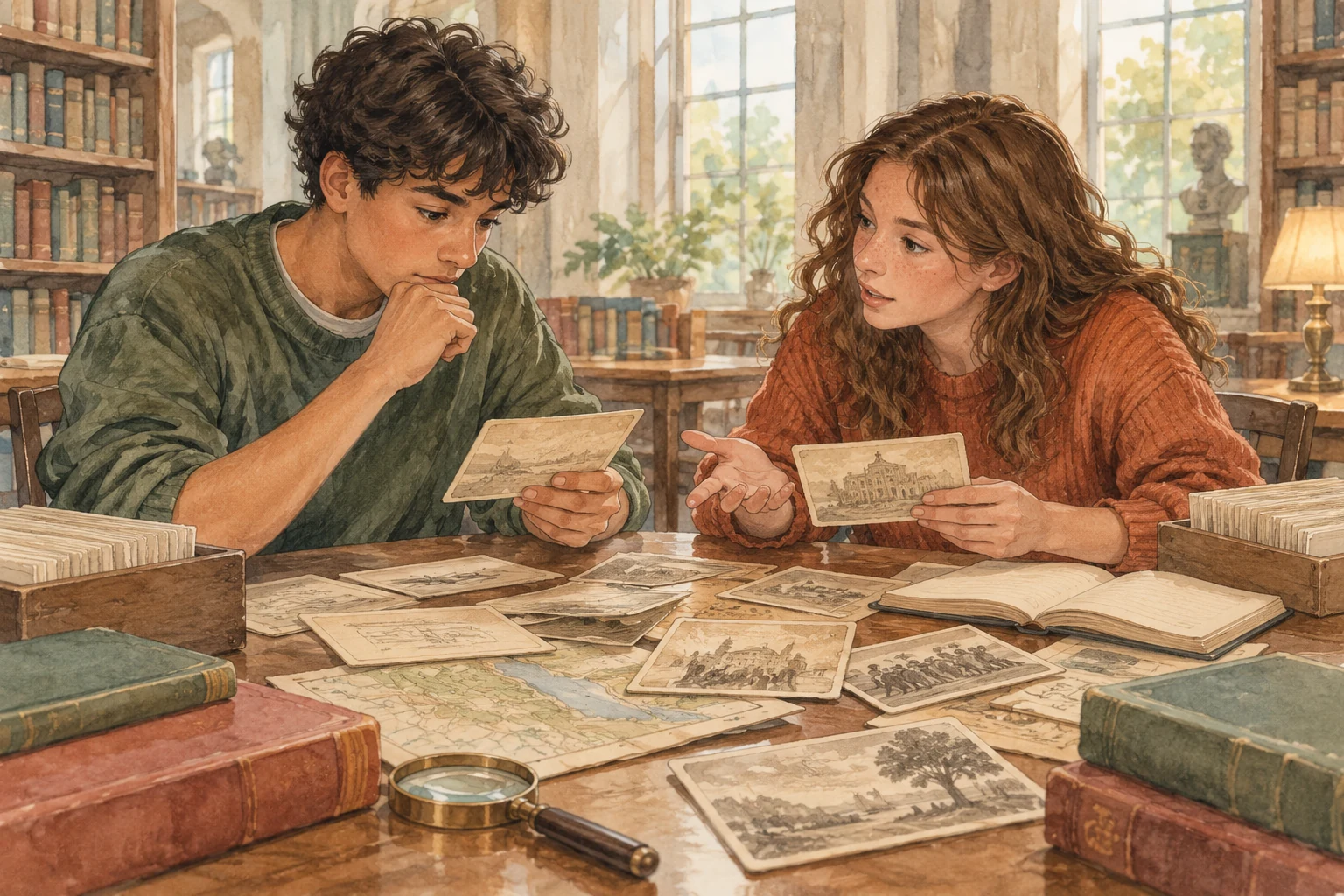
Why study History when students already spend so much of their lives at school? Because the school day, examination system, language of instruction and expectations placed on children were not always arranged as they are today. They reflect earlier decisions about access, work, citizenship, family life and what young people should know.
Singapore offers an unusually rich collection of records for investigating these changes. National Library research traces diverse education providers and language-medium schools through the nineteenth and twentieth centuries. National Heritage Board materials document bilingual policies and expanding access to education. The Compulsory Education Act 2000, which commenced on 1 January 2003, provides a very different type of source: a law defining particular education obligations under specified conditions.
Studying the history of schooling gives students more than a timeline of reforms. It teaches them to compare a policy’s intended purpose with a pupil’s lived experience, understand how childhood varies by period and community, and recognise how sources may record some children more fully than others. This is a powerful reason to study History: it explains why the routines we consider ordinary are the outcomes of choices and social conditions, not timeless rules.
In this article
- School itself has a history
- Singapore’s early education was more varied than one national timetable
- The history of PSLE shows that examinations are constructed systems
- Compulsory education is a legal milestone with precise scope
- A four-week study plan for the history of childhood and school
- FAQ: Has school always been compulsory in Singapore?
- Sources and eduKateSG learning routes
School itself has a history
An adult may remember classes, timetables and exams as familiar structures, while a young student assumes these arrangements have always existed. History challenges that assumption.
School systems develop within particular political, economic and social conditions. Governments and communities must decide who may enrol, who teaches, what languages are used, which knowledge is assessed and how costs are shared. Those decisions can change over generations.
A historian does not merely compare an “old school” photograph with a modern classroom. The useful question is what the classroom represents: access to education, a language policy, a curriculum choice, a technology or the daily experience of a particular group.
The distinction matters because a building may remain while its teaching practices change. A subject may retain its name while its content and assessment develop. Historical inquiry makes these changes visible.
There has never been one universal experience of childhood
Childhood is a biological stage, but the activities, obligations and opportunities associated with it vary across households, societies and periods.
A child might attend school, help with family work or move between several responsibilities. Even two children living in the same decade could face different choices because of household income, language, location or access to institutions.
Students should avoid a claim such as “children in the past did not enjoy childhood”. That statement is too broad and assumes one modern ideal. A careful inquiry asks what experiences are documented for a defined population and what evidence remains missing.
The reward of studying History is a more precise form of empathy. Learners can understand different childhood circumstances without inventing emotions for people they did not know.
Singapore’s early education was more varied than one national timetable
The National Library’s Development of Education reference guide lists records of schools, language-medium arrangements and educational debates across different periods.
This range of sources demonstrates why a student should not project today’s nationally structured school pathway onto earlier centuries. Different education providers and communities were involved, and the conditions of schooling changed over time.
But the existence of several types of schools does not prove that all children had equal access to them. Enrolment records, fees, locations and household accounts would be needed to investigate that question.
The historical method is to distinguish institutional diversity from the actual opportunity available to a particular child. That is more informative than a simple story of old schools being replaced by new ones.
A school enrolment register can tell us a great deal and very little
An enrolment register may establish names, dates, classes and selected personal details recorded by a school. It is valuable for studying attendance at a particular institution.
The document also has limits. It excludes children who never enrolled, and its categories may reflect the administration’s needs rather than the pupil’s own identity. Recorded enrolment does not necessarily establish consistent attendance or later educational achievement.
Researchers must handle personal information with care, especially where records concern living people. An old school document is not automatically free to publish in full.
Students can learn to ask which children are visible in the register and who falls outside its scope. This makes a seemingly dry administrative document a lesson in evidence and selection.
Changes in access require more than one measure
A historical account might celebrate the construction of additional schools. New buildings matter, but they are not identical to enrolment, attendance, completion or learning.
A student investigating access must define the outcome: whether a place existed, whether a child could afford it, whether travel was feasible, whether teaching was available and whether pupils remained in school.
Different records support different claims. Building plans document capacity; registers show recorded pupils; a family’s testimony reveals one experience; examination data capture selected outcomes.
History trains students not to replace all these questions with the word “education improved”. An improvement claim is stronger when the measure, period, source and population are clear.
What changing school languages reveal about society
Language policy reflects practical communication needs as well as concerns about cultural continuity and participation. Singapore’s education history contains several periods in which language-medium arrangements were debated and revised.
The National Heritage Board describes bilingual policy developments at primary and secondary levels during the 1960s and their connection to nation-building.
Students should distinguish what officials prescribed from what happened in homes and school playgrounds. A policy document can establish the intended curriculum; it cannot reveal every child’s daily language use.
The same caution applies to school prospectuses and promotional materials. They express an institution’s public priorities but may not document the linguistic experience of all families. Historical inquiry is stronger when formal policy and lived practice are investigated separately.
Bilingualism cannot be explained only through test scores
One reason bilingual education is historically interesting is that the objectives associated with language learning may include economic communication, cultural connection and social integration, in addition to academic performance.
A student who investigates only changes to examination weighting may miss the wider reasons presented in contemporary policy documents. Conversely, a policy speech should not be treated as proof that every pupil experienced the intended benefits.
The National Library’s PSLE history describes changes in subject weighting and language arrangements, illustrating how assessment can reflect changing priorities.
The task is to separate intended aims, examination rules and observed student experiences. History allows all three to be understood without forcing them into one narrative.
The history of PSLE shows that examinations are constructed systems
An examination seems natural to students because it has a date, a paper format and a result. Yet examinations are designed and periodically revised for particular purposes.
The National Library’s PSLE historical overview records earlier adjustments to scoring and language emphasis. These examples show that assessment structures have a history.
A careful learner does not conclude that every earlier change was beneficial or harmful. Instead, they ask what problem was being addressed, how performance was measured and which groups were affected.
This historical awareness is useful when families encounter a new examination framework. It encourages them to read the actual rules and official guidance for the current cohort, rather than relying on assumptions inherited from an older generation.
Education policy and daily school experience are different kinds of evidence
A ministry circular can establish a policy decision. A school timetable can reveal intended daily structure. A pupil’s notebook may illustrate classroom tasks, while an interview can describe one person’s recollection of schooling.
These sources are complementary. No single source reveals the complete experience of every learner.
If a policy required a new subject, a researcher should investigate implementation before claiming that all pupils received the same teaching. Schools may have differed in staffing, resources or timing.
Students who learn this distinction become better at evaluating both historical and contemporary institutional announcements. They recognise that intention, implementation and lived results should be explained separately.
Why family finances belong in the history of childhood
For a household, education can involve more than official school fees. Travel, books, uniforms, childcare and the opportunity cost of time may influence what families can manage.
Those costs cannot be reconstructed solely from a national policy statement. Historians may need price records, household budgets, letters and oral histories to understand a family’s choices.
A student’s essay should avoid universal claims that all children in one decade faced poverty or that every family could afford school once a formal policy changed.
The important historical skill is to investigate how institutional access and personal circumstances interact. A legal entitlement does not necessarily describe the practical experience of every household.
Schools and industry changed alongside one another
During Singapore’s postwar development, education planners considered how schooling related to economic and technical skills. National Library reference collections include reports on vocational and technical education from the 1950s to the 1970s.
That historical link should not be simplified into “schools only trained workers”. Education also involves language, civic life, arts and personal development. Different policy documents may stress different aims.
Students can compare a technical-education report with a general school prospectus from the same period. What skills and values are emphasised? Which problems did the authors say they were solving?
This research makes the relationship between education and the economy visible without reducing children to future employees.
The 1959–1978 education record illustrates changing priorities
The National Library’s historical overview traces education reforms in the self-government and early independence years and identifies reports that shaped subsequent discussions.
A student should resist turning a sequence of reports into a chain of automatic improvements. A report may diagnose a problem; legislation or administrative changes may follow later; outcomes require their own evidence.
The research task is to identify the question each report addressed and then verify what happened afterwards. This distinguishes policy debate from implementation.
Historical literacy makes documents more than names on a timeline. Reports become evidence of people attempting to understand and redesign an institution under particular constraints.
What the history of streaming teaches about context
Historical accounts of school differentiation and streaming should distinguish the arguments made by policymakers, the categories used at the time and the experiences of pupils.
The National Library’s education-system overview discusses the late-1970s policy context and changes introduced after reviews of the system.
Students should not assume that a historical label has the same meaning as a present subject-level arrangement. They must locate the correct decade and policy.
The purpose of studying this history is to understand how systems were justified and changed, not to assign an educational identity to children today based on an obsolete category. Present arrangements require current MOE guidance.
Changing textbooks reveal changing ideas about knowledge
A textbook reflects choices about what is worth teaching, how concepts should be ordered and which examples are presented to children.
Comparing two textbooks can reveal changes in vocabulary, illustrations, science knowledge or the treatment of social issues. But one book does not automatically represent every classroom in its publication year.
A historical investigation should record the publisher, edition, syllabus context and intended school level. Students can select one topic and compare the explanation rather than making broad claims from cover design.
This exercise develops close reading and respect for context. It also reminds learners that knowledge and teaching methods can develop without making every earlier teacher careless or every new edition perfect.
A classroom photograph is a snapshot, not a national survey
An old classroom photograph may show desks, uniforms, teachers, wall displays or equipment. It can support precise observations about one scene.
It may not reveal attendance rates, quality of teaching or whether the scene was staged. A newly opened school photographed for publicity is especially unlikely to represent every institution in the country.
Students should date and locate the image, identify who produced it and compare it with other relevant records. The goal is not to reject photographs but to use them proportionately.
A strong statement might be that a particular image documents a classroom arrangement at a named school on a recorded occasion. A claim about the entire education system requires broader evidence.
The history of women’s education needs its own sources
Educational opportunities have been shaped by gender expectations in different periods. A responsible account should investigate specific schools, access rules, families and occupations rather than assume a single experience for all girls or boys.
School prospectuses, enrolment data, policy texts and autobiographical sources may illuminate different dimensions of opportunity. A school opening to girls is an important event, but it does not by itself measure their later completion or employment.
Students should define place and period carefully, especially when comparing communities with different educational institutions.
Historical study encourages nuanced understanding of changing opportunities without reducing an entire generation to a stereotype.
Compulsory education is a legal milestone with precise scope
Singapore’s Compulsory Education Act 2000 came into operation on 1 January 2003. The statute concerns compulsory primary education and includes definitions, conditions and exemptions rather than a single unrestricted sentence covering every child in every circumstance.
The National Heritage Board’s education history places compulsory education within the longer development of expanding access.
A student should not confuse the date of a law with the first date any child in Singapore attended school. Nor should the existence of a legal duty be treated as proof that all learners encountered identical educational conditions.
History teaches why legislative milestones matter while insisting that their exact wording and application be understood.
A law passed in one year can take effect later
Compulsory education is a useful illustration of the difference between enactment, commencement and implementation. The statute is titled the Compulsory Education Act 2000, while its commencement date is 1 January 2003.
Students often compress these stages and then create an inaccurate chronology. The same confusion can occur when a reform is announced, piloted and introduced to different cohorts at different times.
A practical worksheet places each date in a separate column. It also asks what kind of evidence is available: legislative text, public announcement, school administrative record or later review.
The lesson goes beyond education history. It is a fundamental habit for understanding how institutions change: a stated intention is not the same as an operative rule, and an operative rule is not the same as every observed outcome.
Children’s experiences can be recovered through oral history
Adults remembering school may describe teachers, friends, journeys, languages, meals and significant moments in their lives. These accounts can reveal aspects that ministry documents do not record.
Memory has limits. Interviewees may blend years together or reconstruct experiences through later knowledge. The historian records interview date and context, checks available details and retains uncertainties.
A single recollection cannot establish how an entire generation felt. It can, however, be valuable evidence of one person’s remembered experience.
This is a way for students to practise historical empathy while maintaining respect for evidence. Listening carefully does not require accepting every recalled date without verification.
What an old report card can and cannot establish
A report card may reveal subjects, grading categories, attendance notes or comments recorded by a school. It can document institutional expectations at a particular time.
It cannot alone establish a student’s long-term potential, family circumstances or adult outcomes. Even marks need to be read within the grading scheme and examination context used in that year.
Students should avoid presenting private family report cards publicly without permission. For classroom practice, anonymised or simulated documents can teach the method.
The exercise is valuable because it shows how familiar paperwork becomes a historical source when its date, purpose and limits are examined.
A school building can survive while its curriculum changes
Schools often have long institutional lives. Their campuses, names, buildings or traditions may persist even while teaching practices and student populations change.
A present-day building should not be used to guess everything about an earlier timetable. Similarly, a commemorative school history may focus on achievements while omitting ordinary daily experiences.
A sound inquiry can use a timeline of verified institutional milestones alongside old prospectuses, photographs and alumni interviews. The records should be kept distinct by purpose.
This is a concrete demonstration of change and continuity. The school as an institution may remain recognisable, while the education offered within it develops substantially.
Schooling is also a history of languages and families
A family’s language choices and school decisions can be shaped by policy, community institutions, perceived opportunities and practical access. These choices do not always align neatly with a single national narrative.
Students should compare a policy document with household testimony only when they are asking a clearly defined question. For example, a requirement to study certain languages may be documented nationally, while how one child experienced the classroom must be investigated personally.
A strong essay recognises variation rather than assigning one view to all members of a community.
This ability matters for citizenship and family understanding because it replaces assumptions about older generations with specific, researchable questions.
What historical reform debates reveal about educational values
Reports on schooling often reveal competing priorities: broad access, quality, language learning, vocational preparation, academic pathways and social cohesion. Different periods may give these concerns different emphasis.
History students can investigate why a proposal was considered necessary at a certain time. What was the reported problem? Which alternatives were discussed? What evidence did the authors use?
A retrospective policy history may make a change seem inevitable. Reading an original report can reveal uncertainty and disagreement that were less visible later.
This is a valuable education in public decision-making. Students learn to evaluate institutional choices without assuming that one generation possessed the same information as another.
Avoid nostalgia when asking whether school used to be better
Family conversations sometimes begin with “school was harder before” or “children had it easier then”. These are understandable memories but poor research questions unless key terms are defined.
Harder in what sense—curriculum, examination stakes, homework, access to materials, language demands or family responsibilities? Easier for which children, in which schools and years?
Historical inquiry begins by choosing a dimension and finding comparable sources. If the examination structure changed, raw scores may not be comparable. If the sample consists of two relatives, it does not represent the whole country.
The goal is not to declare one generation superior. It is to learn how education’s conditions and expectations changed, with evidence proportionate to the claim.
A school system is also an evolving assessment system
Assessment can take different forms: classroom tests, public examinations, projects, observations and other tasks. Their designs reflect what an institution chooses to measure.
History students should distinguish the intended educational aim from the score or grade produced. A change in assessment rules can alter what grades mean even if a subject’s name remains the same.
The PSLE historical account supplies examples of changing language weighting and school pathways in earlier decades.
This is why parents should not directly equate an older relative’s grades with a child’s current results. Historical comparison requires understanding each framework and cohort.
The link between education and a changing economy needs evidence
Historical accounts often connect schooling to industrialisation, workforce training and changing forms of employment. Those links may be important, but they are not demonstrated simply by placing factory openings beside school reforms on a timeline.
A stronger explanation uses documents that explicitly address skill needs, policy decisions and educational provision, then examines whether recorded outcomes followed.
The National Library’s reference guide includes vocational and technical education reports that can support such investigations.
Students learn to distinguish correlation from causation while seeing how different institutions respond to social changes. This skill is valuable far beyond any one education-policy topic.
What can a student learn by interviewing an older relative?
A useful interview begins with a narrow question: what was the school journey like during a specific period? Ask about location, transport, languages and routines, allowing the person to correct the question or decline.
Record when the interview took place, the approximate period remembered and whether the speaker agrees to having their words quoted. Do not assume that family stories are public property.
The student can then compare a remembered timetable or route with dated maps and school records. If a detail differs, the task is to investigate, not accuse.
The final result might be a small, well-supported family school history. It demonstrates that ordinary lives are legitimate historical subjects when researched carefully.
A worked source exercise: two school photographs
Provide one dated archival photograph and a contemporary school photograph, both with verified locations and permitted use. Ask students first to identify only visible differences.
Next, give them a school policy excerpt from the earlier period. Which changes are supported by the photographs, and which could be supported only by the written source?
The children should resist sentences such as “old students learned less technology” unless the evidence concerns actual access and use. A photograph’s frame cannot establish the full curriculum.
A four-sentence conclusion is sufficient: one observation, one contextual fact, one inference and one limitation. This practice builds accurate historical writing without unnecessary length.
A second exercise: read the 2000 law without confusing dates
Using an appropriate excerpt from the Compulsory Education Act, ask students to record the act’s title, commencement date, defined subject of regulation and the question it can answer.
Then compare the statutory information with a broader National Heritage Board history of educational expansion. Students identify what the law establishes and what the retrospective account adds.
The final paragraph should distinguish earlier schooling, policy reform and the specific legal milestone. Students should avoid claims about universal access or identical experiences that the sources do not prove.
This exercise develops chronological precision and the habit of reading the actual source before repeating a simplified summary.
Why the history of schools belongs in a History classroom
Education systems shape how knowledge is transmitted, which questions children are asked and how societies prepare young people for adulthood. They are therefore legitimate historical institutions, not merely the background against which students learn other subjects.
Studying schooling also reveals that historical knowledge itself is selected and taught through changing curricula. Students can examine why earlier textbooks emphasised particular topics and how later scholarship revised interpretations.
That awareness need not produce cynicism about education. It encourages informed inquiry into how knowledge is produced, taught and improved.
The benefit is reflexive understanding: the student learns not only about History, but also about the history of the institution in which they study it.
A four-week study plan for the history of childhood and school
Week one builds a short timeline of the chosen school or policy development. Learners distinguish source dates from remembered estimates and record no more than a few reliable milestones.
Week two compares document types. Students examine a policy, a photograph and a personal account, explaining what each can establish and which voices are missing.
Week three tests explanation. They identify the social problem a reform was meant to address, the recorded decision and what evidence would be needed to evaluate its effect.
Week four requires independent transfer. Supply an unfamiliar school-history example and ask for a concise, sourced argument with a clear limitation.
Improvement means the learner can apply method to new evidence. Remembering more reform dates without understanding source limits is not the main educational goal.
Common mistakes in schooling-history essays
The first mistake is describing every former pupil as if their experiences were identical. Define the school, period and group. The second is equating a law’s title year with its commencement or implementation. Read the statute.
The third is treating an old photograph as evidence of national learning outcomes. Check its limited reach. The fourth is assuming a policy’s stated intention was achieved for everyone. Seek outcome evidence.
The fifth is turning a grandparent’s recollection into a complete social history. Respect the memory while limiting the claim. The sixth is comparing grades across different assessment systems without checking what those grades meant.
Each repair makes the student’s argument smaller but more accurate. That is an essential form of historical maturity.
How parents can discuss historical schooling without comparing children harshly
A conversation about old schools should not become a contest in which a child is told that previous generations were stronger, more obedient or more hardworking. Such sweeping claims are historically difficult to defend.
Instead, ask a specific question: what materials did a relative use, how far did they travel, which languages were taught, or what choices were available after primary school?
Together, locate one credible historical source and compare it with the remembered experience. If there is disagreement, record the uncertainty rather than forcing a verdict.
This turns family conversation into research and helps children appreciate generational differences without shame or nostalgia masquerading as evidence.
FAQ: Has school always been compulsory in Singapore?
No. Singapore’s education history includes earlier efforts to expand access, while the Compulsory Education Act 2000 took effect on 1 January 2003.
The law has defined scope and conditions. Students should consult the statutory text and current official guidance rather than assume it describes all schooling in every period.
FAQ: Can old PSLE grades be compared directly with today’s?
Not without understanding the scoring framework and the cohort involved. The history of the PSLE includes changes in weighting and pathways, and subsequent reforms have altered assessment arrangements further.
For current decisions, families should use the relevant MOE and SEAB materials. Historical comparisons are useful for understanding change, not for claiming one child is automatically stronger than another.
FAQ: Why does History include personal school memories?
Personal testimony can reveal everyday routines and experiences that institutional documents omit. It is meaningful evidence when its source, date and circumstances are recorded.
One person’s recollection does not represent every pupil. A careful project uses it for what it can establish and compares it with other documents where useful.
FAQ: What is a manageable home project?
Investigate one school route, classroom object or timetable used by a consenting family member. Find a dated photograph or public record for comparison and write a short account of what changed and what remained similar.
Include an explicit “what we still do not know” sentence. Learning to preserve uncertainty is part of the historical skill.
Sources and eduKateSG learning routes
Use the National Library’s Development of Education reference collection, its history of Singapore’s education system, PSLE history, the National Heritage Board’s education reform account and the Compulsory Education Act for distinct documentary perspectives.
Within eduKateSG, continue through oral history and overlooked lives, change and continuity and the SEC History learning guide.
The lasting reason to study History is that it helps children understand the origins and limits of their own educational world—and the changing experiences of those who came before them.