
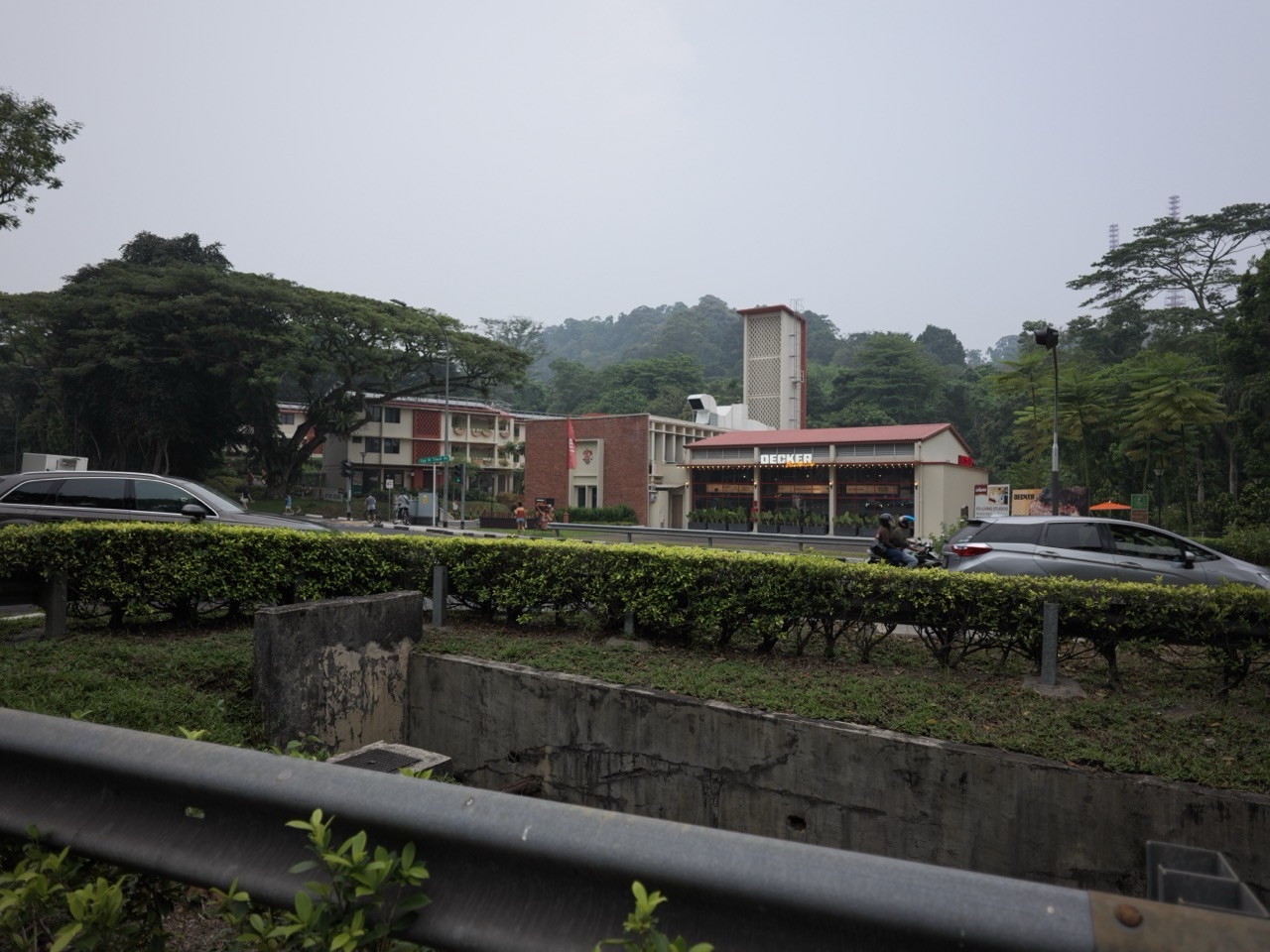
Why study History when a fire engine races past us in seconds? Because the speed of modern emergency response rests on generations of institutions, trained people, buildings, vehicles, communications and public expectations. A fire station is more than a red-brick landmark: it is a working part of a changing network that helps protect residents, businesses and public spaces.
Singapore’s firefighting history contains several different milestones. An organised volunteer fire brigade emerged in 1869, and the Singapore Fire Brigade was established in 1888, with an early purpose-built station at Cross Street. Superintendent Montague Pett arrived in 1904 and helped modernise equipment and training. Central Fire Station on Hill Street was built between 1908 and 1909. As the island developed, suburban stations followed, including Alexandra and the former Bukit Timah Fire Station, built in 1956. The present Singapore Civil Defence Force was established in 1986, before its formal integration with Singapore Fire Service on 15 April 1989.
History allows us to distinguish the date a building was completed from the establishment of an organisation, emergency equipment from actual operational capability, and a documented rescue from a claim about every person’s safety. This makes fire-service History useful for students of Singapore History, Science, Geography, Social Studies and responsible civic life.
In this article
- The real reason to study fire stations
- 1869 marks the organised volunteer tradition
- 1888 was the creation of the Singapore Fire Brigade
- 1908 and 1909 can both appear in Central Fire Station records
- The former Bukit Timah Fire Station was built in 1956
- 15 April 1989 marked formal integration
- Four-week learning plan for fire-service History
- FAQ: when did Singapore establish professional firefighting?
- Authoritative sources and connected eduKateSG learning
The real reason to study fire stations
A fire station is an institution, workplace and physical structure. Its location affects access to streets; its staff need training and communication; its equipment requires maintenance and suitable water supplies.
History asks when each part of this system developed and which public problems the changes were intended to address. A photograph of a motorised engine may show technology, but not prove how quickly it reached every reported incident.
Students learn to separate technical possibilities, organisational plans and verified outcomes. That distinction is useful when studying almost any public service.
An emergency response is not a single person’s achievement
Firefighters, dispatchers, engineers, ambulance crews, building managers, volunteers and the wider community can play different roles during an emergency.
A popular story might focus on a prominent officer or dramatic rescue. A fuller history investigates training, equipment, station coverage and the institutional procedures that supported the response.
This is not a reason to minimise individual courage. It is a way to understand what made particular actions possible.
Students should describe documented contributions rather than invent conversations or private thoughts for responders whose stories have not survived.
What Singapore had before a permanent professional brigade
The National Heritage Board’s Central Fire Station history describes early attempts to fight fires with limited equipment, volunteers and personnel drawn from different public institutions.
An early firefighting response might involve residents and groups called together for a particular blaze. This did not yet amount to the continuously organised service associated with a modern station.
Students should not judge earlier workers merely for lacking equipment invented or adopted decades later.
Historical context begins with the actual resources and risks that people faced.
1869 marks the organised volunteer tradition
SCDF’s 150 years of volunteerism account traces an organised Volunteer Fire Brigade to 1869.
That volunteer milestone is different from the establishment of a professional force. A volunteer organisation can perform significant public work without having identical staffing, facilities or duties.
Students should record the organisational form alongside the year. The label “first” makes sense only when it describes exactly which type of service began.
This prepares learners to analyse other histories in which voluntary groups precede permanent state institutions.
Why a growing port city required organised responses
Warehouses, shops, transport facilities and densely occupied dwellings created different potential sources and consequences of fire.
The concentration of buildings and commercial activity gave officials reasons to improve access, equipment and organisation. That broad explanation must still be distinguished from any claim about the cause of a particular historical fire.
Students can compare city maps and institutional histories to see why the reach of emergency services mattered.
The lesson is multicausal: urban development can increase both the demand for protection and the resources available to provide it.
1888 was the creation of the Singapore Fire Brigade
NHB’s history identifies 1888 as the founding of the Singapore Fire Brigade, the first organised professional firefighting team, and the construction of a purpose-built station at Cross Street.
G. P. Owen, then Secretary of the Singapore Cricket Club, became the founding superintendent.
Students must distinguish this 1888 institution from the 1869 volunteer organisation and the later Central Fire Station building.
Chronology matters because several milestones can be significant without all referring to the first occurrence of the same thing.
A professional service still develops through stages
Creating a brigade does not instantly supply fully trained staff, a sufficient fleet or equipment suitable for every district.
A historical account should investigate what the new organisation possessed, which limitations contemporaries identified and what later reforms addressed.
A founding date is a claim about an institution’s beginning, not proof of its final performance.
Students can apply this distinction to hospitals, schools and police services whose establishment also preceded many of their present capabilities.
Cross Street and Hill Street are different stations
The early brigade’s purpose-built Cross Street premises preceded the iconic Central Fire Station on Hill Street.
An article that calls the 1909 Hill Street building Singapore’s first-ever fire station would overlook the earlier station.
Students should identify the exact historical subject before writing a headline: earliest purpose-built fire station, oldest surviving station and headquarters of a later service are not interchangeable categories.
This is a practical lesson in the careful use of superlatives, especially in heritage articles.
The importance of Montague William Pett
NHB records that professional firefighter Montague William Pett arrived from England in 1904 and succeeded Owen as brigade superintendent.
He advocated improved training, modern vehicles and construction of a properly equipped central station. These are documented contributions to institutional change.
Students should not assign every later fire-service innovation personally to Pett or imply he completed all reforms at once.
A careful biography identifies the decisions associated with a leader while recognising the staff, public funds and wider organisation required for implementation.
A station building reflects operational choices
A station needs room for equipment, living or working facilities, access to roads and systems for handling alarms.
Choosing the Hill Street site near Fort Canning was part of the effort to organise a central emergency base. The physical structure reflected the capabilities and priorities of its period.
A building’s facade cannot prove everything about the brigade’s response performance. Floor plans, vehicles, staffing and contemporary records are needed for those questions.
History connects architecture with organisational purpose without making the building explain itself.
1908 and 1909 can both appear in Central Fire Station records
NHB dates construction of Central Fire Station on Hill Street from 1908, with completion in 1909.
SCDF’s current station directory identifies 1908 as an operational year for the station. The different dates refer to different milestones and institutional conventions.
Students should not automatically discard either reliable source. They should explain whether they are discussing work starting, opening or completion.
This exercise is a useful reminder that apparent disagreements often arise when a date is quoted without naming its event.
The red-brick station remains an operational place
Central Fire Station is a protected national monument and a continuing part of Singapore’s emergency-services network.
Its historic appearance does not mean its interior equipment or operational procedures have remained untouched since 1909.
SCDF’s station directory lists present-day responsibilities that differ in important ways from early twentieth-century firefighting.
Students learn that physical continuity and institutional change can happen together, and that conservation need not prevent a useful public function.
Horse-drawn and motorised engines belonged to different phases
Early firefighting relied on vehicles and pumps whose speed and capacity were constrained by the technology and transport networks then available.
NHB describes motorised engines at the new Central Fire Station, replacing older horse-drawn arrangements. This was a major equipment milestone.
But an engine’s purchase does not establish that every call was answered within the same time. Response depends on staffing, roads, dispatch and conditions at each incident.
History separates the arrival of equipment from the measured effects of using it.
A powerful pump needs a water supply
Water availability, hydrant placement and pumping equipment affect how firefighters can act when they arrive.
The NHB Civic District Heritage Trail notes the expansion of street hydrants under early twentieth-century reforms.
Students should not assume water infrastructure was identical across every district or unchanged through the century.
This connects the history of firefighting to the history of utilities, engineering and urban planning: emergency services depend on wider public systems.
A hydrant count needs a year and definition
An institutional report might record hydrants installed or available in a particular period.
That figure does not automatically tell us where they stood, whether every one functioned during a particular incident or how much water each could deliver.
Students should record the reference date and unit before interpreting the number.
Numerical discipline prevents a genuine infrastructure statistic from being turned into an exaggerated claim about universal safety.
Alarms and communications are part of the history
A response begins when an incident is reported and enough information reaches the right personnel. Before modern mobile communications, people used available alarm and telephone systems.
Students should investigate dated procedures rather than assume someone in 1900 could report an emergency exactly as they would today.
The telephone network, dispatch arrangements and road system form connected parts of emergency capability.
History makes the less visible stages of public response understandable while discouraging assumptions about every earlier incident.
Uniforms and equipment can preserve the working past
SCDF’s heritage collection includes vintage fire appliances and equipment documenting phases in the service’s development.
An original helmet or vehicle may tell us about materials and design, but cannot automatically identify who used it at a specific fire unless the catalogue provides that information.
Students should distinguish a genuine period artefact from a replica used for interpretation.
This is material-source criticism applied to emergency-services History rather than merely a visual tour of old equipment.
A firefighter’s uniform does not describe every working condition
Protective clothing changes with technology, hazards and professional standards. A museum display may show what a person could wear during one period.
It does not establish all the dangers they faced, their training or the work completed during one specific incident.
Students should use organisational histories and personal accounts, where documented and suitable, for those questions.
History values small objects but recognises the limits of their evidential reach.
The Central Fire Station’s tower is part of its identity
The historic tower and red-and-white brickwork make Central Fire Station recognisable in the Civic District.
Architectural details can document design choices, but a picturesque photograph cannot show the full network of stations that later served the city.
Students can compare an early building photograph with the present structure and mark which features remain and which require further research.
This lesson strengthens the distinction between one conserved landmark and the history of an entire public institution.
Fire-service expansion followed the changing city
As housing estates and industrial districts spread beyond the old commercial centre, a single central station could not provide identical geographical coverage everywhere.
New stations and posts responded to local populations, roads and hazards. Their dates and responsibilities need to be examined individually.
Students should not treat the expansion as one event after which all emergency needs were solved permanently.
Historical explanation traces a changing network of services rather than only its most famous station.
Geylang and Alexandra represent suburban expansion
NHB’s history of the former Bukit Timah station describes earlier suburban stations at Geylang and Alexandra alongside the central station.
SCDF’s directory records Alexandra Fire Station’s operational history and its present geographical responsibilities.
Students should distinguish the date a station began work from the date every modern vehicle was added to its fleet.
This shows how emergency coverage developed with neighbourhoods, commerce and transport routes.
The former Bukit Timah Fire Station was built in 1956
The NHB Bukit Timah Heritage Trail identifies 1956 as the construction year of the former fire station at 260 Upper Bukit Timah Road.
It was Singapore’s fourth fire station after Central, Geylang and Alexandra in that local historical account.
Students should not confuse the 1956 building with the 1909 Central Fire Station or assume that all four were built under identical designs.
The station gives Bukit Timah a concrete place to investigate the geography of public emergency response.
A Modernist station tells us about its architectural period
The former Bukit Timah Fire Station has a streamlined Modernist design with tan brick and a period coat of arms.
Its architecture differs from the older red-brick Central Fire Station, reflecting another era of construction and public needs.
A current photograph can document what remains but not the original operation of every room or appliance.
Students should pair the building with the heritage record before claiming how personnel lived and worked there.
Firefighters’ quarters were part of the earlier station
NHB records accommodation for firemen at the former Bukit Timah station.
This suggests a historical arrangement in which proximity to the workplace could matter for readiness and working routines. Yet the existence of quarters does not establish every firefighter’s family circumstances.
A student could compare architectural records with authorised personal testimony, taking care not to invent stories for unnamed occupants.
This brings social History into a subject sometimes reduced to vehicles and sirens.
The old Bukit Timah station ceased operations in 2005
The NHB heritage trail states that the station stopped its firefighting operations in 2005.
The site’s later restaurant and community-related uses represent another chapter. A building can remain physically recognisable after its emergency purpose ends.
Students should distinguish the end of station service from the building’s demolition, which did not occur.
This is an important concept of continuity and change, familiar from old railway stations, schools and industrial structures.
A former fire station is not proof of today’s emergency coverage
A closed station’s location may help reconstruct historic access to surrounding roads, but current emergency services operate through different station and post arrangements.
Students should not give real-time safety directions based on a heritage map or assume the former Bukit Timah building still dispatches engines.
Current emergencies require official emergency services and up-to-date guidance.
The history is valuable because it explains development over time, not because it replaces present operational information.
Industrial areas created different response questions
Factory districts, warehouses and sites handling hazardous substances can present risks different from those in predominantly residential areas.
As industrial facilities developed in Singapore, the emergency network had to consider new geographical and technical requirements.
Students should not claim that all industrial incidents involve identical chemicals or that a fire station’s presence eliminates such hazards.
The historical question is how institutions described and responded to the changing city, with technical claims left to appropriate evidence.
A station’s fleet can reveal a range of responsibilities
Modern SCDF station listings identify combinations of firefighting, rescue and medical vehicles. The mix varies by operational role and location.
A fleet list is evidence of documented capability at a stated period. It does not establish that every vehicle was involved in one particular incident.
Students should resist using a current fleet table to describe what a station possessed when it first opened decades earlier.
This is a practical case of avoiding anachronism in technical History.
Volunteer services continued alongside professional organisations
SCDF’s history recognises a long volunteer tradition, including people who assisted during emergencies and community preparedness activities.
Voluntary service and professional emergency work have different duties, training and forms of accountability.
Students should not assume a nineteenth-century volunteer carried the same equipment as a modern professional firefighter.
A historical explanation can acknowledge continuity of public-spirited participation while describing substantial changes in the institutional system.
Wartime civil defence is a separate chapter
During the Second World War, volunteers and organised services faced bombing, destruction and occupation-related disruption.
SCDF’s volunteer history describes wartime service and the risks faced by members of the Auxiliary Fire Service.
Students should not assume that peacetime fire stations operated normally throughout the conflict.
A careful wartime history needs separate sources on military conditions, civilian experience and the emergency personnel involved.
Postwar organisations did not simply return to their original form
Rebuilding after war can require repairs, new equipment, staffing arrangements and training.
SCDF’s institutional history describes the revival of an Auxiliary Fire Service in 1952, demonstrating that organised support continued to change after the Occupation.
Students should distinguish a restored or reorganised service from the original nineteenth-century volunteer brigade.
This reveals how an institution may preserve a broad mission while changing its organisation through major disruptions.
The 1982 National Civil Defence Plan was not the creation of SCDF
The SCDF official history identifies the launch of the National Civil Defence Plan in 1982 as a significant step in nationwide preparedness.
The organisation known as the Singapore Civil Defence Force was established through later legislation in 1986.
Students should separate planning, legislation and the formal creation of an agency.
This distinction applies widely to public-policy History, where a strategy can precede the institution created to implement it.
The Civil Defence Act was a 1986 milestone
SCDF’s official chronology explains that the Civil Defence Act 1986 established the force as a separate organisation under the Ministry of Home Affairs.
That step brought a formal civil-defence institution into the existing landscape of fire and rescue services.
Students should not describe the Act as the first creation of Singapore’s professional firefighters, whose history goes back much further.
A correctly labelled timeline reveals continuity of firefighting and a later reorganisation of emergency preparedness.
The Hotel New World collapse affected inter-agency thinking
In 1986, the collapse of Hotel New World required a large rescue response involving personnel from different services.
SCDF identifies the incident as important in demonstrating the need for coordinated operations. A major disaster can expose institutional questions that routine daily work may not reveal.
Students should not turn the case into a claim that one agency acted alone or that every later reform had a single cause.
A documented emergency can accelerate decisions within a longer institutional development.
A rescue incident and an institutional merger are different events
The Hotel New World collapse occurred in 1986, while the integration of SCDF with Singapore Fire Service followed in 1989.
Students should not say the merger took effect immediately at the moment of the collapse. Legislation, planning, staff arrangements and changing responsibilities took time.
The two events are connected in SCDF’s retrospective account, but their dates and meanings remain distinct.
History trains students to explain a documented causal link without compressing a multi-year process into one dramatic day.
15 April 1989 marked formal integration
The SCDF overview dates the formal integration of SCDF and Singapore Fire Service to 15 April 1989.
This was a new organisational stage built on more than a century of earlier firefighting history and several decades of civil-defence development.
Students should not interpret the date as the first arrival of a fire engine or the closure of every old station.
The key historical task is to identify which responsibilities and institutions were brought together and what continued through the transition.
A merger can be difficult for the people affected
SCDF’s interview with a veteran officer describes emotional and organisational challenges during the 1989 transition.
Personal testimony helps readers understand that institutional change affects professional identity as well as charts and legal titles.
But one person’s account does not represent every officer’s view, and official agreement on a merger does not prove everyone adjusted instantly.
History pairs organisational milestones with carefully scoped lived experience.
Fire service and ambulance work developed connected roles
Modern SCDF provides firefighting, rescue and emergency medical services, while earlier institutional arrangements differed.
Students should not assume the nineteenth-century Singapore Fire Brigade provided every modern medical and hazardous-materials capability in its current form.
The institutional timeline explains how responsibilities developed, while present guidance explains how services operate now.
Historical precision matters because a broad label such as “emergency response” can hide several specialised kinds of work.
Training standards form part of the history
Professional response depends on exercises, assessment, operational procedures and continued learning.
A museum photograph of an engine is not evidence of every training method. Documents and authorised testimony are better suited to investigating how personnel prepared for particular hazards.
Students should avoid comparing past and present responders only through vehicle horsepower or protective clothing.
History reveals that skill development and organisational learning are central to technical progress.
Fire safety regulation is another institutional strand
A station responds when an incident occurs, while building regulations, inspection and public education aim to reduce hazards before that stage.
SCDF’s present responsibilities include formulating and enforcing fire-safety rules, but these functions have their own legal and administrative histories.
Students should distinguish a regulation from evidence of compliance and a safety campaign from a measured reduction in incidents.
The lesson is that prevention and response are connected but separate public activities.
Heritage Gallery displays have specific source status
SCDF’s Central Fire Station Heritage Gallery contains vintage engines and equipment that introduce visitors to earlier phases of firefighting.
Some material may be an original artefact; other elements may be reconstructed or arranged in a modern exhibition.
Students should use catalogue descriptions to tell them apart, not assume everything displayed was present during one historic incident.
This is the same source discipline needed in a museum or former industrial building.
A preserved vehicle is evidence of one kind of capability
A fire appliance can show design, equipment layout and sometimes the period or station associated with its use.
It cannot independently establish annual incident numbers, average response times or the professional experience of every crew member.
An accurate article can admire technical ingenuity while remaining modest about unmeasured outcomes.
This helps students understand why a visually impressive object is a starting point for inquiry rather than proof of a complete historical narrative.
Changing roads shaped the reach of stations
Motor vehicles, traffic patterns, bridges and industrial roads influence possible emergency journeys. A station map may indicate potential coverage but not the precise time taken in a particular historical incident.
Students can compare period road maps with station histories to investigate why new locations were considered useful.
They should avoid projecting modern expressways backwards into a 1909 response.
This is a strong example of History and Geography working together on a practical public-service question.
Firefighters’ families may appear in station history
Some older stations included residential quarters where personnel or families lived near the workplace.
SCDF’s intergenerational firefighter account describes a responder who grew up around Geylang Fire Station quarters.
This is valuable testimony of one family’s experience, not proof of how every fire-service household lived.
Students can respect the personal meaning without generalising beyond the speaker’s documented story.
The geography of a station can change without its name changing
A fire station’s surroundings may become taller, denser and more complex as new commercial buildings and transport routes are built.
The historic station may retain a familiar name while its operational challenges and fleet change.
A student should compare properly dated descriptions rather than assume the neighbourhood has been identical for a century.
This is continuity of institutional identity alongside change in the service environment.
Do not turn historic incidents into modern emergency instructions
A historical essay may explain how responders tackled a documented fire, but the technology, building rules and risks may differ today.
Readers facing a present emergency should use current SCDF guidance and the emergency services, not recreate techniques from a nineteenth-century account.
The educational task concerns institutions, sources and causal reasoning, rather than unauthorised firefighting practice.
This boundary keeps technical learning respectful of current professional expertise.
A news report and an official incident record can differ
An early newspaper article may contain estimates of damage or casualties, while later institutional records reflect further investigation.
Students should compare publication dates, identify whether the figures were preliminary and avoid accusing a source of deceit solely because it was updated.
The strongest paragraph specifies which version is being cited and what the evidence supports.
History teaches how factual knowledge can improve after an event without eliminating the value of contemporary reporting.
A completed station is not proof of universal safety
Building a station can improve response capability for the area it serves, but the effects depend on staffing, equipment, operations and other conditions.
Students should not claim that a new station stopped all fires or reached every emergency equally.
A sound conclusion identifies the new facility and the particular capability its records document, while leaving broader outcomes to suitable data.
The principle applies equally to hospitals, flood channels and railway routes.
Worked exercise: three origins that must not be merged
Give learners the 1869 volunteer brigade, 1888 professional Singapore Fire Brigade and the 1908–1909 Central Fire Station construction chronology.
Ask what each event describes. The first concerns volunteer organisation, the second a professional force, and the third the later physical station.
The student then corrects the statement “the fire service began when Hill Street’s red-brick station opened”.
This is a simple but effective way to practise accurate chronology and source classification.
Worked exercise: a station building and a rescue service
Provide the NHB Central Fire Station heritage description and SCDF’s current organisation page.
Students identify what the old building record establishes and which responsibilities belong to the present emergency-service organisation.
They should not use today’s vehicle list to describe the original 1909 fleet.
The task develops the ability to read a familiar institution across changing periods without collapsing the evidence into one timeless description.
Worked exercise: understand a former Bukit Timah landmark
Use the 1956 former Bukit Timah Fire Station account and a dated contemporary photograph of the building.
Ask what is architecturally visible, when operations ended and how the site’s use changed. Then ask what would be needed to explain one firefighter’s daily routines there.
The learner should avoid imagining unidentified staff or treating current dining activity as historical firefighting.
This local example makes continuity and change tangible.
Worked exercise: institutional response after 1986
Give students SCDF’s official dates for the 1986 Hotel New World collapse, creation of SCDF under legislation and the 1989 integration with the Singapore Fire Service.
The task is to arrange them accurately and explain why an emergency, a law and a merger are different kinds of event.
Students should identify documented reasons for cooperation without inventing a claim that all reforms happened immediately.
This develops causal reasoning without turning a complicated organisational history into a one-event legend.
Four-week learning plan for fire-service History
Week one builds a timeline from the volunteer brigade to the professional force, the Hill Street station and suburban expansion.
Week two focuses on artefacts and sources, comparing buildings, photographs, oral testimony and institutional accounts.
Week three investigates causes and consequences of changing technology, communications and the 1989 integration, keeping event dates precise.
Week four transfers the method to another public emergency institution and requires a short evidence-based explanation with one meaningful limitation.
Success means the learner understands how public capability develops through systems, not merely a collection of vehicles.
Common mistakes and how to repair them
First, students confuse 1869 volunteer firefighting with the 1888 professional brigade. Second, they describe the 1909 Central Fire Station as the very first station ever built.
Third, they treat a preserved vehicle as proof of an average response time. Fourth, they confuse the 1986 SCDF establishment with the 1989 integration.
Fifth, they assume a closed heritage station is still dispatching emergencies. Sixth, they project current safety equipment or rules backwards.
Every repair requires a correctly dated event, a source appropriate to the question and a limited claim.
Parents can study a fire-service building safely
A family can read an official station-history page, examine a public exterior photograph and compare it with a museum description.
Children should not enter operational areas without permission or try equipment used by responders. Historical research can be completed using authorised public material.
Ask the child to state one observable feature, one documented date and one unanswered question.
This encourages interest in public service while treating emergency facilities as workplaces rather than props for entertainment.
FAQ: when did Singapore establish professional firefighting?
The Singapore Fire Brigade was established in 1888, following an earlier organised volunteer tradition dated to 1869.
These are separate milestones. The iconic Central Fire Station building was subsequently constructed in 1908–1909.
FAQ: when was Central Fire Station built?
NHB dates construction to 1908 and completion to 1909, while SCDF lists 1908 in its station’s operational history.
The different references should be understood by the exact milestone they describe. The building remains both a conserved landmark and an operational fire station.
FAQ: what happened to the Bukit Timah Fire Station?
The former station at 260 Upper Bukit Timah Road was built in 1956 and ceased fire-service operations in 2005.
Its surviving building has since been adapted for other uses. It is no longer an operational public fire station.
FAQ: did the SCDF begin in 1888 or 1986?
The professional Singapore Fire Brigade began in 1888. SCDF was established as a separate civil-defence organisation in 1986 and formally integrated with Singapore Fire Service on 15 April 1989.
The institution’s earlier firefighting roots and its later organisational identity are related but not identical histories.
Authoritative sources and connected eduKateSG learning
Use the NHB Central Fire Station history, SCDF institutional chronology, SCDF station directory, the Bukit Timah Heritage Trail and SCDF’s volunteer history. Its veteran interview provides a differently scoped personal perspective.
Within eduKateSG, continue through the Bukit Ho Swee fire and urban recovery, hospitals and emergency care, historic buildings as sources, electricity and public services and historical evidence evaluation. The SEC History guide connects these enquiry skills with school study.
Fire stations show why History matters: the ability to respond to danger develops through years of organised work, changing technology, public decisions and community participation. Studying that development carefully reveals more than the familiar building or siren ever could.