
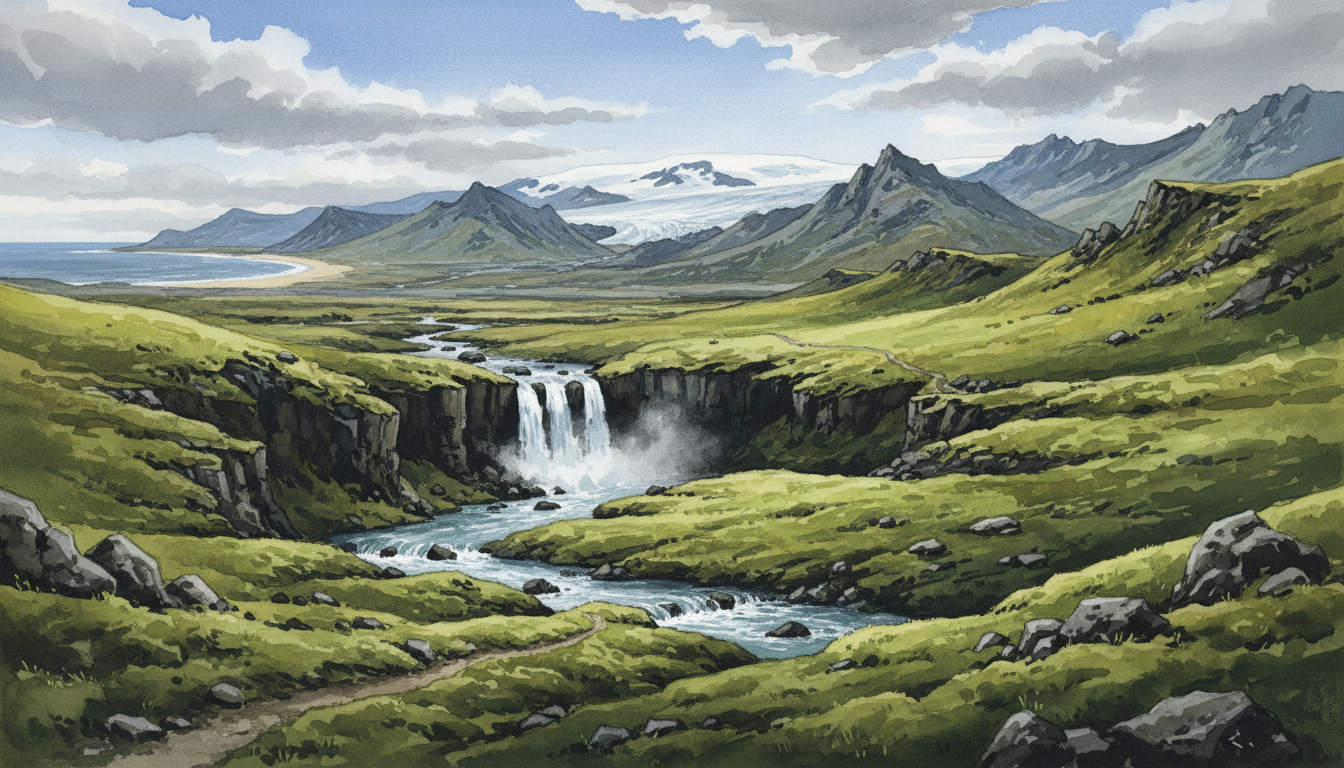
Why study Science? Earth’s outer rigid lithosphere is divided into moving plates. Their motion is connected to mantle convection, gravity-driven slab pull and ridge-related forces, producing earthquakes, mountains and ocean basins. This article explains the mechanism through connected chapters rather than isolated definitions.
Quick answer: Earth’s outer rigid lithosphere is divided into moving plates. Their motion is connected to mantle convection, gravity-driven slab pull and ridge-related forces, producing earthquakes, mountains and ocean basins. The guide gives 25 core explanations, examples of fair comparisons and a set of reasoning questions.
All fictional calculations and scenarios are educational. The guide does not replace professional safety, medical or environmental advice.
Contents
- 1. Lithosphere
- 2. Asthenosphere
- 3. Plate boundaries
- 4. Divergent boundaries
- 5. Mid-ocean ridges
- 6. Seafloor spreading
- 7. Convergent boundaries
- 8. Subduction
- 9. Slab pull
- 10. Ridge push
- 11. Mantle convection
- 12. Transform boundaries
- 13. Faults
- 14. Earthquakes
- 15. Volcanic arcs
- 16. Continental collision
- 17. GPS measurements
- 18. Paleomagnetism
- 19. Ocean-floor ages
- 20. Hotspots
- 21. Plate speeds
- 22. Worked motion example
- 23. Supercontinents
- 24. Singapore geology
- 25. Hazard interpretation
1. Lithosphere
The lithosphere includes the crust and rigid uppermost mantle. It behaves as tectonic plates over geological timescales.
The scientific value of lithosphere lies in the mechanism it helps explain. Earth’s outer rigid lithosphere is divided into moving plates. Their motion is connected to mantle convection, gravity-driven slab pull and ridge-related forces, producing earthquakes, mountains and ocean basins. Students should connect the specific concept with a measurable observation rather than assume that using the correct technical word is the same as explaining a cause.
A useful question is what would change if the relevant conditions were different. Identify the input, the intermediate process and the outcome. Then consider which factors must be held constant for a fair comparison. An observed pattern can support an explanation without proving it is the only possible cause.
When a numerical claim is needed, define the units, scale and assumptions. A diagram, photograph or isolated number may be useful evidence, but its meaning depends on how it was obtained. Explain what additional measurement would distinguish a competing explanation.
2. Asthenosphere
Below the lithosphere, hotter mantle rock can deform over long periods. It is mostly solid, not a global ocean of magma.
The scientific value of asthenosphere lies in the mechanism it helps explain. Earth’s outer rigid lithosphere is divided into moving plates. Their motion is connected to mantle convection, gravity-driven slab pull and ridge-related forces, producing earthquakes, mountains and ocean basins. Students should connect the specific concept with a measurable observation rather than assume that using the correct technical word is the same as explaining a cause.
A useful question is what would change if the relevant conditions were different. Identify the input, the intermediate process and the outcome. Then consider which factors must be held constant for a fair comparison. An observed pattern can support an explanation without proving it is the only possible cause.
When a numerical claim is needed, define the units, scale and assumptions. A diagram, photograph or isolated number may be useful evidence, but its meaning depends on how it was obtained. Explain what additional measurement would distinguish a competing explanation.
3. Plate boundaries
Most large earthquakes and volcanic belts occur near boundaries, though important exceptions exist.
The scientific value of plate boundaries lies in the mechanism it helps explain. Earth’s outer rigid lithosphere is divided into moving plates. Their motion is connected to mantle convection, gravity-driven slab pull and ridge-related forces, producing earthquakes, mountains and ocean basins. Students should connect the specific concept with a measurable observation rather than assume that using the correct technical word is the same as explaining a cause.
A useful question is what would change if the relevant conditions were different. Identify the input, the intermediate process and the outcome. Then consider which factors must be held constant for a fair comparison. An observed pattern can support an explanation without proving it is the only possible cause.
When a numerical claim is needed, define the units, scale and assumptions. A diagram, photograph or isolated number may be useful evidence, but its meaning depends on how it was obtained. Explain what additional measurement would distinguish a competing explanation.
4. Divergent boundaries
Plates move apart, allowing new crust to form in some oceanic settings.
The scientific value of divergent boundaries lies in the mechanism it helps explain. Earth’s outer rigid lithosphere is divided into moving plates. Their motion is connected to mantle convection, gravity-driven slab pull and ridge-related forces, producing earthquakes, mountains and ocean basins. Students should connect the specific concept with a measurable observation rather than assume that using the correct technical word is the same as explaining a cause.
A useful question is what would change if the relevant conditions were different. Identify the input, the intermediate process and the outcome. Then consider which factors must be held constant for a fair comparison. An observed pattern can support an explanation without proving it is the only possible cause.
When a numerical claim is needed, define the units, scale and assumptions. A diagram, photograph or isolated number may be useful evidence, but its meaning depends on how it was obtained. Explain what additional measurement would distinguish a competing explanation.
5. Mid-ocean ridges
Ocean ridges are elevated regions where seafloor spreading and mantle processes interact.
The scientific value of mid-ocean ridges lies in the mechanism it helps explain. Earth’s outer rigid lithosphere is divided into moving plates. Their motion is connected to mantle convection, gravity-driven slab pull and ridge-related forces, producing earthquakes, mountains and ocean basins. Students should connect the specific concept with a measurable observation rather than assume that using the correct technical word is the same as explaining a cause.
A useful question is what would change if the relevant conditions were different. Identify the input, the intermediate process and the outcome. Then consider which factors must be held constant for a fair comparison. An observed pattern can support an explanation without proving it is the only possible cause.
When a numerical claim is needed, define the units, scale and assumptions. A diagram, photograph or isolated number may be useful evidence, but its meaning depends on how it was obtained. Explain what additional measurement would distinguish a competing explanation.
6. Seafloor spreading
New oceanic lithosphere forms at ridges and moves away over time.
The scientific value of seafloor spreading lies in the mechanism it helps explain. Earth’s outer rigid lithosphere is divided into moving plates. Their motion is connected to mantle convection, gravity-driven slab pull and ridge-related forces, producing earthquakes, mountains and ocean basins. Students should connect the specific concept with a measurable observation rather than assume that using the correct technical word is the same as explaining a cause.
A useful question is what would change if the relevant conditions were different. Identify the input, the intermediate process and the outcome. Then consider which factors must be held constant for a fair comparison. An observed pattern can support an explanation without proving it is the only possible cause.
When a numerical claim is needed, define the units, scale and assumptions. A diagram, photograph or isolated number may be useful evidence, but its meaning depends on how it was obtained. Explain what additional measurement would distinguish a competing explanation.
7. Convergent boundaries
Plates move toward each other, causing subduction or continental collision depending on the setting.
The scientific value of convergent boundaries lies in the mechanism it helps explain. Earth’s outer rigid lithosphere is divided into moving plates. Their motion is connected to mantle convection, gravity-driven slab pull and ridge-related forces, producing earthquakes, mountains and ocean basins. Students should connect the specific concept with a measurable observation rather than assume that using the correct technical word is the same as explaining a cause.
A useful question is what would change if the relevant conditions were different. Identify the input, the intermediate process and the outcome. Then consider which factors must be held constant for a fair comparison. An observed pattern can support an explanation without proving it is the only possible cause.
When a numerical claim is needed, define the units, scale and assumptions. A diagram, photograph or isolated number may be useful evidence, but its meaning depends on how it was obtained. Explain what additional measurement would distinguish a competing explanation.
8. Subduction
Dense oceanic lithosphere can descend into the mantle beneath another plate.
The scientific value of subduction lies in the mechanism it helps explain. Earth’s outer rigid lithosphere is divided into moving plates. Their motion is connected to mantle convection, gravity-driven slab pull and ridge-related forces, producing earthquakes, mountains and ocean basins. Students should connect the specific concept with a measurable observation rather than assume that using the correct technical word is the same as explaining a cause.
A useful question is what would change if the relevant conditions were different. Identify the input, the intermediate process and the outcome. Then consider which factors must be held constant for a fair comparison. An observed pattern can support an explanation without proving it is the only possible cause.
When a numerical claim is needed, define the units, scale and assumptions. A diagram, photograph or isolated number may be useful evidence, but its meaning depends on how it was obtained. Explain what additional measurement would distinguish a competing explanation.
9. Slab pull
The gravitational sinking of cold dense lithosphere is a major contributor to motion in many plate systems.
The scientific value of slab pull lies in the mechanism it helps explain. Earth’s outer rigid lithosphere is divided into moving plates. Their motion is connected to mantle convection, gravity-driven slab pull and ridge-related forces, producing earthquakes, mountains and ocean basins. Students should connect the specific concept with a measurable observation rather than assume that using the correct technical word is the same as explaining a cause.
A useful question is what would change if the relevant conditions were different. Identify the input, the intermediate process and the outcome. Then consider which factors must be held constant for a fair comparison. An observed pattern can support an explanation without proving it is the only possible cause.
When a numerical claim is needed, define the units, scale and assumptions. A diagram, photograph or isolated number may be useful evidence, but its meaning depends on how it was obtained. Explain what additional measurement would distinguish a competing explanation.
10. Ridge push
Elevated ridge topography contributes gravitational forces that can help drive plate motion.
The scientific value of ridge push lies in the mechanism it helps explain. Earth’s outer rigid lithosphere is divided into moving plates. Their motion is connected to mantle convection, gravity-driven slab pull and ridge-related forces, producing earthquakes, mountains and ocean basins. Students should connect the specific concept with a measurable observation rather than assume that using the correct technical word is the same as explaining a cause.
A useful question is what would change if the relevant conditions were different. Identify the input, the intermediate process and the outcome. Then consider which factors must be held constant for a fair comparison. An observed pattern can support an explanation without proving it is the only possible cause.
When a numerical claim is needed, define the units, scale and assumptions. A diagram, photograph or isolated number may be useful evidence, but its meaning depends on how it was obtained. Explain what additional measurement would distinguish a competing explanation.
11. Mantle convection
Mantle rock flows very slowly over geological timescales through solid-state deformation.
The scientific value of mantle convection lies in the mechanism it helps explain. Earth’s outer rigid lithosphere is divided into moving plates. Their motion is connected to mantle convection, gravity-driven slab pull and ridge-related forces, producing earthquakes, mountains and ocean basins. Students should connect the specific concept with a measurable observation rather than assume that using the correct technical word is the same as explaining a cause.
A useful question is what would change if the relevant conditions were different. Identify the input, the intermediate process and the outcome. Then consider which factors must be held constant for a fair comparison. An observed pattern can support an explanation without proving it is the only possible cause.
When a numerical claim is needed, define the units, scale and assumptions. A diagram, photograph or isolated number may be useful evidence, but its meaning depends on how it was obtained. Explain what additional measurement would distinguish a competing explanation.
12. Transform boundaries
Plates slide past each other, commonly producing earthquakes without creating or destroying much lithosphere.
The scientific value of transform boundaries lies in the mechanism it helps explain. Earth’s outer rigid lithosphere is divided into moving plates. Their motion is connected to mantle convection, gravity-driven slab pull and ridge-related forces, producing earthquakes, mountains and ocean basins. Students should connect the specific concept with a measurable observation rather than assume that using the correct technical word is the same as explaining a cause.
A useful question is what would change if the relevant conditions were different. Identify the input, the intermediate process and the outcome. Then consider which factors must be held constant for a fair comparison. An observed pattern can support an explanation without proving it is the only possible cause.
When a numerical claim is needed, define the units, scale and assumptions. A diagram, photograph or isolated number may be useful evidence, but its meaning depends on how it was obtained. Explain what additional measurement would distinguish a competing explanation.
13. Faults
Faults are fractures along which rocks have moved. Not every fault is an entire plate boundary.
The scientific value of faults lies in the mechanism it helps explain. Earth’s outer rigid lithosphere is divided into moving plates. Their motion is connected to mantle convection, gravity-driven slab pull and ridge-related forces, producing earthquakes, mountains and ocean basins. Students should connect the specific concept with a measurable observation rather than assume that using the correct technical word is the same as explaining a cause.
A useful question is what would change if the relevant conditions were different. Identify the input, the intermediate process and the outcome. Then consider which factors must be held constant for a fair comparison. An observed pattern can support an explanation without proving it is the only possible cause.
When a numerical claim is needed, define the units, scale and assumptions. A diagram, photograph or isolated number may be useful evidence, but its meaning depends on how it was obtained. Explain what additional measurement would distinguish a competing explanation.
14. Earthquakes
Sudden fault slip releases stored elastic strain energy, generating seismic waves.
The scientific value of earthquakes lies in the mechanism it helps explain. Earth’s outer rigid lithosphere is divided into moving plates. Their motion is connected to mantle convection, gravity-driven slab pull and ridge-related forces, producing earthquakes, mountains and ocean basins. Students should connect the specific concept with a measurable observation rather than assume that using the correct technical word is the same as explaining a cause.
A useful question is what would change if the relevant conditions were different. Identify the input, the intermediate process and the outcome. Then consider which factors must be held constant for a fair comparison. An observed pattern can support an explanation without proving it is the only possible cause.
When a numerical claim is needed, define the units, scale and assumptions. A diagram, photograph or isolated number may be useful evidence, but its meaning depends on how it was obtained. Explain what additional measurement would distinguish a competing explanation.
15. Volcanic arcs
Subduction-related processes can produce chains of volcanoes above descending slabs.
The scientific value of volcanic arcs lies in the mechanism it helps explain. Earth’s outer rigid lithosphere is divided into moving plates. Their motion is connected to mantle convection, gravity-driven slab pull and ridge-related forces, producing earthquakes, mountains and ocean basins. Students should connect the specific concept with a measurable observation rather than assume that using the correct technical word is the same as explaining a cause.
A useful question is what would change if the relevant conditions were different. Identify the input, the intermediate process and the outcome. Then consider which factors must be held constant for a fair comparison. An observed pattern can support an explanation without proving it is the only possible cause.
When a numerical claim is needed, define the units, scale and assumptions. A diagram, photograph or isolated number may be useful evidence, but its meaning depends on how it was obtained. Explain what additional measurement would distinguish a competing explanation.
16. Continental collision
Buoyant continental crust can thicken and build mountains when continents converge.
The scientific value of continental collision lies in the mechanism it helps explain. Earth’s outer rigid lithosphere is divided into moving plates. Their motion is connected to mantle convection, gravity-driven slab pull and ridge-related forces, producing earthquakes, mountains and ocean basins. Students should connect the specific concept with a measurable observation rather than assume that using the correct technical word is the same as explaining a cause.
A useful question is what would change if the relevant conditions were different. Identify the input, the intermediate process and the outcome. Then consider which factors must be held constant for a fair comparison. An observed pattern can support an explanation without proving it is the only possible cause.
When a numerical claim is needed, define the units, scale and assumptions. A diagram, photograph or isolated number may be useful evidence, but its meaning depends on how it was obtained. Explain what additional measurement would distinguish a competing explanation.
17. GPS measurements
High-precision geodesy can measure plate movement of centimetres per year.
The scientific value of gps measurements lies in the mechanism it helps explain. Earth’s outer rigid lithosphere is divided into moving plates. Their motion is connected to mantle convection, gravity-driven slab pull and ridge-related forces, producing earthquakes, mountains and ocean basins. Students should connect the specific concept with a measurable observation rather than assume that using the correct technical word is the same as explaining a cause.
A useful question is what would change if the relevant conditions were different. Identify the input, the intermediate process and the outcome. Then consider which factors must be held constant for a fair comparison. An observed pattern can support an explanation without proving it is the only possible cause.
When a numerical claim is needed, define the units, scale and assumptions. A diagram, photograph or isolated number may be useful evidence, but its meaning depends on how it was obtained. Explain what additional measurement would distinguish a competing explanation.
18. Paleomagnetism
Magnetic signatures in rocks help reconstruct past plate positions and seafloor spreading.
The scientific value of paleomagnetism lies in the mechanism it helps explain. Earth’s outer rigid lithosphere is divided into moving plates. Their motion is connected to mantle convection, gravity-driven slab pull and ridge-related forces, producing earthquakes, mountains and ocean basins. Students should connect the specific concept with a measurable observation rather than assume that using the correct technical word is the same as explaining a cause.
A useful question is what would change if the relevant conditions were different. Identify the input, the intermediate process and the outcome. Then consider which factors must be held constant for a fair comparison. An observed pattern can support an explanation without proving it is the only possible cause.
When a numerical claim is needed, define the units, scale and assumptions. A diagram, photograph or isolated number may be useful evidence, but its meaning depends on how it was obtained. Explain what additional measurement would distinguish a competing explanation.
19. Ocean-floor ages
Oceanic crust tends to be youngest near spreading ridges and older farther away, subject to complex history.
The scientific value of ocean-floor ages lies in the mechanism it helps explain. Earth’s outer rigid lithosphere is divided into moving plates. Their motion is connected to mantle convection, gravity-driven slab pull and ridge-related forces, producing earthquakes, mountains and ocean basins. Students should connect the specific concept with a measurable observation rather than assume that using the correct technical word is the same as explaining a cause.
A useful question is what would change if the relevant conditions were different. Identify the input, the intermediate process and the outcome. Then consider which factors must be held constant for a fair comparison. An observed pattern can support an explanation without proving it is the only possible cause.
When a numerical claim is needed, define the units, scale and assumptions. A diagram, photograph or isolated number may be useful evidence, but its meaning depends on how it was obtained. Explain what additional measurement would distinguish a competing explanation.
20. Hotspots
Some volcanic chains record plate motion relative to mantle sources, though hotspots may also move.
The scientific value of hotspots lies in the mechanism it helps explain. Earth’s outer rigid lithosphere is divided into moving plates. Their motion is connected to mantle convection, gravity-driven slab pull and ridge-related forces, producing earthquakes, mountains and ocean basins. Students should connect the specific concept with a measurable observation rather than assume that using the correct technical word is the same as explaining a cause.
A useful question is what would change if the relevant conditions were different. Identify the input, the intermediate process and the outcome. Then consider which factors must be held constant for a fair comparison. An observed pattern can support an explanation without proving it is the only possible cause.
When a numerical claim is needed, define the units, scale and assumptions. A diagram, photograph or isolated number may be useful evidence, but its meaning depends on how it was obtained. Explain what additional measurement would distinguish a competing explanation.
21. Plate speeds
Plates typically move millimetres to centimetres per year, not metres per day.
The scientific value of plate speeds lies in the mechanism it helps explain. Earth’s outer rigid lithosphere is divided into moving plates. Their motion is connected to mantle convection, gravity-driven slab pull and ridge-related forces, producing earthquakes, mountains and ocean basins. Students should connect the specific concept with a measurable observation rather than assume that using the correct technical word is the same as explaining a cause.
A useful question is what would change if the relevant conditions were different. Identify the input, the intermediate process and the outcome. Then consider which factors must be held constant for a fair comparison. An observed pattern can support an explanation without proving it is the only possible cause.
When a numerical claim is needed, define the units, scale and assumptions. A diagram, photograph or isolated number may be useful evidence, but its meaning depends on how it was obtained. Explain what additional measurement would distinguish a competing explanation.
22. Worked motion example
At a hypothetical steady 5 cm/year, a plate would move 5 metres in 100 years. Real motion varies.
The scientific value of worked motion example lies in the mechanism it helps explain. Earth’s outer rigid lithosphere is divided into moving plates. Their motion is connected to mantle convection, gravity-driven slab pull and ridge-related forces, producing earthquakes, mountains and ocean basins. Students should connect the specific concept with a measurable observation rather than assume that using the correct technical word is the same as explaining a cause.
A useful question is what would change if the relevant conditions were different. Identify the input, the intermediate process and the outcome. Then consider which factors must be held constant for a fair comparison. An observed pattern can support an explanation without proving it is the only possible cause.
When a numerical claim is needed, define the units, scale and assumptions. A diagram, photograph or isolated number may be useful evidence, but its meaning depends on how it was obtained. Explain what additional measurement would distinguish a competing explanation.
23. Supercontinents
Plate motion has repeatedly assembled and broken apart large continental configurations.
The scientific value of supercontinents lies in the mechanism it helps explain. Earth’s outer rigid lithosphere is divided into moving plates. Their motion is connected to mantle convection, gravity-driven slab pull and ridge-related forces, producing earthquakes, mountains and ocean basins. Students should connect the specific concept with a measurable observation rather than assume that using the correct technical word is the same as explaining a cause.
A useful question is what would change if the relevant conditions were different. Identify the input, the intermediate process and the outcome. Then consider which factors must be held constant for a fair comparison. An observed pattern can support an explanation without proving it is the only possible cause.
When a numerical claim is needed, define the units, scale and assumptions. A diagram, photograph or isolated number may be useful evidence, but its meaning depends on how it was obtained. Explain what additional measurement would distinguish a competing explanation.
24. Singapore geology
Singapore lies away from a major active plate boundary but can experience shaking from regional earthquakes.
The scientific value of singapore geology lies in the mechanism it helps explain. Earth’s outer rigid lithosphere is divided into moving plates. Their motion is connected to mantle convection, gravity-driven slab pull and ridge-related forces, producing earthquakes, mountains and ocean basins. Students should connect the specific concept with a measurable observation rather than assume that using the correct technical word is the same as explaining a cause.
A useful question is what would change if the relevant conditions were different. Identify the input, the intermediate process and the outcome. Then consider which factors must be held constant for a fair comparison. An observed pattern can support an explanation without proving it is the only possible cause.
When a numerical claim is needed, define the units, scale and assumptions. A diagram, photograph or isolated number may be useful evidence, but its meaning depends on how it was obtained. Explain what additional measurement would distinguish a competing explanation.
25. Hazard interpretation
Plate tectonics explains many hazards but cannot predict the exact time of an individual earthquake.
The scientific value of hazard interpretation lies in the mechanism it helps explain. Earth’s outer rigid lithosphere is divided into moving plates. Their motion is connected to mantle convection, gravity-driven slab pull and ridge-related forces, producing earthquakes, mountains and ocean basins. Students should connect the specific concept with a measurable observation rather than assume that using the correct technical word is the same as explaining a cause.
A useful question is what would change if the relevant conditions were different. Identify the input, the intermediate process and the outcome. Then consider which factors must be held constant for a fair comparison. An observed pattern can support an explanation without proving it is the only possible cause.
When a numerical claim is needed, define the units, scale and assumptions. A diagram, photograph or isolated number may be useful evidence, but its meaning depends on how it was obtained. Explain what additional measurement would distinguish a competing explanation.
Twelve application exercises
Application exercise 1
Use a fictional dataset about lithosphere. Name an independent variable, a dependent measurement, two controlled conditions and a plausible alternative cause. Describe what evidence would support the hypothesis.
If the result differs from the prediction, consider calibration, sampling and the assumptions of the model. Propose a safer or clearer follow-up investigation without inventing numerical results.
Application exercise 2
Use a fictional dataset about plate boundaries. Name an independent variable, a dependent measurement, two controlled conditions and a plausible alternative cause. Describe what evidence would support the hypothesis.
If the result differs from the prediction, consider calibration, sampling and the assumptions of the model. Propose a safer or clearer follow-up investigation without inventing numerical results.
Application exercise 3
Use a fictional dataset about mid-ocean ridges. Name an independent variable, a dependent measurement, two controlled conditions and a plausible alternative cause. Describe what evidence would support the hypothesis.
If the result differs from the prediction, consider calibration, sampling and the assumptions of the model. Propose a safer or clearer follow-up investigation without inventing numerical results.
Application exercise 4
Use a fictional dataset about convergent boundaries. Name an independent variable, a dependent measurement, two controlled conditions and a plausible alternative cause. Describe what evidence would support the hypothesis.
If the result differs from the prediction, consider calibration, sampling and the assumptions of the model. Propose a safer or clearer follow-up investigation without inventing numerical results.
Application exercise 5
Use a fictional dataset about slab pull. Name an independent variable, a dependent measurement, two controlled conditions and a plausible alternative cause. Describe what evidence would support the hypothesis.
If the result differs from the prediction, consider calibration, sampling and the assumptions of the model. Propose a safer or clearer follow-up investigation without inventing numerical results.
Application exercise 6
Use a fictional dataset about mantle convection. Name an independent variable, a dependent measurement, two controlled conditions and a plausible alternative cause. Describe what evidence would support the hypothesis.
If the result differs from the prediction, consider calibration, sampling and the assumptions of the model. Propose a safer or clearer follow-up investigation without inventing numerical results.
Application exercise 7
Use a fictional dataset about faults. Name an independent variable, a dependent measurement, two controlled conditions and a plausible alternative cause. Describe what evidence would support the hypothesis.
If the result differs from the prediction, consider calibration, sampling and the assumptions of the model. Propose a safer or clearer follow-up investigation without inventing numerical results.
Application exercise 8
Use a fictional dataset about volcanic arcs. Name an independent variable, a dependent measurement, two controlled conditions and a plausible alternative cause. Describe what evidence would support the hypothesis.
If the result differs from the prediction, consider calibration, sampling and the assumptions of the model. Propose a safer or clearer follow-up investigation without inventing numerical results.
Application exercise 9
Use a fictional dataset about gps measurements. Name an independent variable, a dependent measurement, two controlled conditions and a plausible alternative cause. Describe what evidence would support the hypothesis.
If the result differs from the prediction, consider calibration, sampling and the assumptions of the model. Propose a safer or clearer follow-up investigation without inventing numerical results.
Application exercise 10
Use a fictional dataset about ocean-floor ages. Name an independent variable, a dependent measurement, two controlled conditions and a plausible alternative cause. Describe what evidence would support the hypothesis.
If the result differs from the prediction, consider calibration, sampling and the assumptions of the model. Propose a safer or clearer follow-up investigation without inventing numerical results.
Application exercise 11
Use a fictional dataset about plate speeds. Name an independent variable, a dependent measurement, two controlled conditions and a plausible alternative cause. Describe what evidence would support the hypothesis.
If the result differs from the prediction, consider calibration, sampling and the assumptions of the model. Propose a safer or clearer follow-up investigation without inventing numerical results.
Application exercise 12
Use a fictional dataset about supercontinents. Name an independent variable, a dependent measurement, two controlled conditions and a plausible alternative cause. Describe what evidence would support the hypothesis.
If the result differs from the prediction, consider calibration, sampling and the assumptions of the model. Propose a safer or clearer follow-up investigation without inventing numerical results.
Frequently asked questions
What does lithosphere mean in this topic?
The lithosphere includes the crust and rigid uppermost mantle. It behaves as tectonic plates over geological timescales.
What does asthenosphere mean in this topic?
Below the lithosphere, hotter mantle rock can deform over long periods. It is mostly solid, not a global ocean of magma.
What does plate boundaries mean in this topic?
Most large earthquakes and volcanic belts occur near boundaries, though important exceptions exist.
What does divergent boundaries mean in this topic?
Plates move apart, allowing new crust to form in some oceanic settings.
What does mid-ocean ridges mean in this topic?
Ocean ridges are elevated regions where seafloor spreading and mantle processes interact.
What does seafloor spreading mean in this topic?
New oceanic lithosphere forms at ridges and moves away over time.
What does convergent boundaries mean in this topic?
Plates move toward each other, causing subduction or continental collision depending on the setting.
What does subduction mean in this topic?
Dense oceanic lithosphere can descend into the mantle beneath another plate.
What does slab pull mean in this topic?
The gravitational sinking of cold dense lithosphere is a major contributor to motion in many plate systems.
What does ridge push mean in this topic?
Elevated ridge topography contributes gravitational forces that can help drive plate motion.
What does mantle convection mean in this topic?
Mantle rock flows very slowly over geological timescales through solid-state deformation.
What does transform boundaries mean in this topic?
Plates slide past each other, commonly producing earthquakes without creating or destroying much lithosphere.
Scientific references and further learning
The lasting value of Science
Earth’s outer rigid lithosphere is divided into moving plates. Their motion is connected to mantle convection, gravity-driven slab pull and ridge-related forces, producing earthquakes, mountains and ocean basins. Scientific literacy means understanding mechanisms, using evidence carefully and knowing where a simplified model stops being reliable.