
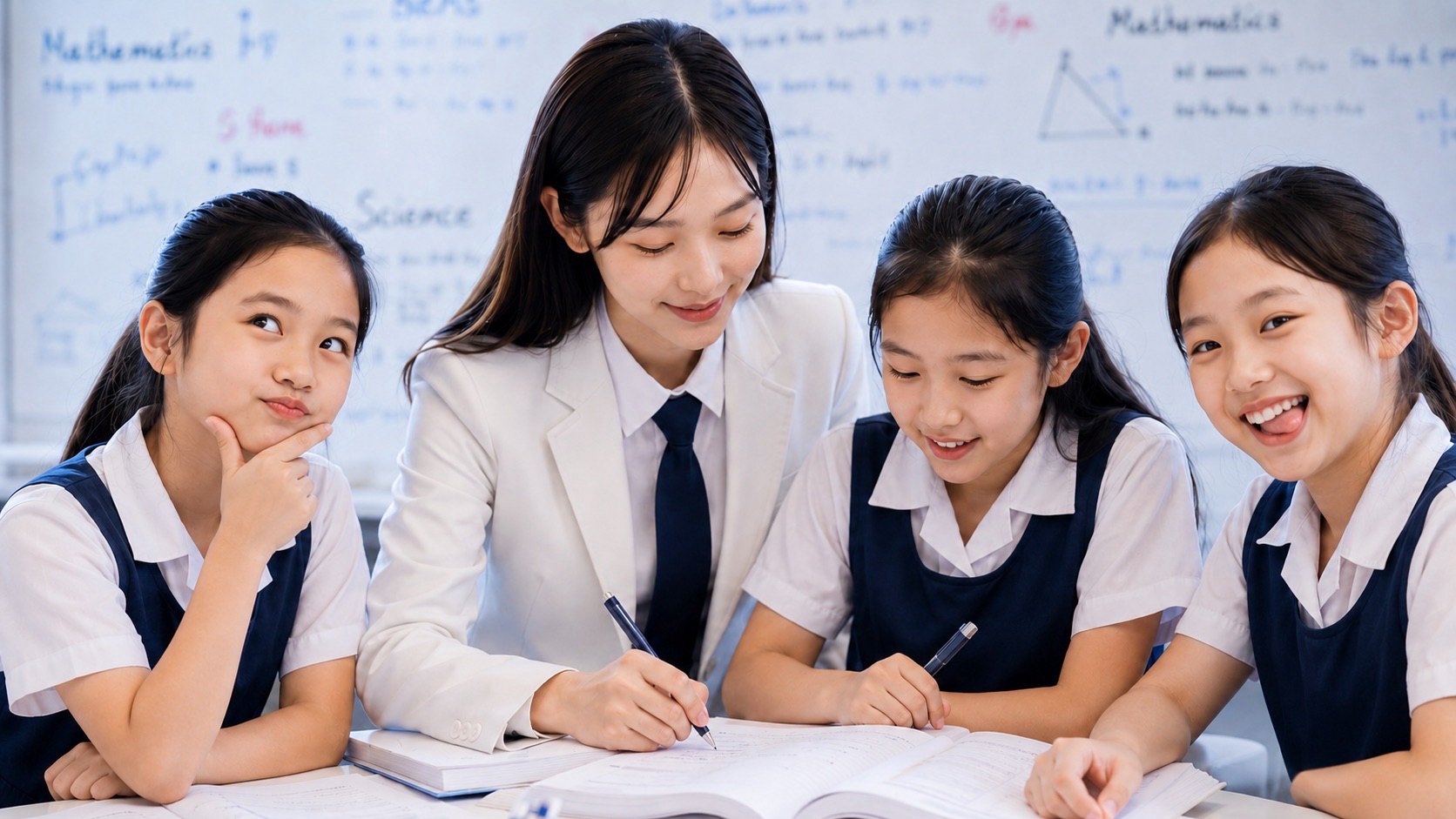
Primary 2 English Tuition Sengkang: Building Strong Language Skills for Young Learners
Summary
Primary 2 English is one of the most important quiet years in a child’s language journey.
It is not yet the loud examination year.
It is not yet the year where parents panic over PSLE marks.
But it is the year where many important habits begin to form.
A child learns how to read with more independence, write fuller sentences, understand instructions, answer questions, use grammar more accurately, speak with more confidence, and express thoughts with clearer words.
At eduKate Sengkang, our Primary 2 English Tuition helps young learners build these skills early, gently and properly.
Because strong English is not created suddenly in Primary 5 or Primary 6.
It is built sentence by sentence, story by story, correction by correction, confidence by confidence.
When a child learns English well early, the whole academic journey becomes lighter.
Primary 2 English Is Not “Too Early”
Many parents wonder whether Primary 2 is too young for English tuition.
The better question is this:
Is the child already building the right language habits?
At Primary 2, children are still wonderfully open.
They are curious.
They are expressive.
They are playful.
They are still forming their relationship with learning.
This is a powerful time.
If English feels clear and enjoyable, the child becomes more willing to read, speak and write.
If English feels confusing, the child may begin to withdraw.
Some children stop raising their hands.
Some avoid writing longer answers.
Some guess instead of reading carefully.
Some use the same simple words again and again because they do not know how to stretch their vocabulary.
Some can speak well but cannot organise their writing.
Some can read aloud but do not fully understand what the passage means.
These are not failures.
They are early signals.
And early signals are useful because they can be corrected before they become larger gaps.
Primary 2 English Tuition should not frighten a child.
It should help the child feel that English is something they can understand, use and enjoy.
The Hidden Importance of Primary 2
Primary 2 looks simple from the outside.
The worksheets may not look difficult.
The compositions may still be short.
The comprehension passages may feel manageable.
The grammar items may look basic.
But underneath these small tasks, major foundations are being formed.
A Primary 2 child is learning how language works.
They are learning that a sentence needs order.
They are learning that words carry meaning.
They are learning that punctuation changes how a sentence is read.
They are learning that a story has a beginning, middle and ending.
They are learning that answers must come from evidence, not guessing.
They are learning that speaking clearly helps people understand them.
These are civilisation skills.
A society becomes better when children can read carefully, think clearly, speak kindly and write meaningfully.
English is not only a school subject.
It is a tool for thought.
A child who has strong English can understand instructions in Mathematics.
They can explain observations in Science.
They can express feelings.
They can ask better questions.
They can read more widely.
They can participate more confidently in class.
That is why Primary 2 matters.
It is the year where the child is not only learning English.
The child is learning how to use language to make sense of the world.
What Primary 2 Students Often Struggle With
At Primary 2, English weaknesses can look small.
But they usually show up in repeated patterns.
Some children write very short sentences.
They may write:
“I went to the park. I played. I was happy.”
The meaning is there, but the expression is limited.
Some children have ideas but cannot organise them.
They may know what happened in the story, but they cannot explain it in a proper sequence.
Some children struggle with grammar.
They may confuse tenses, plurals, prepositions, subject-verb agreement or sentence endings.
Some children read too quickly.
They miss small words, skip instructions and choose answers without checking.
Some children are shy during oral discussion.
They may know what they want to say, but they answer in one word or very short phrases.
Some children have weak vocabulary.
They use words like “nice”, “good”, “bad”, “happy” and “sad” repeatedly because they have not yet built a richer word bank.
Some children are afraid of making mistakes.
This is one of the most important issues to fix early.
A child who fears mistakes may stop trying.
A child who stops trying loses practice.
A child who loses practice falls behind.
Good Primary 2 English tuition should make mistakes useful, not scary.
A mistake shows us where to teach.
What We Build in Primary 2 English Tuition
At eduKate Sengkang, our Primary 2 English Tuition focuses on the whole child as a young language learner.
We build reading.
Students learn to read with attention, understand what is happening in a passage, notice important details, and answer questions more carefully.
We build vocabulary.
Students learn new words in context, not as empty memorisation. They learn how words are used in sentences, stories and real situations.
We build grammar.
Students learn the rules that make sentences correct and clear. Grammar is taught not only as worksheet answers, but as a system for better writing and speaking.
We build sentence control.
Students learn how to write complete sentences, extend ideas, add details and avoid messy expression.
We build comprehension.
Students learn how to slow down, find clues, understand meaning, and answer based on the passage.
We build writing.
Students learn how to describe actions, feelings, settings and events. They begin to understand story flow and paragraph thinking.
We build oral confidence.
Students practise speaking in a safe environment so they can answer more clearly and naturally.
We build confidence.
Because confidence is not shouting loudly.
Confidence is the quiet feeling of knowing, “I understand what to do.”
Teaching English Properly at a Young Age
Young children do not improve by being overloaded.
They improve when lessons are clear, structured and encouraging.
A Primary 2 child needs the right balance.
Too easy, and the child does not grow.
Too difficult, and the child shuts down.
Too much drilling, and the child may dislike English.
Too little correction, and weak habits continue.
So the teaching must be thoughtful.
At eduKate Sengkang, we help students learn English in small, meaningful steps.
First, we explain clearly.
Then we show examples.
Then students try.
Then we correct.
Then they try again.
This loop is important because children need repeated success to build confidence.
Not artificial praise.
Real success.
The child must experience:
“I can read this.”
“I can write this sentence.”
“I can answer this question.”
“I can say my idea.”
“I can improve.”
When a young learner experiences improvement, motivation becomes natural.
Why Small-Group Tuition Helps Primary 2 Students
Primary 2 children need attention.
They may not always know how to explain what they do not understand.
A child may say, “I don’t know.”
But “I don’t know” can mean many things.
It can mean:
“I cannot read the word.”
“I do not understand the question.”
“I do not know what answer format to use.”
“I forgot the grammar rule.”
“I have an idea but cannot write it.”
“I am scared my answer is wrong.”
In a small-group setting, the tutor can observe these details more closely.
The tutor can see how the child reads.
The tutor can listen to how the child speaks.
The tutor can check how the child forms sentences.
The tutor can correct mistakes before they become habits.
This is especially useful for younger learners.
At Primary 2, children need guidance that feels personal, calm and safe.
They should not feel lost in a crowd.
They should feel seen.
Building a Love for Reading
Reading is one of the greatest gifts we can give a child.
A child who reads well gains vocabulary, sentence rhythm, imagination, background knowledge and emotional understanding.
But some children do not love reading because reading feels difficult.
They stumble over words.
They cannot follow the story.
They feel tired after a few lines.
They do not know how to picture what is happening.
So we help them build reading stamina gradually.
We teach them to notice characters.
We teach them to follow events.
We teach them to ask simple questions:
Who is involved?
What happened?
Where did it happen?
Why did it happen?
How did the character feel?
What clue tells us that?
These small questions help children become active readers.
They stop seeing reading as words on a page.
They begin to see meaning.
And when children see meaning, reading becomes more enjoyable.
Building Better Sentences
Many Primary 2 students need help with sentence construction.
This is normal.
At this age, children often think faster than they write.
Their ideas may be lively, but their sentences may be incomplete, repetitive or unclear.
So we teach sentence building.
A simple sentence can become stronger with detail.
For example:
“The boy ran.”
Can become:
“The frightened boy ran quickly across the playground.”
Then we can ask:
Why was he frightened?
Where was he going?
Who was chasing him?
What happened next?
This is how writing grows.
Not by forcing children to memorise difficult phrases.
But by teaching them how to expand meaning.
A good sentence helps the reader see more clearly.
That is what young writers must learn.
Building Oral Confidence
Some children are naturally talkative at home but quiet in class.
Some children know the answer but do not want to speak.
Some children speak in short phrases because they have not practised explaining ideas fully.
Oral confidence must be built gently.
A child should not be embarrassed into speaking.
They should be guided into speaking.
We help students answer in fuller sentences.
We help them describe pictures.
We help them explain feelings.
We help them give simple opinions.
We help them listen to others.
We help them learn that speaking is not only about giving the “correct” answer.
It is about communicating clearly.
This matters far beyond English class.
A child who can speak clearly becomes more confident in school, friendships and future learning.
Preparing Early Without Pressuring the Child
Primary 2 English Tuition should not turn childhood into exam panic.
That is not the aim.
The aim is to prepare early so the child does not suffer later.
When foundations are built early, upper primary becomes less frightening.
Primary 3 and Primary 4 bring more demanding comprehension, grammar, vocabulary and writing.
Primary 5 and Primary 6 bring heavier PSLE preparation.
If a child enters those years with weak sentence structure, poor reading habits and low confidence, everything becomes harder.
But if the child has already built strong habits, the journey becomes smoother.
Early preparation is kindness.
It gives the child time.
Time to learn.
Time to practise.
Time to make mistakes.
Time to improve.
Time to grow into the language properly.
What Parents May Notice After Good Tuition
Progress in Primary 2 may not always look dramatic at first.
It may begin quietly.
The child reads a little more willingly.
The child writes slightly longer sentences.
The child checks punctuation.
The child uses a better word.
The child answers with more confidence.
The child stops saying, “I don’t know,” so quickly.
The child begins to explain.
These small changes matter.
They are signs of a learner becoming stronger.
Over time, these small changes become bigger changes.
Better reading becomes better comprehension.
Better sentences become better writing.
Better vocabulary becomes better expression.
Better oral practice becomes better confidence.
Better habits become better results.
That is how English improves.
Not suddenly.
Steadily.
The eduKate Sengkang Approach
At eduKate Sengkang, we believe young learners deserve careful teaching.
They should not be rushed through worksheets without understanding.
They should not be made to feel small because they are still learning.
They should not be allowed to drift quietly with weak habits.
They need structure.
They need encouragement.
They need correction.
They need a tutor who knows how to turn confusion into clarity.
Our Primary 2 English Tuition helps students build the skills that matter most at this stage: reading, grammar, vocabulary, comprehension, sentence writing, oral expression and confidence.
We teach English as a living skill.
Not only for marks.
Not only for worksheets.
But for thinking, communication and future learning.
Because when a child can use language well, the child can reach further.
For Sengkang Parents: When Should You Seek Help?
You may consider Primary 2 English Tuition if your child:
writes very short or incomplete sentences,
struggles to understand passages,
has weak spelling or grammar,
uses very limited vocabulary,
avoids reading,
finds comprehension questions difficult,
is shy when speaking,
makes repeated mistakes despite school practice,
or lacks confidence in English.
These signs do not mean your child is weak.
They mean your child needs guidance.
And with guidance, young learners can change quickly.
Primary 2 is a beautiful time to help them.
The child is still young enough to rebuild habits gently.
The pressure is still manageable.
The foundation can still be shaped well.
Building Strong Language Skills for a Better Future
Education is one of the ways we build a better world.
Not in one grand gesture.
But through children.
A child who learns to read becomes more aware.
A child who learns to write becomes more expressive.
A child who learns to speak becomes more confident.
A child who learns to listen becomes more thoughtful.
A child who learns English well gains access to stories, knowledge, friendships, school success and future opportunity.
That is why Primary 2 English matters.
It is not just a small year.
It is a foundation year.
At eduKate Sengkang, we help young learners build that foundation properly.
We help them catch the small gaps early.
We help them grow in confidence.
We help them learn English with clarity, patience and purpose.
Because properly taught children shine brighter.
And when children shine brighter, the future becomes brighter too.
Primary 2 English Tuition Sengkang
If your child is struggling with English, do not wait until the problem becomes heavy.
Start with clarity.
Start with the sentence.
Start with the word.
Start with the reading habit.
Start with confidence.
At eduKate Sengkang, our Primary 2 English Tuition helps young learners build strong language skills for school, exams and life.
We are here to help your child learn properly, grow steadily and become a confident English learner.
One sentence at a time.
One story at a time.
One bright future at a time.
Primary 2 is a crucial year in a child’s academic journey, as it lays the foundation for essential English language skills that will be built upon in the years ahead. At this stage, students are learning to read more complex texts, write basic sentences, and understand grammar rules. Primary 2 English tuition in Sengkang provides young learners with the structured guidance they need to develop these core language skills. With personalized lessons, engaging activities, and expert tutors, students can enhance their English proficiency and gain confidence in both schoolwork and communication.
For more information about the Primary English curriculum in Singapore, visit the MOE Primary Curriculum page.
Why Primary 2 English Tuition is Essential
1. Strengthening Basic Language Skills
At the Primary 2 level, students are introduced to more complex reading materials, sentence structures, and grammar rules. Sengkang English tuition focuses on helping students strengthen their reading comprehension, writing, and grammar skills. By reinforcing what they learn in school, tuition ensures that students build a solid foundation in English, which is essential for future academic success.
2. Personalized Support for Individual Learning Needs
Every child learns at their own pace, and some students may need extra support in certain areas of English, such as reading or writing. Primary 2 English tuition provides personalized lessons that cater to the individual needs of each student. Whether your child is struggling with phonics, sentence construction, or spelling, tutors can provide targeted guidance to help them overcome challenges and improve their language proficiency.
3. Building Confidence in Reading and Writing
Confidence is key when it comes to learning a language. Many Primary 2 students feel anxious about reading aloud or writing full sentences, especially if they find certain aspects of English challenging. English tuition offers a supportive environment where students can practice their reading and writing skills regularly, receive constructive feedback, and gradually build their confidence. This increased self-assurance helps them perform better in class and participate more actively in lessons.
Key Focus Areas in Primary 2 English Tuition
A. Reading Comprehension and Phonics
At the Primary 2 level, students are beginning to read longer texts and understand more complex stories. English tuition focuses on developing reading comprehension skills by teaching students how to identify main ideas, understand key details, and answer simple comprehension questions. Phonics is also emphasized to ensure that students can decode unfamiliar words and read with greater fluency.
B. Basic Writing Skills
Primary 2 students are learning how to write complete sentences and short paragraphs. English tuition helps students improve their writing skills by teaching them how to construct sentences, use correct punctuation, and spell words accurately. Through guided writing exercises, students practice forming sentences that make sense and convey their ideas clearly.
C. Grammar and Vocabulary Building
A solid understanding of grammar is essential for writing and speaking effectively. In Primary 2 English tuition, students learn basic grammar rules such as subject-verb agreement, the use of tenses, and the correct use of punctuation marks. Vocabulary-building exercises introduce new words and phrases, helping students expand their language repertoire and use appropriate vocabulary words in their writing.
D. Oral Communication Practice
Oral communication is an important skill for young learners, especially when it comes to class participation and oral exams. Primary 2 English tuition provides students with opportunities to practice speaking in English, whether through reading aloud, participating in discussions, or answering questions. Tutors offer feedback on pronunciation and fluency, helping students gain confidence in expressing their thoughts verbally.
Success Stories
Primary 2 English tuition has helped many young learners improve their language skills and gain confidence in the classroom. For example, Chloe, a Primary 2 student, struggled with reading comprehension at the start of the year. Through regular tuition sessions, she practiced phonics and reading aloud, which improved her reading fluency and comprehension. By the end of the year, Chloe was performing better in her school English assessments and was more confident in her reading abilities.
Similarly, Ethan, another Primary 2 student, found writing challenging. He had difficulty constructing sentences and often made grammar mistakes. After enrolling in English tuition, Ethan received personalized guidance on sentence structure and grammar rules. His writing improved significantly, and he became more confident in completing his English writing assignments.
You can read more success stories from parents and students on our Facebook page.
How to Get Started
Consultation
If you want to help your child build a strong foundation in English, we recommend starting with a consultation. This session allows us to assess your child’s current English proficiency and provide a personalized learning plan that focuses on developing their core language skills.
Trial Lessons (Available Upon Request)
Due to our 3-pax-per-class limit, trial lessons are available based on availability. Please inquire during your consultation to see if a trial lesson is open in our Primary 2 English tuition classes.
For more information or to schedule a consultation, visit EduKate Singapore or contact us on Facebook.
Conclusion
Primary 2 is a critical year for building strong language skills that will support students throughout their academic journey. English tuition provides young learners with the guidance they need to develop reading, writing, grammar, and communication skills. With personalized lessons, regular practice, and supportive feedback, Primary 2 English tuition helps students gain confidence and proficiency in English, ensuring they are well-prepared for future success.
Help your child build a strong foundation in English—enrol in Primary 2 English tuition today and set them on the path to academic success!